Quick Answer
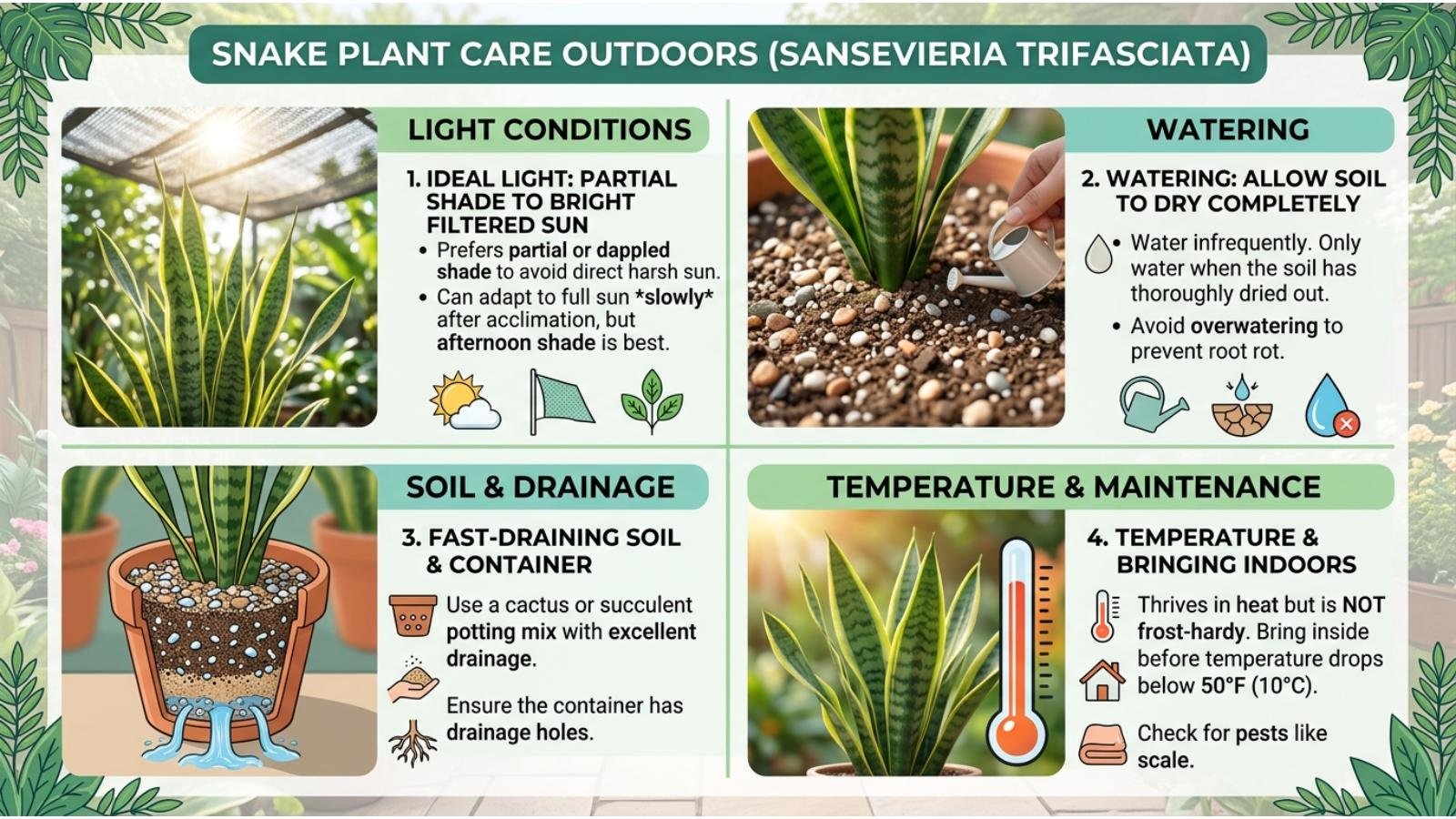
Snake plant care outdoors is simple when you provide bright, suitable light, well-draining soil, careful watering, and protection from extreme temperatures.
Snake plants can grow outdoors in warm, frost-free conditions, but they should be gradually introduced to stronger sunlight. Let the soil dry between waterings, protect the plant from prolonged heavy rain, and move container-grown plants indoors before cold weather arrives.
Introduction
Snake plants are known for their tough nature, low water requirements, and ability to adapt to different growing conditions. While they are commonly grown indoors, they can also thrive outdoors when their basic needs are met.
Outdoor conditions are different from indoor conditions. Your snake plant may receive stronger sunlight, more rainfall, greater temperature fluctuations, and increased airflow. These changes can encourage healthy growth, but they can also create problems if the plant is moved outdoors too quickly or planted in poorly draining soil.
The biggest mistake beginners make is assuming that a hardy snake plant can tolerate unlimited water and sunlight. It cannot. The right balance of light, drainage, moisture, and temperature is what keeps an outdoor snake plant healthy.
Can Snake Plants Grow Outdoors?
Yes, snake plants can grow outdoors in warm climates where they are protected from frost and prolonged cold.
They can work particularly well in:
- Covered patios
- Balconies
- Sheltered gardens
- Porches
- Courtyards
- Outdoor containers
- Warm, well-drained garden beds
Container growing is especially useful because you can move the plant when temperatures change or heavy rain is expected.
If you live in a climate with cold winters, keeping the snake plant in a container gives you much greater control over its growing environment.
Choosing the Right Outdoor Location
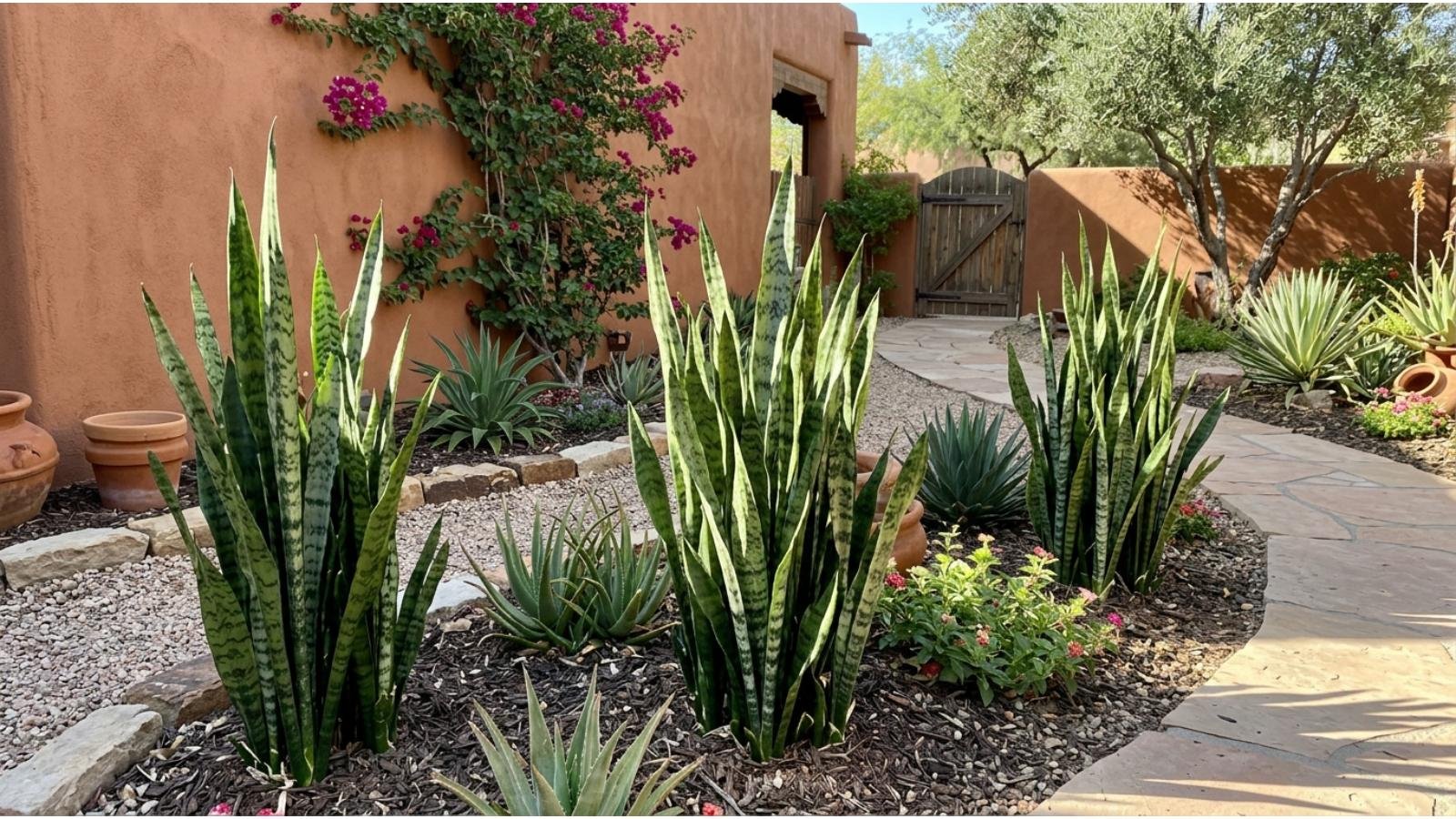
Choosing the correct location is one of the most important parts of snake plant care outdoors.
Snake plants tolerate different light levels, but outdoor sunlight can be much stronger than the light they receive indoors. A plant that has been sitting inside for months should not suddenly be placed under intense afternoon sunlight.
A sheltered location with bright filtered light is often an excellent starting point.
Good locations include:
- Under a lightly shaded patio
- Near a bright outdoor wall
- Beneath a tree with filtered light
- On a covered balcony
- In an area receiving gentle morning sun
What About Full Sun?
Established snake plants can tolerate considerable sunlight, but this does not mean every plant should immediately be placed in full sun.
If the plant has been growing indoors, gradually increase its outdoor light exposure.
Watch for:
- Bleached-looking leaves
- Brown patches
- Crispy leaf edges
- Pale sections
- Sudden discoloration
These signs can indicate that the plant is struggling with excessive or sudden sunlight exposure.
Image Suggestion: A healthy outdoor snake plant growing in bright filtered sunlight compared with a sun-scorched snake plant.
How to Acclimate a Snake Plant Outdoors
Acclimation is one of the most overlooked parts of outdoor plant care.
A snake plant growing indoors becomes accustomed to relatively low and consistent light. Outdoor sunlight can be dramatically more intense.
Instead of moving it directly into strong sunlight:
- Place the plant outdoors in bright shade.
- Keep it protected from intense afternoon sun initially.
- Give it gentle morning light.
- Gradually increase its exposure over several days.
- Watch the leaves for signs of stress.
- Reduce exposure if scorching appears.
This gradual transition gives the foliage time to adapt.
A plant that successfully tolerates strong sunlight outdoors may have developed that tolerance gradually. Another plant of the same species that has spent months indoors may react very differently.
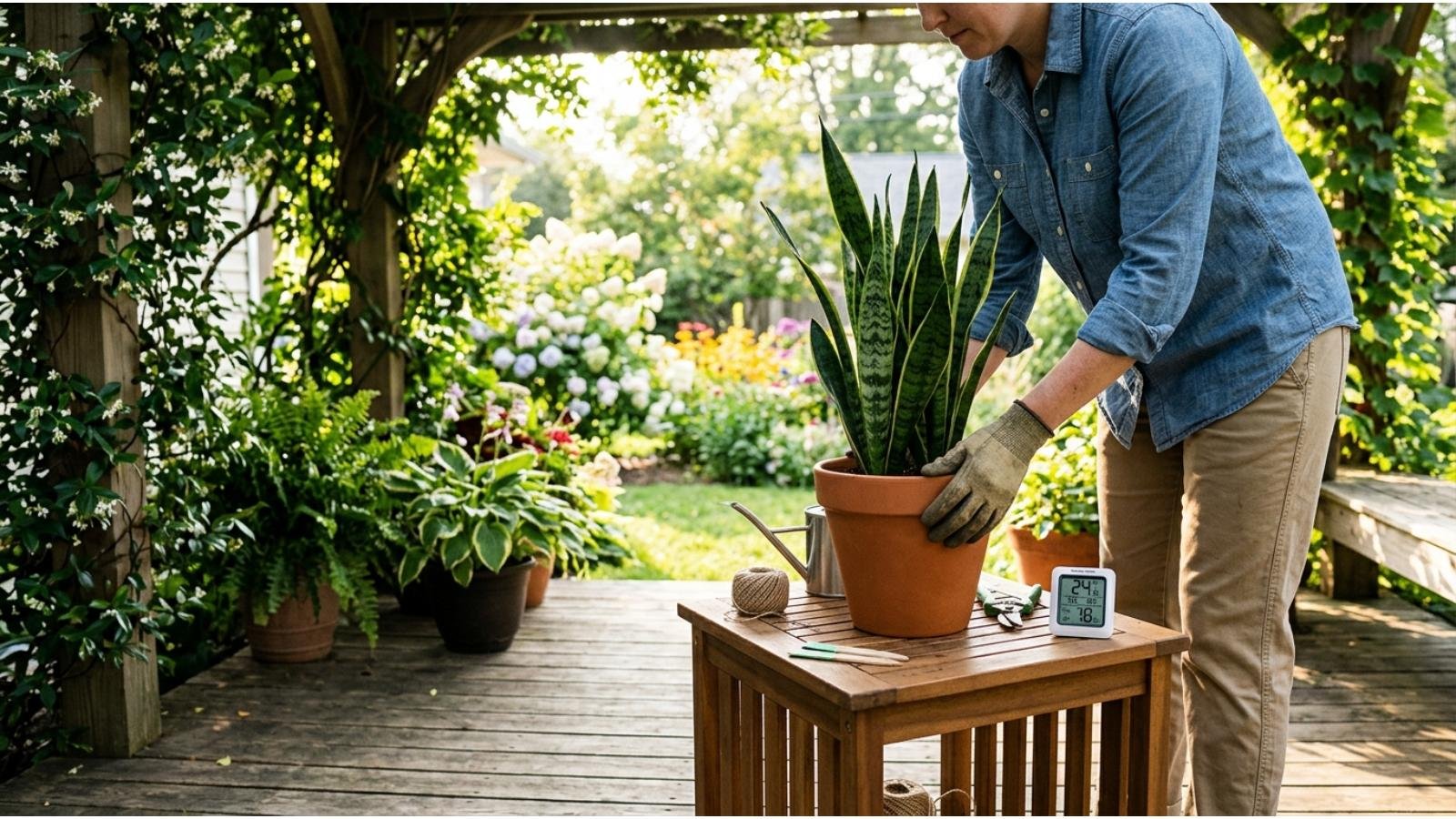
Best Soil for Outdoor Snake Plants
Fast-draining soil is essential.
Snake plants store water in their thick leaves and underground structures, so they do not need constantly moist soil. Their roots can suffer when the growing medium remains wet for extended periods.
For containers, use a loose, well-draining potting mix designed for succulents or similar drought-tolerant plants.
A suitable growing medium should:
- Drain excess water quickly
- Avoid becoming compacted
- Allow air around the roots
- Hold enough moisture for healthy growth without staying soggy
If planting directly in the ground, avoid areas where rainwater naturally collects.
Why Drainage Matters
Imagine two snake plants receiving the same amount of water.
The first grows in loose, well-draining soil. The second grows in heavy soil that stays wet for days.
Even though both plants received the same amount of water, the second plant is at greater risk because its roots remain surrounded by moisture for longer.
This is why drainage can be more important than simply counting how often you water.
How Often Should You Water a Snake Plant Outdoors?
There is no universal watering schedule for outdoor snake plants.
Instead, check the soil before watering.
Outdoor conditions can cause the soil to dry more quickly because of:
- Stronger light
- Higher temperatures
- Increased airflow
- Wind
- Smaller containers
However, rainfall can completely change the watering requirement.
Before watering, ask:
- Is the soil still damp?
- Has it rained recently?
- Is the container draining properly?
- Is water collecting underneath the pot?
- Has the weather been unusually humid or cool?
If the soil is still wet, wait.
When watering is necessary, water thoroughly and allow excess water to drain away.
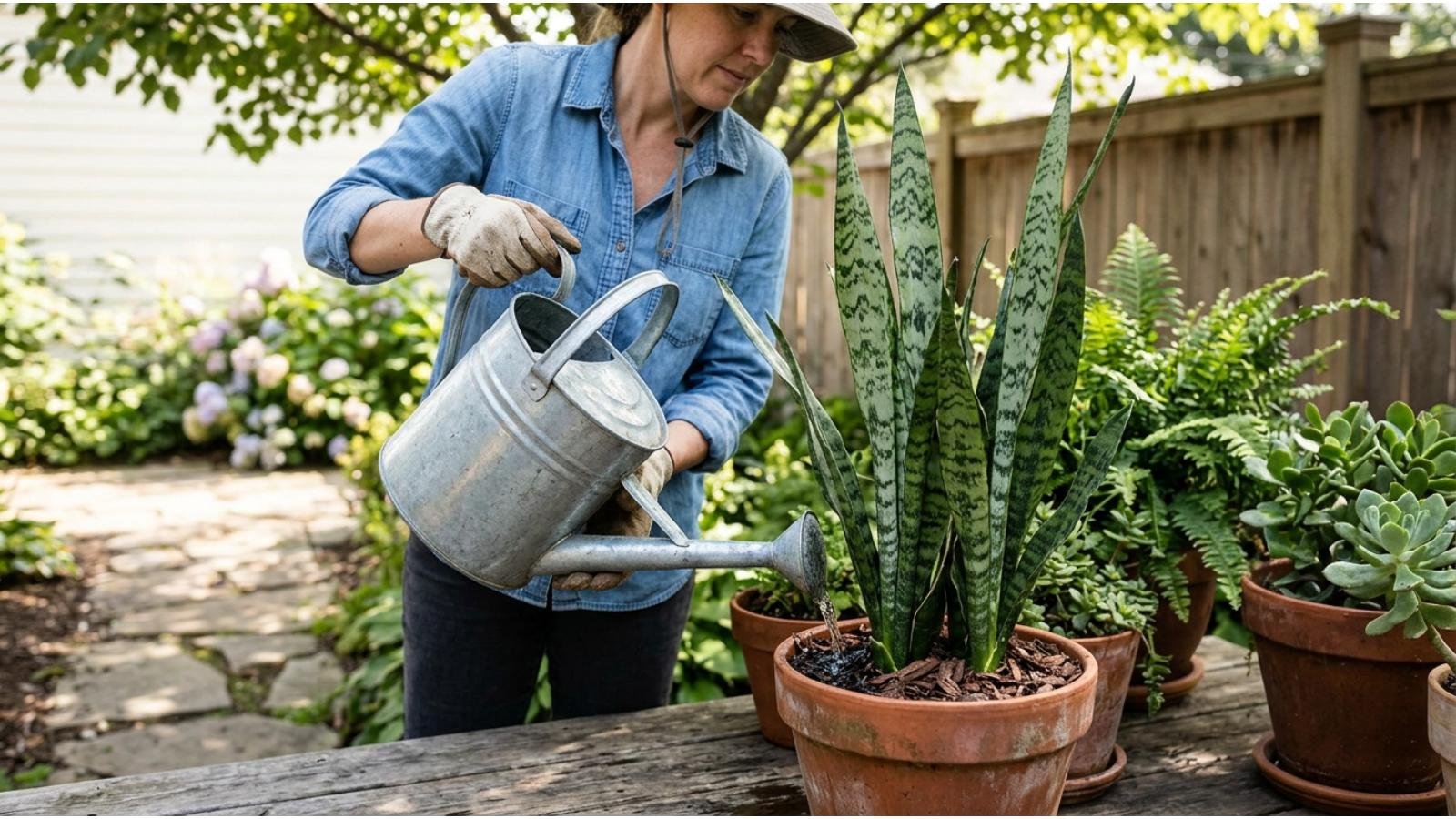
Snake Plant Care During Rainy Weather
Rain is one of the biggest differences between indoor and outdoor snake plant care.
If your plant is receiving regular rainfall, you may not need to water it manually.
During prolonged rainy periods, container-grown snake plants should ideally be placed somewhere sheltered, especially if the potting mix stays wet for several days.
Avoid leaving the container in a saucer filled with rainwater.
A simple rule is:
If nature is already watering the plant, check the soil before adding more water.
This prevents one of the most common outdoor snake plant problems: excessive moisture.
Image Suggestion: Snake plant growing beneath a covered patio while heavy rain falls outside.
Temperature Requirements
Temperature is another major consideration.
Snake plants prefer warm conditions and can be damaged by cold temperatures and frost.
Outdoor plants should be protected from:
- Frost
- Freezing temperatures
- Cold nights
- Sudden temperature drops
- Prolonged cold rain
If you grow your snake plant in a container, bring it indoors or move it into a warm, protected area before cold weather becomes severe.
Do not wait until frost has already damaged the foliage.
Snake Plant Care Outdoors in Hot Weather
Snake plants generally handle warm conditions well, but extreme heat can still create stress.
During very hot periods:
- Check the soil regularly.
- Protect recently acclimated plants from intense afternoon sun.
- Make sure the container has adequate drainage.
- Avoid placing plastic pots directly on extremely hot surfaces.
- Provide filtered shade during extreme heat if necessary.
Do not automatically water every day simply because temperatures are high.
Always check the soil first.
A hot day can increase evaporation, but watering frequency should still be based on actual moisture conditions around the roots.
Fertilizing Outdoor Snake Plants
Snake plants are relatively light feeders.
If your plant is actively growing outdoors, you can provide a balanced fertilizer at an appropriate dilution during the growing season.
Avoid excessive fertilization.
Giving a plant more fertilizer does not automatically make it healthier or faster growing. Too much fertilizer can create unnecessary stress and may contribute to salt buildup in the soil.
For most home gardeners, occasional feeding during active growth is enough.
Can You Plant a Snake Plant Directly in the Ground?
Yes, if your climate is warm enough and the soil drains well.
Ground planting can work particularly well in sheltered areas where the plant receives appropriate light and is protected from excessive rain.
However, container growing has an important advantage: mobility.
A container lets you:
- Move the plant away from heavy rain.
- Protect it from cold weather.
- Change its light exposure.
- Relocate it during extreme heat.
- Bring it indoors when necessary.
If your climate experiences cold winters, containers are usually easier to manage.
Choosing the Right Container
A snake plant container should always have drainage holes.
The container should be appropriately sized for the plant rather than dramatically oversized.
An excessively large pot can hold more wet soil than the roots can use, increasing the time it takes for the growing medium to dry.
Look for:
- Proper drainage holes
- A stable base
- Appropriate size
- Good-quality potting soil
- No standing water underneath
Terracotta containers can also be useful because they allow moisture to escape through the sides of the pot.
How to Know When Your Snake Plant Needs Repotting
Outdoor snake plants do not need frequent repotting.
Consider repotting when:
- Roots are tightly filling the container.
- Water runs straight through unusually quickly.
- The plant repeatedly becomes unstable.
- The container is clearly too small.
- The soil has deteriorated and no longer drains properly.
Avoid moving the plant into a dramatically larger pot simply because you want it to grow faster.
A slightly larger container is generally easier to manage than an oversized one.
Outdoor Snake Plant Care by Season
| Season | Main Concern | What to Do |
|---|---|---|
| Spring | Sudden sunlight | Acclimate gradually |
| Summer | Heat and intense light | Monitor soil and provide suitable shade |
| Rainy Season | Excess moisture | Reduce watering and improve protection |
| Autumn | Falling temperatures | Monitor nighttime conditions |
| Winter | Cold and wet soil | Move containers to a warm, protected area |
The exact timing depends on your local climate, so pay attention to actual weather conditions rather than relying only on calendar dates.
Common Outdoor Snake Plant Problems
Brown or Scorched Leaves
Sudden exposure to strong sunlight is one possible cause.
If the plant was recently moved outdoors, consider whether the light intensity changed dramatically.
Move it to filtered light and allow it to acclimate more gradually.
Soft or Mushy Leaves
Soft leaves can be a warning sign of excessive moisture or root problems.
Check the soil immediately.
If it remains wet for an extended period, improve drainage and reduce watering.
Yellow Leaves
Yellowing can have several causes, including excessive moisture, poor drainage, aging leaves, and environmental stress.
Do not automatically add fertilizer when leaves turn yellow.
First investigate the growing conditions.
Drooping or Leaning Leaves
Check:
- Soil moisture
- Light exposure
- Root condition
- Temperature
- Recent environmental changes
A sudden change in conditions can sometimes cause temporary stress.
Brown Leaf Tips
Brown tips may occur for several reasons.
Consider recent changes in watering, sunlight, temperature, humidity, and root conditions before deciding what needs to change.
Common Mistakes to Avoid
1. Moving an Indoor Plant Straight Into Full Sun
This can cause sudden leaf scorch.
Acclimate gradually instead.
2. Watering on a Fixed Schedule
Outdoor conditions change constantly.
Check the soil rather than watering simply because it is a particular day of the week.
3. Ignoring Rainfall
A plant receiving several days of rain may need no additional water.
4. Using Heavy Soil
Poorly draining soil can keep roots wet for too long.
5. Leaving the Pot in Standing Water
Always allow excess water to drain away.
6. Leaving the Plant Outdoors During Frost
Snake plants are not designed to withstand freezing conditions.
Move container plants into protection before severe cold arrives.
7. Fertilizing Too Frequently
Snake plants do not require heavy feeding.
More fertilizer is not necessarily better.
How to Move a Snake Plant Back Indoors
When outdoor temperatures begin dropping, move the plant indoors before cold conditions become severe.
Before bringing it inside:
- Inspect the foliage carefully.
- Look for insects or other pests.
- Remove dead or damaged leaves.
- Check the soil moisture.
- Clean excess dirt from the outside of the container.
- Place the plant somewhere with suitable indoor light.
- Adjust watering based on the new indoor conditions.
Do not continue watering at the same frequency used outdoors.
Indoor conditions usually have different light, airflow, temperature, and evaporation rates.
Does Outdoor Light Make Snake Plants Grow Faster?
Appropriate outdoor light can support stronger growth, especially when the plant receives enough warmth and has healthy roots.
However, more sunlight is not automatically better.
The goal is to provide enough light for healthy growth without exposing the foliage to unnecessary stress.
Bright filtered light can be an excellent compromise for plants transitioning from indoor conditions.
Can Snake Plants Survive Heavy Rain?
Occasional rain is generally manageable when the plant has excellent drainage.
The bigger problem is prolonged moisture.
If heavy rain is expected for several days, move a container-grown snake plant into a sheltered location.
For plants growing directly in the ground, choose raised or naturally well-draining areas rather than low spots where water collects.
A Simple Outdoor Care Routine
You do not need a complicated schedule to maintain an outdoor snake plant.
Check the plant regularly
Look at the leaves and soil, particularly after unusual weather.
Check before watering
Do not water automatically. Test the soil first.
Watch sunlight
Pay attention to leaf color and scorching after changing the plant’s location.
Monitor rainfall
Reduce manual watering when the weather is already providing sufficient moisture.
Prepare for temperature changes
Move container plants before cold or freezing weather arrives.
This simple routine is usually more useful than following a rigid watering calendar.
Frequently Asked Questions
Can snake plants live outside all year?
They can live outdoors year-round in suitable warm, frost-free climates. In colder regions, they should be protected from freezing temperatures and prolonged cold weather.
Do snake plants like full sun outdoors?
They can tolerate significant sunlight, but plants moved from indoor conditions should be introduced to strong sunlight gradually. Bright filtered light is a safer starting point.
How often should I water an outdoor snake plant?
Water when the soil has dried sufficiently. The exact frequency depends on temperature, rainfall, soil, container size, and light conditions.
Can snake plants tolerate rain?
They can tolerate occasional rain when drainage is good. Continuous wet soil is much more concerning than occasional rainfall.
What is the best soil for an outdoor snake plant?
Use a loose, fast-draining growing medium. Avoid heavy soil that remains wet for long periods.
Can snake plants survive winter outdoors?
They can remain outdoors only in climates that stay sufficiently warm and frost-free. Container plants should be moved into protection when cold conditions arrive.
Why are my outdoor snake plant leaves turning brown?
Possible causes include excessive sunlight, watering problems, poor drainage, temperature stress, or physical damage. Look at recent environmental changes to identify the likely cause.
Can I grow a snake plant in the ground?
Yes, provided the climate is warm enough and the soil drains well. Container growing is preferable when the plant needs seasonal protection.
Should I fertilize a snake plant growing outdoors?
Light feeding during active growth can be beneficial, but snake plants generally do not require frequent fertilization.
Can I leave my snake plant outside during heavy rain?
It is better to provide shelter during prolonged heavy rainfall, especially when the container drains slowly or the soil remains wet for several days.
Final Takeaways
Successful snake plant care outdoors comes down to four essentials: appropriate light, well-draining soil, careful watering, and protection from temperature extremes.
Start by choosing a bright but sheltered location. If the plant has been indoors, acclimate it gradually instead of exposing it immediately to intense sunlight. Water only when the soil has dried sufficiently, and pay close attention to rainfall.
Most importantly, remember that a snake plant’s reputation for toughness does not mean it can tolerate permanently wet soil, freezing temperatures, or sudden environmental changes.
With the right location and a simple care routine, a snake plant can become a low-maintenance and attractive addition to an outdoor patio, balcony, container garden, or suitable warm-climate landscape.