Quick Answer
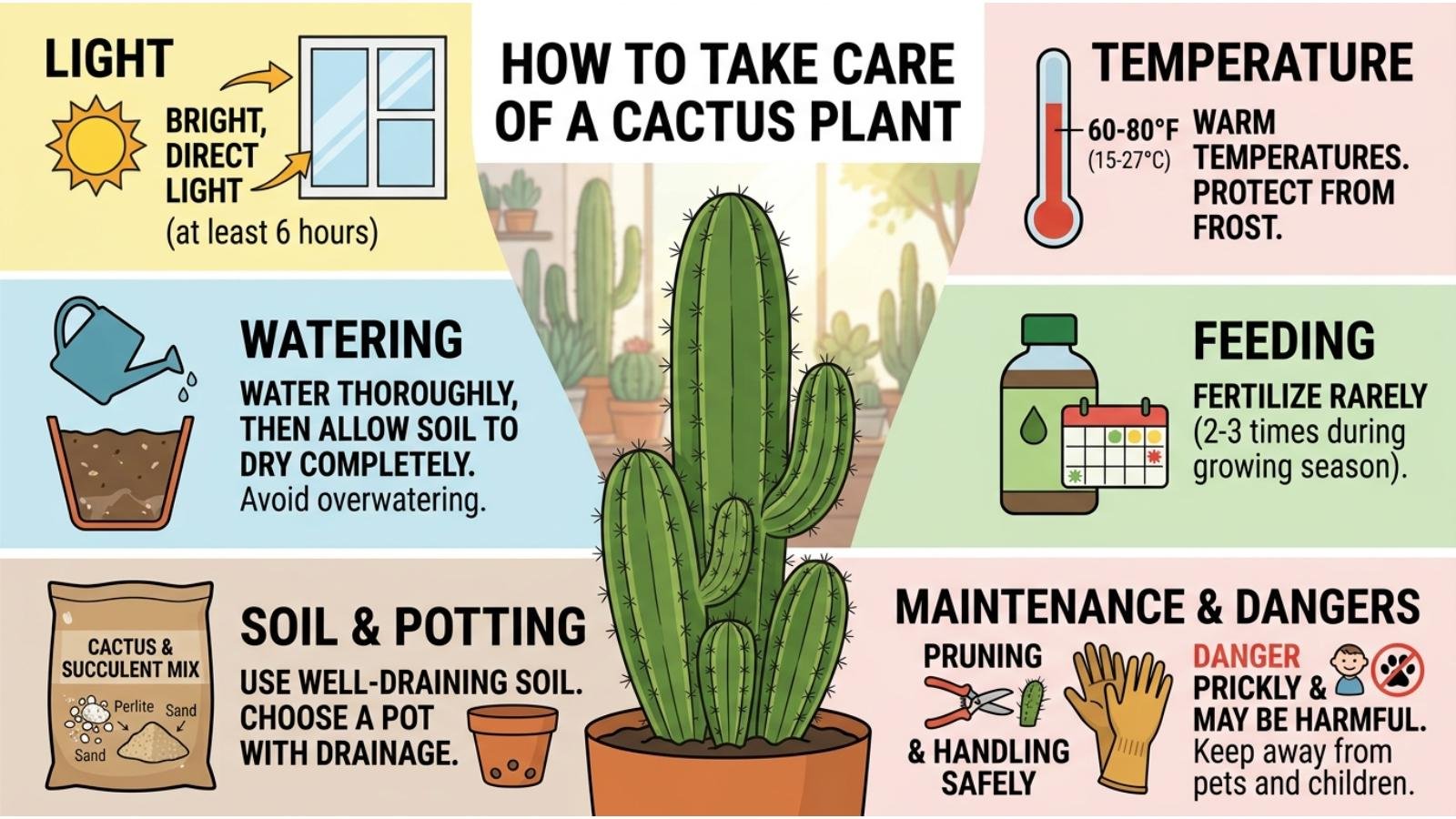
To take care of a cactus plant, provide plenty of bright light, use fast-draining soil, water deeply only after the soil has dried completely, and make sure the pot has drainage holes.
Keep the cactus in a warm location with good airflow, fertilize lightly during active growth, and reduce watering during winter. The biggest mistake is usually watering too often, not too little.
Introduction
Learning how to take care of a cactus plant is relatively simple, but cactus care is different from caring for most common houseplants. These plants are adapted to environments where water can be scarce, sunlight is strong, and the soil drains quickly.
The most important principle is to let the soil dry thoroughly between waterings. A cactus may tolerate temporary dryness much better than constantly wet roots. If your cactus is becoming soft, yellow, brown, or unusually thin, the problem may not be a lack of water—it could be poor drainage, insufficient light, or watering too frequently.
With the right combination of light, soil, watering, temperature, and seasonal care, a cactus can remain healthy for many years.
Understanding What a Cactus Needs
Cacti are succulents that store water in their stems, allowing them to survive periods of drought. Their thick stems and specialized structures help minimize water loss.
This adaptation explains why cactus care is often misunderstood.
A cactus does not need frequent small amounts of water simply because its soil looks dry on the surface. Instead, it generally benefits from a thorough watering followed by a sufficiently long drying period.
The exact care routine depends on the cactus species, pot size, soil, temperature, humidity, and amount of sunlight.
How Much Light Does a Cactus Need?
Most cacti prefer bright light and several hours of direct sunlight each day.
A sunny window can work well indoors, particularly one that receives strong sunlight for much of the day. However, a cactus that has been growing in low light should not suddenly be placed in intense direct sunlight for hours.
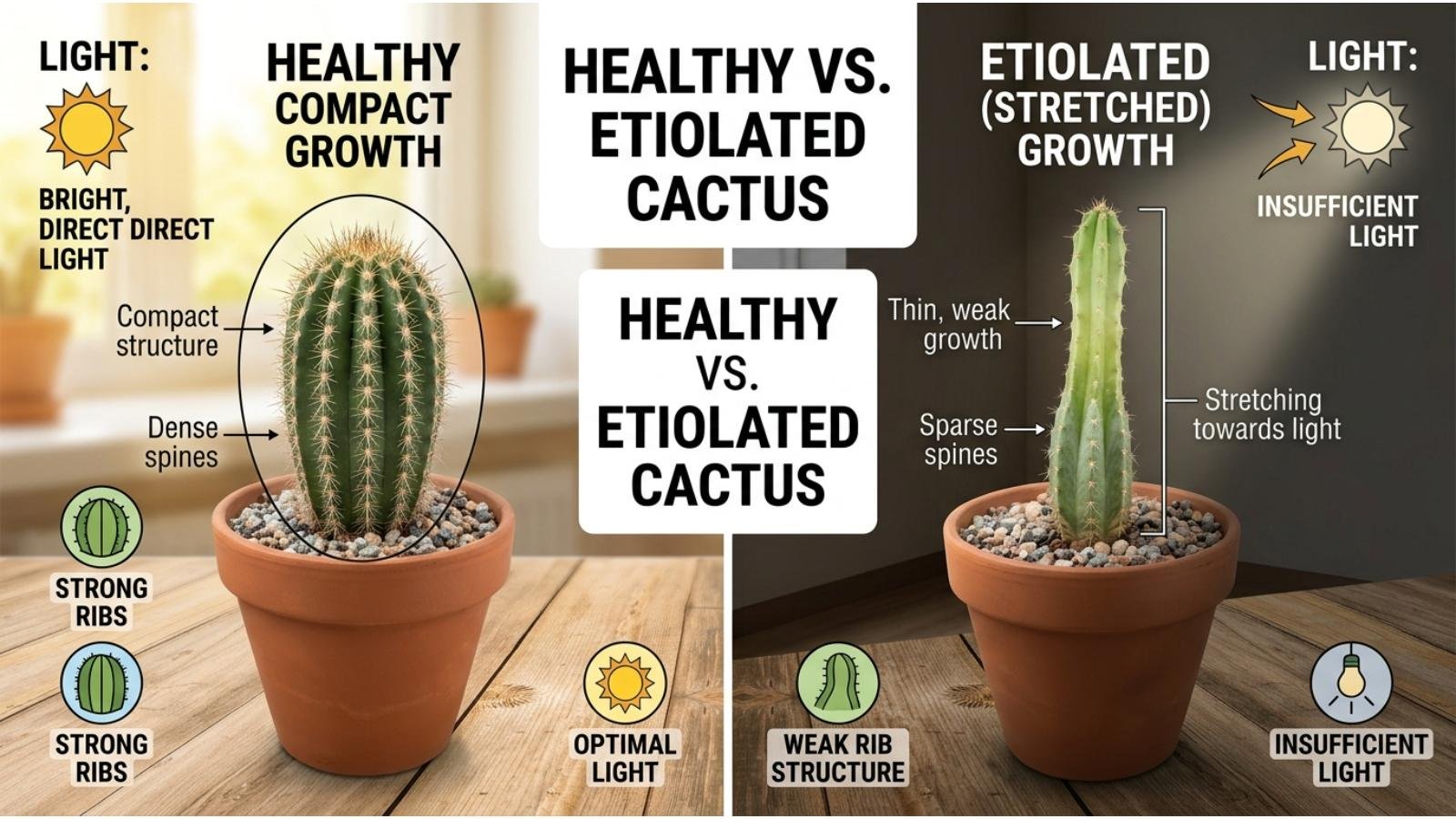
Signs your cactus needs more light
- It becomes tall and stretched.
- New growth appears unusually thin.
- The plant leans strongly toward a window.
- Its normal shape becomes distorted.
- Growth becomes weak or sparse.
This stretching is called etiolation. Once a cactus has stretched because of insufficient light, the distorted growth generally does not return to its original shape.
How to increase sunlight safely
If your cactus has been kept in a relatively dark location:
- Move it closer to a bright window.
- Begin with limited direct sunlight.
- Gradually increase exposure over several days or weeks.
- Watch for signs of sun stress.
- Rotate the pot occasionally for more even growth.
The Right Way to Water a Cactus
Watering is probably the most important part of learning how to take care of a cactus plant.
Instead of following a rigid calendar, check the growing conditions and soil moisture.
When the soil is completely dry, water the cactus thoroughly until water begins draining from the bottom of the pot. Then empty excess water from the saucer or outer container.
Do not give a cactus just a few drops every couple of days. Small, frequent watering can keep parts of the root zone repeatedly damp without properly soaking the entire root system.
A simple watering method
- Check the soil several inches below the surface.
- Make sure it is completely dry before watering.
- Slowly water around the soil.
- Continue until excess water drains from the bottom.
- Allow the pot to drain completely.
- Wait until the soil dries again before watering.
How often should you water a cactus?
There is no universal schedule.
During warm, bright growing conditions, a cactus may need water more frequently than during winter. A cactus growing in a small pot in strong sunlight may also dry much faster than one growing in a large container in a cool room.
The condition of the soil matters more than the number of days since the last watering.
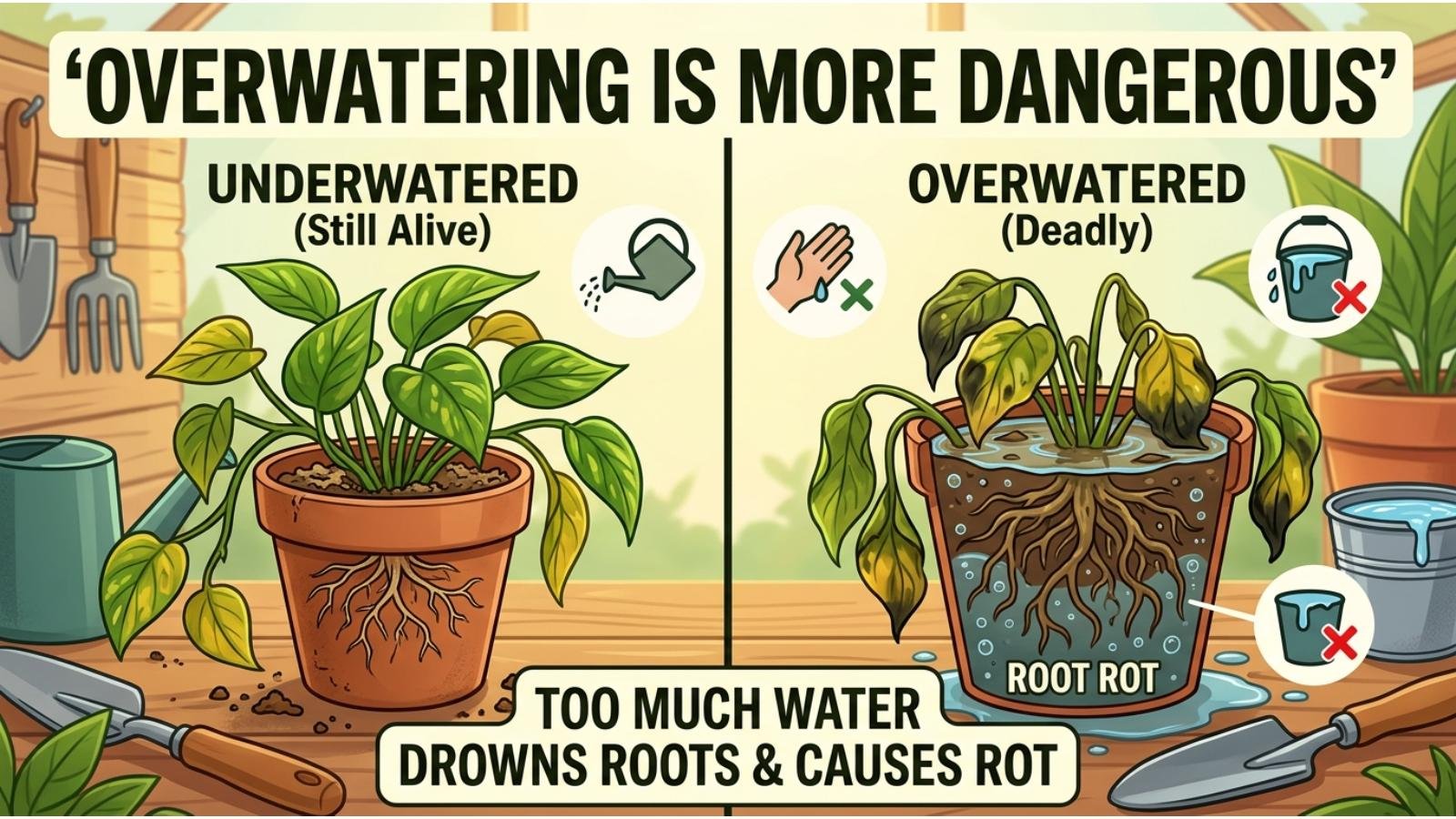
Why Overwatering Is More Dangerous Than Underwatering
Many beginners assume that a cactus should be watered whenever it appears slightly dry. This can create a serious problem.
Cactus roots need access to air as well as moisture. When soil remains wet for long periods, the roots may become damaged and susceptible to rot.
Possible warning signs include:
- Soft or mushy tissue.
- Yellowing or discoloration.
- A darkened base.
- A foul smell from the soil.
- Sudden collapse.
- Plant tissue becoming unusually swollen or weak.
A shriveled cactus, on the other hand, may simply be experiencing prolonged dryness.
The key is to distinguish dehydration from root problems rather than automatically adding more water.
Choosing the Best Soil for a Cactus
Cactus soil should drain quickly and should not remain wet for long periods.
A heavy garden soil that holds large amounts of moisture is generally unsuitable for container-grown cacti. A specialized cactus or succulent mix can be useful, particularly when combined with additional mineral material if the mix stays wet for too long.
Good cactus soil should:
- Drain rapidly.
- Provide enough air around the roots.
- Avoid becoming compacted.
- Dry reasonably quickly after watering.
- Provide physical support for the plant.
Why drainage matters
Even excellent watering habits cannot compensate for soil that stays saturated for too long.
Think of cactus care as a system:
Water + soil + drainage + pot + environment = root health.
Changing only one factor may not solve the problem if the other conditions remain unsuitable.
Choose a Pot With Drainage Holes
A drainage hole is one of the simplest ways to reduce watering problems.
The container should allow excess water to escape freely. Decorative pots without drainage can be used as outer containers, but the cactus should ideally remain in a suitable inner pot where excess water can drain.
Avoid oversized pots
A very large container holds more soil, and more soil can retain moisture around the roots for longer.
A pot that is appropriately sized for the root system generally makes moisture management easier.
Image Suggestion: Cactus planted in a drainage pot versus cactus sitting directly in a container without drainage.
When Should You Repot a Cactus?
A cactus does not need frequent repotting.
Consider repotting when:
- Roots are growing through drainage holes.
- The plant has become unstable.
- The soil has broken down or drains poorly.
- The container is clearly too small.
- You need to address a root problem.
Choose a pot only slightly larger than the existing root system rather than dramatically increasing the container size.
Repotting steps
- Prepare a suitable container with drainage.
- Use fresh, well-draining soil.
- Carefully remove the cactus from its old pot.
- Inspect the roots for obvious damage.
- Remove unsuitable old soil where appropriate.
- Position the plant at a similar depth.
- Fill around the roots without compacting the soil excessively.
- Allow the plant to settle before returning to its normal watering routine.
Use thick gloves, folded cardboard, tongs designed for plant handling, or another safe method when working with spiny varieties.
What Temperature Is Best for Cactus Plants?
Most commonly grown cacti prefer warm conditions during active growth.
They generally perform well when protected from:
- Freezing temperatures.
- Sudden temperature changes.
- Cold, constantly wet conditions.
- Poorly ventilated spaces.
Temperature requirements vary significantly between cactus species, so species-specific information is particularly useful when growing unusual or less common varieties.
Indoor cacti should also be kept away from extremely hot surfaces such as radiators or heating vents.
Do Cacti Need Humidity?
Most cacti do not require high humidity indoors.
Good airflow can be more useful than artificially increasing humidity, particularly when the soil is already staying wet for extended periods.
Avoid placing a cactus in a poorly ventilated, constantly damp location.
A bright, well-ventilated environment combined with appropriately dry soil generally creates better conditions than an overly humid space.
Should You Fertilize a Cactus?
Cacti can benefit from fertilizer during periods of active growth, but heavy feeding is unnecessary.
Use a fertilizer intended for cacti or succulents and follow its dilution instructions. Applying fertilizer to dry, stressed, or dormant plants can be counterproductive.
A practical approach is to:
- Fertilize during active growth.
- Use a diluted application rather than excessive amounts.
- Avoid frequent heavy feeding.
- Reduce or stop fertilizing during dormancy.
Too much fertilizer can contribute to weak or unnatural growth and may cause salt accumulation in the soil.
Cactus Care During Winter
Winter often requires a different routine.
Because indoor light levels can decrease and growth may slow, your cactus may use less water than it does during warmer, brighter months.
Winter care checklist
- Provide as much suitable light as possible.
- Water less frequently when growth slows.
- Avoid keeping the soil continuously damp.
- Protect the plant from freezing temperatures.
- Avoid unnecessary fertilization.
- Maintain reasonable airflow.
The exact winter routine depends on the species and the temperature of your growing environment.
How to Tell if Your Cactus Is Healthy
A healthy cactus should generally have firm tissue and a shape appropriate for its species.
Look for:
- Firm stems.
- Stable growth.
- Healthy-looking new growth.
- Normal coloration for the species.
- Roots that are not constantly wet.
- No unexplained soft or collapsing areas.
Remember that different cactus species naturally have different colors, textures, ribs, spines, and growth habits. Do not treat every visual difference as a disease.
Common Cactus Problems and What They Mean
| Problem | Possible Cause | What to Check |
|---|---|---|
| Soft or mushy base | Excess moisture or root problems | Soil, drainage, roots |
| Wrinkled plant | Prolonged dryness or root damage | Soil moisture and roots |
| Stretched growth | Insufficient light | Light exposure |
| Yellowing | Several possible causes | Watering, roots, light |
| Brown damaged patches | Sun stress, injury, or other problems | Recent environmental changes |
| Slow growth | Low light, dormancy, species traits | Season and growing conditions |
| Plant leaning | Uneven light or weak growth | Light direction |
| Soil staying wet | Poor drainage or oversized pot | Soil and container |
These symptoms can overlap, so avoid treating a symptom automatically without checking the plant’s growing conditions.
What to Do if Your Cactus Is Shriveling
A wrinkled cactus is not always an emergency.
First check the soil.
If the soil is completely dry
The plant may need water. Give it a thorough watering and allow excess water to drain away.
If the soil is already wet
Do not automatically add more water.
Persistent moisture combined with shriveling can indicate that the roots are not functioning properly. Inspect the drainage and, if necessary, examine the roots.
This distinction is especially important because adding more water to a plant suffering from root damage can make the underlying problem worse.
What to Do if a Cactus Is Turning Soft
Softness is more concerning than ordinary wrinkling.
Check:
- How wet the soil is.
- Whether the container drains.
- Whether the base is soft.
- Whether there is discoloration.
- Whether the roots appear healthy.
If rot is suspected, the plant may need to be removed from its container and inspected. Healthy tissue and damaged tissue must be distinguished carefully, and severely affected plants may not be recoverable.
Avoid repeatedly watering a soft cactus simply because it looks dehydrated.
Can You Grow a Cactus Indoors?
Yes. Many cacti grow successfully indoors when they receive adequate light.
The biggest indoor challenge is usually insufficient sunlight combined with excessive watering.
A cactus sitting several feet from a bright window may receive much less usable light than it appears to receive. Indoor conditions can also cause soil to dry more slowly than expected.
For indoor cactus care, pay particular attention to:
- Window placement.
- Seasonal light changes.
- Pot drainage.
- Soil drying time.
- Air circulation.
- Watering frequency.
Cactus Care in Different Seasons
Spring
As light and temperatures increase, many cacti begin active growth. Gradually adjust watering as the plant begins using more moisture.
Summer
Strong light and warm temperatures can increase water use. Check the soil regularly, but never water simply because it is a particular day of the week.
Fall
Growth may begin slowing. Gradually reduce watering according to temperature, light, and the plant’s activity.
Winter
Many cacti require significantly less water during dormancy or slower growth. Bright light and appropriate temperatures remain important.
Image Suggestion: Four-season cactus care infographic showing changes in light, watering, and fertilizing.
10 Common Cactus Care Mistakes
1. Watering on a Fixed Schedule
A calendar cannot account for changes in temperature, sunlight, soil, and pot size.
2. Using a Pot Without Drainage
Excess water has nowhere to escape, increasing the risk of root problems.
3. Keeping the Cactus in Low Light
Insufficient light can lead to stretched and weak growth.
4. Using Heavy Soil
Slow-draining soil can stay wet longer than cactus roots prefer.
5. Choosing a Huge Pot
Extra soil can retain moisture around a relatively small root system.
6. Giving Tiny Amounts of Water Frequently
This can create an inconsistent moisture pattern and prevent the soil from properly drying.
7. Fertilizing Too Much
Cacti generally need less fertilizer than many fast-growing houseplants.
8. Moving a Low-Light Cactus Into Harsh Sun Suddenly
A sudden environmental change can cause sun damage.
9. Ignoring Seasonal Changes
A cactus may use much less water during cool, dark periods.
10. Treating Every Wrinkle as a Need for Water
Wrinkling can result from dehydration, but it can also occur when roots have been damaged and cannot absorb water effectively.
A Simple Cactus Care Routine
If you want an easy routine, use this checklist:
Every few days:
Check the plant for obvious changes, pests, damage, or unusual softness.
Before watering:
Check whether the soil has dried completely.
When watering:
Water thoroughly and allow the container to drain.
Every few weeks:
Check the light exposure and make sure the cactus is not becoming stretched or leaning excessively.
During active growth:
Consider occasional diluted cactus fertilizer when appropriate.
During winter or dormancy:
Reduce watering according to the plant’s environment and growth rate.
This approach is more reliable than blindly following a weekly watering schedule.
Cactus Care Checklist
| Care Factor | What to Aim For |
|---|---|
| Light | Bright light, with direct sun for many species |
| Soil | Fast-draining cactus or succulent mix |
| Water | Thoroughly when soil is completely dry |
| Pot | Container with drainage holes |
| Temperature | Warm conditions suited to the species |
| Humidity | Generally moderate to low |
| Fertilizer | Light feeding during active growth |
| Repotting | Only when genuinely needed |
| Winter | Less water when growth slows |
| Airflow | Good circulation without harsh drafts |
Frequently Asked Questions
How often should I water a cactus?
Watering frequency depends on the species and environment. Wait until the soil has dried completely, then water thoroughly and allow excess water to drain.
How do I know when my cactus needs water?
Check the soil rather than relying only on appearance. A significantly wrinkled cactus combined with completely dry soil may indicate dehydration, but wrinkles can have other causes.
Can a cactus get too much sunlight?
Yes. Although many cacti love strong light, a plant that has been growing in low light can suffer damage if suddenly exposed to intense direct sun.
Why is my cactus growing tall and skinny?
Insufficient light is a common cause. The plant stretches toward available light, producing elongated growth.
Can I keep a cactus in a bathroom?
It depends on the bathroom. A bright, well-ventilated bathroom may work, but a dark and constantly humid bathroom is generally less suitable.
Should I mist my cactus?
Routine misting is usually unnecessary. Proper soil moisture and good drainage are more important for most cactus plants.
Does cactus soil need fertilizer?
Cacti can benefit from occasional, appropriately diluted fertilizer during active growth, but excessive feeding is unnecessary.
Why is my cactus turning yellow?
Yellowing can have multiple causes, including watering problems, root stress, environmental changes, or natural aging. Check the soil, drainage, light, and overall condition before changing the care routine.
Should I water a cactus in winter?
Many cacti need much less water during winter, particularly when temperatures are cooler and growth slows. The correct amount depends on the species and growing conditions.
How long can a cactus survive without water?
There is no single answer. Cacti differ greatly in their water-storage capacity and environmental requirements. Avoid using a fixed number of days as a universal rule; monitor the plant and its soil instead.
Final Takeaway
The easiest way to remember how to take care of a cactus plant is to focus on the balance between light, drainage, and watering. Give the plant enough suitable light, grow it in fast-draining soil, use a container with drainage, and let the soil dry thoroughly before watering again.
Most cactus problems are not caused by forgetting to water for a few days. They are more often connected to unsuitable light, poor drainage, or moisture that remains around the roots for too long. Once you learn to observe the soil and the plant instead of following a rigid schedule, cactus care becomes much easier and more predictable.