Quick Answer
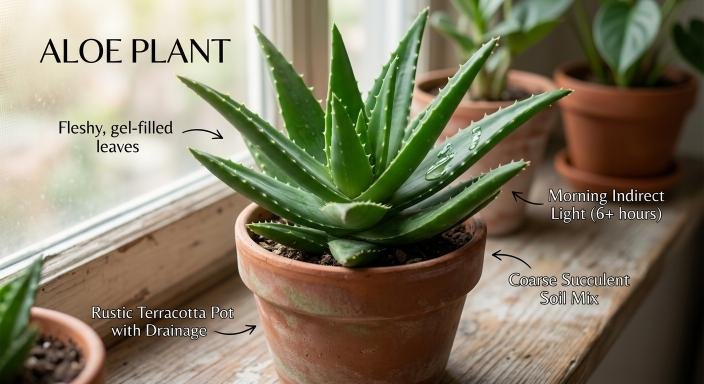
Aloe plant care is mainly about providing bright light, fast-draining soil, and careful watering. Let the soil dry thoroughly between waterings, and never allow the plant to sit in standing water.
Use a pot with drainage holes and avoid heavy, moisture-retaining soil. Aloe generally grows best with several hours of bright light each day, moderate temperatures, and minimal feeding. Most problems come from overwatering, poor drainage, or insufficient light.
Introduction
Aloe plants are popular because they can tolerate periods of dryness and require less maintenance than many tropical houseplants. However, their reputation for being nearly impossible to kill can lead to one of the most common mistakes in aloe plant care: watering too frequently.
Aloe stores water in its thick, fleshy leaves. That means it does not need consistently moist soil. In fact, keeping the roots wet for too long can cause root rot, soft leaves, discoloration, and eventually plant loss.
Successful aloe care is less about doing more and more about getting a few important conditions right. Give your aloe enough light, use soil that drains quickly, water deeply but infrequently, and pay attention to changes in the leaves.
Understanding How Aloe Grows
Aloe is a succulent, which means it has specialized tissues that store water. Its thick leaves allow it to survive periods when water is unavailable.
This water-storage ability affects nearly every part of its care routine.
Unlike plants that need frequent watering to maintain thin leaves, aloe can remain healthy while its growing medium dries between waterings. The roots need access to oxygen as well as moisture, so constantly wet soil creates an unfavorable environment.
A healthy aloe commonly has:
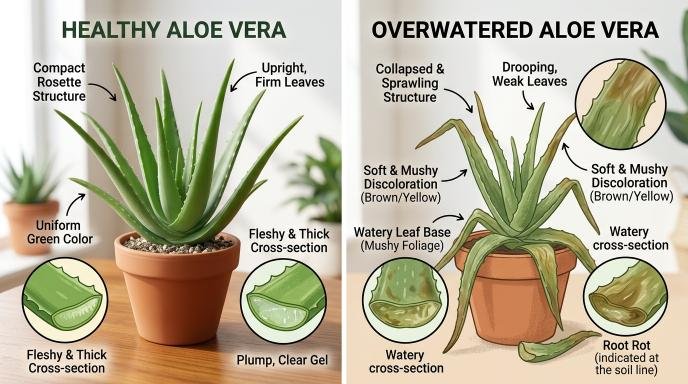
- Thick, firm leaves.
- Upright or gently arching growth.
- Green to blue-green foliage depending on the variety and conditions.
- A compact rosette shape.
- Firm roots without a persistent soggy smell or appearance.
How Much Light Does an Aloe Plant Need?
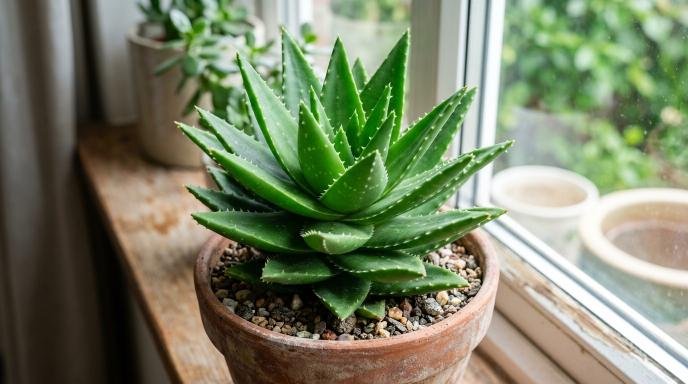
Aloe generally performs best in bright light, with several hours of direct sunlight tolerated by established plants when they are acclimated gradually.
Light is especially important indoors because a room that appears bright to people may provide considerably less usable light than an outdoor location.
The best indoor location
Place aloe near a bright:
- South-facing window.
- West-facing window.
- East-facing window.
A very bright window with filtered afternoon sunlight can also work well.
If your aloe receives too little light, you may notice:
- Long, stretched growth.
- Leaves spreading outward instead of remaining compact.
- Pale or less vibrant foliage.
- Slow growth.
- A plant leaning toward the window.
Avoid sudden changes in sunlight
One overlooked part of aloe plant care is acclimation.
An aloe that has been growing indoors in moderate light can become stressed if it is suddenly placed in strong outdoor sunlight. Move it into brighter conditions gradually over several days or weeks.
This reduces the chance of sun stress and leaf scorching.
Practical Tip: Rotate an indoor aloe occasionally so one side does not permanently lean toward the strongest light source.
How Often Should You Water an Aloe Plant?
Water aloe when the soil has dried thoroughly rather than following a rigid calendar.
The exact interval depends on light, temperature, pot size, soil, humidity, and season.
A plant growing in bright light and warm conditions may use water considerably faster than one growing in a cool, dim room.
The correct watering method
When the soil is dry:
- Water the soil thoroughly.
- Allow excess water to drain from the bottom of the pot.
- Empty any water collected in a saucer or outer container.
- Wait until the soil dries substantially before watering again.
Avoid giving tiny amounts of water every few days. Light surface watering can encourage an inconsistent moisture pattern while leaving deeper portions of the root zone wet.
How to tell when aloe needs water
Do not rely on the calendar alone. Instead, check the growing medium.
Push a finger several inches into the soil or use another method to assess moisture deeper in the pot.
Signs that may indicate the plant needs water include:
- Dry soil.
- Leaves becoming slightly less firm.
- Leaves beginning to look thinner than usual.
A slightly thirsty aloe is usually easier to recover than an aloe suffering from prolonged wet soil.
Why Overwatering Is So Dangerous
Overwatering does not simply mean giving a plant too much water once.
The bigger problem is watering again before the root zone has had enough time to dry.
When soil remains wet for extended periods, roots can become damaged and may eventually rot. Once significant root damage occurs, the plant may show symptoms above the soil even though the original problem began underground.
Common signs of excessive moisture include:
- Soft or mushy leaves.
- Yellowing foliage.
- Brown or dark areas.
- A collapsing center.
- A foul-smelling root system.
- Leaves that detach unusually easily.
What Soil Is Best for Aloe?
Aloe needs a growing medium that drains quickly.
Regular garden soil or a heavy houseplant mix can retain too much moisture when used alone, particularly in containers without excellent drainage.
A suitable aloe growing medium should:
- Drain excess water quickly.
- Provide enough air around the roots.
- Avoid remaining saturated for long periods.
- Remain stable enough to support the plant.
A commercial succulent or cactus mix can be a convenient starting point. Depending on the mix, additional mineral material such as coarse perlite or pumice may improve drainage.
The goal is not simply to make soil dry instantly. The goal is to create a balance where the plant receives water while excess moisture can escape.
Choosing the Right Pot for Aloe
The pot is just as important as the soil.
Always choose a container with at least one functional drainage hole.
A decorative container without drainage can trap excess water around the roots, even when the soil itself is reasonably well drained.
Should an aloe pot be large?
Usually, no.
An oversized container holds more soil than the plant needs, and that extra soil can remain wet longer after watering.
Choose a pot that provides enough room for the existing root system with some space for growth, rather than immediately moving a small aloe into a very large container.
Terracotta pots can also be useful because their porous sides allow some moisture to escape.
How to Repot an Aloe Plant
Repotting is useful when the plant has outgrown its container, the growing medium has deteriorated, drainage has become poor, or the root system needs inspection.
Step-by-step aloe repotting
- Choose a container only slightly larger than the current one.
- Make sure the new pot has drainage holes.
- Prepare a fast-draining succulent growing medium.
- Remove the aloe carefully without unnecessarily damaging the roots.
- Inspect the root system for obvious signs of rot or damage.
- Place fresh growing medium in the new container.
- Position the plant so the base of the leaves is not buried deeply.
- Fill around the roots with the new medium.
- Allow the plant to settle before returning to its normal watering routine.
Avoid burying the central crown of the aloe. Persistent moisture around the crown can increase the risk of rot.
How to Fertilize Aloe
Aloe generally does not require heavy feeding.
Excessive fertilizer can create unnecessary stress and may contribute to weak or abnormal growth.
During active growth, a diluted fertilizer formulated for succulents can be used according to the product’s directions.
A practical approach is to prioritize:
- Adequate light.
- Proper drainage.
- Appropriate watering.
- Suitable soil.
- Fertilization only when useful.
Fertilizer cannot compensate for poor light or constantly wet soil.
Aloe Plant Care in Different Seasons
Aloe’s water requirements can change throughout the year.
Spring
Spring often brings renewed growth.
As light and temperatures increase, monitor the soil more closely. Your aloe may begin using water faster than it did during winter.
Summer
Aloe may need more frequent watering during hot, bright conditions, particularly when grown outdoors.
However, increased heat does not automatically mean you should water on a fixed schedule. Check the soil first.
Fall
Growth may gradually slow as light levels decrease.
Begin adjusting your watering routine rather than continuing a summer schedule automatically.
Winter
Indoor aloe often needs less water during winter because growth slows and evaporation can decrease.
A common mistake is maintaining the same watering schedule year-round. In a cool, dim room, soil can remain wet for much longer.
Can Aloe Grow Outdoors?
Yes, aloe can grow outdoors in suitable climates.
Outdoor plants may benefit from stronger light and better airflow, but they also face greater exposure to rain, temperature changes, and intense sunlight.
If your climate experiences cold or freezing conditions, protect the plant appropriately or bring container-grown aloe indoors.
Outdoor aloe should be positioned where:
- The soil drains rapidly.
- Water does not collect around the roots.
- The plant receives appropriate light.
- Extreme cold is avoided.
- Sudden changes in sun exposure are minimized.
Why Are My Aloe Leaves Turning Brown?
Brown aloe leaves can have several causes, so the pattern matters.
Brown, dry leaf tips
Possible causes include:
- Underwatering.
- Very dry conditions.
- Excessive fertilizer.
- Environmental stress.
- Physical damage.
Brown, soft, or mushy leaves
This is more concerning for excessive moisture or rot.
Check the soil and roots rather than simply adding more water.
Brown patches after moving outdoors
Sudden exposure to intense sunlight can cause sun stress, particularly when the plant was previously growing indoors.
Gradual acclimation can help prevent this problem.
Why Is My Aloe Plant Turning Yellow?
Yellow leaves can occur for several reasons, but consistently wet soil is one of the first things to investigate.
Check:
- How frequently you are watering.
- Whether the soil is drying between waterings.
- Whether the pot has drainage holes.
- Whether the container is excessively large.
- Whether roots appear healthy.
- Whether the plant is receiving adequate light.
If only an older lower leaf is gradually yellowing while the rest of the plant remains healthy, normal aging may also be involved.
Look at the overall pattern rather than diagnosing the problem from one leaf alone.
Why Is My Aloe Plant Getting Soft?
Soft aloe leaves are often a warning sign that deserves attention.
Possible causes include:
- Overwatering.
- Root rot.
- Severe underwatering.
- Cold damage.
- Physical injury.
The combination of soft leaves and consistently wet soil is particularly concerning.
If the plant is declining despite wet soil, inspect the roots. Healthy roots should not have the unpleasant odor and mushy texture commonly associated with advanced root problems.
Why Is My Aloe Plant Leaning?
An aloe that gradually leans toward a window may not be receiving enough light evenly.
This is especially common indoors.
Try moving the plant to a brighter location and rotate it periodically.
However, do not immediately place a low-light aloe into intense direct sunlight for long periods. Increase exposure gradually to reduce stress.
If the plant has become severely stretched, improving light can prevent further stretching, but existing elongated growth will not necessarily return to its original compact shape.
Aloe Plant Pups and Propagation
Healthy aloe plants can produce offsets, commonly called pups, around the base of the parent plant.
Once an offset has developed sufficiently, it can potentially be separated and grown independently.
Basic propagation process
- Remove the plant carefully from its container if necessary.
- Identify an offset with an established connection to the parent.
- Separate it carefully with a clean cutting tool when required.
- Allow damaged cut surfaces to dry appropriately.
- Plant the offset in a suitable fast-draining medium.
- Provide bright light without immediately exposing a stressed cutting to harsh conditions.
- Water cautiously while it establishes roots.
Avoid treating a newly separated pup like a mature, fully established plant. Its root system may initially be limited.
Common Aloe Plant Care Mistakes
Watering on a fixed schedule
A calendar cannot account for changes in temperature, light, soil, and pot size.
Better approach: Check the soil before watering.
Using a pot without drainage
This can trap excess water around the roots.
Better approach: Use a container with a drainage hole.
Keeping aloe in a dark corner
Aloe may survive for a while in poor light, but long-term growth can become weak and stretched.
Better approach: Provide bright light and acclimate gradually to stronger sunlight.
Using heavy soil
Moisture-retaining soil can create unfavorable root conditions.
Better approach: Use a fast-draining succulent-style growing medium.
Choosing a huge pot
More soil means more potential moisture retention.
Better approach: Select a container appropriate for the root system.
Watering because the leaves look slightly different
Leaf changes do not always mean the plant needs water.
Better approach: Check the growing medium and examine the entire plant before deciding what action to take.
A Simple Aloe Plant Care Routine
For beginners, aloe care can be reduced to a simple routine.
Every few days
Look at the plant for obvious changes such as:
- New discoloration.
- Damaged leaves.
- Unusual softness.
- Signs of pests.
- Leaning or stretched growth.
Before watering
Check the soil.
If it is still substantially moist, wait.
Every few weeks
Evaluate:
- Light exposure.
- Soil drainage.
- Leaf firmness.
- Overall growth.
- Pot condition.
Seasonally
Adjust watering according to temperature, light, and growth rather than using the same schedule throughout the year.
This observation-based approach is more reliable than following a strict watering calendar.
Aloe Plant Care Troubleshooting Guide
| Problem | Possible Cause | What to Check |
|---|---|---|
| Yellow leaves | Excess moisture, aging, stress | Soil moisture and root condition |
| Soft leaves | Overwatering or root problems | Wet soil and roots |
| Dry, shriveled leaves | Insufficient water or root problems | Soil and root health |
| Brown patches | Sun stress, watering issues, damage | Recent environmental changes |
| Long, stretched growth | Insufficient light | Window placement |
| Leaning plant | Uneven or weak light | Light direction |
| Slow growth | Low light, seasonal slowdown, poor conditions | Light and root environment |
| Mushy base | Rot or persistent moisture | Roots and crown |
| Leaves spreading outward | Insufficient light or growth habit | Light intensity |
| Plant staying wet for too long | Heavy soil or oversized pot | Drainage and container |
How to Tell if Your Aloe Is Healthy
A healthy aloe does not necessarily grow rapidly.
Instead, look for steady signs of good condition:
- Leaves remain firm.
- New growth develops from the center.
- The plant maintains a stable shape.
- Soil drains efficiently.
- Roots remain healthy.
- There is no persistent foul odor.
- Leaves do not repeatedly become soft or mushy.
Slow growth during periods of low light or cooler conditions can be normal.
The goal is not to force rapid growth. The goal is to maintain a healthy root system and consistent growing conditions.
Frequently Asked Questions About Aloe Plant Care
How often should I water an aloe plant?
Water when the growing medium has dried substantially. The exact interval depends on light, temperature, soil, pot size, and season, so checking the soil is more reliable than following a fixed weekly schedule.
Does aloe need direct sunlight?
Aloe generally benefits from bright light and can tolerate direct sunlight when properly acclimated. Plants moved suddenly from low indoor light into intense sun may develop leaf stress or scorching.
Can aloe grow indoors?
Yes. Aloe can grow well indoors when placed near a bright window and planted in a fast-draining medium inside a container with drainage.
Why are my aloe leaves soft?
Soft leaves can result from excessive moisture, root problems, severe dehydration, cold damage, or physical injury. Check the soil and roots before changing the watering routine.
Can I use regular potting soil for aloe?
Regular potting soil may retain too much moisture when used alone. A fast-draining succulent or cactus mix is generally more suitable.
Does aloe need fertilizer?
Aloe usually needs relatively little fertilizer. During active growth, a suitable fertilizer used according to its directions can support growth, but excessive feeding should be avoided.
Why is my aloe plant turning brown?
Brown foliage can result from watering problems, intense sunlight after sudden exposure, dry conditions, fertilizer issues, or physical damage. The location and texture of the brown area can help identify the likely cause.
Should I cut damaged aloe leaves?
Remove severely damaged or rotting leaves with a clean cutting tool. Avoid removing healthy leaves unnecessarily because they contribute to the plant’s ability to store water and produce energy.
Can aloe survive without water for a long time?
Aloe can tolerate dry conditions better than many common houseplants because its leaves store water. However, prolonged severe dehydration can still damage the plant.
How do I make aloe grow faster?
Provide strong appropriate light, well-draining soil, suitable temperatures, adequate watering, and enough room for healthy roots. Avoid excessive watering or fertilizer in an attempt to accelerate growth.
Final Aloe Plant Care Checklist
Before changing your aloe’s care routine, check these essentials:
- Light: Bright light is usually best.
- Water: Allow the soil to dry substantially between waterings.
- Soil: Choose a fast-draining growing medium.
- Pot: Always provide effective drainage.
- Container size: Avoid unnecessarily large pots.
- Temperature: Protect aloe from damaging cold.
- Fertilizer: Feed lightly and only when appropriate.
- Repotting: Repot when the plant or growing medium genuinely requires it.
- Troubleshooting: Examine soil, roots, light, and recent environmental changes before treating symptoms.
Conclusion
Successful aloe plant care is surprisingly simple once you understand how the plant stores water. The biggest priority is preventing the roots from remaining wet for extended periods while providing enough light for compact, healthy growth.
Instead of watering according to a fixed schedule, observe the soil and the plant. Instead of choosing a decorative pot with no drainage, prioritize the root environment. And instead of reacting to one discolored leaf immediately, look for patterns across the entire plant.
With bright light, fast-draining soil, careful watering, and occasional maintenance, aloe can remain a healthy and attractive plant for years.