Quick Answer
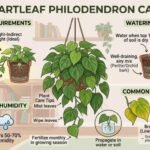
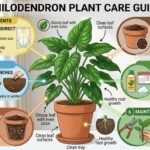
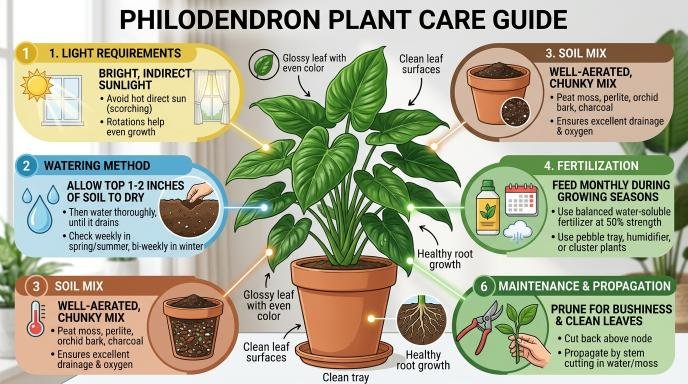
Philodendron plant care is relatively easy when you provide bright, indirect light, well-draining soil, moderate watering, warm temperatures, and reasonable humidity.
Water when the top 1–2 inches of soil feels dry rather than following a fixed schedule. Keep the plant away from harsh direct sunlight and cold drafts, and prune damaged growth regularly. Good drainage is especially important because consistently wet soil can cause root rot.
Introduction
Philodendrons are popular houseplants because many varieties tolerate less-than-perfect indoor conditions while still producing attractive, vigorous foliage. However, “easy-care” does not mean a philodendron can survive anything. Most problems come from a few preventable issues, especially overwatering, poor drainage, insufficient light, and unsuitable temperatures.
Successful philodendron plant care is mainly about understanding what the plant is telling you. Yellow leaves, brown edges, slow growth, drooping foliage, and long spaces between leaves can each point to different environmental problems. Instead of watering or fertilizing automatically, learning how light, soil moisture, roots, and humidity interact will help you grow a healthier plant with fewer problems.
Understanding Philodendrons
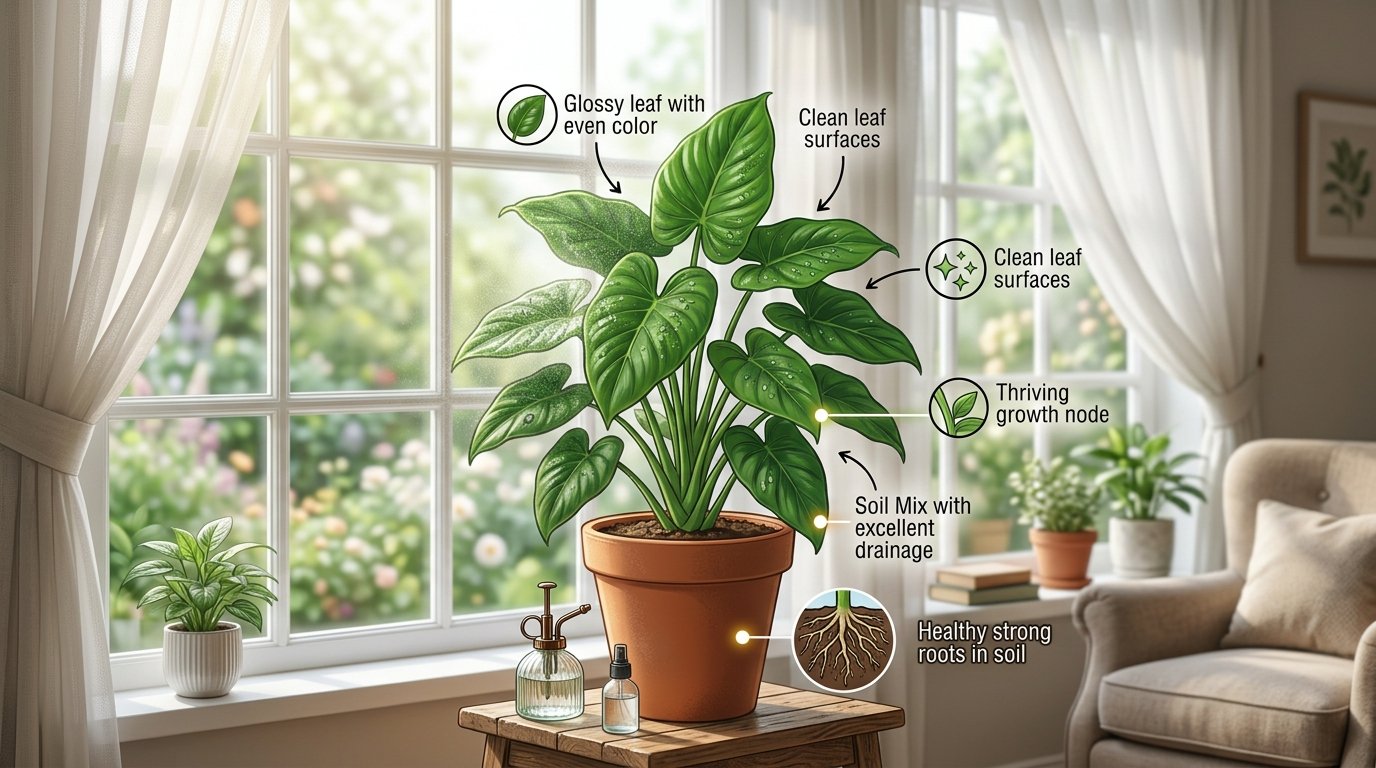
Philodendrons are tropical plants known for their attractive foliage and adaptability to indoor environments. Depending on the variety, they may grow as upright plants or develop long trailing and climbing stems.
Some common types include:
- Heartleaf philodendron.
- Philodendron Brasil.
- Philodendron Birkin.
- Philodendron Micans.
- Philodendron Prince of Orange.
- Philodendron Rojo Congo.
- Philodendron Xanadu.
- Philodendron Selloum.
Care requirements can vary somewhat between varieties. A climbing philodendron may benefit from a moss pole or other support, while a compact self-heading variety may naturally maintain a more upright shape.
The most important principle is not to treat every philodendron variety exactly the same. Leaf size, growth habit, light tolerance, and watering needs can differ.
Philodendron Light Requirements
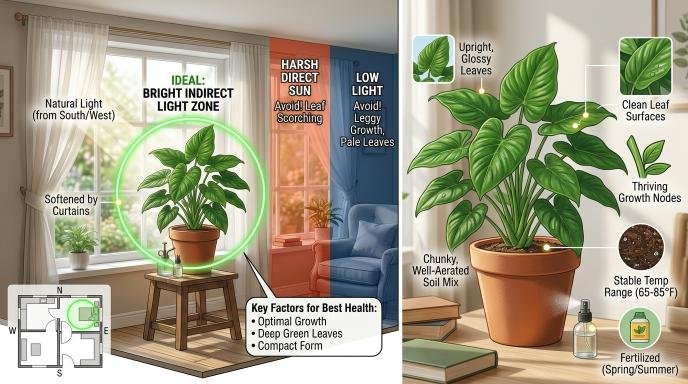
Philodendrons generally grow best in bright, indirect light.
Place the plant near a window where it receives plenty of filtered daylight without being exposed to intense afternoon sun for long periods.
What happens with too little light?
A philodendron receiving insufficient light may show:
- Slow growth.
- Smaller new leaves.
- Long spaces between leaves.
- Pale or less attractive foliage.
- Weak, stretched stems.
- Reduced variegation in some varieties.
A plant can survive in relatively low light, but survival and vigorous growth are different things.
What happens with too much direct sunlight?
Strong direct sunlight can scorch foliage, particularly when the plant has been grown indoors under filtered light.
Signs may include:
- Bleached patches.
- Brown crispy areas.
- Curling leaves.
- Faded foliage.
If your plant is receiving strong sunlight, move it farther from the window or filter the light with a sheer curtain rather than placing it immediately in a dark corner.
Practical tip: If you can comfortably read near the plant during the daytime without turning on a light, the area may provide useful natural light. However, the exact intensity varies significantly by window direction, season, climate, and distance from the glass.
Image Suggestion: Diagram showing ideal bright indirect light placement for an indoor philodendron.
How Often Should You Water a Philodendron?
There is no reliable watering schedule that works for every philodendron.
Instead, check the soil.
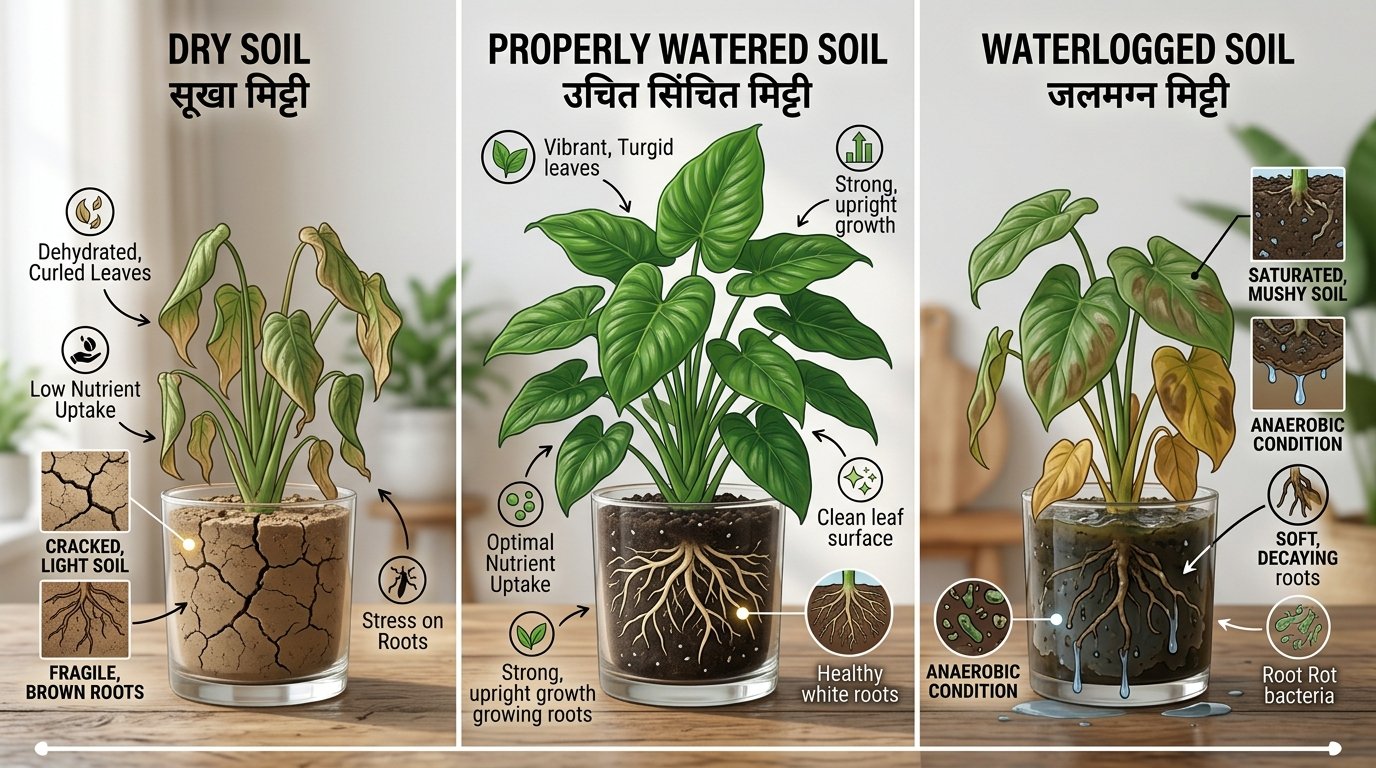
For many indoor philodendrons, water when the upper portion of the potting mix has dried out. A practical starting point is checking the top 1–2 inches of soil with your finger.
When watering:
- Check the soil before adding water.
- If the upper layer has dried, water thoroughly.
- Allow excess water to drain from the bottom.
- Empty standing water from a saucer or decorative container.
- Wait until the soil dries to the appropriate level before watering again.
The goal is not to keep the soil permanently wet.
Why overwatering is so common
Beginners sometimes interpret drooping leaves as a sign that a plant needs water. But drooping can also occur when roots have been damaged by excessively wet soil.
Repeatedly adding water to already-moist soil reduces the amount of air around the roots. Over time, unhealthy roots may struggle to absorb water and nutrients properly.
This creates a frustrating situation where a plant can look thirsty even though its soil is constantly wet.
Best Soil for Philodendrons
A good philodendron soil mix should retain some moisture while allowing excess water and air to move through the root zone.
A practical homemade mix can include:
- Quality indoor potting mix.
- Orchid bark.
- Perlite or another aerating material.
The exact ratio does not need to be perfect. The important characteristic is a loose, well-draining structure.
Why drainage matters
Philodendron roots need access to both moisture and oxygen. Dense soil that stays saturated for long periods can create an unfavorable root environment.
If water takes a very long time to drain, the problem may not be your watering frequency. The soil itself may be holding too much moisture.
Choosing the Right Pot
The container is just as important as the soil.
Choose a pot with drainage holes and a size appropriate for the root system. Moving a small philodendron into a very large pot can increase the amount of soil that remains wet after watering.
A slightly larger container is usually more practical than dramatically increasing pot size.
Signs your philodendron may need repotting
Consider repotting when:
- Roots are circling heavily around the root ball.
- Roots are emerging from drainage holes.
- Water runs through the pot unusually quickly because the mix has become compacted or root-bound.
- Growth has slowed despite suitable light and care.
- The plant repeatedly dries out much faster than expected.
Do not repot simply because a calendar says it is time. Root condition and soil performance are more useful indicators.
Philodendron Temperature Requirements
Philodendrons generally prefer warm, stable indoor conditions.
Keep them away from:
- Cold drafts.
- Air-conditioning vents.
- Very cold windows during winter.
- Heating vents.
- Sudden temperature changes.
Cold stress can cause slowed growth, drooping, discoloration, or leaf damage.
A stable indoor environment is generally more useful than constantly moving the plant from one location to another.
Humidity for Philodendrons
Philodendrons naturally come from tropical environments, so they can appreciate moderate to higher humidity.
However, extremely high humidity is not automatically necessary for healthy indoor growth.
If your home is relatively dry, practical options include:
- Grouping several plants together.
- Using a humidifier.
- Keeping the plant away from dry heating airflow.
- Maintaining appropriate watering and soil conditions.
Avoid relying on frequent leaf misting as the primary humidity solution. Mist evaporates quickly and usually does not provide the same sustained effect as increasing ambient humidity.
Practical tip: Before buying a humidifier, check whether poor watering, inadequate light, or compacted soil is actually causing the problem. Increasing humidity will not fix damaged roots.
Fertilizing Philodendrons
Philodendrons benefit from nutrients during active growth, particularly when they are growing strongly in spring and summer.
A balanced houseplant fertilizer can be used according to its label directions.
Avoid the common mistake of assuming more fertilizer means faster growth.
Excess fertilizer can contribute to salt buildup in the soil and damage roots. A healthy plant receiving adequate light generally makes better use of nutrients than a stressed plant receiving excessive fertilizer.
A sensible approach
- Fertilize during active growth.
- Follow the product’s recommended dilution.
- Avoid repeatedly applying concentrated fertilizer.
- Reduce or pause feeding when growth naturally slows.
- Water appropriately between fertilizer applications.
If the plant has recently been repotted into nutrient-rich potting mix, additional fertilizer may not be necessary immediately.
How to Prune a Philodendron
Pruning helps control shape, remove damaged foliage, and encourage a fuller appearance in some philodendrons.
Use clean, sharp scissors or pruning shears.
Remove:
- Completely dead leaves.
- Severely damaged foliage.
- Diseased-looking material when appropriate.
- Excessively long or unwanted stems.
For vining philodendrons, strategic pruning can encourage branching and create a fuller plant.
Do not remove large amounts of healthy foliage simply to make the plant look smaller. Leaves are important for photosynthesis and continued growth.
Supporting Climbing Philodendrons
Some philodendrons naturally climb.
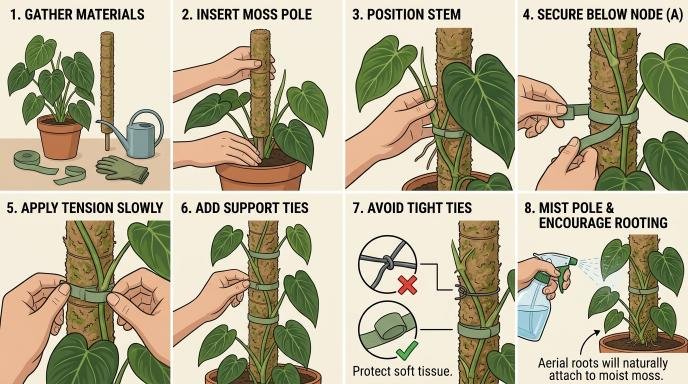
A moss pole, trellis, or similar support can give climbing varieties a structure to grow against.
As the plant climbs, it may produce larger leaves under favorable conditions.
Attach stems loosely rather than tying them tightly. The goal is to provide support without cutting into growing tissue.
Image Suggestion: Step-by-step illustration showing how to attach a climbing philodendron to a moss pole without damaging the stem.
Propagating Philodendrons
Many vining philodendrons can be propagated from stem cuttings.
A successful cutting should contain an appropriate node, because new roots and shoots develop from nodes rather than from an arbitrary piece of leaf.
Simple propagation method
- Select a healthy stem.
- Cut below a viable node using clean scissors.
- Place the node in water or an appropriate propagation medium.
- Keep it warm with suitable indirect light.
- Monitor root development.
- Transfer to an appropriate potting mix once the cutting has developed a useful root system.
A leaf without a node may remain attractive for a while but generally cannot produce a new complete plant by itself.
Common Philodendron Care Mistakes
Watering on a fixed schedule
Watering every Monday or every seven days may sound convenient, but indoor conditions change.
Light, temperature, pot size, soil composition, season, and plant size all affect how quickly soil dries.
Better approach: Check the soil before watering.
Using a pot without drainage
Decorative containers can trap excess water around the roots.
Better approach: Use a container with drainage holes, or keep the plant in a draining nursery pot inside the decorative container.
Keeping the plant in very low light
Philodendrons can tolerate lower light than some houseplants, but prolonged low light often leads to weak growth.
Better approach: Provide bright filtered light whenever possible.
Giving fertilizer to a struggling plant
Fertilizer does not repair root rot, severe underwatering, or poor lighting.
Better approach: Identify the underlying problem before feeding.
Repotting too frequently
Constant repotting can disturb roots unnecessarily.
Better approach: Repot when the root system or soil condition actually indicates a need.
Philodendron Problems and Solutions
| Problem | Likely Causes | What to Check |
|---|---|---|
| Yellow leaves | Overwatering, aging leaves, root stress | Soil moisture and drainage |
| Brown crispy edges | Dry conditions, inconsistent watering, intense light | Soil, humidity, and window exposure |
| Drooping leaves | Underwatering, overwatering, root damage, stress | Feel the soil before watering |
| Small new leaves | Insufficient light, limited nutrients, immature growth | Light and feeding routine |
| Long gaps between leaves | Insufficient light | Move toward brighter indirect light |
| Soft stems | Excess moisture or serious root problems | Roots and soil condition |
| Leaf scorch | Excessive direct sunlight | Window exposure |
| Slow growth | Low light, cool temperatures, seasonal dormancy | Light and temperature |
The important lesson is that one symptom can have multiple causes.
For example, yellow leaves do not automatically mean the plant needs fertilizer. If the soil remains wet for long periods, adding fertilizer could make the situation worse.
Why Are My Philodendron Leaves Turning Yellow?
Yellowing leaves are one of the most common philodendron concerns.
Start by determining whether the yellow leaf is old or part of new growth.
An occasional older leaf turning yellow can be part of normal plant aging. A pattern of multiple yellow leaves, particularly when the soil stays wet, deserves closer inspection.
Check:
- How frequently you are watering.
- How long the soil remains wet.
- Whether the pot has drainage holes.
- Whether roots smell unpleasant or appear unhealthy.
- How much light the plant receives.
Avoid changing five things at once. Make one informed adjustment and observe the plant’s response.
Why Are Philodendron Leaves Turning Brown?
Brown areas can develop for several reasons, including inconsistent watering, dry indoor air, excessive direct sunlight, or root problems.
Look at the location and texture of the damage.
Crispy brown patches exposed directly to strong sunlight may indicate light stress. Brown tips combined with very dry soil suggest a different problem.
If browning occurs alongside persistently wet soil and yellowing leaves, investigate the root environment rather than simply increasing humidity.
Why Is My Philodendron Drooping?
Drooping does not automatically mean “water me.”
First check the soil.
If the soil is very dry
The plant may be experiencing underwatering. Give it a thorough watering and allow excess water to drain.
If the soil is wet
Do not automatically add more water. Investigate drainage, soil structure, and root health.
This simple soil check prevents one of the most common houseplant mistakes: treating every form of drooping as dehydration.
Philodendron Care Through the Seasons
Spring
Growth often becomes more active as light levels increase.
- Monitor soil more frequently.
- Resume appropriate fertilization.
- Check for new growth.
- Consider pruning or propagation.
Summer
Higher temperatures and stronger light can increase water use.
- Monitor moisture regularly.
- Protect leaves from intense direct sunlight.
- Maintain good airflow.
- Watch for excessively dry soil.
Autumn
Growth may gradually slow.
- Adjust watering according to soil moisture.
- Avoid continuing a summer watering routine automatically.
- Monitor changes in natural light.
Winter
Indoor conditions can become challenging because of heating, low light, and cold drafts.
- Keep plants away from cold windows and heating vents.
- Reduce watering if the soil dries more slowly.
- Avoid overfertilizing during reduced growth.
- Watch carefully for prolonged wet soil.
Advanced Tip: Read the New Growth
Experienced plant growers often pay more attention to new growth than old leaves.
New leaves reveal how the plant is responding to its current environment.
Healthy new growth generally indicates that the plant has sufficient resources to continue developing. If new leaves repeatedly emerge small, distorted, pale, or damaged, investigate the growing conditions rather than focusing only on older foliage.
This is particularly useful because older leaves may show damage caused by conditions that have already changed.
Advanced Tip: Check Roots When Problems Persist
When watering, lighting, and temperature appear reasonable but the plant continues declining, inspect the root system.
Healthy roots should generally be firm and functional rather than mushy and decomposing.
If you discover damaged roots:
- Remove the plant carefully from its container.
- Examine the root system.
- Remove clearly damaged material with clean tools.
- Reassess the pot size.
- Use fresh, well-draining growing media.
- Correct the watering conditions that caused the problem.
Simply replacing soil without changing the underlying watering habit can lead to the same problem again.
Is Philodendron Easy to Care For?
Yes, many philodendron varieties are considered relatively easy houseplants because they can adapt to a range of indoor conditions.
But easy care does not mean neglect.
The biggest advantage is their ability to communicate environmental stress through changes in growth and foliage. Once you learn to interpret those signals, philodendron care becomes much more predictable.
Philodendron Care Checklist
Use this quick checklist when evaluating your plant:
- Bright, indirect light.
- Well-draining potting mix.
- Container with drainage holes.
- Water based on soil moisture rather than a fixed schedule.
- Warm and relatively stable temperatures.
- Moderate humidity when practical.
- Appropriate feeding during active growth.
- Regular removal of dead or severely damaged foliage.
- Support for climbing varieties.
- Periodic inspection of roots and soil.
- Adjustment of care as seasons change.
Frequently Asked Questions
How much light does a philodendron need?
Most philodendrons grow well in bright, indirect light. They can tolerate lower light, but insufficient light may result in slower growth, smaller leaves, and elongated stems.
How often should I water a philodendron?
Water when the appropriate upper layer of soil has dried rather than following a strict calendar. The exact interval varies according to light, temperature, pot size, soil, and season.
Can philodendrons grow in low light?
Many varieties can tolerate low-light conditions, but tolerance does not mean optimal growth. Brighter indirect light generally supports stronger and more attractive growth.
Do philodendrons need high humidity?
They appreciate moderate to higher humidity, but extremely high humidity is not essential for most indoor specimens. Proper light, watering, drainage, and temperature remain fundamental.
Why are my philodendron leaves yellow?
Possible causes include overwatering, poor drainage, root stress, aging foliage, or other environmental issues. Check the soil moisture and root environment before changing your fertilizer routine.
Should I mist my philodendron?
Misting can temporarily wet the leaves, but it is not a dependable long-term way to increase room humidity. A humidifier provides a more sustained change in ambient humidity.
Can I propagate a philodendron from a leaf?
A leaf alone generally cannot produce a complete new philodendron. Stem propagation requires a viable node.
Should I cut off yellow philodendron leaves?
If a leaf is completely yellow or severely damaged, removing it can improve the plant’s appearance. However, first investigate why the leaf is turning yellow if multiple leaves are affected.
Do philodendrons need a moss pole?
Not all philodendrons need one. Climbing varieties can benefit from support, while self-heading types may not require a moss pole.
When should I repot my philodendron?
Repot when the plant is significantly root-bound, the soil structure has deteriorated, drainage has become problematic, or the existing container is clearly limiting healthy growth. Avoid repotting simply according to a fixed calendar.
Conclusion
Good philodendron plant care comes down to balance rather than complicated routines. Give the plant bright indirect light, a breathable and well-draining growing medium, appropriate watering, stable temperatures, and enough nutrients to support active growth.
Most problems become easier to solve when you inspect the soil before watering and look at the plant’s newest growth for clues. Instead of reacting to individual yellow or brown leaves, consider the entire growing environment. That approach produces healthier roots, stronger foliage, and more consistent long-term growth.
Related Internal Link Opportunities:
- Indoor plant care for beginners.
- How to fix overwatered houseplants.
- Best potting soil for indoor plants.
- How to propagate houseplants from cuttings.
- How to identify and treat root rot.
- Bright indirect light for indoor plants.