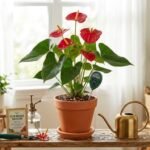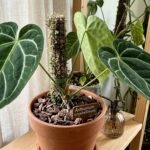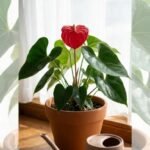
Quick Answer
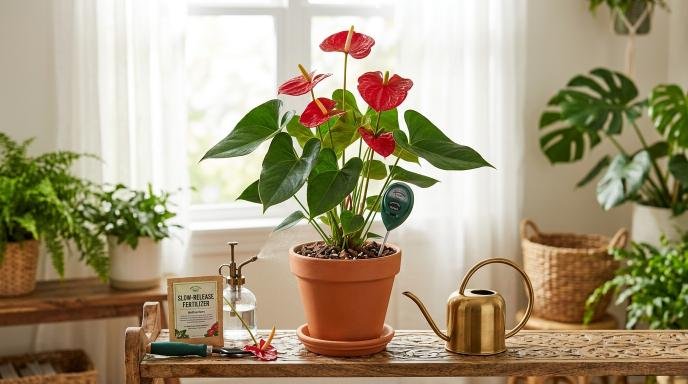
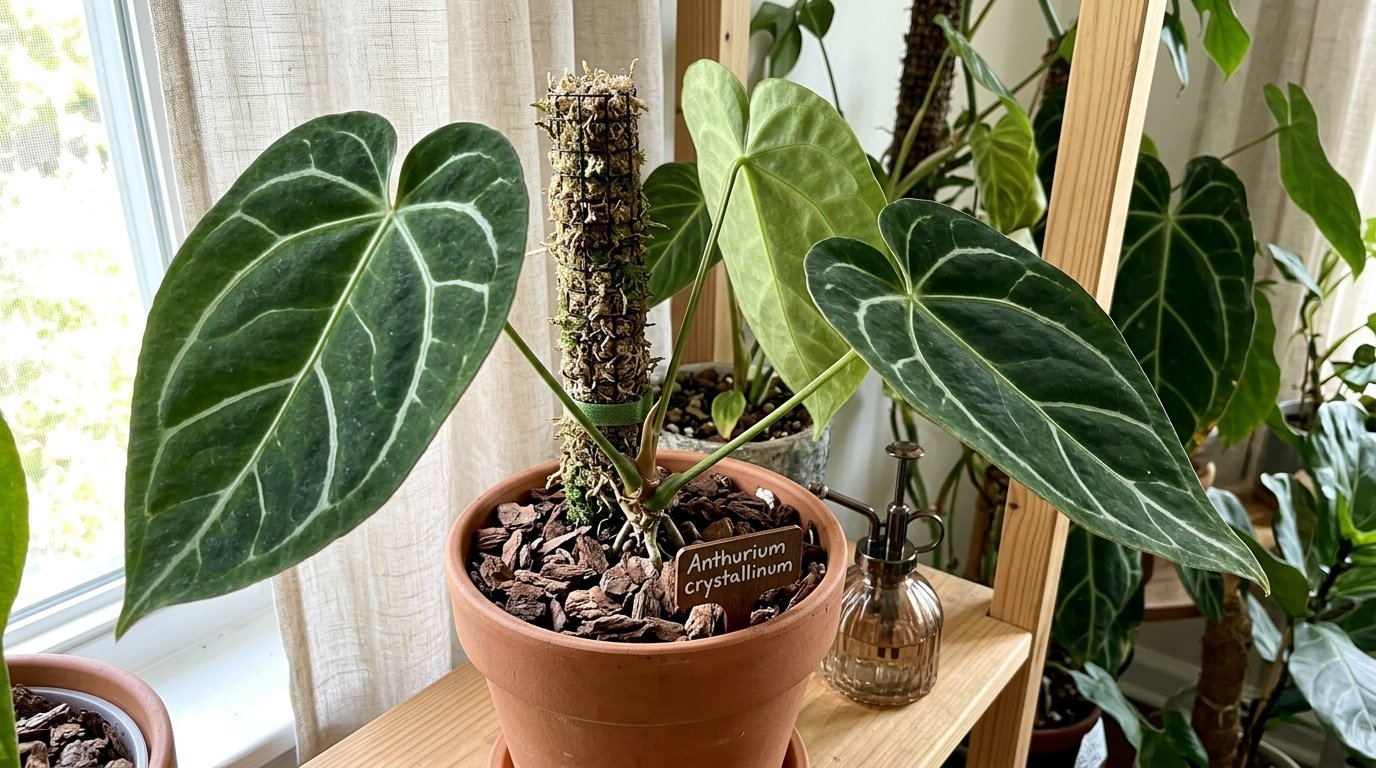
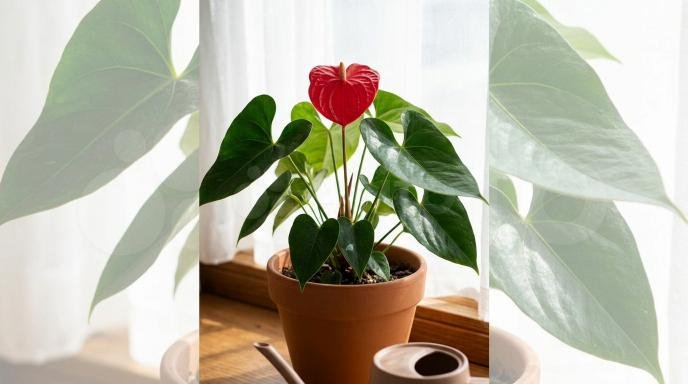
Anthurium plant care is mainly about bright indirect light, well-draining soil, careful watering, moderate humidity, and warm temperatures.
Water when the upper layer of soil begins to dry rather than following a fixed schedule. Keep the plant away from harsh direct sunlight and cold drafts, and fertilize lightly during active growth. With consistent conditions, anthuriums can produce glossy foliage and colorful, long-lasting flowers.
Introduction
Anthuriums are popular houseplants because their glossy leaves and colorful heart-shaped flowers can add a tropical look to almost any indoor space. However, their attractive appearance can make beginners assume they need constant watering and attention. In practice, anthurium plant care is more about maintaining balance than keeping the soil constantly wet.
The most common problems—yellow leaves, brown tips, drooping foliage, root rot, and poor flowering—usually come from a mismatch between light, moisture, drainage, humidity, and temperature. Once you understand what each factor does, caring for an anthurium becomes much more predictable.
Understanding Anthurium Growing Conditions
Anthuriums are tropical plants that naturally grow in warm, humid environments. Many species grow as epiphytes or in loose organic material rather than sitting in dense, permanently wet soil.
That explains an important care principle: anthuriums like moisture, but their roots also need oxygen.
A pot that stays saturated for long periods can restrict air around the roots and encourage root problems. On the other hand, allowing the plant to become severely dry again and again can cause leaf stress and reduce flowering.
The goal is evenly moist but well-aerated growing conditions.
How Much Light Does an Anthurium Need?
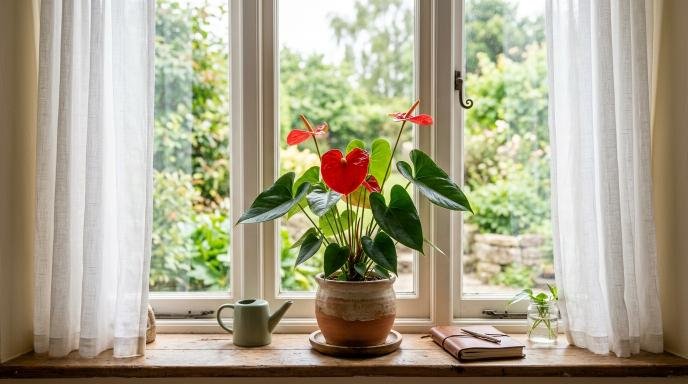
Bright, indirect light is usually ideal.
Place an anthurium near a bright window where it receives plenty of filtered daylight without sitting in strong midday sun for hours.
Too little light
Insufficient light may result in:
- Slow growth.
- Smaller leaves.
- Fewer flowers.
- Longer spaces between leaves.
- Pale or less vigorous growth.
Too much direct sunlight
Strong direct sunlight can scorch the foliage, especially through hot glass. Scorched leaves may develop:
- Brown patches.
- Bleached areas.
- Crispy edges.
- Sudden discoloration.
Practical tip: If the plant receives intense sunlight through a south- or west-facing window, use a sheer curtain or move it slightly farther from the glass.
Watering Anthurium Plants Correctly
Watering is one of the most important parts of anthurium plant care, and using a fixed weekly schedule often causes problems.
Instead, check the growing medium.
When the upper portion of the soil has started to dry, water thoroughly until excess water drains from the bottom of the pot. Empty standing water from a saucer or decorative container afterward.
Signs your anthurium may need water
- Soil feels noticeably dry near the surface.
- Leaves begin to lose firmness.
- Growth becomes less vigorous.
- The pot feels considerably lighter than after watering.
Signs of overwatering
- Yellowing leaves.
- Persistently wet soil.
- Soft or collapsing stems.
- Unpleasant smell from the potting mix.
- Dark, mushy roots.
- Sudden decline despite wet soil.
A common beginner mistake is watering because the leaves look slightly droopy without checking the soil. Drooping can occur from both underwatering and root problems, so always examine the growing medium first.
What Soil Is Best for Anthuriums?
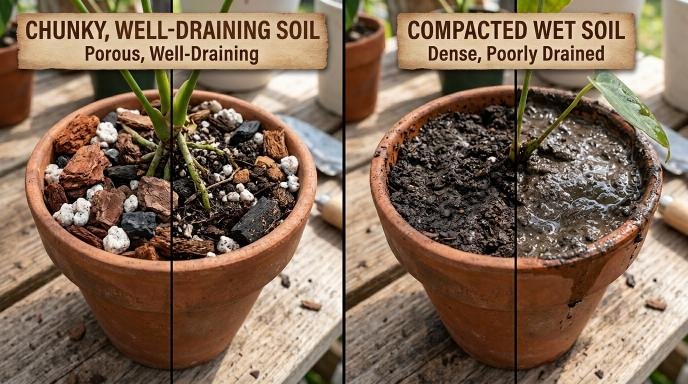
Anthuriums generally perform better in a loose, chunky, well-draining mix than in heavy garden soil.
A useful mixture can include:
- High-quality indoor potting mix.
- Orchid bark.
- Perlite or another material that improves aeration.
- Organic material that helps retain moderate moisture.
The exact recipe is less important than the result. The finished mix should hold some moisture while allowing excess water and air to move freely through the root zone.
Why soil structure matters
Dense soil may remain wet for too long. Extremely coarse material, however, can dry too quickly.
If water sits around the roots for days, improve drainage and aeration rather than simply reducing the amount of water you pour.
Choosing the Right Anthurium Pot
A container should have drainage holes.
This sounds simple, but decorative pots without drainage are a frequent cause of watering problems. Excess water has nowhere to escape, making it difficult to maintain healthy roots.
Choose a pot only moderately larger than the root system. Moving an anthurium into an unnecessarily large container can leave a large volume of soil wet around relatively few roots.
When repotting, increase the container size gradually rather than dramatically.
Temperature Requirements
Anthuriums prefer consistently warm conditions.
A comfortable indoor environment is generally easier for them than a location exposed to cold windows, drafts, or sudden temperature changes.
Keep the plant away from:
- Cold drafts.
- Air-conditioning vents.
- Heating vents.
- Frequently opened exterior doors.
- Very cold windows during winter.
Cold stress can cause slowed growth, drooping, discoloration, and general decline.
Humidity for Anthuriums
Higher humidity can encourage healthier foliage, particularly in dry indoor environments.
However, increasing humidity does not compensate for poor watering or inadequate light.
If the surrounding air is dry, practical options include:
- Grouping several plants together.
- Using a humidifier.
- Keeping plants in naturally humid rooms when light is sufficient.
- Monitoring humidity with a simple hygrometer.
Avoid assuming that frequent misting alone will solve a consistently dry environment. Misting usually provides only temporary moisture on the leaf surface.
How to Fertilize an Anthurium
Anthuriums benefit from regular but moderate feeding during active growth.
Use a balanced or houseplant fertilizer according to its label directions. Avoid applying concentrated fertilizer to dry soil because this can increase the risk of root stress.
During periods of active growth, light and consistent feeding is generally more useful than occasional heavy applications.
If the plant is growing slowly because of insufficient light, simply adding more fertilizer will not fix the underlying problem.
Expert tip: Check the plant’s growing conditions before increasing fertilizer. Light, roots, water, and temperature determine how effectively the plant can use nutrients.
How to Encourage Anthurium Flowers
Flowering depends on overall plant health rather than fertilizer alone.
For better flowering:
- Provide bright indirect light.
- Keep watering consistent.
- Avoid prolonged waterlogging.
- Maintain warm temperatures.
- Provide moderate to high humidity when practical.
- Feed appropriately during active growth.
- Avoid repeatedly moving the plant between very different environments.
Anthuriums that receive inadequate light may remain alive and produce leaves but struggle to flower.
If flowering has stopped, evaluate light first rather than immediately increasing fertilizer.
Anthurium Pruning
Anthuriums generally require only light pruning.
Remove:
- Completely dead leaves.
- Severely damaged leaves.
- Spent flowers when desired.
- Yellowing foliage that is clearly declining.
Use clean, sharp scissors or pruning shears.
Avoid removing healthy green leaves simply because they are older. Green leaves still contribute energy to the plant.
How to Repot an Anthurium
Repotting is useful when the plant has become root-bound, the potting mix has broken down, drainage has deteriorated, or roots are circling heavily around the container.
Step-by-step
- Water the plant appropriately before repotting if the soil is extremely dry.
- Gently remove the root ball.
- Inspect the roots.
- Remove obviously dead or mushy roots with clean tools.
- Choose a container with drainage.
- Add fresh, airy potting mix.
- Position the plant at approximately the same depth.
- Fill around the roots without heavily compacting the mix.
- Water appropriately after repotting.
- Place the plant back into suitable indirect light.
Do not bury the stem substantially deeper than it was previously growing.
Image Suggestion: Step-by-step anthurium repotting showing healthy roots, damaged roots, and the correct planting depth.
Common Anthurium Problems and Solutions
| Problem | Possible Cause | What to Check |
|---|---|---|
| Yellow leaves | Overwatering, aging foliage, root stress | Soil moisture and roots |
| Brown leaf tips | Dry air, inconsistent watering, fertilizer buildup | Humidity, watering, soil |
| Drooping leaves | Underwatering, root problems, temperature stress | Soil and root condition |
| Few flowers | Insufficient light or poor growing conditions | Light intensity and plant health |
| Brown patches | Sun scorch or stress | Window exposure |
| Mushy roots | Excess moisture and poor drainage | Root system and soil |
| Slow growth | Low light, cool conditions, root issues | Light, temperature, roots |
| Curling leaves | Water stress, heat, dry air, pests | Growing conditions and leaves |
Why Are Anthurium Leaves Turning Yellow?
Yellow leaves do not automatically mean the plant needs more water.
If several leaves are turning yellow while the soil remains wet, overwatering or poor drainage should be investigated first.
If only an older lower leaf gradually turns yellow while new growth looks healthy, natural leaf aging may be responsible.
Look at the whole plant rather than diagnosing the problem from one leaf.
Why Are Anthurium Leaves Turning Brown?
Brown edges or tips can have several causes.
Common possibilities include:
- Dry indoor air.
- Irregular watering.
- Excess fertilizer salts.
- Strong direct sunlight.
- Root damage.
- Environmental stress.
Check the pattern. Crispy patches facing a sunny window suggest a different problem from brown tips appearing across many leaves in a dry room.
Anthurium Pests
Anthuriums can occasionally attract common houseplant pests such as:
- Aphids.
- Mealybugs.
- Spider mites.
- Scale.
- Thrips.
Inspect both sides of leaves, new growth, leaf joints, and stems.
Early detection makes pest management much easier. If you notice sticky residue, tiny insects, fine webbing, distorted new growth, or clusters around leaf joints, isolate the affected plant from nearby houseplants and inspect it carefully.
Anthurium Care Through the Seasons
Spring and summer
Growth is often stronger when temperatures and light increase. Monitor moisture more frequently because the plant may use water faster.
This is also generally the period when feeding can be most useful if the plant is actively growing.
Fall and winter
Growth may slow because of reduced light and cooler temperatures.
Avoid continuing a summer watering routine automatically. Let the plant’s actual moisture needs determine when you water.
Move the plant away from cold drafts and protect it from sudden temperature changes.
Common Anthurium Care Mistakes
Watering on a fixed schedule
A calendar cannot account for changes in temperature, light, pot size, soil, and humidity.
Using heavy garden soil
Dense soil can remain wet around the roots and reduce aeration.
Putting the plant in harsh sunlight
Anthuriums need light, but intense direct sun can damage foliage.
Choosing an oversized pot
A large container can hold excess moisture for too long.
Fertilizing a struggling plant immediately
If the problem is root rot, low light, or temperature stress, additional fertilizer can make the situation worse.
Ignoring the roots
Leaves show symptoms, but the roots often reveal the underlying problem.
An Expert Approach to Anthurium Care
When an anthurium starts declining, avoid changing five things at once.
Instead, troubleshoot systematically:
First, check the soil. Is it dry, evenly moist, or staying wet?
Second, inspect the roots if the soil remains wet. Healthy roots should not be mushy or badly decomposed.
Third, evaluate light. Is the plant receiving bright filtered light, or is it sitting in a dark corner?
Fourth, check temperature and drafts. A plant near an air conditioner may experience very different conditions from one in a stable room.
Finally, examine the leaves for pests.
This approach makes it much easier to identify the real cause instead of treating symptoms randomly.
Frequently Asked Questions
How often should I water an anthurium?
Water when the upper portion of the growing medium has started to dry. The exact frequency depends on light, temperature, humidity, pot size, and soil composition.
Do anthuriums need direct sunlight?
They generally perform best in bright indirect light. Strong direct sunlight, particularly during intense midday periods, can scorch the leaves.
Why is my anthurium not flowering?
Insufficient light is a common reason. Also check watering, temperature, nutrition, root health, and overall plant maturity.
Can anthuriums grow indoors?
Yes. They can perform well indoors when provided with bright indirect light, suitable warmth, good drainage, and appropriate watering.
Should I mist my anthurium?
Misting can temporarily increase moisture around the leaves, but it is not a reliable substitute for maintaining suitable overall humidity.
What type of soil does anthurium need?
Use a loose, airy, well-draining mix that retains some moisture without becoming waterlogged. Adding materials such as bark and perlite can improve structure.
Why are my anthurium leaves drooping?
Check the soil first. Underwatering can cause drooping, but waterlogged roots can also prevent the plant from taking up water properly. Temperature stress can contribute as well.
How do I know if my anthurium has root rot?
Look for persistently wet soil, declining foliage, unpleasant soil odor, and dark or mushy roots. Healthy roots should have a firm structure rather than feeling soft and decomposed.
Can I cut off damaged anthurium leaves?
Yes. Completely dead or severely damaged leaves can be removed with clean, sharp tools. Avoid removing healthy green foliage unnecessarily.
Conclusion
Successful anthurium plant care comes down to balance: bright indirect light, an airy growing medium, appropriate watering, warmth, sufficient humidity, and moderate nutrition.
The biggest improvement most beginners can make is to stop treating watering as a fixed weekly task. Check the soil and the plant’s growing conditions instead. If leaves begin changing color or the plant stops flowering, investigate light, moisture, roots, temperature, and pests before reaching for fertilizer.
With stable conditions and careful observation, anthuriums can remain attractive indoor plants and reward consistent care with vigorous foliage and recurring flowers.