Quick Answer
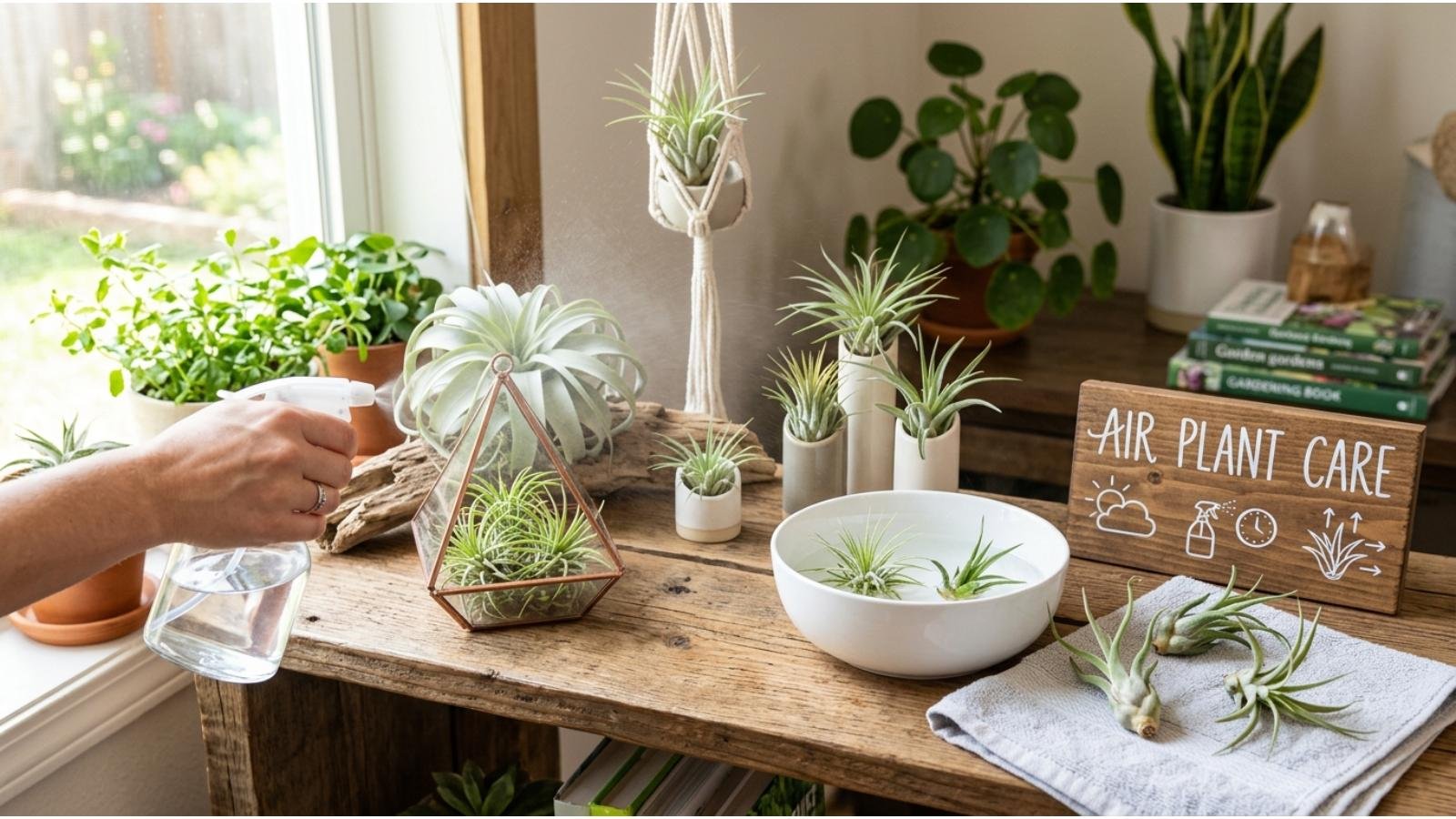
Air plant care is mainly about getting light, water, airflow, and drying right. Most Tillandsia grow best in bright, filtered or indirect light and need thorough watering about once a week, although the exact schedule varies by species, humidity, temperature, and light. After watering, shake off excess water and let the plant dry completely in a well-ventilated spot. Air plants do not need soil because their leaves absorb moisture and nutrients through specialized structures called trichomes.
Introduction
Air plants, also known as Tillandsia, look almost too unusual to be real. They can grow without soil, attach themselves to wood or rocks, and fit into decorative holders, glass displays, and small spaces. But their soil-free lifestyle does not mean they need no care. The biggest challenge is learning how to provide enough moisture without leaving water trapped around the leaves.
The good news is that successful air plant care becomes simple once you understand how Tillandsia naturally grows. Instead of watering roots like a traditional houseplant, you are caring for leaves that are specially adapted to capture moisture. More than 600 Tillandsia species exist, and their needs can vary considerably depending on whether they come from relatively dry or humid habitats.
What Are Air Plants
Air plants belong to the Tillandsia genus within the bromeliad family. They are epiphytes, meaning they naturally grow attached to trees, branches, rocks, and other surfaces rather than rooted in soil.
Their roots primarily provide physical attachment. Their leaves contain specialized structures called trichomes that help capture and absorb moisture and nutrients. This is why putting an air plant into ordinary potting soil is unnecessary and can create conditions that encourage rot.
Air plants are found naturally across parts of the southern United States, Mexico, Central America, South America, and the Caribbean. Their habitats range from humid forests to much drier environments, which explains why different Tillandsia species can have noticeably different care requirements.
Image Suggestion: Close-up botanical illustration showing Tillandsia leaves and trichomes compared with traditional plant roots.
How Much Light Do Air Plants Need
Light is one of the most important factors in air plant health because Tillandsia need adequate light for photosynthesis and flowering.
A good starting point is bright, filtered or indirect light. An east- or west-facing window can work well, while a very bright south-facing location may require some protection depending on the season and species.
Watch the plant rather than relying only on a fixed window rule.
- Pale, stretched, weak growth can indicate insufficient light.
- Strong, compact growth generally indicates better conditions.
- Gray or silvery foliage does not automatically mean the plant is unhealthy.
- Species with dense silvery trichomes are often adapted to brighter and drier environments.
- Darker green, smoother-leaved types commonly prefer more moisture and filtered light.
North Carolina Extension notes that many Tillandsia require high light levels to flower, and artificial LED lighting can supplement natural light when necessary.
Practical tip: Avoid placing a newly purchased air plant immediately in intense afternoon sun. Gradually acclimate it to stronger light, particularly if it was previously grown indoors under filtered conditions.
Image Suggestion: Air plant positioned near an east-facing window with bright filtered sunlight.
How to Water Air Plants Properly
Watering is where many beginners struggle.
The common misconception is that air plants only need occasional misting because they supposedly absorb everything they need from the air. In an average indoor environment, especially one with dry heating or air conditioning, humidity alone is usually not enough. Extension guidance commonly recommends thorough watering rather than relying exclusively on light misting.
For many Tillandsia, a practical routine is:
- Fill a clean container with room-temperature water.
- Submerge the air plant for roughly 20 to 60 minutes.
- Remove it and gently shake away excess water.
- Place it somewhere with good air circulation.
- Allow it to dry completely before returning it to its display.
Different extension sources give somewhat different soaking durations, from about 20 minutes to an hour, so the plant’s species and growing conditions matter.
For many indoor plants, weekly watering is a useful starting point. A plant in a hot, bright, dry room may require more frequent attention, while one in a cooler, darker environment may dry more slowly.
Is Misting Enough for Air Plants
Misting can be useful, but it should not automatically replace thorough watering.
Penn State Extension notes that misting to runoff may need to occur frequently when household humidity is low, while rinsing or soaking can provide a more thorough hydration method.
If you mist, make sure the plant actually becomes thoroughly wet and can dry afterward. Frequent light sprays followed by poor airflow can create a deceptive routine where the plant stays damp in some areas without receiving consistent hydration.
How to Dry Air Plants After Watering
Proper drying is just as important as watering.
This is one of the most overlooked parts of air plant care. Water trapped between leaves or inside the plant’s central growth area can contribute to rot.
After soaking:
- Shake the plant gently.
- Turn it upside down or place it on its side.
- Give it plenty of air circulation.
- Keep it out of enclosed containers until completely dry.
- Avoid immediately returning a wet plant to a sealed glass globe.
Penn State Extension specifically recommends allowing air plants to dry for several hours before putting them back into terrariums or enclosed displays.
Expert insight: A beautiful glass container can actually become a poor growing environment if it prevents evaporation. Air plants need display space that looks attractive and allows moisture to escape.
Image Suggestion: Correct air plant drying position compared with an air plant sitting wet inside a closed glass container.
Water Quality for Tillandsia
Water quality can matter, particularly for sensitive species.
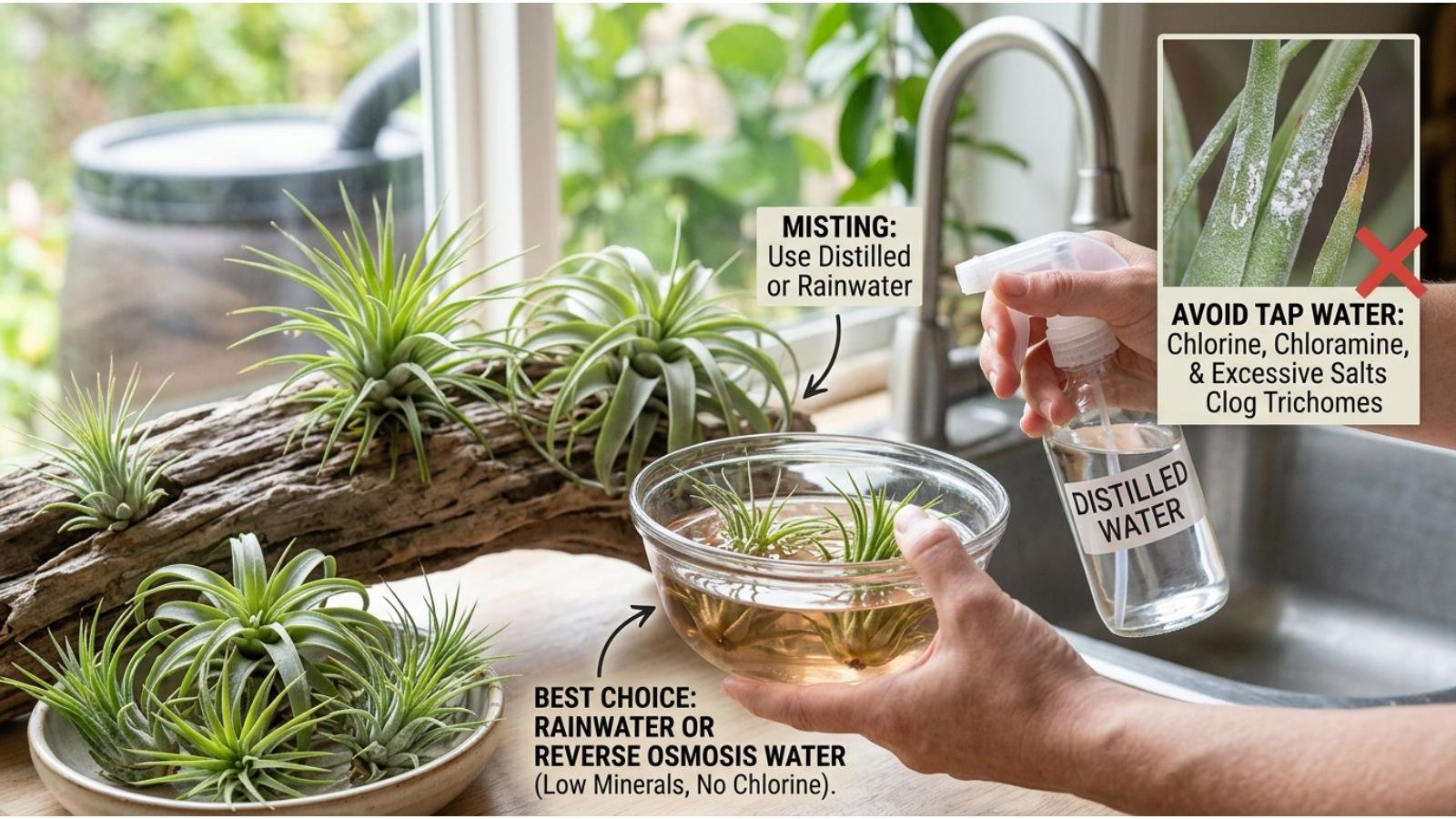
Some extension sources recommend rainwater, suitable bottled water, or tap water that has been allowed to sit so it reaches room temperature and loses some chlorine. University of Vermont Extension also advises avoiding softened water because its salts can harm air plants.
If your local tap water is heavily treated or leaves significant mineral deposits, observe how your plants respond rather than assuming every Tillandsia will react identically.
A simple approach is to use:
- Room-temperature tap water when your local water works well for plants.
- Rainwater where it can be collected safely.
- Appropriate bottled water when necessary.
- Avoid softened water.
- Avoid very hot or very cold water.
Humidity and Air Circulation
Air plants appreciate moisture in the environment, but humidity alone does not solve every watering problem.
Mesic Tillandsia from more humid habitats generally appreciate higher humidity and filtered light. Xeric types from drier environments tend to have more prominent silvery trichomes and can tolerate brighter, drier conditions.
Air circulation is especially important after watering.
A useful combination is:
Moisture + airflow + drying time.
Avoid positioning air plants directly beside heating vents or strong air-conditioning outlets because these can rapidly dry the foliage and create unstable conditions.
Temperature for Healthy Air Plants
Most commonly grown Tillandsia prefer warm household conditions rather than cold temperatures.
Penn State Extension recommends daytime temperatures around 65°F to 90°F and nighttime temperatures above 55°F for housegrown Tillandsia. Other extension guidance gives somewhat broader ranges, but the consistent message is to protect these tropical and warm-temperate plants from cold and frost.
Avoid:
- Frost.
- Freezing temperatures.
- Extremely cold windows during winter.
- Direct blasts from heating or cooling vents.
- Sudden extreme temperature changes.
Fertilizing Air Plants
Air plants can survive without frequent fertilization, but appropriate fertilizer can support growth and flowering.
If you choose to fertilize, use a fertilizer specifically intended for air plants or bromeliads and follow the product directions carefully. Cornell Cooperative Extension notes that a diluted water-soluble fertilizer can be applied approximately monthly.
More fertilizer is not better.
Overfeeding can create unnecessary stress, particularly when the plant is already struggling with poor light, dehydration, or inadequate airflow.
A healthy order of priorities is:
Light first. Water second. Airflow third. Fertilizer afterward.
How to Know When an Air Plant Needs Water
Your plant can give you useful visual clues.
Common signs of dehydration include:
- Leaves becoming noticeably curled or rolled.
- Brown or crispy leaf tips.
- A generally dry or stressed appearance.
- Reduced firmness compared with a healthy plant.
Cornell Extension specifically identifies curled or rolled leaves and brown leaf tips as potential signs that an air plant needs more water.
However, do not diagnose watering problems from one symptom alone. Heat, intense sunlight, low humidity, root or base damage, and poor general growing conditions can also contribute to decline.
Signs of Overwatering and Rot
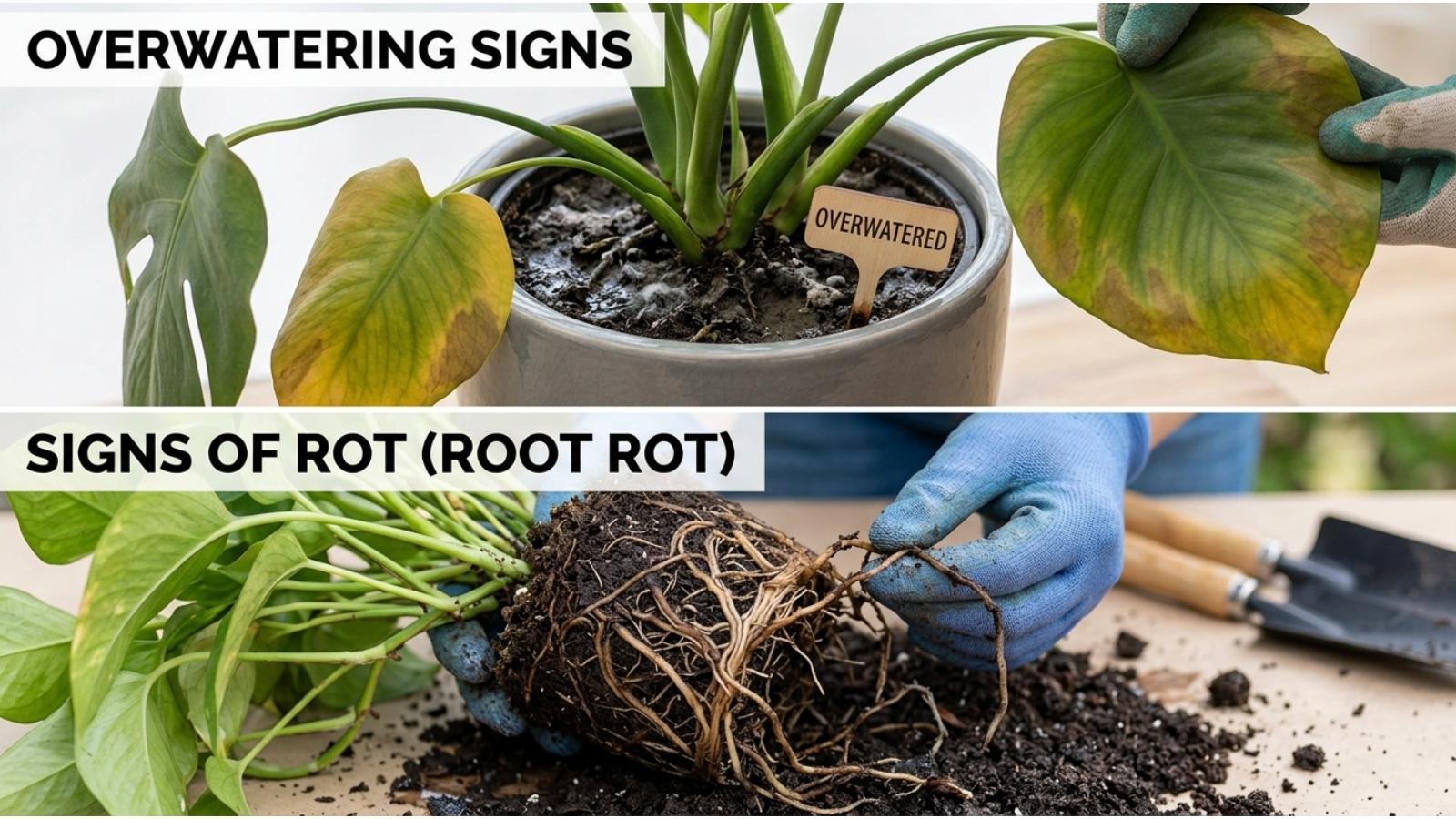
Air plants do not suffer from traditional soil-based overwatering because they have no soil reservoir, but remaining wet for too long can still cause serious problems.
The danger is usually a combination of excessive moisture and inadequate drying.
Watch for:
- A soft or mushy base.
- Darkening or collapsing tissue.
- Leaves pulling away unusually easily.
- A deteriorating central growth area.
- Persistent moisture trapped between leaves.
When rot is suspected, improve airflow immediately and stop keeping the plant continuously wet. Severely rotted plants may not recover, so prevention is much more effective than trying to reverse advanced decay.
Air Plant Care for Different Types
Not every Tillandsia should be treated exactly the same.
Xeric Air Plants
Xeric species often have gray or silvery foliage with abundant trichomes. They evolved in comparatively dry environments and generally tolerate brighter conditions and periods between watering better than moisture-loving types.
Tillandsia xerographica is a well-known example. North Carolina Extension recommends bright light and soaking approximately every one to two weeks under typical conditions, with less frequent watering during winter.
Mesic Air Plants
Mesic species generally come from environments with greater moisture availability. They often have greener, smoother foliage and smaller trichomes.
They tend to appreciate:
- Filtered light.
- Higher humidity.
- More consistent watering.
- Good air circulation.
Penn State Extension explains that these environmental differences are important when determining the best care routine for individual Tillandsia species.
Image Suggestion: Side-by-side comparison of a silvery xeric Tillandsia and a greener mesic Tillandsia.
How to Care for Air Plants After Flowering
Air plants have an unusual life cycle.
Most Tillandsia flower only once during their lifetime. After flowering, many produce offsets called pups around the base of the mother plant. The parent gradually declines while the pups continue growing.
This is normal and does not necessarily mean you have done anything wrong.
Instead of throwing away the mother plant immediately, watch for new growth.
How to Propagate Air Plant Pups
Pups can eventually become independent plants.
A useful guideline is to wait until an offset reaches at least about one-third the size of the mother plant before separating it. Cornell and University of Vermont Extension both describe this general approach.
To separate a pup:
- Hold the mother plant securely.
- Gently work the pup away from the base.
- Avoid excessive twisting or pulling.
- Separate it only when it has developed enough size to survive independently.
- Continue normal light, watering, and airflow afterward.
You can also leave pups attached and allow the plant to form a larger clump.
Best Ways to Display Air Plants
One reason Tillandsia are so popular is their flexibility.
They can be displayed on:
- Cork bark.
- Driftwood.
- Decorative stones.
- Open ceramic holders.
- Hanging frames.
- Suitable wire mounts.
- Open glass containers.
The most important rule is that the display should not trap water around the plant.
North Carolina Extension notes that Tillandsia can be grown on wood, bark, cork, rocks, and similar surfaces.
Avoid permanently sealing the plant inside a container that restricts airflow.
Practical tip: Design your display around watering first and appearance second. If you cannot easily remove, soak, drain, and dry the plant, the display is probably too restrictive.
Common Air Plant Care Mistakes
Several mistakes appear again and again among new Tillandsia owners.
Treating Them as No Care Plants
Air plants need no soil, but they still need consistent care. Their unusual growing habit often causes beginners to underestimate their water requirements.
Only Misting Occasionally
A few sprays every couple of weeks may not provide enough hydration in a dry indoor environment.
Leaving Them Wet
Thorough watering followed by poor drying can be more dangerous than a short period of dryness.
Keeping Them Too Far From Light
A plant may survive in a dim room for a while but gradually become weaker.
Putting Them in Closed Terrariums
Decorative glass can look excellent while creating poor airflow.
Using Softened Water
Salt-containing softened water can be harmful to Tillandsia.
Assuming Every Species Has Identical Needs
Tillandsia come from remarkably diverse environments. Care should be adjusted according to the species and its foliage characteristics.
Air Plant Care Troubleshooting
| Problem | Likely Cause | What to Do |
|---|---|---|
| Curled leaves | Dehydration | Give the plant a thorough watering and reassess its routine. |
| Brown crispy tips | Dry conditions or insufficient moisture | Increase watering consistency and check light and humidity. |
| Soft dark base | Possible rot | Improve airflow and prevent water from remaining trapped. |
| Weak stretched growth | Insufficient light | Move it gradually toward brighter filtered light. |
| Plant stays wet for hours | Poor airflow | Move it to a more ventilated location. |
| No flowers | Insufficient maturity or light | Improve growing conditions and give the plant time. |
| Mother plant declining after flowering | Normal lifecycle | Look for pups developing around the base. |
These symptoms should be interpreted alongside the plant’s species, recent watering history, light level, and temperature rather than treated as definitive diagnoses.
Seasonal Air Plant Care
Your watering routine should change with indoor conditions.
Spring and Summer
Longer daylight and warmer temperatures can increase water loss. Plants placed outdoors may receive additional moisture from rain and humidity, but direct hot afternoon sun can still cause stress.
Fall
As temperatures and daylight decrease, monitor drying time carefully. A plant that needed frequent watering during summer may dry much more slowly later in the year.
Winter
Indoor heating can produce very dry air, while cooler rooms can slow drying. Keep plants away from heating vents and adjust watering based on how quickly the plant dries.
University extension guidance emphasizes that environmental conditions, including light, temperature, humidity, and species, should influence watering frequency rather than relying on one rigid schedule.
Frequently Asked Questions About Air Plant Care
How often should I water an air plant
For many indoor Tillandsia, once-weekly thorough watering is a useful starting point. Adjust the frequency according to species, light, temperature, humidity, and drying speed.
Can air plants live without soil
Yes. Tillandsia are epiphytes, and their roots primarily provide attachment. Their leaves absorb moisture and nutrients through specialized structures called trichomes.
Should I soak my air plant
Soaking is a common and effective way to thoroughly hydrate many Tillandsia. After soaking, shake off excess water and allow the plant to dry completely in good airflow.
Can I use tap water
Often, yes, depending on your local water quality. Room-temperature water is preferable, while softened water should be avoided. Some growers use rainwater or other suitable alternatives when tap water causes problems.
Do air plants need sunlight
Yes. Most need bright light to remain healthy, and strong light is particularly important for flowering. Filtered or indirect light is a good starting point for many indoor plants.
Why is my air plant turning brown
Brown or crispy tips can be associated with insufficient moisture, although other environmental stresses can contribute. Check the watering routine, light, temperature, and humidity together.
Why is my air plant turning green after watering
The foliage of many Tillandsia can appear greener when wet because their trichomes become filled with water. As they dry, the characteristic silvery appearance can return.
Do air plants flower
Yes. Tillandsia can produce colorful flowers, but most plants flower only once during their lifecycle. They commonly produce pups during or after flowering.
Can air plants grow in a bathroom
They can do well in a bright bathroom if there is adequate light and good ventilation. A dark bathroom without natural or supplemental light is unlikely to provide enough energy for long-term healthy growth.
Can air plants live outside
Many Tillandsia can grow outdoors in suitable warm climates. Protect them from frost and adapt their placement to their species, particularly regarding intense direct sun.
Conclusion
Successful air plant care is less about following a rigid calendar and more about understanding the plant’s environment. Give your Tillandsia adequate bright light, water it thoroughly, let it dry completely, and maintain good air circulation.
The most important lesson is that air plants are not maintenance-free plants. Their lack of soil simply means their care system is different. Once you recognize the signs of dehydration, understand your plant’s light requirements, and make drying part of every watering routine, Tillandsia become remarkably manageable houseplants.
For the best results, identify your specific species whenever possible. A silvery xeric plant and a green, moisture-loving mesic plant may both be sold as “air plants,” but their ideal conditions can be quite different.