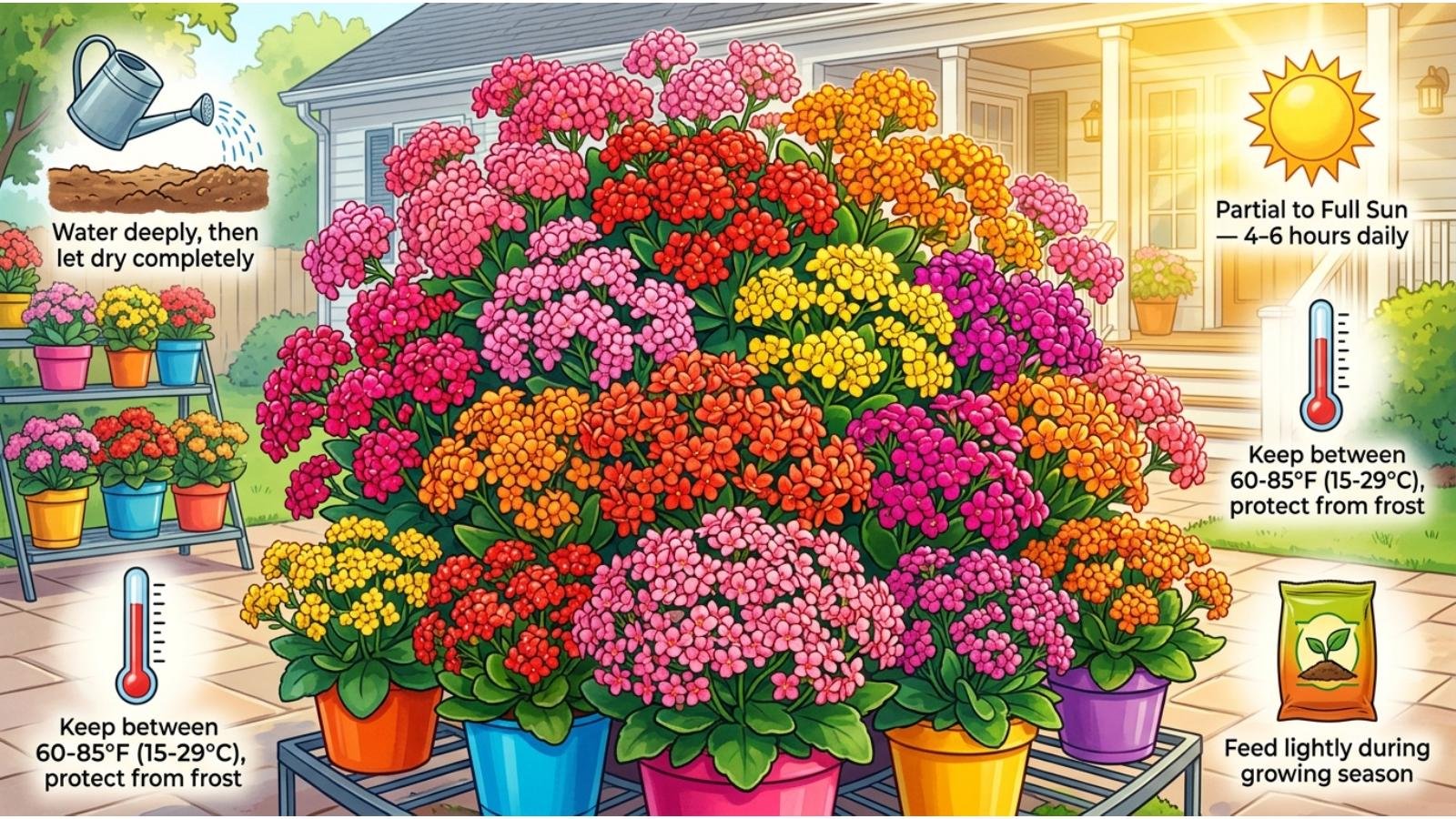
Kalanchoes are popular outdoor plants because their fleshy foliage, compact growth, and colorful flowers can add long-lasting interest to patios, balconies, entryways, and sheltered garden spaces. However, successful kalanchoe plant care outdoors requires a slightly different approach from caring for moisture-loving garden plants. The biggest mistakes are usually too much water, sudden exposure to intense sunlight, and leaving tender plants outside during cold weather.
The good news is that kalanchoe is relatively forgiving once you understand how it naturally handles water and light. Its succulent leaves act as water-storage organs, so you do not need to keep the soil constantly moist. In fact, allowing the growing medium to dry appropriately between waterings is one of the most useful habits you can develop.
Quick Answer
Kalanchoe plant care outdoors is easiest when the plant gets bright light, excellent drainage, moderate watering, and protection from frost. Most kalanchoes are succulent plants that store water in their leaves, so consistently wet soil can cause root problems. Grow them in containers or very well-drained beds, allow the growing medium to dry between thorough waterings, and move container plants to a protected location before freezing temperatures arrive.
Choosing the Right Outdoor Location
Location determines how well your kalanchoe grows, flowers, and handles summer weather. A bright, sheltered position is usually much better than an exposed location where the plant receives harsh afternoon heat, strong wind, or excessive rain.
For many kalanchoes, especially Kalanchoe blossfeldiana, bright light with some protection from intense conditions works well. The Royal Horticultural Society lists Kalanchoe blossfeldiana for sheltered positions and partial shade, while also noting its suitability for patio and container growing.
Look for a location that provides:
- Bright natural light.
- Morning sun when possible.
- Protection from prolonged harsh afternoon sun in very hot climates.
- Good air circulation.
- Shelter from heavy rain.
- Easy access for moving containers when temperatures fall.
A sheltered patio, covered porch, bright balcony, or protected garden corner can be an excellent location.
Outdoor conditions can be much harsher than indoor conditions. A plant that has spent months behind filtered glass should not suddenly be placed under intense midday sunlight. Extension guidance for moving houseplants outdoors recommends introducing plants gradually and favoring morning sun or filtered light initially because direct outdoor sunlight can scorch foliage.
Image Suggestion: Kalanchoe growing outdoors on a bright sheltered patio with morning sunlight.
How Much Sun Does Kalanchoe Need Outdoors
Kalanchoes need plenty of light, but the ideal amount depends on the climate, cultivar, season, and how accustomed the plant is to outdoor conditions.
In mild conditions, a kalanchoe can perform well with several hours of sunlight. In extremely hot climates, however, intense afternoon sunlight can cause leaf scorch, particularly if a plant was previously grown indoors.
A practical approach is to give a recently moved kalanchoe morning sun first. After it adjusts, gradually increase its exposure if the leaves remain healthy.
Watch the foliage rather than following a rigid number of sunlight hours.
Signs of excessive light or heat can include:
- Brown or crispy patches.
- Bleached-looking areas.
- Dry leaf edges.
- Sudden leaf damage after relocation.
- Drooping during extreme heat.
On the other hand, insufficient light can result in weak or stretched growth and poor flowering. Succulents generally require plenty of light, although their exact tolerance varies.
The key is bright light without unnecessarily exposing the plant to the harshest conditions of the day.
Best Soil for Outdoor Kalanchoe
Well-draining soil is one of the most important requirements for successful kalanchoe plant care outdoors.
Kalanchoes are succulents, so their roots should not remain surrounded by saturated soil for long periods. A heavy garden soil that holds water can become especially problematic after repeated rainfall.
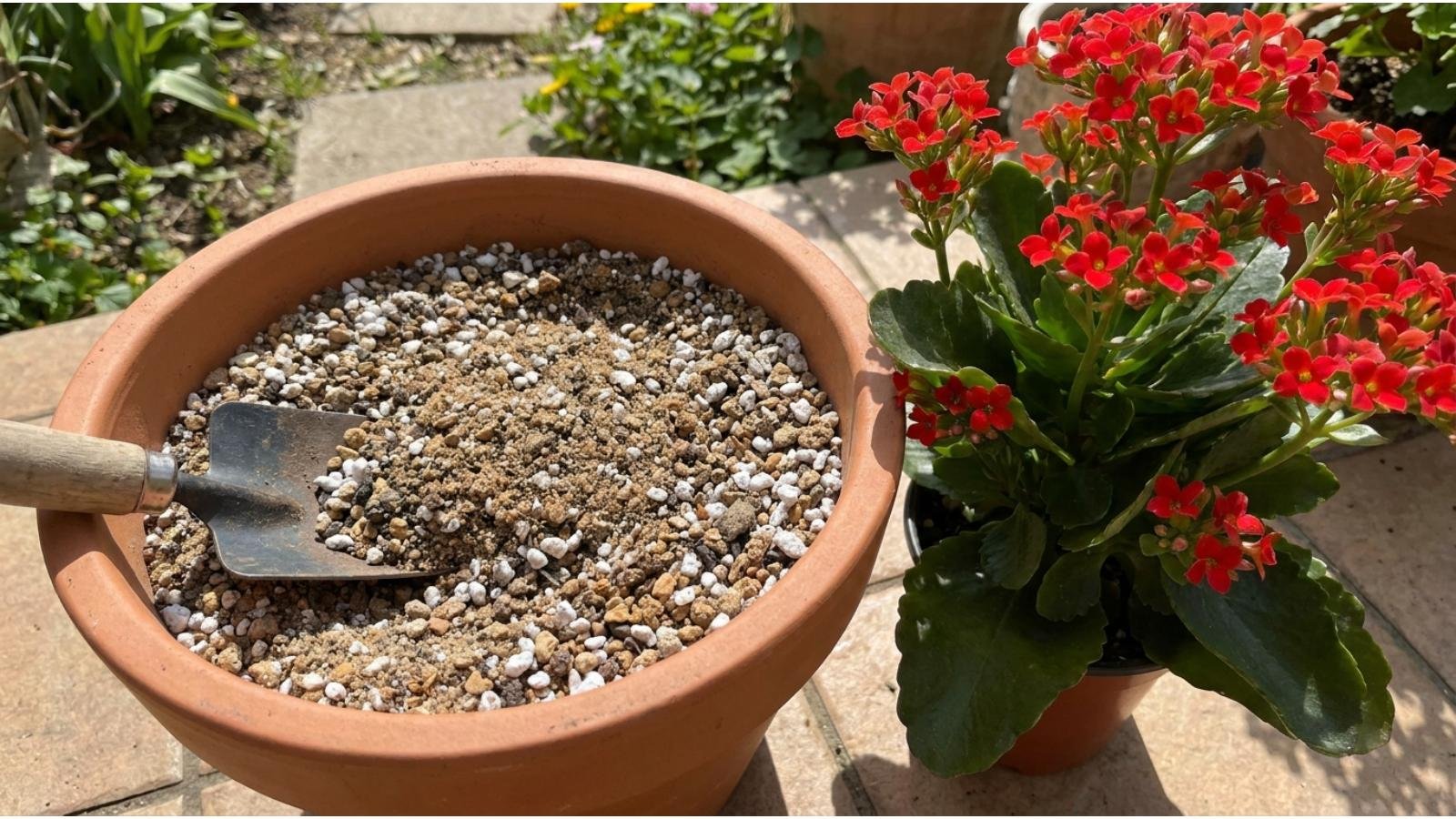
For container growing, use a fast-draining succulent or cactus-style potting mix. You can improve drainage further with an appropriate mineral component such as coarse grit or perlite.
A good growing medium should:
- Drain excess water quickly.
- Provide enough support for the roots.
- Avoid becoming permanently soggy.
- Allow air to reach the root zone.
- Dry reasonably between waterings.
For garden beds, avoid low areas where water collects after rain. If the native soil drains poorly, growing kalanchoe in a raised area or container is often safer.
Image Suggestion: Close-up comparison of well-draining kalanchoe soil versus compacted waterlogged soil.
Choosing the Best Pot for Outdoor Kalanchoe
A container gives you an important advantage: mobility.
If a storm arrives, the plant receives too much afternoon heat, or temperatures suddenly fall, you can move the kalanchoe.
Choose a pot with drainage holes at the bottom. The pot should be large enough to support the root system without providing a huge volume of unused wet soil.
Terracotta can be useful because it allows moisture to evaporate through the container walls, although the plant can dry faster in hot weather.
Outdoor container plants generally dry faster than plants grown in the ground, particularly during hot, dry, windy weather.
Do not place the pot inside a decorative container where excess water remains trapped around the roots.
How to Water Kalanchoe Outdoors
Watering is where many kalanchoe owners go wrong.
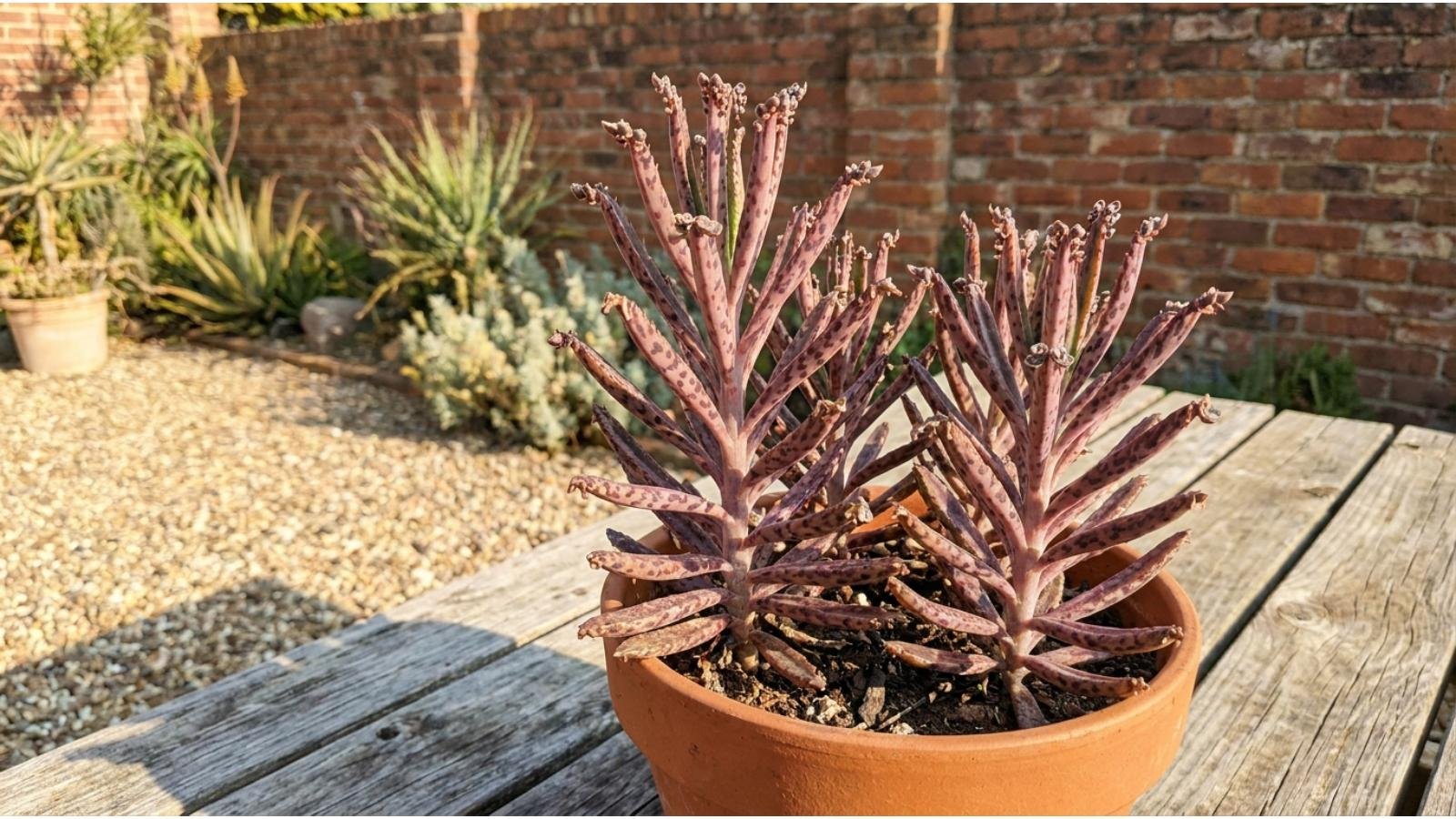
Because kalanchoes are succulents, watering on a fixed daily schedule is usually unnecessary. Instead, check the growing medium and the plant’s environment.
When the soil has dried sufficiently, water thoroughly so moisture reaches the root zone. Then allow excess water to drain completely.
The watering succulents only when their compost has fully dried during the growing season and emphasizes allowing water to drain through the container rather than leaving plants standing in water.
A useful outdoor routine is:
- Check the soil before watering.
- Consider recent rainfall.
- Water thoroughly when the growing medium is appropriately dry.
- Let excess water escape through the drainage holes.
- Reduce watering during cool or inactive periods.
- Never water simply because a calendar says it is watering day.
Hot weather can increase water loss, but that does not mean the roots should remain constantly wet. A small container exposed to wind and full morning sun may dry much faster than a large container in a sheltered position.
This is why checking the plant and soil is more reliable than following a universal watering schedule.
How to Water Kalanchoe During Rainy Weather
Outdoor rainfall changes the watering equation completely.
If your kalanchoe has received substantial rain, do not automatically add more water. Check the soil first.
A container that stays wet for several days needs more protection from rain rather than additional irrigation.
During periods of persistent rain:
- Move potted kalanchoes under a covered area.
- Make sure drainage holes are unobstructed.
- Empty water collected in saucers.
- Avoid placing pots directly in standing water.
- Check the roots and foliage if the soil remains wet for an unusually long time.
For kalanchoe, drainage is not a minor detail. It is part of the watering system.
Temperature and Cold Protection
Kalanchoe is not a plant you should casually leave outdoors through freezing weather.
If cold weather or frost is approaching, container-grown plants have a major advantage because they can be moved.
Move your kalanchoe to a protected location before freezing conditions arrive. A bright indoor area, sheltered porch, greenhouse, or other frost-free location can be appropriate depending on your climate.
Do not wait until the plant has already suffered frost damage.
Frost can injure tender plant tissues, causing foliage and stems to become limp, darkened, distorted, or damaged.
Image Suggestion: Outdoor kalanchoe container being moved into a sheltered area before a cold night.
Feeding Outdoor Kalanchoe
Kalanchoes generally do not need heavy feeding.
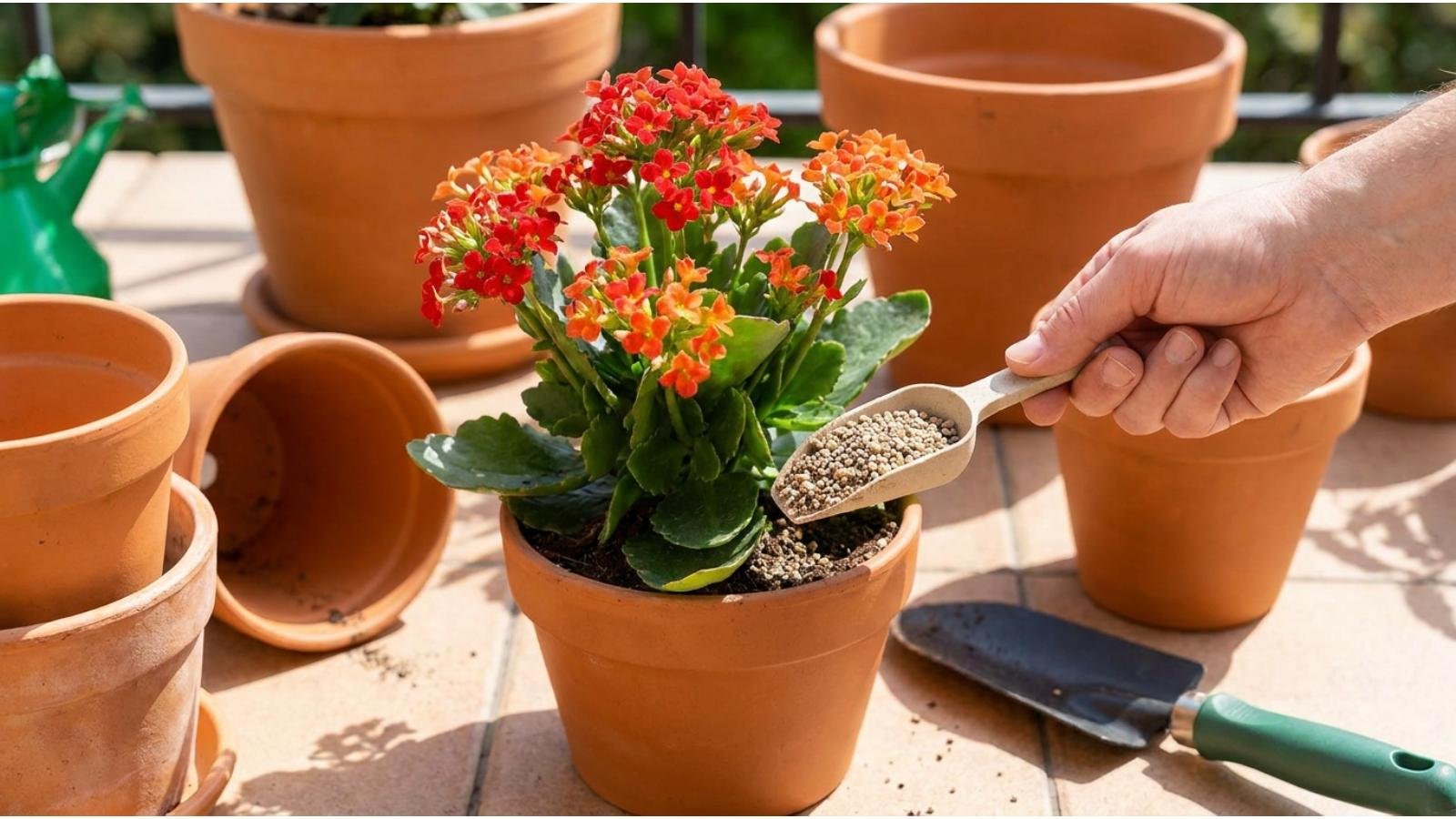
During active growth, a balanced fertilizer applied according to the product label can support healthy growth. The balanced liquid fertilizer two or three times during the growing season for Kalanchoe blossfeldiana.
Avoid the temptation to fertilize every time you water.
Too much fertilizer can encourage excessive soft growth rather than creating the compact, healthy plant most gardeners want.
A sensible approach is:
- Fertilize during active growth.
- Follow the fertilizer manufacturer’s dilution instructions.
- Avoid excessive applications.
- Reduce or stop feeding during inactive periods.
- Water appropriately before or around fertilization according to the fertilizer directions.
If the plant is already stressed by heat, drought, root problems, or cold, correcting the underlying issue should come before trying to stimulate it with fertilizer.
Pruning and Deadheading Kalanchoe
Kalanchoe does not normally require complicated pruning.
Remove faded flower clusters to keep the plant looking tidy and encourage a more attractive appearance. Remove damaged, dead, or unhealthy growth with clean tools.
Pruning can also help prevent a plant from becoming overly untidy after flowering.
Avoid cutting healthy stems simply because the plant is not flowering at the moment. Flowering depends on factors including light, temperature, plant maturity, and the particular kalanchoe type.
How to Encourage Kalanchoe to Flower
Healthy foliage does not always mean abundant flowers.
If your kalanchoe grows well but refuses to bloom, look at its overall growing conditions instead of immediately adding more fertilizer.
Check:
- Light exposure.
- Plant maturity.
- Recent pruning.
- Watering habits.
- Temperature conditions.
- Seasonal changes.
- Whether the plant is receiving excessively long periods of artificial light at night.
A common mistake is assuming that more fertilizer automatically produces more flowers. Flowering is influenced by environmental conditions, and excessive feeding is not a substitute for appropriate light and plant care.
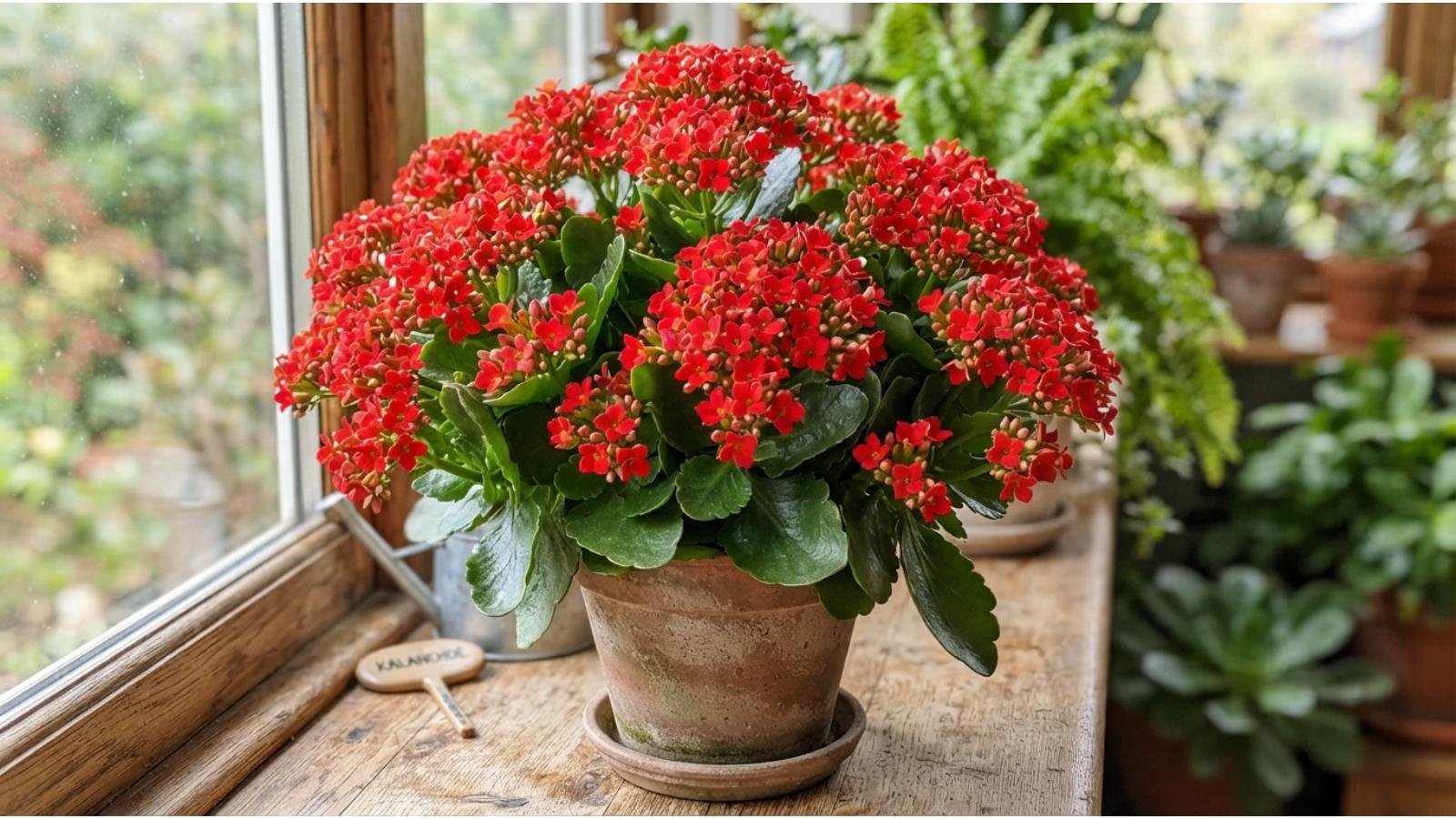
When conditions are suitable, Kalanchoe blossfeldiana can produce colorful flowers in shades including red, pink, yellow, orange, and cream.
Image Suggestion: Healthy flowering kalanchoe showing multiple colorful flower clusters above compact green foliage.
Kalanchoe Outdoor Care Through the Seasons
Outdoor kalanchoe care should change with the weather.
Spring
Spring is an excellent time to move a kalanchoe outdoors after cold conditions have passed.
If the plant has been indoors, introduce it to outdoor light gradually rather than immediately placing it in intense sunlight.
Increase light exposure progressively while monitoring the leaves.
Summer
Summer usually brings faster drying and stronger sunlight.
Check containers more frequently, especially during hot, windy weather. At the same time, do not turn frequent checking into automatic watering.
Provide protection from extreme afternoon heat if the foliage shows signs of scorching.
Fall
As temperatures begin to decline, reduce unnecessary watering and start watching nighttime temperatures.
This is also the time to prepare container plants for relocation if cold weather is approaching.
Winter
In regions with freezing weather, treat kalanchoe as a tender plant rather than assuming it will survive outdoors.
Move containers to a frost-free environment before freezing conditions arrive. Container gardening is particularly useful for tender plants because pots can be relocated when frost is forecast.
Common Kalanchoe Problems Outdoors
Yellow Leaves
Yellow leaves can have several causes, so avoid assuming that fertilizer deficiency is always responsible.
Check the soil first.
If the growing medium remains wet for long periods, overwatering or poor drainage may be contributing to the problem.
If the soil is extremely dry, heat and drought stress may be involved.
Look at the entire situation rather than diagnosing the leaf color in isolation.
Soft or Mushy Leaves
Soft, mushy foliage can be a warning sign of excess moisture or tissue damage.
Check the roots and growing medium. If the soil remains saturated, improve drainage and adjust watering.
Do not continue watering simply because the leaves look unhealthy.
Brown or Crispy Leaves
Brown, crispy patches can develop from excessive heat, intense sunlight, drought stress, or other environmental problems.
Think about what changed immediately before the symptoms appeared.
If the plant was moved from filtered indoor light to intense outdoor sun, sudden sun exposure is an obvious possibility. Outdoor plants can experience rapid scorching when they are not acclimated properly.
Leggy Growth
Long, weak, widely spaced stems often indicate that the plant is not receiving enough usable light.
Move it toward a brighter location gradually rather than suddenly exposing it to extreme midday sunlight.
Pruning can improve the shape, but better light is usually the more important long-term correction.
No Flowers
If the plant has healthy leaves but produces few flowers, evaluate light and seasonal conditions first.
Also consider whether recent pruning removed developing flowering growth or whether the plant is simply between flowering cycles.
Outdoor Pests and Diseases
Kalanchoes can encounter common garden pests, especially when grown in warm conditions.
Inspect the plant regularly, especially:
- Leaf joints.
- New growth.
- The underside of leaves.
- Stems.
- Areas where leaves meet the main stem.
Early detection makes pest management much easier.
Poor airflow, prolonged wetness, and damaged foliage can also create conditions favorable to disease problems. Avoid keeping the plant unnecessarily wet and remove severely damaged material when appropriate.
Outdoor Kalanchoe Care Mistakes to Avoid
Several mistakes appear repeatedly when people transition from ordinary houseplant care to outdoor succulent care.
- Watering every day without checking the soil.
- Using heavy soil that drains slowly.
- Leaving containers sitting in rainwater.
- Moving the plant directly from indoors into intense midday sun.
- Keeping kalanchoe outdoors during freezing weather.
- Using a container without drainage holes.
- Fertilizing a stressed plant excessively.
- Ignoring early pest infestations.
- Assuming every kalanchoe variety has identical environmental requirements.
- Treating a hot climate exactly like a mild climate.
The most useful habit is observation. Look at the soil, leaves, weather, light exposure, and recent changes before deciding what the plant needs.
Container Growing Versus In Ground Growing
For many gardeners, container growing is the safer option.
| Feature | Container Kalanchoe | In Ground Kalanchoe |
|---|---|---|
| Drainage control | Easier to control | Depends heavily on native soil |
| Moving during cold weather | Easy | Difficult |
| Moving away from heavy rain | Easy | Difficult |
| Soil control | Excellent | Limited |
| Suitable for balconies | Excellent | No |
| Protection from extreme weather | Easier | More difficult |
| Long-term placement | Flexible | More permanent |
Containers are especially useful for gardeners in climates where kalanchoe cannot reliably remain outdoors year-round.
How to Move Kalanchoe From Indoors to Outdoors
Do not make the transition overnight.
Start by placing the plant outdoors in a sheltered location with bright but relatively gentle light. Morning sun is often a practical starting point.
Over the following days, gradually increase exposure while watching for signs of stress.
If leaves begin showing scorch, reduce intense exposure and give the plant more protection.
This acclimation process is important because outdoor sunlight can be substantially more intense than the light a plant receives indoors.
A Simple Outdoor Kalanchoe Care Routine
A simple routine is often more effective than complicated schedules.
Weekly check
- Feel or inspect the growing medium.
- Look for pests.
- Examine new growth.
- Check drainage.
- Observe leaf color and firmness.
- Look at upcoming weather conditions.
When the soil is sufficiently dry
Water thoroughly and allow excess moisture to drain away.
During hot weather
Monitor containers more frequently because they can dry faster.
After heavy rain
Skip irrigation until the growing medium has dried appropriately.
Before cold weather
Move container plants to a protected, frost-free location.
This approach adapts care to the plant’s actual conditions rather than forcing the plant into an arbitrary watering calendar.
Frequently Asked Questions About Kalanchoe Plant Care Outdoors
Can Kalanchoe Live Outside All Year
It depends on the climate and the kalanchoe species. Tender types such as Kalanchoe blossfeldiana should not be exposed to freezing conditions. In colder climates, grow them in containers so they can be moved indoors or into a protected area before frost.
Does Kalanchoe Like Full Sun Outdoors
Kalanchoe generally appreciates bright light, but intense outdoor sun can be too harsh, especially immediately after moving a plant from indoors. Morning sun and gradual acclimation are safer starting points in hot climates.
How Often Should I Water Outdoor Kalanchoe
There is no reliable universal schedule. Check the growing medium and weather conditions. Water thoroughly when the soil has dried appropriately, then allow excess water to drain. Avoid keeping the roots continuously wet.
Can Kalanchoe Grow in Garden Soil
It can grow in the ground where the soil drains very well and the climate is suitable. Heavy or poorly drained soil is a poor choice because kalanchoes prefer well-drained conditions.
Can Kalanchoe Survive Rain
Kalanchoe can tolerate normal rainfall when planted or potted in well-draining conditions. Problems occur when rain keeps the root zone saturated for extended periods. During prolonged wet weather, move container plants under shelter when practical.
Why Are My Outdoor Kalanchoe Leaves Turning Brown
Brown leaves can result from intense sunlight, heat, drought stress, or other environmental problems. Consider recent changes in sunlight and watering before deciding on a treatment. Sudden exposure to strong outdoor sun is a common reason plants develop scorch after being moved outside.
Should I Bring Kalanchoe Inside for Winter
If your area experiences freezing temperatures, bringing a container-grown kalanchoe into a frost-free location is the safest approach. Kalanchoe blossfeldiana is not considered a plant that survives freezing conditions reliably.
Is Kalanchoe Easy to Grow Outdoors
Yes, when its basic requirements are met. The most important factors are suitable light, fast drainage, careful watering, and protection from freezing weather.
Can Kalanchoe Grow in Pots Outdoors
Yes. Kalanchoe is particularly well suited to container growing, and containers make it easier to control soil conditions and move plants away from frost or extreme weather.
Is Kalanchoe Safe Around Pets
Kalanchoe should be kept away from pets that may chew on the plant. The RHS lists Kalanchoe blossfeldiana as potentially harmful if eaten by dogs, cats, rabbits, rodents, and caged birds.
Conclusion
Successful kalanchoe plant care outdoors comes down to managing four things well: light, drainage, water, and temperature. Give the plant bright light while protecting it from sudden harsh exposure, use fast-draining soil, water only when the growing medium has dried appropriately, and move tender plants to safety before freezing weather arrives.
The biggest improvement most gardeners can make is to stop treating kalanchoe like an ordinary thirsty garden plant. Its succulent leaves are designed to store water, so thoughtful watering and excellent drainage are more valuable than frequent irrigation. With the right outdoor location and seasonal adjustments, kalanchoe can remain compact, healthy, and beautifully colorful for a long time.