Quick Answer
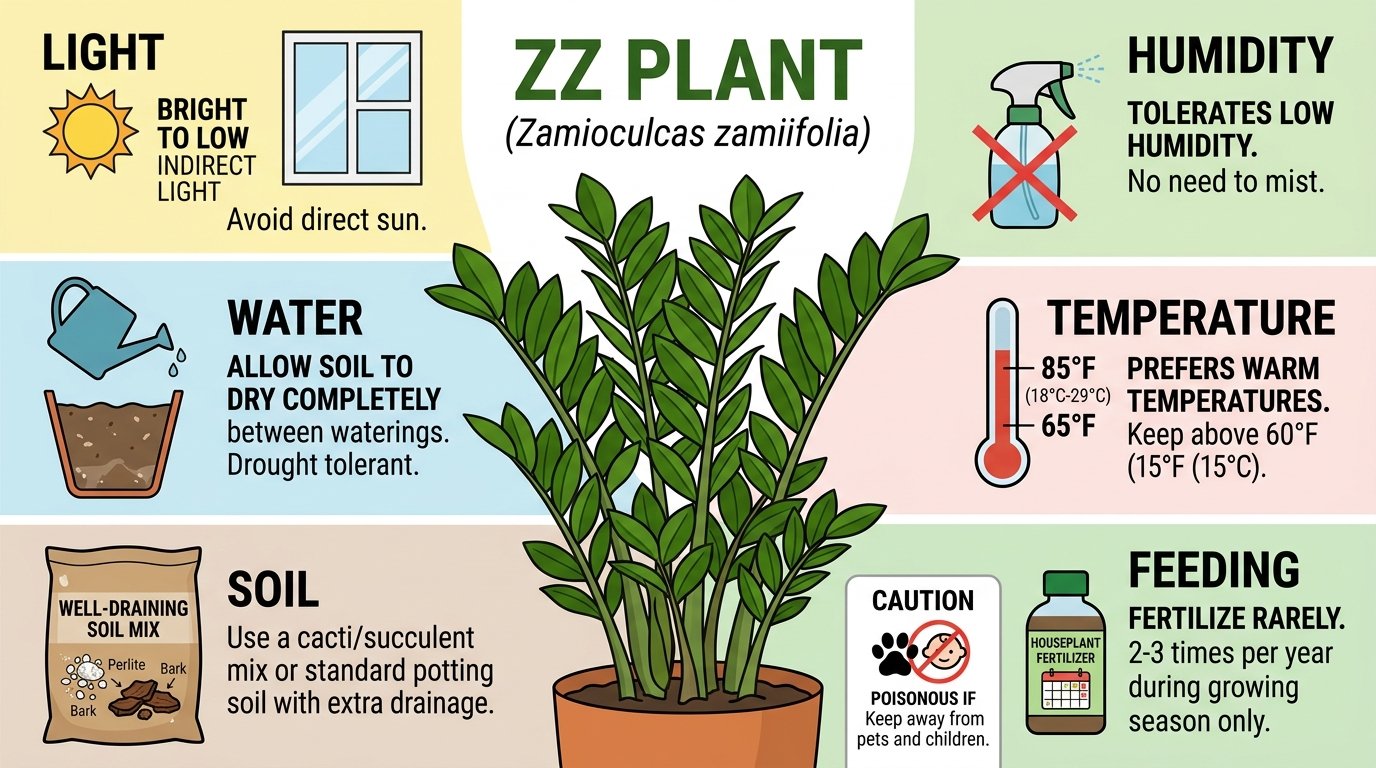
To care for a ZZ plant, place it in bright indirect light or tolerate lower light, use well-draining soil, and water only when the soil has dried substantially.
ZZ plants prefer being slightly dry rather than constantly wet. Keep temperatures comfortably warm, avoid standing water, and fertilize lightly during active growth. Their thick rhizomes store water, making them naturally drought tolerant and relatively easy to maintain.
ZZ plants prefer being slightly dry rather than constantly wet. Keep temperatures comfortably warm, avoid standing water, and fertilize lightly during active growth. Their thick rhizomes store water, making them naturally drought tolerant and relatively easy to maintain.
Introduction
Learning how to care for ZZ plant properly is mostly about understanding what the plant does not need. Unlike many tropical houseplants, a ZZ plant does not require frequent watering, constantly moist soil, or intense sunlight.
The ZZ plant, commonly known as Zamioculcas zamiifolia, stores water in underground structures called rhizomes. This adaptation helps it survive periods of dryness, but it also explains why excessive watering can cause serious problems. A plant that looks thirsty may actually be suffering from poor drainage or damaged roots.
The easiest approach is to create conditions that resemble the ZZ plant’s natural preference: moderate indirect light, occasional deep watering, excellent drainage, and plenty of time for the soil to dry between waterings.
Understanding the ZZ Plant Before You Care for It
ZZ plants have thick, upright stems covered with glossy leaflets. Beneath the soil are swollen rhizomes that function somewhat like water-storage organs.
This structure affects almost every part of ZZ plant care.
Because the plant can store water:
- It generally tolerates missed waterings.
- It does not need constantly moist soil.
- Its roots can suffer when soil stays wet for too long.
- Watering on a fixed schedule can be less reliable than checking the soil.
- A large pot that holds excess moisture can create problems even when watering seems reasonable.
One of the most common beginner mistakes is treating a ZZ plant like a thirsty tropical plant. More water does not mean faster growth.
Practical insight: If you are unsure whether your ZZ plant needs water, checking the soil is usually more useful than looking only at the leaves.
ZZ Plant Light Requirements
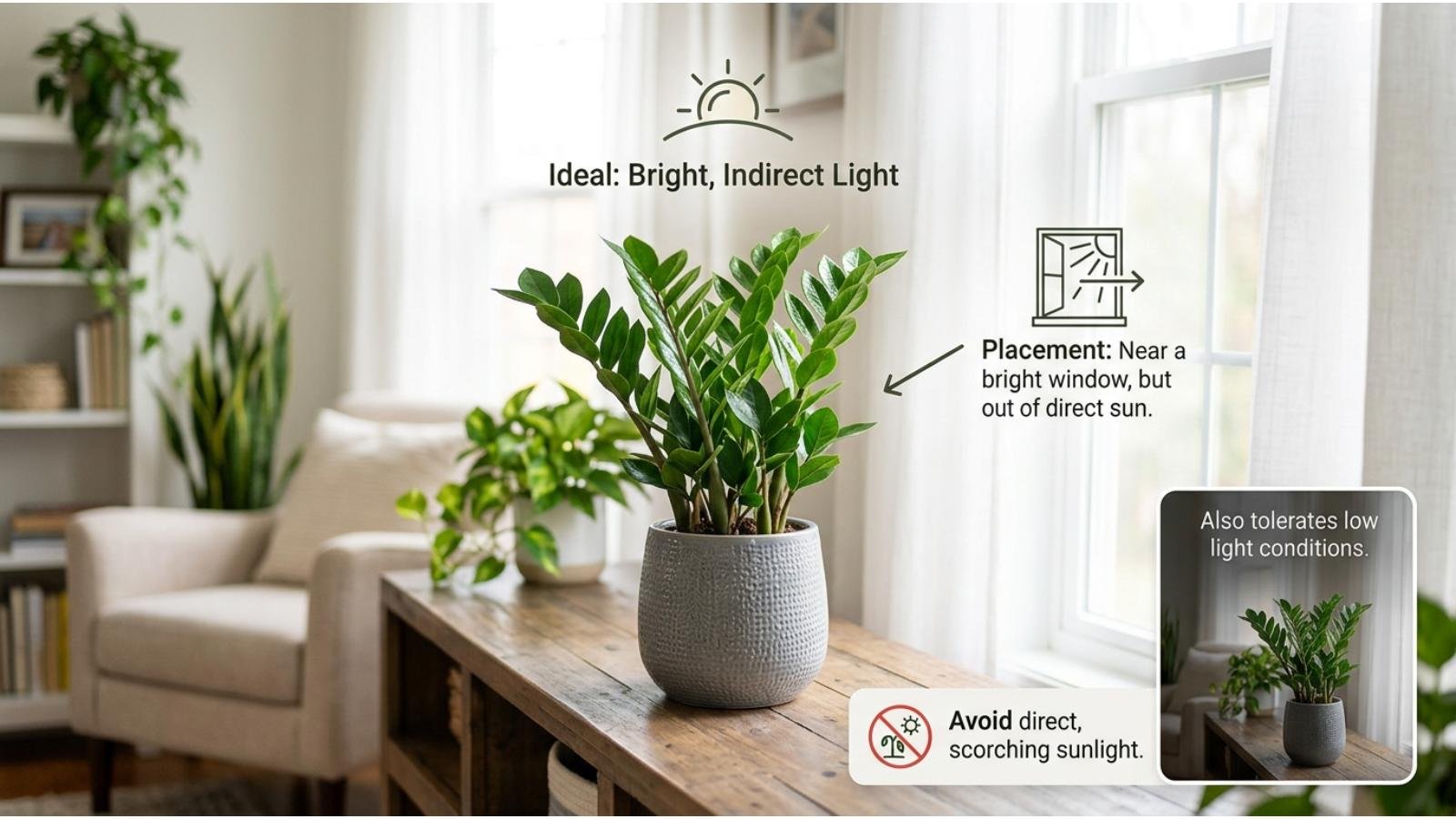
ZZ plants are famous for tolerating low light, but low-light tolerance does not mean low light is ideal for maximum growth.
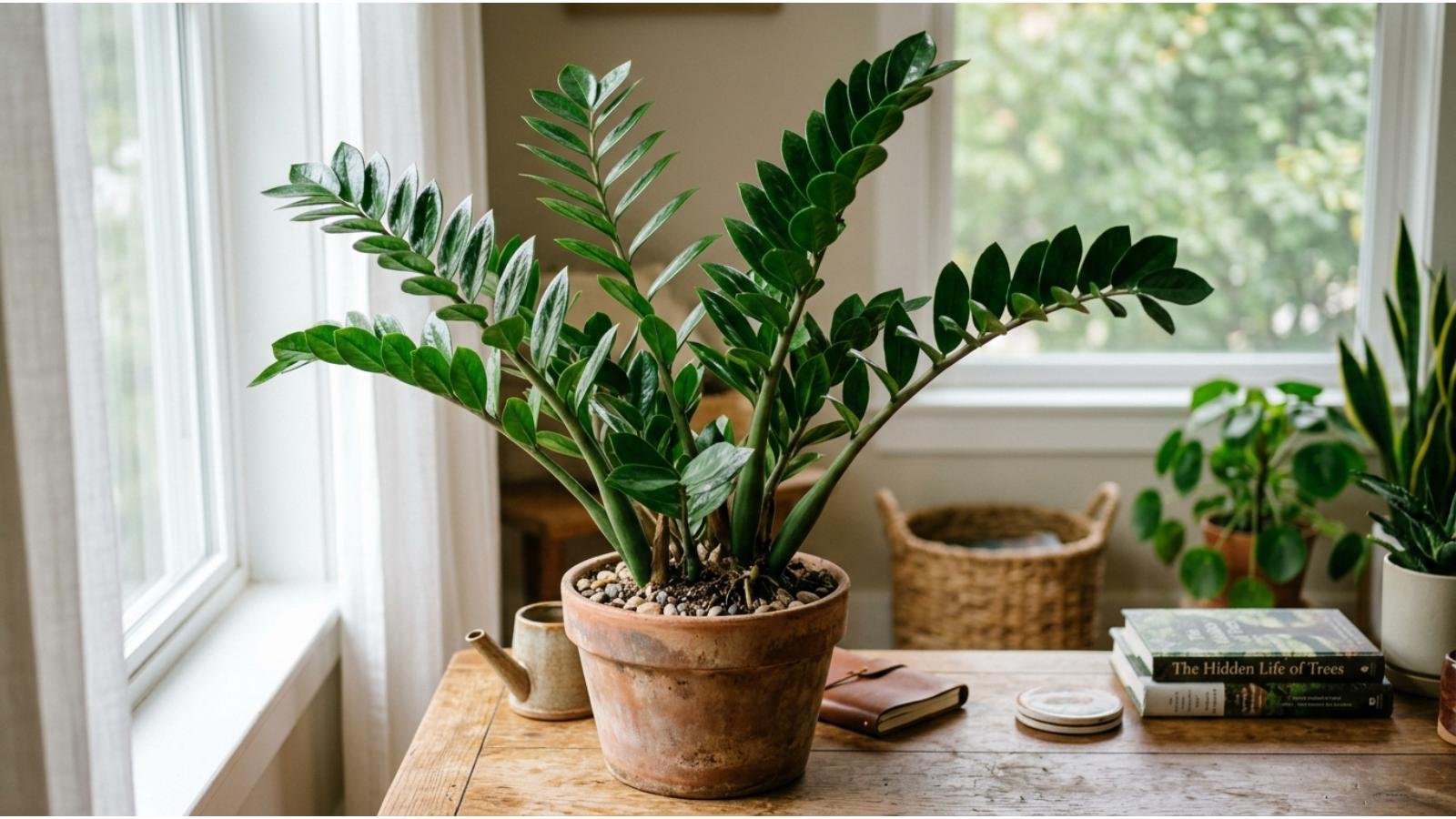
Bright, indirect light usually provides a good balance between healthy growth and protection from harsh direct sunlight.
Best lighting conditions
A good location may be:
- Near a bright window with filtered light.
- Several feet away from a sunny window.
- In a bright room where sunlight does not directly scorch the leaves.
- Under suitable indoor grow lighting.
Can ZZ Plants Grow in Low Light?
Yes. ZZ plants can survive in relatively low-light locations, which is one reason they are popular office and indoor plants.
However, growth may become slower. New stems may also develop more gradually than they would in brighter indirect light.
If your plant is surviving but barely growing, light may be one of the first environmental factors worth checking.
What About Direct Sunlight?
Strong, direct afternoon sunlight through glass can scorch ZZ plant foliage. Symptoms may include pale, bleached, brown, or crispy patches.
Gentle morning sunlight may be tolerated better, but the intensity of the light matters more than simply labeling it as “direct” or “indirect.”
Image Suggestion: ZZ plant placed in bright indirect light beside a window, showing an appropriate distance from the glass.
How Often Should You Water a ZZ Plant?
There is no universal watering schedule that works for every ZZ plant.
Instead, water according to soil dryness, pot size, light, temperature, and humidity.
As a general indoor guideline, a ZZ plant may need watering every couple of weeks or even less frequently in low-light conditions. During brighter, warmer periods it may use water more quickly.
A Better Watering Method
Follow these steps:
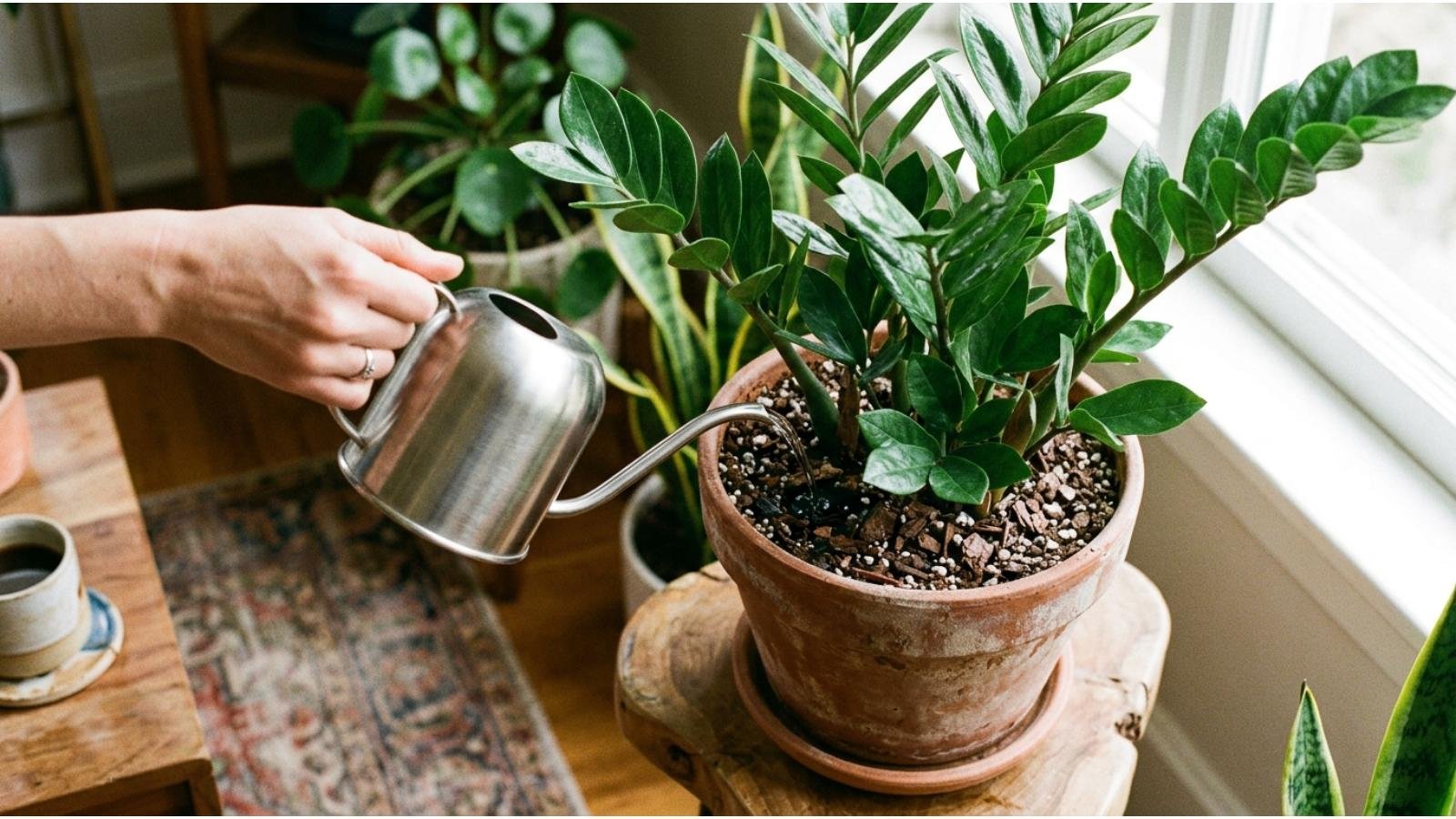
- Check the top portion of the soil with your finger or a moisture check.
- Feel deeper into the pot when possible rather than judging only the surface.
- If the soil is still substantially moist, wait.
- When the soil has dried sufficiently, water thoroughly.
- Allow excess water to drain completely.
- Empty standing water from a saucer or outer container.
The exact drying point depends on your growing conditions, but the key is to avoid keeping the root zone continuously wet.
Why Overwatering Is More Dangerous
Beginners sometimes assume that yellow leaves mean the plant needs more water. With ZZ plants, that assumption can be particularly risky.
Overwatering can reduce the amount of oxygen available around the roots and create conditions associated with root and rhizome rot.
A ZZ plant can recover from being slightly dry far more easily than from repeatedly sitting in saturated soil.
Image Suggestion: Soil moisture comparison showing a dry ZZ plant pot beside a saturated, poorly drained pot.
Choosing the Right Soil for a ZZ Plant
Good drainage is one of the most important parts of ZZ plant care.
A suitable mix should allow water to move through the root zone instead of remaining trapped around the rhizomes.
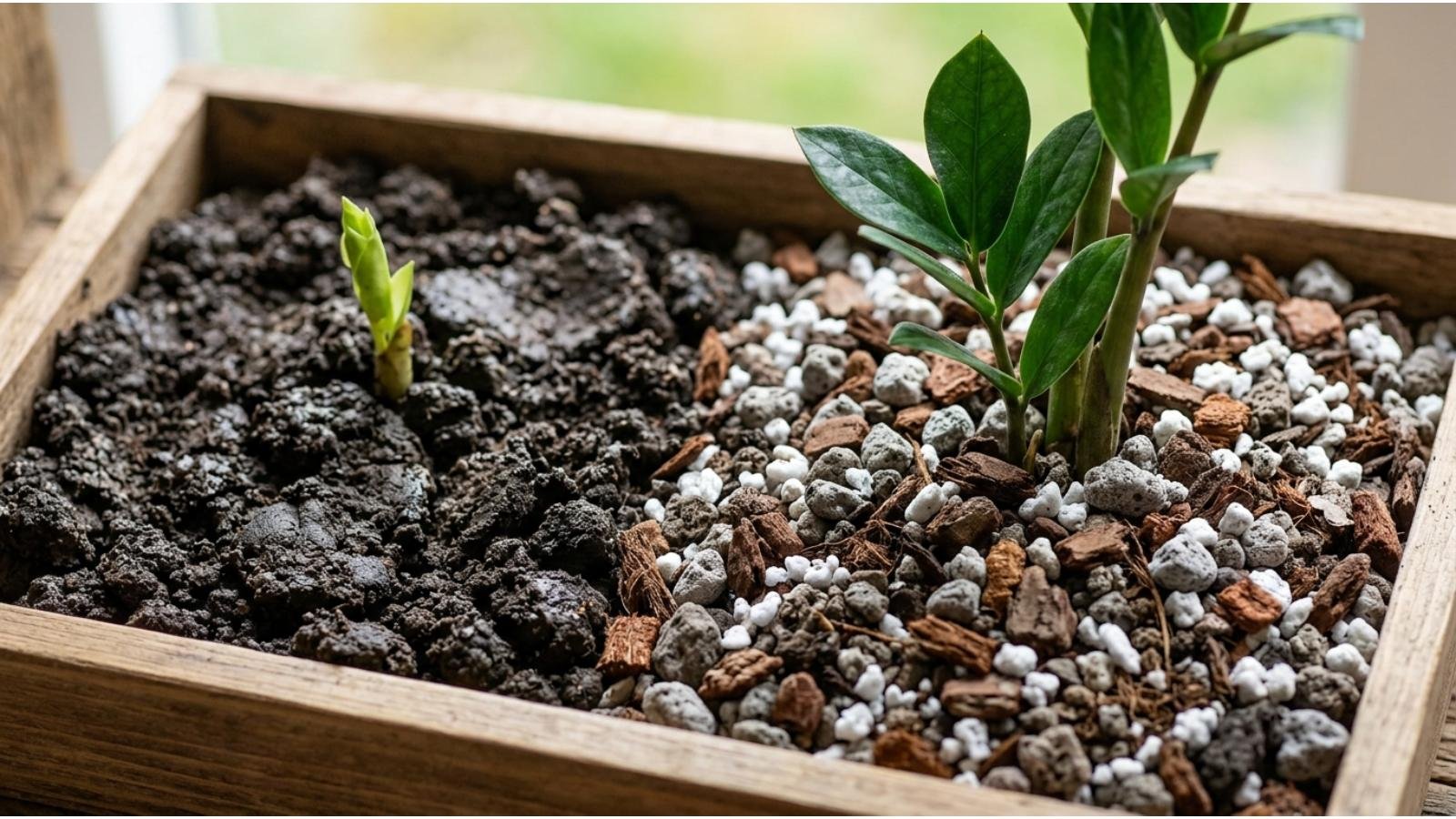
A practical houseplant mixture can include:
- Quality indoor potting mix.
- Perlite or another material that improves aeration and drainage.
- A coarse component such as orchid bark if the existing mix holds too much moisture.
The exact recipe does not need to be complicated.
The goal is an airy, well-draining growing medium that does not remain soggy for long periods.
How to Tell If Your Soil Is Holding Too Much Water
Watch for:
- Soil that remains wet for many days.
- A musty smell.
- Repeated yellowing leaves.
- Soft or deteriorating roots.
- A plant that declines despite regular watering.
If these signs appear, changing the watering frequency alone may not solve the problem. The soil and pot drainage may also need attention.
Choosing the Right Pot
The pot is often overlooked when diagnosing ZZ plant problems.
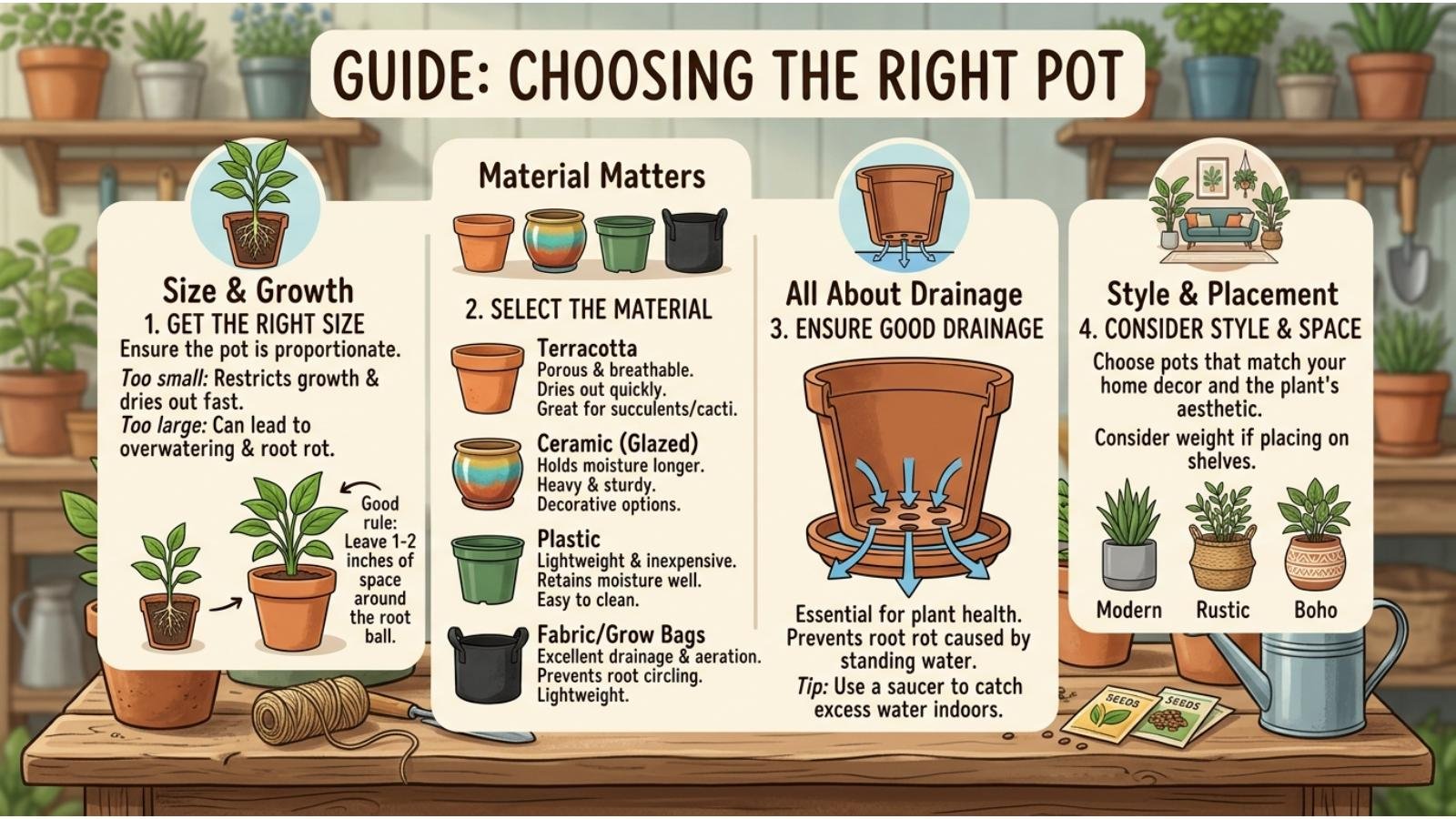
A container should have drainage holes so excess water can escape.
Avoid choosing an extremely large pot simply because you want your plant to have room to grow. A large volume of soil can retain moisture around the roots for longer than necessary.
When Should You Repot a ZZ Plant?
Repot when the plant has substantially outgrown its container, roots are becoming severely crowded, the growing medium has deteriorated, or drainage has become problematic.
A new container only needs to be moderately larger than the previous one.
Repotting into an oversized pot can unintentionally increase the risk of prolonged soil moisture.
Practical tip: A ZZ plant does not need frequent repotting just because it is growing slowly. Slow growth is normal, especially in lower light.
Temperature and Humidity Requirements
ZZ plants generally perform well in ordinary indoor temperatures.
Protect them from:
- Cold drafts.
- Very cold windows.
- Sudden temperature changes.
- Direct blasts from heating or cooling equipment.
They can tolerate normal household humidity and usually do not require a humidifier simply to remain healthy.
Unlike some tropical plants, a ZZ plant does not need a constantly humid environment to thrive indoors.
Should You Mist a ZZ Plant?
Misting is generally unnecessary.
It does not replace proper watering and can add little meaningful benefit when ordinary indoor humidity is adequate.
Focus instead on light, drainage, watering, and temperature.
How to Fertilize a ZZ Plant
ZZ plants are relatively slow growers, so they usually do not require heavy feeding.
During active growth, you can use a balanced houseplant fertilizer at an appropriate diluted strength according to its label.
Avoid applying excessive fertilizer in an attempt to force faster growth.
Too much fertilizer can contribute to salt buildup in the soil and may damage roots.
When Not to Fertilize
Avoid routine feeding when:
- The plant is severely stressed.
- The soil is waterlogged.
- Roots appear damaged.
- The plant is struggling because of poor light or temperature.
- Growth has naturally slowed during a cooler, darker period.
Fix the environmental problem first rather than trying to compensate with fertilizer.
ZZ Plant Pruning and Maintenance
ZZ plants do not require complicated pruning.
Remove leaves or stems that are:
- Completely yellow or brown.
- Dead.
- Severely damaged.
- Diseased or rotting.
Use clean, sharp pruning tools and cut unwanted stems near their base.
Do not remove healthy foliage simply because individual leaves are older. Healthy leaves contribute to photosynthesis and help the plant produce energy.
Cleaning ZZ Plant Leaves
Because ZZ plant leaves are naturally glossy, dust can become noticeable.
Gently wipe leaves with a clean, slightly damp cloth when needed.
Avoid relying on oily leaf-shine products. They can leave residue on foliage and are unnecessary for maintaining healthy leaves.
Image Suggestion: Before-and-after illustration showing dusty ZZ plant leaves and gently cleaned foliage.
How to Encourage Faster ZZ Plant Growth
If your ZZ plant seems to be doing nothing for months, that does not automatically indicate a problem.
ZZ plants are naturally slower-growing houseplants.
However, you can encourage healthier growth by improving its overall conditions.
Focus on these factors
Provide adequate light.
Moving a plant from very low light to brighter indirect light can support more active growth.
Water appropriately.
Repeated drought followed by excessive watering creates unnecessary stress.
Use suitable soil.
Roots need both moisture and air.
Avoid oversized pots.
Extra soil can remain wet for too long.
Feed lightly during active growth.
Nutrients can support development when other growing conditions are already suitable.
Be patient.
A healthy ZZ plant may still produce new growth slowly.
One of the most overlooked ZZ plant-care lessons is that slow growth is not the same as poor health.
How to Propagate a ZZ Plant
ZZ plants can be propagated in several ways, including division and leaf or stem cuttings.
Propagation by Division
Division is practical when a mature ZZ plant has multiple rhizomes.
- Remove the plant carefully from its container.
- Examine the underground rhizomes.
- Separate suitable sections with their associated roots and stems.
- Place each division into an appropriately sized container.
- Use well-draining soil.
- Water carefully after planting.
- Give the new plants suitable indirect light.
Division can produce established plants more quickly than starting from a single leaf.
Propagation From Leaf Cuttings
ZZ plants can also be propagated from individual leaflets, but this method requires patience.
New roots and rhizome development can take a considerable amount of time.
Do not assume that a leaf cutting has failed simply because you see little activity after a few weeks.
Image Suggestion: Step-by-step ZZ plant propagation diagram showing division and leaf propagation.
Common ZZ Plant Problems and What They Mean
| Problem | Possible Cause | What to Check |
|---|---|---|
| Yellow leaves | Excess moisture, aging foliage, stress | Soil moisture and drainage |
| Brown crispy leaves | Dryness, intense sunlight, environmental stress | Watering and light |
| Soft stems | Excess moisture or rot | Roots, rhizomes, and soil |
| Drooping growth | Water stress or root problems | Soil moisture and root condition |
| Slow growth | Low light, season, or natural growth rate | Light and growing conditions |
| Pale leaves | Too much intense light or nutritional/environmental stress | Light exposure and care |
| Mushy roots | Prolonged excess moisture | Drainage and root health |
| Little new growth | Low light or normal slow growth | Light, season, and overall health |
Remember that a symptom can have more than one cause. Avoid changing several care factors at once unless the plant is in immediate danger.
Why Are ZZ Plant Leaves Turning Yellow?
Yellowing is one of the most common concerns among ZZ plant owners.
The first thing to investigate is soil moisture.
If the soil stays wet for an extended period and several leaves begin yellowing, excessive moisture may be contributing to the problem.
However, one older yellow leaf does not necessarily mean your plant is sick. Plants naturally replace older foliage.
What to Do
Check:
- How frequently you are watering.
- How quickly the soil dries.
- Whether the container has drainage holes.
- Whether the pot is excessively large.
- Whether the plant receives adequate light.
- Whether stems or roots show signs of rot.
Do not automatically increase watering just because a leaf turns yellow.
Why Are ZZ Plant Leaves Turning Brown?
Brown foliage can result from several conditions.
Possible causes include:
- Excessively dry soil.
- Strong direct sunlight.
- Low humidity combined with other stress.
- Physical damage.
- Fertilizer buildup.
- Root problems.
Look at the location and pattern of the damage.
Crispy patches on the side facing intense sunlight suggest a different issue than widespread browning accompanied by wet soil.
Diagnosing the pattern is more useful than treating every brown leaf as a watering problem.
Why Is My ZZ Plant Drooping?
A ZZ plant with drooping stems deserves a closer inspection.
Check the soil first.
If the soil is extremely dry, the plant may be experiencing water stress. If the soil is constantly wet, however, the problem may involve damaged roots or rhizomes rather than a simple lack of water.
Also examine the stems for softness or unusual discoloration.
Important: Do not keep adding water to a drooping ZZ plant without checking the soil. Drooping does not automatically mean thirst.
ZZ Plant Root or Rhizome Rot
Root and rhizome rot is commonly associated with prolonged excess moisture.
Warning signs can include:
- Soft roots.
- Mushy rhizomes.
- Unpleasant odor.
- Soft stems.
- Rapid decline.
- Persistent yellowing.
If rot is suspected, remove the plant from the pot and inspect the underground parts.
Healthy tissue should be firm rather than mushy.
Remove severely damaged portions with clean tools and repot healthy material into fresh, well-draining medium. Adjust watering afterward so the plant is not repeatedly exposed to saturated conditions.
Seasonal ZZ Plant Care
Spring
As light levels increase, growth may become more active.
- Check the soil regularly.
- Gradually adjust watering according to drying speed.
- Consider light fertilization during active growth.
- Inspect for new shoots and crowded roots.
Summer
Higher temperatures and brighter light can increase water use.
- Monitor soil moisture rather than following a rigid calendar.
- Protect the plant from harsh direct sunlight.
- Watch for unusually rapid drying.
Fall
Growth may begin slowing as light levels decrease.
- Reduce watering frequency when the soil takes longer to dry.
- Avoid unnecessary fertilizer.
- Check the plant before moving it into darker locations.
Winter
Indoor ZZ plants often grow slowly during darker, cooler months.
- Water less frequently when appropriate.
- Keep the plant away from cold drafts.
- Avoid keeping the root zone continuously wet.
- Do not fertilize heavily when growth has slowed.
The important principle is simple: watering should respond to how quickly the soil dries, not to the calendar alone.
A Simple ZZ Plant Care Routine
If you want a low-maintenance routine, use this checklist.
Every Week
- Check the plant’s light exposure.
- Look for pests or damaged foliage.
- Check the soil rather than automatically watering.
Every Few Weeks
- Water only when the soil has dried sufficiently.
- Water thoroughly and allow excess water to drain.
- Inspect leaves and stems for changes.
Every Few Months
- Clean dusty leaves.
- Check whether roots are becoming crowded.
- Inspect the pot’s drainage.
- Review whether the plant is receiving enough light.
During Active Growth
- Consider light fertilization when the plant is healthy.
- Monitor new growth.
- Adjust watering as environmental conditions change.
This routine is intentionally simple. ZZ plant care becomes easier when you stop treating every week as a scheduled watering event.
Common ZZ Plant Care Mistakes
Watering on a Fixed Schedule
Watering every Sunday may sound convenient, but your plant does not know what day it is.
Soil dries at different rates depending on light, temperature, humidity, pot size, and soil composition.
Using a Pot Without Drainage
A beautiful container is not helpful if excess water has nowhere to go.
If you want to use a decorative cachepot, keep the plant in a properly draining nursery container inside it.
Giving Too Much Direct Sun
ZZ plants tolerate bright conditions, but intense sunlight can damage foliage.
Fertilizing to Fix Poor Growth
If a ZZ plant is barely growing, fertilizer is not always the answer. Insufficient light is often a more relevant factor.
Repotting Too Frequently
ZZ plants do not need constant disturbance. Repot when there is a genuine reason.
Assuming Every Yellow Leaf Means Thirst
Yellow foliage can be associated with too much moisture as well as other causes.
Always investigate the soil before watering.
Is a ZZ Plant Good for Beginners?
Yes, ZZ plants are generally considered beginner-friendly because they tolerate periods of dryness and can adapt to a range of indoor lighting conditions.
But “easy care” does not mean impossible to kill.
The biggest risk for beginners is often overwatering.
A ZZ plant that receives too little water for a short period may recover. A plant repeatedly kept in saturated soil can develop much more serious problems.
For a beginner, the best strategy is not to give the plant constant attention. Instead, learn to recognize when it actually needs attention.
Frequently Asked Questions
How often should I water a ZZ plant?
Water when the soil has dried sufficiently rather than following a strict schedule. Environmental conditions can make a ZZ plant dry out faster or slower.
Does a ZZ plant need direct sunlight?
No. Bright indirect light is generally suitable. It can tolerate lower light, while intense direct sunlight can scorch the foliage.
Why is my ZZ plant not growing?
Low light is a common factor, but ZZ plants are naturally slow-growing. Check light, soil, watering, temperature, and nutrition before assuming something is wrong.
Can ZZ plants survive low light?
Yes. ZZ plants are known for tolerating relatively low-light indoor conditions, although growth is usually slower than in brighter indirect light.
Should I mist my ZZ plant?
Misting is generally unnecessary. Proper light, watering, drainage, and temperature are much more important.
Can I keep a ZZ plant in a bathroom?
It can work if the bathroom receives enough suitable light. A dark bathroom may keep the plant alive for a while but is unlikely to provide ideal conditions for active growth.
Why are my ZZ plant stems falling over?
Check soil moisture, root health, lighting, and the condition of the stems. Persistently wet soil can be particularly concerning if stems are becoming soft.
Can I cut yellow ZZ plant leaves?
Yes. Completely yellow or damaged leaves can be removed with clean pruning tools. However, first investigate why the foliage is yellowing so the underlying problem does not continue.
How long can a ZZ plant go without water?
There is no single number that applies to every plant. A mature ZZ plant can tolerate substantial periods of dryness because its rhizomes store water, but prolonged severe dehydration can still cause stress and damage.
Does a ZZ plant need fertilizer?
It can benefit from light feeding during active growth, but it generally does not require heavy fertilization.
When should I repot a ZZ plant?
Repot when the plant has substantially outgrown its container, the growing medium has deteriorated, drainage has become problematic, or the roots are severely crowded.
Can a ZZ plant grow from a leaf?
Yes. ZZ plants can be propagated from leaflets, but the process can be slow and requires patience.
Final Takeaways for Healthy ZZ Plant Care
Successful care for ZZ plant comes down to resisting the temptation to overdo it.
Give your ZZ plant suitable indirect light, well-draining soil, a container with drainage holes, and enough time for the soil to dry between waterings. Water thoroughly when it actually needs water, then allow excess moisture to escape.
If growth is slow, remember that slow growth is part of the plant’s nature. If leaves turn yellow, check the soil before reaching for the watering can. If stems become soft or the soil stays wet for too long, investigate the roots and rhizomes.
The most useful ZZ plant-care habit is simple: observe the plant and its soil before deciding what action to take. Once you understand its drought-tolerant nature, maintaining a healthy ZZ plant becomes much more straightforward.
If you want, I can also turn this into a fully SEO-packaged version with an SEO title, meta description under 140 characters, URL slug, SEO tags, secondary keywords, FAQs, and image prompts.