Quick Answer
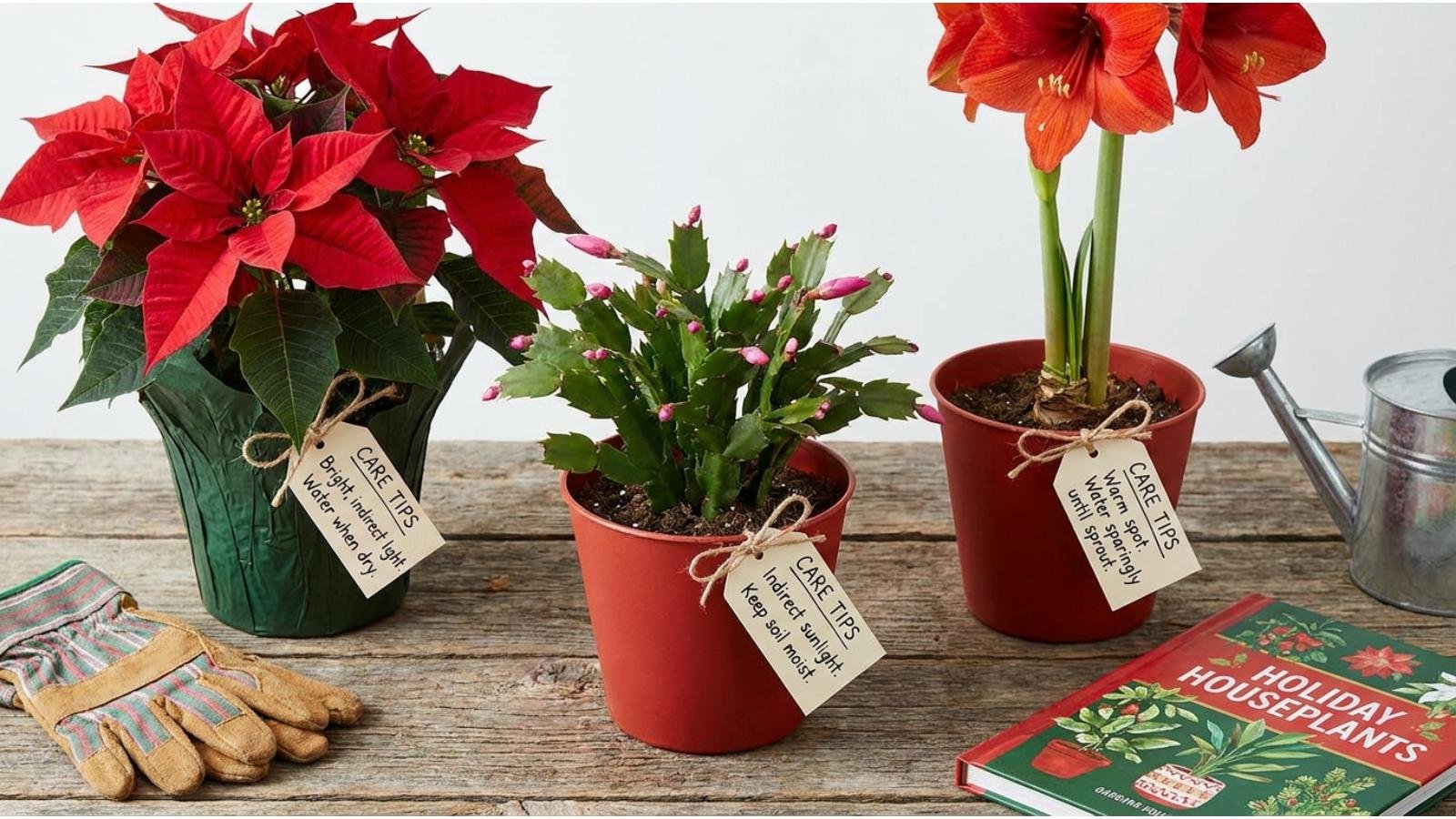
Christmas plant care depends on the type of plant, but most popular holiday plants need bright indirect light, careful watering, good drainage, and protection from temperature extremes.
Christmas cactus prefers slightly moist soil and higher humidity, while poinsettia needs to dry somewhat between waterings. Avoid overwatering, cold drafts, and sudden environmental changes to keep holiday plants healthy and attractive.
Introduction
Christmas plant care becomes especially important during the holiday season because many festive plants are moved indoors, placed near decorations, or exposed to changing temperatures. These sudden environmental changes can cause yellow leaves, wilting, dropped foliage, or poor flowering.
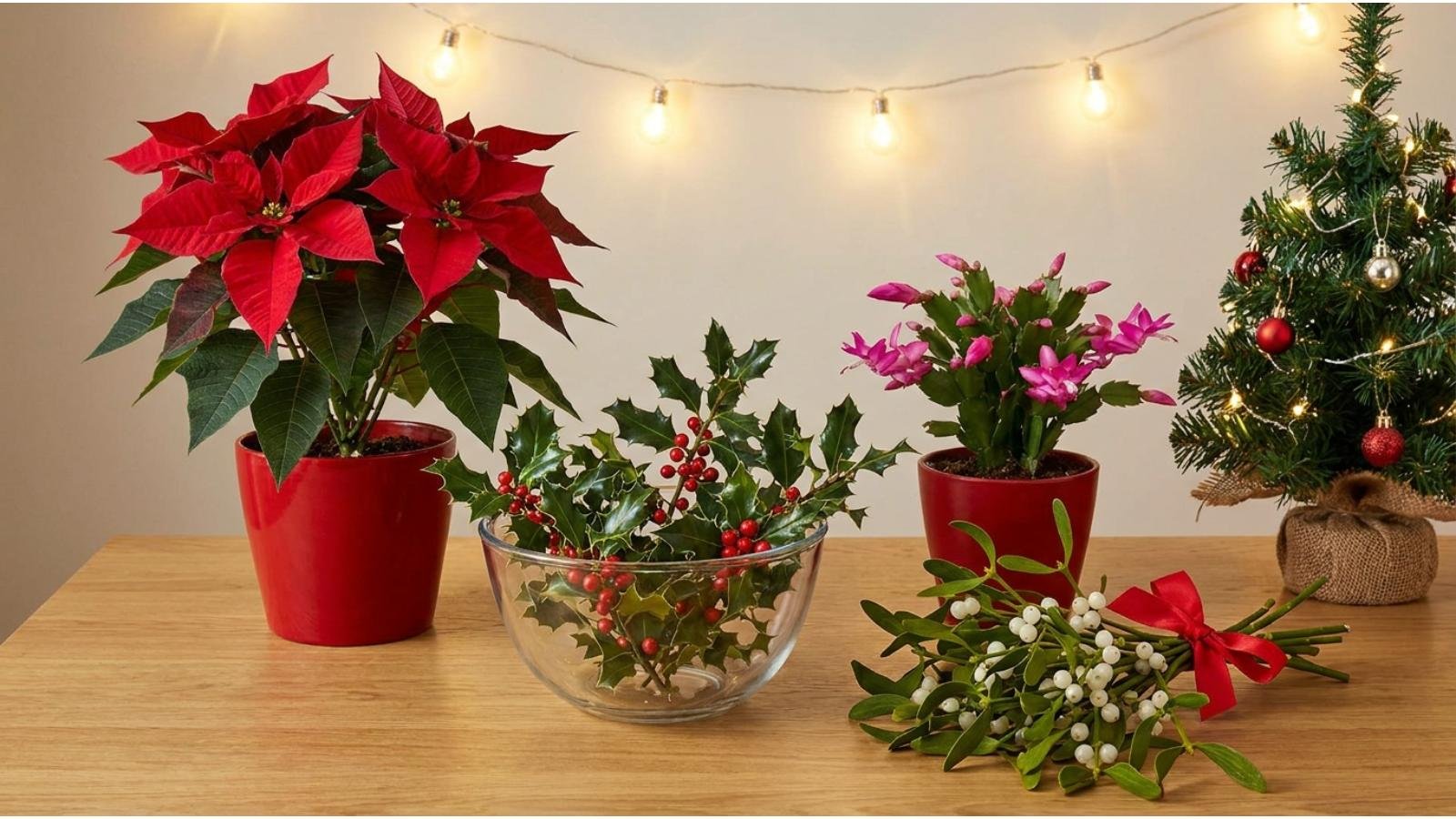
The term Christmas plant can refer to several popular holiday plants, including Christmas cactus, poinsettia, Christmas kalanchoe, rosemary Christmas trees, and other seasonal plants. Although their care requirements differ, they all benefit from understanding light, watering, temperature, humidity, and seasonal changes.
One of the most common mistakes is treating every Christmas plant like a typical houseplant. A Christmas cactus, for example, does not want the same watering routine as a poinsettia. Identifying the plant first makes its care much easier.
Popular Christmas Plants and Their Basic Needs
| Christmas Plant | Light | Watering | Main Care Concern |
|---|---|---|---|
| Christmas Cactus | Bright indirect light | Water when the surface begins drying | Avoid soggy soil |
| Poinsettia | Bright indirect light | Water when slightly dry | Protect from cold drafts |
| Christmas Kalanchoe | Bright light | Allow soil to dry somewhat | Avoid overwatering |
| Rosemary Christmas Tree | Bright light or gentle sun | Water when soil begins drying | Needs excellent drainage |
| Norfolk Island Pine | Bright indirect light | Keep moderately moist | Avoid very dry air |
The exact routine should always be adjusted according to the plant, pot size, soil, temperature, and amount of light it receives.
How to Care for a Christmas Plant Indoors
1. Give It the Right Amount of Light
Light is one of the biggest factors determining whether a Christmas plant remains healthy after you bring it indoors.
Most holiday plants perform well near a bright window, but intense direct afternoon sunlight can sometimes scorch foliage, particularly when a plant has previously been grown under filtered light.
A good indoor position is usually:
- Near a bright east- or west-facing window.
- A few feet from a strong south-facing window.
- Away from dark corners.
- Protected from prolonged harsh afternoon sun when necessary.
If stems become unusually stretched or new growth is pale, insufficient light may be contributing to the problem.
Practical tip: Don’t judge light levels only by how bright a room feels to your eyes. Human vision adapts remarkably well to low light, while plants cannot.
Image Suggestion: Christmas plants positioned at different distances from a bright indoor window.
Water According to the Plant, Not the Calendar
There is no universal Christmas plant watering schedule.
Indoor conditions change quickly during winter. Heating systems can dry the air, while shorter days can slow plant growth and reduce water consumption.
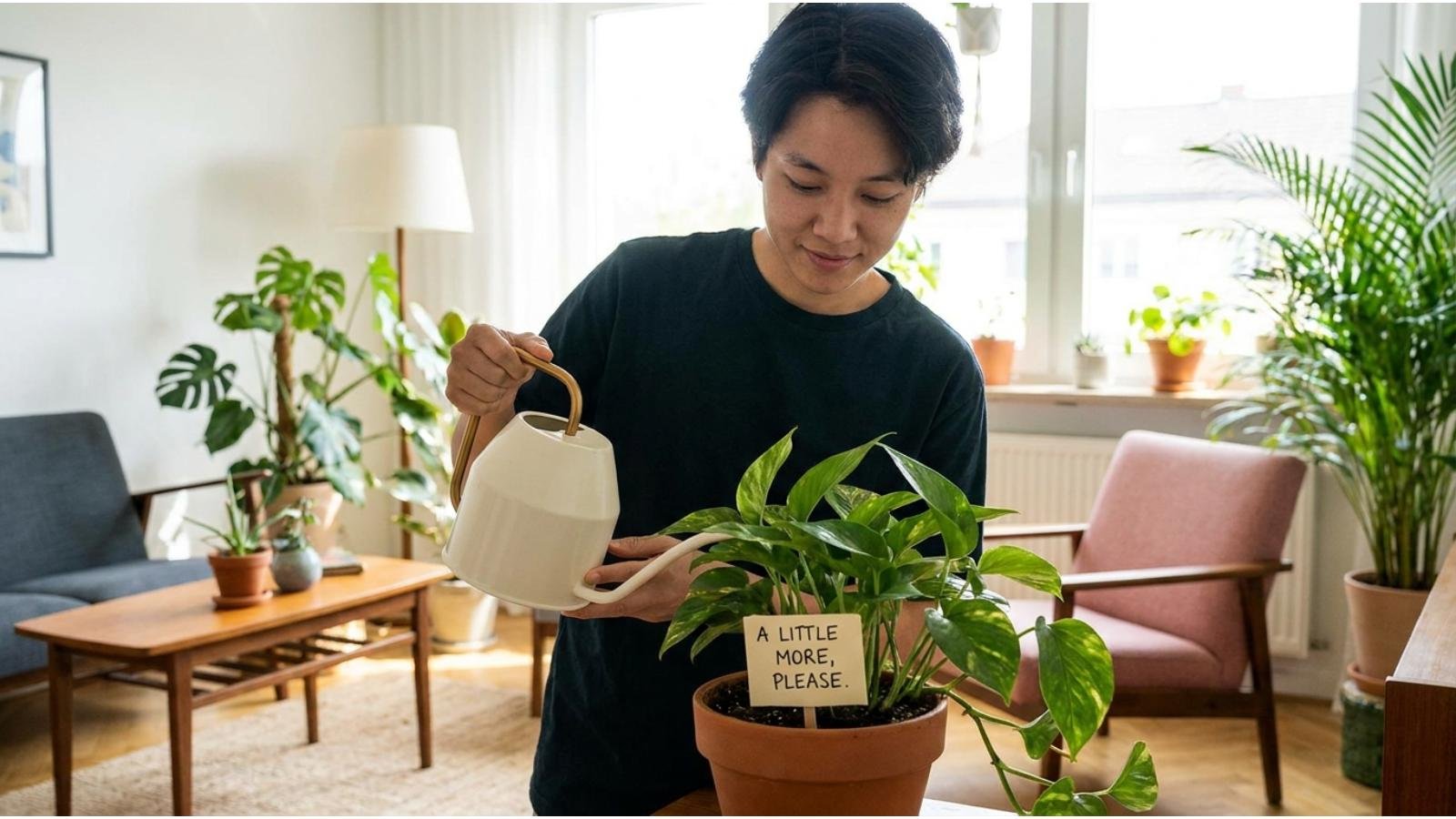
Before watering, check the soil with your finger.
For many Christmas plants, water when the upper portion of the soil has begun to dry. Then water thoroughly enough to moisten the root zone and allow excess water to drain from the pot.
Avoid:
- Watering automatically every few days.
- Leaving the pot sitting in standing water.
- Adding small amounts of water repeatedly without checking the soil.
- Assuming drooping always means the plant needs water.
Overwatering is particularly dangerous because roots need oxygen as well as moisture. Constantly saturated soil can eventually lead to root problems.
Real-world observation: A plant sitting in a decorative holiday container may look perfectly dry on top while water remains trapped around the roots. Always check whether the inner pot can drain freely.
Make Sure the Pot Drains Properly
Good drainage is more important than simply choosing an attractive holiday container.
If the plant is placed inside a decorative cover pot, check whether excess water can escape. After watering, allow the nursery pot to drain completely before returning it to the decorative container.
Warning signs of poor drainage include:
- Yellowing leaves.
- Soft or collapsing stems.
- Persistently wet soil.
- A musty smell from the pot.
- Leaves dropping despite consistently moist soil.
A drainage hole does not automatically guarantee healthy roots. The growing medium also needs enough air space to prevent prolonged saturation.
Image Suggestion: Correctly draining Christmas plant versus a plant sitting in standing water.
Protect Christmas Plants From Temperature Extremes
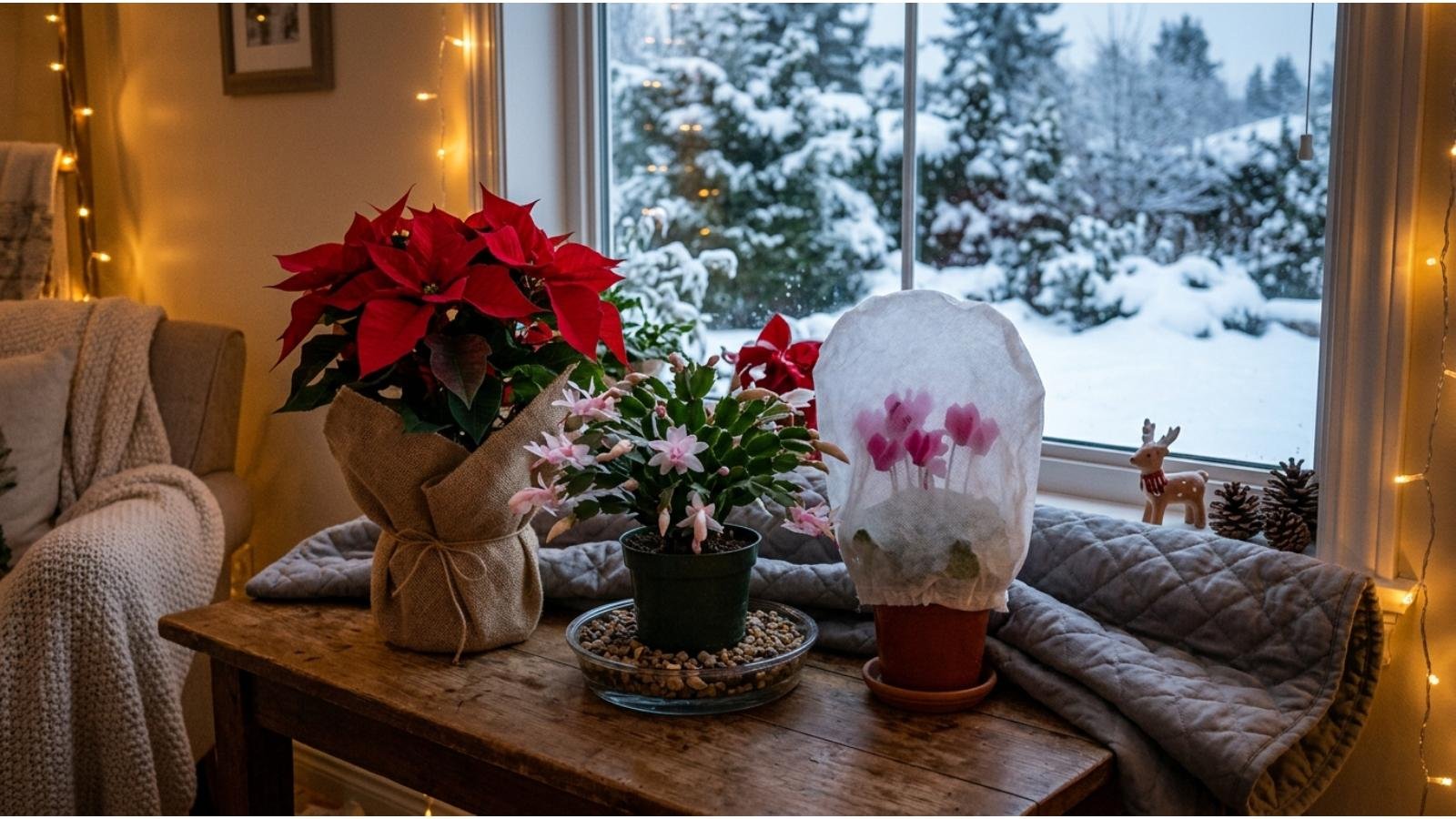
Holiday plants are often placed close to windows, doors, fireplaces, heaters, or air-conditioning vents. These locations can expose plants to rapid temperature changes.
Try to keep your plant away from:
- Cold drafts.
- Frequently opened exterior doors.
- Direct heat from radiators or heaters.
- Fireplace heat.
- Strong air-conditioning airflow.
- Very cold window glass.
A stable indoor environment is generally better than repeatedly moving the plant between warm and cold locations.
This is especially important for poinsettias, which can react poorly to cold exposure.
Maintain Reasonable Humidity
Winter heating can make indoor air considerably drier than many tropical or subtropical plants prefer.
Low humidity may cause:
- Brown leaf edges.
- Dry-looking foliage.
- Bud or flower problems.
- Increased water loss.
You can improve the environment by grouping compatible plants together or using a humidifier when appropriate.
However, increasing humidity does not compensate for poor watering practices. A plant sitting in waterlogged soil can still suffer even when the surrounding air is humid.
Christmas Cactus Care


Christmas cactus is one of the most popular holiday plants. Unlike desert cacti, it naturally grows in humid forest environments, so its care is somewhat different from that of a typical dry-climate cactus.
Light
Provide bright, indirect light. Gentle morning sunlight can be beneficial, while strong direct sunlight can cause stress or discoloration.
Water
Water when the upper layer of the growing medium begins to dry, then allow excess water to drain.
Don’t keep it bone-dry for extended periods simply because it is called a cactus.
Humidity
Christmas cactus generally appreciates more humidity than desert cacti. Dry indoor air can become particularly noticeable during winter heating.
Flowering
Christmas cactus needs appropriate environmental cues to produce abundant flowers. Changes in day length, temperature, and watering can influence flowering.
Once flower buds appear, avoid repeatedly moving the plant or dramatically changing its environment.
Poinsettia Care During the Holidays


Poinsettias are famous for their colorful bracts and are commonly purchased during the Christmas season.
They need bright light, moderate watering, and protection from temperature extremes.
How Often Should You Water a Poinsettia?
Don’t water simply because it is Monday, Wednesday, or another particular day.
Instead, check the growing medium. When the surface begins to dry, water thoroughly and allow excess moisture to escape.
Poinsettias are frequently damaged by one of two extremes:
Too much water: Roots remain wet and may deteriorate.
Too little water: Leaves wilt and may drop prematurely.
A decorative foil wrapper can also trap excess water around the roots. If your poinsettia has one, make sure drainage is not obstructed.
Christmas Plant Care After the Holidays
Many people treat Christmas plants as temporary decorations, but several can continue growing for years with proper care.
After the holiday season:
- Move the plant to a suitable permanent location.
- Continue providing appropriate light.
- Adjust watering according to growth and indoor conditions.
- Remove damaged foliage.
- Avoid unnecessary fertilizing while growth is slow.
- Resume more active feeding when the plant enters a period of stronger growth.
Don’t immediately discard a plant simply because flowers or colorful leaves fade. Some plants naturally enter a less decorative phase after their seasonal display.
Should You Fertilize a Christmas Plant?
Usually, fertilizing should not be the first priority during the darkest part of winter.
If growth is slow, the plant may not need large amounts of additional nutrients. Excess fertilizer can accumulate in the growing medium and damage roots.
A better approach is to:
- Prioritize appropriate light.
- Maintain healthy roots.
- Water correctly.
- Fertilize during active growth according to the plant’s specific requirements.
For a Christmas cactus or other flowering houseplant, feeding during its active growth period can be more useful than heavily fertilizing while it is dormant or stressed.
Common Christmas Plant Care Mistakes
Overwatering
This is one of the most frequent problems with indoor holiday plants.
People often water more frequently because the plant is inside a warm room. However, reduced winter light can slow water use.
Solution: Check soil moisture before watering.
Placing Plants Beside a Heater
The warm air may feel comfortable to you, but continuous hot airflow can dry foliage and create stressful conditions.
Solution: Move the plant away from direct heat.
Ignoring Drainage
A beautiful decorative pot can hide a serious drainage problem.
Solution: Use a container that allows excess water to escape.
Moving the Plant Constantly
Holiday plants are often moved around to make room for decorations, guests, or furniture.
Solution: Choose one stable location with suitable light and temperature.
Assuming Every Christmas Plant Has the Same Needs
Christmas cactus, poinsettia, rosemary, and other holiday plants have different natural growing conditions.
Solution: Identify the plant before establishing a care routine.
Christmas Plant Problems and Solutions
| Problem | Possible Cause | What to Check |
|---|---|---|
| Yellow leaves | Overwatering, poor drainage, stress | Soil moisture and drainage |
| Wilting | Underwatering or root problems | Soil and roots |
| Leaf drop | Temperature change, watering problems, stress | Location and moisture |
| Brown edges | Dry air or inconsistent watering | Humidity and watering |
| Few flowers | Insufficient light or incorrect seasonal conditions | Light and plant-specific flowering requirements |
| Soft stems | Excess moisture or root damage | Soil drainage |
| Buds dropping | Environmental stress | Temperature, light, and movement |
Remember that one symptom can have multiple causes. For example, wilting does not automatically mean the plant needs more water. Roots damaged by excessive moisture can also prevent a plant from absorbing water properly.
How to Keep Christmas Plants Healthy in Low Light
Winter presents a particular challenge because daylight hours are shorter.
If your home does not receive enough natural light, consider placing the plant closer to a bright window or using an appropriate grow light.
Signs that your plant may need more light include:
- Weak or stretched growth.
- Pale new leaves.
- Reduced flowering.
- Slow growth during its normal growing season.
Don’t compensate for poor light by watering more frequently. Low light and excess moisture can create a particularly unfavorable combination.
How to Keep a Christmas Plant Blooming
Flowering depends on the specific plant, but several general practices help:
- Provide adequate light.
- Avoid major temperature fluctuations.
- Keep watering consistent.
- Avoid unnecessary relocation.
- Follow the plant’s natural seasonal requirements.
- Don’t overfertilize.
For plants such as Christmas cactus, flowering is strongly connected to seasonal environmental cues. Trying to force flowering while simultaneously changing light, temperature, watering, and location can make the situation harder rather than easier.
Can You Repot a Christmas Plant During Winter?
Usually, there is no need to repot a healthy Christmas plant immediately after purchasing it.
Repotting can add unnecessary stress, particularly when the plant is already adjusting to a new indoor environment.
Consider repotting when:
- Roots are severely crowded.
- The growing medium has deteriorated.
- Drainage is consistently poor.
- The plant is unstable in its current container.
- There is a specific root-related problem.
If repotting is necessary, choose a container only moderately larger than the existing root system and use a growing medium appropriate for the plant.
Image Suggestion: Step-by-step Christmas plant repotting showing root ball, fresh growing medium, and correctly sized container.
A Simple Christmas Plant Care Routine
For beginners, this routine is easier than following a rigid watering calendar.
Once or twice a week
Check:
- Soil moisture.
- Leaf condition.
- Drainage.
- Temperature around the plant.
Every few weeks
Look for:
- New growth.
- Pest activity.
- Yellow or damaged leaves.
- Changes in light exposure.
- Root or drainage problems.
After the holidays
Review the plant’s long-term needs and move it to a permanent location if necessary.
This approach encourages you to respond to the plant instead of treating it according to an arbitrary schedule.
Frequently Asked Questions
How often should I water a Christmas plant?
There is no fixed schedule because watering depends on the plant species, pot size, soil, temperature, and light. Check the soil before watering and make sure excess water can drain away.
Why are my Christmas plant leaves turning yellow?
Yellow leaves can result from overwatering, poor drainage, environmental stress, or natural aging. Check the soil before adding more water.
Can Christmas plants survive indoors?
Yes. Many popular Christmas plants can grow successfully indoors when provided with suitable light, temperature, humidity, and watering.
Should I put my Christmas plant near a window?
A bright location is generally beneficial, but avoid locations where foliage is exposed to extreme cold, hot glass, or strong drafts.
Can I keep a Christmas cactus after Christmas?
Yes. Christmas cactus can be maintained as a long-term houseplant and may bloom again when its seasonal requirements are met.
Why is my Christmas cactus not flowering?
Insufficient light, inappropriate seasonal conditions, environmental changes, and inconsistent care can all affect flowering. Avoid constantly moving the plant and provide the conditions appropriate for Christmas cactus.
Why is my poinsettia losing leaves?
Poinsettias can lose leaves because of temperature stress, watering problems, insufficient light, or sudden changes in their environment. Check its location and soil moisture first.
Should I fertilize my Christmas plant in winter?
Not necessarily. Many plants have slower growth during winter and may require little or no fertilizer. Follow the specific needs of your plant and concentrate first on light, watering, and root health.
Can I repot a Christmas plant after buying it?
You usually don’t need to repot immediately unless there is a drainage, root, or container problem. Allowing a healthy plant to adjust to its new environment can reduce unnecessary stress.
Final Thoughts
Successful Christmas plant care is less about following a strict calendar and more about understanding what your particular plant needs. Start by identifying the species, then provide appropriate light, careful watering, good drainage, stable temperatures, and suitable humidity.
The biggest improvement most beginners can make is to stop treating watering as a routine task. Check the soil and the plant’s condition first. With that simple habit, many common holiday plant problems become much easier to prevent.
And when the decorations come down, don’t assume the plant’s useful life is over. With the right after-holiday care, many Christmas plants can transition from seasonal decorations into healthy, long-term houseplants.