Quick Answer
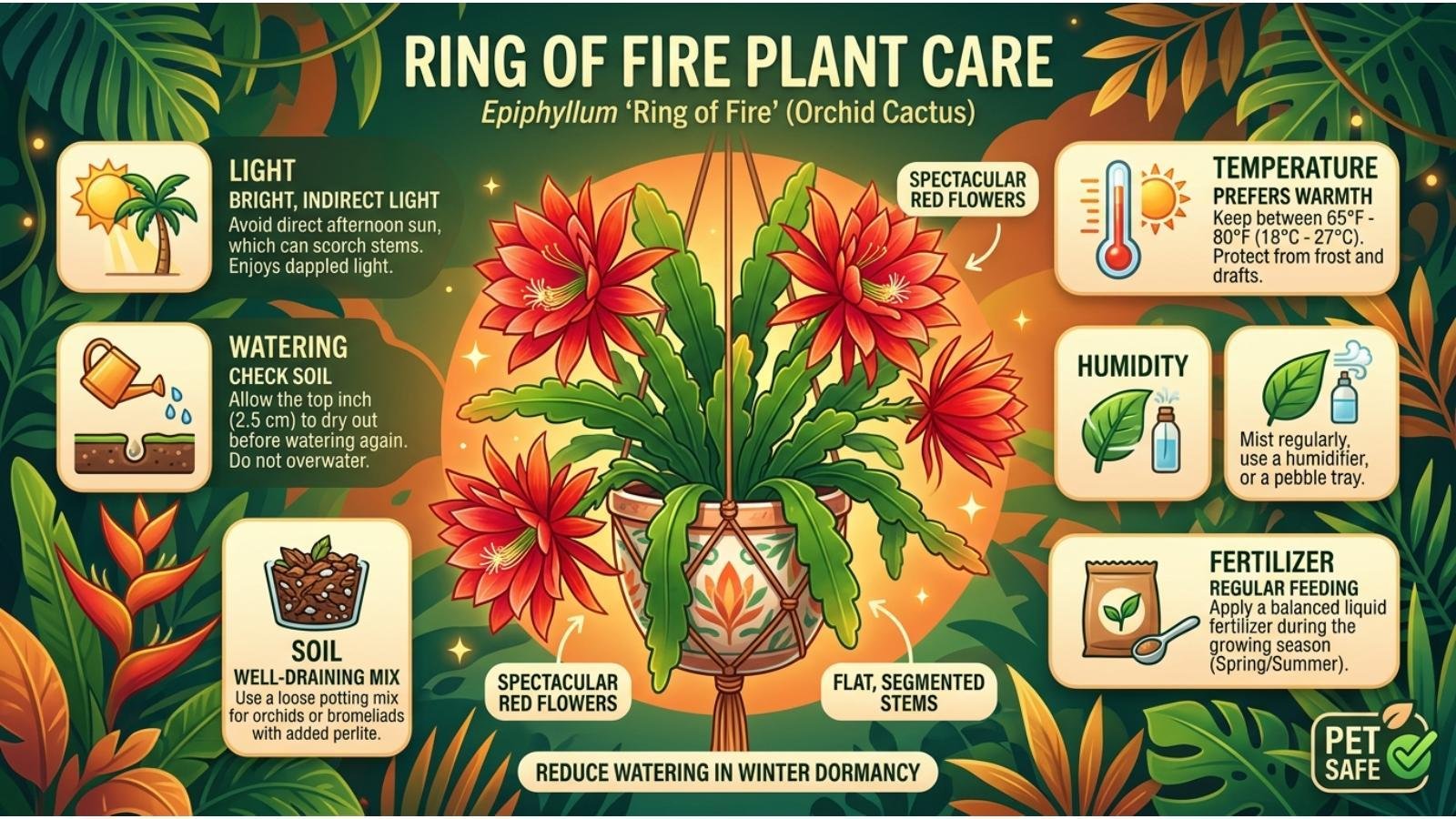
Ring of Fire plant care requires bright, indirect light, well-draining soil, careful watering, warm temperatures, and moderate to high humidity. Water when the upper layer of soil has dried rather than following a strict schedule. Use a pot with drainage holes and avoid keeping the roots constantly wet. Good light is especially important for maintaining strong growth and attractive variegated foliage.
Introduction
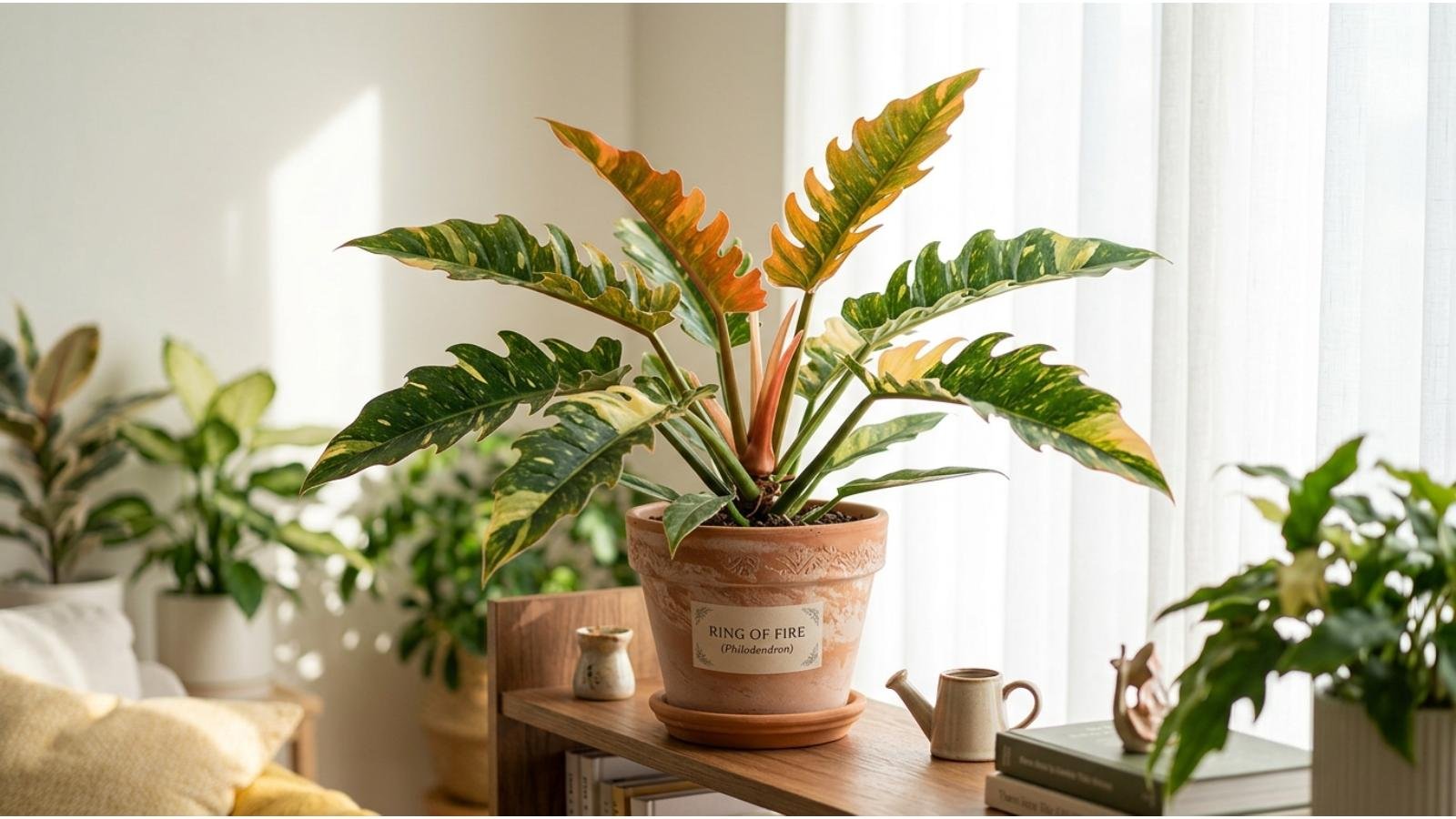
The Ring of Fire plant is a striking variegated philodendron known for its dramatically shaped leaves and changing colors. New leaves can emerge with shades of orange, yellow, cream, and green before developing their mature appearance.
Although this plant can become a spectacular indoor centerpiece, its unusual foliage does not mean it needs complicated care. The biggest difference between a healthy Ring of Fire and a struggling one usually comes down to light, watering, soil drainage, and consistency.
A common beginner mistake is watering whenever the leaves look slightly less firm. That can keep the soil wet for too long and create root problems. Instead, learn to evaluate the soil and the plant’s growing environment before watering.
What Is a Ring of Fire Plant?
Ring of Fire is a popular cultivated philodendron valued for its colorful, highly serrated foliage.
Unlike many houseplants that produce leaves in one consistent shade, Ring of Fire can develop several colors as individual leaves mature. Young leaves may display warmer orange, copper, or yellow tones before becoming greener and creamier.
Its dramatic appearance makes it particularly popular with indoor plant collectors.
The important thing to remember is that leaf color is influenced by the plant’s genetics and growing conditions. Good care supports healthy development, but changing the lighting does not guarantee a particular color pattern on every new leaf.
Image Suggestion: Close-up photograph showing several Ring of Fire leaves at different stages of maturity.
Ring of Fire Plant Care Requirements
| Care Factor | Ideal Approach |
|---|---|
| Light | Bright, indirect or filtered light |
| Water | Water when the upper soil layer dries |
| Soil | Loose, airy, well-draining mix |
| Temperature | Warm, stable indoor temperatures |
| Humidity | Moderate to high humidity |
| Fertilizer | Light feeding during active growth |
| Pot | Container with drainage holes |
| Repotting | Only when necessary |
| Airflow | Good circulation without harsh drafts |
| Pest Care | Inspect leaves and stems regularly |
The goal is not to create perfect conditions every day. Instead, provide stable conditions that allow the plant to grow without repeated stress.
How Much Light Does a Ring of Fire Need?
Bright, indirect light is one of the most important parts of Ring of Fire plant care.
Place the plant near a bright window where it receives plenty of natural light without being exposed to intense direct sunlight for long periods.
Because Ring of Fire has variegated leaves, some portions of the foliage contain less chlorophyll than fully green leaves. Good lighting helps the plant produce energy efficiently and supports healthy new growth.
Too little light
A Ring of Fire receiving insufficient light may show:
- Slow growth.
- Smaller leaves.
- Longer spaces between leaves.
- Weak or stretched growth.
- Less vigorous new foliage.
Too much direct sunlight
Excessive intense sunlight can cause:
- Brown patches.
- Bleached areas.
- Crispy leaf edges.
- Scorched foliage.
A bright room with filtered sunlight is usually a better choice than placing the plant directly against a window with strong afternoon sun.
Practical tip
If you are moving the plant from a dim location to a much brighter one, increase light gradually rather than suddenly exposing it to intense sunlight.
Image Suggestion: Visual guide showing low light, ideal bright indirect light, and harsh direct sunlight.
How Often Should You Water a Ring of Fire?
There is no perfect watering schedule that works for every Ring of Fire.
A plant growing in a small pot in a bright, warm room may dry much faster than one growing in a large container in a cool, humid room.
Instead of watering according to the calendar, check the soil.
A simple watering method
- Check the upper portion of the soil.
- If it is still noticeably wet, wait.
- When the soil has dried appropriately, water thoroughly.
- Allow excess water to escape through the drainage holes.
- Empty standing water from the saucer or decorative container.
- Check the soil again before the next watering.
The roots need moisture, but they also need oxygen. Permanently saturated soil can reduce air around the roots and contribute to root deterioration.
Signs your plant may be overwatered
- Yellowing leaves.
- Persistently wet soil.
- Soft or collapsing foliage.
- Unpleasant-smelling soil.
- Dark or mushy roots.
- Sudden decline despite frequent watering.
Signs the plant may be too dry
- Drooping leaves.
- Very dry potting mix.
- Crispy brown edges.
- Leaves becoming less firm.
- Water running quickly through extremely dry soil.
Do not automatically water every time you notice yellowing. First determine whether the soil is actually dry.
Best Soil for Ring of Fire
Ring of Fire needs a growing medium that holds some moisture while allowing excess water and air to move through the root zone.
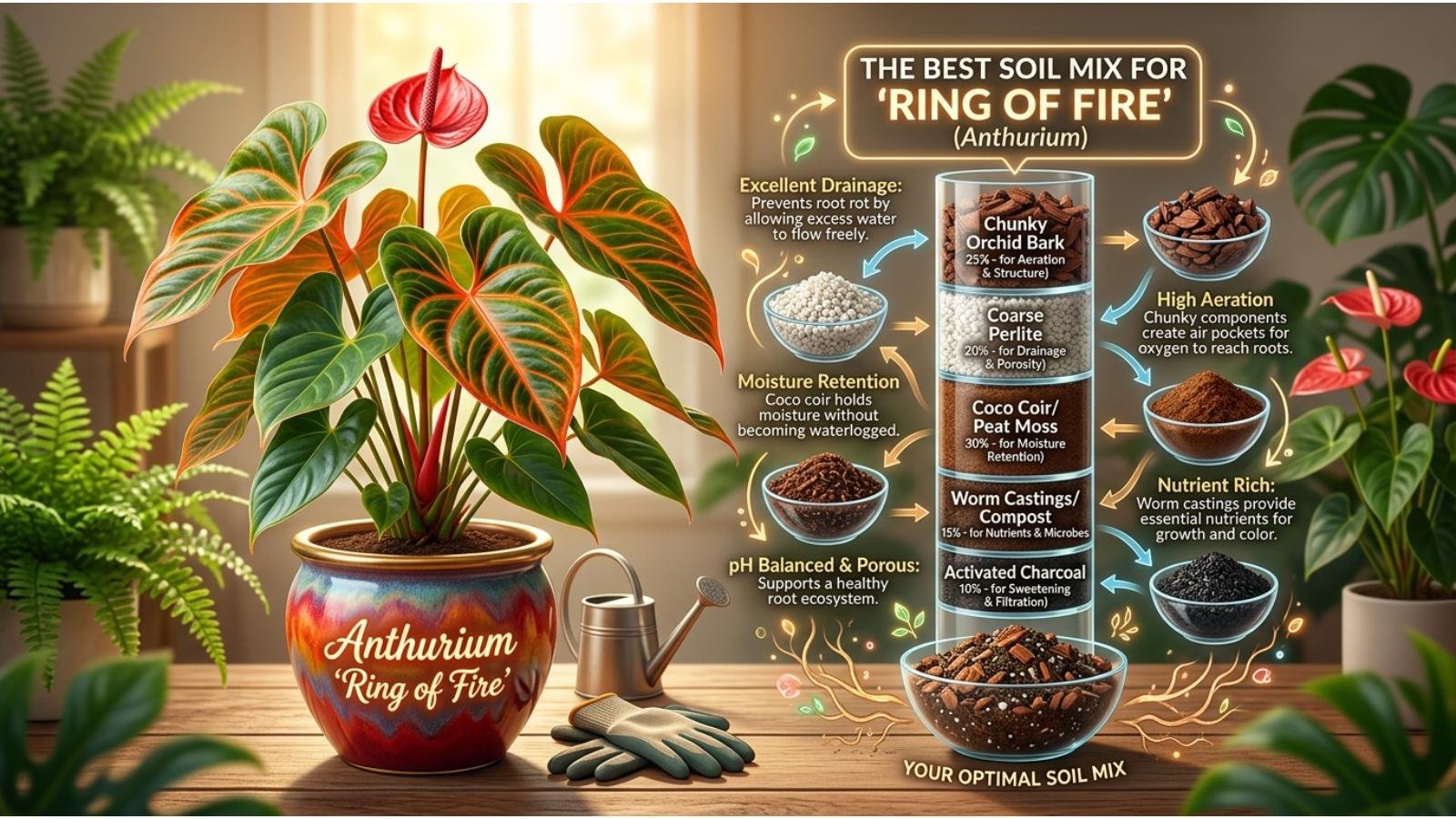
A practical chunky mix can contain:
- Quality indoor potting mix.
- Orchid bark.
- Perlite or another aerating material.
- A modest amount of moisture-retaining organic material.
The exact recipe is less important than the final texture.
What good soil should do
Good soil should:
- Drain excess water.
- Remain lightly moist after watering.
- Allow air around the roots.
- Avoid becoming compacted.
- Support healthy root development.
Heavy garden soil is generally a poor choice for indoor containers because it can compact and retain excessive moisture.
Image Suggestion: Cross-section illustration of airy Ring of Fire potting mix showing spaces for roots, water, and air.
Choosing the Right Pot
Always choose a pot with drainage holes.
A decorative container without drainage can trap water around the roots, even if the plant appears healthy from the surface.
Another common mistake is using a pot that is much larger than the existing root system.
A huge container contains more soil, and more soil can remain wet for longer. This can make watering much more difficult.
When repotting, choose a container only moderately larger than the current root system.
Temperature Requirements
Ring of Fire prefers warm, stable conditions.
A comfortable indoor environment is generally suitable, provided the plant is protected from:
- Cold drafts.
- Sudden temperature changes.
- Extremely cold windows.
- Direct heat from radiators.
- Strong air-conditioning drafts.
Avoid placing the plant directly beside a heater or air conditioner. Even if the room temperature seems comfortable, constant hot or cold airflow can stress the foliage.
Practical tip
A stable environment is usually more useful than chasing an exact temperature number.
Does Ring of Fire Need High Humidity?
Ring of Fire generally appreciates moderate to higher humidity, especially when the indoor air is very dry.
Higher humidity can help reduce excessive moisture loss from foliage and may support healthier leaf development.
However, you do not need to keep the plant in extremely humid conditions.
If your home is dry, consider:
- A room humidifier.
- Grouping compatible plants together.
- Moving the plant away from strong heating or cooling airflow.
Avoid relying on constant leaf misting as your primary humidity solution.
Good airflow is also important. Extremely humid, stagnant conditions can encourage fungal and bacterial problems.
How to Fertilize Ring of Fire
Ring of Fire can benefit from regular feeding during active growth.
Use a balanced houseplant fertilizer according to its label directions, preferably at an appropriate diluted strength.
Remember
More fertilizer does not mean faster or healthier growth.
Excessive fertilizer can contribute to:
- Brown leaf tips.
- Root damage.
- Salt buildup in the soil.
- Weak or stressed foliage.
Do not use fertilizer to compensate for poor lighting, bad soil, or damaged roots.
Correct the growing conditions first.
Why Are Ring of Fire Leaves Turning Yellow?
Yellow leaves can result from several different problems.
Overwatering
If the soil stays wet for long periods, roots may become stressed or damaged.
Poor drainage
Even a careful watering routine can cause problems when the pot cannot release excess water.
Insufficient light
Very low light can contribute to weak growth and foliage problems.
Natural aging
An older lower leaf may naturally turn yellow as the plant redirects resources toward newer growth.
Root damage
A plant with damaged roots may show yellowing even when you are watering regularly.
What to do
Before making major changes, check:
- Soil moisture.
- Drainage.
- Root condition.
- Light exposure.
- Recent environmental changes.
- Pest activity.
Diagnosing the cause is more useful than simply adding water or fertilizer.
Why Are Ring of Fire Leaves Turning Brown?
Brown leaves can have different causes depending on where and how the damage appears.
Brown crispy edges
These may be associated with:
- Very dry conditions.
- Irregular watering.
- Low humidity.
- Root stress.
Brown bleached patches
These can indicate excessive direct sunlight or leaf scorch.
Brown tips
Possible causes include:
- Fertilizer buildup.
- Dry air.
- Inconsistent watering.
- Root problems.
Dark or soft areas
These require closer inspection because they may indicate tissue damage, excessive moisture, or disease-related problems.
Do not diagnose a problem based on color alone. Consider the pattern, texture, soil moisture, and recent care changes together.
Image Suggestion: Ring of Fire leaf problem chart showing brown tips, sun scorch, dry edges, and moisture-related damage.
Ring of Fire Leaves Not Unfurling
A new leaf that takes a long time to open can be frustrating, but it does not always indicate a serious problem.
Check:
- Light levels.
- Temperature.
- Humidity.
- Root health.
- Soil moisture.
- Pest activity.
New leaves develop gradually, and environmental changes do not always produce immediate visible results.
If you recently moved the plant or changed its care routine, give it time to respond before making several additional changes.
Avoid manually forcing a tightly rolled leaf open. The developing leaf can be delicate and easily damaged.
Why Is My Ring of Fire Not Growing?
Slow growth can be caused by several environmental factors.
Insufficient light
The plant needs adequate light to support photosynthesis and new growth.
Poor root health
Damaged roots cannot effectively support healthy foliage.
Small or depleted growing medium
An old, compacted growing medium can interfere with drainage and root function.
Seasonal slowdown
Growth may naturally slow when environmental conditions become less favorable.
Recent stress
Repotting, transportation, sudden lighting changes, or temperature fluctuations can temporarily slow development.
Before adding more fertilizer, determine whether the plant is receiving enough light and whether its roots are healthy.
Common Ring of Fire Plant Care Mistakes
Watering on a Fixed Schedule
Watering every few days or every week without checking the soil can lead to unnecessary moisture.
Better approach: Check the soil before watering.
Keeping the Soil Constantly Wet
Moist soil is useful, but saturated soil can deprive roots of oxygen.
Better approach: Use a well-draining mix and allow appropriate drying.
Giving Too Much Direct Sun
Bright light is beneficial, but intense direct sunlight can scorch variegated foliage.
Better approach: Choose bright filtered or indirect light.
Using an Oversized Pot
A large container can hold excess moisture around a relatively small root system.
Better approach: Increase pot size gradually.
Fertilizing a Stressed Plant
Fertilizer cannot fix damaged roots or poor environmental conditions.
Better approach: Identify and correct the underlying problem first.
Constantly Changing the Plant’s Location
Repeatedly moving a plant makes it difficult to determine which environment it actually prefers.
Better approach: Choose a suitable location and give the plant time to adjust.
Ring of Fire Pest Problems
Ring of Fire can experience common indoor plant pests such as:
- Spider mites.
- Mealybugs.
- Scale.
- Aphids.
- Thrips.
Inspect the plant regularly, particularly:
- Leaf undersides.
- New growth.
- Leaf joints.
- Petioles.
- Stems.
Look for tiny insects, webbing, sticky residue, speckled foliage, distorted new growth, or unusual discoloration.
If you discover pests, separate the affected plant from nearby plants while you investigate and treat the problem.
Early detection is much easier to manage than a large infestation.
How to Repot a Ring of Fire
Repotting should be based on the plant’s condition rather than an arbitrary calendar.
Consider repotting when:
- Roots are filling the container.
- Water drains unusually quickly because the plant is heavily root-bound.
- The potting mix has broken down.
- Drainage has become poor.
- Roots show signs of serious problems.
- The plant is repeatedly drying out much faster than expected.
Repotting steps
- Select a pot with drainage holes.
- Prepare fresh, airy potting mix.
- Carefully remove the plant.
- Inspect the roots.
- Remove severely damaged roots with a clean tool.
- Position the plant at an appropriate depth.
- Fill around the roots with fresh mix.
- Water appropriately.
- Place the plant back in suitable indirect light.
Avoid unnecessarily disturbing healthy roots.
Image Suggestion: Step-by-step repotting infographic showing root inspection and correct pot size.
Can You Propagate Ring of Fire?
Ring of Fire can be propagated from suitable stem material when the cutting contains a viable node.
A leaf by itself is generally not enough to produce a new plant. The node contains the growth point needed for successful propagation.
Basic propagation process
- Select healthy stem material.
- Identify a viable node.
- Use a clean cutting tool.
- Take an appropriate cutting.
- Place the node in a suitable propagation medium.
- Provide warmth and bright indirect light.
- Keep the medium appropriately moist without making it stagnant.
- Wait for roots and new growth to develop.
Patience is important. Propagation speed can vary considerably depending on temperature, light, humidity, and the condition of the cutting.
Image Suggestion: Close-up diagram labeling a Ring of Fire stem, node, petiole, and correct cutting area.
Ring of Fire Care During Different Seasons
Spring and Summer
During active growth, the plant may use water more quickly.
Check the soil regularly and provide adequate light. If you fertilize, follow an appropriate feeding routine rather than increasing fertilizer excessively.
Fall and Winter
Growth may slow as light levels decrease.
The plant may also use water more slowly, meaning soil can remain wet for longer.
Do not continue a summer watering schedule automatically.
The same plant can require very different watering intervals at different times of year.
Ring of Fire Indoor Care vs Outdoor Care
Ring of Fire can be grown outdoors in suitable warm climates, but outdoor conditions require more attention.
Outdoor plants may experience:
- Stronger sunlight.
- Heavy rainfall.
- Wind.
- Temperature fluctuations.
- Pest exposure.
A sheltered location with bright filtered light is generally safer than exposing the plant to intense afternoon sun.
If moving a houseplant outdoors, acclimate it gradually instead of immediately placing it in strong sunlight.
A Simple Ring of Fire Care Routine
You do not need to spend hours caring for your plant.
Once or twice a week, perform a quick inspection.
Check the soil
Determine whether it is still wet or has dried enough for watering.
Check the leaves
Look for yellowing, browning, pests, or unusual marks.
Check new growth
Look for healthy leaf development and signs of damage.
Check the environment
Consider recent changes in light, temperature, humidity, or airflow.
Check the pot
Make sure drainage holes are not blocked and standing water is not accumulating.
This simple routine can help you catch problems before they become severe.
How to Encourage Larger Ring of Fire Leaves
Large leaves are influenced by several factors rather than one special trick.
Focus on:
- Adequate bright indirect light.
- Healthy roots.
- Consistent moisture.
- Good nutrition.
- Warm temperatures.
- Suitable humidity.
- Appropriate space for root development.
Avoid trying to force larger leaves through excessive fertilizer or watering.
Healthy growth comes from balanced conditions.
If the plant repeatedly produces very small leaves, investigate the environment rather than assuming it simply needs more fertilizer.
How to Maintain Attractive Variegation
Ring of Fire naturally produces variable coloration, so individual leaves will not always look identical.
Good lighting is important because the plant needs enough light to support its less-green foliage.
However, extremely intense direct sunlight is not the solution.
Maintain bright indirect light and allow the plant to produce new growth naturally.
Remember that variegation is not completely controlled by care. Genetics play an important role in how much green, cream, yellow, orange, or other coloration appears on new leaves.
Frequently Asked Questions
How much light does Ring of Fire need?
Ring of Fire prefers bright, indirect or filtered light. Strong indirect light helps support healthy growth and attractive foliage while reducing the risk of sun scorch.
How often should I water Ring of Fire?
Water when the appropriate upper portion of the soil has dried rather than following a fixed schedule. Water thoroughly and allow excess water to drain.
Can Ring of Fire grow in low light?
It may survive in lower light, but growth can become slower and foliage may be smaller. Bright indirect light is generally preferable.
Does Ring of Fire need high humidity?
It appreciates moderate to higher humidity, particularly in very dry indoor environments. Consistent room humidity is more useful than relying on occasional leaf misting.
Why is my Ring of Fire turning yellow?
Check the soil moisture, drainage, light, roots, and age of the affected leaf. Overwatering is one possible cause, but yellowing can result from several different issues.
Why are the leaves turning brown?
Brown foliage can result from excessive direct sunlight, dry conditions, inconsistent watering, fertilizer buildup, root stress, pests, or other environmental problems.
Can I put Ring of Fire outside?
Yes, provided the climate is warm enough and the plant is protected from harsh direct sunlight, cold temperatures, strong winds, and excessive rainfall.
Can Ring of Fire be propagated from a leaf?
A leaf without an appropriate stem node generally cannot produce a complete new plant. Successful propagation normally requires suitable stem material containing a viable node.
Should I mist my Ring of Fire?
Misting is not essential. If indoor humidity is consistently low, maintaining suitable ambient humidity is generally more practical than repeatedly misting the foliage.
Why is my Ring of Fire growing slowly?
Insufficient light, poor root health, seasonal changes, unsuitable temperatures, compacted soil, or recent stress can all contribute to slow growth.
How do I make Ring of Fire grow faster?
Provide bright indirect light, healthy roots, airy soil, appropriate watering, warmth, and adequate nutrition. Avoid trying to accelerate growth through excessive fertilizer or watering.
How often should I repot Ring of Fire?
Repot when the root system or growing medium indicates that it is necessary. There is no need to repot simply because a certain amount of time has passed.
Final Thoughts
Successful Ring of Fire plant care is built around balance rather than complicated routines.
Give the plant bright indirect light, airy well-draining soil, appropriate watering, warmth, reasonable humidity, and consistent nutrition during active growth. Most importantly, learn to inspect the plant before making changes.
The most useful rule is simple: observe first, then act. Once you understand how your Ring of Fire responds to its environment, maintaining healthy and attractive growth becomes much easier.