Quick Answer
Ponytail palm plant care is relatively easy because this drought-tolerant plant stores water in its thick, bulbous trunk. Grow it in bright light, preferably with several hours of indirect sunlight or some direct sun.
Use a well-draining cactus or succulent potting mix, water thoroughly only when the soil has dried out, and choose a pot with drainage holes. Keep it warm, protect it from frost, and avoid overwatering to prevent root rot.
Introduction
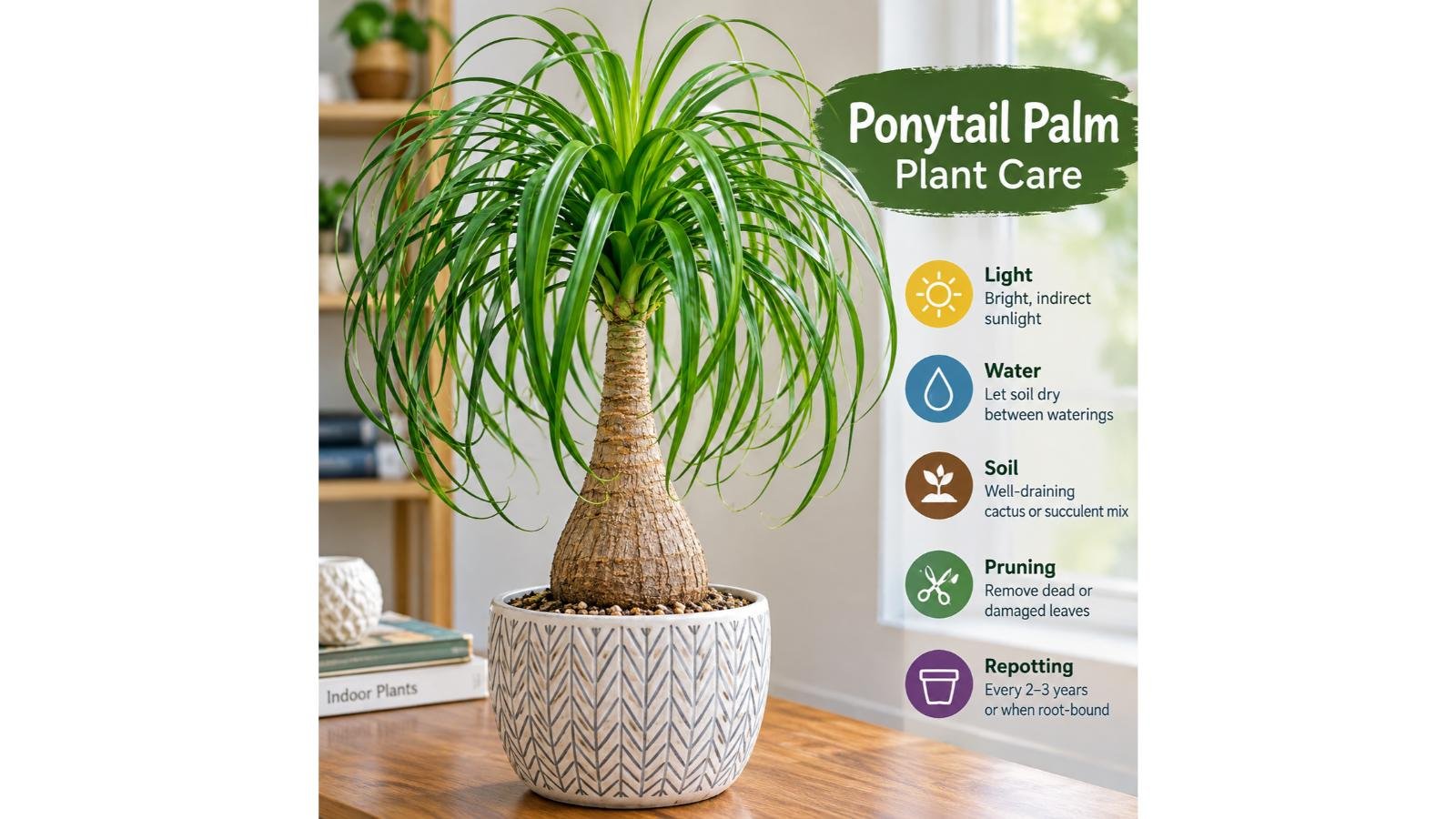
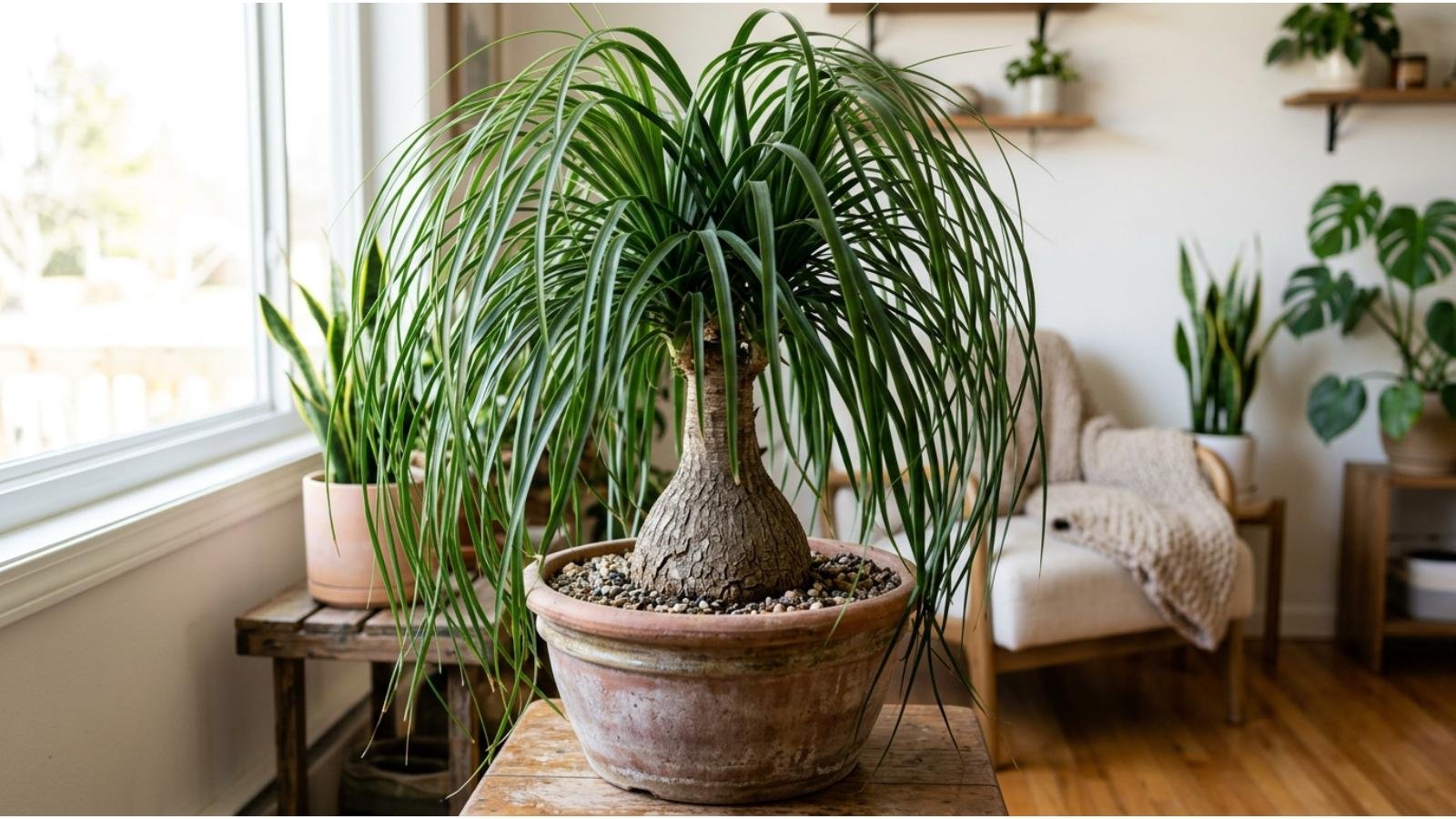
The ponytail palm is a distinctive houseplant known for its swollen trunk, cascading leaves, and impressive ability to tolerate occasional neglect. Despite its name and palm-like appearance, it is not a true palm. It is a slow-growing plant that stores water in its enlarged base, making it particularly suitable for people who prefer low-maintenance indoor greenery.
However, being drought-tolerant does not mean it can survive every growing condition. Too much water, insufficient light, poorly draining soil, and cold temperatures can gradually weaken the plant.
Understanding ponytail palm plant care helps you maintain healthy foliage, protect its distinctive trunk, and encourage steady growth without unnecessary maintenance.
This guide explains how to choose the right location, water correctly, prepare suitable soil, manage common problems, and keep your ponytail palm looking attractive throughout the year.
What Is a Ponytail Palm?
The ponytail palm, botanically known as Beaucarnea recurvata, is a slow-growing plant native to Mexico.
Its unusual appearance makes it easy to recognize:
- Bulbous trunk: The enlarged base stores water and gives the plant its characteristic appearance.
- Long, arching leaves: Narrow green leaves emerge from the top and curve downward like a ponytail.
- Drought tolerance: Its water-storage structure allows it to withstand periods of dry soil.
- Slow growth: It generally develops gradually, making it suitable for indoor spaces where a manageable plant is preferred.
Although it resembles a palm tree, the ponytail palm belongs to a different botanical group. Its care requirements are closer to those of drought-adapted plants than those of moisture-loving tropical palms.
Image suggestion: A labeled botanical illustration showing the ponytail palm’s swollen trunk, cascading leaves, and root system.
Ponytail Palm Care Requirements at a Glance
| Care factor | Recommended conditions |
|---|---|
| Light | Bright indirect light; some direct sunlight is beneficial after gradual acclimation |
| Watering | Water thoroughly when the soil has dried out |
| Soil | Fast-draining cactus or succulent mix |
| Pot | A container with drainage holes |
| Temperature | Warm indoor conditions; protect from frost |
| Humidity | Average household humidity is generally suitable |
| Fertilizer | Light feeding during active growth |
| Growth rate | Slow |
| Repotting | Only when necessary, usually after several years |
| Pruning | Remove dead or damaged leaves |
| Main problem to avoid | Overwatering and poorly draining soil |
These recommendations provide a starting point. Adjust watering and light according to your plant’s actual growing conditions rather than following a rigid calendar.
Choose the Right Light for Healthy Growth
Light is one of the most important factors in ponytail palm plant care.
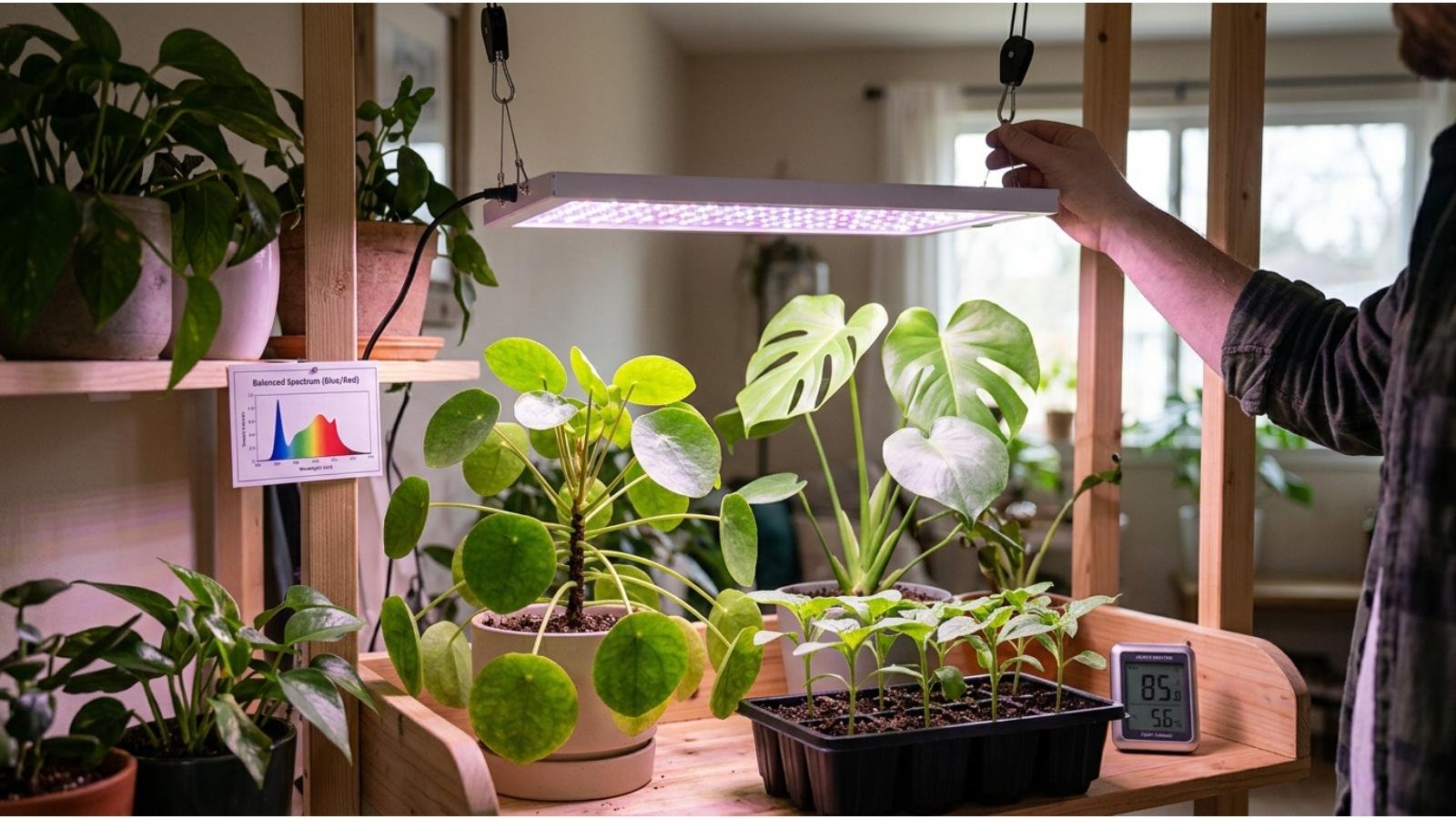
Ponytail palms grow best in bright locations. They can tolerate some direct sunlight, particularly when gradually accustomed to it, but a plant that has spent months in a dim room may develop leaf damage if suddenly moved into intense sunshine.
Where should you place your ponytail palm?
Suitable locations include:
- Near a bright east-facing window.
- Close to a bright south- or west-facing window, with appropriate protection from intense afternoon sun if necessary.
- In a well-lit living room or office.
- In a sunroom where the plant can receive plenty of natural light.
A bright window is generally more suitable than a dark corner several feet away from natural light.
What happens when the plant receives insufficient light?
Low light can lead to:
- Slower growth.
- Weaker or less attractive foliage.
- A gradual decline in overall plant vigor.
- Soil that stays wet longer because the plant uses water more slowly.
If your ponytail palm is growing poorly indoors, assess its lighting before assuming it needs more fertilizer.
Practical tip: If you move a plant from a dim room to a sunny window, increase its exposure gradually over several days or weeks. This helps reduce the risk of leaf scorch.
Image suggestion: A comparison showing a ponytail palm in a bright window and another in a dim corner, illustrating the difference in suitable placement.
Water Correctly to Prevent Root Rot
Watering is where many ponytail palm owners make mistakes.
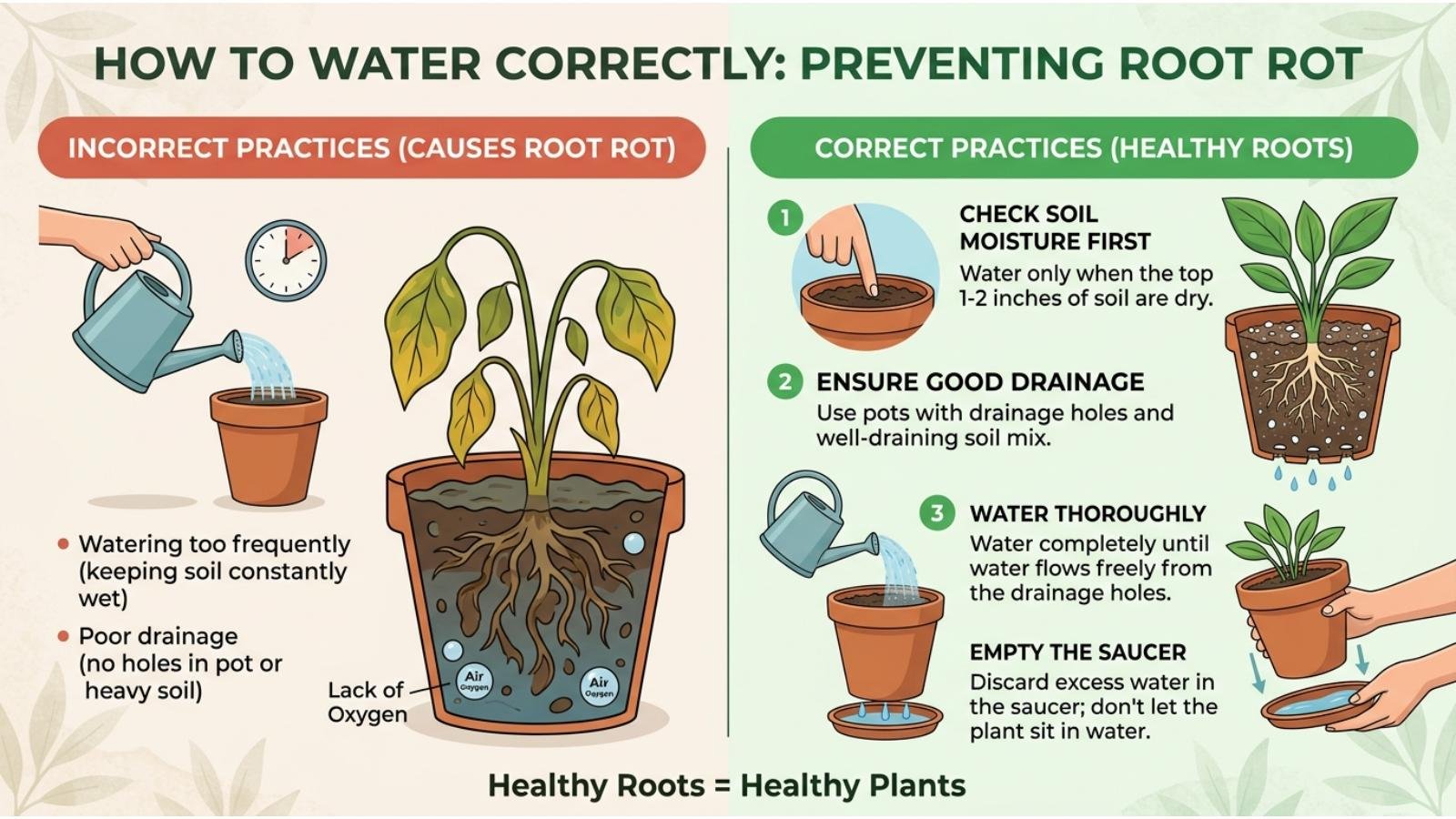
Because the swollen trunk stores water, the plant does not need constantly moist soil. Frequent watering can deprive the roots of oxygen and create conditions that encourage root rot.
How often should you water a ponytail palm?
There is no single watering schedule that works for every home.
The correct interval depends on:
- Light intensity.
- Room temperature.
- Pot size and material.
- Soil composition.
- Season.
- Whether the plant is actively growing.
Instead of watering every few days, check the soil.
The correct watering method
- Insert your finger into the potting mix to check whether it is dry. For a larger pot, check moisture deeper in the soil using a wooden stick or moisture probe.
- If the soil is still damp, wait before watering.
- Once the soil has dried out sufficiently, water thoroughly.
- Allow excess water to drain through the bottom of the pot.
- Empty the saucer or outer container so the roots are not left sitting in water.
The goal is to provide a thorough drink when needed, followed by a period in which the soil can dry.
Seasonal watering adjustments
During warmer, brighter months, the plant may use water more quickly.
During winter, particularly in a cool room with limited sunlight, growth and water use often slow down. The soil may therefore remain dry for longer.
Do not automatically increase watering just because the leaves look less vigorous. First check the soil, lighting, and condition of the trunk.
Expert tip: A dry soil surface does not always mean the entire root zone is dry. Check below the surface before watering, especially when the plant is growing in a large container.
Image suggestion: A step-by-step watering illustration showing a soil moisture check, thorough watering, and drainage from the pot.
Use Well-Draining Soil
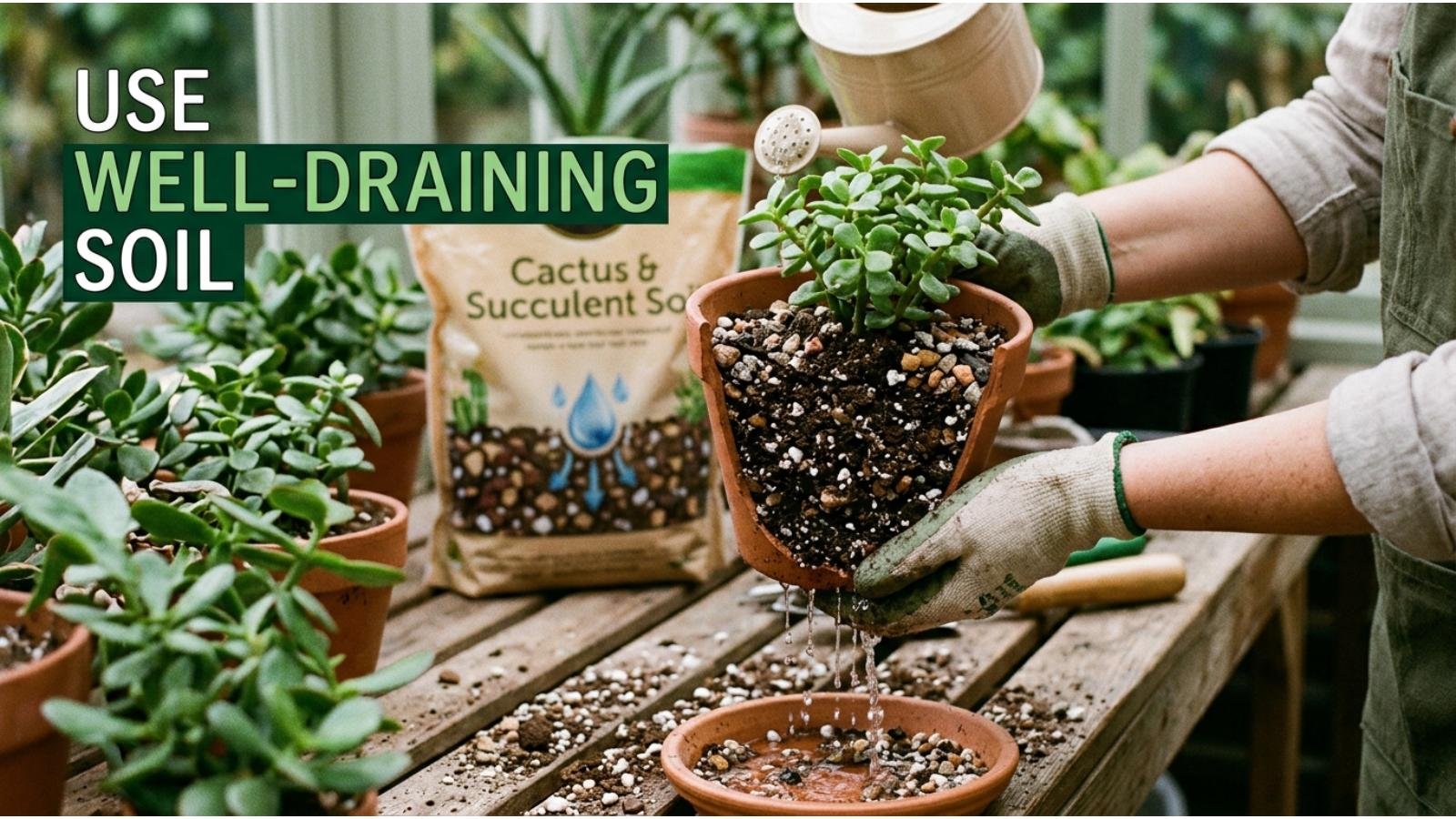
Ponytail palms need a potting mix that allows excess water to escape rather than remaining around the roots.
Ordinary moisture-retentive houseplant soil may stay wet too long, particularly in a cool room or a container without adequate drainage.
What is the best soil for a ponytail palm?
A cactus or succulent potting mix is a useful starting point.
You can also prepare a mix using ingredients such as:
- A moderate amount of quality potting soil.
- Perlite or pumice to improve aeration.
- Coarse horticultural material suitable for improving drainage.
The exact proportions are less important than the final result: the mix should hold enough moisture to support the roots but allow excess water to drain freely.
Avoid heavy garden soil and dense mixes that become compacted or remain saturated.
Why soil drainage matters
When soil stays wet for extended periods, roots may struggle to obtain sufficient oxygen.
This can cause root deterioration, poor growth, and eventually a weakened or collapsing plant.
If your ponytail palm has a soft trunk base and persistently wet soil, inspect the root system rather than adding fertilizer or watering more frequently.
Image suggestion: A side-by-side illustration of a compact, waterlogged potting mix and an airy, fast-draining succulent mix.
Select a Suitable Pot
The right container helps maintain healthy roots and makes watering easier.
Ponytail palms generally do not need an oversized pot. A container that is much larger than the root system can hold excess moisture for too long.
What type of pot should you use?
Choose a container with drainage holes.
Terracotta pots can be useful because their porous walls allow moisture to evaporate more readily. Plastic and glazed containers can also work, but you may need to monitor soil moisture more carefully.
When choosing a pot, consider:
- The size of the root system.
- The weight and stability of the plant.
- The drainage capacity of the container.
- The amount of room available for gradual growth.
A wide, heavy container may help support a larger plant, particularly if its foliage spreads outward.
Should you use a deep pot?
A very deep pot is not automatically better.
Choose a container that accommodates the roots comfortably without leaving a large volume of unused, moisture-retaining soil.
Always ensure that the swollen trunk sits appropriately above the soil line. Do not bury the bulbous base deeply in an attempt to make the plant more stable.
Maintain Warm Temperatures
Ponytail palms are warm-climate plants and generally perform well in typical indoor temperatures.
They should be protected from frost and prolonged exposure to cold conditions.
Suitable indoor placement
Keep your plant away from:
- Cold drafts near frequently opened exterior doors.
- Unheated rooms that become very cold.
- Direct contact with freezing windows.
- Heating vents that produce prolonged blasts of hot, dry air.
A stable indoor environment is usually easier for the plant to tolerate than repeated temperature fluctuations.
Can ponytail palms grow outdoors?
Yes, ponytail palms can grow outdoors in suitable warm climates.
They are best suited to locations where temperatures remain sufficiently warm and frost is not a regular concern.
If you grow yours outdoors, choose a bright position and use well-draining soil. Protect young or container-grown plants from cold snaps.
Do not assume that a plant that tolerates bright sunlight will also tolerate freezing temperatures.
Image suggestion: A ponytail palm growing in a bright outdoor patio container in a warm climate.
Understand Humidity Requirements
Ponytail palms are adaptable and generally tolerate ordinary household humidity.
They do not usually require the high humidity that some tropical foliage plants need.
You generally do not need to:
- Mist the leaves every day.
- Install a humidifier specifically for this plant.
- Keep the pot standing in water to increase humidity.
Instead, focus on adequate light, appropriate watering, and good soil drainage.
If the leaf tips become brown, investigate watering practices, salt accumulation, excessive sunlight, and environmental stress before assuming that low humidity is the cause.
Fertilize Lightly During Active Growth
Ponytail palms are not heavy feeders.
Excessive fertilizer is unnecessary and may contribute to salt buildup or damage the roots.
When should you fertilize?
Feed sparingly during active growth, generally in spring and summer when the plant is receiving sufficient light and growing conditions are favorable.
A balanced, diluted houseplant fertilizer can be suitable.
Follow the product’s instructions and avoid applying fertilizer to severely dry soil or to a plant that is already stressed.
During winter, reduce or stop feeding if growth has slowed substantially.
Signs you may be overfertilizing
Watch for:
- Browning leaf tips.
- A crust of mineral deposits on the soil surface.
- Poor growth despite repeated feeding.
- Root damage associated with salt accumulation.
These symptoms can have multiple causes, so check the growing conditions before concluding that fertilizer is responsible.
Practical tip: If your plant is healthy but growing slowly, remember that ponytail palms are naturally slow-growing. Increasing fertilizer does not necessarily make them grow faster.
Repot Only When Necessary
Ponytail palms do not require frequent repotting.
Because they grow slowly, a healthy plant may remain in the same container for several years.
Repotting too often can create unnecessary disturbance and may leave the plant sitting in more soil than its roots can use efficiently.
When should you repot?
Consider repotting when:
- Roots are densely crowded or emerging through the drainage holes.
- The plant has become unstable in its container.
- The potting mix has deteriorated or no longer drains properly.
- There are signs of root problems that require inspection and treatment.
How to repot a ponytail palm
- Choose a container with drainage holes that provides only a modest increase in space.
- Prepare a fresh, fast-draining potting mix.
- Carefully remove the plant from its existing container.
- Inspect the roots and remove dead or rotting material with clean tools.
- Position the plant at approximately the same depth as before.
- Fill around the roots with the new mix without compacting it excessively.
- Allow the plant to settle into its new environment and avoid keeping the soil continuously wet.
If you have removed rotting roots, be especially cautious with watering while the plant recovers.
Image suggestion: A sequence illustrating how to remove a ponytail palm from its pot, inspect its roots, and repot it in fresh succulent soil.
Prune Brown or Damaged Leaves
Ponytail palms do not require regular shaping to remain healthy.
Their naturally arching leaves create the plant’s distinctive appearance.
Pruning is mainly useful for removing dead, damaged, or unattractive foliage.
How to prune safely
- Use clean, sharp scissors or pruning shears.
- Remove completely dead leaves near their base when practical.
- Trim damaged leaf tips if appearance is a concern.
- Avoid removing large amounts of healthy foliage unnecessarily.
If only the tips of the leaves are brown, you can trim the damaged portions while following the natural shape of the leaves.
Avoid cutting into the swollen trunk or removing the growing point at the center of the crown.
The growing point is important for continued development, and damage to it can seriously affect the plant.
Should you cut off all brown tips?
No.
A few brown tips do not necessarily indicate a serious problem.
If the damage is limited, trimming the unattractive portions is usually sufficient. However, if browning is spreading, identify and address the underlying cause rather than repeatedly cutting the leaves.
Encourage Healthy Growth
Ponytail palms are naturally slow-growing, so patience is important.
Their growth rate depends on light, temperature, root health, watering, and the plant’s age.
How can you support growth?
Provide:
- Bright light.
- Warm growing conditions.
- A well-draining potting mix.
- Appropriate watering.
- Occasional light feeding during active growth.
- Enough root space without excessive pot size.
A plant receiving good care may gradually produce longer foliage and develop a more substantial appearance.
However, the swollen trunk does not necessarily enlarge quickly in an indoor environment.
Do not interpret slow growth alone as evidence of poor care.
Can you make a ponytail palm grow faster?
You can support healthy growth by improving unsuitable conditions, but you cannot reliably force rapid growth.
Excessive watering and fertilizer are not shortcuts to a larger plant.
If growth has stalled, check whether the plant is receiving enough light and whether its roots are healthy before changing the feeding schedule.
Propagate Ponytail Palms
Ponytail palms can sometimes produce offsets, often called pups, near the base of a mature plant.
These offsets may provide an opportunity for propagation.
However, not every ponytail palm produces pups, and propagation is not always straightforward.
Propagating from offsets
If a mature plant produces a suitable offset:
- Wait until the offset is sufficiently developed to handle.
- Examine how it is attached to the parent plant.
- Separate it carefully using a clean, sharp tool if it can be removed without excessive damage.
- Allow any necessary cut surfaces to dry appropriately before planting.
- Place the offset in a small container with a well-draining propagation mix.
- Provide bright indirect light and avoid keeping the mix constantly wet while the new plant establishes itself.
Success depends on the condition of the offset and whether it has the structures needed to develop independently.
Can you grow a ponytail palm from seed?
Yes, ponytail palms can be grown from seed.
However, seed propagation takes patience and depends on obtaining viable seed and providing suitable germination conditions.
For most home growers, an established nursery plant is a more straightforward way to obtain a mature-looking ponytail palm.
Image suggestion: A close-up illustration of a ponytail palm pup growing beside the swollen base of the parent plant.
Common Ponytail Palm Problems and Their Solutions
Even a low-maintenance plant can develop problems when its growing conditions are unsuitable.
The key is to examine the symptoms alongside the soil moisture, lighting, temperature, and condition of the trunk.
Brown Leaf Tips
Brown tips are a common concern, but they do not have a single cause.
Possible contributing factors include:
- Inconsistent watering.
- Excessive fertilizer or mineral salt accumulation.
- Very intense sunlight after a sudden change in exposure.
- Physical damage.
- Environmental stress.
What to do:
Check the soil moisture and review your watering routine. Consider whether you have recently moved the plant into stronger sunlight or applied fertilizer.
Trim damaged tips if desired, but avoid removing healthy foliage unnecessarily.
Yellow Leaves
Occasional older leaves may yellow and die as part of normal leaf turnover.
However, widespread yellowing can indicate a problem.
Possible causes include:
- Excessive watering.
- Poor drainage.
- Insufficient light.
- Root damage.
- Environmental stress.
What to do:
Check whether the soil remains wet for long periods. Make sure the pot drains freely and assess the light conditions.
If several leaves are yellowing while the soil remains wet, inspect the roots and trunk base for signs of rot.
Soft or Mushy Trunk
A soft, deteriorating trunk base is more concerning than a few brown leaf tips.
It may indicate rot associated with excessive moisture or other serious damage.
What to do:
- Stop watering while you assess the problem.
- Examine the soil and drainage.
- Inspect the roots and affected tissues if rot is suspected.
- Remove clearly rotting material with clean tools where appropriate.
- Repot into fresh, well-draining mix if necessary.
- Avoid keeping the plant in wet soil while it recovers.
A severely rotted trunk may not be recoverable.
Drooping or Unattractive Leaves
Ponytail palm leaves naturally arch downward, so drooping is not always a sign of trouble.
However, a sudden change in foliage appearance may be associated with poor light, root problems, or environmental stress.
What to do:
Compare the plant’s current appearance with its normal growth pattern.
Check soil moisture, lighting, and temperature before changing your watering routine.
Slow or Stalled Growth
Slow growth is normal for this plant.
If the plant has stopped producing new foliage for an extended period, consider whether it is receiving sufficient light and whether its roots are healthy.
What to do:
Improve inadequate lighting, maintain suitable temperatures, and check for drainage problems.
Avoid applying extra fertilizer simply because the plant is growing slowly.
Pest Problems
Ponytail palms can occasionally be affected by common houseplant pests, including spider mites, mealybugs, and scale insects.
Inspect the foliage and leaf bases periodically.
Look for:
- Fine webbing.
- Small cotton-like clusters.
- Unusual bumps attached to leaves.
- Sticky residue.
- Speckling or discoloration.
What to do:
Isolate an affected plant from nearby houseplants.
Identify the pest and use an appropriate treatment according to its instructions. Recheck the plant regularly because some pests require repeated treatment.
Image suggestion: A plant troubleshooting chart showing brown tips, yellow leaves, a healthy trunk, and a potentially rotting trunk base.
Seasonal Ponytail Palm Care
Your plant’s needs can change as light levels and temperatures change throughout the year.
Spring
Spring is a useful time to assess the plant’s condition as growth becomes more active.
- Check whether the plant needs repotting.
- Resume light feeding if it is actively growing.
- Gradually increase outdoor sunlight exposure if moving the plant outside.
- Check that the potting mix still drains properly.
Summer
During warmer months, the plant may use water more quickly.
- Check soil moisture regularly.
- Provide plenty of bright light.
- Protect indoor plants from excessive heat through glass if leaf scorching becomes a problem.
- Monitor outdoor plants during prolonged heat.
Do not water automatically every day. Allow the soil to dry appropriately between waterings.
Autumn
As days become shorter, growth may slow.
- Reduce fertilizer as active growth declines.
- Monitor soil moisture more carefully.
- Bring outdoor plants inside before temperatures become unsuitable.
- Inspect the plant for pests before bringing it indoors.
Winter
Winter care often involves reducing unnecessary watering and protecting the plant from cold.
- Provide the brightest suitable indoor location.
- Water less frequently when the soil dries more slowly.
- Avoid cold drafts and frost.
- Stop or reduce fertilizer if growth has slowed.
The main principle is to adjust care to the plant’s actual growing conditions rather than following a fixed seasonal calendar.
Indoor vs. Outdoor Ponytail Palm Care
Ponytail palms can grow in containers indoors or outdoors in suitable climates.
The main difference is how environmental conditions affect light exposure, moisture, and temperature.
| Factor | Indoor care | Outdoor care |
|---|---|---|
| Light | Bright window or another well-lit location | Bright position with suitable sun exposure |
| Watering | Often less frequent because indoor soil may dry slowly | May require more frequent checks during hot, dry weather |
| Temperature | Protect from cold drafts and unsuitable indoor conditions | Protect from frost and cold snaps |
| Soil | Fast-draining potting mix | Well-draining soil or container mix |
| Pests | Inspect during routine houseplant care | Check for pests and environmental damage |
| Main concern | Insufficient light and overwatering | Weather extremes and unsuitable soil drainage |
An indoor plant may grow more slowly than one growing outdoors in a warm, bright environment.
Outdoor conditions can also change quickly, so do not assume that rainfall alone provides the correct watering routine for a container plant.
Common Ponytail Palm Care Mistakes to Avoid
Several avoidable mistakes can gradually weaken an otherwise healthy plant.
Watering Too Frequently
The swollen trunk stores water, so the plant does not need constantly moist soil.
Better approach: Check soil moisture before watering and allow excess water to drain.
Choosing a Pot Without Drainage Holes
Water trapped in a container can leave the roots sitting in saturated soil.
Better approach: Use a pot with drainage holes and empty standing water from the saucer.
Using Heavy, Moisture-Retentive Soil
Dense soil can remain wet for too long.
Better approach: Use a fast-draining cactus or succulent mix.
Keeping the Plant in a Dark Corner
Low light can reduce growth and weaken the plant over time.
Better approach: Move it to a brighter location and acclimate it gradually if the new spot receives direct sunlight.
Fertilizing Too Much
More fertilizer does not necessarily mean faster growth.
Better approach: Feed sparingly during active growth and follow the fertilizer label.
Repotting Too Often
Frequent repotting is unnecessary for a naturally slow-growing plant.
Better approach: Repot when the roots, soil condition, or stability of the plant indicate that it is needed.
Ignoring a Soft Trunk
A soft or mushy trunk base can indicate a serious problem.
Better approach: Investigate moisture and root health promptly instead of treating the symptom as ordinary leaf damage.
Ponytail Palm Care for Beginners
If you are new to houseplants, the ponytail palm can be a manageable choice because it tolerates periods of dry soil and does not require constant attention.
However, beginners should focus on a few essential habits.
Start with these five rules:
- Place the plant in a bright location.
- Use a pot with drainage holes.
- Choose a fast-draining potting mix.
- Check the soil before watering.
- Protect the plant from frost and prolonged cold.
You do not need an elaborate care routine.
In fact, unnecessary intervention can create problems. Repeated watering, frequent repotting, and excessive feeding may do more harm than good.
A simple routine based on observation is generally more useful than trying to follow a complicated schedule.
Frequently Asked Questions
Is a ponytail palm easy to care for?
Yes. Ponytail palms are generally considered easy-care houseplants because they tolerate dry conditions and grow slowly. They still need adequate light, well-draining soil, and protection from overwatering.
How often should I water my ponytail palm?
Water when the soil has dried out sufficiently. The interval varies according to light, temperature, pot size, soil composition, and season. Check the soil rather than relying on a fixed weekly schedule.
Does a ponytail palm need direct sunlight?
Ponytail palms appreciate bright light and can tolerate some direct sunlight after gradual acclimation. If your plant has been growing in a dim room, introduce stronger sunlight slowly to reduce the risk of leaf scorch.
Why are the tips of my ponytail palm turning brown?
Brown tips may result from inconsistent watering, mineral salt buildup, excessive fertilizer, intense sunlight after a sudden move, or other environmental stress. Check the growing conditions before deciding on a remedy.
Why is my ponytail palm trunk soft?
A soft or mushy trunk base can indicate rot or serious tissue damage, particularly when the soil stays wet. Check drainage and inspect the roots and affected tissues promptly.
Can I grow a ponytail palm indoors?
Yes. Ponytail palms can grow well indoors when provided with bright light, suitable temperatures, and a fast-draining potting mix.
Can ponytail palms grow outdoors?
Yes, in suitable warm climates. They need adequate light, well-draining soil, and protection from frost. Container-grown plants should be moved to a protected location when temperatures become unsuitable.
Do ponytail palms need high humidity?
No. They generally tolerate average household humidity and do not usually require daily misting or a dedicated humidifier.
Should I cut brown leaves off my ponytail palm?
You can remove completely dead leaves and trim brown tips for appearance. Use clean tools and avoid damaging the central growing point or removing large amounts of healthy foliage.
How fast does a ponytail palm grow?
Ponytail palms are naturally slow-growing. Their growth depends on light, temperature, water management, root health, and age. Slow growth alone does not necessarily mean the plant is unhealthy.
When should I repot my ponytail palm?
Repot when the roots become crowded, the plant becomes unstable, or the potting mix deteriorates or drains poorly. Because growth is slow, repotting every year is usually unnecessary.
Can I propagate a ponytail palm from a pup?
Sometimes. Mature plants may produce offsets near the base. A suitable offset can potentially be separated and grown independently, although success depends on its development and condition.
Is a ponytail palm a true palm?
No. Despite its appearance and common name, the ponytail palm is not a true palm. Its botanical name is Beaucarnea recurvata.
Why is my ponytail palm not growing?
Slow growth is normal. If growth has stopped for an extended period, check light levels, temperature, soil drainage, and root health before increasing fertilizer.
Related Plant Care Topics for Internal Linking
Readers interested in ponytail palm plant care may also benefit from these related guides:
- Snake Plant Care.
- Aloe Vera Plant Care.
- Jade Plant Care.
- Yucca Plant Care.
- Spider Plant Care.
- Pothos Plant Care.
- Air Plant Care.
- Elephant Ear Plant Care.
These topics can help readers compare the growing requirements of different houseplants and choose suitable plants for their homes.
Conclusion
Successful ponytail palm plant care comes down to providing bright light, using fast-draining soil, watering only when needed, and protecting the plant from cold conditions.
Its swollen trunk stores water, so frequent watering is unnecessary and can become harmful when the roots remain wet. A suitable container, a simple feeding routine, and occasional inspection of the foliage and trunk will help you identify problems before they become severe.
Remember that ponytail palms grow slowly. A healthy plant does not need constant attention or repeated fertilizer applications to thrive.
Give your ponytail palm plenty of light, let its soil dry appropriately between waterings, and avoid unnecessary disturbance. With these straightforward habits, you can enjoy its distinctive trunk and cascading foliage for years.