Quick Answer
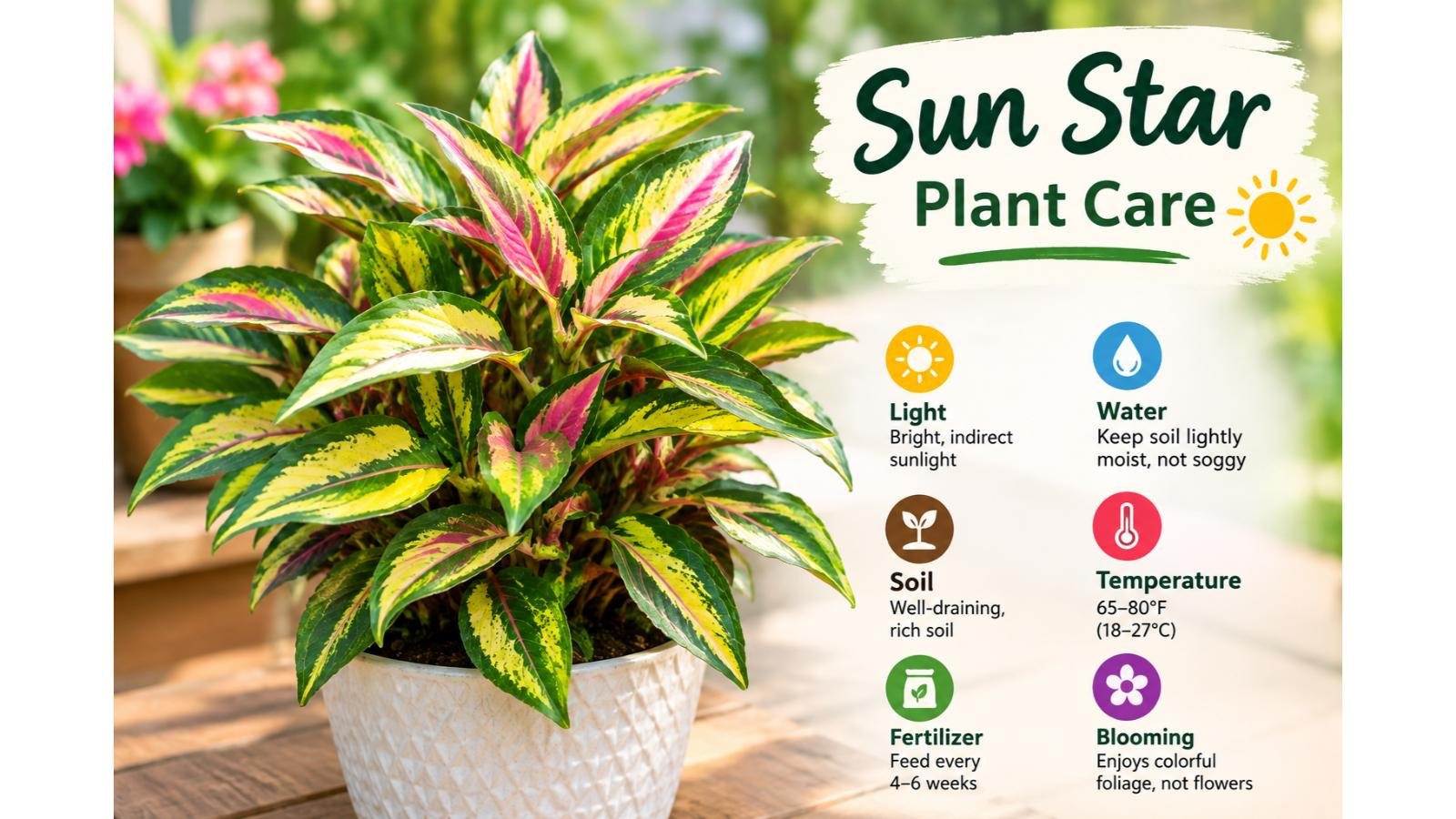
Sun star plant care is relatively easy when you provide bright, indirect light, well-draining soil, and careful watering.
The sun star plant (Ornithogalum dubium) grows from a bulb and produces clusters of cheerful orange, yellow, or occasionally white flowers. Water when the top layer of soil begins to dry, keep the bulb from sitting in soggy soil, and provide cooler conditions after flowering to support its natural growth cycle.
Introduction
The sun star plant is a beautiful flowering bulb that brings bright, star-shaped blooms into indoor spaces, patios, and gardens. Its vibrant flowers and compact growth make it an attractive choice for plant lovers who want colorful displays without the demanding maintenance of some other flowering plants.
However, keeping a sun star healthy involves understanding something important: this plant grows from a bulb and follows a seasonal growth cycle. Its watering, flowering, and resting needs can change throughout the year.
Many beginners assume that a sun star needs constant watering and feeding to keep blooming. In reality, excessive moisture, poor drainage, and ignoring its natural dormancy can cause more problems than a lack of attention.
This guide explains how to care for a sun star plant, encourage healthy flowers, recognize common problems, and manage the plant after blooming.
Understanding the Sun Star Plant


The sun star, commonly sold as orange star or orange star flower, is a flowering bulb belonging to the genus Ornithogalum. The species most often associated with this name is Ornithogalum dubium, which is native to South Africa.
Its flowers grow in clusters above narrow, strap-shaped green leaves. Depending on the variety, the blooms may be orange, yellow, or occasionally white.
Sun Star Plant Facts
| Feature | Details |
|---|---|
| Botanical name | Ornithogalum dubium |
| Common names | Sun star, orange star, orange star flower |
| Plant type | Bulbous perennial |
| Native region | South Africa |
| Flower colors | Orange, yellow, and occasionally white |
| Mature height | Approximately 10–30 cm, depending on growing conditions |
| Light requirements | Bright light to full sun |
| Soil requirements | Well-draining soil |
| Growth cycle | Seasonal, with a resting period |
| Difficulty | Relatively easy with proper seasonal care |
| Toxicity | Harmful if eaten; keep away from pets and children |
The most important thing to understand is that a sun star is not an ordinary foliage houseplant. It stores energy in its bulb, grows leaves and flowers during its active season, and can naturally lose its foliage when entering dormancy.
Sun Star Plant Light Requirements
Light plays a major role in the sun star’s ability to produce strong leaves and healthy flowers.
Although the plant can adapt to indoor conditions, it generally performs best in a bright location with plenty of natural light.
Best indoor location
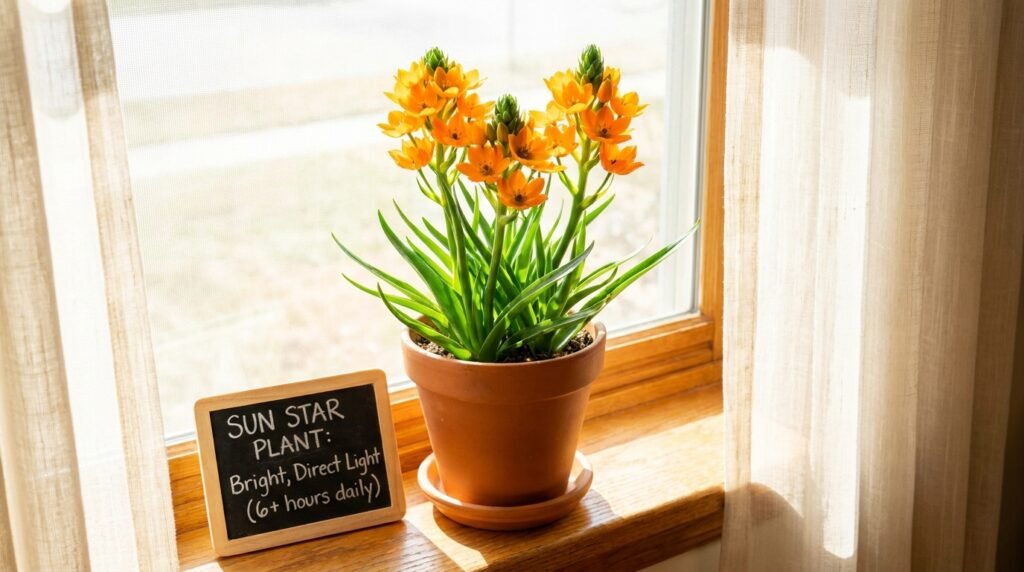
Place your sun star near a bright window where it receives several hours of sunlight.
Suitable locations include:
- A bright south-facing window with suitable protection from excessive midday heat.
- A west-facing window with strong afternoon light.
- An east-facing window with gentle morning sunlight.
The plant can tolerate some direct sunlight, and outdoor specimens generally benefit from a sunny, sheltered position. However, plants grown indoors should be acclimated gradually when moved into stronger sunlight.
Signs your sun star needs more light
Watch for these symptoms:
- Leaves becoming unusually long and weak.
- Flower stems stretching toward a window.
- Fewer flowers than expected.
- Stems leaning or falling over.
When light is insufficient, the plant may put more energy into reaching for light rather than producing compact, sturdy growth.
Practical tip: Rotate the pot occasionally so that different sides receive light. This can help prevent the flower stems from leaning consistently in one direction.
Can a sun star grow in low light?
It may survive temporarily in a moderately bright room, but a dark corner is not a suitable long-term location.
If your plant is growing weakly or failing to flower, move it gradually to a brighter position rather than immediately exposing it to intense direct sunlight.
Image suggestion: A comparison showing a compact sun star grown in bright light beside a stretched, leaning plant grown in insufficient light.
How to Water a Sun Star Plant
Watering is one of the most important parts of sun star plant care because the bulb can rot when it remains in excessively wet soil.
The correct watering routine depends on whether the plant is actively growing or resting.
Watering during active growth
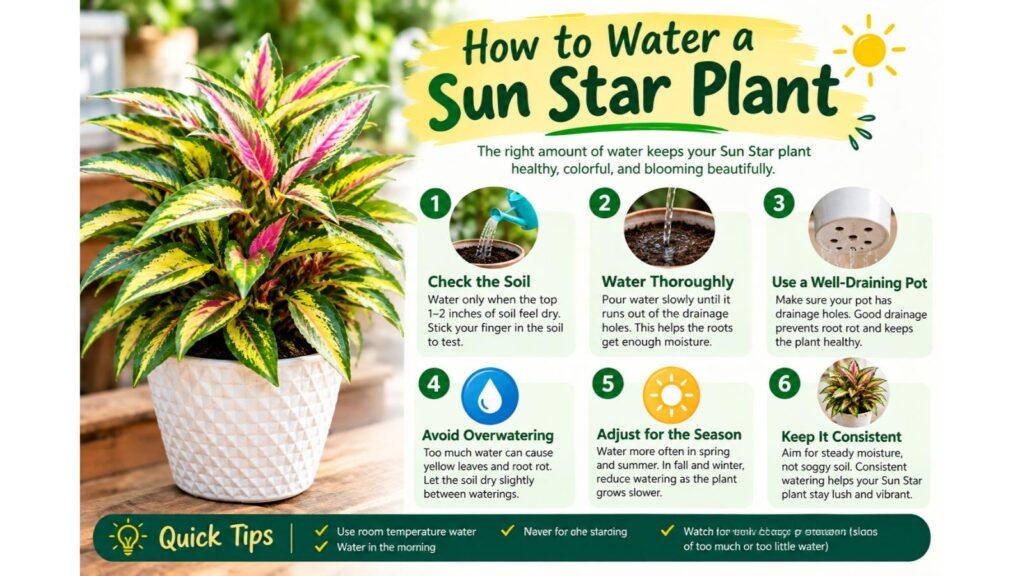
When the plant is producing green leaves and flowers:
- Check the soil with your finger.
- Allow the upper portion of the potting mix to dry before watering again.
- Water thoroughly until excess moisture drains from the bottom.
- Empty any water collected in the saucer.
Avoid keeping the soil continuously saturated. The roots need moisture, but the bulb also needs an environment that does not remain waterlogged.
A useful starting point is to check the soil every few days and water when the upper 2–4 cm has dried. The actual interval will vary with temperature, pot size, sunlight, and soil composition.
Watering during dormancy
After flowering, the leaves may gradually turn yellow and die back.
This is a natural part of the plant’s seasonal cycle.
When the foliage begins to die:
- Reduce watering as growth slows.
- Stop routine watering once the plant has fully died back and the bulb is resting.
- Keep the dormant bulb dry enough to avoid rot.
- Resume watering gradually when new growth appears.
Some indoor growing conditions may require slightly different moisture management, so avoid treating every yellowing leaf as proof that the plant needs water.
How to tell if you are overwatering
Common warning signs include:
- Yellowing leaves while the soil remains wet.
- Soft or collapsing growth near the base.
- A bulb that becomes soft or develops an unpleasant smell.
- Persistent moisture in a poorly drained pot.
If you notice these symptoms, check the soil and bulb rather than adding more water.
How to tell if you are underwatering
Possible signs include:
- Limp or drooping leaves during active growth.
- Dry soil pulling away from the pot.
- Leaves losing firmness during warm weather.
Before watering, check whether the plant is actively growing. A dormant sun star should not be watered like a plant producing fresh leaves.
Image suggestion: A watering guide showing the difference between appropriately moist soil, waterlogged soil, and a dry dormant bulb.
Choosing the Right Soil and Pot
Sun star bulbs need a potting medium that drains efficiently.
Heavy soil that stays wet for long periods can reduce root health and increase the risk of bulb rot.
Best soil mixture
A suitable mixture should be:
- Loose and well aerated.
- Capable of draining excess water quickly.
- Moisture-retentive enough to support active growth without becoming soggy.
You can use a quality bulb potting mix or a well-draining potting medium amended with suitable gritty material.
A cactus-style mix can also work when its composition provides adequate support and moisture retention for the plant’s growing conditions.
Choosing a container
Select a pot with drainage holes.
A container that is only slightly larger than the root system is generally easier to manage than an oversized pot filled with soil that stays wet for too long.
For several bulbs, choose a container that gives them enough room without leaving excessive unused soil.
Should the bulb be buried completely?
When planting a dormant bulb, follow the planting depth recommended for the particular bulb or cultivar. Avoid burying an actively growing bulb too deeply during repotting.
The planting medium should support the bulb while allowing water to drain freely.
When should you repot?
Repot when:
- The potting mix has deteriorated or become compacted.
- The container no longer provides adequate drainage.
- The bulbs have outgrown their available space.
- You need to inspect and separate suitable offsets.
Repotting during dormancy or around the beginning of the next growth cycle is generally more convenient than disturbing a plant in full flower.
Image suggestion: A labeled illustration of a sun star bulb in a pot with drainage holes and a loose, well-draining potting mixture.
Ideal Temperature and Humidity
Sun stars prefer mild growing conditions and should be protected from freezing temperatures.
During active growth, aim for a comfortable indoor environment rather than exposing the plant to extreme heat or cold.
Temperature recommendations
| Condition | Recommended approach |
|---|---|
| Active growth | Maintain mild, comfortable temperatures. |
| Flowering | Cooler conditions can help flowers last longer. |
| Hot weather | Protect the plant from excessive heat and prolonged harsh afternoon sun. |
| Cold weather | Protect bulbs from frost and freezing soil. |
| Dormancy | Provide a suitable dry resting environment. |
Sun stars are frost-sensitive, so container-grown plants should be moved to a protected location before freezing conditions arrive.
Does the sun star need high humidity?
No special humidity treatment is normally necessary.
Average indoor humidity is generally suitable, provided the plant has adequate airflow and its leaves and flowers are not kept persistently wet.
Avoid unnecessary misting, particularly when the plant is flowering. Wet flowers and poor air circulation can encourage fungal problems.
Practical tip: If you keep your sun star in a humid room, pay particular attention to soil drainage and airflow instead of trying to increase humidity further.
Fertilizing Sun Star Plants
Fertilizer can support healthy leaves and flowers during active growth, but it cannot compensate for insufficient light, poor drainage, or an unhealthy bulb.
When should you fertilize?
Feed the plant while it is actively growing, following the instructions on a balanced liquid fertilizer suitable for flowering bulbs or container plants.
A conservative approach is to:
- Begin feeding when healthy new growth is established.
- Use the product at an appropriate dilution.
- Apply fertilizer only when the plant is actively growing.
- Reduce or stop feeding as the foliage begins to die back.
- Avoid fertilizing a dormant bulb.
Freshly purchased plants that are already growing in fertilized potting mix may not need additional fertilizer immediately.
Common fertilizing mistakes
Using too much fertilizer: Excess fertilizer can damage roots and cause unnecessary salt buildup.
Feeding during dormancy: A resting bulb cannot use nutrients in the same way as an actively growing plant.
Expecting fertilizer to fix poor lighting: Extra nutrients will not correct weak growth caused by insufficient sunlight.
Practical tip: If your sun star has healthy green leaves but produces few flowers, assess its light exposure and seasonal growth cycle before increasing fertilizer.
How to Encourage Sun Star Plants to Bloom
The sun star’s flowers are its main attraction, so it is understandable to want the plant to bloom reliably.
However, flowering depends on more than fertilizer alone.
Provide sufficient light
A bright growing location helps the plant develop stronger foliage and flower stems.
Plants kept in deep shade may produce weaker growth and reduced flowering.
Maintain appropriate watering
During active growth, provide enough moisture to support the leaves and developing flowers.
At the same time, avoid waterlogged soil that can damage the bulb.
Respect the seasonal cycle
Sun stars are seasonal bulbous plants. Their growth and flowering patterns depend on environmental conditions and the bulb’s development.
Allowing the plant to complete its growth cycle is important for its long-term health. Do not try to force continuous growth by keeping a naturally dormant bulb constantly wet.
Remove faded flowers
Once individual flowers have faded, you can remove them with clean scissors.
This keeps the plant looking tidy and prevents unwanted seed development if you do not intend to collect seeds.
Leave healthy green leaves in place because they help replenish the bulb’s energy reserves.
Why is my sun star not flowering?
Consider the following possibilities:
- The plant is receiving insufficient light.
- The bulb is too small or not sufficiently established.
- The plant has not completed an appropriate growth and resting cycle.
- The roots or bulb have been damaged by excessive moisture.
- Growing conditions are unsuitable for healthy development.
Correcting the underlying growing conditions is generally more useful than repeatedly changing fertilizers.
Image suggestion: A three-stage illustration showing a sun star in active leaf growth, in full bloom, and entering dormancy.
Sun Star Plant Dormancy and After-Flowering Care
Dormancy is one of the most important aspects of long-term sun star plant care.
When flowering ends, the plant may gradually lose its leaves. This can be alarming for beginners who expect a flowering houseplant to remain green throughout the year.
However, seasonal dieback is a normal feature of this bulbous plant.
What to do after flowering
Follow these steps:
Step 1: Remove faded flowers.
Cut off spent flower heads with clean scissors. Avoid cutting healthy foliage.
Step 2: Continue caring for green leaves.
If the plant still has healthy green foliage, allow it to continue growing. The leaves help replenish the bulb’s stored energy.
Step 3: Reduce watering as the foliage declines.
When the leaves begin yellowing naturally, gradually reduce watering.
Step 4: Allow the foliage to die back.
Once the leaves have fully died, remove them carefully.
Step 5: Keep the dormant bulb dry.
Store the pot or bulb in a suitable dry, protected location. Avoid keeping dormant bulbs in constantly wet soil.
Step 6: Watch for new growth.
When fresh shoots appear, gradually return the plant to brighter light and resume watering to support active growth.
These steps follow the plant’s natural seasonal pattern and help avoid one of the most common mistakes: treating a dormant bulb as though it were still actively growing.
Does a sun star die after flowering?
No. Flowering does not automatically mean the bulb has died.
A healthy bulb may rest and produce new growth during a subsequent growing season. However, successful reblooming depends on the bulb’s condition, growing environment, and seasonal care.
Do not discard a firm, healthy-looking dormant bulb simply because its leaves have disappeared.
Image suggestion: A seasonal care infographic showing flowering, foliage decline, dry dormancy, and the return of new shoots.
Growing Sun Star Plants Outdoors
Sun stars can be grown outdoors in suitable climates, particularly where they receive good light and have access to well-draining soil.
Their frost sensitivity means that outdoor planting requires attention to local weather conditions.
Choosing an outdoor location
Look for a sheltered location that provides:
- Plenty of sunlight.
- Protection from freezing temperatures.
- Well-draining soil.
- Good air circulation.
- Protection from prolonged waterlogging.
A sunny rock garden or a suitable container can provide the drainage these bulbs need.
Can sun stars grow in garden beds?
Yes, provided the climate and soil conditions are suitable.
In areas with cold winters, growing sun stars in containers can make it easier to protect the bulbs.
If you plant them directly in the ground, avoid low-lying areas where water collects after rain.
Outdoor watering
Water during active growth when the soil begins to dry.
During dormancy, reduce watering substantially and avoid unnecessary irrigation.
In rainy climates, natural rainfall may keep the soil wetter than expected, making good drainage especially important.
Growing sun stars in containers outdoors
Container growing is a practical option if you want to move the plant between outdoor and protected locations.
Use a pot with drainage holes and monitor soil moisture more closely during hot or windy weather.
Practical tip: Before moving a sun star outdoors for the first time, gradually acclimate it to stronger sunlight. A sudden change from indoor shade to intense outdoor sun can stress the foliage.
How to Propagate Sun Star Plants
Sun stars can be propagated from seed or suitable offsets, although growing from seed generally takes longer to produce flowering-size plants.
The most appropriate method depends on whether your plant produces offsets and whether you are willing to wait for seedlings to mature.
Propagation by offsets
Offsets are small bulbs that develop alongside the parent bulb.
If your plant produces suitable offsets, you can separate them during dormancy.
- Allow the plant to complete its active growth cycle.
- Carefully remove the bulb from its container when appropriate.
- Identify offsets that can be separated without excessive damage.
- Separate them gently using clean hands or tools.
- Plant the offsets in suitable, well-draining growing medium.
- Resume watering gradually when growth begins.
Not every sun star produces offsets readily, so propagation by division may not be possible with every plant.
Propagation from seed
Growing sun stars from seed is another option.
Fresh seed can be sown in a suitable well-draining medium and kept appropriately moist during germination.
Seedlings require time to develop bulbs and mature, so this method is better suited to patient growers interested in raising new plants rather than quickly multiplying flowering specimens.
Which propagation method should you choose?
| Method | Main advantage | Main limitation |
|---|---|---|
| Offsets | Can produce new plants from an existing bulb. | The parent plant may produce few or no offsets. |
| Seeds | Allows you to raise new plants from seed. | Seedlings take time to mature and flower. |
Practical tip: Avoid disturbing a healthy flowering plant simply to search for offsets. Waiting until the plant has finished its growth cycle is usually more convenient.
Common Sun Star Plant Problems and Solutions
Even though sun stars are relatively manageable plants, incorrect watering, insufficient light, and unsuitable seasonal care can cause problems.
The key is to identify the cause before changing your care routine.
Yellowing leaves
Possible causes:
- Natural seasonal dieback.
- Excessive watering.
- Poor drainage.
- Stress from unsuitable growing conditions.
What to do:
Check whether the plant is approaching the end of its growing cycle.
If the leaves are yellowing while the plant is actively growing, inspect the soil moisture and drainage. If the plant has finished flowering and the foliage is gradually dying back, dormancy may be the natural explanation.
Sun star leaves are drooping
Drooping can result from several different conditions.
| Possible cause | What to check | What to do |
|---|---|---|
| Underwatering | Soil is very dry during active growth. | Water thoroughly and allow excess water to drain. |
| Overwatering | Soil remains wet for extended periods. | Reduce watering and improve drainage. |
| Insufficient light | Leaves and stems are stretched or weak. | Gradually move the plant to a brighter location. |
| Natural dormancy | Foliage is declining after flowering. | Reduce watering and allow the plant to rest. |
Do not assume drooping always means the plant needs more water. Adding water to an already waterlogged pot can make the problem worse.
Sun star flowers are fading quickly
Flowers naturally fade as they age, but environmental conditions can affect how long they remain attractive.
Check for:
- Excessive heat.
- Strong, harsh afternoon sunlight.
- Inadequate watering during active growth.
- Wet flowers combined with poor air circulation.
Move the plant away from extreme heat and maintain suitable growing conditions.
The bulb is soft or rotting
A soft bulb is a serious warning sign.
Bulb rot is commonly associated with excessive moisture and poor drainage.
If you suspect rot:
- Stop routine watering.
- Inspect the bulb carefully.
- Remove severely damaged material with a clean tool if the remaining bulb can be salvaged.
- Replace saturated or unsuitable potting mix.
- Replant only healthy material in a clean container with drainage holes.
A bulb that is extensively rotted may not recover.
Sun star plant is not growing
If your plant appears inactive, determine whether it is dormant or struggling.
A dormant bulb may naturally remain without leaves for a period.
However, if the plant is expected to be actively growing, inspect the bulb for damage and review its light, temperature, and moisture conditions.
Avoid repeatedly digging up the bulb to check for growth, as unnecessary disturbance can damage roots and developing shoots.
Pests affecting sun star plants
Sun stars are generally not heavily troubled by pests, but problems can occur.
Potential pests include:
- Mealybugs.
- Spider mites.
- Other sap-feeding insects.
Inspect the leaves, leaf bases, and growing points regularly.
If you notice pests, isolate the affected plant when practical and use a treatment appropriate for the identified pest and the plant’s growing conditions.
Image suggestion: A troubleshooting chart showing healthy leaves, naturally yellowing dormant foliage, stretched growth, and a damaged bulb.
Seasonal Sun Star Plant Care Calendar
A seasonal routine makes sun star care easier because it helps you recognize when the plant should be growing and when it may need to rest.
The exact timing can vary with climate, indoor temperatures, and the bulb’s development. The following calendar describes the general pattern rather than a fixed schedule.
| Growth stage | What to expect | Care priorities |
|---|---|---|
| Active growth | New leaves develop. | Provide bright light, appropriate watering, and suitable feeding. |
| Flowering | Colorful flower clusters appear. | Maintain good light, avoid waterlogging, and remove faded flowers. |
| Post-flowering | Flowers fade and foliage may begin declining. | Continue supporting healthy green leaves while gradually reducing watering as growth slows. |
| Dormancy | Leaves may die back completely. | Keep the bulb dry and protected from unsuitable conditions. |
| Return of growth | New shoots emerge. | Gradually increase watering and return the plant to bright light. |
This approach is more reliable than watering or fertilizing the plant according to an unchanging weekly calendar.
Is the Sun Star Plant Toxic to Pets?
Yes. Ornithogalum dubium is considered harmful if eaten, and it should be kept away from pets and children who might chew its leaves, flowers, or bulbs.
Take these precautions:
- Place the plant where pets and children cannot reach it.
- Avoid leaving discarded bulbs or foliage where animals can chew them.
- Wear gloves if you have sensitive skin or are handling damaged plant material.
- Wash your hands after handling the plant.
If a person or animal eats part of the plant, contact an appropriate medical professional or veterinarian for advice.
Practical tip: If your pet regularly chews houseplants, choose a location that is genuinely inaccessible rather than relying on the plant’s appearance to discourage chewing.
Internal Linking Opportunities
If you are building a plant-care website, these related articles could help readers explore other flowering plants and bulb-care topics.
- Kalanchoe Plant Care.
- Bromeliad Plant Care.
- Aloe Plant Care.
- Elephant Ear Plant Care.
- Mandevilla Plant Care.
- How to Care for Flowering Bulbs.
- How to Prevent Bulb Rot.
- How to Grow Plants in Containers.
Use these topics as internal links where they naturally support the reader’s next question.
Frequently Asked Questions About Sun Star Plant Care
1. How often should I water a sun star plant?
Water during active growth when the upper 2–4 cm of soil has dried. Water thoroughly and allow excess moisture to drain. Reduce watering as the plant enters dormancy, and keep the dormant bulb dry.
2. Does a sun star plant need direct sunlight?
Sun stars benefit from bright light and can grow well with some direct sunlight. Indoors, a bright window is a suitable location. Gradually acclimate the plant when moving it into stronger sunlight to avoid sudden stress.
3. Why is my sun star plant turning yellow?
Yellowing can indicate natural dormancy, overwatering, poor drainage, or other growing problems. If flowering has finished and the foliage is gradually declining, dormancy may be normal. If the soil is constantly wet or the bulb is soft, investigate possible rot.
4. Will my sun star plant bloom again?
A healthy sun star bulb may bloom again in a subsequent growing season. Provide sufficient light, appropriate watering during active growth, and suitable conditions during dormancy. Reblooming is not guaranteed, particularly if the bulb is weak or its growing conditions are unsuitable.
5. Should I cut off the leaves after flowering?
No. Keep healthy green leaves until they naturally yellow and die back. The foliage helps replenish the bulb’s stored energy. Remove dead leaves once they have completely dried.
6. Can I grow a sun star plant indoors?
Yes. Sun stars can be grown indoors in a bright location with well-draining soil. A sunny windowsill can provide suitable light, but avoid placing the plant in a dark corner or allowing its pot to remain waterlogged.
7. Can sun star plants grow outdoors?
Yes, in suitable climates. They need plenty of light, well-draining soil, and protection from frost. Container growing is useful in colder regions because the bulbs can be moved to a sheltered location.
8. Why is my sun star plant not flowering?
Insufficient light, an immature or weakened bulb, unsuitable growing conditions, or an interrupted seasonal cycle may contribute to poor flowering. Review the plant’s overall care rather than relying on extra fertilizer alone.
9. Can I leave my sun star bulb in the pot during dormancy?
Yes. You can generally leave the bulb in its container while it rests, provided the potting medium and storage conditions are suitable. Keep it dry enough to prevent rot and resume watering when new growth appears.
10. Is sun star plant safe for cats and dogs?
No. Sun star plants are considered toxic if eaten. Keep them out of reach of cats, dogs, and other animals that may chew plants.
11. What kind of fertilizer is suitable for sun star plants?
A balanced liquid fertilizer suitable for flowering bulbs or container plants can be used during active growth. Follow the product’s dilution instructions and stop feeding when the plant enters dormancy.
12. How do I propagate a sun star plant?
Sun stars can be propagated from seeds or offsets. Offsets can be separated when suitable bulbs develop, while seed propagation requires patience because seedlings take time to mature.
Conclusion
Successful sun star plant care comes down to understanding its needs as a seasonal flowering bulb rather than treating it like a typical evergreen houseplant.
Give it plenty of light, use well-draining soil, water carefully during active growth, and protect the bulb from excessive moisture. Most importantly, allow the foliage to complete its natural cycle and respect the plant’s resting period after flowering.
If your sun star begins losing its leaves after blooming, do not immediately assume that you have done something wrong. Check whether it is entering dormancy, keep the bulb in suitable conditions, and watch for fresh growth when the next growing season begins.
The key to keeping a sun star healthy is simple: provide the right conditions while it grows, and do not interfere with its natural rest.
With consistent seasonal care, you can give your sun star the opportunity to remain healthy and potentially reward you with another colorful display of flowers.