Quick Answer
Rousseau Plant Care is a plant-care brand rather than the botanical name of a specific houseplant. If you are searching for Rousseau plant care, the first step is to identify the actual plant you own.
Different plants, including Anthuriums, Monsteras, and Philodendrons, have different watering, lighting, humidity, and soil requirements. Providing the right conditions for your particular plant is essential for healthy roots, attractive foliage, and steady growth.
Introduction
Indoor plants can transform a living space, bringing natural color, texture, and life into your home. However, keeping them healthy requires more than occasional watering. Understanding their individual needs makes the difference between a plant that merely survives and one that produces healthy new growth.
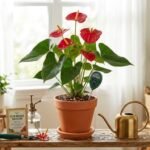
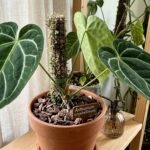
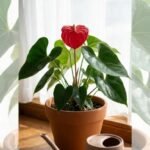
If you are researching Rousseau plant care, it is important to understand that the name refers to a plant-care business, not a single botanical species. Its plant collection includes tropical houseplants such as Anthuriums, Monsteras, and Philodendrons.
This guide explains the essential principles of indoor plant care, with particular attention to tropical foliage plants. You will learn how to manage light, watering, soil, humidity, fertilizing, repotting, and common plant problems.
Important: These recommendations are general starting points. Always adjust your care routine to the species, growing conditions, and actual moisture level of your plant.
1. Understand Your Plant Before Choosing a Care Routine
One of the most common indoor gardening mistakes is assuming that every houseplant needs the same treatment.
A plant that thrives in consistently moist soil may struggle if treated like a drought-tolerant succulent. Similarly, a tropical plant that prefers bright indirect light may develop scorched leaves when placed in intense afternoon sunlight.
Before changing your care routine, identify the plant.
Common tropical houseplants
| Plant type | General care preference |
|---|---|
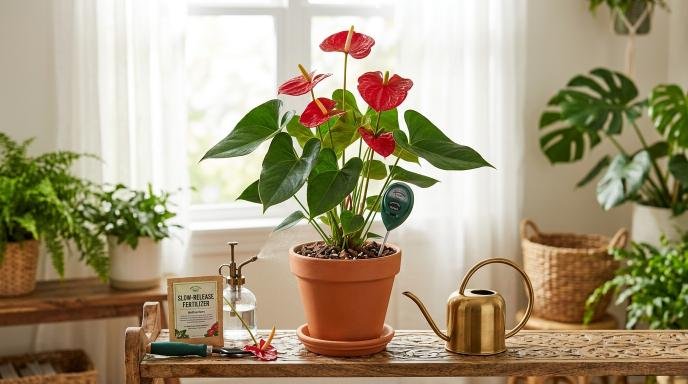
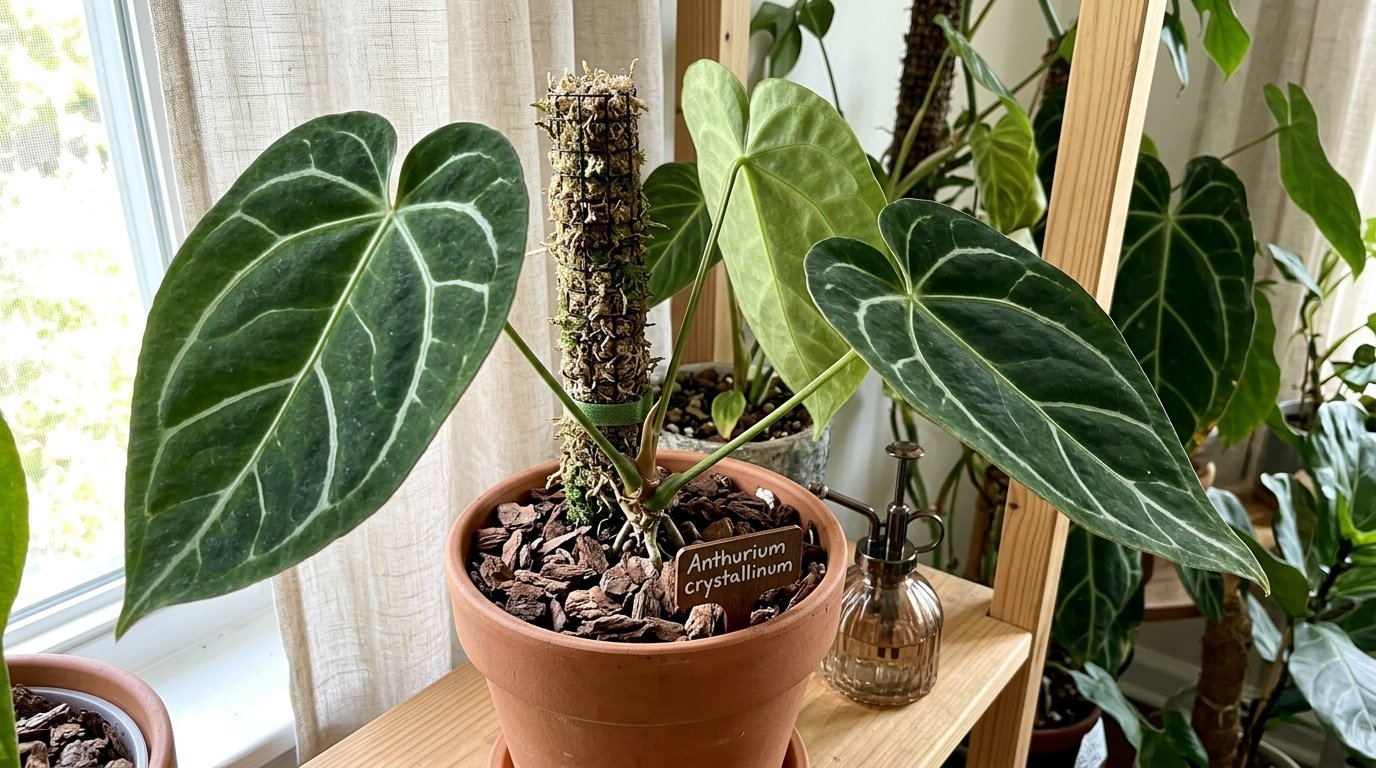
| Anthurium | Bright indirect light, airy growing medium, and appropriate humidity |
| Monstera | Bright indirect light, well-draining soil, and room to climb |
| Philodendron | Light suited to the species, an airy growing medium, and careful watering |
These are broad guidelines rather than universal rules. Individual species and cultivars can have different requirements.
Practical tip: Keep the plant’s identification label or take a clear photograph of its leaves and growth pattern. Accurate identification helps you avoid following care instructions intended for a different species.
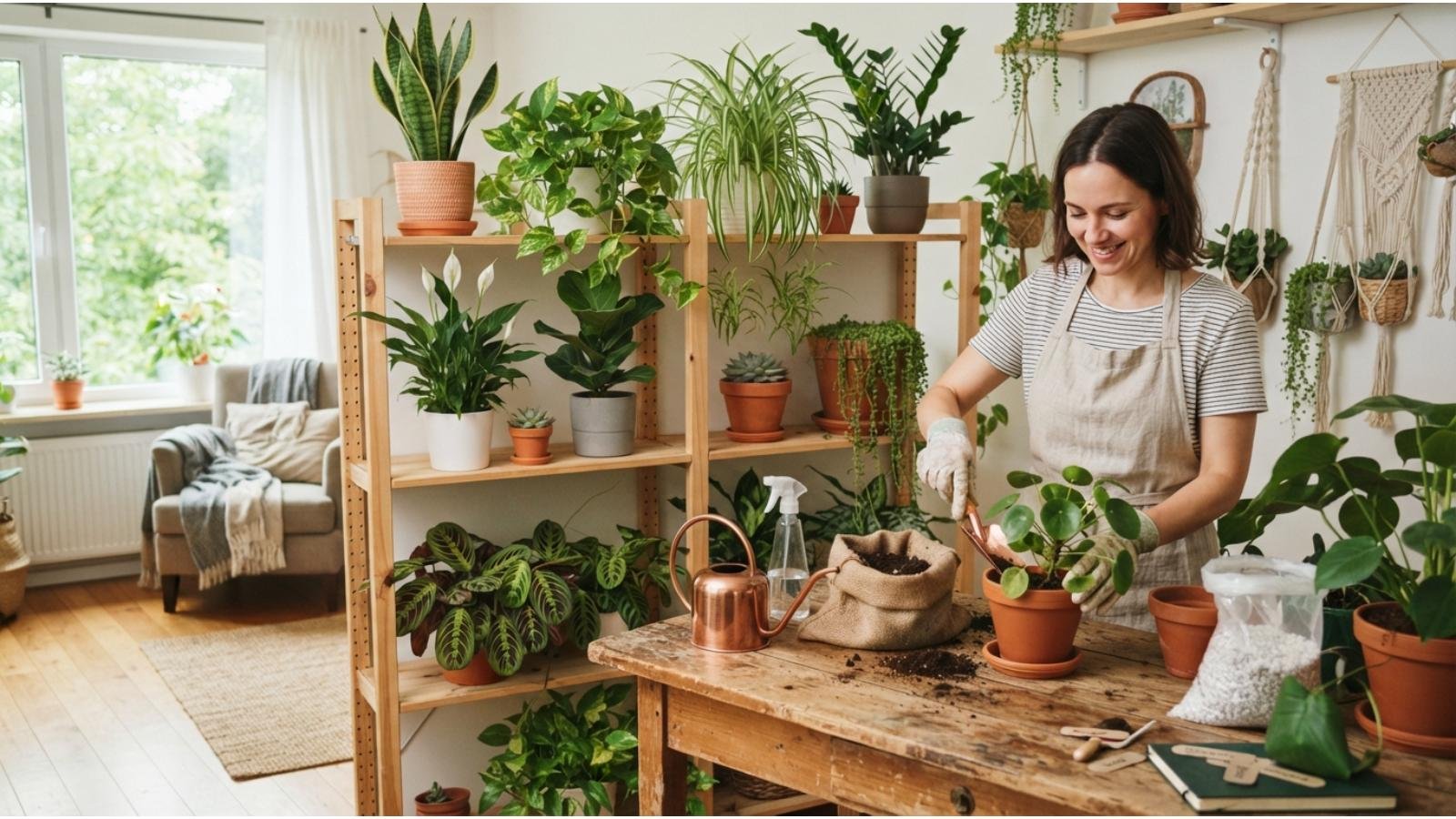
Image suggestion: A labeled comparison of Anthurium, Monstera, and Philodendron foliage.
2. Provide the Right Amount of Light
Light influences nearly every aspect of plant growth, including leaf development, water consumption, and the production of new foliage.
Many tropical foliage plants grow well in bright, indirect light. However, the ideal placement depends on the species and the intensity of the sunlight reaching your home.
What is bright indirect light?
Bright indirect light is strong natural illumination that does not expose the leaves to prolonged, harsh direct sunlight.
Suitable locations may include:
- Near an east-facing window with gentle morning light.
- A short distance from a bright south- or west-facing window.
- Near a window where a sheer curtain softens intense sunlight.
The correct distance depends on window size, season, outdoor shading, and the plant’s light requirements.
Signs your plant needs more light
Watch for:
- Slow or weak new growth.
- Longer stems with unusually large spaces between leaves.
- Smaller leaves on plants that normally produce larger foliage.
- Growth leaning noticeably toward a window.
These symptoms can also have other causes, so consider watering, root health, and temperature before making major changes.
Signs of excessive direct sunlight
Strong direct sunlight may cause:
- Pale or bleached patches.
- Dry, brown areas on exposed leaves.
- Scorched leaf edges.
- Rapid drying of the growing medium.
How to improve lighting
- Observe where sunlight falls throughout the day.
- Move the plant gradually toward a brighter location if growth is weak.
- Protect sensitive foliage from intense afternoon sun.
- Rotate the pot occasionally if the plant grows unevenly toward the window.
- Monitor new growth rather than expecting damaged leaves to become healthy again.
Expert tip: A room that looks bright to your eyes may still provide relatively little usable light for a tropical plant. If natural light is limited, a suitable grow light can help supplement it.
Image suggestion: A diagram showing bright indirect light, filtered sunlight, and harsh direct sunlight.
3. Water Correctly Without Overwatering
Watering mistakes are among the most common reasons houseplants develop unhealthy roots.
Beginners often assume that a drooping plant must be thirsty. However, drooping can also occur when roots are damaged by excessive moisture and cannot absorb water effectively.
The safest approach is to check the growing medium before watering.
How to know when your plant needs water
Use these simple checks:
- Finger test: Check the upper portion of the growing medium for moisture.
- Pot weight: Compare how heavy the pot feels after watering with how it feels as it dries.
- Soil appearance: Look for changes in surface color and texture.
- Plant condition: Consider leaf firmness and growth, but do not rely on drooping alone.
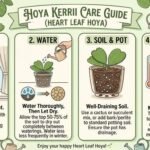
Different plants should be allowed to dry to different degrees. Some Anthuriums, for example, prefer more consistent moisture than plants adapted to drier conditions.
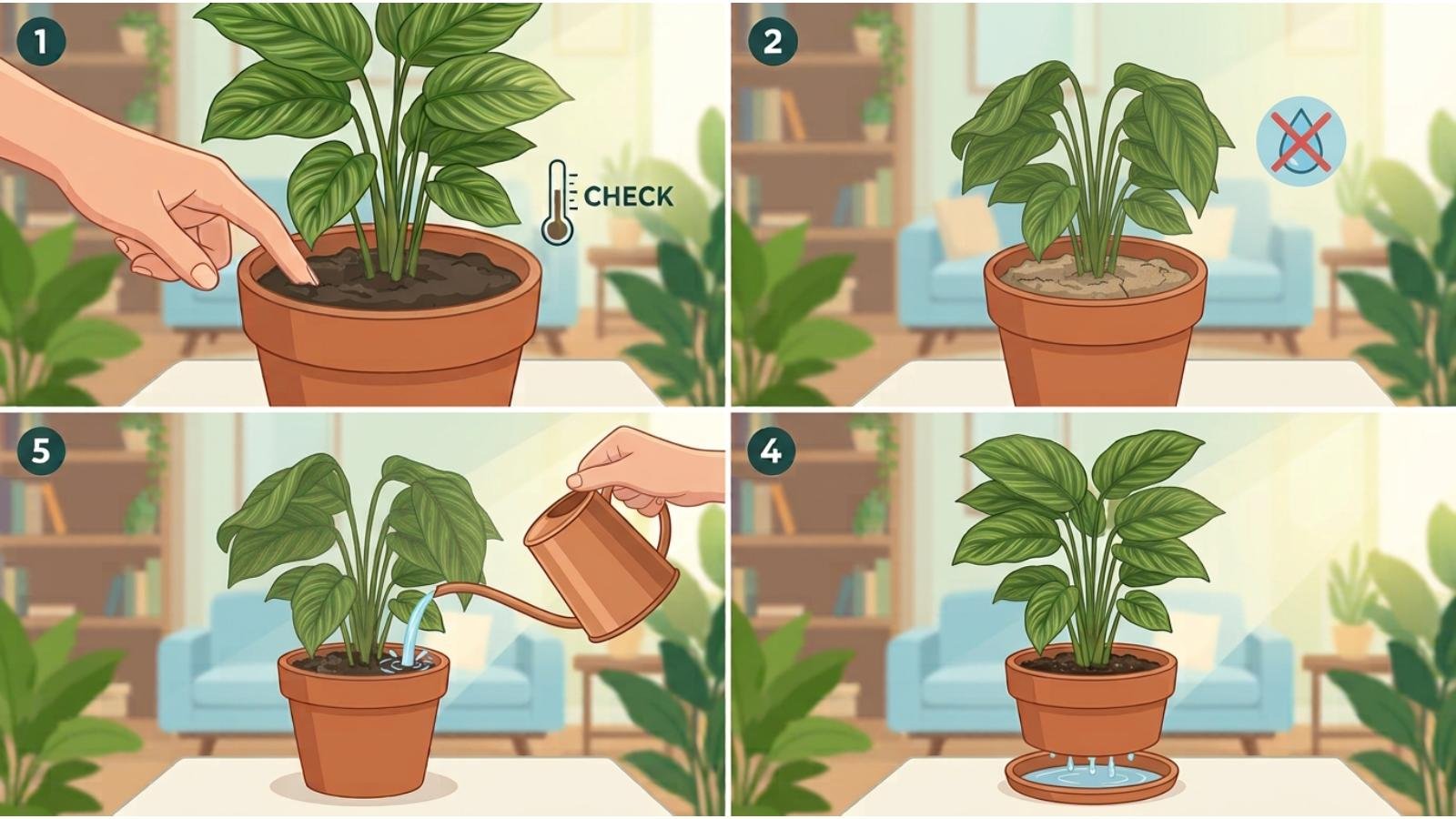
Step-by-step watering method
- Check the moisture level of the growing medium.
- If watering is needed, apply water evenly across the surface.
- Allow excess water to escape through the drainage holes.
- Empty any collected water from the saucer or decorative outer pot.
- Check the growing medium again before the next watering.
Avoid leaving the roots sitting in stagnant water.
How often should you water?
There is no reliable watering schedule that works for every indoor plant.
Watering frequency depends on:
- Plant species and size.
- Pot size and material.
- Growing-medium composition.
- Temperature and humidity.
- Light intensity.
- Season and growth rate.
A plant growing in a warm, bright room may use water much faster than the same plant in a cool, dim location.
Practical example: If the surface of the growing medium is dry but the lower portion remains wet, adding more water may keep the roots excessively saturated. Check deeper into the medium before watering again.
4. Choose a Suitable Growing Medium
The growing medium provides physical support, holds moisture, and allows roots to access oxygen.
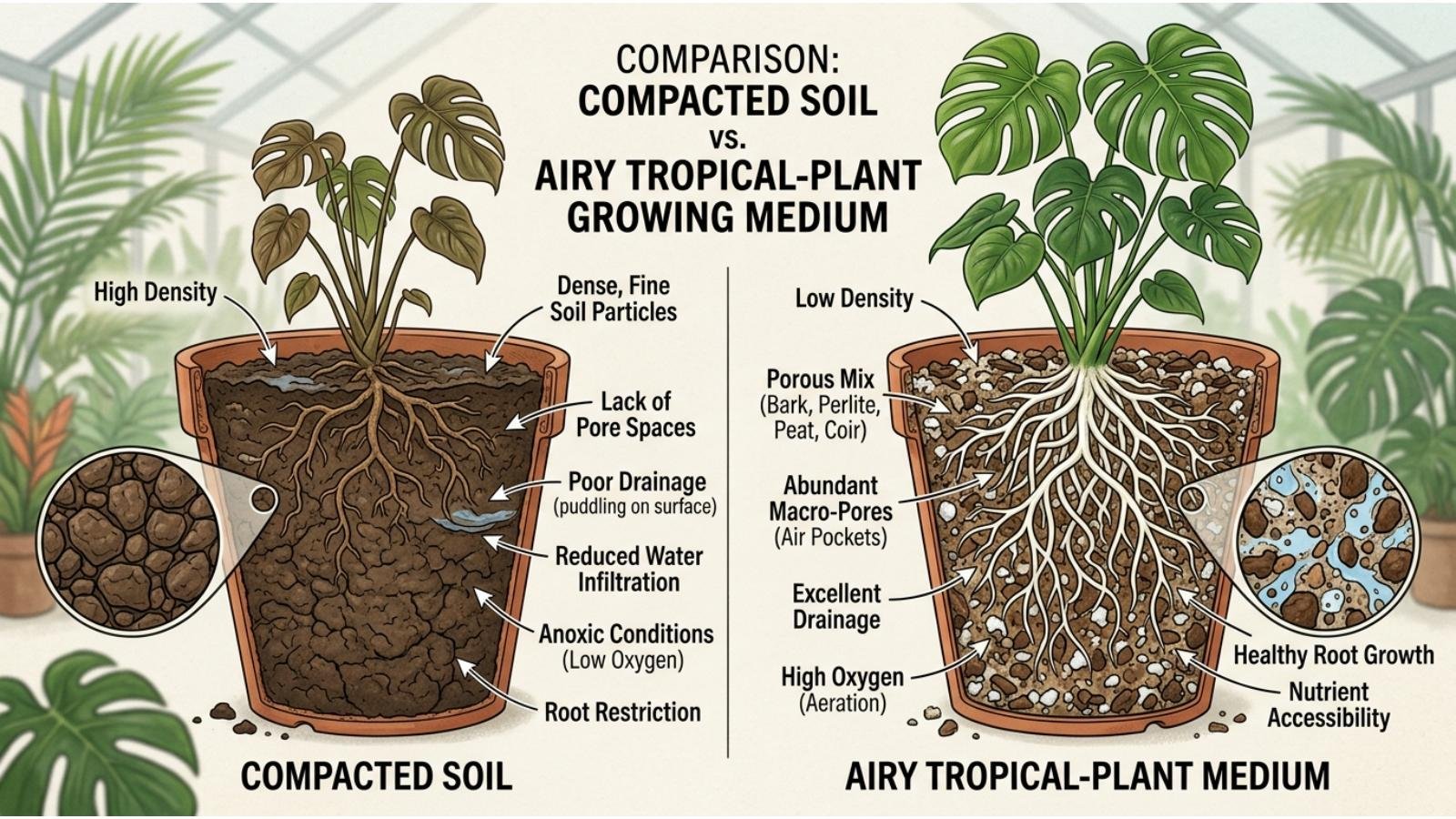
For many tropical foliage plants, a loose, well-aerated medium is preferable to dense soil that remains waterlogged for long periods.
What makes a good growing medium?
A suitable mix should:
- Retain enough moisture to support the plant.
- Drain excess water effectively.
- Maintain air spaces around the roots.
- Remain structurally stable rather than quickly becoming compacted.
Components you may encounter
| Component | Purpose |
|---|---|
| Coco coir | Helps retain moisture |
| Orchid bark | Creates larger air spaces and improves structure |
| Perlite | Improves aeration and drainage |
| Pumice | Adds structure and helps maintain air spaces |
| Quality potting mix | Provides a moisture-retaining base and growing-medium structure |
The right proportions depend on the plant, growing environment, and watering habits. A mix that dries too quickly in one home may work well in a more humid environment.
Should you use ordinary garden soil?
Heavy garden soil is generally unsuitable for indoor tropical plants in containers because it can compact, restrict airflow, and retain excessive moisture.
Choose a suitable container growing medium instead.
Expert tip: If a plant repeatedly stays wet for too long, investigate the medium, pot size, drainage, and environmental conditions before simply reducing watering. The underlying problem may be poor aeration rather than the amount of water alone.
5. Maintain Appropriate Humidity and Temperature
Many tropical foliage plants originate in environments with relatively warm temperatures and higher humidity than some indoor rooms provide.
However, not every tropical plant requires extremely high humidity, and raising humidity without improving airflow can create other problems.
How humidity affects your plant
Humidity influences how quickly leaves lose water to the surrounding air.
When humidity is too low for a particular species, you may notice:
- Brown leaf tips or margins.
- Leaves drying faster than expected.
- Difficulty maintaining attractive foliage.
- Increased moisture stress during hot or windy conditions.
These symptoms are not exclusive to low humidity. Root problems, inconsistent watering, and fertilizer accumulation can produce similar damage.
Ways to improve humidity
You can try:
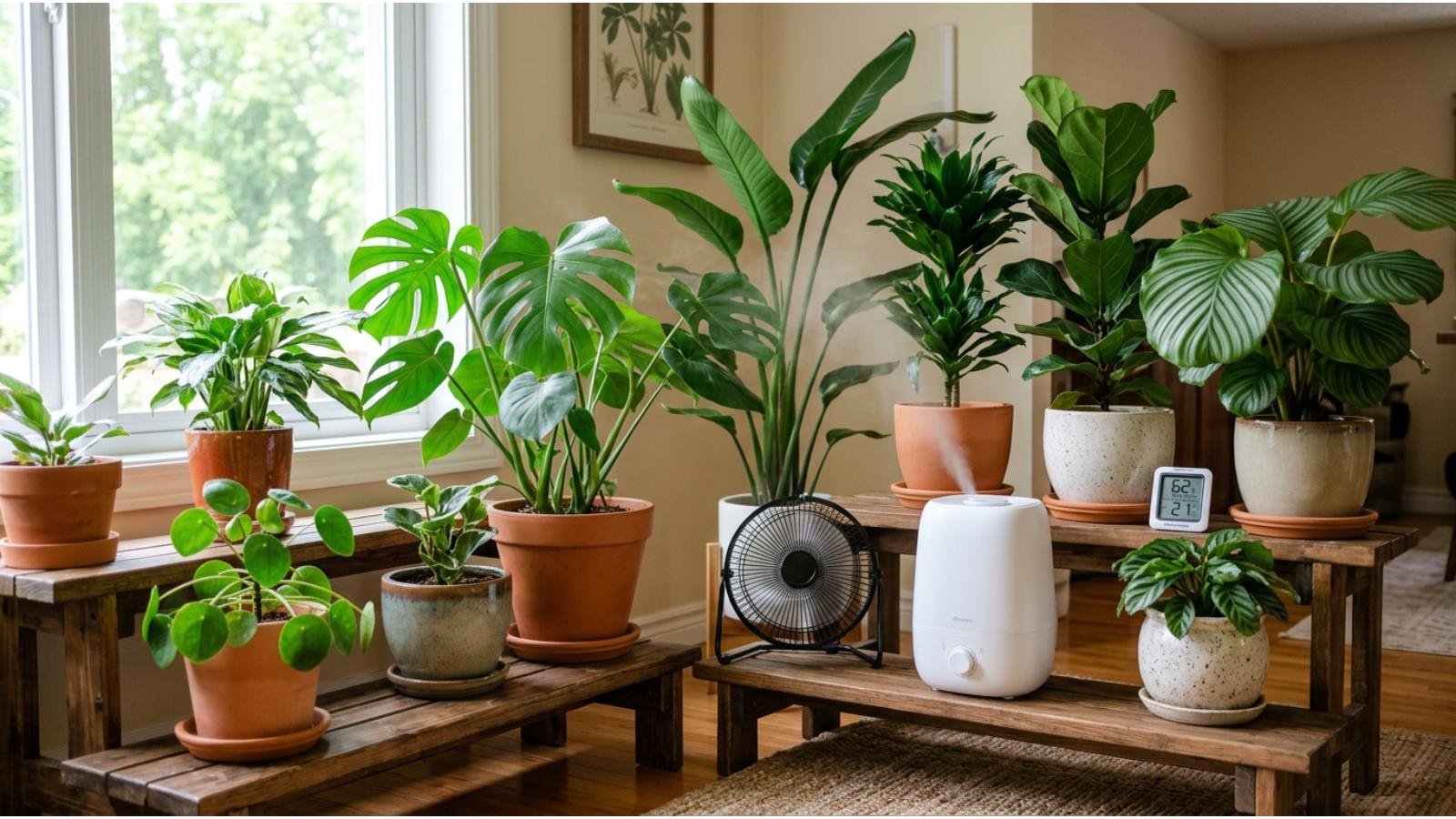
- Grouping compatible plants together.
- Using a room humidifier.
- Keeping humidity-sensitive plants away from heating and cooling vents.
- Monitoring humidity with a simple hygrometer.
Misting leaves may provide only a temporary change in local humidity. It is not a dependable substitute for maintaining appropriate room conditions.
Temperature recommendations
Many common tropical foliage plants prefer consistently warm indoor conditions.
Protect them from:
- Cold drafts.
- Sudden temperature changes.
- Direct contact with hot radiators.
- Excessive heat from windows or heating equipment.
Avoid placing a tropical plant where cold air repeatedly strikes its leaves.
6. Use the Right Pot and Ensure Proper Drainage
Choosing an attractive pot is easy. Choosing a pot that supports healthy roots requires a little more attention.
A container that is too large may hold more moisture than the plant can use. A pot without adequate drainage can allow water to accumulate around the roots.
What type of pot should you choose?
Look for a container that:
- Has functional drainage holes.
- Provides enough space for the root system.
- Is not excessively large for the plant.
- Is suitable for the growing medium and watering routine.
Plastic pots tend to retain moisture longer than porous terracotta pots under similar conditions. This difference can affect how frequently you need to water.
When should you repot?
Consider repotting when:
- Roots are densely circling the inside of the pot.
- The growing medium has broken down or become compacted.
- Water cannot move through the medium properly.
- The plant dries out unusually quickly because its root system fills the container.
- Root health has deteriorated and the plant needs fresh medium.
A plant does not automatically need repotting just because a few roots are visible through the drainage holes.
How to repot safely
- Choose a pot with adequate drainage.
- Select a suitable fresh growing medium.
- Carefully remove the plant from its existing container.
- Inspect the roots for signs of damage or decay.
- Remove clearly dead or rotten roots with clean tools.
- Position the plant at approximately its previous planting depth.
- Fill around the roots without compressing the medium excessively.
- Water appropriately for the species and medium, allowing excess water to drain.
Avoid moving a small plant into an unnecessarily large container simply to give it room to grow.
7. Fertilize for Healthy, Balanced Growth
Plants require nutrients to develop roots, stems, and leaves. However, fertilizer cannot compensate for poor lighting, damaged roots, or inappropriate watering.
Excess fertilizer can also damage roots and contribute to salt accumulation in the growing medium.
When should you fertilize?
Many indoor foliage plants benefit from regular, moderate feeding during active growth.
A sensible approach is to:
- Use a fertilizer appropriate for the plant.
- Follow the product label.
- Begin conservatively if you are unfamiliar with the plant’s needs.
- Reduce or stop feeding when growth slows substantially.
- Avoid fertilizing a severely stressed plant until the underlying problem is addressed.
The appropriate feeding schedule depends on the species, fertilizer formulation, growing medium, and environmental conditions.
Signs of possible fertilizer problems
Excess fertilizer or accumulated salts may contribute to:
- Brown leaf tips or margins.
- Poor root health.
- Crusting on the growing-medium surface.
- Unusual growth problems despite adequate watering.
These symptoms can have several causes, so investigate the overall care conditions before assuming fertilizer is responsible.
Practical tip: More fertilizer does not necessarily mean faster growth. Providing sufficient light, healthy roots, and appropriate moisture is usually more important than increasing fertilizer concentration.
8. Support Climbing Plants With Appropriate Structures
Some tropical plants naturally climb trees or other structures in their native environments.
Monstera and many climbing Philodendron species may benefit from a suitable support as they mature.
Why plant support matters
A climbing structure can:
- Keep stems from sprawling across the floor.
- Help organize the plant’s growth.
- Provide a surface for aerial roots to attach to.
- Make it easier to maintain a tidy indoor display.
Common support options
- Moss poles.
- Coir poles.
- Trellises.
- Sturdy wooden stakes.
Choose a structure suited to the plant’s growth habit and expected size.
How to attach a plant safely
- Position the support securely in the pot.
- Gently guide the appropriate stem toward it.
- Use soft plant ties to hold the stem without constricting it.
- Check the ties regularly as the plant grows.
- Avoid forcing stiff stems into sharp bends.
Not every Philodendron has the same growth habit. Some species are climbers, while others grow in a self-supporting or spreading form. Identify your plant before choosing its support.
9. Prune and Clean Foliage Carefully
Pruning helps remove damaged growth and maintain a manageable plant shape.
However, excessive pruning can reduce the plant’s ability to produce energy, particularly when it is already stressed.
When to prune
Consider removing:
- Completely dead leaves.
- Severely damaged foliage.
- Diseased material when removal is appropriate.
- Stems that need trimming for size or shape.
Use clean, sharp pruning tools.
How to prune safely
- Inspect the plant and identify the growth you want to remove.
- Clean your pruning tools before use.
- Cut damaged leaves or stems carefully without injuring healthy growth.
- Avoid removing too much healthy foliage at once.
- Monitor the plant afterward for new growth and signs of stress.
Should you remove brown leaf tips?
You can trim unattractive brown tips for appearance, but leave a small margin of brown tissue rather than cutting into healthy green areas.
Remember that trimming a leaf does not correct the underlying cause of the damage. Check watering, humidity, fertilizer, and root health if browning continues.
10. Propagate Your Plant When Appropriate
Propagation allows you to produce new plants from an existing healthy plant.
The correct method depends on the species and its growth structure.
Common propagation methods
| Method | How it works |
|---|---|
| Stem cuttings | A suitable stem section develops roots and new growth |
| Division | A plant with multiple growth points is separated into individual sections |
| Offsets | Naturally produced smaller plants are separated when sufficiently developed |
| Seed propagation | Plants are grown from viable seeds under appropriate conditions |
Propagating a climbing aroid
For a suitable climbing Monstera or Philodendron, stem cuttings may be an option.
A viable cutting generally needs an appropriate node, and some species or cultivars require particular care to root successfully.
A leaf without a node may remain green for some time but usually cannot develop into a complete new climbing plant.
Basic propagation steps
- Select a healthy parent plant.
- Identify the appropriate propagation method for the species.
- Use clean tools.
- Prepare the cutting or division carefully.
- Place it in a suitable propagation medium or other appropriate rooting environment.
- Maintain suitable warmth, moisture, and light.
- Monitor root development before moving the new plant into its longer-term growing setup.
Important: Do not assume that every houseplant can be propagated successfully from a leaf cutting. Confirm the method for your particular species.
11. Common Indoor Plant Problems and How to Fix Them
When a plant starts looking unhealthy, avoid changing every aspect of its care at once.
A systematic diagnosis is more useful than repeatedly moving the plant, adding fertilizer, and increasing watering without identifying the problem.
Yellow leaves
Possible causes include:
- Excessive moisture around the roots.
- Underwatering.
- Insufficient light.
- Nutrient problems.
- Natural aging of older leaves.
What to do: Check the growing medium, drainage, root condition, and lighting. Determine whether the yellowing affects one old leaf or several leaves throughout the plant.
Brown leaf tips
Possible causes include:
- Low humidity for the species.
- Inconsistent watering.
- Fertilizer salt accumulation.
- Root damage.
- Exposure to hot or dry airflow.
What to do: Examine the growing environment and watering history. Avoid assuming that brown tips always mean the plant needs more humidity.
Drooping leaves
Possible causes include:
- Dry growing medium.
- Waterlogged roots.
- Root damage.
- Excessive heat.
- Environmental stress.
What to do: Check moisture before watering. If the medium is already wet, adding more water may make the situation worse.
Slow growth
Possible causes include:
- Insufficient light.
- Seasonal changes.
- A recently repotted or relocated plant adjusting to its environment.
- Root restriction.
- Nutrient deficiencies.
- Naturally slow growth.
What to do: Evaluate the plant’s species, season, lighting, root health, and recent changes. A lack of rapid growth does not automatically mean something is wrong.
Leaf spots
Possible causes include:
- Physical damage.
- Sunburn.
- Persistent leaf wetness.
- Fungal or bacterial disease.
- Pest activity.
What to do: Inspect both sides of the leaves, isolate a plant with suspected contagious disease, and improve appropriate airflow. Remove severely affected material when warranted.
Root rot
Root rot can develop when roots remain excessively wet and conditions favor root damage or disease.
Warning signs may include:
- Persistently wet growing medium.
- Soft, dark, deteriorating roots.
- Unpleasant odors from the root zone.
- Wilting despite wet soil.
What to do: Inspect the roots if root damage is suspected. Remove clearly rotten material with clean tools, replace unsuitable growing medium, and correct drainage and watering conditions.
Key lesson: A plant can wilt because its roots are too dry or because damaged, waterlogged roots cannot function properly. Check the root environment before deciding to water.
12. Adjust Your Care Routine to the Seasons
Indoor plants respond to changes in daylight, temperature, and growth rate, even when they remain inside the same room throughout the year.
A watering routine that works during warm, bright months may become excessive during cooler, darker periods.
Spring and summer
During active growth:
- Monitor soil moisture more frequently.
- Provide sufficient light while protecting sensitive foliage from harsh sun.
- Feed according to the plant’s needs and fertilizer instructions.
- Check whether climbing plants need additional support.
- Inspect leaves regularly for pests.
Plants growing in warm conditions may use water more quickly, but always check the growing medium before watering.
Autumn and winter
When growth slows:
- Reduce watering when the plant uses less water.
- Avoid unnecessary repotting.
- Reduce or pause fertilizing according to the species and growing conditions.
- Keep plants away from cold drafts.
- Check whether shorter days have reduced the available light.
Do not automatically stop watering during winter. A plant that remains actively growing in a warm, bright room may still need regular moisture.
Seasonal care checklist
| Care task | Spring and summer | Autumn and winter |
|---|---|---|
| Watering | Monitor more frequently as conditions warm | Check carefully as drying may slow |
| Fertilizing | Feed during active growth as appropriate | Reduce feeding if growth slows |
| Lighting | Protect sensitive plants from intense sunlight | Check whether available light is sufficient |
| Repotting | Consider if needed and conditions support recovery | Avoid unnecessary disturbance |
| Pest inspection | Inspect regularly | Continue inspecting, especially indoors near other plants |
You do not need to spend hours caring for every houseplant each week.
A short inspection routine can help you identify problems before they become severe.
Weekly checklist
1. Inspect the leaves.
Look for yellowing, browning, spots, webbing, or unusual discoloration.
2. Check the growing medium.
Assess moisture rather than watering automatically on a particular day.
3. Examine the plant’s position.
Make sure it is receiving suitable light and is not exposed to harsh drafts or excessive heat.
4. Check for pests.
Look beneath leaves, around leaf joints, and along stems.
5. Inspect drainage.
Make sure water can escape freely and that the pot is not sitting in stagnant water.
6. Observe new growth.
Healthy new leaves, stable stems, and functioning roots provide useful clues about the plant’s condition.
7. Record important changes.
Make a note of watering, repotting, fertilizer application, or relocation when troubleshooting a recurring problem.
Why keeping records helps
When a plant develops a problem, remembering exactly when you watered or changed its location can be difficult.
A simple care log can help you identify patterns and avoid making several unnecessary changes at once.
14. Beginner Mistakes to Avoid
Even experienced plant owners occasionally make mistakes. The goal is to recognize problems early and adjust care based on evidence.
Mistake 1: Watering on a fixed schedule
Watering every Monday, for example, may work temporarily but can become unsuitable when the weather or growing conditions change.
Better approach: Check the growing medium and water according to the plant’s needs.
Mistake 2: Choosing a location based only on appearance
A decorative corner may not provide enough light for the plant.
Better approach: Choose a location that satisfies the plant’s lighting requirements first.
Mistake 3: Using a pot without drainage
Excess water may accumulate around the roots.
Better approach: Use a container with drainage holes or keep the plant in a suitable nursery pot inside a decorative outer container.
Mistake 4: Repotting too frequently
Unnecessary repotting can disturb roots and create avoidable stress.
Better approach: Repot when the plant’s root system, growing medium, or overall condition indicates that it is needed.
Mistake 5: Increasing fertilizer whenever growth slows
Poor light, seasonal changes, and root problems may be responsible for slow growth.
Better approach: Identify the cause before adding nutrients.
Mistake 6: Treating every yellow leaf as an emergency
An occasional older leaf turning yellow may be part of normal aging.
Better approach: Look at the overall pattern. Widespread yellowing or rapid deterioration deserves closer investigation.
Mistake 7: Ignoring pests until the infestation spreads
Small pest populations can be difficult to notice.
Better approach: Inspect new plants before introducing them to an existing collection, and check foliage regularly.
15. Frequently Asked Questions About Rousseau Plant Care
What is Rousseau Plant Care?
Rousseau Plant Care is the name of a plant-care business, not a botanical species. When researching care instructions, identify the specific plant you own so you can follow guidance appropriate to its needs.
Is Rousseau a specific type of houseplant?
The name alone does not identify a particular houseplant species. It may refer to the business, a product, or a plant name used in a particular context. Check the plant’s label or botanical identification before choosing a care routine.
How often should I water a tropical houseplant?
Watering frequency depends on the species, growing medium, pot, light, temperature, and humidity. Check the medium before watering and allow excess water to drain. Avoid keeping roots continuously saturated unless the particular plant requires those conditions.
Do Anthuriums, Monsteras, and Philodendrons need the same care?
No. Although many are tropical foliage plants, their moisture preferences, growth habits, and other requirements differ. Even plants within the same genus may need different care.
Can I grow tropical foliage plants indoors?
Yes. Many tropical foliage plants can grow indoors when provided with suitable light, temperature, moisture, and growing-medium conditions. Some may also benefit from additional humidity or a climbing support.
Why are my plant’s leaves turning yellow?
Yellow leaves can result from overwatering, underwatering, insufficient light, nutrient problems, root damage, or natural aging. Check the moisture level and the pattern of yellowing before deciding what to change.
Why are the tips of my plant’s leaves turning brown?
Brown tips may be associated with low humidity, inconsistent watering, fertilizer salts, root problems, or hot, dry airflow. Examine the plant’s growing conditions rather than assuming that humidity is always the cause.
Should I mist my indoor plants?
Misting is not a dependable way to maintain consistently higher humidity. A room humidifier or another suitable environmental adjustment may be more effective for plants that genuinely need higher humidity.
Do climbing Monsteras need a moss pole?
A suitable climbing Monstera may benefit from a moss pole or another sturdy support. The need depends on the plant’s growth habit, size, and the way you want it to grow.
When should I repot my plant?
Repot when the roots are crowded, the growing medium has deteriorated, drainage is poor, or the plant’s condition indicates that a new container or medium is needed. Avoid repotting unnecessarily.
Can I use ordinary garden soil for indoor plants?
Heavy garden soil is generally not a good choice for tropical houseplants in containers. A suitable container growing medium should provide appropriate moisture retention, drainage, and airflow.
How can I tell whether my plant is healthy?
Look for healthy new growth, reasonably firm stems, foliage appropriate to the species, and roots that are functioning properly. A single imperfect leaf does not necessarily mean the plant is unhealthy.
16. Related Articles and Internal Linking Opportunities
If you are building a plant-care website, these related topics can help readers find more specific information after reading this guide.
Suggested internal links:
- Anthurium Plant Care: Light, Watering, Humidity, and Soil.
- Monstera Plant Care: A Complete Growing Guide.
- Philodendron Plant Care: How to Maintain Healthy Foliage.
- How to Choose the Right Pot for Indoor Plants.
- How to Identify and Treat Root Rot.
- How to Propagate Tropical Houseplants.
- Common Indoor Plant Problems and Their Solutions.
- How to Choose the Right Grow Light for Houseplants.
Each article should provide detailed guidance for its particular plant or problem rather than repeating the same general advice.
Conclusion
Successful Rousseau plant care begins with understanding that the name does not identify one specific plant species. The most important step is to identify your plant and provide conditions suited to its individual requirements.
For tropical foliage plants, focus on these essentials:
- Provide appropriate light without exposing sensitive leaves to excessive sunlight.
- Water according to soil moisture and the plant’s requirements.
- Use a growing medium that balances moisture retention with adequate airflow.
- Choose a pot with suitable drainage.
- Maintain appropriate temperature and humidity.
- Fertilize according to active growth and the plant’s nutritional needs.
- Inspect foliage and roots regularly to identify problems early.
The most useful habit is to observe your plant before changing its care routine. Check the leaves, growing medium, roots, and environment together. This approach helps you distinguish between underwatering, overwatering, insufficient light, and other common problems.
With careful observation and consistent, species-appropriate care, you can build a healthier indoor plant collection and make better decisions as your plants grow.