Quick Answer
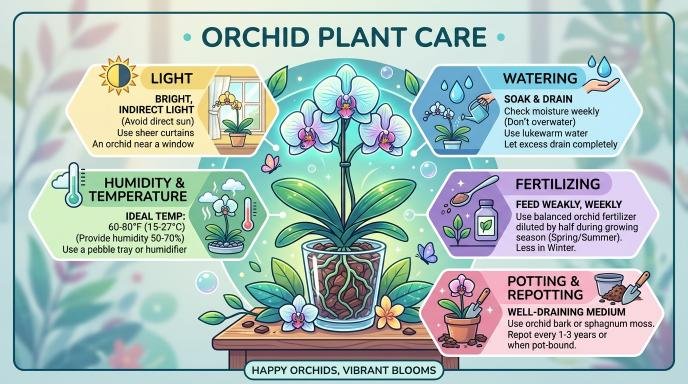
Orchid plant care is mainly about providing bright indirect light, careful watering, good drainage, suitable humidity, gentle airflow, and a well-draining orchid potting mix.
Most popular orchids, especially Phalaenopsis, prefer their roots to dry somewhat between waterings rather than staying constantly wet. Water thoroughly, let excess drain completely, and adjust watering according to light, temperature, season, and the condition of the roots.
Introduction
Orchids can look difficult to care for, but most problems come from a few common mistakes rather than the plant being unusually fragile. Too much water, insufficient light, poor drainage, and incorrect potting material are among the issues that can gradually weaken an otherwise healthy orchid.
The key to successful orchid plant care is learning to read the plant instead of following a rigid watering schedule. Healthy roots, firm leaves, active new growth, and strong flower spikes can tell you much more than a calendar can.
This guide explains how to care for orchids from the moment you bring one home through watering, lighting, repotting, fertilizing, flowering, pruning, and troubleshooting.
Understanding Your Orchid Before You Change Its Care
Not all orchids have identical requirements. Different orchid groups naturally grow in different environments, so their preferences can vary considerably.
The orchid most commonly sold as a houseplant is the Phalaenopsis orchid, often called the moth orchid. It is relatively adaptable and is an excellent starting point for beginners.
Other orchids, such as Dendrobium, Cattleya, Oncidium, and Paphiopedilum, can have different preferences for light, watering, temperature, and seasonal growth.
If you are unsure what type of orchid you have, check its plant label or identify it from its flowers, leaves, growth pattern, and roots before changing its routine.
Practical tip: If an orchid is currently healthy, avoid making several major changes at once. Sudden changes in light, watering, temperature, and potting conditions can make it harder to determine what caused a problem.
How Much Light Does an Orchid Need?
Light is one of the most important parts of orchid care because an orchid needs sufficient light to produce energy for leaf growth, roots, and flowering.
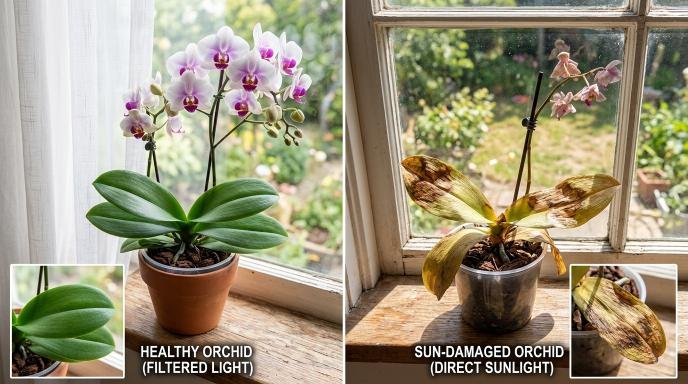
Most common indoor orchids perform well in bright, indirect light.
A suitable location may be near:
- An east-facing window.
- A bright north-facing window.
- A bright window with filtered light.
- A brighter room where direct midday sunlight does not scorch the leaves.
An orchid receiving too little light may produce dark green leaves but struggle to flower.
Too much intense direct sunlight can cause pale, yellowing, bleached, or scorched areas on the leaves.
How to Judge Light by the Leaves
Rather than relying entirely on the direction of the window, observe the plant.
Healthy orchid leaves are generally:
- Firm.
- Smooth.
- Green.
- Actively producing new growth when conditions are favorable.
Very dark green foliage combined with a lack of flowering can indicate inadequate light, although flowering also depends on the orchid’s age, species, season, temperature, and overall health.
The Right Temperature for Orchids
Most common indoor orchids appreciate moderate household temperatures, but their exact preferences depend on the species.
For many Phalaenopsis orchids, normal indoor temperatures are suitable.
Avoid placing an orchid directly beside:
- Heating vents.
- Air-conditioning outlets.
- Drafty doors.
- Very cold windows during winter.
- Hot appliances.
- Locations exposed to sudden temperature extremes.
Temperature changes can also influence flowering. In some orchids, a modest difference between daytime and nighttime temperatures can help encourage flowering, but the required conditions vary by type.
The goal is not to create a complicated climate-controlled environment. Instead, provide relatively stable conditions and avoid extreme fluctuations.
How to Water an Orchid Correctly
Watering is where many beginners make mistakes.
An orchid should not be watered simply because it has been seven days since the previous watering. The plant’s water requirements change with temperature, humidity, light, pot size, potting material, and season.
A Better Way to Decide When to Water
Check:
- The condition of the potting medium.
- The color and appearance of the roots if they are visible.
- The weight of the container.
- Whether excess moisture is still present.
- The environmental conditions around the plant.
For orchids growing in transparent containers, roots can provide useful clues.
Roots that appear green after watering are hydrated. As they dry, many orchid roots become lighter or silvery.
This does not mean every orchid should be watered immediately whenever roots look pale. Check the growing medium and overall condition of the plant as well.
How to Water
When watering is necessary:
- Move the orchid to a suitable place for watering.
- Thoroughly wet the potting medium.
- Allow water to flow freely through the drainage holes.
- Let excess water drain completely.
- Return the orchid to its normal location.
The most important part is complete drainage.
Never allow the orchid’s pot to sit continuously in accumulated water.
Can You Water Orchids With Ice?
Using ice cubes is generally unnecessary.
Orchids benefit from having their roots thoroughly hydrated and then allowed to approach the appropriate level of dryness before the next watering. A small amount of slowly melting ice does not provide the same straightforward control as properly watering the entire root zone and allowing excess water to drain.
Room-temperature or moderately cool water is generally easier to use safely.
What Type of Potting Mix Is Best for Orchids?
Most commonly grown orchids are not suited to ordinary garden soil.
Their roots require air as well as moisture. Dense soil can remain wet for too long and reduce airflow around the roots.
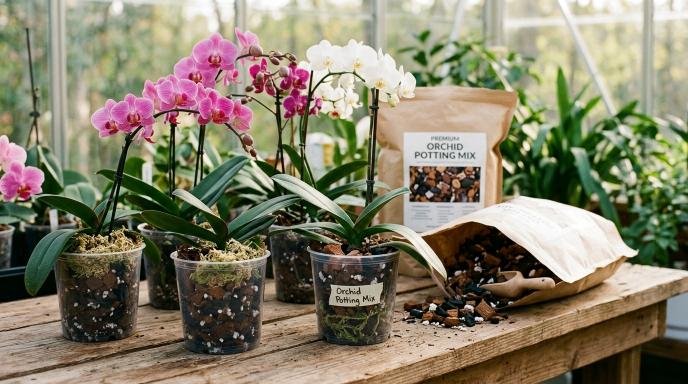
A suitable orchid mix commonly contains materials such as:
- Bark.
- Perlite.
- Sphagnum moss.
- Horticultural charcoal.
- Other coarse, moisture-managing materials.
The exact mixture should depend on the orchid and your growing environment.
For example, an orchid kept in a warm, dry home may need a mix that retains moisture longer than one growing in a humid environment.
Why Ordinary Potting Soil Can Cause Problems
Dense soil can hold excessive moisture around orchid roots.
This can contribute to:
- Root deterioration.
- Poor aeration.
- Slow growth.
- Yellowing leaves.
- Weak plants.
- Reduced flowering.
The growing medium should provide a balance between moisture retention and airflow.
Choosing the Right Orchid Pot
The container is almost as important as the potting mix.
Good orchid containers generally provide excellent drainage.
Transparent orchid pots can also be useful because they allow you to observe the roots and moisture conditions without disturbing the plant.
Useful Features of an Orchid Pot
Look for:
- Drainage holes.
- Adequate airflow around the root zone.
- A size appropriate for the root system.
- A container that works with your chosen potting mix.
Avoid choosing an excessively large pot simply because you want the orchid to have “more room.”
A large container can hold more moisture around the roots and may take longer to dry.
Orchid Humidity Requirements
Many orchids naturally experience higher humidity than a typical heated or air-conditioned home.
However, increasing humidity without improving airflow can create other problems.
A practical indoor approach is to combine:
- Reasonable humidity.
- Good air circulation.
- Appropriate watering.
- Adequate spacing between plants.
Should You Mist Orchids?
Misting can temporarily increase moisture on the surface of leaves, but it is not a replacement for proper root watering or maintaining an appropriate growing environment.
Repeatedly keeping leaves and flowers wet, especially in poorly ventilated conditions, can encourage disease problems.
If humidity is low, improving the overall environment is generally more useful than repeatedly spraying the plant.
Airflow Matters More Than Many Beginners Realize
Good air movement helps an orchid’s growing environment remain balanced.
Gentle airflow can help moisture evaporate from wet surfaces and reduce stagnant conditions around leaves and roots.
The orchid does not need to sit directly in front of a powerful fan.
Instead, aim for gentle circulation rather than strong continuous wind.
Expert insight: High humidity and poor airflow are not the same thing as a healthy tropical environment. Orchids can appreciate humidity while still benefiting from moving air.
How to Fertilize Orchids
Orchids need nutrients for healthy roots, leaves, and flowering, but more fertilizer is not automatically better.
Use a fertilizer formulated for orchids or one appropriate for the plant and follow its label instructions.
A sensible approach is to fertilize during active growth while adjusting the frequency according to the orchid, growing medium, environmental conditions, and fertilizer concentration.
Avoid Fertilizer Buildup
Excess fertilizer salts can accumulate in the growing medium.
Symptoms can include:
- Root damage.
- Browning or damaged root tips.
- Poor growth.
- Leaf problems.
Periodic thorough watering with clean water can help flush accumulated soluble salts from suitable potting systems, provided the container drains freely.
Never compensate for weak light or poor watering by increasing fertilizer.
When and How to Repot an Orchid
Orchids generally do not need frequent repotting simply because a certain amount of time has passed.
Repot when the growing medium has broken down, drainage has deteriorated, the plant has outgrown the container, or the roots and potting conditions indicate that a change is needed.
For many orchids, repotting after flowering can be convenient, although the best timing depends on the plant’s condition and growth cycle.
Step-by-Step Orchid Repotting
- Prepare a clean container and fresh orchid medium.
- Carefully remove the orchid from its old pot.
- Gently remove loose, deteriorated potting material.
- Inspect the roots.
- Remove clearly dead or severely damaged roots with clean cutting tools.
- Position the healthy roots in the new container.
- Add fresh orchid medium around the roots.
- Keep the plant stable without packing the medium excessively tightly.
- Water according to the condition of the fresh medium and roots.
Avoid aggressively cutting healthy, firm roots simply because they look unusual.
How to Tell Healthy Orchid Roots From Damaged Roots
Roots are one of the best indicators of orchid health.
Healthy roots are generally:
- Firm.
- Plump.
- Intact.
- White, green, or silvery depending on moisture and root covering.
Damaged roots may be:
- Brown or black.
- Mushy.
- Hollow.
- Collapsing when gently touched.
However, color alone should not determine whether a root is healthy.
A dry, silvery root can be perfectly healthy.
A green root is not automatically healthy simply because it is green.
Texture is often more informative than color.
How to Encourage an Orchid to Bloom Again
A healthy orchid may stop flowering temporarily without being unhealthy.
Flowering depends on factors such as:
- Light.
- Temperature.
- Plant maturity.
- Seasonal changes.
- Nutritional status.
- Root health.
- The orchid’s natural growth cycle.
Before adding more fertilizer or moving the plant repeatedly, check whether it is receiving enough light.
After Flowers Fade
Once flowers naturally finish, inspect the flower spike.
Depending on the orchid and the condition of the spike, it may be appropriate to leave a healthy green spike, trim it according to the plant’s growth pattern, or remove a completely dried spike.
Do not automatically cut every flower spike to the same length.
The correct approach depends on the orchid type and whether the spike remains green and healthy.
What to Do With Yellow Orchid Leaves
One yellow leaf does not necessarily mean the orchid is dying.
Older leaves naturally age and may eventually turn yellow before falling away.
The situation becomes more concerning when several leaves turn yellow rapidly or when yellowing occurs alongside:
- Soft roots.
- Persistent wetness.
- Poor drainage.
- Sudden wilting.
- Foul-smelling potting material.
- Major environmental stress.
Look at the entire plant rather than diagnosing the problem from leaf color alone.
Common Orchid Plant Care Mistakes
Watering on a Fixed Schedule
Watering every Sunday, for example, may sound simple, but environmental conditions change.
Better approach: Check the plant and growing medium before watering.
Using Dense Potting Soil
Ordinary soil can restrict airflow around orchid roots.
Better approach: Use a suitable orchid-growing medium.
Keeping the Pot Constantly Wet
Orchid roots need both moisture and oxygen.
Better approach: Water thoroughly and allow appropriate drying between waterings.
Giving Too Little Light
An orchid can survive for a while in low light but may struggle to flower.
Better approach: Provide bright, indirect light appropriate for the orchid type.
Increasing Fertilizer When Growth Is Poor
Poor growth does not automatically mean nutrient deficiency.
Better approach: First investigate light, roots, watering, temperature, and potting conditions.
Ignoring the Roots
Many problems begin below the surface.
Better approach: Periodically observe visible roots and inspect them when repotting.
Constantly Moving the Plant
Repeatedly changing locations can make it difficult for the orchid to adapt and makes troubleshooting harder.
Better approach: Choose a suitable location and make gradual adjustments when necessary.
Orchid Troubleshooting Guide
| Problem | Possible Causes | What to Check |
|---|---|---|
| Yellow leaves | Aging, excess moisture, stress, root problems | Roots and watering conditions |
| Limp leaves | Dehydration, root damage, environmental stress | Root health and moisture |
| Dark or mushy roots | Excess moisture or poor drainage | Pot and growing medium |
| No flowers | Insufficient light, natural growth cycle, plant stress | Light and overall health |
| Buds dropping | Environmental stress, temperature changes, watering problems | Location and recent changes |
| Wrinkled leaves | Dehydration or impaired roots | Roots and watering |
| Brown leaf areas | Sun damage, stress, environmental problems | Light exposure and conditions |
| Slow growth | Low light, poor roots, temperature, nutrition | Entire growing environment |
| Potting mix staying wet | Dense medium, oversized pot, poor drainage | Container and growing medium |
Why Are Orchid Leaves Wrinkled?
Wrinkled or accordion-like leaves can indicate that the orchid is not maintaining adequate hydration.
But simply watering more may not solve the problem.
If the roots have been damaged by prolonged moisture, the plant may have very few functional roots capable of absorbing water.
This creates a confusing situation: the pot may be wet while the leaves still appear dehydrated.
That is why checking root health is essential.
Why Are Orchid Buds Falling Off?
Orchid buds can drop when the plant experiences stress.
Potential contributors include:
- Sudden temperature changes.
- Moving the plant repeatedly.
- Very dry conditions.
- Major changes in light.
- Watering problems.
- Ethylene exposure from ripening fruit or other sources in some situations.
A few lost buds do not always indicate a serious disease.
Look for a pattern and examine recent environmental changes.
Orchid Care Through the Seasons
Spring
As light levels and growth increase, an orchid may begin producing new roots, leaves, or flower growth.
Monitor watering as the plant’s needs change.
Summer
Higher temperatures and stronger light can increase water use.
Check the plant more frequently, but do not automatically water more often without assessing the growing medium.
Protect orchids from excessive direct heat and intense sunlight.
Fall
Changing temperatures and shorter days may slow growth.
Avoid continuing a summer watering routine automatically if the plant is using less water.
Winter
Indoor heating can create dry air, while cooler temperatures may slow evaporation.
Keep orchids away from cold drafts and heating vents and adjust watering according to actual drying conditions.
Indoor Orchid Care: A Simple Routine
If you want a practical routine without overcomplicating orchid care, use this checklist.
Every Few Days
Observe:
- Leaves.
- Flowers.
- Visible roots.
- Overall plant posture.
- Signs of pests or disease.
Before Watering
Check:
- Potting medium.
- Root appearance.
- Container weight.
- Recent temperature and light conditions.
During Active Growth
Monitor:
- New roots.
- New leaves.
- Fertilizer needs.
- Potting medium condition.
When the Plant Finishes Flowering
Inspect:
- Flower spike.
- Roots.
- Potting medium.
- Light conditions.
This approach is more reliable than following a rigid calendar.
A Simple Orchid Care Setup for Beginners
If you are caring for your first orchid, start with these fundamentals:
| Care Factor | Practical Goal |
|---|---|
| Light | Bright, mostly indirect light |
| Water | Thorough watering followed by appropriate drying |
| Drainage | Fast and complete drainage |
| Potting medium | Coarse, airy orchid medium |
| Humidity | Moderate to higher humidity with airflow |
| Air movement | Gentle circulation |
| Fertilizer | Appropriate orchid fertilizer used carefully |
| Repotting | When the medium deteriorates or the plant needs it |
| Temperature | Stable household conditions appropriate to the orchid |
| Observation | Regularly inspect leaves and roots |
You do not need an elaborate greenhouse setup to grow a healthy indoor orchid.
Good fundamentals usually matter more than expensive equipment.
How to Know Your Orchid Is Healthy
A healthy orchid commonly shows several positive signs:
- Firm leaves.
- Active root growth.
- Firm roots.
- New leaves or roots during active growth.
- Stable plant structure.
- Normal flowering for its type and season.
- No persistent foul odor or mushy roots.
A plant does not need to have flowers constantly to be healthy.
An orchid can spend considerable time building roots and leaves between flowering periods.
Frequently Asked Questions About Orchid Plant Care
How often should you water an orchid?
Water when the growing conditions indicate that the orchid needs it rather than following a fixed weekly schedule. Check the potting medium, roots, container weight, temperature, and humidity before watering.
Should orchids be watered from the top?
They can be watered from above as long as water reaches the growing medium and the container drains thoroughly. Avoid leaving standing water in the crown or between leaves.
How much sunlight does an orchid need?
Most common indoor orchids prefer bright, indirect light. Excessively intense direct sunlight can scorch foliage, while insufficient light can reduce growth and flowering.
Can orchids grow in regular potting soil?
Most commonly grown epiphytic orchids should not be planted in dense ordinary potting soil. They generally need an airy medium that provides both moisture and oxygen around the roots.
Why is my orchid not blooming?
Insufficient light is one possible reason, but flowering also depends on orchid type, plant maturity, seasonal growth, temperature, and overall health. Examine the entire growing environment before changing fertilizer.
Why are my orchid leaves turning yellow?
An older leaf may naturally yellow as it ages. Rapid yellowing of multiple leaves can indicate watering problems, root damage, environmental stress, or other issues.
Do orchids like humidity?
Many orchids benefit from moderate humidity, but humidity should be balanced with good airflow. A constantly wet, stagnant environment can create problems.
Should I cut off dead orchid flowers?
Remove flowers once they naturally fade. Whether to cut the entire flower spike depends on its condition and the orchid type. A green spike may still have potential for additional growth.
How do I know if orchid roots are dead?
Dead or severely damaged roots are often soft, mushy, hollow, or collapsing. Healthy roots are generally firm and substantial, even if their color changes as they dry.
Can an orchid recover from root rot?
An orchid can sometimes recover if enough healthy roots remain and the underlying cause is corrected. Remove severely damaged roots, improve drainage and growing conditions, and avoid keeping the remaining roots continuously wet.
Should orchids be misted?
Misting is not essential for successful orchid care. Maintaining suitable humidity, watering the roots properly, and providing good airflow are more important.
Can orchids grow indoors?
Yes. Many orchids are well suited to indoor growing when provided with adequate light, appropriate watering, drainage, and suitable temperatures.
Final Orchid Plant Care Checklist
Successful orchid plant care does not require perfection. It requires observation and consistency.
Remember these fundamentals:
- Give the orchid enough bright, appropriate light.
- Water according to actual conditions rather than a fixed calendar.
- Use an airy orchid-growing medium.
- Choose a container with excellent drainage.
- Never keep the roots sitting in stagnant water.
- Maintain reasonable humidity with good airflow.
- Fertilize carefully rather than excessively.
- Inspect roots when problems appear.
- Repot when the growing medium breaks down or the plant needs it.
- Adjust care as seasons and growing conditions change.
The most useful habit is to observe before you act. A wrinkled leaf, pale root, yellowing leaf, or missing flowers is a clue rather than a complete diagnosis. Once you learn to interpret those clues, orchid care becomes much less intimidating and much more predictable.