Quick Answer
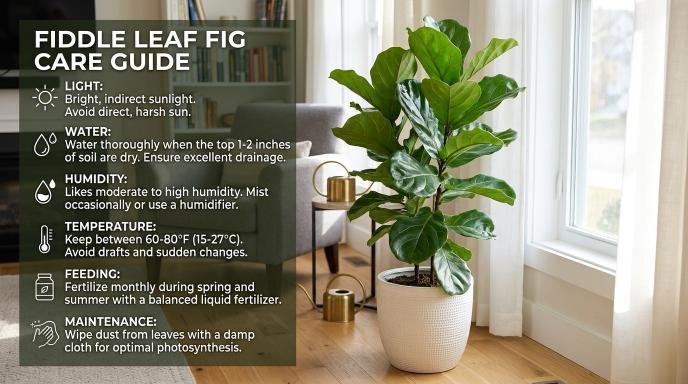
Fiddle leaf fig care is mainly about providing bright indirect light, careful watering, well-draining soil, stable temperatures, and good humidity.
Water when the upper portion of the soil has dried rather than following a fixed schedule. Keep the plant away from cold drafts and sudden environmental changes, rotate it regularly for even growth, and watch the leaves for early signs of overwatering, underwatering, pests, or inadequate light.
Introduction
The fiddle leaf fig is one of the most recognizable indoor plants, thanks to its large, violin-shaped leaves and upright growth. It can become an impressive statement plant, but its reputation for being difficult often comes from inconsistent care rather than the plant being inherently complicated.
Successful fiddle leaf fig care comes down to understanding what the plant is telling you. Yellowing leaves, brown edges, drooping foliage, slow growth, and leaf drop are not random problems. They are clues about light, moisture, roots, temperature, humidity, or environmental stress.
The biggest mistake beginners make is reacting to every problem by adding more water or moving the plant repeatedly. Fiddle leaf figs generally respond better to consistency. Give the plant the right environment, allow the soil to partially dry between waterings, and make changes gradually.
Understanding the Fiddle Leaf Fig
The fiddle leaf fig is a tropical tree known botanically as Ficus lyrata. In its natural environment, it grows much larger than the typical indoor specimen and receives strong filtered light, warm temperatures, and periods of substantial moisture followed by drainage.
That background explains several important aspects of indoor care.
Its large leaves need adequate light to support photosynthesis. Its roots need oxygen as well as water, which is why constantly wet soil can become a serious problem. And because it naturally grows in a warm environment, sudden exposure to cold air or temperature fluctuations can cause stress.
Indoor fiddle leaf figs can grow successfully for years when their basic environmental needs remain stable.
How Much Light Does a Fiddle Leaf Fig Need?
Light is one of the most important factors in fiddle leaf fig care.
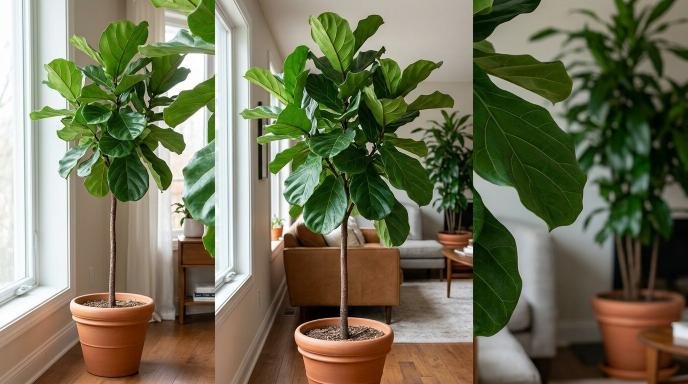
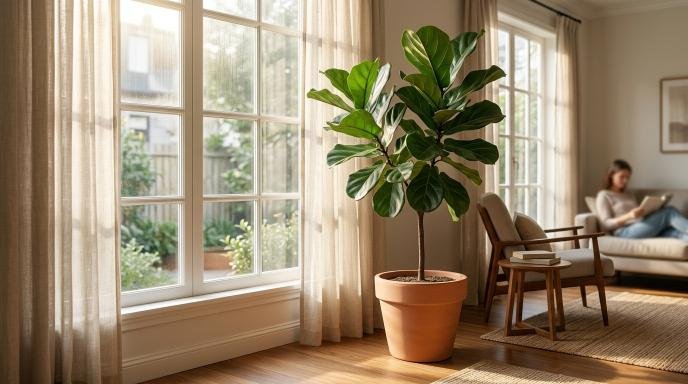
Place the plant in a bright location where it receives plenty of indirect light. A position near a bright window is often suitable, provided intense direct sunlight does not scorch the leaves.
A plant that receives too little light may show:
- Slow or weak growth.
- Smaller new leaves.
- Longer spaces between leaves.
- Leaves turning toward the light.
- Persistent soil moisture because the plant uses water more slowly.
- Increased risk of overwatering.
A fiddle leaf fig can tolerate some gentle direct morning sunlight, particularly when it has been gradually acclimated. However, abruptly placing a plant that has been growing in low light into several hours of strong sun can result in leaf scorch.
How to Tell If the Plant Needs More Light
Look at the overall growth pattern rather than relying on one leaf.
If new growth is weak, the plant is leaning strongly toward a window, and the soil remains wet for a long time, insufficient light may be contributing to the problem.
Rotate the pot every week or two so the plant develops more evenly instead of growing heavily toward one direction.
Practical Tip: Do not keep moving a struggling fiddle leaf fig from one room to another every few days. Give a new location time to show whether it is working.
The Right Way to Water a Fiddle Leaf Fig
Watering is where many fiddle leaf fig problems begin.
The goal is not to keep the soil constantly wet. Instead, allow the upper portion of the potting mix to dry before watering thoroughly.
Before watering, check the soil with your finger or another suitable method. The surface should not be treated as the only indicator because the top can dry while deeper soil remains wet.
When the plant needs water:
- Check the moisture level several inches below the surface.
- If the soil has dried sufficiently, water slowly and thoroughly.
- Continue until excess water begins draining from the bottom.
- Empty excess water collected in the saucer or outer container.
- Allow the soil to dry to an appropriate level before watering again.
The exact interval changes with the season, light level, pot size, soil composition, humidity, and temperature.
Why a Fixed Watering Schedule Can Fail
A calendar-based routine such as watering every Sunday may work temporarily, but it does not account for changing conditions.
A fiddle leaf fig in bright light during warm weather may use water much faster than the same plant sitting in a darker room during winter.
Better rule: Check the soil and plant conditions instead of automatically watering because a certain number of days have passed.
How to Recognize Overwatering
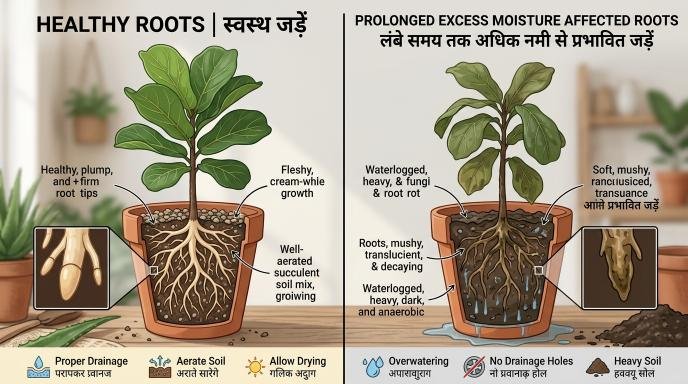
Overwatering does not simply mean giving a plant too much water once. More often, it means the soil remains excessively wet for too long or the plant is watered again before the root zone has had enough time to dry.
Common warning signs include:
- Yellowing leaves.
- Soft or declining foliage.
- Leaf drop.
- Persistently wet soil.
- Unpleasant-smelling soil.
- Weak or deteriorating roots.
- New growth that fails to develop normally.
The most important point is that yellow leaves do not automatically mean the plant needs more water.
Adding water without checking the soil can make an underlying moisture problem worse.
What to Do If the Soil Stays Wet
First determine why the soil is staying wet.
Possible causes include:
- Insufficient light.
- A container that is too large.
- Poor drainage.
- Heavy soil.
- No drainage hole.
- Watering too frequently.
- A cool indoor environment.
Correct the underlying issue rather than simply reducing the amount of water each time.
If root damage is suspected, inspect the roots and replace severely compromised soil when necessary.
How to Recognize Underwatering
Underwatering can produce a different set of symptoms.
A severely dry fiddle leaf fig may develop:
- Drooping leaves.
- Dry or crispy brown edges.
- Leaves that feel unusually thin or limp.
- Soil pulling away from the sides of the container.
- Rapid leaf decline during prolonged drought.
However, brown edges can also result from other environmental factors, so symptoms should always be considered together with soil moisture and recent care.
If the soil has become extremely dry, water thoroughly rather than repeatedly adding tiny amounts. The goal is to rehydrate the root zone evenly while allowing excess water to drain away.
What Type of Soil Is Best?
Fiddle leaf figs need a growing medium that holds enough moisture for the roots while still allowing excess water and air to move through the root zone.
A suitable mix should be:
- Well draining.
- Airy rather than compacted.
- Moisture-retentive without staying saturated.
- Appropriate for a container with drainage holes.
Heavy, compacted soil can remain wet for too long and restrict oxygen around the roots.
At the other extreme, an extremely fast-draining mix combined with a hot, bright location may require more frequent watering.
The best mix therefore depends partly on your growing environment.
Choosing the Right Pot
A drainage hole is one of the most important features of a fiddle leaf fig container.
Without proper drainage, excess water can accumulate around the roots even when the plant appears healthy above the soil.
When repotting, avoid dramatically oversized containers. A pot that is much larger than the root system can hold a large volume of soil that stays wet for an extended period.
Choose a container that provides enough room for root development without creating a disproportionately large wet zone.
Practical Tip: Decorative outer pots are fine, but make sure the actual growing container allows water to drain freely.
Temperature and Humidity
Fiddle leaf figs generally prefer warm, stable indoor conditions.
Keep the plant away from:
- Cold drafts.
- Frequently opened exterior doors.
- Strong heating vents.
- Air-conditioning vents.
- Sudden temperature changes.
Humidity can also affect leaf appearance. Very dry indoor air may contribute to crispy edges, particularly when combined with inadequate watering or strong heat.
Increasing humidity can help in dry conditions, but humidity should not be used as a substitute for proper watering and root care.
Good air circulation is also useful because stagnant, excessively humid conditions can create an environment where certain pests and fungal problems become more likely.
Fertilizing a Fiddle Leaf Fig
Fiddle leaf figs benefit from nutrients during active growth, particularly when they are growing vigorously and receiving sufficient light.
Use a balanced fertilizer appropriate for indoor foliage plants and follow the product’s recommended dilution and frequency.
Avoid the common mistake of assuming that more fertilizer means faster growth.
Excess fertilizer can contribute to salt accumulation and root stress. A plant struggling because of poor light, damaged roots, or improper watering should not automatically be given additional fertilizer.
Expert Tip: Fix environmental problems first. Fertilizer supports healthy growth; it cannot compensate for inadequate light or chronically waterlogged roots.
Pruning and Shaping a Fiddle Leaf Fig
Pruning can help manage the size and shape of a fiddle leaf fig while encouraging a more attractive structure.
Remove:
- Completely dead leaves.
- Severely damaged foliage when appropriate.
- Weak or unwanted growth.
- Branches that interfere with the desired shape.
Use clean, sharp pruning tools to make controlled cuts.
If you want a taller tree with branching rather than a single straight stem, pruning can be used strategically to influence the plant’s structure.
Do not remove large amounts of healthy foliage simply to reshape the plant quickly. The leaves are important for photosynthesis and overall plant health.
Why Are Fiddle Leaf Fig Leaves Turning Brown?
Brown leaves are one of the most common fiddle leaf fig concerns, but there is no single cause.
Potential factors include:
- Underwatering.
- Inconsistent watering.
- Very dry air.
- Excessive fertilizer salts.
- Root problems.
- Strong direct sunlight.
- Physical damage.
- Environmental stress.
The location of the browning can provide clues.
Brown, Crispy Edges
Crispy margins are often associated with moisture stress, dry conditions, or inconsistent watering, although other factors can contribute.
Brown Patches
Localized brown patches can result from environmental damage, excessive sunlight, physical injury, or root-related stress.
Brown Leaves With Wet Soil
If browning occurs while the soil remains consistently wet, investigate the root environment before simply watering more.
Why Are Fiddle Leaf Fig Leaves Turning Yellow?
Yellow leaves can occur for several reasons.
Older leaves occasionally yellow naturally as part of normal aging, but widespread or repeated yellowing deserves attention.
Possible causes include:
- Excessive moisture.
- Poor drainage.
- Insufficient light.
- Root stress.
- Nutrient problems.
- Sudden environmental changes.
Check the soil before taking action.
If the soil is already wet, adding more water is unlikely to solve the problem. If the soil is extremely dry, the plant may instead be experiencing moisture stress.
The surrounding symptoms are often more useful than leaf color alone.
Why Is My Fiddle Leaf Fig Dropping Leaves?
Leaf drop can be alarming, particularly when several leaves fall within a short period.
Fiddle leaf figs can respond to sudden changes in their environment by dropping leaves.
Common triggers include:
- Moving the plant.
- Major changes in light.
- Overwatering.
- Underwatering.
- Temperature fluctuations.
- Draft exposure.
- Root damage.
- Pest infestations.
If the plant has recently been moved, avoid making several additional changes at once.
Give it stable conditions and monitor the new growth, soil moisture, and remaining foliage.
Practical Insight: A plant losing an occasional older leaf is very different from a plant rapidly dropping multiple leaves. The speed and pattern of decline matter.
Why Are New Leaves Small?
Small new leaves can indicate that the plant is not receiving enough resources to support vigorous growth.
Check:
- Light intensity.
- Root health.
- Watering consistency.
- Nutrient availability.
- Temperature.
- Overall growing conditions.
Low light is especially important to investigate because a plant cannot compensate indefinitely for insufficient light simply by receiving more fertilizer.
Fiddle Leaf Fig Pests to Watch For
Indoor fiddle leaf figs can be affected by common houseplant pests, including:
- Spider mites.
- Scale insects.
- Mealybugs.
- Thrips.
Inspect both the upper and lower surfaces of leaves, along stems, and around new growth.
Early detection makes pest management much easier.
Look for:
- Fine webbing.
- Sticky residue.
- Small insects.
- Cotton-like clusters.
- Speckled or distorted leaves.
- Silvery damage.
- Unusual leaf discoloration.
Isolate a visibly infested plant from other houseplants while you investigate and treat the problem.
Cleaning Fiddle Leaf Fig Leaves
Large fiddle-shaped leaves naturally collect dust.
Dust can make the plant look dull and may interfere with the leaf surface’s ability to function efficiently.
Gently clean leaves with a soft, damp cloth when needed.
Support the leaf rather than pulling aggressively on it.
Avoid using household cleaning chemicals, oily products, or shiny leaf products that are not intended for plant foliage.
Regular cleaning also gives you an opportunity to inspect the leaves for pests and early signs of stress.
Repotting a Fiddle Leaf Fig
Repotting is not something a fiddle leaf fig needs simply because a certain amount of time has passed.
Consider repotting when:
- Roots are becoming severely crowded.
- Water runs through unusually quickly because the root mass has filled the container.
- The soil structure has significantly deteriorated.
- The plant is clearly outgrowing its current container.
- Root problems require intervention.
When repotting, avoid unnecessarily disturbing healthy roots.
Choose fresh, well-draining growing medium and a container that is appropriately sized for the root system.
After repotting, expect the plant to need some time to adjust. Avoid immediately combining repotting with several other major environmental changes.
Seasonal Fiddle Leaf Fig Care
Spring
As light levels increase, growth may become more active.
Check the plant regularly because its watering needs can change as it begins using more moisture.
Spring is also a useful time to evaluate whether the plant needs pruning, repotting, or nutritional support.
Summer
Bright light and warm temperatures can increase water use.
Monitor soil moisture rather than blindly following a schedule.
Protect the leaves from sudden exposure to intense sunlight if the plant has been growing in filtered indoor light.
Fall
As daylight decreases, growth may slow.
Because the plant may use water more slowly, allowing the soil to dry appropriately between waterings becomes increasingly important.
Winter
Indoor heating can create dry air, while shorter days can reduce available light.
Keep the plant away from cold drafts and heating vents, and be particularly careful about overwatering when growth slows.
A Simple Fiddle Leaf Fig Care Routine
A consistent routine is more useful than constant intervention.
Weekly Check
Inspect:
- Soil moisture.
- Leaves.
- New growth.
- Pest activity.
- Light exposure.
- Signs of physical damage.
Every Few Weeks
Consider:
- Rotating the plant.
- Cleaning dusty leaves.
- Checking the underside of leaves.
- Assessing whether growth remains balanced.
During Active Growth
Monitor whether the plant needs appropriate fertilization, pruning, or additional space.
During Slow Growth
Reduce unnecessary intervention and pay particular attention to watering frequency and light levels.
Common Fiddle Leaf Fig Care Mistakes
Watering on a Calendar
A fixed schedule ignores changes in light, temperature, humidity, and plant growth.
Better approach: Check the soil before watering.
Keeping the Plant in a Dark Corner
A fiddle leaf fig may survive for a while in inadequate light, but survival is not the same as healthy growth.
Better approach: Provide a bright location and monitor how the plant responds.
Using a Huge Pot
A large container can retain more moisture than the root system can use.
Better approach: Match the container size to the root system.
Moving the Plant Constantly
Frequent changes can make it difficult to determine which environmental factor is helping or hurting.
Better approach: Make one meaningful change at a time and observe the response.
Fertilizing a Stressed Plant
Fertilizer does not fix root rot, poor lighting, or incorrect watering.
Better approach: Correct the environmental problem first.
Ignoring the Underside of Leaves
Pests often hide where they are difficult to see.
Better approach: Inspect both sides of the foliage regularly.
How to Make a Fiddle Leaf Fig Grow Taller
Height is strongly influenced by light, genetics, plant age, and growing conditions.
To encourage healthy vertical growth:
- Provide sufficient bright light.
- Maintain consistent watering.
- Avoid prolonged root stress.
- Feed appropriately during active growth.
- Keep the plant in a stable environment.
- Avoid unnecessary heavy pruning.
If the plant grows toward a light source, rotate it periodically for more balanced development.
Remember that healthy growth is more important than forcing rapid growth. A plant that grows quickly under stressful conditions may develop weak or unattractive structure.
How to Encourage Branching
Many fiddle leaf figs naturally prefer upward growth.
If you want a fuller, more branched appearance, strategic pruning can encourage dormant buds to develop below a cut.
Timing matters because the plant needs enough energy to produce new growth.
Do not expect immediate branching after every pruning cut. The response depends on plant health, light, temperature, and growing conditions.
A healthy plant receiving sufficient light generally has a better chance of producing strong new growth after pruning.
Fiddle Leaf Fig Care Troubleshooting Guide
| Problem | Possible Causes | What to Check First |
|---|---|---|
| Yellow leaves | Excess moisture, low light, root stress | Soil moisture and drainage |
| Brown crispy edges | Dry conditions, inconsistent watering | Soil and humidity |
| Brown patches | Sun exposure, physical damage, moisture stress | Location and recent changes |
| Leaf drop | Environmental change, watering problems, root stress | Recent changes and soil |
| Slow growth | Low light, poor roots, inadequate nutrition | Light and root health |
| Small new leaves | Insufficient light or plant stress | Light and growing conditions |
| Drooping | Underwatering or root problems | Soil moisture |
| Pests | Spider mites, scale, mealybugs, thrips | Leaf undersides and stems |
| Soil stays wet | Poor drainage, low light, heavy mix | Container and soil |
| Leaning plant | Uneven light | Plant position |
How to Tell What Your Fiddle Leaf Fig Actually Needs
Instead of treating individual symptoms in isolation, use a simple diagnostic sequence.
First, check the soil.
Is it excessively wet, appropriately moist, or extremely dry?
Second, check the roots if there are signs of persistent moisture problems.
Healthy roots are essential for healthy foliage.
Third, evaluate light.
Is the plant receiving enough bright light for active growth?
Fourth, look at recent changes.
Did you move the plant, change its watering routine, repot it, expose it to direct sunlight, or place it near a heating or cooling vent?
Finally, inspect for pests.
Small infestations can become significant before obvious damage appears.
This approach prevents the common mistake of treating every brown or yellow leaf with the same solution.
Frequently Asked Questions
How often should I water a fiddle leaf fig?
Watering frequency depends on light, temperature, pot size, soil, and season. Check the soil before watering rather than following a fixed weekly schedule. When the appropriate portion of the soil has dried, water thoroughly and allow excess water to drain.
Does a fiddle leaf fig need direct sunlight?
It can tolerate some gentle direct sunlight when properly acclimated, but bright indirect light is generally easier to manage indoors. Sudden exposure to intense sunlight can scorch leaves.
Why is my fiddle leaf fig losing leaves?
Leaf loss can result from overwatering, underwatering, low light, temperature changes, drafts, root problems, pests, or sudden environmental changes. Examine the soil and recent changes before choosing a treatment.
Should I cut off brown fiddle leaf fig leaves?
If a leaf is mostly healthy with only a small damaged area, removing the entire leaf is not always necessary. Severely damaged or dead leaves can be removed with clean pruning tools.
Can fiddle leaf figs grow indoors?
Yes. With adequate bright light, appropriate watering, drainage, warmth, and consistent care, fiddle leaf figs can grow successfully indoors.
How much humidity does a fiddle leaf fig need?
Fiddle leaf figs generally appreciate moderate to higher humidity, but consistent watering, good drainage, and suitable light are more important than trying to create extremely humid conditions.
Why are the new leaves on my fiddle leaf fig small?
Small new leaves can be associated with insufficient light, root stress, inconsistent watering, or inadequate growing conditions. Evaluate the plant’s overall environment rather than immediately adding fertilizer.
Should I mist my fiddle leaf fig?
Misting may temporarily increase moisture around the foliage, but it is not a substitute for appropriate watering or adequate environmental humidity. Good air circulation and proper root care remain important.
When should I repot a fiddle leaf fig?
Repot when the plant has significantly outgrown its container, the root system has become severely crowded, the soil has deteriorated, or root problems require replacement of the growing medium.
Can I put my fiddle leaf fig outside?
It can potentially benefit from outdoor conditions during suitable warm weather, but acclimation is essential. Moving a plant suddenly from indoor filtered light to strong outdoor sunlight can cause severe leaf scorch.
Final Takeaways
Successful fiddle leaf fig care is less about following a rigid schedule and more about learning to read the plant’s environment.
Give it bright light, use a well-draining growing medium, choose a container with drainage, and water according to soil moisture rather than the calendar. Keep temperatures reasonably stable and inspect the leaves regularly for pests or early signs of stress.
Most importantly, avoid reacting too quickly. When a fiddle leaf fig develops yellow, brown, or dropping leaves, investigate the underlying conditions before changing several things at once.
A healthy fiddle leaf fig does not require perfect care. It needs consistent care, appropriate light, sensible watering, healthy roots, and a stable environment.