Quick Answer
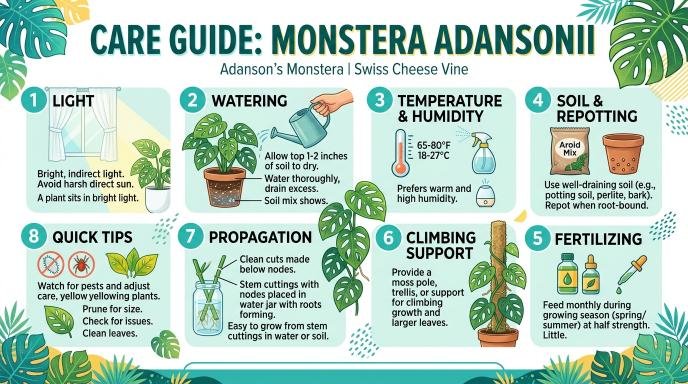
Monstera adansonii care is mainly about bright, indirect light, well-draining soil, moderate watering, warm temperatures, and adequate humidity.
Let the top portion of the soil dry before watering again, and provide a moss pole or other support if you want larger, more mature leaves. Avoid constantly wet soil, harsh direct sunlight, and sudden environmental changes.
Introduction
Monstera adansonii is a popular tropical houseplant known for its distinctive leaves covered with natural holes. Its unusual foliage makes it attractive, but the plant can become leggy, develop yellow leaves, or stop producing healthy growth when its basic growing conditions are inconsistent.
The good news is that Monstera adansonii care is relatively straightforward once you understand what the plant is actually responding to. Instead of following a rigid watering schedule, pay attention to light, soil moisture, leaf condition, humidity, and new growth. These clues make it much easier to determine what your plant needs.
Understanding Monstera Adansonii
Monstera adansonii is a tropical climbing aroid that naturally grows in warm, humid environments. As it matures, it can climb surrounding vegetation and produce increasingly characteristic foliage.
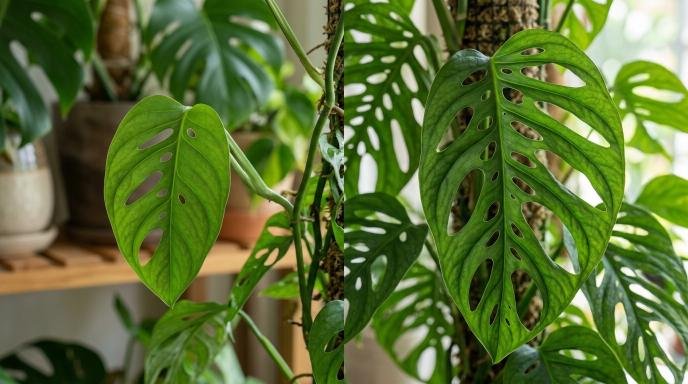
Its famous leaf holes, called fenestrations, are a normal feature of the species. However, young plants may produce leaves with fewer holes than mature plants.
One important point for beginners is that fenestrations are not necessarily a sign that something is wrong. A young or recently propagated plant may simply need time and appropriate growing conditions before developing more dramatic foliage.
Light Requirements
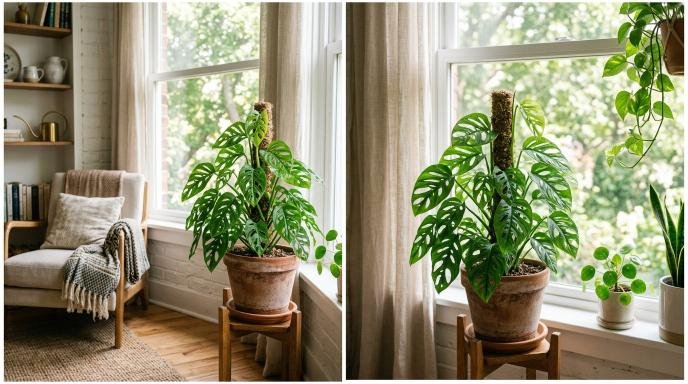
Bright, indirect light is usually the best starting point for Monstera adansonii.
Place the plant near a bright window where it receives plenty of filtered light. An east-facing window can work particularly well, while a very bright south- or west-facing window may require some protection from intense direct afternoon sunlight.
Why light matters
Light provides the energy the plant needs for photosynthesis and healthy growth. Insufficient light can result in:
- Long gaps between leaves.
- Smaller new leaves.
- Slower growth.
- Less impressive fenestration.
- Weak or stretched stems.
Too much intense direct sunlight can cause pale, bleached, or scorched patches on the foliage.
A practical light test
If your Monstera adansonii is producing healthy new leaves but the stems are becoming unusually long with large spaces between leaves, consider whether the plant is receiving enough light.
Rather than immediately adding fertilizer, improve the lighting first. Fertilizing a plant that lacks sufficient light generally does not solve the underlying problem.
How to Water Monstera Adansonii
Water thoroughly when the upper part of the potting mix has dried, then allow excess water to drain completely.
The exact interval will depend on light, temperature, pot size, soil composition, and season. This is why watering every fixed number of days can be unreliable.
A simple watering method
- Check the soil before watering.
- If the upper layer has dried and the plant needs water, water thoroughly.
- Allow excess water to escape through the drainage holes.
- Empty standing water from the saucer or outer container.
- Check the soil again before the next watering.
Why overwatering causes problems
Roots need both moisture and oxygen. Permanently saturated soil reduces the air spaces available around the roots and can create conditions that encourage root deterioration.
Beginners often mistake yellow leaves for a need for more water. In reality, consistently wet soil can be one possible cause of yellowing.
At the same time, allowing the entire root ball to become extremely dry for prolonged periods can cause wilting, crispy leaf edges, and stress.
The goal is consistent moisture without persistent saturation.
Choosing the Right Soil
Monstera adansonii benefits from an airy, well-draining growing medium.
A useful mix can include ingredients such as:
- Quality indoor potting mix.
- Orchid bark.
- Perlite or another material that improves aeration.
- A modest amount of moisture-retentive material when appropriate.
The exact recipe is less important than the final structure of the mix. Water should move through the pot without leaving the roots sitting in a dense, muddy medium.
A common mistake
Using heavy garden soil in a small indoor container can create drainage and aeration problems. A potting mix designed for containers is generally more appropriate for indoor Monstera.
Pot Selection and Drainage
Choose a container with drainage holes.
A decorative pot without drainage can still be used as an outer cover, but the plant should remain in a properly draining inner pot.
Avoid choosing an excessively large container simply because you want the plant to grow faster. A very large volume of soil can stay wet for longer after watering, increasing the risk of root problems.
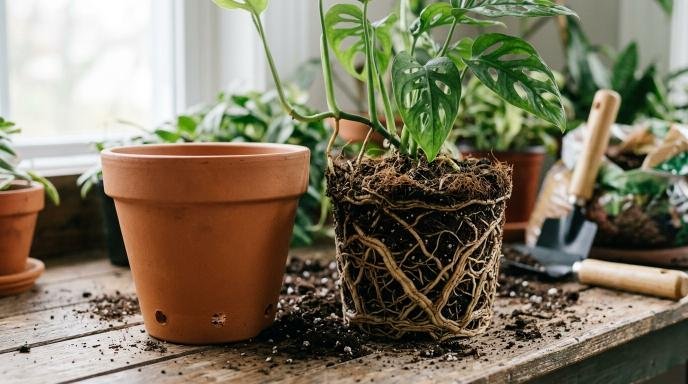
When roots have substantially filled the existing container or water begins moving unusually quickly through the root ball, it may be time to consider repotting.
Humidity and Air Movement
Monstera adansonii generally appreciates moderate to high humidity, especially in dry indoor environments.
However, increasing humidity does not mean the plant should sit in stagnant, constantly damp air.
Good indoor conditions combine:
- Adequate humidity.
- Appropriate watering.
- Good air circulation.
- Healthy roots.
- Suitable temperatures.
Should you mist Monstera adansonii?
Occasional misting may temporarily increase moisture around the leaves, but it is not a reliable substitute for maintaining suitable room humidity.
If the surrounding air is consistently dry, improving the room environment is usually more useful than repeatedly spraying the foliage.
Avoid keeping wet leaves in a poorly ventilated location for extended periods.
Temperature Requirements
Warm, stable conditions are generally suitable for Monstera adansonii.
Protect it from:
- Cold drafts.
- Sudden temperature changes.
- Very cold windows.
- Direct exposure to heating or cooling vents.
A plant may tolerate a brief unfavorable condition without obvious damage, but repeated environmental stress can slow growth and contribute to leaf problems.
Fertilizing for Healthy Growth
During active growth, Monstera adansonii can benefit from a balanced houseplant fertilizer used according to its product instructions.
Fertilizer supports growth, but more is not better.
Overfertilizing can lead to salt accumulation and root stress. If the plant is already struggling because of poor lighting, root problems, or improper watering, fertilizer should not be treated as a quick fix.
A healthy feeding routine works best when the plant already has appropriate light, water, soil, and temperature.
Supporting Monstera Adansonii as It Climbs
One of the most useful upgrades for a mature Monstera adansonii is vertical support.
A moss pole, coir support, trellis, or similar structure can encourage climbing growth.
As a climbing plant, Monstera adansonii can behave differently when given something to grow against. With suitable conditions and maturity, supported growth can produce larger and more developed foliage.
How to attach the plant
Do not tightly tie stems in a way that restricts growth.
Instead:
- Position the support close to the main climbing stem.
- Gently guide the stem toward it.
- Use soft plant ties where necessary.
- Adjust the ties as the plant grows.
- Avoid damaging aerial roots or forcing stems into sharp bends.
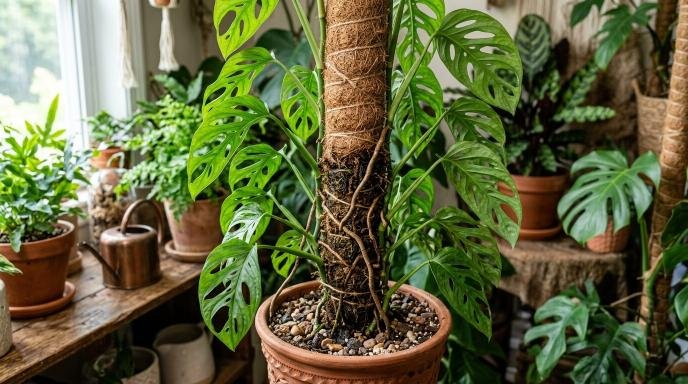
Why Your Monstera Adansonii May Not Have Many Holes
Fenestrations can vary with plant age, growing conditions, genetics, and maturity.
A young plant may produce relatively solid leaves. This does not automatically mean it is unhealthy.
If an established plant consistently produces small, less-fenestrated leaves, examine its growing conditions—particularly light, support, root health, and overall maturity.
What to check first
- Is the plant receiving enough bright, indirect light?
- Is new growth healthy?
- Has the plant recently been propagated?
- Is the root system healthy?
- Does the plant have something to climb?
- Has growth been slowed by seasonal changes?
Do not assume fertilizer alone will create fenestrations.
Pruning Monstera Adansonii
Pruning can help maintain a manageable shape, remove damaged growth, and encourage a more attractive plant structure.
Use clean, sharp pruning tools and make deliberate cuts.
Remove leaves that are extensively damaged or clearly declining, but do not remove healthy foliage unnecessarily. Leaves are valuable photosynthetic surfaces, so excessive pruning can reduce the plant’s ability to produce energy.
Pruning can also be useful when stems have become excessively long and sparse.
Propagating Monstera Adansonii
Stem cuttings are a common way to propagate Monstera adansonii.
A viable cutting should include an appropriate node because new roots and shoots develop from nodes rather than simply from a piece of leaf.
Basic propagation process
- Select a healthy stem.
- Make a clean cutting that includes a node.
- Place the node in an appropriate propagation medium.
- Keep conditions warm and suitably humid.
- Provide bright, indirect light.
- Wait for roots and new growth to develop.
- Pot the rooted cutting into an airy growing medium.
A leaf without a viable node may remain green for a while but cannot necessarily produce a new plant.
Common Monstera Adansonii Problems
Yellow Leaves
Yellowing can have several causes.
Potential factors include:
- Excessive soil moisture.
- Poor drainage.
- Natural aging of older leaves.
- Insufficient light.
- Root stress.
- Environmental changes.
Look at the whole plant rather than diagnosing the issue from one yellow leaf.
If several leaves are yellowing while the soil remains wet for long periods, investigate watering and drainage first.
Brown Leaf Edges
Brown edges can occur when the plant experiences dry conditions, inconsistent watering, low humidity, excessive fertilizer salts, or other environmental stress.
Check the growing environment before assuming that humidity alone is responsible.
Curling Leaves
Curling may indicate water stress, excessive heat, dry air, root problems, or another environmental issue.
Check the soil moisture and inspect the plant’s location before changing several variables at once.
Leggy Growth
Long stems with large spaces between leaves commonly indicate that the plant is searching for more light.
Move it gradually toward a brighter location with suitable indirect light.
Pruning and providing support can also improve the plant’s appearance after correcting the lighting problem.
Drooping Leaves
Drooping does not always mean the plant needs water.
Check the soil first.
If the soil is dry, watering may resolve the problem. If the soil is already saturated, adding more water can make the underlying problem worse.
Seasonal Monstera Adansonii Care
Spring and Summer
During active growth:
- Monitor soil moisture more frequently.
- Provide strong filtered light.
- Feed according to the fertilizer instructions.
- Train new growth onto a support.
- Watch for rapid growth that may require pruning or repotting.
Fall and Winter
Growth may slow as light levels decrease.
You may need to:
- Water less frequently.
- Reduce or pause fertilization when growth substantially slows.
- Keep the plant away from cold drafts.
- Maintain suitable indoor humidity.
- Move the plant closer to an appropriate light source if natural light becomes weak.
The important principle is to respond to actual growing conditions rather than following a calendar-based watering routine.
Common Mistakes to Avoid
Watering on a Fixed Schedule
A calendar cannot account for changes in temperature, light, pot size, or soil.
Better approach: Check the soil and plant before watering.
Keeping the Plant in Poor Light
Water and fertilizer cannot compensate for inadequate light.
Better approach: Prioritize a bright growing location.
Using a Huge Pot
Extra soil can remain wet for too long.
Better approach: Increase pot size gradually as the root system develops.
Ignoring Drainage
A decorative container without drainage can create persistent moisture problems.
Better approach: Use a container with drainage holes.
Cutting Every Imperfect Leaf
A slightly damaged leaf may still contribute energy to the plant.
Better approach: Remove foliage when there is a practical reason, rather than pruning simply for cosmetic perfection.
Expecting Instant Fenestrations
Young plants may not immediately produce highly perforated leaves.
Better approach: Focus on healthy growth, appropriate light, maturity, and climbing support.
A Simple Monstera Adansonii Care Routine
Use this checklist to keep maintenance practical:
Weekly
- Check soil moisture.
- Inspect leaves for pests or damage.
- Check that stems are growing securely.
- Rotate the plant if growth is becoming strongly one-sided.
During active growth
- Monitor new leaves.
- Feed appropriately.
- Train climbing stems.
- Check whether the plant has outgrown its support.
Every few months
- Inspect roots if there is a reason to suspect a problem.
- Clean dusty leaves gently.
- Evaluate whether lighting is still appropriate.
- Check the pot and drainage system.
The most useful habit is observing the plant rather than automatically performing every task on a fixed schedule.
Frequently Asked Questions
How often should I water Monstera adansonii?
Water when the upper portion of the growing medium has dried rather than watering according to a fixed weekly schedule. The exact frequency varies with light, temperature, pot size, soil, and season.
Does Monstera adansonii need direct sunlight?
It generally performs well in bright, indirect light. Strong direct afternoon sunlight can scorch the leaves, particularly when the plant has not been acclimated.
Why is my Monstera adansonii growing without holes?
Young plants often produce less-fenestrated foliage. Light, maturity, growing conditions, and climbing behavior can influence leaf development.
Does Monstera adansonii need a moss pole?
It does not strictly require one, but a moss pole or other vertical support can be particularly useful for a climbing Monstera adansonii and may encourage more mature growth.
Can Monstera adansonii grow in low light?
It can tolerate lower light than some plants, but prolonged low light commonly results in slower, weaker, and more stretched growth.
Why are my Monstera adansonii leaves turning yellow?
Yellow leaves can result from several factors, including excessive moisture, poor drainage, insufficient light, root stress, or normal aging. Check the soil and overall growing conditions before changing your watering routine.
Should I mist my Monstera adansonii?
Misting is not necessary for basic care and provides only temporary humidity. Consistent environmental conditions and good air circulation are more important.
Can I propagate Monstera adansonii from one leaf?
A leaf alone generally cannot produce a complete new plant. Successful stem propagation requires a viable node.
Is Monstera adansonii easy to care for?
It can be a manageable houseplant for beginners when provided with bright indirect light, appropriate watering, an airy growing medium, and suitable temperatures.
Conclusion
Successful Monstera adansonii care comes down to understanding the plant rather than following a rigid schedule. Give it bright indirect light, well-draining soil, thorough but controlled watering, suitable warmth, and enough humidity for your indoor environment.
For the best long-term results, pay particular attention to new growth and soil moisture. If growth becomes stretched, investigate light. If the soil stays wet for a long time, investigate drainage and watering. If the plant is healthy but remains small and less-fenestrated, give it time and consider providing climbing support.
With consistent conditions and thoughtful observation, Monstera adansonii can develop into a vigorous, attractive climbing houseplant with increasingly distinctive foliage.