Quick Answer
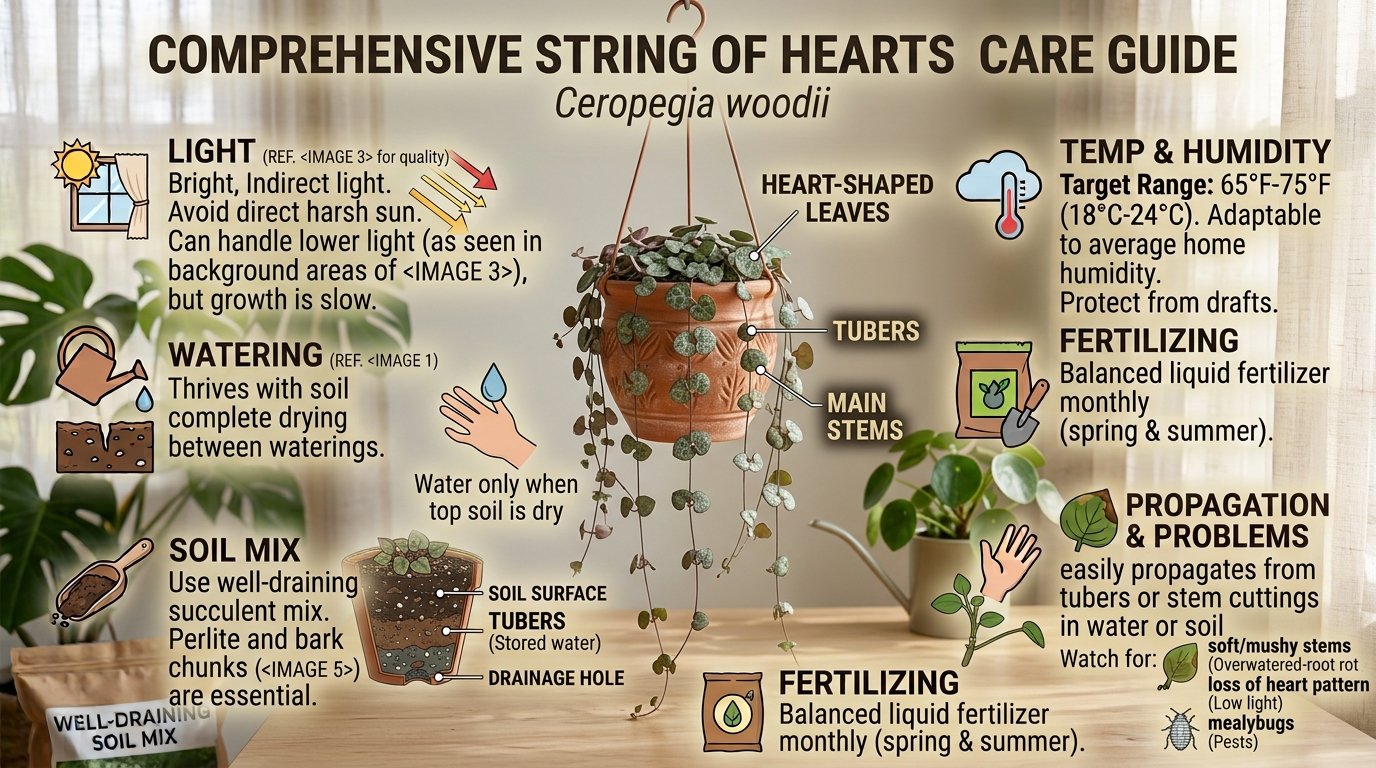
String of Hearts plant care is mainly about providing bright, indirect light, fast-draining soil, careful watering, and warm temperatures.
Let the soil dry well between waterings because its succulent-like leaves and tubers store moisture. Use a pot with drainage holes, avoid constantly wet soil, and protect the plant from cold drafts. With enough light, it can produce long, trailing vines and healthy heart-shaped leaves.
Introduction
The string of hearts plant (Ceropegia woodii) is a popular trailing houseplant known for its delicate vines, heart-shaped leaves, and attractive silver-green patterning. Although it looks fragile, it can be surprisingly easy to grow when its basic needs are understood.
The biggest mistake is usually treating it like a typical tropical houseplant. String of hearts stores water in its fleshy leaves and underground structures, so frequent watering can cause problems faster than occasional dryness.
The key to successful string of hearts plant care is finding the right balance: plenty of light, excellent drainage, thorough but infrequent watering, and good airflow.
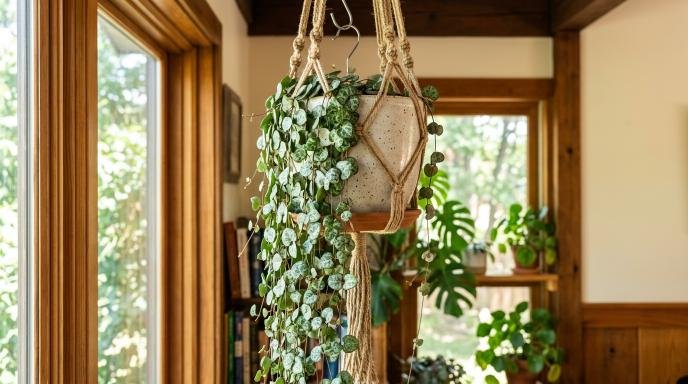
String of Hearts Plant Care at a Glance
| Care Requirement | Best Conditions |
|---|---|
| Light | Bright, indirect light with some gentle direct sun |
| Water | Water thoroughly, then allow soil to dry significantly |
| Soil | Very well-draining, lightweight mix |
| Pot | Drainage holes are essential |
| Temperature | Warm indoor temperatures |
| Humidity | Average household humidity is usually sufficient |
| Fertilizer | Light feeding during active growth |
| Growth habit | Trailing vine |
| Repotting | Only when necessary |
| Propagation | Stem cuttings, tubers, or leaves depending on method |
How Much Light Does String of Hearts Need?
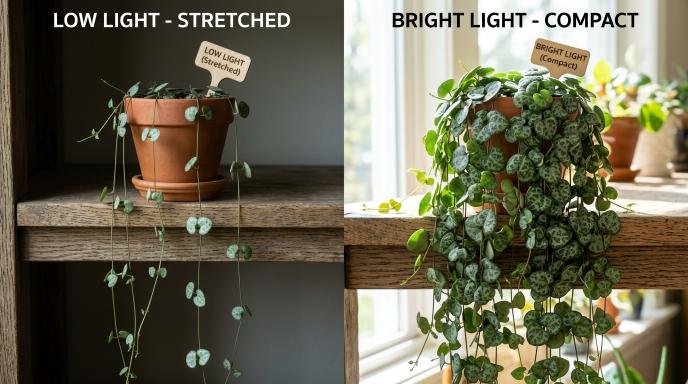
String of hearts grows best in bright light, and good lighting is one of the most important factors for maintaining dense, attractive vines.
A location near a bright window is usually ideal. Some gentle direct sunlight can help the plant maintain stronger growth and better coloration, but intense afternoon sun through glass can scorch the leaves.
Signs your plant needs more light
Watch the spacing between leaves rather than simply judging whether the plant is alive.
Insufficient light can cause:
- Longer gaps between leaves.
- Thin or weak stems.
- Slower growth.
- Smaller leaves.
- Less attractive foliage.
- Vines that become sparse near the base.
If the plant is growing rapidly toward a window, it may be telling you that its current location is too dim.
Expert Tip: Rotate the pot occasionally so one side does not receive all the available light. This can encourage more balanced growth.
How Often Should You Water String of Hearts?
There is no reliable watering schedule that works for every home. Instead, check the soil and the plant’s growing conditions.
Allow the potting mix to dry substantially before watering again. When it is time to water, soak the soil thoroughly until excess water drains from the bottom.
Then empty any water collected in the saucer or outer container.
Why overwatering is dangerous
String of hearts has succulent characteristics and stores moisture in its leaves and underground tubers. Keeping the roots wet for long periods can reduce oxygen around the roots and encourage root problems.
Common signs of excessive moisture include:
- Yellowing leaves.
- Soft or mushy foliage.
- Stems becoming weak near the soil.
- Leaf drop.
- Darkened or damaged roots.
- A persistently wet potting mix.
What underwatering looks like
A severely thirsty plant may develop:
- Wrinkled leaves.
- Limp foliage.
- Dry, brittle stems.
- Excessive leaf drop.
The important distinction is that a dry plant generally needs water, while a wet plant needs time and better drainage.
What Soil Is Best for String of Hearts?
Use a fast-draining potting mix that does not stay saturated for long periods.
A practical mix can combine:
- Regular indoor potting soil.
- Perlite or pumice.
- Coarse material such as orchid bark.
The goal is not simply to make the soil “dry.” It should retain enough moisture for the roots while allowing excess water and air to move freely through the pot.
Why soil structure matters
A heavy mix may remain wet around the roots long after the surface appears dry. This can make watering decisions misleading.
For string of hearts, a loose, aerated mix is generally much safer than dense garden soil.
Image Suggestion: Close-up diagram showing an airy string of hearts potting mix with drainage spaces around the roots.
Choosing the Right Pot
A drainage hole is more important than the decorative appearance of the container.
Choose a pot that:
- Has at least one drainage hole.
- Is appropriately sized for the root system.
- Does not hold excess water around the roots.
- Allows you to remove the plant easily when checking its condition.
Avoid placing the plant directly into a decorative container with no drainage unless it is being used as an outer cover for a draining nursery pot.
Should You Use a Large Pot?
Usually, no.
An oversized pot holds more soil, and more soil can stay wet for longer after watering. This increases the risk of poor root conditions.
When repotting, move up gradually rather than choosing a dramatically larger container.
String of Hearts Temperature Requirements
String of hearts prefers warm indoor conditions and should be protected from cold temperatures.
Keep it away from:
- Cold drafts.
- Frequently opened exterior doors during winter.
- Very cold windows.
- Direct blasts from heating or cooling equipment.
Stable temperatures are generally better than repeated swings between very warm and cold conditions.
If growth slows during cooler or darker months, reduce watering rather than automatically increasing care.
Does String of Hearts Need High Humidity?
Usually, no.
One advantage of string of hearts is that it generally adapts well to ordinary indoor humidity.
You do not normally need to mist the plant to keep it healthy. Constantly wetting the foliage can be less useful than providing:
- Good airflow.
- Proper light.
- Well-draining soil.
- Appropriate watering.
If your home is extremely dry, focus first on preventing the plant from becoming dehydrated and maintaining stable growing conditions rather than relying on daily misting.
How to Fertilize String of Hearts
String of hearts does not require heavy feeding.
During active growth, a diluted balanced houseplant fertilizer can be applied according to the product’s instructions.
Avoid fertilizing:
- Bone-dry soil.
- A stressed or severely damaged plant.
- A plant with suspected root problems.
- During periods of very slow growth.
Overfertilizing does not compensate for poor lighting or watering. In fact, excessive fertilizer can contribute to salt accumulation and root stress.
Expert Tip: Good light and healthy roots usually matter more than adding extra fertilizer.
When Should You Repot String of Hearts?
String of hearts often prefers being left alone rather than being repotted unnecessarily.
Consider repotting when:
- Roots are filling the container.
- Water runs through unusually quickly because the root system has become very dense.
- The existing soil has broken down significantly.
- The plant has outgrown its container.
- The pot or drainage system is no longer suitable.
Spring or the beginning of active growth is generally a convenient time for repotting.
After repotting, avoid immediately compensating with excessive watering. Give the plant time to settle while maintaining appropriate moisture.
How to Propagate String of Hearts
String of hearts can be propagated in several ways, making it an excellent plant for creating fuller displays.
Stem Cuttings
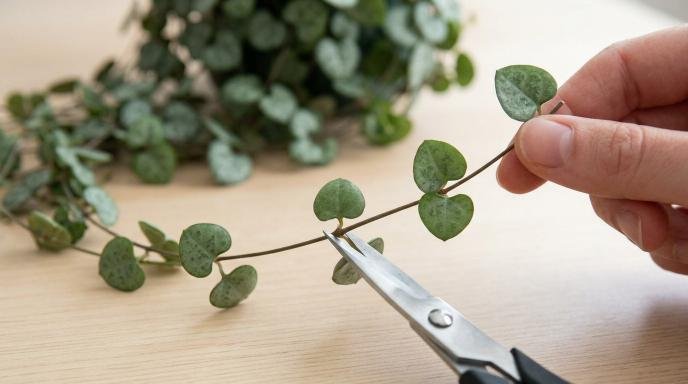
A healthy vine can be divided into sections containing viable nodes.
Basic process:
- Select a healthy vine.
- Cut it into suitable sections.
- Place the appropriate node against a lightly moist propagation medium.
- Keep the medium lightly moist rather than saturated.
- Provide bright, indirect light.
- Wait for roots and new growth to develop.
Tuber Propagation
Mature string of hearts can produce small tubers along the vines or near the plant’s base. These structures can sometimes be used for propagation.
The advantage is that the developing plant already has a useful storage structure, which can help it establish.
Water Propagation
Stem sections can also root in water, although transitioning rooted cuttings into soil requires care.
Once roots have developed, move the cutting into a well-draining growing medium and avoid keeping the new plant constantly saturated.
How to Make String of Hearts Fuller
Long vines are attractive, but a plant can become sparse near the pot if growth is concentrated toward the ends.
To create a fuller appearance:
- Provide stronger suitable light.
- Prune excessively long or bare sections.
- Propagate healthy cuttings.
- Replant rooted cuttings into the same container.
- Encourage multiple growing points.
- Avoid excessive fertilizer.
One practical technique is to loop healthy vines back onto the surface of the potting mix so suitable nodes remain close to the growing medium. Under favorable conditions, this can encourage additional rooting and new growth.
Why Is My String of Hearts Losing Leaves?
Leaf loss can have several causes, so look at the entire plant rather than assuming it is always underwatered.
Possible causes include:
Too much water:
Wet soil combined with yellowing, soft leaves, or declining stems is a warning sign.
Too little water:
Leaves may become thin, wrinkled, or dry.
Insufficient light:
The plant may become stretched and lose leaves along older sections.
Temperature stress:
Cold conditions can cause decline or slow growth.
Natural aging:
Older leaves can occasionally yellow and drop without indicating a serious problem.
The surrounding conditions usually reveal more than the fallen leaf itself.
Why Are the Leaves Turning Yellow?
Yellow leaves are a symptom rather than a diagnosis.
Check:
- How wet the soil is.
- How much light the plant receives.
- Whether the pot drains properly.
- Whether the stems feel firm or soft.
- Whether yellowing is affecting a few old leaves or the entire plant.
If several leaves are yellow while the soil stays wet for long periods, excessive moisture should be investigated first.
Why Is My String of Hearts Not Growing?
Slow growth does not necessarily mean something is wrong.
The most common factors to check are:
- Light intensity.
- Temperature.
- Watering frequency.
- Root health.
- Seasonal growth patterns.
- Nutrient availability.
If the plant receives little light, adding fertilizer alone is unlikely to solve the problem.
Move it gradually toward a brighter suitable location and monitor new growth over time.
Why Are My String of Hearts Leaves Small?
Small leaves can result from insufficient light, limited resources, or generally weak growing conditions.
If new leaves are consistently much smaller than older leaves, evaluate the plant’s light first.
A healthy plant receiving suitable light should generally produce stronger, more substantial new growth.
Common String of Hearts Care Mistakes
Watering on a Fixed Calendar
Watering every Sunday regardless of soil conditions is risky.
Better approach: Check the growing medium and environmental conditions before watering.
Using Heavy Soil
Dense soil can remain wet around the roots.
Better approach: Use a porous, fast-draining mix.
Keeping It Too Far From a Window
The plant may survive in dim conditions but produce weak, stretched growth.
Better approach: Give it a bright location with suitable filtered or gentle direct light.
Using a Huge Decorative Pot
Large containers can retain unnecessary moisture.
Better approach: Match the pot size to the root system and prioritize drainage.
Misting Instead of Proper Watering
Misting does not replace watering the root zone.
Better approach: When the plant needs water, thoroughly hydrate the soil and then allow excess water to drain away.
Seasonal String of Hearts Care
Spring
Increasing light and warmer temperatures usually encourage active growth.
This can be a good time to:
- Repot if necessary.
- Propagate.
- Begin regular light fertilization.
- Prune and reshape vines.
Summer
Monitor soil moisture more frequently because warmth and brighter light can increase water use.
Do not assume that hot weather means the plant needs daily water. Check the soil first.
Autumn
Growth may gradually slow as light levels decrease.
Reduce watering frequency when the plant uses water more slowly.
Winter
Cold temperatures and low light can make overwatering especially dangerous.
Keep the plant warm, maximize suitable natural light, and allow the growing medium to dry more between waterings.
String of Hearts Care: Indoor vs. Outdoor
String of hearts can perform well outdoors in suitable climates, particularly where temperatures remain warm and the plant can be protected from harsh conditions.
Indoors, environmental control is easier.
| Condition | Indoors | Outdoors |
|---|---|---|
| Light | Easier to control | Can be very strong |
| Watering | Usually more predictable | Rain can complicate watering |
| Temperature | More stable | Weather-dependent |
| Pests | Usually easier to monitor | Greater exposure |
| Placement | Window or hanging pot | Sheltered patio or similar area |
Outdoor plants need special attention to heavy rain and intense sunlight. A location that is bright does not necessarily need to receive harsh all-day sun.
How to Keep Long String of Hearts Vines Healthy
Long vines can become tangled or damaged as they grow.
To keep them attractive:
- Support the container securely.
- Avoid repeatedly moving the hanging vines.
- Check stems for damage when watering.
- Rotate the plant occasionally.
- Trim weak or completely bare sections.
- Propagate healthy sections to maintain a fuller plant.
The vines are delicate enough that rough handling can cause breakage even when the plant itself is healthy.
A Practical Weekly Care Routine
Instead of following a rigid watering schedule, use a simple inspection routine.
Check the soil
Determine whether the growing medium has dried sufficiently before watering.
Inspect the leaves
Look for unusual yellowing, wrinkling, softness, or sudden leaf drop.
Check the vines
Healthy stems should not be persistently soft or collapsing near the soil.
Examine the light
Make sure nearby furniture, curtains, or seasonal changes have not significantly reduced available light.
Inspect for pests
Look along stems, leaf undersides, and crowded areas for unusual insects or residue.
This five-minute inspection can prevent small problems from becoming major ones.
Frequently Asked Questions
Is string of hearts easy to care for?
Yes. It is relatively forgiving when grown in bright light and well-draining soil. The biggest challenge is avoiding excessive watering.
How often should I water string of hearts?
Water when the growing medium has dried substantially rather than following a fixed schedule. Environmental conditions determine how quickly the soil dries.
Does string of hearts need direct sunlight?
It can tolerate some gentle direct sunlight and generally benefits from strong light. Protect it from intense exposure that causes leaf scorching.
Can string of hearts grow in low light?
It can survive in lower light, but growth is often weaker and more stretched. Bright light generally produces better-looking, fuller growth.
Should I mist my string of hearts?
Misting is usually unnecessary. Proper watering, drainage, light, and airflow are more important.
Why is my string of hearts getting leggy?
Insufficient light is a common reason. Move the plant gradually to a brighter location and prune or propagate excessively stretched vines.
Can I propagate string of hearts from a single leaf?
Leaf propagation can be possible, but success depends on the presence of appropriate plant tissue and propagation conditions. Stem and tuber-based methods are generally more practical for producing established plants.
Does string of hearts like to be root bound?
It can tolerate being somewhat root bound, so frequent repotting is unnecessary. Repot when the root system has genuinely outgrown the container or the growing medium has deteriorated.
Why are my string of hearts leaves wrinkled?
Wrinkled leaves commonly indicate that the plant has lost significant moisture, but root problems can also prevent a plant from taking up water properly. Check both the soil moisture and root condition.
Is string of hearts safe around pets?
Because plant safety can vary by species and individual circumstances, identify the plant accurately and verify its toxicity status before allowing pets to chew on it. Keeping trailing plants out of reach is the safest approach
Final Thoughts
Successful string of hearts plant care comes down to resisting the urge to overcare for it. Give the plant plenty of suitable light, use a porous growing medium, provide thorough watering only when the soil has dried sufficiently, and make sure excess water can escape.
If growth becomes sparse, check light first. leaves become soft or yellow while the soil remains wet, investigate watering and drainage. If vines become long and bare, pruning and propagation can help rebuild a fuller plant.
Once you learn to read the soil, leaves, and vines instead of relying on a fixed watering calendar, string of hearts becomes a remarkably rewarding trailing houseplant.