
Philodendron micans is a popular tropical houseplant known for its heart-shaped leaves, velvety texture, and beautiful bronze, green, and reddish-purple tones.
With the right balance of light, watering, humidity, and soil, this trailing plant can grow long vines and produce lush foliage indoors. Understanding philodendron micans care helps prevent common problems such as yellow leaves, leggy growth, root rot, and dry leaf edges.
Whether you are growing your first houseplant or expanding your indoor jungle, Philodendron micans is relatively easy to maintain when its basic needs are met. The key is to provide bright, indirect light, a well-draining potting mix, and consistent moisture without keeping the roots constantly wet.
Quick Answer
Philodendron micans grows best in bright, indirect light, temperatures of 65–85°F (18–29°C), and moderate to high humidity. Water when the top 1–2 inches of soil feel dry, and use a well-draining, airy potting mix. Feed lightly during active growth, prune leggy vines as needed, and always use a pot with drainage holes.
Philodendron Micans Care Requirements
Philodendron micans is a tropical climbing and trailing aroid that belongs to the Araceae family. It is often grown in hanging baskets, on shelves, or around a moss pole. Its foliage can appear green, bronze, coppery, or purple depending on lighting, leaf maturity, and viewing angle.
The following care conditions help maintain healthy foliage and steady growth.
| Care factor | Ideal conditions |
|---|---|
| Light | Bright, indirect light |
| Water | When the top 1–2 inches of soil dry |
| Soil | Airy, well-draining aroid mix |
| Humidity | Around 50–70%, with good airflow |
| Temperature | 65–85°F (18–29°C) |
| Fertilizer | Balanced, diluted fertilizer during active growth |
| Growth habit | Trailing or climbing |
| Pruning | As needed to encourage fuller growth |
| Repotting | When rootbound or the potting mix deteriorates |
| Toxicity | Toxic if chewed or ingested by pets and people |

Best Light for Philodendron Micans
Light has a major influence on the growth rate, leaf size, and color of Philodendron micans. In its natural tropical habitat, the plant grows in filtered light rather than under intense, direct sunlight.
Bright, Indirect Light Is Best
Place your plant near an east-facing window or a few feet from a bright south- or west-facing window, depending on the intensity of the sunlight. A sheer curtain can soften strong rays.
Good lighting helps the plant produce compact growth and maintain attractive foliage. Insufficient light often causes longer gaps between leaves, smaller new growth, and vines that look thin or stretched.
Direct afternoon sunlight can scorch the leaves, particularly when the plant has been growing in a dim location.
Can Philodendron Micans Grow in Low Light?
Philodendron micans can tolerate lower light levels, but tolerance does not mean optimal growth. In a dim room, the plant may grow slowly and become leggy.
If natural light is limited, use a suitable grow light positioned according to the manufacturer’s recommendations. Keep the light schedule consistent rather than leaving the plant under artificial lighting all day and night.
Practical tip: Rotate the pot occasionally so that different sides receive similar light. If new leaves become smaller and the spaces between them increase, gradually move the plant closer to a brighter window.

How Often Should You Water Philodendron Micans?
Watering mistakes are among the most common causes of problems with Philodendron micans. Although it appreciates evenly moist soil, its roots need oxygen and cannot remain saturated for long periods.
When to Water
Check the soil rather than following a rigid weekly schedule.
- Insert your finger approximately 1–2 inches into the potting mix.
- If the soil feels dry at that depth, water thoroughly.
- If it still feels damp, wait and check again later.
- Allow excess water to drain completely before returning the pot to its decorative container or saucer.
The frequency depends on the season, room temperature, pot size, soil composition, and available light. A plant in a warm, bright room may need water much more frequently than one in a cool, dim space.
How to Water Correctly
Pour water evenly over the soil until it flows from the drainage holes. This helps moisten the entire root ball rather than just the upper layer.
Empty standing water from the saucer. Avoid repeatedly adding small amounts of water that wet only the surface while leaving deeper roots dry.
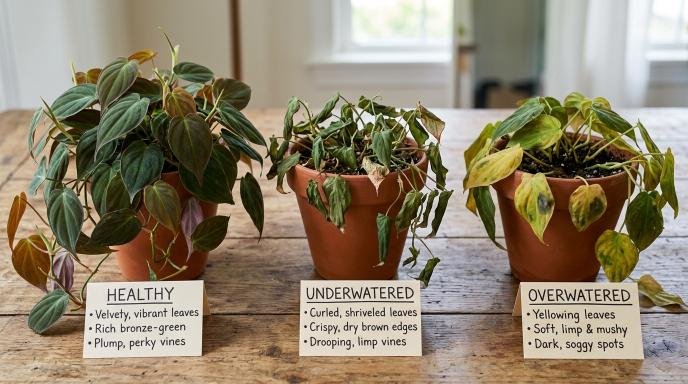
Signs of Overwatering
Overwatering usually means the soil stays wet too long, not simply that you watered thoroughly.
Watch for:
- Yellowing leaves, especially when several appear together.
- Persistently wet soil.
- Soft stems or a sour smell from the potting mix.
- Dark, mushy roots if the plant is removed from its pot.
If these signs occur, inspect the drainage and soil. If roots are rotting, remove damaged roots with clean scissors and repot into fresh, airy mix.
Signs of Underwatering
An underwatered Philodendron micans may develop drooping leaves, dry edges, or a noticeably light pot. The soil may pull away from the sides of the container.
Water thoroughly when the mix has dried too much, then adjust your checking routine. Do not compensate for chronic underwatering by leaving the plant sitting in water.
Choosing the Best Soil for Philodendron Micans
Philodendron micans needs a potting mix that retains some moisture while allowing excess water and air to move through the root zone.
Dense garden soil or ordinary potting soil used alone can remain wet for too long, especially in a plastic pot or a cool room.
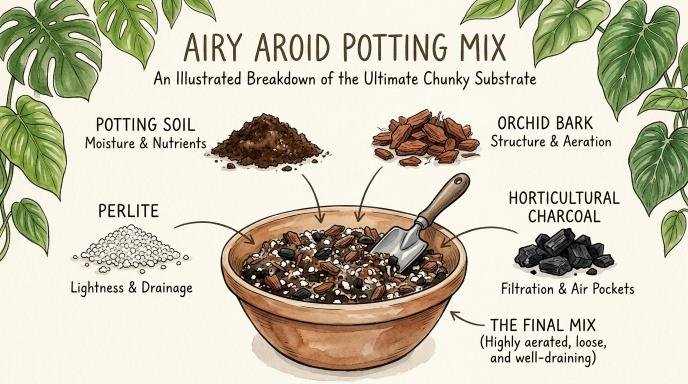
Recommended Potting Mix
A useful homemade aroid mix includes:
- 40% quality indoor potting mix or coco coir-based mix.
- 30% orchid bark.
- 20% perlite or pumice.
- 10% horticultural charcoal, if available.
These proportions are a starting point rather than a strict formula. You can adjust them to suit your environment.
If your room is hot and dry, a mix that retains slightly more moisture may be helpful. In a humid environment, or when you tend to water frequently, additional bark and perlite can improve aeration.
The finished mix should feel loose rather than compacted, and water should drain without leaving the root ball waterlogged.
Why Drainage Matters
Healthy roots require both moisture and oxygen. When soil remains saturated, oxygen becomes limited and root function can decline.
Choose a container with drainage holes and avoid moving the plant into a pot much larger than its root system. Excess soil around a small root ball can take longer to dry.
Ideal Temperature and Humidity
Philodendron micans prefers the warm conditions associated with tropical plants. Stable indoor temperatures generally make it easier to maintain healthy growth.
Temperature
A range of 65–85°F (18–29°C) is suitable for active growth. Protect the plant from cold drafts, sudden temperature changes, and direct contact with air-conditioning or heating vents.
Cold conditions can slow growth and make the plant more sensitive to wet soil. During cooler months, water use often decreases, so check the potting mix before watering.
Humidity
Moderate to high humidity can support attractive foliage, particularly when the air is dry. Around 50–70% relative humidity is a useful target, although established plants can adapt to ordinary indoor conditions.
If the leaf edges become dry while the soil moisture and roots appear healthy, check humidity and exposure to hot or cold air.
A humidifier is more effective for maintaining stable humidity than frequent misting. Misting briefly raises moisture around the leaves but does not reliably maintain room humidity. Wet foliage without adequate airflow can also encourage disease problems.
Practical tip: If you use a humidifier, maintain airflow around the plant and avoid placing it where condensation continually forms on the leaves or walls.
Fertilizing Philodendron Micans for Healthy Growth
Philodendron micans benefits from moderate feeding during its active growing season. Fertilizer supplies nutrients that support new leaves, roots, and stems, but more fertilizer does not necessarily produce better growth.
Which Fertilizer Should You Use?
A balanced liquid houseplant fertilizer is suitable for most indoor plants of this type. During spring and summer, apply it at a reduced concentration according to the product label and the plant’s growth rate.
A conservative starting point is half the label-recommended strength, provided the product instructions permit dilution to that concentration.
Reduce or stop feeding when growth slows considerably in winter, particularly in cooler rooms or low light.
Signs of Fertilizer Problems
Excess fertilizer can cause brown leaf tips, damaged roots, or a buildup of mineral salts on the soil surface. If this occurs, pause feeding and flush the mix with water if the pot drains freely.
Pale leaves do not automatically mean fertilizer is needed. Poor lighting, damaged roots, unsuitable soil pH, and watering problems can also affect leaf color.
Correct the underlying growing conditions before adding extra nutrients.
How to Prune Philodendron Micans
Pruning helps maintain the shape of your plant, removes damaged growth, and provides cuttings for propagation.
Philodendron micans naturally develops trailing stems. If you want a fuller display rather than a few long vines, occasional pruning can encourage growth from nodes along the remaining stems.
Step-by-Step Pruning
- Inspect the plant and identify overly long, bare, damaged, or unhealthy stems.
- Use clean, sharp scissors or pruning shears.
- Cut just above a healthy node when shortening a stem.
- Remove dead or badly damaged leaves without cutting healthy stems unnecessarily.
- Keep suitable healthy cuttings for propagation.
Avoid removing too much foliage at once, particularly if the plant is already stressed by low light, root problems, or recent repotting.
How to Make Philodendron Micans Fuller
Prune long stems and use the healthy cuttings to fill gaps in the same pot once they have rooted. This creates a denser appearance than relying on a few long vines alone.
Provide adequate light after pruning. Cutting back a plant cannot compensate for conditions that continually cause weak, stretched growth.
How to Propagate Philodendron Micans
Stem cuttings are a straightforward way to propagate Philodendron micans. The key is to include at least one healthy node because roots and new growth develop from the stem’s growth points.
Propagation in Water
- Select a healthy stem with at least one node and preferably one or more leaves.
- Cut just below the node using clean scissors.
- Place the node in clean water while keeping the leaves above the waterline.
- Set the cutting in bright, indirect light.
- Change the water when it becomes cloudy and replenish it as needed.
- Once a healthy root system has developed, transfer the cutting to a well-draining potting mix.
Avoid moving a cutting solely because a tiny root has appeared. Waiting until several roots have developed gives the cutting a better starting point, although there is no single root length that guarantees success.
Propagation in Soil
You can also place a node-containing cutting directly into a lightly moist, airy propagation mix.
Keep the mix from drying out completely during establishment, but avoid saturation. High humidity may help reduce moisture loss from the cutting, provided airflow remains adequate.
Common Propagation Mistakes
- Taking a cutting without a node.
- Submerging the leaves in water.
- Placing the cutting in direct sunlight.
- Keeping the propagation medium constantly waterlogged.
- Transferring a water-rooted cutting into very dry soil without monitoring its moisture.
Propagation success depends on the condition of the cutting, temperature, light, and hygiene. Not every cutting roots at the same speed.
Repotting Philodendron Micans
Philodendron micans does not need frequent repotting. Moving it into a new container too early can increase the amount of wet soil surrounding its roots.
When Should You Repot?
Repot when you notice one or more of the following:
- Roots emerging from the drainage holes.
- A root ball that has become tightly packed.
- Potting mix that breaks down or drains poorly.
- Water passing through the pot unusually quickly because the root ball has become dense.
- Growth slowing despite suitable light, watering, and nutrition.
Roots appearing at a drainage hole alone do not always mean immediate repotting is necessary. Check the overall root system and the condition of the potting mix.
How to Repot Safely
- Select a pot with drainage holes, usually only 1–2 inches wider than the existing pot.
- Gently remove the plant and inspect the roots.
- Trim away soft, dark, rotting roots with clean tools.
- Place the plant in fresh, airy potting mix at approximately its previous planting depth.
- Water appropriately and let excess water drain.
- Return it to bright, indirect light while it adjusts.
Do not bury the stems deeply or compress the soil tightly around the roots.
Practical tip: Repotting is often easiest during active growth, but a plant with severe root rot should be addressed promptly rather than left in unsuitable soil until spring.
Common Philodendron Micans Problems and Solutions
When a Philodendron micans looks unhealthy, examine several factors before changing its entire care routine. A single symptom can have more than one cause.
| Problem | Possible cause | What to do |
|---|---|---|
| Yellow leaves | Overwatering, poor drainage, or natural aging | Check soil moisture, drainage, and root health |
| Brown, crispy edges | Dry soil, low humidity, excess salts, or heat | Check moisture, humidity, and fertilizer use |
| Long, sparse vines | Insufficient light | Gradually improve indirect light |
| Small new leaves | Low light, limited root health, or nutrient issues | Assess lighting and inspect growing conditions |
| Drooping leaves | Underwatering, overwatering, or root damage | Check soil and roots before watering |
| Soft, dark stems | Possible rot | Inspect roots and remove affected tissue |
| Faded or scorched patches | Excessive direct sunlight | Move the plant away from harsh sun |
| Slow growth | Seasonal slowdown, low light, or root restrictions | Check the growing environment and root system |
Why Are Philodendron Micans Leaves Turning Yellow?
Yellow leaves are a symptom rather than a diagnosis. One older leaf turning yellow occasionally may be normal, especially as the plant produces new growth.
Several yellow leaves appearing in quick succession deserve closer inspection. If the soil stays wet for days and the stems look weak, overwatering or root damage may be responsible.
If the mix is dry and the leaves droop, underwatering is more likely. Check the soil before choosing a solution.
Why Is My Philodendron Micans Losing Its Color?
Leaf color changes naturally as leaves mature, and the appearance of velvety foliage varies with light and viewing angle.
If new growth looks pale, green, or less vibrant than expected, assess light intensity first. Very dim conditions can weaken growth, while intense direct sun may bleach or scorch foliage.
Do not increase fertilizer simply to make the leaves more colorful.
Why Are the Vines Leggy?
Leggy growth often develops when the plant stretches toward a light source. Move it gradually into brighter indirect light and prune overly long stems if needed.
To improve fullness, root healthy cuttings and plant them back into the pot after they establish.
Common Philodendron Micans Care Mistakes
Even an easygoing houseplant can struggle when several small mistakes combine.
Following a Fixed Watering Schedule
Watering every Sunday regardless of soil moisture can leave the roots wet in winter and allow the plant to dry excessively during hot weather.
Better approach: Check the soil and consider the season, room temperature, and potting mix before watering.
Using a Pot Without Drainage
A decorative container without drainage can trap water around the root ball.
Better approach: Keep the plant in a nursery pot with drainage holes and place it inside the decorative container. Empty any collected water.
Placing It in Harsh Sunlight
A plant moved directly from a dim room to intense afternoon sunlight can develop scorched patches.
Better approach: Increase light gradually and observe how the foliage responds.
Repotting Into an Oversized Container
Excess potting mix around a small root system may remain wet for too long.
Better approach: Choose a container that provides enough room for root growth without creating a large reservoir of unused soil.
Ignoring Pests
Small insects can remain hidden on the undersides of leaves and along stems until damage becomes noticeable.
Better approach: Inspect new plants before introducing them to your collection, and examine the foliage regularly.
Philodendron Micans Pests and Prevention
Common houseplant pests include spider mites, mealybugs, thrips, and scale insects. Early detection makes treatment easier and reduces the risk of pests spreading to other plants.
Look for fine webbing, tiny moving dots, cotton-like clusters, sticky residue, silvery scars, or small bumps attached to stems.
If you suspect an infestation:
- Isolate the affected plant from nearby houseplants.
- Inspect the undersides of leaves, leaf joints, and trailing stems.
- Remove visible pests where practical.
- Use an insecticidal soap or another product specifically labeled for the pest and indoor ornamental plants.
- Follow the label instructions and repeat treatment if required.
- Continue monitoring the plant for several weeks.
Test any treatment on a small area first when appropriate, and keep treated foliage away from direct sunlight until dry if the product label advises it.
Avoid applying household cleaning products or concentrated oils to the leaves. These can cause damage and may not control the pest effectively.
Seasonal Philodendron Micans Care
The plant’s water and nutrient needs change with the growing environment, so seasonal adjustments are more useful than following the same routine all year.
Spring and Summer
During active growth:
- Check soil moisture more frequently as temperatures rise.
- Provide bright, indirect light.
- Feed conservatively with a suitable houseplant fertilizer.
- Prune and propagate healthy vines.
- Monitor for pests as new foliage develops.
Autumn and Winter
As growth slows:
- Allow the soil to dry appropriately between waterings.
- Reduce or pause fertilizer if growth becomes minimal.
- Protect the plant from cold windows and drafts.
- Maintain suitable light levels.
- Check that the potting mix is not staying wet in cooler conditions.
Indoor conditions matter more than the calendar alone. A plant growing actively under strong artificial light in a warm room may continue to need regular care during winter.
Is Philodendron Micans Safe for Pets?
Philodendron micans is considered toxic if chewed or ingested because it contains insoluble calcium oxalate crystals. These crystals can irritate the mouth and digestive tract.
Keep the plant out of reach of cats, dogs, and children who may chew its leaves or stems. Hanging baskets are useful only if pets cannot reach trailing vines.
If ingestion occurs, contact a veterinarian or an appropriate poison advice service for guidance. Do not induce vomiting unless a qualified professional instructs you to do so.
Wear gloves if you have sensitive skin, and wash your hands after pruning or handling damaged plant tissue.
Frequently Asked Questions About Philodendron Micans Care
Is Philodendron Micans Easy to Care For?
Yes. Philodendron micans is generally manageable for beginners when given bright, indirect light, an airy potting mix, and appropriate watering. Avoid keeping the roots constantly wet, and check for pests regularly.
How Often Should I Water Philodendron Micans?
There is no universal schedule. Water when the top 1–2 inches of soil feel dry, then allow excess water to drain. Warm rooms, bright light, and smaller pots can increase watering frequency.
Does Philodendron Micans Need High Humidity?
It appreciates moderate to high humidity, with around 50–70% being a useful target. However, established plants can often adapt to average indoor humidity when watering, light, and root conditions are appropriate.
Can Philodendron Micans Grow in Low Light?
It can tolerate lower light, but growth may become slower and less compact. Bright, indirect light generally produces healthier, fuller growth.
Why Is My Philodendron Micans Not Growing?
Possible causes include insufficient light, cool temperatures, damaged roots, compacted soil, or seasonal slowdown. Check the growing conditions before adding fertilizer or repotting.
Can Philodendron Micans Grow in Water?
Stem cuttings can root in water, and the plant may be maintained in water under suitable conditions. However, long-term water culture requires appropriate nutrients, clean water, and sufficient oxygen. Ordinary soil-care routines do not transfer directly to water culture.
How Do I Make Philodendron Micans Fuller?
Provide adequate indirect light, prune long vines above healthy nodes, and propagate suitable cuttings. Once rooted, several cuttings can be planted into the same pot to create a denser appearance.
Does Philodendron Micans Like to Climb or Trail?
It can do both. Let the stems hang from a shelf or basket for a trailing display, or provide a suitable support for climbing growth. A support may encourage a more upright arrangement when the stems attach successfully.
When Should I Repot Philodendron Micans?
Repot when the root system becomes crowded, the potting mix deteriorates, or drainage becomes problematic. Choose a pot only modestly larger than the root ball and use fresh, airy soil.
Is Philodendron Micans Toxic to Cats and Dogs?
Yes. It contains insoluble calcium oxalate crystals that can cause oral irritation and other symptoms if chewed or ingested. Keep it away from pets and seek veterinary advice if ingestion occurs.
Conclusion
Successful Philodendron micans care comes down to balancing moisture, light, and root health. Provide bright, indirect light, use a loose and well-draining potting mix, and water when the upper layer of soil has dried rather than following a fixed schedule.
Prune long vines when needed, propagate healthy cuttings to create a fuller plant, and adjust watering and feeding as growth changes through the seasons. Most importantly, investigate the cause of yellow leaves, weak growth, or brown edges before changing several care conditions at once.
With consistent attention to these basics, Philodendron micans can reward you with cascading vines and attractive velvety foliage for years.