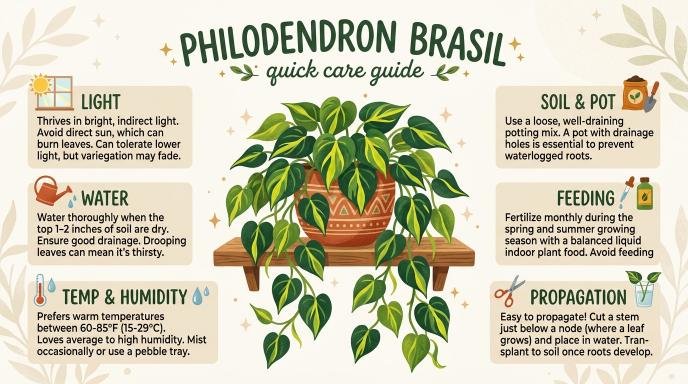
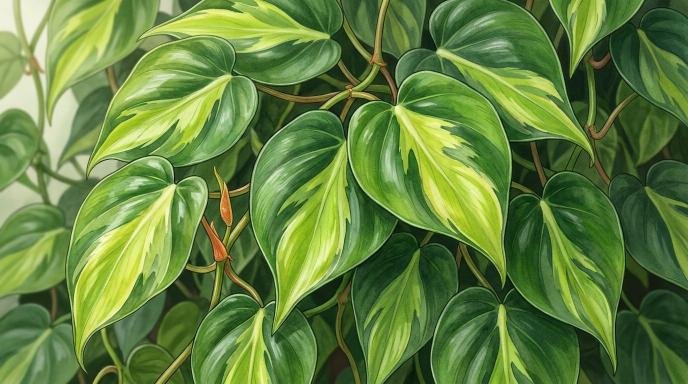
Philodendron Brasil is a colorful, trailing houseplant prized for its heart-shaped leaves marked with bright lime-green and darker green sections.
It is relatively forgiving, but its attractive foliage depends on getting a few fundamentals right. Understanding philodendron brasil care can help prevent yellow leaves, root rot, weak growth, and loss of its distinctive variegation.
The biggest mistake beginners make is treating Philodendron Brasil like a plant that needs constant attention. It usually performs better when you provide bright indirect light, allow the soil to partially dry between waterings, and give its roots a well-draining growing medium. Once those conditions are balanced, this vining philodendron can grow vigorously with comparatively little maintenance.
Quick Answer
Philodendron Brasil grows best in bright, indirect light, well-draining soil, moderate humidity, and temperatures around 65–80°F (18–27°C). Water when the upper portion of the soil has dried, rather than following a rigid schedule. Prune regularly to encourage fuller growth and protect the roots from prolonged soggy soil.
What Is Philodendron Brasil?
Philodendron Brasil is a popular cultivated form of the heartleaf philodendron, recognized by its heart-shaped foliage with contrasting green and yellow-green coloration.
Unlike upright philodendrons that form a central rosette, Philodendron Brasil naturally develops long vines. This makes it especially useful for:
- Hanging baskets.
- Shelves.
- Tall plant stands.
- Bookcases.
- Trellises.
- Indoor containers where its vines can trail downward.
Its ability to tolerate less-than-perfect conditions is one reason it is popular with beginners. However, tolerance does not mean that every location will produce equally attractive growth.
Practical observation: A Philodendron Brasil may survive in relatively low light, but surviving and thriving are different things. When light is inadequate, new leaves often become smaller, growth stretches between leaves, and the plant may gradually lose some of the visual contrast that makes the cultivar attractive.
Philodendron Brasil Light Requirements
Light is one of the most important factors in Philodendron Brasil care because it influences growth speed, leaf size, internode spacing, and variegation.
Best light
Provide bright, indirect light for most of the day.
An area near an east- or west-facing window can work well if strong direct afternoon sunlight is filtered. A bright north-facing location may also work depending on the season and indoor conditions.
Can Philodendron Brasil tolerate low light?
Yes, but prolonged low light can lead to weaker growth.
Common signs include:
- Long spaces between leaves.
- Small new leaves.
- Slow growth.
- Less noticeable variegation.
- Vines reaching toward the nearest window.
If your plant is growing very slowly and the soil is staying wet for a long time, insufficient light may be part of the problem. Lower light means the plant uses water more slowly, so watering too frequently becomes easier.
Can it receive direct sunlight?
Gentle morning sunlight can be beneficial, but intense direct sunlight through glass can scorch foliage.
Signs of excessive sunlight may include:
- Pale or bleached patches.
- Brown crispy areas.
- Curling leaves.
- Sudden leaf discoloration.
Move the plant farther from the window or filter the light rather than placing it immediately into a very dark corner.
Expert Tip: If you want vigorous trailing growth, prioritize light before increasing fertilizer. More fertilizer cannot compensate for inadequate light.
How Often Should You Water Philodendron Brasil?
Water Philodendron Brasil when the upper layer of its potting mix has dried rather than watering according to a fixed weekly schedule.
There is no universally correct watering interval because indoor temperature, light, pot size, soil composition, humidity, and season all change how quickly the plant dries.
A simple method is:
- Check the top portion of the soil with your finger.
- If it still feels noticeably moist, wait.
- If the upper layer has dried and the pot feels considerably lighter, check deeper into the mix.
- Water thoroughly when the plant actually needs it.
- Allow excess water to drain completely.
Avoid letting the container sit in standing water.
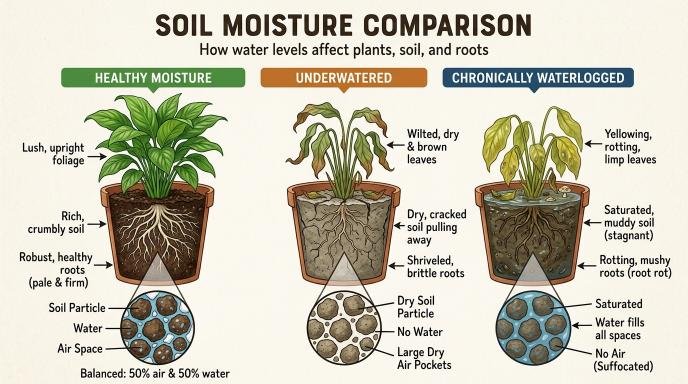
Why overwatering causes problems
Philodendron Brasil roots require oxygen as well as moisture. When soil remains saturated for extended periods, air spaces become filled with water, reducing oxygen around the roots.
This can contribute to root damage and eventually cause:
- Yellowing leaves.
- Soft stems.
- Wilting despite wet soil.
- Brown or black roots.
- Unpleasant-smelling soil.
- Sudden leaf loss.
Common mistake: Seeing a wilted leaf and immediately adding more water. Wilting does not always mean drought. Root problems can also prevent a plant from absorbing water effectively.
What about underwatering?
A severely dry plant may develop:
- Drooping leaves.
- Dry or crispy leaf edges.
- Curling foliage.
- Very dry potting mix.
- Rapid leaf loss in extreme cases.
The solution is not to keep the soil permanently wet afterward. Instead, restore appropriate watering and allow the plant to follow a normal wet-to-partially-dry cycle.
Best Soil for Philodendron Brasil
Philodendron Brasil performs best in a loose, airy, well-draining potting mix that retains some moisture without becoming compacted.
A useful homemade mix can contain:
- Quality indoor potting mix.
- Orchid bark.
- Perlite or another coarse aeration material.
The exact ratio is less important than the final texture. When squeezed lightly, the mix should not behave like dense mud or remain compressed for a long time.
Why soil structure matters
Roots need both water and oxygen. A chunky, porous mix creates air spaces while still holding enough moisture for the plant.
If the soil becomes compacted, water may either remain trapped around the roots or run down the sides of the container without properly wetting the root ball.
Practical test: After watering, observe how quickly excess water exits the drainage holes. Extremely slow drainage combined with soil that stays wet for many days is a warning that the growing medium may be too dense.
Choosing the Right Pot
A pot with drainage holes is strongly recommended.
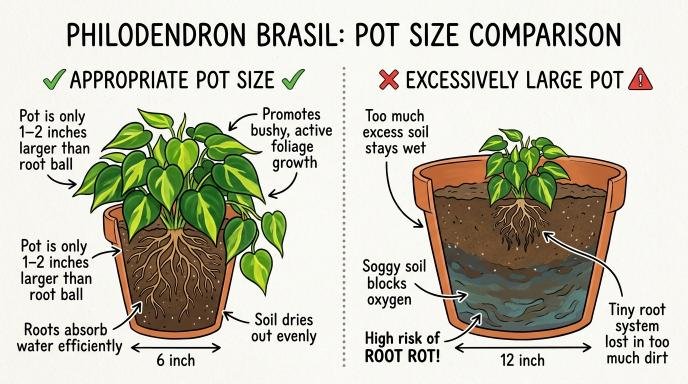
The container should be large enough to accommodate the root system but not dramatically larger than the current root ball.
An oversized pot can hold a large volume of wet soil around relatively few roots. That can make the mix dry slowly and increase the risk of overwatering.
When should you repot?
Consider repotting when:
- Roots are emerging from drainage holes.
- Water passes through unusually quickly because the pot is heavily root-bound.
- Growth has slowed despite suitable light and nutrition.
- The potting mix has broken down or become compacted.
- The plant repeatedly dries out extremely quickly.
You do not need to repot simply because the calendar says it is time.
Temperature and Humidity
Philodendron Brasil generally prefers warm indoor conditions and moderate humidity.
A comfortable range is approximately 65–80°F (18–27°C).
Protect it from:
- Cold drafts.
- Sudden temperature changes.
- Direct blasts from heating systems.
- Very cold windows during winter.
- Prolonged exposure to temperatures near freezing.
Does Philodendron Brasil need high humidity?
It can adapt to average household humidity, so a specialized greenhouse-like environment is not normally necessary.
Higher humidity can support healthier foliage, particularly in very dry indoor environments, but humidity should not be used to compensate for poor watering or inadequate light.
If humidity is extremely low, you may notice:
- Crispy leaf edges.
- Brown tips.
- Faster moisture loss from the foliage.
A humidifier can be useful if the surrounding air is consistently dry.
Fertilizing Philodendron Brasil
Philodendron Brasil benefits from regular nutrition during active growth.
A balanced houseplant fertilizer used according to its label directions can support:
- New leaf production.
- Vine development.
- Healthy foliage.
- Continued growth during the growing season.
Avoid assuming that more fertilizer produces faster growth.
Excess fertilizer can accumulate salts in the potting medium and damage roots.
Signs of fertilizer problems
Possible symptoms include:
- Brown leaf margins.
- Crispy leaf tips.
- White crust on the soil surface.
- Sudden decline after fertilizing.
If you suspect fertilizer buildup, thoroughly flush the potting medium with clean water and allow excess water to drain away.
Expert Tip: A healthy root system and adequate light should come before increasing fertilizer. Nutrition works best when the plant already has suitable growing conditions.
How to Prune Philodendron Brasil
Pruning is one of the easiest ways to improve the appearance of a Philodendron Brasil.
Use clean, sharp scissors or pruning shears and cut just above a node when shortening a vine.
Pruning can help:
- Control excessive vine length.
- Remove damaged foliage.
- Encourage branching.
- Create a fuller appearance.
- Provide cuttings for propagation.
How to make a leggy plant fuller
If your plant has long vines with large gaps between leaves, do not simply keep cutting the ends without addressing the cause.
First evaluate light.
If light is insufficient, new growth may remain stretched even after pruning. Once the plant receives better light, strategic pruning can encourage a more compact appearance.
You can also root healthy cuttings and plant them back into the same container to create a denser display.
How to Propagate Philodendron Brasil
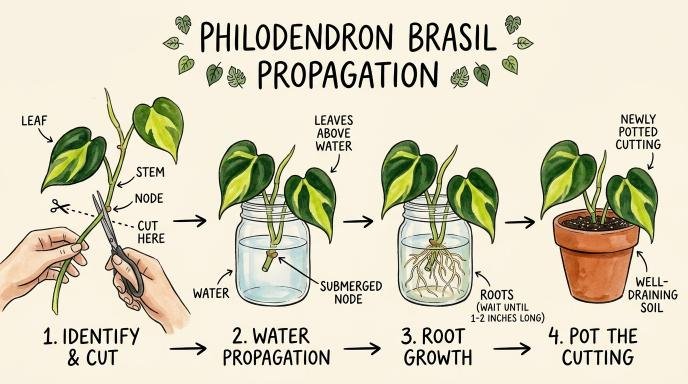
Stem cuttings are a straightforward way to propagate Philodendron Brasil.
Water propagation
- Select a healthy vine.
- Cut below a node.
- Remove lower leaves that would sit underwater.
- Place the node in clean water.
- Keep the cutting in bright, indirect light.
- Change the water regularly.
- Transfer the cutting to an appropriate potting mix once roots have developed sufficiently.
The important part is the node. A leaf without a viable node generally cannot produce a new complete plant.
Soil propagation
You can also place a node directly into a lightly moist, airy growing medium.
Keep the medium slightly moist while roots establish, but avoid keeping it saturated.
Practical observation: Water propagation makes root development easy to see, but moving a cutting from water into soil can still cause some adjustment. Soil propagation can avoid that transition but requires closer attention to moisture.
Why Is My Philodendron Brasil Losing Variegation?
One of the most common concerns with Philodendron Brasil is changing leaf coloration.
Light plays an important role in how strongly the plant displays its characteristic contrasting foliage.
If new growth becomes increasingly green, evaluate:
- Light intensity.
- Position relative to the window.
- Recent pruning.
- Which parts of the plant are producing new growth.
Avoid putting the plant into harsh direct sunlight simply to increase variegation. Excessive sunlight can damage leaves.
What if one vine becomes mostly green?
A strongly green shoot can sometimes become more dominant and produce additional green growth.
Selective pruning may help maintain a more balanced appearance, particularly if you cut back overly green growth to a node associated with more desirable foliage.
Do not expect every new leaf to have identical markings. Natural variation occurs from leaf to leaf.
Why Are Philodendron Brasil Leaves Turning Yellow?
Yellow leaves have multiple possible causes, so the correct solution depends on the pattern and the plant’s growing conditions.
If several leaves turn yellow
Check watering first.
If the soil remains wet for long periods, overwatering or poor drainage may be involved.
If older leaves yellow occasionally
An isolated older leaf can naturally age and eventually fall off.
This is very different from rapid yellowing across multiple leaves.
If yellow leaves accompany wet soil
Inspect the root environment. Persistent moisture, poor drainage, and compact soil deserve immediate attention.
If leaves are yellow and dry
Underwatering, excessive sunlight, or environmental stress may be involved.
Troubleshooting rule: Do not diagnose yellow leaves from color alone. Check the soil moisture, light exposure, root condition, temperature, and whether the affected leaves are old or newly produced.
Why Are the Leaves Turning Brown?
Brown areas can result from several different conditions.
Common possibilities include:
- Dry soil.
- Very low humidity.
- Fertilizer buildup.
- Excessive direct sunlight.
- Physical damage.
- Root stress.
Crispy brown patches on the window-facing side may point toward excessive sunlight, while brown edges combined with very dry soil may indicate moisture stress.
If browning appears suddenly after fertilizing, consider salt accumulation or fertilizer concentration.
Why Is My Philodendron Brasil Drooping?
Drooping can occur because of either too little or too much water.
Check for underwatering
If the soil is extremely dry and the leaves are limp, the plant may need water.
Check for overwatering
If the soil is wet and the plant continues to droop, adding more water can make the situation worse.
Inspect the roots if the problem persists. Healthy roots generally have a firm appearance, while severely damaged roots may be dark, soft, or mushy.
This is one of the most important troubleshooting lessons for beginners: drooping does not automatically mean the plant needs water.
Why Is My Philodendron Brasil Not Growing?
Slow growth can be caused by:
- Insufficient light.
- Cold temperatures.
- Poor nutrition.
- Root problems.
- Compact soil.
- Seasonal dormancy.
- An unsuitable watering routine.
Start with light and roots rather than immediately adding fertilizer.
A plant kept in a dim corner may simply lack the energy required for rapid new growth.
During cooler or darker months, slower growth can also be normal.
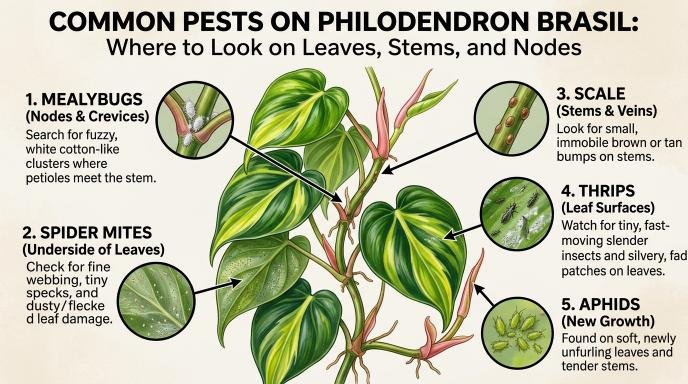
Philodendron Brasil Pests
Philodendron Brasil can occasionally experience common houseplant pests such as:
- Spider mites.
- Mealybugs.
- Scale insects.
- Aphids.
- Thrips.
Inspect leaves regularly, particularly the undersides and areas around new growth.
Early detection is much easier to manage than a severe infestation.
If you notice pests:
- Isolate the affected plant from nearby plants.
- Inspect the entire plant carefully.
- Remove visible pests where practical.
- Clean foliage when appropriate.
- Use a suitable houseplant pest treatment according to its label directions.
- Repeat monitoring because pest eggs or immature stages may survive the first treatment.
Philodendron Brasil Care Through the Seasons
Spring
Spring is often an excellent time for active growth.
Focus on:
- Increasing light gradually if needed.
- Regular watering as the plant becomes more active.
- Beginning or increasing appropriate fertilization.
- Pruning overgrown vines.
- Repotting if the root system requires it.
Summer
Growth may be vigorous in warm conditions.
Monitor the soil more frequently because warmer temperatures and brighter light can increase water use.
However, never water solely because it is summer. Check the plant and soil first.
Fall
As light levels decline, growth may slow.
You may need to reduce watering frequency because the soil can take longer to dry.
Winter
Keep the plant away from cold drafts and extremely cold windows.
Growth may slow considerably, and fertilizer requirements generally decrease when the plant is not actively producing new growth.
Seasonal mistake to avoid: Continuing a summer watering routine during a dark winter period can leave the soil wet for too long.
Common Philodendron Brasil Care Mistakes
Watering on a fixed schedule
A calendar cannot account for changes in light, temperature, humidity, and soil.
Better approach: Check the soil and plant before watering.
Keeping the plant in deep shade
Philodendron Brasil may tolerate low light, but insufficient light often produces weak, stretched growth.
Better approach: Give it bright indirect light.
Using a pot without drainage
Water has nowhere to escape, increasing the risk of saturated roots.
Better approach: Use a container with drainage holes.
Using heavy garden soil indoors
Dense soil can hold too much water and restrict airflow around roots.
Better approach: Use a loose, well-draining indoor growing mix.
Fertilizing a struggling plant heavily
Fertilizer does not fix root rot, poor lighting, or improper watering.
Better approach: Correct the environmental problem first.
Ignoring green, stretched new growth
New growth can reveal what the plant is experiencing now.
Better approach: Evaluate light whenever new leaves become unusually small, widely spaced, or less colorful.
A Simple Philodendron Brasil Care Routine
For beginners, a straightforward routine works better than constantly adjusting the plant.
Weekly check
Inspect:
- Soil moisture.
- Leaves.
- New growth.
- Undersides of leaves.
- Signs of pests.
- Overall plant posture.
Every few weeks
Rotate the container if growth is becoming strongly one-sided.
Check whether vines need support or pruning.
Every few months
Evaluate:
- Root development.
- Soil condition.
- Light exposure.
- Plant shape.
- Fertilization routine.
This approach helps you respond to the plant rather than forcing it into a rigid watering or maintenance schedule.
Philodendron Brasil Care at a Glance
| Care Factor | Recommended Approach |
|---|---|
| Light | Bright, indirect light |
| Water | Water when the upper soil has dried |
| Soil | Loose, airy, well-draining mix |
| Pot | Container with drainage holes |
| Temperature | Around 65–80°F (18–27°C) |
| Humidity | Moderate household humidity is usually acceptable |
| Fertilizer | Balanced houseplant fertilizer during active growth |
| Pruning | Trim above nodes to control vines and encourage branching |
| Propagation | Stem cuttings with viable nodes |
| Growth habit | Trailing or climbing vine |
| Repotting | When root-bound or soil structure has deteriorated |
| Common problems | Overwatering, low light, pests, brown edges, yellow leaves |
Advanced Tip: Use the Plant’s Growth as Feedback
One of the best ways to improve Philodendron Brasil care is to stop looking at individual symptoms in isolation.
Instead, look for patterns.
For example:
Small leaves + long gaps + vines reaching toward a window
→ Light may be inadequate.
Yellow leaves + consistently wet soil + slow growth
→ Root-zone moisture may be excessive.
Crispy edges + very dry soil
→ Moisture stress may be involved.
Brown patches on the brightest side of leaves
→ Excessive direct sunlight may be contributing.
Healthy roots + good light + active new growth but pale foliage
→ Nutrition may deserve attention.
This pattern-based approach is more reliable than trying to solve every symptom with a single treatment.
Frequently Asked Questions
Is Philodendron Brasil easy to care for?
Yes. It is generally considered a forgiving indoor vine when provided with suitable indirect light, appropriate watering, drainage, and a well-aerated potting mix.
How much light does Philodendron Brasil need?
Bright, indirect light is ideal. It can tolerate lower light, but growth may become slower and more stretched, and the foliage may show less pronounced coloration.
Should I mist my Philodendron Brasil?
Misting is not essential for healthy growth in most homes. Consistent watering, suitable light, and good root health are more important. If indoor air is extremely dry, a humidifier can provide more consistent humidity.
Can Philodendron Brasil grow in low light?
It can survive in lower light, but it generally grows better with brighter indirect light. Very low light can result in leggy growth and smaller leaves.
Why is my Philodendron Brasil turning completely green?
Changing foliage coloration can be associated with growing conditions, particularly light. Evaluate whether the plant is receiving enough bright indirect light and consider pruning excessively green growth if necessary.
How do I make Philodendron Brasil bushier?
Provide adequate bright indirect light and prune long vines above nodes. Healthy cuttings can also be rooted and planted back into the container to increase fullness.
How fast does Philodendron Brasil grow?
Growth varies significantly with light, temperature, nutrition, root health, and season. Under favorable indoor conditions, it can produce new leaves and extend its vines actively during the growing season.
Can Philodendron Brasil grow in water?
Stem cuttings with viable nodes can develop roots in water. Long-term water culture is possible with appropriate management, but ordinary potting mix is a straightforward choice for established plants.
Should I cut off yellow leaves?
If a leaf is substantially yellow and declining, removing it can improve the plant’s appearance. However, removing the leaf does not solve the underlying problem, so investigate watering, light, roots, or nutrition as appropriate.
When should I repot Philodendron Brasil?
Repot when the plant becomes significantly root-bound, the soil structure deteriorates, drainage changes, or the plant repeatedly dries out unusually quickly. Avoid moving it into a dramatically oversized pot.
Is Philodendron Brasil toxic to pets?
Philodendrons contain insoluble calcium oxalate crystals and can cause irritation if chewed or swallowed. Keep the plant away from pets and children who may be tempted to chew its leaves.
Conclusion
Successful philodendron brasil care is less about maintaining a strict schedule and more about understanding what the plant is telling you. Give it bright indirect light, an airy potting mix, good drainage, and water only when the soil has begun to dry. Prune long vines when necessary and use healthy nodes for propagation.
When problems appear, look at the whole growing environment instead of treating symptoms individually. Yellow leaves, drooping, slow growth, and brown edges can all have different causes. Checking light, soil moisture, roots, temperature, and recent changes will usually point you toward the right solution.
With those fundamentals in place, Philodendron Brasil can become a vigorous, attractive trailing houseplant that requires surprisingly little maintenance while providing colorful foliage and plenty of opportunities for propagation.