The Philodendron Pink Princess is a striking tropical houseplant known for its dark green, nearly black leaves decorated with pink variegation.
Although it looks like a high-maintenance collector’s plant, it can thrive indoors when its light, watering, humidity, and soil requirements are balanced. The biggest challenge is maintaining healthy growth while encouraging attractive pink leaves without stressing the plant.
Learning proper philodendron pink princess care helps prevent common problems such as yellow leaves, brown pink patches, leggy stems, and loss of variegation. With a suitable growing environment and a consistent routine, beginners and experienced plant enthusiasts can enjoy a healthier, fuller plant.
Quick Answer
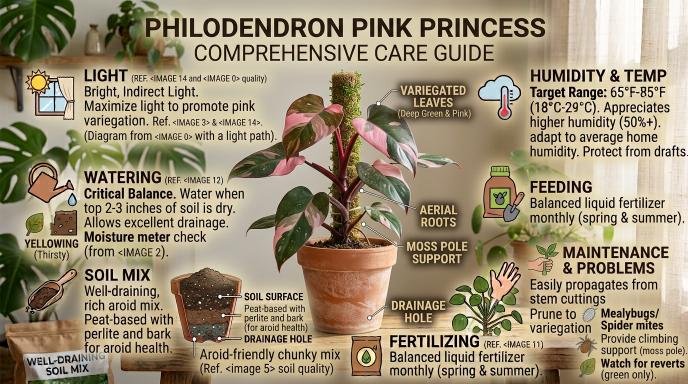
Philodendron Pink Princess grows best in bright, indirect light, well-draining aroid soil, and temperatures between 65–85°F (18–29°C). Water when the upper 1–2 inches of soil feel dry, maintain moderate to high humidity, and fertilize lightly during active growth. Avoid direct afternoon sun, waterlogged soil, and sudden environmental changes.
What Is a Philodendron Pink Princess?
Philodendron Pink Princess is a tropical climbing aroid recognized for its deep green foliage and contrasting pink variegation. Its botanical name is Philodendron erubescens ‘Pink Princess’. The plant develops climbing stems, aerial roots, and large, glossy leaves when grown under suitable conditions.
The pink coloring results from variegation, where certain leaf areas contain little or no chlorophyll. Because these sections contribute less to photosynthesis, the plant depends on its green tissue to produce much of the energy needed for growth.
This explains why two Pink Princess plants can look very different. One may produce leaves with balanced green and pink coloring, while another develops mostly green leaves or large pink sections.
Important growing insight: More pink does not automatically mean a healthier plant. Leaves with extremely little green tissue may contribute less energy, making balanced variegation and strong overall growth more desirable than chasing completely pink leaves.
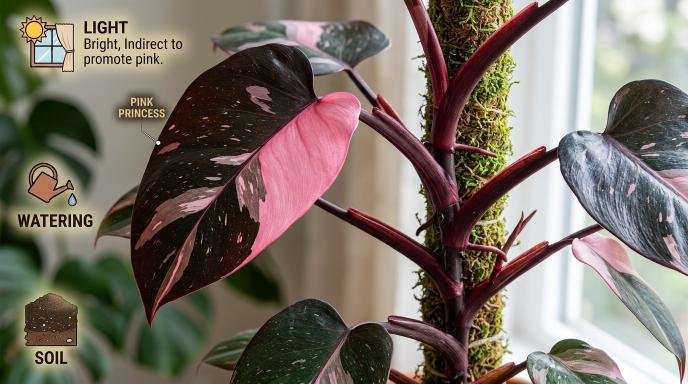
Ideal Growing Conditions for Philodendron Pink Princess
Providing the right environment is more effective than frequently changing fertilizers or watering schedules to encourage faster growth.
| Growing factor | Ideal conditions |
|---|---|
| Light | Bright, indirect light |
| Temperature | 65–85°F (18–29°C) |
| Humidity | Ideally 50–70% |
| Watering | When the upper 1–2 inches of soil dry |
| Soil | Airy, chunky, well-draining mix |
| Soil pH | Slightly acidic to neutral, approximately 5.5–7 |
| Fertilizer | Balanced, diluted fertilizer during active growth |
| Growth habit | Climbing vine |
| Toxicity | Toxic if chewed or ingested |
These conditions provide a practical starting point. Adjust watering and humidity according to your room, pot size, season, and the plant’s response.
Provide Bright, Indirect Light
Light is one of the most important factors in successful Pink Princess care. It supports healthy growth and helps the plant maintain attractive variegation.
Place your plant near an east-facing window or a bright window where strong afternoon sunlight is filtered through a sheer curtain. A bright south- or west-facing window can also work if the plant is positioned away from intense direct rays.
Can a Pink Princess Grow in Low Light?
It may survive in lower light, but prolonged low-light conditions can produce slower growth, smaller leaves, longer spaces between leaves, and less attractive foliage.
When the plant does not receive enough light, new leaves may emerge mostly green. This is not always a permanent change, but consistently inadequate lighting can make balanced growth more difficult.
Signs of Too Much or Too Little Light
- Too little light: Slow growth, elongated stems, smaller leaves, and reduced vigor.
- Too much direct sun: Bleached patches, dry brown areas, or scorched foliage.
- Suitable light: Firm leaves, steady growth, and healthy new foliage.
If you move your plant from a dim room to a brighter location, do so gradually. A sudden increase in direct sunlight can damage leaves that have adapted to lower light.
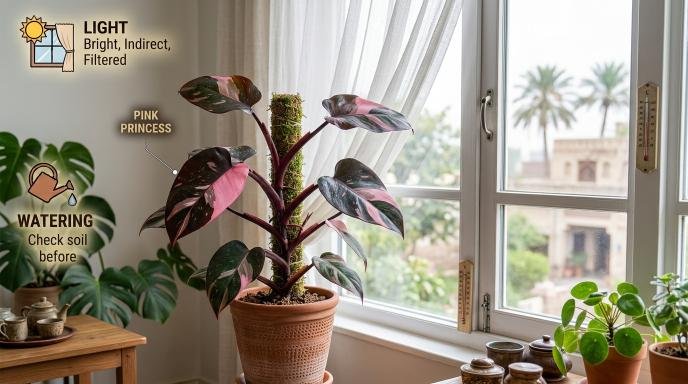
Water Correctly Without Overwatering
Overwatering is one of the most common causes of trouble with indoor aroids. It usually occurs when roots remain in wet soil for too long, reducing their access to oxygen.
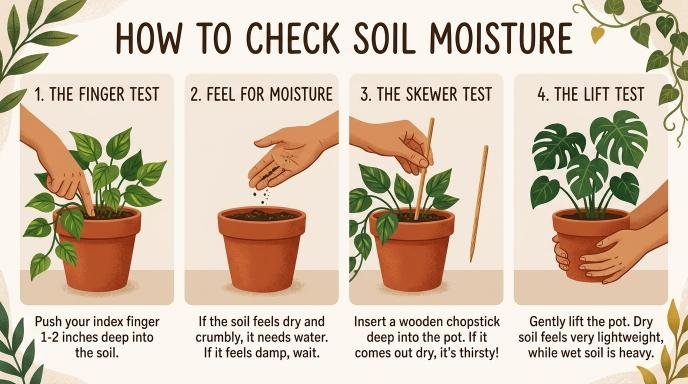
Instead of watering on a fixed weekday, check the soil first.
Step-by-Step Watering Method
- Insert your finger approximately 1–2 inches into the soil.
- If the soil feels moist, wait and check again later.
- If the upper layer has dried, water thoroughly until excess water drains through the pot’s drainage holes.
- Empty any standing water from the saucer or decorative outer pot.
- Check the soil again before the next watering.
The soil should not be kept constantly wet, but it should not be allowed to remain bone-dry for extended periods either.
How Often Should You Water a Pink Princess?
Watering frequency depends on environmental conditions rather than a universal schedule.
| Condition | Typical effect on watering |
|---|---|
| Warm, bright room | Soil dries faster |
| Cool winter conditions | Soil dries more slowly |
| Small pot | Often dries faster |
| Large pot with a small root system | Can remain wet longer |
| Chunky soil mix | Drains and aerates more effectively |
| Dense, compact soil | May retain excess moisture |
In many homes, watering may be needed every several days to every couple of weeks, but always use soil moisture as the deciding factor.
Signs of Watering Problems
Overwatering: Yellowing leaves, persistently wet soil, a musty smell, and soft or dark roots.
Underwatering: Drooping leaves, dry soil pulling away from the pot, and crispy edges.
Drooping alone does not tell you which problem is present. Check the soil before adding more water. A plant with damaged roots can droop even when its pot is already wet.
Choose a Well-Draining Aroid Soil Mix
Philodendron Pink Princess needs a growing medium that holds some moisture while allowing air to reach its roots. Ordinary dense garden soil is usually unsuitable for indoor container growing because it can compact and remain wet for too long.
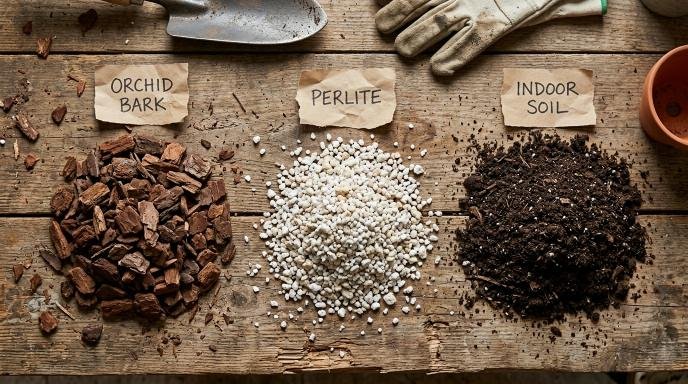
Best Soil Mix for Pink Princess
A practical homemade mix includes:
- 40% quality indoor potting mix or coco coir-based medium.
- 30% orchid bark.
- 20% perlite or pumice.
- 10% horticultural charcoal or additional coarse aeration material.
These proportions are a starting point rather than a strict formula. In a humid environment, a slightly airier mix may help. In a very dry room, a mix that retains a little more moisture may be preferable.
Why Soil Structure Matters
The combination of organic material and coarse components creates air pockets around the roots. This helps prevent prolonged saturation while allowing the plant to access moisture between waterings.
If your mix dries out almost immediately, increase the moisture-retaining component slightly. If it stays wet for many days and smells unpleasant, improve drainage and inspect the roots.
Common mistake: Adding more perlite to an already suitable mix will not solve every watering problem. Pot size, drainage holes, room temperature, and watering volume matter just as much.
Maintain Suitable Humidity
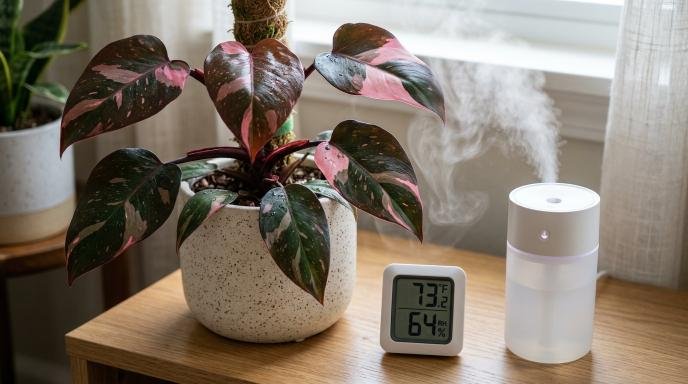
As a tropical plant, Pink Princess generally benefits from moderate to high humidity. Around 50–70% relative humidity is a useful target for indoor growth, although established plants can often tolerate lower humidity if other conditions are suitable.
Low humidity can contribute to crispy leaf margins, particularly when combined with dry soil, heat, or inconsistent watering.
How to Increase Humidity
- Use a room humidifier when indoor air is persistently dry.
- Group plants together while maintaining good airflow.
- Keep the plant away from heating vents and strong air-conditioning drafts.
- Monitor humidity with a simple digital hygrometer.
Misting is not a reliable long-term method of increasing room humidity because its effect is temporary. Repeatedly wetting leaves without adequate airflow can also encourage leaf problems.
Avoid placing the plant in a closed container without ventilation simply to create humidity. Excessive condensation and poor airflow can introduce other issues.
Maintain the Right Temperature
Philodendron Pink Princess grows best in warm, stable indoor conditions. A temperature range of 65–85°F (18–29°C) is suitable for most active growth.
Cold drafts, sudden temperature changes, and prolonged exposure to temperatures below approximately 55°F (13°C) can stress the plant.
During winter, keep it away from cold window glass and exterior doors. In summer, avoid placing it directly beside a hot window where intense sunlight heats the foliage.
If growth slows during cooler months, do not automatically increase watering or fertilizer. The plant may simply be using less water and growing more slowly.
Fertilize for Healthy Growth
Pink Princess benefits from regular but moderate feeding during active growth. Fertilizer supplies nutrients needed for new leaves, roots, and stems, but excessive feeding can damage roots and contribute to salt buildup.
Best Fertilizing Routine
Use a balanced liquid houseplant fertilizer according to its label, often diluted to half strength if the product’s full concentration is stronger than your plant needs.
- Feed during active spring and summer growth.
- Apply fertilizer to appropriately moist soil rather than a severely dry root ball.
- Reduce feeding when growth slows in autumn and winter.
- Flush the growing medium occasionally with clean water if mineral salts accumulate and the pot drains freely.
Do not fertilize a plant that is severely stressed, suffering from root rot, or recently repotted into a nutrient-rich mix until it begins recovering.
Can Fertilizer Make the Leaves More Pink?
Fertilizer cannot reliably create pink variegation. Leaf coloration is primarily influenced by the plant’s genetics and the distribution of chlorophyll in its growing tissue.
Excess fertilizer may cause brown tips, damaged roots, and poor growth rather than better coloration. Proper lighting, healthy roots, and balanced nutrition are more useful than high fertilizer doses.
Support Climbing Growth With a Moss Pole
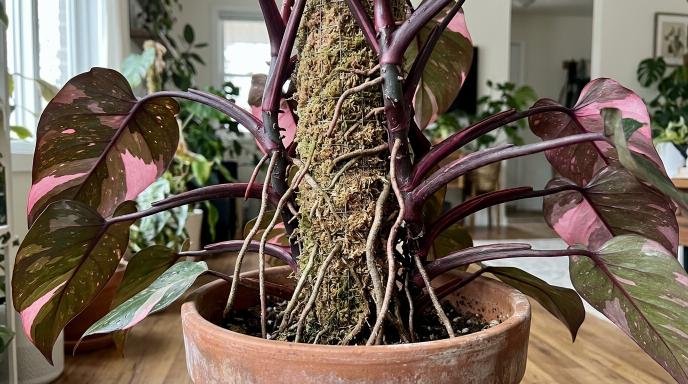
Pink Princess is a climbing philodendron. In nature, climbing philodendrons use nearby structures for support. Indoors, a moss pole or sturdy coir pole can encourage upright growth and make it easier to manage longer stems.
How to Train Your Pink Princess
- Place a suitable support in the pot without excessively disturbing the root system.
- Gently position the main stem against the support.
- Secure the stem loosely with soft plant ties.
- Check the ties regularly so they do not cut into growing tissue.
- Guide new growth upward as the plant develops.
A moss pole can encourage larger leaves in suitable growing conditions, particularly when the plant is allowed to attach its aerial roots to a moist, textured surface. However, a pole alone does not guarantee larger foliage; light, root health, maturity, and nutrition remain important.
If you prefer a trailing appearance, you can grow the plant without a pole. It may simply develop a different growth habit.
Prune and Propagate Philodendron Pink Princess
Pruning helps manage the plant’s shape, remove damaged growth, and provide cuttings for propagation. It can also be useful when the plant develops long, sparse stems.
Always use clean, sharp pruning shears. Wear gloves if you have sensitive skin because philodendron sap can be irritating.
When Should You Prune?
Prune when you notice:
- Damaged or diseased leaves.
- Long, bare sections of stem.
- Unbalanced growth.
- A need for stem cuttings.
- A sustained pattern of mostly green or mostly pink new growth that you want to manage.
Removing a leaf will not necessarily cause the next leaf to develop pink variegation. New growth depends on the plant’s growing points and genetic pattern.
How to Propagate Pink Princess From Stem Cuttings
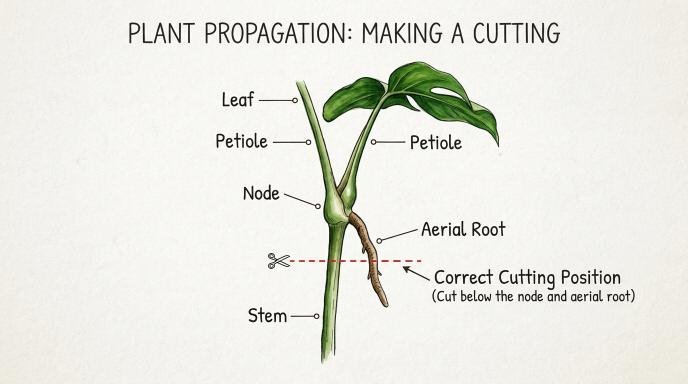
- Select a healthy stem section with at least one viable node.
- Use clean shears to cut just below the node.
- Place the cutting in water, moist sphagnum moss, or an airy propagation medium, ensuring the node is in contact with the rooting environment.
- Provide warm temperatures and bright, indirect light.
- Maintain appropriate moisture and monitor for root development.
- Pot the cutting into a suitable aroid mix once it has developed a useful root system.
A leaf without a node cannot normally produce a new climbing philodendron. The node contains the growth tissue required for developing new shoots.
When transferring a water-rooted cutting into soil, keep the mix lightly moist during the transition, but do not leave it saturated.
How to Maintain Pink Variegation
Pink variegation is one of the main reasons collectors grow this plant. However, it is also one of the most misunderstood parts of Pink Princess care.
The pink areas contain little or no chlorophyll, so they contribute less to photosynthesis than green areas. A healthy plant needs sufficient green tissue to support continued growth.
Why Is My Pink Princess Turning Green?
Several factors may contribute to greener new leaves:
- Insufficient light.
- The plant’s natural variegation pattern.
- A growing point that produces predominantly green tissue.
- Normal variation between individual leaves.
Start by checking light exposure and the health of the growing stem. Avoid moving the plant into harsh direct sunlight in an attempt to force more pink.
If a particular stem consistently produces entirely green leaves, inspect the stem and growing point. Pruning back to a healthy node with more balanced variegation may encourage a different growth pattern, but results are not guaranteed.
Why Are the Pink Sections Turning Brown?
Pink areas can brown because they are more vulnerable to visible damage from intense light, low humidity, inconsistent moisture, or physical injury. Their discoloration does not automatically mean the plant has a disease.
Check whether the damage is limited to exposed pink tissue or affects the green parts as well. Widespread damage suggests that watering, root health, or environmental conditions may need attention.
Practical tip: Take a photograph of each new leaf as it opens. Comparing several leaves over time can help you determine whether the plant’s variegation is changing consistently or whether one leaf has simply developed differently.
Repot When the Roots Need More Space
Pink Princess does not need frequent repotting. Repot when roots crowd the container, emerge heavily through drainage holes, or the growing medium deteriorates and no longer drains properly.
Signs Your Plant Needs Repotting
- Roots form a dense mass around the root ball.
- Water passes through the pot unusually quickly because little growing medium remains.
- Growth declines despite appropriate light and watering.
- The existing mix becomes compacted or stays wet for too long.
Choose a pot with drainage holes that is only modestly larger than the existing root ball. A container that is much too large can retain more moisture than the roots can use, increasing the risk of root problems.
Best Time to Repot
Spring and early summer are often convenient because the plant is entering an active growth period. However, if root rot or a serious drainage problem develops, repotting should not be delayed simply because it is the wrong season.
After repotting, provide stable conditions and avoid immediately applying strong fertilizer.
Common Philodendron Pink Princess Problems and Solutions
Many leaf problems look similar at first. The most reliable approach is to inspect the entire plant, check soil moisture, and look for patterns instead of treating every yellow or brown leaf the same way.
| Problem | Possible cause | Recommended action |
|---|---|---|
| Yellow leaves | Overwatering, aging foliage, root stress | Check soil moisture and roots; remove only leaves that are dying or damaged |
| Brown, crispy edges | Low humidity, underwatering, salt buildup | Check moisture consistency, humidity, and fertilizer use |
| Brown pink patches | Sunburn, dry air, physical damage | Filter intense sunlight and stabilize care |
| Drooping leaves | Dry soil, root damage, or temperature stress | Check the soil before watering |
| Small new leaves | Insufficient light, poor root health, or lack of support | Improve light and inspect roots and growing conditions |
| Leggy stems | Inadequate light or insufficient support | Increase indirect light gradually and consider a moss pole |
| Mostly green leaves | Natural variation or inadequate light | Improve lighting and monitor several new leaves |
| Soft, dark roots | Possible root rot | Remove rotted roots and repot into fresh, airy medium |
| White crust on soil | Mineral or fertilizer salt accumulation | Review fertilizer use and flush the mix if drainage is adequate |
How to Recognize Root Rot
Root rot is more likely when the soil stays wet, the plant declines despite watering, and roots become soft, dark, or unpleasant-smelling.
Healthy roots are generally firm, while rotted roots may feel mushy and lose their outer tissue.
If root rot is suspected:
- Remove the plant from its pot.
- Inspect the roots and gently remove the old, wet growing medium.
- Cut away clearly rotted roots using clean tools.
- Repot into fresh, airy mix and a clean pot with drainage holes.
- Adjust watering so the medium can partially dry between waterings.
Do not assume every dark root is rotten. Root color varies with growing medium and age; texture and smell are useful additional clues.
Seasonal Care for Pink Princess
Your plant’s needs change throughout the year as light levels, temperature, and indoor humidity fluctuate.
Spring
- Check whether the plant needs repotting.
- Resume regular feeding as active growth begins.
- Increase watering gradually as the soil starts drying faster.
- Train new stems onto a support.
Summer
- Monitor soil moisture more frequently.
- Protect leaves from intense afternoon sun.
- Maintain airflow in humid conditions.
- Watch for pests and fertilizer buildup.
Autumn
- Reduce fertilizer as growth slows.
- Check soil before watering because drying may take longer.
- Inspect the plant before bringing it closer to other houseplants if it spent time outdoors.
Winter
- Keep the plant away from cold drafts.
- Reduce watering frequency if the soil remains wet longer.
- Avoid feeding heavily when growth is minimal.
- Provide supplemental grow lighting if natural light becomes inadequate.
In warm climates, including homes that remain warm throughout the year, the plant may continue growing during winter. Follow its actual growth and soil moisture rather than the calendar alone.
Common Mistakes to Avoid
Even experienced houseplant owners can struggle with Pink Princess when they focus too much on appearance and not enough on root health.
Watering by schedule: A weekly routine may work in one room but cause root problems in another. Check soil moisture first.
Using dense soil: Heavy soil can retain excess water and reduce oxygen around roots. Choose an airy mix instead.
Chasing more pink with direct sun: Bright indirect light is safer than exposing the plant to harsh sunlight, which can scorch its leaves.
Using excessive fertilizer: Strong fertilizer does not force variegation and can damage roots.
Repotting into an oversized pot: Too much unused soil can stay wet for longer than the root system can handle.
Expecting every leaf to match: Variegation naturally varies, even on a healthy plant. Judge progress over several leaves rather than one.
Ignoring pests: Spider mites, thrips, mealybugs, and scale insects can damage foliage. Inspect leaf undersides, stems, and new growth regularly.
Is Philodendron Pink Princess Suitable for Beginners?
Yes, a Pink Princess can be grown by beginners who are comfortable checking soil moisture and providing suitable indirect light. It is not necessarily the easiest houseplant, but its needs are manageable when the environment is stable.
It may be a good choice if you can provide:
- A bright indoor location.
- A pot with drainage holes.
- A suitable, airy growing medium.
- Consistent watering based on soil moisture.
- Occasional pruning and pest inspections.
It may be challenging if your room is consistently dark, your pots lack drainage, or you frequently water plants without checking the soil.
For beginners, choosing a healthy plant with several leaves, firm stems, and visible balanced variegation is often more rewarding than buying a very small cutting with uncertain growth.
Is Philodendron Pink Princess Toxic to Pets?
Yes. Philodendron Pink Princess contains insoluble calcium oxalate crystals, which can irritate the mouth and digestive tract when chewed or ingested.
Keep it out of reach of cats, dogs, and children who may chew its leaves or stems. Sap can also irritate sensitive skin, so wear gloves when pruning or repotting and wash your hands afterward.
If a pet or child chews the plant, seek appropriate professional medical or veterinary guidance, especially if swelling, persistent discomfort, or difficulty swallowing occurs.
Image Suggestion: A houseplant safety illustration showing the Pink Princess positioned on a secure shelf away from pets.
Frequently Asked Questions
How often should I water my Philodendron Pink Princess?
Water when the upper 1–2 inches of soil feel dry, then allow excess water to drain. The interval varies with light, temperature, pot size, and soil composition, so avoid following a rigid weekly schedule.
How do I make my Pink Princess more pink?
Provide bright, indirect light and maintain healthy roots. Variegation is largely determined by the plant’s genetics and growing points, so neither fertilizer nor intense sunlight can guarantee more pink coloring.
Why are my Pink Princess leaves turning yellow?
Overwatering and root stress are common causes, but older leaves can also yellow naturally. Check soil moisture, drainage, and root condition before changing your watering routine.
Can a Philodendron Pink Princess grow in water?
Stem cuttings with viable nodes can root in water. However, growing a mature plant permanently in water requires a suitable setup and careful management of nutrients, oxygen, and water quality. A well-draining potting mix is generally easier for conventional houseplant care.
Does Pink Princess need a moss pole?
No. A moss pole is optional, but it can support the plant’s natural climbing habit and may help encourage larger leaves as the plant matures under good growing conditions.
Why is my Pink Princess growing slowly?
Slow growth can result from low light, cool temperatures, root problems, inadequate nutrition, or normal seasonal dormancy. Check the environment and roots before increasing fertilizer.
Should I cut off completely green leaves?
Not automatically. First ensure the plant receives suitable indirect light. If a stem consistently produces only green growth and you want to preserve a balanced variegation pattern, pruning back to a suitable node may help, although the outcome is not guaranteed.
Can Pink Princess tolerate low humidity?
It can tolerate moderate indoor humidity, but growth may be less reliable in very dry conditions. Aim for approximately 50–70% relative humidity when practical, and avoid combining dry air with inconsistent watering or excessive heat.
When should I repot a Pink Princess?
Repot when the roots become crowded, the growing medium breaks down, or drainage becomes poor. Choose a pot only modestly larger than the root ball and use fresh, airy soil.
How fast does a Pink Princess grow?
Growth depends on light, temperature, root health, nutrition, and plant maturity. Under suitable conditions, it produces new leaves during active growth, but it is not possible to guarantee a specific number of leaves per month.
Is Philodendron Pink Princess rare?
Availability varies by location, season, and nursery production. It has become more accessible than it was during periods of high collector demand, although plants with particularly attractive variegation may still command higher prices.
Conclusion
Successful philodendron pink princess care depends on balancing light, moisture, soil aeration, temperature, and nutrition. Start with bright, indirect light, an airy growing medium, and watering based on soil moisture rather than a fixed schedule. Add a moss pole if you want to encourage climbing growth, prune carefully when necessary, and inspect the roots whenever the plant declines unexpectedly.
Remember that attractive variegation is only one measure of success. A Pink Princess with healthy roots, firm stems, and consistent new growth is in a better position to produce beautiful leaves over time. Focus on stable growing conditions instead of trying to force rapid growth or unusually pink foliage, and your plant will have a much better chance of thriving indoors.