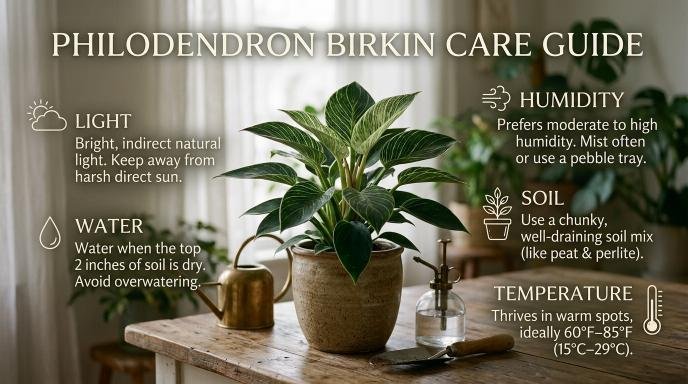
Philodendron Birkin is a striking tropical houseplant known for its dark green leaves decorated with creamy white pinstripes.
It can be surprisingly easy to grow, but its attractive variegation makes lighting, watering, humidity, and feeding especially important. With the right routine, your Birkin can produce healthy new leaves while maintaining strong stems and attractive foliage.
The biggest mistake beginners make is treating Philodendron Birkin like a plant that needs constantly wet soil. It actually performs better when the growing mix is allowed to partially dry between waterings. Understanding how to balance moisture, light, and drainage is the key to successful philodendron birkin care.
Quick Answer
Philodendron Birkin care requires bright, indirect light, well-draining soil, moderate humidity, and watering when the upper portion of the soil becomes dry. Keep it warm, protect it from harsh direct sun and cold drafts, and fertilize lightly during active growth for healthy leaves and attractive variegation.
Understanding the Philodendron Birkin
Philodendron Birkin is a cultivated philodendron known for its distinctive white or cream-colored leaf striping. Individual leaves can vary considerably, and new foliage may emerge with different amounts of variegation.
This is important because Birkin does not always produce identical leaves. One leaf may have heavy white striping while another may appear mostly green. Changes in variegation are not automatically a sign that something is wrong.
The plant grows upright when young, gradually developing a fuller appearance as it produces additional leaves.
Why Its Variegation Matters
The lighter portions of the leaves contain less chlorophyll than green areas. Because of this, highly variegated leaves generally have less photosynthetic capacity than completely green foliage.
That means lighting needs to be balanced:
- Too little light can encourage weaker growth and greener leaves.
- Too much intense sunlight can scorch the foliage.
- Bright filtered light usually provides the best compromise.
- A plant with more white variegation may need particularly good indirect light.
Best Light for Philodendron Birkin
Bright, indirect light is generally the best choice.
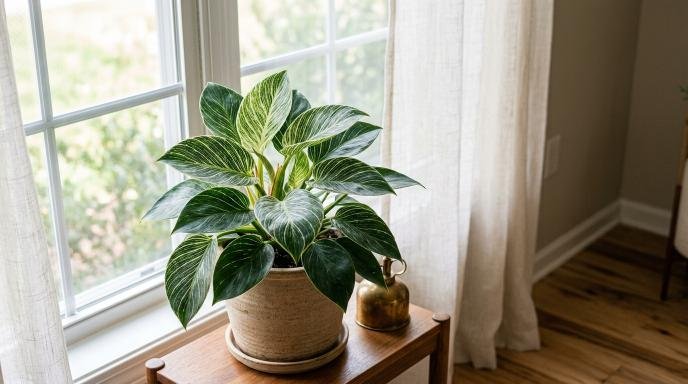
Place your Birkin near a bright window where it receives plenty of ambient daylight without sitting in intense afternoon sun for hours.
An east-facing window can be particularly convenient because it often provides gentler morning sunlight. Near a bright south- or west-facing window, keep the plant farther back or filter the sunlight with a sheer curtain.
Signs of Too Little Light
Watch for:
- Slow production of new leaves.
- Long spaces between leaves.
- Smaller new foliage.
- Weak or leaning growth.
- Increasingly green foliage.
Low light does not necessarily kill the plant quickly. The problem is that growth can gradually become weaker and less attractive.
Signs of Excessive Light
Strong direct sunlight can cause:
- Brown or crispy patches.
- Bleached-looking areas.
- Curling leaves.
- Rapid moisture loss from the soil.
Practical tip: Instead of moving a Birkin immediately into the brightest possible location, increase its light gradually. A plant accustomed to lower light can react poorly to a sudden change.
How Often to Water Philodendron Birkin
Watering should be based on soil moisture rather than a fixed calendar.
Check the upper portion of the potting mix with your finger. If it feels noticeably dry, it is usually time to water. If the soil still feels wet several centimeters below the surface, wait longer.
When watering:
- Water thoroughly until excess moisture drains from the bottom.
- Allow the pot to drain completely.
- Empty standing water from a saucer or decorative container.
- Check the soil again before the next watering.
The frequency will change with temperature, light, pot size, soil composition, and season.
Why Overwatering Is a Common Problem
Beginners sometimes assume yellow leaves mean the plant needs more water. In reality, constantly wet soil can contribute to root problems and yellowing foliage.
A better approach is to investigate the soil before adding more water.
If the soil remains wet for a long time, consider whether:
- The pot is too large.
- Drainage holes are blocked.
- The potting mix is too dense.
- The plant receives insufficient light.
- Watering is simply too frequent.
Choosing the Right Soil
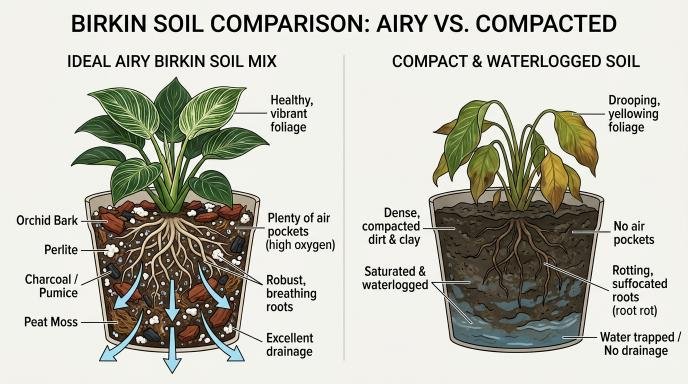
Philodendron Birkin benefits from an airy, well-draining growing medium.
A useful mix should hold some moisture while allowing excess water and air to move through the root zone.
A practical homemade mixture can include:
- High-quality indoor potting mix.
- Orchid bark.
- Perlite or another coarse aeration material.
The exact ratio does not need to be perfect. The goal is a medium that does not become a dense, muddy mass after watering.
The Pot Matters Too
A drainage hole is much more important than the decorative appearance of the container.
Choose a pot that is only moderately larger than the root system. Moving a small Birkin into a very large container can leave a large volume of soil wet for too long after watering.
Temperature and Humidity
Philodendron Birkin prefers warm indoor conditions and generally dislikes cold drafts.
Keep it away from:
- Cold windows during winter.
- Air-conditioning vents.
- Heating vents.
- Sudden temperature changes.
- Very cold outdoor conditions.
Moderate household humidity is often adequate, although higher humidity can support more comfortable growth, particularly in very dry indoor environments.
Do You Need a Humidifier?
Not necessarily.
If the plant is growing normally and the leaf edges remain healthy, there may be no need to dramatically increase humidity.
If your indoor environment is exceptionally dry and you notice crispy edges or poor-looking new growth, improving humidity can help. A humidifier is generally more predictable than constantly misting the leaves.
Fertilizing Philodendron Birkin
During active growth, Birkin can benefit from a balanced houseplant fertilizer applied according to its product directions.
Avoid the temptation to use extra fertilizer because you want faster growth.
Excess fertilizer can accumulate in the soil and potentially damage roots.
A sensible approach is:
- Fertilize during active growth.
- Reduce or stop feeding when growth slows significantly.
- Use the recommended dilution.
- Water appropriately rather than fertilizing dry, stressed soil.
- Flush accumulated salts from the potting mix occasionally if needed.
Healthy roots and adequate light are more important than heavy feeding.
Repotting Philodendron Birkin
Birkin does not need to be repotted simply because a certain amount of time has passed.
Look for actual signs that the plant needs more space.
Repot when:
- Roots are circling heavily around the root ball.
- Roots are emerging from drainage holes.
- Water runs through the pot unusually quickly because the root mass has become dense.
- Growth has slowed despite appropriate care.
- The existing potting mix has broken down and no longer drains well.
Choose a container only one size larger than the current pot.
After repotting, avoid immediately creating a much wetter watering routine. The fresh soil can hold moisture differently from the old mix.
How to Propagate Philodendron Birkin
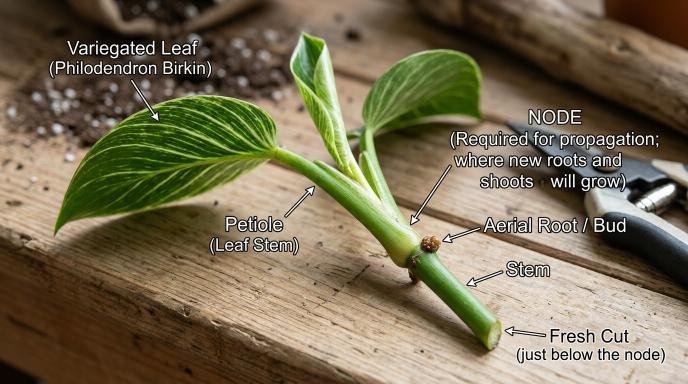
Propagation is generally performed using stem cuttings that contain an appropriate node.
A successful cutting needs a viable growth point rather than simply a piece of leaf.
Basic Propagation Steps
- Select a healthy stem with a suitable node.
- Make a clean cut with a sanitized cutting tool.
- Place the cutting in an appropriate propagation medium.
- Keep the medium lightly moist rather than saturated.
- Provide warm conditions and bright indirect light.
- Wait for roots and new growth to develop.
- Transfer the rooted cutting into an appropriate potting mix when established.
Propagation can take time, so avoid repeatedly disturbing the cutting to check for roots.
Pruning and Cleaning
Pruning is mostly useful for removing damaged, diseased, or unwanted growth and maintaining the plant’s appearance.
Use clean cutting tools and avoid removing healthy leaves unnecessarily.
Dust can also accumulate on large leaves, reducing their visual appeal and interfering with normal leaf function. Gently wiping foliage with clean water can help keep leaves attractive.
Avoid aggressive polishing products that leave oily residues on the foliage.
Philodendron Birkin Leaf Problems
Leaf problems are often symptoms rather than diagnoses. Look at the plant’s overall conditions before changing several things at once.
Yellow Leaves
Possible causes include:
- Excessive watering.
- Poor drainage.
- Naturally aging foliage.
- Root stress.
- Insufficient light combined with excessive moisture.
Check the soil first rather than automatically increasing watering.
Brown Leaf Tips
Brown edges can result from:
- Very dry conditions.
- Inconsistent watering.
- Excessive fertilizer salts.
- Root problems.
- Environmental stress.
Look for patterns. If only older leaves have minor damage while new growth is healthy, the situation may be less serious than widespread browning.
Curling Leaves
Curling can occur when the plant is experiencing water stress, excessive heat, very dry air, or root-related problems.
Check both the soil and environment before deciding on a solution.
White or Cream Leaves
Highly variegated foliage can naturally contain large areas of cream or white.
However, if a plant begins producing extremely pale leaves repeatedly and growth becomes weak, evaluate its overall light and growing conditions. Variegation can vary from leaf to leaf, so a single unusually white leaf is not necessarily a problem.
Philodendron Birkin Pests
Indoor philodendrons can occasionally attract common houseplant pests such as:
- Spider mites.
- Mealybugs.
- Scale insects.
- Thrips.
- Aphids.
Inspect the undersides of leaves and areas around new growth regularly.
Early detection is much easier to manage than a large infestation.
If you notice insects, isolate the affected plant from nearby houseplants and identify the pest before selecting a treatment. Repeat monitoring is important because one treatment may not eliminate every life stage of a pest.
Common Philodendron Birkin Care Mistakes
Watering on a Fixed Schedule
Watering every Sunday regardless of soil conditions can create problems.
Better approach: Check the soil and adjust watering according to the plant’s environment.
Keeping the Soil Constantly Wet
Philodendrons appreciate moisture, but their roots also need oxygen.
Better approach: Use an airy mix and allow part of the soil to dry before watering again.
Putting It in Harsh Direct Sun
More light is not always better.
Better approach: Give bright filtered or indirect light.
Using an Oversized Pot
A large container can hold moisture for too long.
Better approach: Increase pot size gradually as the root system develops.
Fertilizing Too Heavily
Extra fertilizer does not automatically produce faster, healthier growth.
Better approach: Follow the fertilizer’s recommended dilution and frequency.
Chasing Perfect Variegation
Birkin foliage can naturally change in appearance from leaf to leaf.
Better approach: Focus on healthy roots, appropriate light, steady growth, and overall plant health.
Seasonal Philodendron Birkin Care
Spring
As growth increases:
- Check soil moisture more frequently.
- Resume regular fertilizing if appropriate.
- Inspect for pests.
- Consider repotting if the roots are crowded.
Summer
Higher temperatures and brighter light may increase water use.
Check the soil more often, especially if the plant is close to a bright window.
Fall
Growth may gradually slow.
Reduce watering according to actual soil moisture rather than continuing a summer schedule automatically.
Winter
Indoor heating can create dry air while reduced daylight slows growth.
Avoid keeping the soil constantly wet simply because the calendar says it is watering day. Lower light and slower growth can mean the plant uses water more slowly.
A Simple Weekly Care Routine
You do not need a complicated schedule to maintain a healthy Birkin.
Once a Week
- Check the soil moisture.
- Inspect leaves for pests.
- Look at new growth.
- Rotate the pot if growth is becoming strongly one-sided.
- Check for yellowing or damaged foliage.
Every Few Weeks
- Inspect the drainage area.
- Clean dusty leaves if needed.
- Review whether the plant is receiving adequate light.
During Active Growth
- Fertilize appropriately.
- Monitor new leaves.
- Watch for root crowding.
This simple observation-based routine is usually more effective than following a rigid calendar.
When Should You Move Your Philodendron Birkin?
Move the plant if its current location is causing obvious problems.
For example, if it is several feet from a dim window and producing very small, widely spaced leaves, a brighter location may help.
Make environmental changes gradually when possible. A sudden move from low light to intense direct sun can create leaf damage.
How to Encourage Healthy New Leaves
Healthy new growth depends on several factors working together.
Focus on:
- Bright indirect light.
- Consistent but not excessive moisture.
- Airy, well-draining soil.
- Warm temperatures.
- Appropriate nutrition.
- Adequate root space.
If all six are reasonably balanced, the plant has a much better chance of producing strong foliage.
Trying to fix slow growth with fertilizer alone is a common mistake. If light or roots are the limiting factor, extra fertilizer will not solve the underlying problem.
Philodendron Birkin Care: Quick Reference
| Care Factor | Best Practice |
|---|---|
| Light | Bright, indirect light |
| Water | Water when the upper soil becomes dry |
| Soil | Airy, well-draining mix |
| Pot | Container with drainage holes |
| Humidity | Moderate to moderately high |
| Temperature | Warm, stable indoor conditions |
| Fertilizer | Light, balanced feeding during active growth |
| Repotting | When roots become crowded or soil deteriorates |
| Pruning | Remove damaged or unwanted growth |
| Propagation | Stem cuttings with viable nodes |
Frequently Asked Questions
Is Philodendron Birkin easy to care for?
Yes. It is generally manageable as a houseplant when provided with bright indirect light, appropriate watering, good drainage, and warm conditions.
How much light does a Philodendron Birkin need?
It performs best in bright indirect light. Avoid prolonged exposure to intense direct sunlight, particularly through hot windows.
Should I mist my Philodendron Birkin?
Misting is not essential for successful care. If your indoor air is very dry, maintaining more consistent ambient humidity is generally more useful than occasional misting.
Why is my Philodendron Birkin turning green?
Birkin leaves naturally vary in variegation. If the plant is producing consistently greener foliage, evaluate its light and overall growing conditions. One green leaf alone does not necessarily indicate a problem.
Why are my Birkin leaves turning yellow?
Overwatering, poor drainage, root stress, and naturally aging leaves are common possibilities. Check the soil moisture and roots before changing your watering routine.
Can Philodendron Birkin grow in low light?
It may survive in lower light, but growth can become slower and less vigorous. Brighter indirect light is preferable for maintaining strong growth.
How often should I repot Philodendron Birkin?
Repot based on root growth and soil condition rather than a fixed annual schedule. A slightly crowded plant is generally preferable to one sitting in an oversized container full of wet soil.
Can I grow Philodendron Birkin outdoors?
It can grow outdoors in suitable warm conditions, provided it is protected from harsh direct sunlight, cold temperatures, and excessive rain. In climates with unsuitable temperatures, container growing makes it easier to move the plant indoors.
Is Philodendron Birkin toxic to pets?
Philodendrons contain calcium oxalate crystals and can be harmful if chewed or ingested by pets. Keep the plant away from animals that may nibble on foliage.
Final Takeaways
Successful philodendron birkin care is less about following a rigid schedule and more about learning to read the plant. Give it bright indirect light, let excess water drain freely, allow some drying between waterings, and avoid oversized pots and excessive fertilizer.
Pay particular attention to the roots and new growth. Healthy roots support healthy leaves, while good light helps the plant make the most of its naturally variable variegation. With consistent conditions and regular observation, Philodendron Birkin can become a reliable and attractive long-term houseplant.