Quick Answer
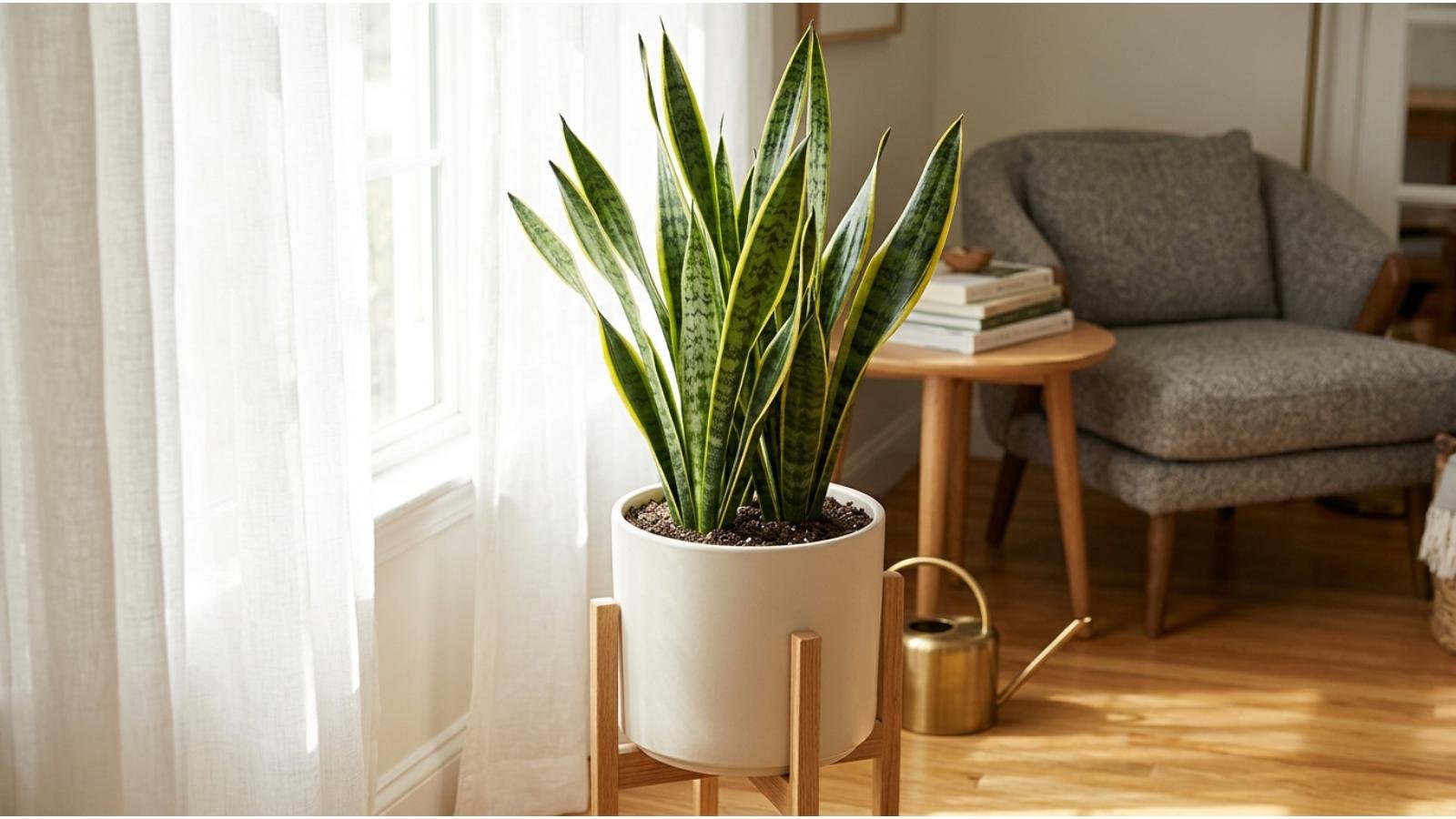
Snake plant care is simple when you get three things right: bright indirect light, fast-draining soil, and careful watering. Let the potting mix dry out between waterings, use a container with drainage holes, and avoid leaving the roots in standing water. Snake plants tolerate lower light and periods of neglect, but they generally grow better in brighter conditions.
Introduction
Snake plant care is often described as “water it occasionally and forget about it,” but that advice leaves out the details that determine whether your plant merely survives or actually looks healthy. These drought-tolerant houseplants store water in their thick leaves, which means the biggest beginner mistake is usually not underwatering—it is watering too often.
The good news is that snake plants are remarkably forgiving. Whether you have a classic Sansevieria trifasciata, a compact ‘Hahnii’, a variegated cultivar, or another type now classified within Dracaena, you can keep it healthy by paying attention to the plant’s light, soil, roots, temperature, and leaf condition rather than following a rigid watering calendar.
Understanding the Snake Plant Before You Care for It
The plant commonly called a snake plant or mother-in-law’s tongue has traditionally been sold under the genus Sansevieria. Sansevieria trifasciata is now also recognized as Dracaena trifasciata, reflecting its close botanical relationship to Dracaena.
Snake plants have thick, fleshy leaves capable of storing water. That adaptation explains nearly everything about their care: they do not need constantly moist soil, they tolerate periods of drought, and their roots are vulnerable when wet conditions persist.
Common types include:
- Sansevieria trifasciata — classic upright, striped leaves.
- ‘Laurentii’ — recognizable by its yellow-edged variegation.
- ‘Hahnii’ — a shorter, compact rosette-forming type.
- Sansevieria cylindrica — cylindrical, upright leaves.
- Sansevieria masoniana — broad leaves commonly sold as whale-fin snake plants.
Different cultivars can have different shapes, heights, and light preferences, so avoid assuming every snake plant behaves exactly the same way.
Image Suggestion: A labeled comparison graphic showing classic snake plant, ‘Laurentii’, ‘Hahnii’, cylindrical snake plant, and whale-fin varieties.
How Much Light Does a Snake Plant Need?
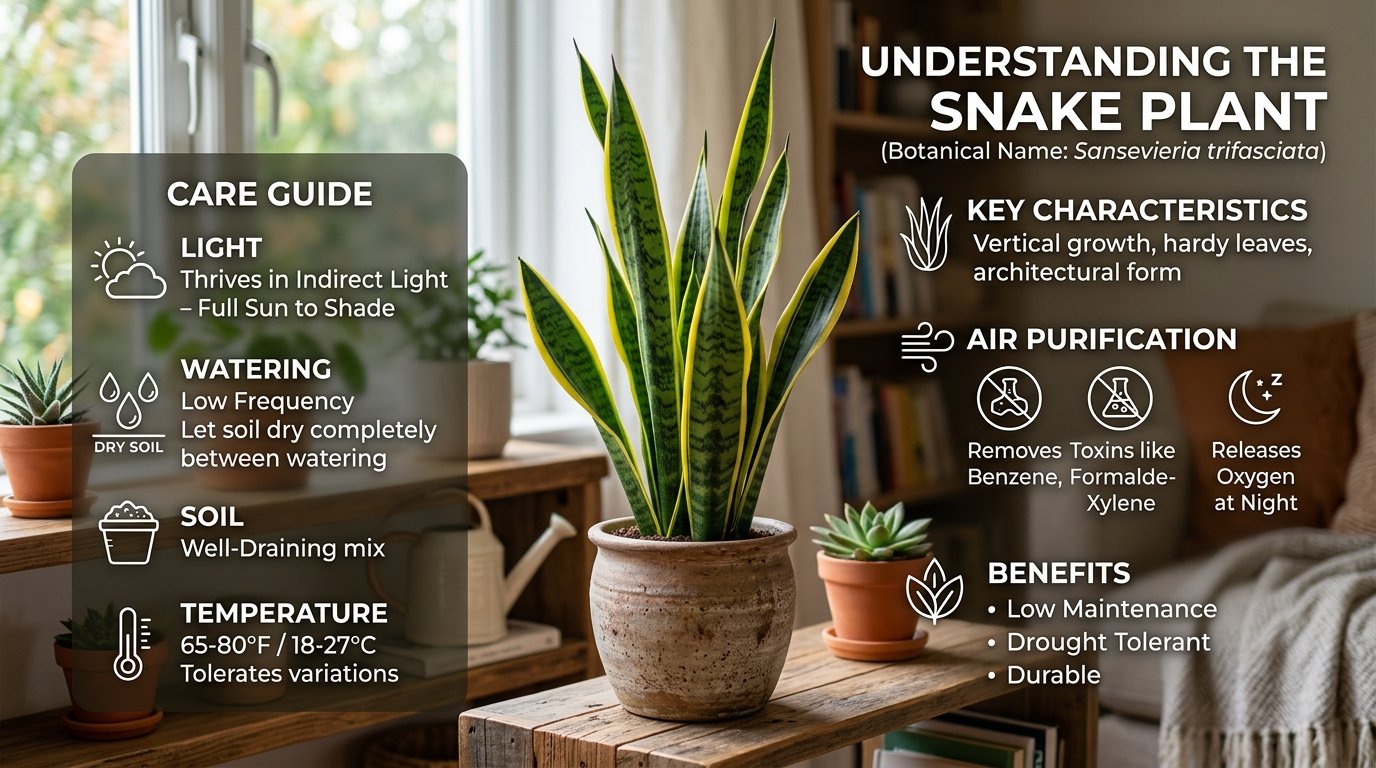
Snake plants are famous for tolerating low light, but tolerating low light is not the same as thriving in it.
A bright location with filtered or indirect light is generally an excellent choice. Snake plants can also adapt to lower-light environments, although growth may become slower and the plant may develop a less compact appearance. The RHS notes that plants grown in shade can produce taller leaves, while plants receiving more light may remain more compact.
Good locations
Try placing your plant:
- Near a bright east-facing window.
- A short distance from a bright south- or west-facing window with filtered light.
- In a bright office.
- In a room with strong natural daylight but no harsh midday sun directly hitting the leaves.
What about direct sunlight?
More light is not automatically better. Snake plants can tolerate substantial light, but intense summer sun through glass can scorch foliage. The RHS specifically recommends avoiding strong midday summer sun, particularly when plants are grown indoors or moved outdoors.
Practical tip: If your plant has been sitting in a dark corner for months, do not suddenly move it into intense direct sun. Increase light gradually.
Image Suggestion: A simple “best window placement” diagram showing low light, bright indirect light, and harsh direct afternoon sunlight.
Snake Plant Watering: The Rule That Prevents Most Problems
If you remember only one part of snake plant care, remember this:
Do not water according to the calendar—check the soil first.
Snake plants are drought-tolerant because their fleshy leaves store water. Keeping their roots wet for prolonged periods can encourage root rot, which the RHS identifies as one of the main causes of poor health in sansevierias.
How to know when it is time to water
Push your finger into the potting mix. If the soil is still noticeably moist, wait.
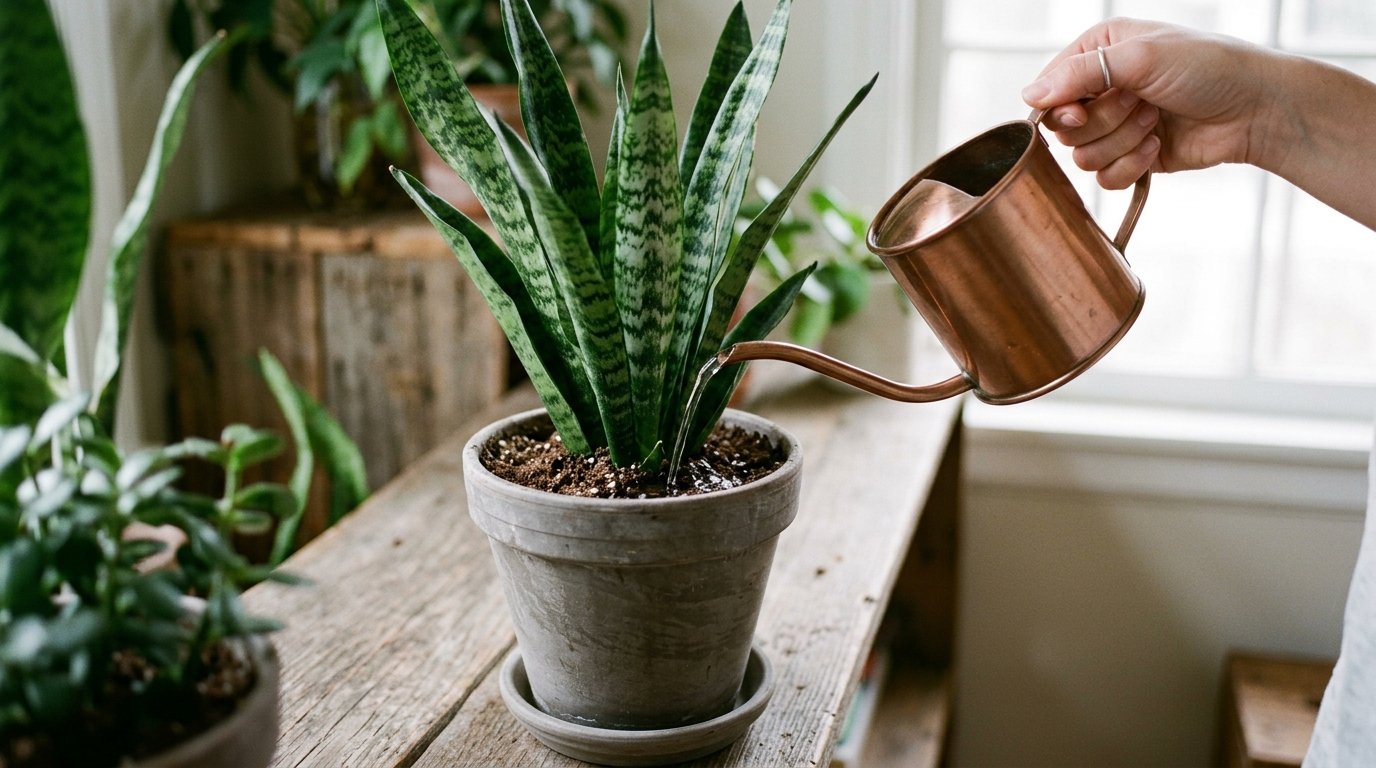
When the mix has dried substantially, water thoroughly enough that some water drains from the bottom of the container. Then empty the saucer or outer pot rather than allowing the plant to sit in standing water.
How often should you water?
There is no universal seven-day or fourteen-day rule.
Your watering frequency depends on:
- Light intensity.
- Temperature.
- Pot size.
- Pot material.
- Soil composition.
- Humidity.
- Season.
- Root health.
A snake plant in bright light and a warm room may use water faster than one sitting in a cool, dim corner.
Winter watering
During winter, growth often slows and the plant uses less water. The RHS recommends watering very sparingly during this period, particularly because the soil may remain wet for longer.
The common mistake: Seeing slightly wrinkled leaves and immediately adding water without checking the soil. Wrinkling can indicate dehydration, but plant symptoms should always be interpreted alongside soil moisture and root condition.
Choosing the Right Soil and Pot
A snake plant’s roots need oxygen as well as moisture. That is why a heavy mix that stays wet for a long time can create problems.
The RHS recommends a free-draining, peat-free cactus compost. It also gives a practical homemade-style mix of two parts peat-free loam-based compost to one part horticultural grit or fine gravel.
What makes a good snake plant mix?
Look for a mixture that:
- Drains quickly.
- Does not remain soggy for days.
- Provides enough structure for roots.
- Allows air around the root system.
The pot matters too
Always choose a container with drainage holes.
A decorative pot without drainage can become a hidden water reservoir. Even if you carefully measure every watering, excess moisture has nowhere to escape.
A huge pot is also not necessarily better. Oversized containers hold more unused soil, which can stay damp around the roots for too long. The RHS recommends moving into only a slightly larger pot when repotting.
Image Suggestion: Cross-section illustration of a snake plant in a drainage pot, showing roots, free-draining soil, and excess water leaving through the bottom.
Repotting Without Stressing Your Snake Plant
Snake plants generally do not need frequent repotting. In fact, they are comfortable being somewhat root-bound.
Repot when:
- Roots have substantially filled the container.
- The pot is becoming distorted from the root mass.
- The plant repeatedly dries extremely quickly because the container is packed with roots.
- The existing soil has deteriorated and drainage has become poor.
- The plant has suffered root problems requiring fresh growing media.
The RHS advises using a pot only slightly larger than the previous one and avoiding unnecessary oversized containers.
A practical repotting method
- Choose a pot with drainage holes.
- Select a container only modestly larger than the current one.
- Prepare a fast-draining potting mix.
- Remove the plant carefully.
- Inspect the roots for obvious damage or rot.
- Remove unhealthy material with clean tools.
- Position the plant at approximately the same depth.
- Fill around the root ball with fresh mix.
- Avoid packing the soil excessively tightly.
- Allow the plant to settle before returning to its normal watering routine.
Expert tip: Don’t repot simply because you have owned the plant for a certain number of months. Look at the plant and its root system instead.
Temperature and Humidity: Keep It Comfortable, Not Tropical
Snake plants generally prefer normal indoor temperatures rather than extreme conditions. The RHS gives an ideal range of approximately 60–75°F (15–24°C) and recommends protecting them from cold drafts and temperatures below about 50°F (10°C).
Humidity is another area where snake plants differ from many tropical houseplants.
They generally prefer lower humidity and do not need regular misting. The RHS specifically advises against misting them and recommends avoiding persistently steamy environments.
That means you usually do not need:
- A humidifier just for your snake plant.
- Daily misting.
- A pebble tray.
- A permanently steamy bathroom.
Good airflow is useful, although the plant should still be protected from cold drafts.

Feeding a Snake Plant: Less Is Usually More
Snake plants are not heavy feeders.
During active growth, the RHS recommends feeding approximately once a month with a liquid houseplant fertilizer or specialist cactus feed.
Avoid the temptation to fertilize more frequently because you want faster growth. Excess fertilizer can create problems, while snake plants naturally tend to grow at a measured pace.
A useful approach is:
- Feed during active growth.
- Reduce or stop feeding when growth slows.
- Follow the fertilizer’s dilution instructions.
- Do not fertilize a severely stressed or recently damaged plant simply to “boost” it.
Important: Fertilizer cannot compensate for poor light, waterlogged soil, damaged roots, or an unsuitable pot.
Pruning, Cleaning, and Keeping the Plant Looking Good
Snake plants generally require little pruning. Their leaves can remain attractive for years, so avoid cutting healthy foliage merely because it has a minor cosmetic imperfection.
Remove leaves that are:
- Completely dead.
- Severely damaged.
- Rotten at the base.
- Beyond reasonable cosmetic recovery.
Cut damaged leaves near their base with a clean tool.
Because the sap can irritate skin, the RHS recommends wearing gloves when handling or pruning sansevierias.
Should you cut brown tips?
A small brown tip does not automatically mean the entire leaf needs removal. If the rest of the leaf is healthy, you can leave it or carefully trim the damaged portion for appearance.
Do not repeatedly cut healthy leaves simply to create a particular shape. Snake plants grow from their bases, so removing a leaf is not like trimming a hedge.
Snake Plant Problems: What the Leaves Are Telling You
Snake plants communicate through changes in their foliage. The trick is interpreting those changes alongside the plant’s growing conditions.
| Symptom | Possible cause | What to check |
|---|---|---|
| Soft, mushy leaves | Excess moisture or root problems | Soil moisture and roots |
| Yellowing leaves | Often associated with excessive moisture | Drainage and watering pattern |
| Wrinkled leaves | Dehydration or damaged roots | Soil and root health |
| Brown, crispy patches | Scorching, dryness, or environmental stress | Light and watering |
| Leaning leaves | Low light, weak growth, or root problems | Light exposure and roots |
| Slow growth | Low light, seasonal slowdown, or natural growth rate | Light and temperature |
| Pests around leaf bases | Mealybugs or other sap-feeding insects | Inspect leaf joints and bases |
These symptoms are clues rather than diagnoses. For example, a wrinkled leaf does not always mean “water immediately.” If the soil is wet and the roots are compromised, adding more water can make the underlying problem worse.
Soft leaves are especially important
Firm, upright foliage is generally what you want. If leaves become unusually soft or collapse near the base, investigate the roots and soil rather than simply increasing watering.
Overwatering and prolonged standing water are among the most important problems to rule out.
Image Suggestion: Side-by-side infographic comparing healthy, dehydrated, sun-scorched, and overwatered snake plant leaves.
Root Rot: How to Recognize and Respond
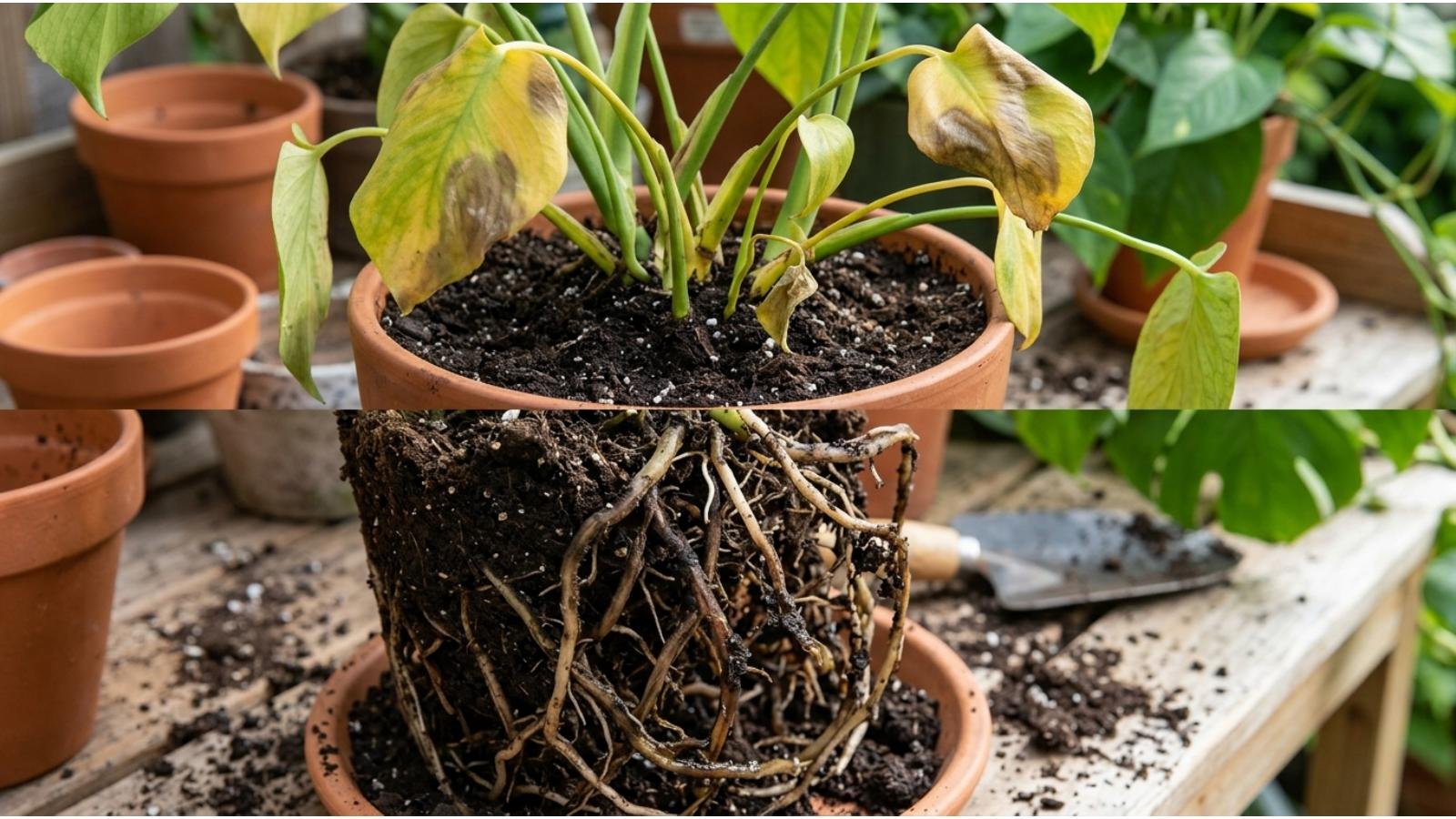
Root rot is one of the most serious snake plant problems because the visible symptoms can appear after the roots have already been damaged.
Warning signs can include:
- Soft leaves.
- Leaves collapsing at the base.
- Persistent wet soil.
- A plant that appears unhealthy despite having plenty of water.
- Dark or deteriorated roots when the plant is removed from its container.
If root problems are suspected, inspect the root system rather than continuing the normal watering schedule.
A healthier setup usually involves removing damaged roots, replacing persistently wet soil with a fast-draining mix, using a pot with drainage, and correcting the watering pattern.
The key lesson is simple: a snake plant does not need more water merely because it looks stressed.
Pests: What to Watch For
Snake plants are generally resilient, but they can still experience pests.
The RHS identifies mealybugs and red spider mites among the pests that can affect sansevierias. Vine weevil can also cause problems, particularly through damage to the roots.
Make inspection part of routine care
Every few weeks, look closely at:
- Leaf bases.
- Crevices between leaves.
- The underside of foliage.
- New growth.
- Areas where leaves emerge from the soil.
Early detection is much easier to manage than an established infestation.
If you notice insects, isolate the affected plant from nearby houseplants while you identify and address the problem.
Propagating Snake Plants
Once your plant is mature, propagation can be a rewarding part of snake plant care.
The RHS identifies several propagation methods, including division, offsets, and leaf cuttings, depending on the type. Spring is a particularly suitable time for propagation because plants are beginning active growth.
Propagation by division
Division is especially useful when a mature plant has produced multiple growth points.
In broad terms:
- Remove the plant from its container.
- Identify natural divisions or offsets.
- Separate them carefully while retaining healthy roots where possible.
- Pot each division into an appropriately sized container.
- Use a free-draining mix.
- Return the new plants to suitable light.
- Avoid keeping the fresh divisions constantly wet.
An important variegation detail
Leaf propagation does not always reproduce the variegation of the parent plant. The RHS specifically notes that offspring from variegated cultivars can lose their variegation when raised from leaf cuttings.
If preserving the appearance of a variegated cultivar matters, division or offsets are generally more appropriate than relying on leaf cuttings.
Seasonal Snake Plant Care
Your plant’s needs change throughout the year because light, temperature, and growth rate change.
Spring
This is often a good time to:
- Repot if necessary.
- Propagate mature plants.
- Gradually increase watering as growth resumes.
- Begin regular feeding during active growth.
Summer
Watch light carefully.
Bright conditions can increase water use, but intense direct sun through glass can scorch foliage. If the plant is moved outdoors, acclimate it gradually and protect it from cold weather later in the year.
Fall
As growth slows:
- Reduce feeding.
- Check the soil more carefully before watering.
- Watch for cooler temperatures near windows.
Winter
The biggest mistake is maintaining a summer watering routine in winter.
Lower light and slower growth can mean the soil takes considerably longer to dry. Water less frequently and avoid leaving the plant in cold, wet soil.
Snake Plant Care by Experience Level
If you’re a beginner
Focus on four things:
- A pot with drainage holes.
- Fast-draining soil.
- Bright, indirect light when possible.
- Waiting for the soil to dry before watering.
You do not need an elaborate care schedule.
If you’re an intermediate grower
Start paying attention to how your environment affects watering.
A plant in a bright room, small porous pot, and warm environment will behave differently from one in a large plastic container in low light.
Instead of asking, “How often should I water?” ask:
“How quickly does my particular potting mix dry under my particular conditions?”
That question leads to better care.
If you’re an advanced grower
Pay attention to cultivar differences, root development, variegation, seasonal growth, and the relationship between light and water use.
For example, increasing light can change how quickly the pot dries. Increasing the pot size can have the opposite effect by increasing the amount of soil holding moisture.
Good plant care is therefore less about memorizing a schedule and more about understanding the plant’s environment.
Snake Plant Care Mistakes to Avoid
1. Watering every week automatically
A calendar cannot measure soil moisture.
2. Using a pot without drainage
Beautiful containers can become unhealthy growing environments when excess water cannot escape.
3. Using heavy garden soil indoors
Dense soil can remain wet for too long. A free-draining houseplant or cactus-style mix is a safer starting point.
4. Assuming low light means no light
Snake plants tolerate low light, but brighter conditions generally support better growth.
5. Putting a newly shaded plant into harsh sun
Sudden exposure to intense sunlight can damage foliage.
6. Misting constantly
Snake plants do not require tropical humidity. The RHS recommends low humidity and specifically advises against misting.
7. Repotting too often
Snake plants are comfortable when somewhat root-bound and generally do not need frequent repotting.
8. Fertilizing a struggling plant instead of finding the cause
Food cannot fix root rot, poor drainage, inadequate light, or chronic overwatering.
Are Snake Plants Safe Around Pets?
This is an important consideration for households with cats or dogs.
The ASPCA lists snake plant (Sansevieria trifasciata) as toxic to cats and dogs. The toxic principles are saponins, and reported clinical signs include nausea, vomiting, and diarrhea.
If you have pets that chew plants, keep the snake plant inaccessible to them. If you suspect ingestion, contact your veterinarian or an appropriate animal poison-control service promptly.
Image Suggestion: A pet-safe placement illustration showing a snake plant positioned on a stable, inaccessible shelf.
Can Snake Plants Flower?
Yes. Although snake plants are primarily grown for their foliage, mature plants can occasionally produce fragrant, star-shaped white flowers on long stalks.
Flowering is not something you should expect on a strict annual schedule. It is better to view it as an occasional bonus rather than a sign that your plant is failing if it does not bloom.
When flowers fade, the spent stalk can be cut down at the base.
A Simple Weekly Snake Plant Check
You do not need to spend much time caring for a snake plant. A short inspection is more useful than constant maintenance.
Check:
- Soil: Is it still wet?
- Leaves: Are they firm and upright?
- Light: Is the plant receiving reasonable daylight?
- Pot: Is excess water able to escape?
- Pests: Do you see insects around the leaf bases?
- Roots: Is there a reason to suspect root damage?
- Season: Has the plant’s growth rate changed?
If everything looks healthy, leave it alone.
That last point is surprisingly important. Snake plants are often harmed by well-intentioned owners who continually water, move, repot, mist, and fertilize a plant that was already doing perfectly well.
Frequently Asked Questions About Snake Plant Care
How often should I water a snake plant?
Water when the potting mix has dried substantially rather than following a fixed schedule. Light, temperature, pot size, and soil determine how quickly it dries. During winter, watering usually needs to be reduced because growth slows.
Do snake plants need direct sunlight?
No. They can tolerate lower light and grow well in bright filtered light. Strong summer midday sun can scorch leaves, so intense direct sunlight should be approached carefully.
Why are my snake plant leaves turning yellow?
Yellowing can be associated with excessive moisture, particularly when combined with poor drainage. Check the soil and roots before increasing watering.
Why are my snake plant leaves soft?
Soft or collapsing leaves can indicate excessive moisture and root problems. Check whether the soil stays wet for prolonged periods and inspect the roots if necessary.
Why are my snake plant leaves wrinkled?
Wrinkling can occur when the plant lacks available water, but it should be interpreted together with soil moisture and root health. If the soil is already wet, watering more may worsen the situation.
Do snake plants like humidity?
They generally prefer low humidity and do not require misting. Good airflow is beneficial, while persistently steamy conditions are unnecessary.
What is the best soil for snake plants?
Use a free-draining mix, such as a cactus or succulent-style potting medium. The RHS recommends free-draining, peat-free cactus compost for sansevierias.
Do snake plants need fertilizer?
They can benefit from feeding during active growth. The RHS recommends monthly feeding from approximately April through September with a liquid houseplant fertilizer or specialist cactus feed.
How often should I repot a snake plant?
There is no fixed schedule. Repot when the plant has substantially filled its container or the current growing conditions are no longer suitable. Use only a slightly larger pot rather than dramatically increasing the container size.
Can I propagate a snake plant from a leaf?
Yes, depending on the type. Snake plants can be propagated from leaf cuttings, offsets, or division. However, variegated cultivars may produce non-variegated offspring from leaf cuttings.
Are snake plants poisonous to cats and dogs?
Yes. The ASPCA lists Sansevieria trifasciata as toxic to cats and dogs, with saponins identified as the toxic principle. Possible signs include nausea, vomiting, and diarrhea.
Final Takeaway: The Best Snake Plant Care Is Surprisingly Simple
Successful snake plant care is less about doing more and more about avoiding the wrong things. Give the plant good drainage, let the soil dry between waterings, provide reasonable light, protect it from extreme cold and harsh sun, and resist unnecessary misting and repotting.
The most useful habit is to observe before you act. Check the soil before watering. Look at the leaves before fertilizing. Consider the light before assuming the plant needs more water. Once you start responding to the plant’s actual conditions instead of following a rigid schedule, snake plant care becomes much easier—and your plant has a much better chance of staying healthy for years.
Related topics worth exploring
- Indoor plant watering guides
- Best soil mixes for succulents
- Houseplant root rot prevention
- Snake plant propagation
- Low-light houseplants
- Pet-safe houseplants
Suggested featured image: A realistic, healthy snake plant in a modern indoor setting with clearly visible upright leaves, natural window light, and a subtle visual callout showing the three essentials: Light • Dry Soil • Drainage.