Quick Answer
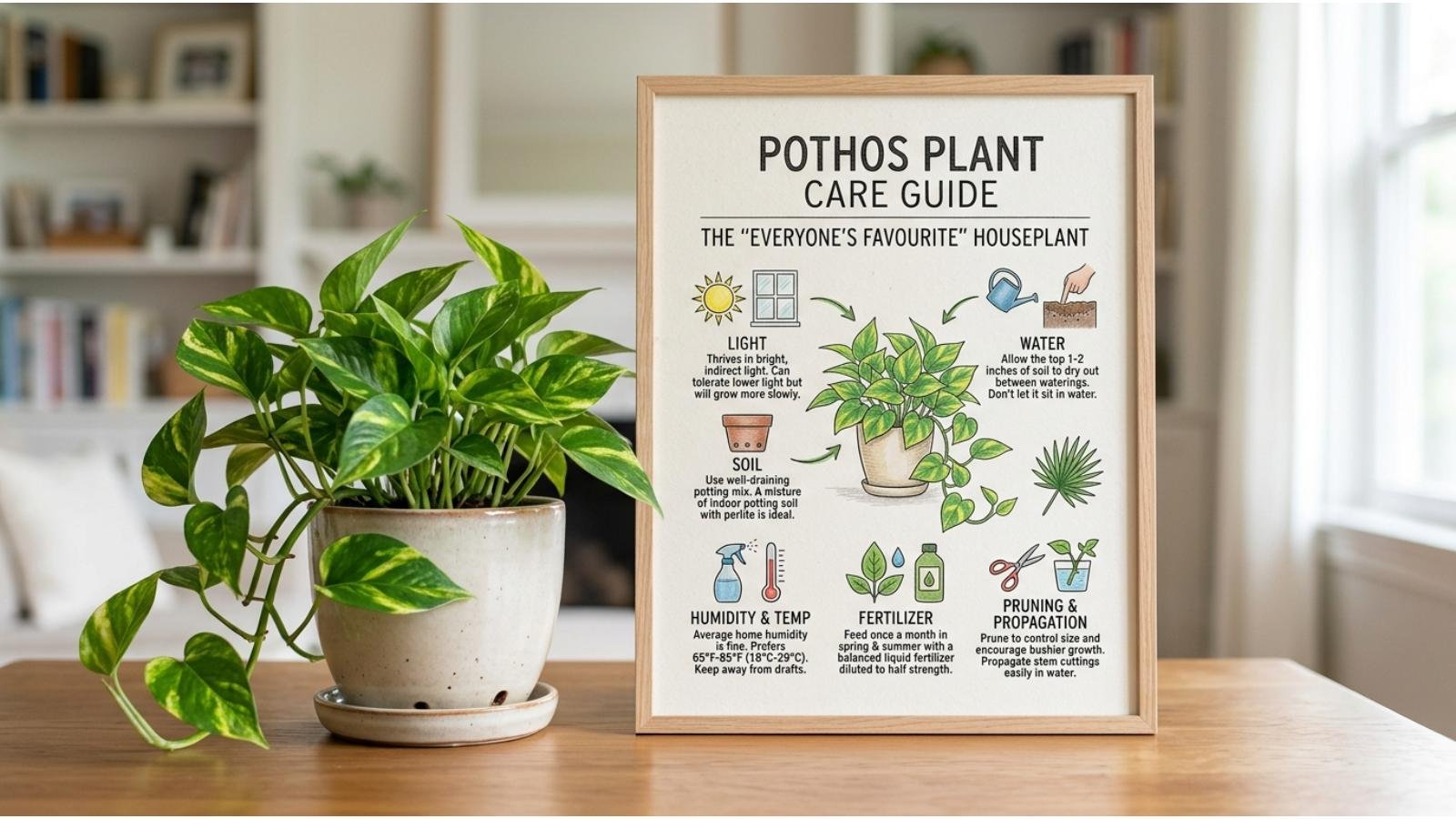
Pothos plant care is mainly about getting three things right: bright, indirect light, well-draining soil, and watering only when the upper portion of the soil has started to dry. Pothos (Epipremnum aureum) tolerates lower light and ordinary household humidity, which makes it beginner-friendly, but consistently wet soil can cause root problems. Prune long vines to encourage fuller growth, and keep the plant away from pets because pothos contains insoluble calcium oxalates.
Introduction
Pothos plant care is often described as almost effortless, but even this famously adaptable houseplant can struggle when its basic needs are misunderstood. Yellow leaves, bare vines, drooping foliage, brown edges, slow growth, and root rot are usually not random problems—they are clues that something about light, watering, soil, temperature, or pruning needs attention.
The good news is that pothos is remarkably forgiving. It can trail from a shelf, climb a support, or fill a hanging basket, and it can adapt to a range of indoor conditions. The key is not to give it more care, but to give it the right care at the right time. Once you learn how to read the leaves and soil, maintaining a healthy pothos becomes much more predictable.
Understanding the Pothos Plant
Pothos is commonly associated with Epipremnum aureum, an evergreen climbing plant in the arum family, Araceae. It is also sold under names such as golden pothos and devil’s ivy.
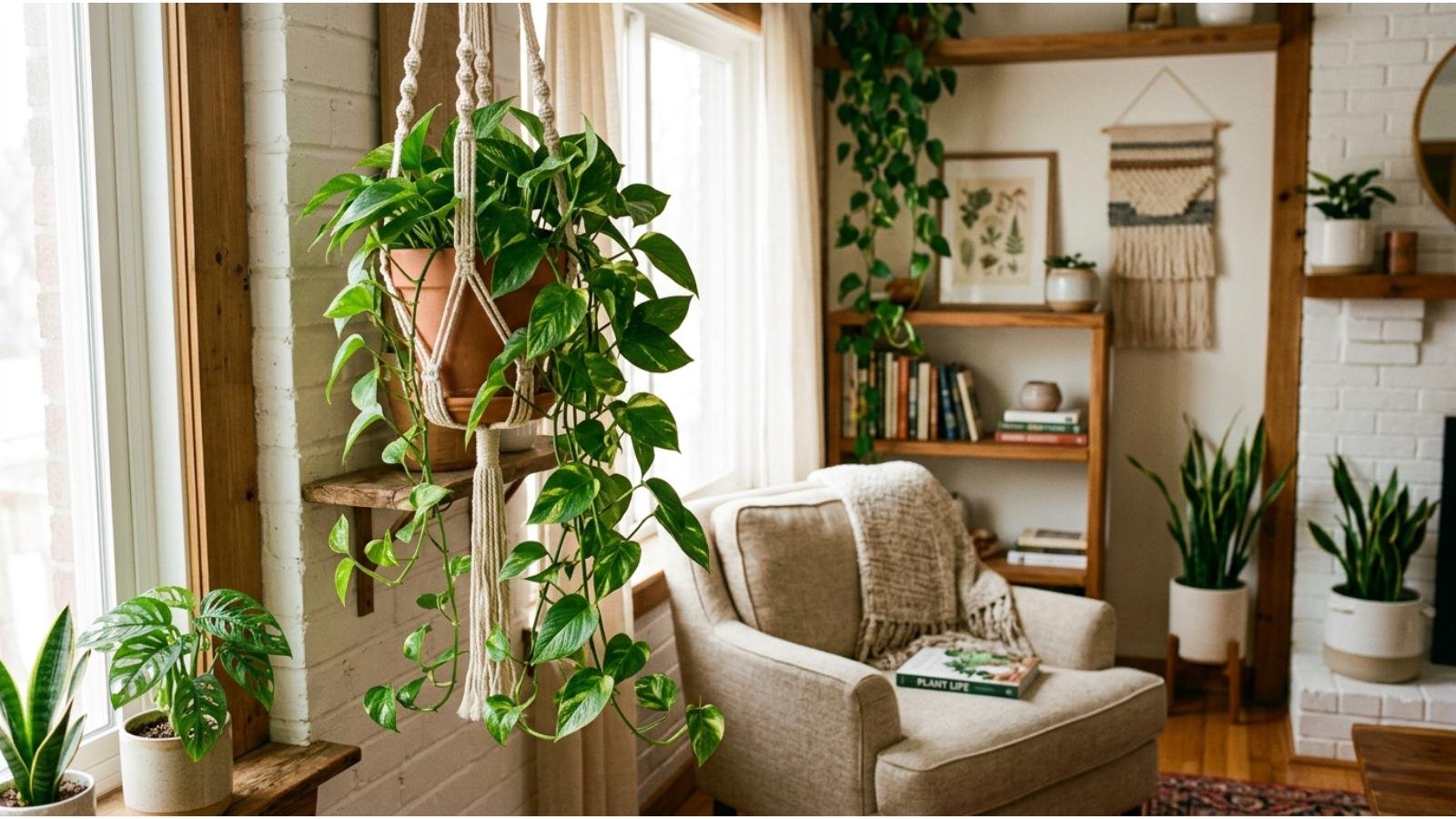
Its heart-shaped leaves can be green, yellow-green, cream, or variegated depending on the cultivar. The stems naturally trail, but the plant can also climb when given suitable support. In favorable conditions, mature vines can become surprisingly long.
In its natural environment, pothos climbs using aerial roots. Indoors, that same growth habit explains why a plant may behave very differently depending on whether you let it hang or train it upward.
Why pothos is popular
Pothos has several qualities that make it particularly useful for indoor growers:
- It tolerates a range of indoor light conditions.
- It does not require unusually high humidity.
- Its trailing growth works well in hanging containers and on shelves.
- It can be trained to climb.
- Stem cuttings make propagation relatively straightforward.
- It generally needs less attention than many tropical houseplants.
However, “easy” does not mean indestructible. The most common mistake is assuming an easy plant should be watered frequently. In reality, excessive moisture is one of the quickest ways to create problems.
Image Suggestion: A labeled botanical illustration showing pothos leaves, stems, nodes, aerial roots, and a mature trailing vine.
Pothos Light Requirements: Finding the Sweet Spot
Light is one of the most important factors in pothos plant care because it affects growth speed, leaf size, color, and variegation.
The ideal indoor location is usually bright, indirect light. An east- or west-facing window can work well, while strong light through a south-facing window may need to be filtered with a sheer curtain. Direct, intense sunlight can scorch foliage.
What happens in low light?
Pothos can survive in lower light, but survival and vigorous growth are different things.
In insufficient light, you may notice:
- Slower new growth
- Longer spaces between leaves
- Smaller leaves
- Reduced variegation
- A sparse or stretched appearance
Variegated pothos varieties generally need enough light to maintain their contrasting patterns. When light is too weak, new growth may become greener because the plant benefits from producing more chlorophyll-rich tissue.
Can pothos handle direct sunlight?
A little gentle morning sun may be tolerated, but harsh direct sunlight—particularly through hot glass—can damage leaves.
Signs of excessive light can include:
- Pale or bleached-looking areas
- Crispy brown patches
- Scorched leaf surfaces
- Sudden deterioration after moving the plant into stronger sunlight
Rather than placing pothos directly against a very sunny window, move it slightly back or filter the light.
A practical light test
Stand where your pothos sits during the brightest part of the day.
If the room is bright enough to read comfortably without switching on a lamp, the area may be suitable. If the plant is several feet from a small window and receives only dim ambient light, expect slower growth.
Image Suggestion: A simple diagram comparing bright indirect light, low light, and harsh direct sunlight around a pothos.
How Often Should You Water a Pothos?
There is no universally correct watering schedule such as “every seven days.”
The better approach is to check the soil before watering.
RHS guidance recommends watering when the growing medium is approaching dryness and warns that keeping the compost continually wet can contribute to root rot.
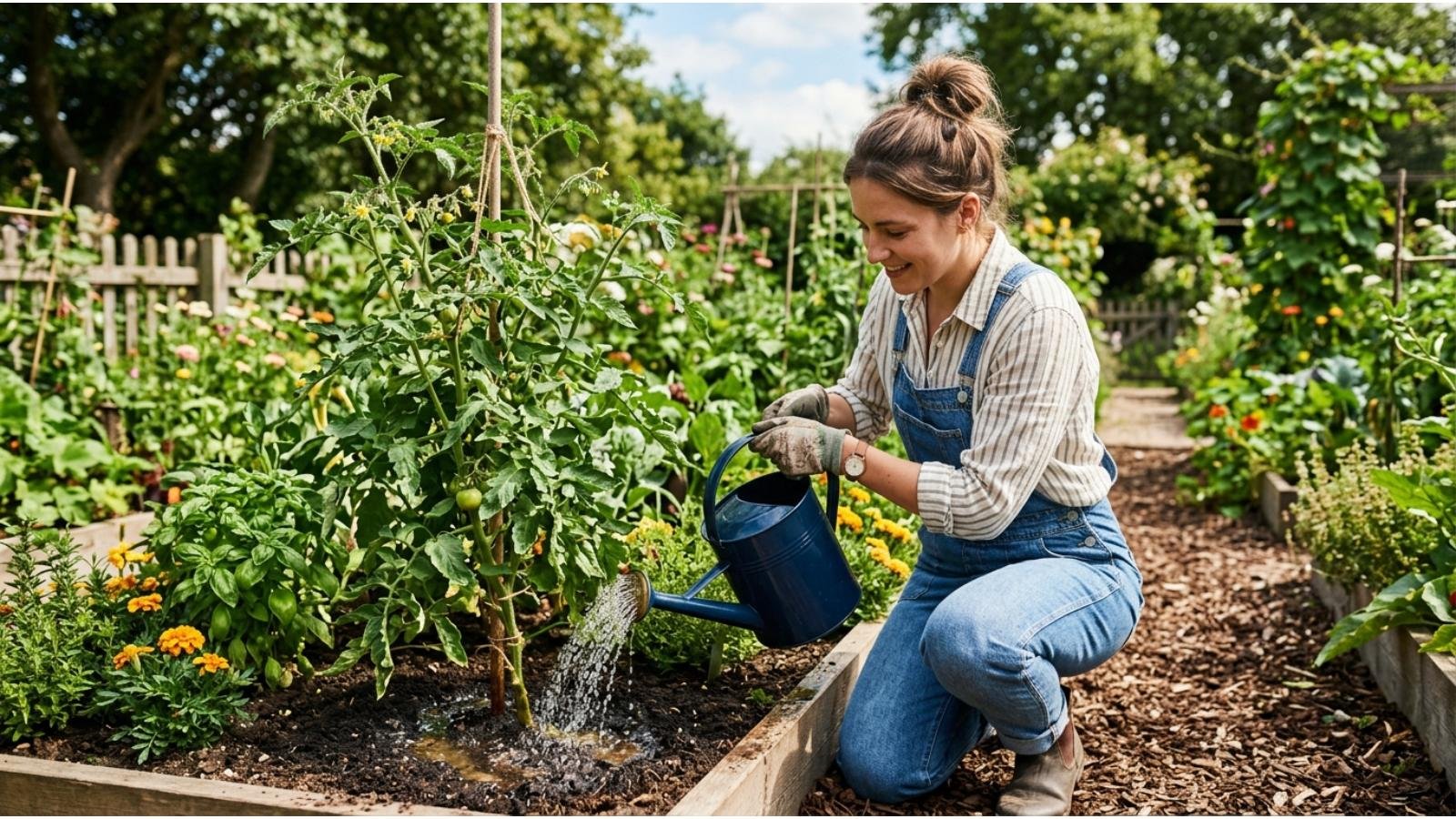
A simple watering method
- Check the upper layer of the potting mix with your finger.
- If it still feels noticeably moist, wait.
- If the upper portion has dried and the plant needs water, water thoroughly.
- Allow excess water to drain from the container.
- Empty standing water from a saucer or cachepot.
The important distinction is between thorough watering and frequent watering.
A pothos generally benefits from being watered thoroughly and then allowed to approach dryness rather than receiving small amounts every day.
Why watering schedules fail
Your pothos may need water more frequently in a bright, warm room during active growth than it does in a cool, dim location.
Factors affecting watering include:
- Pot size
- Potting mix
- Temperature
- Light intensity
- Humidity
- Season
- Root density
- Drainage
This is why copying someone else’s weekly watering schedule can backfire.
What does an overwatered pothos look like?
Possible warning signs include:
- Yellowing leaves
- Persistently wet soil
- Soft or declining stems
- A musty smell from the pot
- Sudden leaf loss
- Dark, damaged roots when inspected
One yellow leaf does not automatically mean root rot. Look at the whole pattern: soil moisture, recent watering, drainage, and the condition of new growth.
What does an underwatered pothos look like?
A thirsty pothos may show:
- Drooping leaves
- Dry potting mix
- Curling or limp foliage
- Brown, crispy edges
- A noticeably lightweight pot
If the soil has become extremely dry and has pulled away from the sides of the container, water slowly and thoroughly rather than dumping a large amount onto completely hydrophobic soil at once.
Image Suggestion: Side-by-side visual showing a healthy pothos, underwatered pothos, and overwatered pothos with labeled symptoms.
Choosing the Right Soil and Pot
Good pothos care begins below the leaves.
Pothos prefers a growing medium that retains some moisture while still draining efficiently. RHS describes the plant as preferring moist but well-drained conditions.
A practical indoor mix can combine:
- Quality houseplant potting mix
- Perlite or another aerating material
- Optional orchid bark or similar coarse material
The exact recipe does not need to be complicated. The goal is an airy root environment rather than dense soil that stays saturated for long periods.
Why drainage matters
A drainage hole gives excess water somewhere to go.
A decorative pot without drainage can become a hidden reservoir of moisture. If you like using decorative cachepots, keep the pothos in a nursery pot with drainage and remove it when watering.
Does pot size matter?
Yes.
Moving a small pothos into a dramatically oversized container can leave a large volume of soil wet for longer than the roots can use. That increases the risk of moisture-related root problems.
When repotting, choose a container only moderately larger than the current root system.
Expert tip: Don’t repot simply because a plant has been in the same pot for a certain number of months. Look at the roots, soil condition, drainage, and growth.
Temperature and Humidity: Keep It Comfortable
Pothos comes from tropical environments, but that does not mean you need to turn your home into a greenhouse.
RHS recommends approximately 18–30°C (65–86°F) for good growth and advises avoiding cold drafts and direct heat sources.
Protect pothos from temperature extremes
Avoid placing the plant directly beside:
- Air-conditioning vents
- Very hot radiators
- Frequently opened exterior doors during cold weather
- Drafty windows
- Strong heating appliances
Sudden environmental changes can be more stressful than a stable room that is slightly less than ideal.
Does pothos need high humidity?
Not necessarily.
This is an important point that is often exaggerated in houseplant advice. RHS specifically notes that epipremnums do not require high humidity and can perform well in ordinary household conditions.
If your home’s air is very dry, you can still help the plant by keeping it away from direct heat and maintaining stable growing conditions.
Misting is not a substitute for proper watering, drainage, or adequate light.

Feeding Pothos for Stronger Growth
Pothos can grow without an elaborate fertilizer routine, but regular feeding during active growth can support healthier development.
RHS recommends feeding epipremnum approximately once a month during the growing season with a general houseplant fertilizer.
A sensible feeding approach
Use a balanced houseplant fertilizer according to its label directions rather than assuming more fertilizer means more growth.
Overfertilizing can lead to:
- Salt buildup in the growing medium
- Root damage
- Brown leaf edges
- Weak or stressed growth
A plant that is struggling because of poor light or damaged roots will not necessarily recover faster because you add fertilizer.
Rule of thumb: Fix light, watering, drainage, and root problems before reaching for fertilizer.
Pruning Pothos: How to Make It Fuller
Pothos naturally wants to trail, so an unpruned plant may eventually produce long vines with noticeable gaps between leaves.
Pruning gives you control over the shape.
How to prune
- Inspect the vine and identify where you want new growth.
- Use clean, sharp scissors or pruning shears.
- Cut just above a healthy node.
- Remove damaged or unhealthy foliage.
- Use healthy cuttings for propagation if desired.
Pruning encourages you to create a more compact plant, while regular pinching of growing tips can help produce a bushier appearance.
Why is my pothos long and bare?
Usually, the problem is not simply “old age.”
Possible causes include:
- Insufficient light
- Natural trailing growth
- Infrequent pruning
- Poor growing conditions
- Competition from other stems
If the plant is healthy but sparse, pruning and propagating the cuttings back into the same pot can create a fuller display.
RHS also recommends tip pruning to encourage branching.
Image Suggestion: Step-by-step pruning diagram showing a pothos node, correct cutting position, and resulting branching points.
How to Propagate Pothos From Cuttings
Pothos is one of the more approachable plants for beginners who want to learn propagation.
The key is understanding the node.
A node is the point on the stem where leaves and/or roots can develop. A cutting without an appropriate node is unlikely to produce a new plant.
Water propagation
A straightforward method is:
- Select a healthy vine.
- Cut a section containing at least one viable node.
- Place the node in water while keeping unnecessary foliage above the waterline.
- Put the cutting in bright, indirect light.
- Change the water when needed to keep it clean.
- Once a healthy root system develops, transfer the cutting to an appropriate potting mix.
Soil propagation
You can also place a suitable cutting directly into moist, well-draining potting mix.
This avoids the transition from water roots to soil roots, although you will need to maintain appropriate moisture while the cutting establishes.
RHS lists stem-tip cuttings and layering among propagation methods for epipremnum.
Propagation mistake to avoid
Do not assume that a leaf by itself is enough.
For pothos, the node is the critical part of a typical stem cutting.
Why Are My Pothos Leaves Turning Yellow?
Yellow leaves are among the most common reasons people search for pothos plant care advice.
But yellow does not identify one single problem.
Possible causes include:
| Symptom | Possible cause | What to check |
|---|---|---|
| Several yellow leaves + wet soil | Overwatering | Soil moisture and drainage |
| Yellow older leaf + otherwise healthy plant | Natural aging | Overall plant condition |
| Yellowing + poor growth | Insufficient light | Window placement |
| Yellowing after repotting | Root disturbance or moisture stress | Roots and soil |
| Yellowing with soft stems | Serious moisture/root issue | Drainage and roots |
| Pale foliage | Excessive light or nutritional issues | Light and feeding |
The best diagnosis comes from looking at several clues together.
Don’t remove every yellow leaf immediately
If one old leaf is yellow while the rest of the plant looks vigorous, the plant may simply be shedding an aging leaf.
But if yellowing is widespread and accompanied by constantly wet soil, investigate the roots and watering routine before doing anything else.
Brown Leaves, Crispy Edges, and Drooping: Troubleshooting Guide
Pothos problems are easier to solve when you diagnose the pattern instead of treating every symptom with more water.
Brown, crispy edges
Possible causes include:
- Underwatering
- Very dry conditions
- Excessive fertilizer salts
- Environmental stress
- Strong direct sunlight
Check the soil before watering and consider whether the plant recently moved into a hotter or brighter location.
Drooping leaves
Drooping can occur from both underwatering and overwatering.
That sounds contradictory, but it is why checking the soil matters.
Dry soil + drooping: dehydration is a reasonable suspect.
Wet soil + drooping: the roots may be stressed and unable to function normally.
Adding more water to already-saturated soil is unlikely to solve the second problem.
Leaves losing variegation
If a variegated pothos is producing increasingly green leaves, inadequate light may be contributing. Variegated foliage generally needs sufficient light to maintain strong patterning.
Move the plant gradually toward brighter indirect light rather than suddenly placing it in intense sun.
Slow growth
Check these in order:
- Is there enough light?
- Is the soil staying wet too long?
- Has the plant been root-bound for a long time?
- Is the temperature stable?
- Is the plant actively growing?
- Has it been recently stressed or pruned?
Avoid changing five variables at once. One of the most useful habits in plant care is changing one major factor and then observing the response.
Image Suggestion: Troubleshooting infographic connecting common pothos symptoms to likely causes and recommended checks.
Common Pothos Care Mistakes to Avoid
1. Watering on a fixed calendar
A weekly schedule may work temporarily, but indoor conditions change.
Better: Check the soil.
2. Keeping the pot constantly wet
Pothos likes moisture but does not need permanently saturated roots.
Better: Let the growing medium approach dryness before watering again.
3. Putting it in deep shade
Pothos can tolerate lower light, but growth and variegation may suffer.
Better: Provide bright, indirect light when possible.
4. Putting it directly in harsh sunlight
Strong sun can scorch leaves.
Better: Filter intense sunlight.
5. Using a pot with no drainage
This makes moisture management unnecessarily difficult.
Better: Use a container with drainage.
6. Fertilizing a struggling plant
Fertilizer is not a universal treatment.
Better: Diagnose the underlying issue first.
7. Never pruning
Long, sparse vines are normal for a trailing plant, but pruning can help create a fuller appearance.
Better: Trim strategically and propagate healthy cuttings.
8. Ignoring pests
Even resilient plants can develop pest problems.
Inspect stems, leaf undersides, and new growth periodically, particularly when bringing a new plant into your collection.
Pothos Varieties: Which One Should You Grow?
Different pothos cultivars can have dramatically different appearances even though their basic care is similar.
Golden Pothos
Golden pothos is known for green leaves marked with yellow or golden variegation. It is one of the most recognizable forms of pothos.
Marble Queen
Marble Queen features attractive green-and-cream variegation. Because heavily variegated leaves contain less green tissue, adequate light is particularly useful for maintaining strong growth and patterning.
‘N’Joy
‘N’Joy’ has distinctive green-and-white variegation and a more patterned appearance.
General care comparison
| Type | Appearance | Light consideration |
|---|---|---|
| Golden Pothos | Green and yellow | Bright indirect light helps variegation |
| Marble Queen | Green and cream | Brighter indirect light is useful |
| ‘N’Joy’ | Green and white | Good light helps maintain pattern |
| Green pothos types | Mostly green | Often more tolerant of lower light |
The important point is that cultivar-specific appearance can change how much light you need for the plant to look its best, even when the basic care requirements remain similar.
Should Pothos Climb or Trail?
Either approach can work.
Let it trail
A hanging planter or high shelf allows the vines to cascade downward. This is one of the easiest ways to display pothos.
Train it upward
Pothos can also climb a moss or coir-covered support. Its aerial roots help it attach and climb in its natural growth style.
Climbing can produce a different visual effect and may encourage larger foliage as the plant matures under suitable conditions.
Which is better?
Choose based on your space.
Trail it if: you want a cascading plant for a shelf or hanging basket.
Train it if: you want a vertical feature and enjoy maintaining a climbing plant.
Seasonal Pothos Care
Your pothos does not experience the same indoor conditions year-round.
Spring and summer
During active growth:
- Check soil more frequently.
- Provide strong indirect light.
- Consider monthly feeding according to fertilizer directions.
- Prune and propagate if needed.
RHS recommends regular feeding during the growing season.
Fall
Growth may begin slowing as light levels change.
Reduce unnecessary watering rather than continuing a summer routine automatically.
Winter
Indoor heating and lower light can change the plant’s needs.
Be particularly careful about:
- Overwatering
- Cold drafts
- Heat vents
- Reduced light
- Sudden temperature changes
The plant may use water more slowly in lower-light winter conditions, so the calendar should not dictate your watering.
A Simple Pothos Care Routine
If you want a practical routine rather than a complicated schedule, use this checklist.
Every few days
Look at the plant.
Check for:
- New growth
- Drooping
- Pest activity
- Damaged leaves
- Unusual discoloration
Before watering
Check the soil.
Do not water simply because a certain day of the week has arrived.
Once a month
Consider:
- Rotating the plant if growth is uneven
- Cleaning dusty leaves
- Inspecting stems and leaf undersides
- Checking whether vines need pruning
- Feeding during the active growing season if appropriate
RHS specifically recommends occasionally wiping pothos leaves with a damp cloth to remove dust.
Every few months
Look at the bigger picture:
- Is the plant growing?
- Is the pot draining correctly?
- Is the soil compacted?
- Are roots emerging from drainage holes?
- Is the plant becoming excessively sparse?
- Has the location stopped providing enough light?
This approach is more reliable than treating pothos care as a fixed calendar.
Is Pothos Safe Around Cats and Dogs?
This is an important consideration for pet owners.
According to the ASPCA, golden pothos (Epipremnum aureum) is toxic to cats and dogs. It contains insoluble calcium oxalates that can cause oral irritation, intense burning or irritation of the mouth, tongue, and lips, drooling, vomiting, and difficulty swallowing.
RHS also advises keeping epipremnum away from children and pets and notes that the plant can be harmful if eaten.
If a pet chews or eats pothos, contact a veterinarian or an appropriate animal poison-control service, particularly if symptoms such as significant mouth irritation, vomiting, swelling, or difficulty breathing occur. The ASPCA advises contacting a veterinarian or its Poison Control service when poisoning is suspected.
Important: “Low maintenance” does not mean “pet safe.”
Image Suggestion: A pet-safe home placement illustration showing a pothos hanging securely out of reach of cats and dogs.
When Should You Repot a Pothos?
Repotting is useful when the existing container or growing medium is limiting healthy growth.
Consider repotting when:
- Roots are heavily circling the container.
- Roots are emerging extensively from drainage holes.
- Water runs through unusually quickly because the root mass has become very dense.
- The potting mix has broken down or drains poorly.
- The plant repeatedly becomes unstable in its container.
Do not automatically choose a huge pot.
A moderately larger container usually makes moisture management easier than dramatically increasing the amount of soil around a relatively small root system.
After repotting, avoid immediately compensating with excessive watering or fertilizer. Give the plant time to adjust while maintaining appropriate light and moisture.
Advanced Tip: Read the Plant Before Changing Its Care
One of the most useful habits for experienced houseplant growers is learning to distinguish between symptoms and causes.
For example, yellow leaves are a symptom.
“Water more” is a treatment suggestion.
But if the real cause is already-saturated soil, adding water makes the situation worse.
Instead, work through the evidence:
Leaf symptom → soil moisture → light → roots → recent changes → environmental conditions.
This diagnostic approach is more useful than memorizing dozens of isolated rules.
Another overlooked point is that a plant’s needs can change after you move it. A pothos that needed watering every ten days in a dim room may dry out much faster after being moved into bright indirect light.
Good plant care is therefore less about following a rigid schedule and more about responding to the conditions around the plant.
Frequently Asked Questions About Pothos Plant Care
How often should I water pothos?
Water when the upper portion of the growing medium has begun to dry rather than following a fixed weekly schedule. The exact interval depends on light, temperature, pot size, soil, and season. Avoid keeping the soil continuously wet.
Does pothos need direct sunlight?
Usually no. Bright, indirect light is a better target. Strong direct sunlight can scorch the leaves, while very low light can slow growth and reduce variegation.
Why are my pothos leaves turning yellow?
Possible causes include excessive moisture, poor drainage, insufficient light, stress after repotting, or normal aging of individual leaves. Check the soil and overall plant condition before changing your watering routine.
Can pothos grow in low light?
Yes, pothos can tolerate lower-light conditions, but it generally grows more slowly there. Variegated varieties may also lose some of their visible patterning when light is insufficient.
How do I make pothos grow faster?
Provide bright indirect light, appropriate watering, well-draining soil, suitable temperatures, and adequate nutrition during active growth. Avoid trying to accelerate growth by keeping the soil constantly wet.
How do I make pothos fuller?
Prune long vines above suitable nodes and propagate healthy cuttings. You can also root multiple cuttings and plant them back into the same container to create a fuller-looking display.
Can pothos grow in water permanently?
Pothos cuttings can root in water, which makes water propagation convenient. However, a mature plant grown as a long-term houseplant generally benefits from a suitable growing medium that provides both moisture and root aeration.
Does pothos need humidity?
Not necessarily. Pothos is adaptable to ordinary household conditions and does not require the high humidity associated with some more demanding tropical houseplants.
Should I mist my pothos?
Misting is not necessary for routine pothos care. Focus instead on appropriate soil moisture, drainage, light, and temperature.
Can I put pothos in a bathroom?
A bright bathroom can be a suitable location, provided the plant receives enough indirect light. Humidity alone does not compensate for inadequate light.
Why is my pothos losing variegation?
Insufficient light can contribute to less pronounced variegation, particularly in highly variegated cultivars. Try increasing bright indirect light gradually rather than exposing the plant suddenly to harsh direct sun.
Is pothos toxic to cats?
Yes. ASPCA lists golden pothos as toxic to cats because it contains insoluble calcium oxalates.
Is pothos toxic to dogs?
Yes. ASPCA lists golden pothos as toxic to dogs and identifies insoluble calcium oxalates as the toxic principle.
How often should I fertilize pothos?
During active growth, a general houseplant fertilizer can be applied approximately monthly according to product directions. RHS recommends monthly feeding during the growing season.
Pothos Plant Care: The Bottom Line
Successful pothos plant care is surprisingly simple once you stop treating it as a strict schedule.
Give your plant bright, indirect light, well-draining soil, and water when the growing medium is approaching dryness. Use a container with drainage, avoid harsh direct sunlight, and keep the plant away from cold drafts and intense heat sources. Prune long vines when you want a fuller shape, and use healthy stem cuttings for propagation.
Most importantly, learn to read the plant. Dry soil and drooping leaves suggest a very different problem from wet soil and yellowing leaves. That small diagnostic habit can prevent many of the mistakes that turn an easy houseplant into a frustrating one.
If you provide stable conditions and resist the urge to overwater, pothos can reward you with vigorous vines and attractive foliage for years. Just remember that its easy-care reputation applies to cultivation—not pet safety. Keep it securely away from cats and dogs, and enjoy one of the most adaptable trailing houseplants available to indoor growers.
Suggested Internal-Link Opportunities
For a broader houseplant content hub, this article could naturally link to related guides such as:
- Best Low-Light Houseplants
- How Often Should You Water Houseplants?
- How to Propagate Houseplants From Cuttings
- Indoor Plant Fertilizer Guide
- How to Fix Yellow Leaves on Houseplants
- Best Pet-Safe Houseplants
- Beginner’s Guide to Repotting Indoor Plants
Recommended Secondary Keywords
- how to care for pothos
- pothos care guide
- pothos watering
- pothos light requirements
- pothos soil
- pothos plant watering
- how often to water pothos
- pothos propagation
- how to propagate pothos
- pothos pruning
- pothos yellow leaves
- pothos brown leaves
- pothos root rot
- pothos humidity
- pothos fertilizer
- pothos varieties
- golden pothos care
- marble queen pothos care
- pothos plant problems
- pothos indoor care
- pothos plant care for beginners
- how to make pothos fuller
- pothos climbing vs trailing
- pothos pet safety