Quick Answer
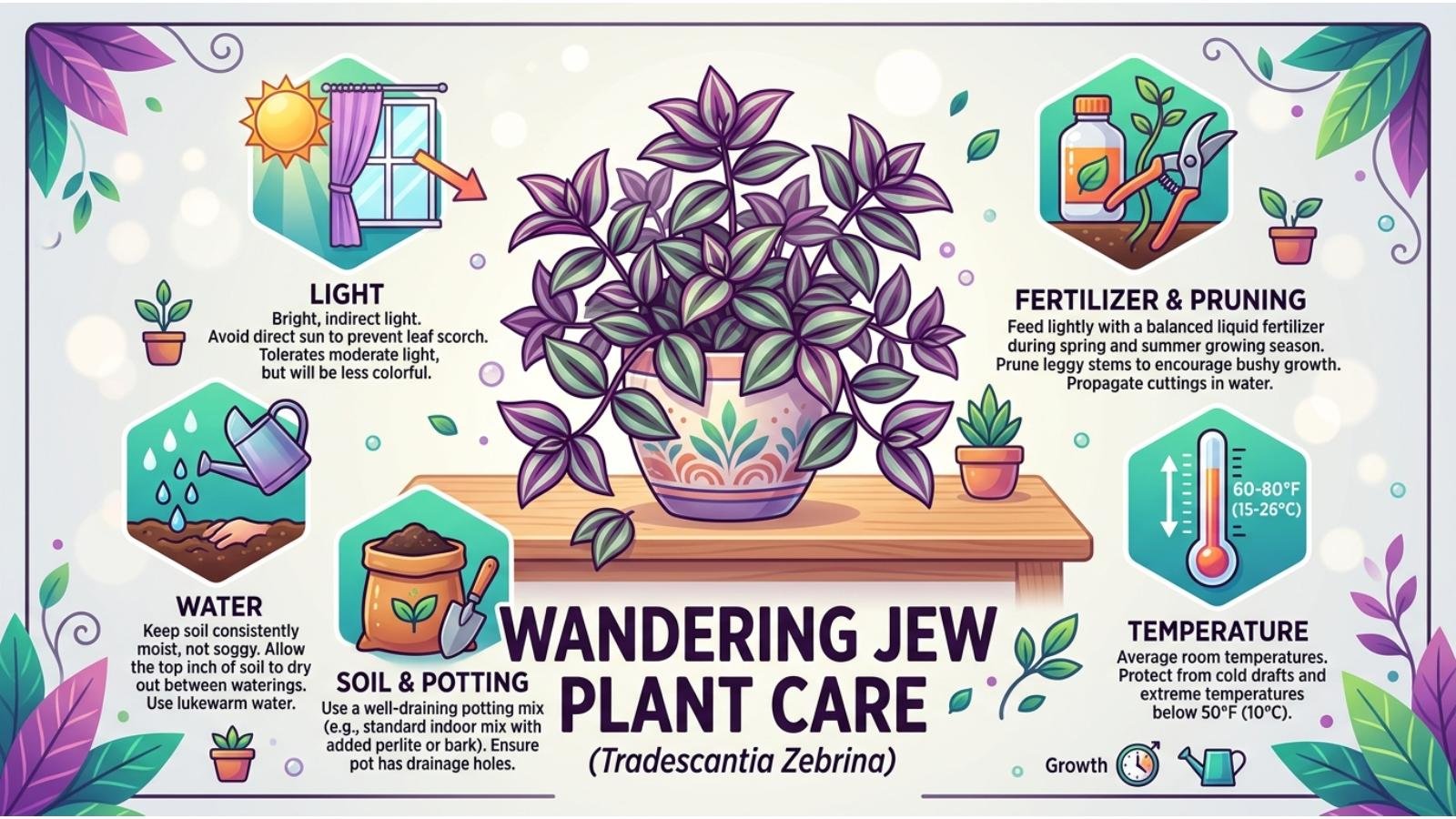
Wandering jew plant care is relatively easy when you provide bright, filtered light, well-draining soil, moderate watering, warmth, and regular trimming. The name commonly refers to trailing Tradescantia plants, especially Tradescantia zebrina, also called inch plant, silver inch plant, wandering dude, or zebra plant. Let the soil partially dry between waterings, avoid soggy roots, and pinch or prune long stems to keep the plant bushy.
Introduction
Wandering jew plants are popular houseplants because they combine fast growth with striking striped foliage and a naturally trailing habit. But their reputation for being “easy” can be misleading: a plant can survive poor conditions while becoming leggy, losing its color, or developing root and stem problems.
The good news is that wandering jew plant care becomes much simpler when you stop following a rigid watering schedule and instead respond to light, soil moisture, temperature, and the plant’s growth pattern. This guide explains exactly what your Tradescantia needs, how to propagate it, how to make it bushier, and how to diagnose common problems before they become serious.
Note on terminology: “Wandering Jew” is an older common name used for several Tradescantia species. This guide primarily focuses on Tradescantia zebrina, one of the plants commonly sold under that name. It is also known as wandering dude, inch plant, silver inch plant, and zebra plant.
What Is a Wandering Jew Plant?
Tradescantia zebrina is a fast-growing, trailing perennial in the spiderwort family, Commelinaceae. It is native from Mexico to Colombia and is widely grown as a houseplant, hanging-basket plant, patio plant, and ground cover in suitable climates.
Its most recognizable features include:
- Green or purple foliage with silver or white stripes
- Purple undersides of the leaves
- Soft, trailing stems
- Rapid growth
- Small three-petaled lavender-purple flowers
- Stems that can root at their nodes
The plant’s common name “inch plant” is particularly fitting because its leaf nodes are spaced roughly an inch apart. Those nodes are also important for propagation because new roots can develop from them.
Image Suggestion: Close-up botanical photograph labeling the leaves, purple undersides, trailing stems, and rooting nodes of Tradescantia zebrina.
Wandering Jew Plant Care Requirements at a Glance
| Care factor | What to provide | What to watch for |
|---|---|---|
| Light | Bright filtered or indirect light | Too little light causes legginess |
| Water | Moderate; allow some drying between waterings | Constantly wet soil can cause rot |
| Soil | Moisture-retentive but well-draining | Heavy, compacted soil is risky |
| Temperature | Warm indoor conditions | Cold can slow or damage growth |
| Humidity | Average household humidity is usually tolerated | Very dry conditions can encourage pests |
| Fertilizer | Balanced fertilizer during active growth | Excess fertilizer can cause problems |
| Pruning | Regular pinching and trimming | Neglected stems become sparse |
| Propagation | Stem cuttings | Use healthy, actively growing stems |
RHS recommends bright filtered light, moderate watering during active growth, monthly balanced liquid fertilizer, and reduced watering in winter. North Carolina Extension likewise describes T. zebrina as a low-maintenance plant that performs well in filtered sun, average room temperatures, and moist but well-drained soil.
How Much Light Does a Wandering Jew Plant Need?
Bright, filtered light is one of the best choices for a healthy wandering jew plant.
Good locations include:
- Near a bright east-facing window
- Near a bright west-facing window with some protection
- A few feet back from an intense south-facing window
- A bright room with filtered daylight
The interesting part is that Tradescantia zebrina can tolerate a fairly broad range of light. North Carolina Extension notes that stronger light can intensify foliage color, while insufficient light can cause the lower leaves to drop and reduce the plant’s attractive coloration.
Too little light
You may notice:
- Long gaps between leaves
- Small or dull foliage
- Green coloration replacing stronger purple or silver tones
- Lower leaves dropping
- Weak, stretched stems
This is called legginess, and it is one of the most common reasons a Tradescantia looks disappointing despite otherwise reasonable care.
Too much direct sunlight
Very strong direct sun can scorch foliage, particularly when a plant has not been acclimated. RHS specifically recommends bright filtered light indoors and notes that direct sunshine can scorch some Tradescantia foliage.
Practical tip: If the plant is growing rapidly but the spaces between leaves are becoming noticeably longer, increase light gradually rather than immediately moving it into harsh midday sun.
Image Suggestion: Side-by-side comparison of a compact, colorful Tradescantia in bright filtered light versus a stretched, pale plant growing in low light.

How Often Should You Water a Wandering Jew Plant?
There is no reliable “water every X days” rule for Tradescantia because indoor conditions vary.
Instead, check the soil.
When the upper portion of the potting mix has dried somewhat, water thoroughly until excess water drains from the pot. Then empty standing water from the saucer or decorative container.
North Carolina Extension recommends regular watering while allowing the soil to dry between waterings and reducing watering during winter. RHS similarly recommends moderate watering during active growth and less water during winter.
The biggest watering mistake
Many beginners assume that a fast-growing plant must always have wet soil.
That is unnecessary.
A Tradescantia can appreciate consistent moisture without wanting permanently saturated roots. Soggy conditions reduce the amount of air available around the roots and increase the risk of root and stem rot. North Carolina Extension specifically identifies root and stem rot as problems associated with soggy soil.
Signs of underwatering
Look for:
- Limp foliage
- Dry, shrinking soil
- Crispy leaf edges
- Drooping stems
- Slower growth
Signs of overwatering
Look for:
- Persistently wet soil
- Soft or collapsing stems
- Yellowing or declining foliage
- Unpleasant-smelling soil
- Root or stem deterioration
Don’t diagnose overwatering from one yellow leaf alone.
Choosing the Right Soil and Pot
The ideal potting mix balances two needs:
RHS recommends well-drained growing conditions and lists loam and sand among suitable soil textures.
For an indoor plant, a practical mix can be based around:
- Quality houseplant potting mix
- A drainage-enhancing component such as perlite
- A container with drainage holes
The exact recipe is less important than the result.
Choose the pot carefully
A container that is dramatically larger than the root ball can hold excess moisture for too long. A pot with drainage holes gives excess water somewhere to escape.
If your decorative pot has no drainage, use it as a cover pot rather than planting directly into it.
Image Suggestion: Simple diagram showing an ideal Tradescantia pot with drainage holes and an airy potting mix versus a waterlogged container.
Temperature and Humidity for Wandering Jew Plants
Tradescantia generally appreciates warm indoor conditions. North Carolina Extension gives 65–75°F (18–24°C) as a favorable temperature range for T. zebrina and notes that the plant tolerates average household humidity as well as higher humidity.
You don’t necessarily need a humidifier just because you own a Tradescantia.
Focus first on:
- Adequate light
- Correct watering
- Good drainage
- Warm temperatures
- Air circulation
Humidity becomes more useful to consider when the surrounding air is consistently very dry or when pest pressure appears.
Avoid placing the plant directly against cold drafts, heating vents, or air-conditioning outlets.
How to Fertilize a Wandering Jew Plant
A Tradescantia’s rapid growth means it can benefit from regular feeding during active growth.
RHS recommends a balanced liquid fertilizer about monthly during active growth and reducing watering during winter.
A simple approach is:
- Feed during the active growing season.
- Use a balanced houseplant fertilizer according to its label.
- Avoid applying concentrated fertilizer to dry, stressed roots.
- Reduce or pause feeding when growth naturally slows.
More fertilizer does not automatically mean more growth.
Excess fertilizer can contribute to salt buildup and stressed roots, while inadequate light can limit growth regardless of how much fertilizer you apply.
The better strategy is to fix light and watering first, then fertilize to support healthy growth.
How to Prune a Wandering Jew Plant for Bushier Growth
This is one of the most useful techniques in wandering jew plant care.
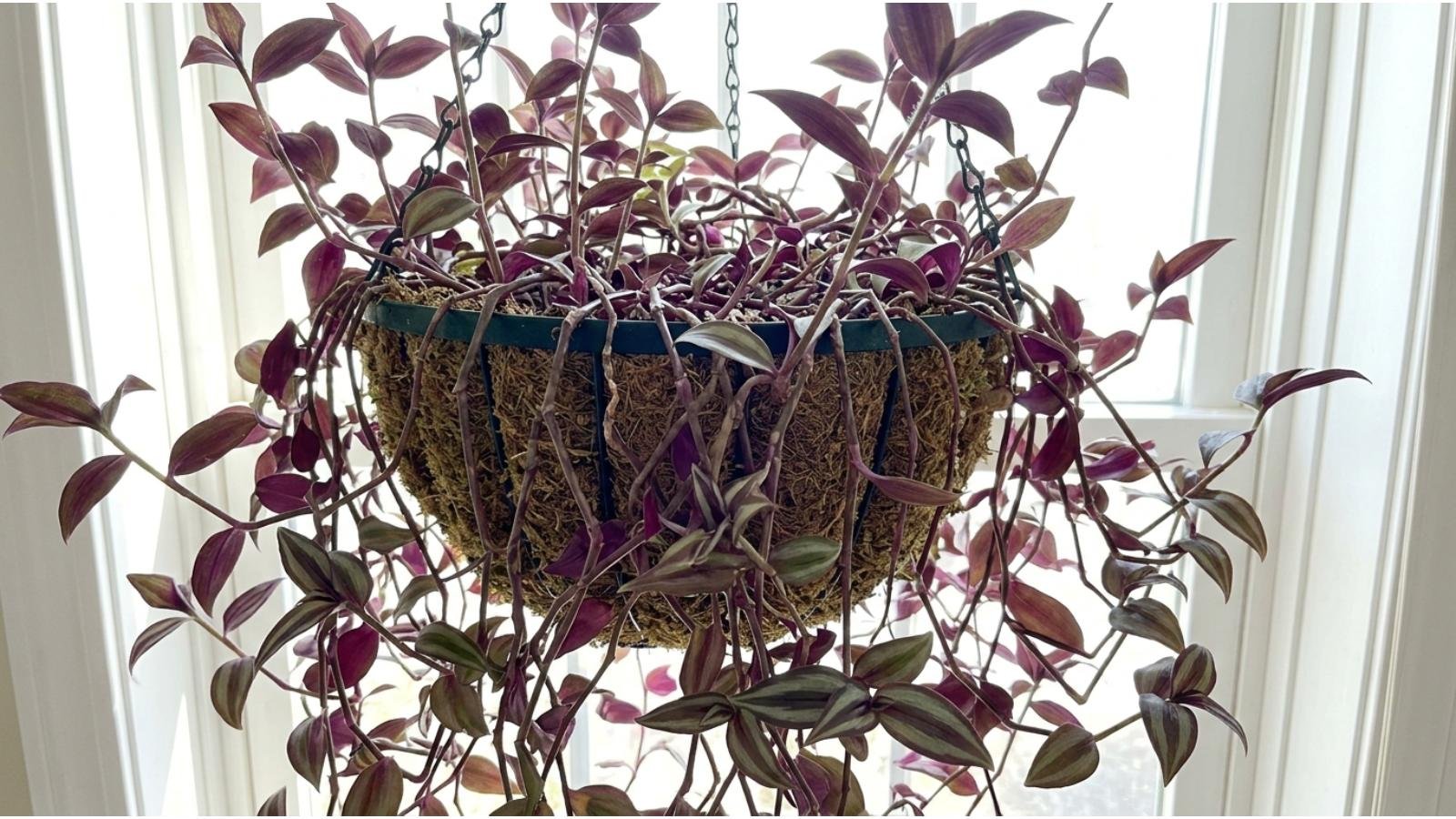
Tradescantia naturally wants to trail. If you never trim it, the plant can eventually develop long stems with leaves concentrated toward the ends.
Regular pruning encourages a fuller appearance.
Follow these steps:
- Identify long, bare, or overly stretched stems.
- Cut just above a healthy node.
- Remove damaged or declining foliage.
- Pinch growing tips on actively growing stems.
- Reuse healthy cuttings for propagation.
RHS specifically recommends trimming or pinching to promote thicker growth and stronger shoots, while North Carolina Extension notes that hard pruning can be done in spring and that trimming helps create denser foliage.
A useful expert trick: plant the cuttings back
Instead of throwing away every healthy cutting, root several and plant them into the same container.
Over time, this can create a much fuller-looking pot without buying another plant.
How to Propagate Wandering Jew Plants
Propagation is one of the easiest parts of growing Tradescantia.
Method 1: Water propagation
Take a healthy stem cutting containing several nodes.
- Cut below a node.
- Remove leaves from the lower portion.
- Place the lower nodes in water.
- Keep the cutting in bright, indirect light.
- Change the water when necessary.
- Once roots develop, transfer it into potting mix.
Method 2: Soil propagation
You can also place fresh stem cuttings directly into moist, well-draining potting mix.
Keep the mix lightly moist while roots establish, but avoid creating a permanently saturated environment.
RHS lists softwood or stem-tip cuttings as a propagation method and notes that cuttings can be rooted in water before being potted into growing medium. (RHS)
Why node position matters
Don’t simply cut a random piece of stem and expect the same result.
Nodes are the key areas where roots can develop. This is why a cutting with several healthy nodes generally gives you more useful propagation material.
Image Suggestion: Step-by-step propagation graphic showing a Tradescantia stem, node, water rooting, new roots, and transplanting.
Why Is My Wandering Jew Plant Leggy?
A leggy Tradescantia usually needs attention to light and pruning.
The plant stretches when it is trying to position its leaves where they can capture more light.
Try this recovery plan
1: Move it to brighter filtered light.
2: Trim the longest bare stems.
3: Root healthy cuttings.
4: Replant several rooted or fresh cuttings into the same con
5: Rotate the pot periodically so growth remains more balanced.
Simply cutting the plant without improving its lighting often produces the same problem again.
Why Are My Wandering Jew Leaves Losing Their Color?
Fading color can have several causes, but inadequate light is an important one.
North Carolina Extension reports that low lighting can cause leaves to lose some of their coloration, while stronger light can improve color intensity.
However, don’t assume that “more sunlight” always means “better color.”
Some cultivars and growing conditions respond differently, and intense direct sun can damage foliage.
Better approach
Move the plant gradually toward a brighter position and monitor it.
You want:
strong natural light + protection from harsh exposure
rather than simply putting the plant in the strongest sunlight available.
Common Wandering Jew Plant Problems and Solutions
| Problem | Likely cause | What to do |
|---|---|---|
| Long, bare stems | Insufficient light or lack of pruning | Increase light and trim |
| Pale foliage | Too little light | Move to a brighter location |
| Brown/crispy leaves | Dry conditions, intense sun, or inconsistent watering | Check soil and light |
| Yellowing with wet soil | Possible overwatering/root stress | Improve drainage and watering |
| Soft stems | Excess moisture or rot | Inspect roots and remove damaged tissue |
| Sparse growth | Low light or old trailing growth | Prune and provide brighter light |
| Tiny insects/webbing | Pest infestation | Inspect closely and treat promptly |
| Leaf spots | Wet foliage, crowding, or fungal issues | Improve airflow and watering technique |
North Carolina Extension identifies aphids, mealybugs, scale, whiteflies, and spider mites as potential pests and notes that soggy soil can contribute to root and stem rot. It also reports that overcrowding or wet foliage can contribute to leaf-spot and fungal problems.
How to Deal With Pests
Tradescantias can attract common houseplant pests, particularly when plants are stressed or conditions encourage infestations.
Watch the undersides of leaves and the areas around stems and nodes.
Potential pests include:
- Aphids
- Mealybugs
- Scale
- Whiteflies
- Spider mites
- Thrips
RHS and North Carolina Extension both identify several of these pests as potential problems for Tradescantia zebrina.
A practical inspection routine
When watering, spend 30 seconds looking closely at:
- New growth
- Leaf undersides
- Stem joints
- Areas where leaves meet stems
Early detection is much easier to manage than an established infestation.
If you see pests, isolate the affected plant from other houseplants and use an appropriate treatment according to the product label.
Seasonal Wandering Jew Plant Care
Spring
Spring is an excellent time to:
- Prune leggy growth
- Propagate cuttings
- Refresh the potting mix if necessary
- Resume regular feeding
- Increase watering as growth accelerates
Summer
Growth can become very vigorous.
Monitor:
- Soil moisture
- Light intensity
- Pest activity
- Long trailing stems
If moving the plant outdoors, acclimate it gradually rather than exposing indoor-grown foliage immediately to intense sunlight.
Fall
As growth begins to slow:
- Reduce fertilizer
- Watch soil moisture more carefully
- Move outdoor plants indoors before damaging cold arrives
- Inspect carefully for pests before bringing them inside
Winter
RHS recommends watering more sparingly during winter.
The most common winter mistake is maintaining a summer watering routine even though the plant is using less water.
Water according to the soil and growth conditions—not the calendar alone.
Indoor vs. Outdoor Wandering Jew Plant Care
Tradescantia zebrina can be grown outdoors in appropriate climates, but it should not automatically be treated as a year-round outdoor plant everywhere.
North Carolina Extension lists it for USDA hardiness zones 9a through 11b, while cooler climates generally require it to be treated as an indoor plant or seasonal outdoor plant.
| Indoors | Outdoors |
|---|---|
| Easy to control light | Natural light can intensify color |
| Easier temperature management | Weather can cause rapid drying |
| Useful as a hanging plant | Can work as ground cover in suitable climates |
| Lower exposure to outdoor pests | Greater pest exposure |
| Growth can slow in winter | Warm-season growth can be vigorous |
Before planting Tradescantia outdoors permanently, check its suitability for your local climate and whether it is considered invasive in your area.
An Important Pet and Skin-Safety Note
This is an area where plant names can create confusion.
Different Tradescantia species can have different safety profiles, and “wandering jew” is a common name rather than a precise botanical identification.
North Carolina Extension lists Tradescantia zebrina as having low-severity poisonous characteristics and notes that its watery sap can cause skin irritation.
The ASPCA separately lists variegated inch plant (Tradescantia fluminensis) as toxic to dogs, cats, and horses, with dermatitis among the clinical signs.
For households with pets, identify the exact species or cultivar rather than relying only on the common name. Keep Tradescantia away from animals that chew plants, and wear gloves if your skin is sensitive when handling the sap.
Beginner Mistakes That Make Tradescantia Look Worse
1. Watering on a fixed schedule
“Every Sunday” may sound convenient, but plant water requirements change with temperature, light, season, and pot size.
Check the soil instead.
2. Keeping it in a dark corner
Tradescantia may survive there, but survival isn’t the same as attractive growth.
Low light often leads to stretched stems and weaker coloration.
3. Never pruning
Trailing plants need occasional trimming if you want a dense, full appearance.
4. Using a pot without drainage
Even an easy-care plant can struggle when excess water has nowhere to escape.
5. Over-fertilizing
Fertilizer supports growth; it doesn’t replace adequate light.
6. Treating every yellow leaf as a watering problem
Look at the entire plant before changing your routine.
7. Ignoring the stems
Many Tradescantia problems become easier to diagnose when you inspect the stems and nodes, not just the leaves.
A Simple Weekly Care Routine
You don’t need to fuss over a wandering jew plant every day.
Once a week:
- Check the soil and determine whether it has dried enough to need water.
- Inspect leaves for pests, discoloration, or damage.
- Look at the stems for soft spots or excessive legginess.
- Rotate the pot if growth is becoming one-sided.
- Remove dead leaves and unhealthy growth.
- Check the growing tips and decide whether pruning is needed.
This takes only a few minutes and can catch problems before they become difficult to reverse.
Frequently Asked Questions
How much sunlight does a wandering jew plant need?
Bright, filtered or indirect light is generally ideal indoors. More light can help maintain strong foliage coloration, while inadequate light can cause stretched growth and fading. Avoid suddenly exposing an indoor plant to intense direct sunlight because foliage can scorch.
How often should I water a wandering jew plant?
Water when the potting mix has partially dried rather than following a strict calendar. Water thoroughly and allow excess water to drain. Reduce watering when growth slows in winter
Why is my wandering jew plant turning green?
Low light is one possible reason. Tradescantia zebrina generally develops stronger coloration under brighter conditions, while low light can reduce its distinctive coloring.
Why is my wandering jew plant getting leggy?
Low light is a common cause, especially when stems become long and leaves are widely spaced. Pruning and providing brighter filtered light can help restore a fuller appearance.
Can I propagate wandering jew plants in water?
Yes. Healthy stem cuttings can be rooted in water before being transferred to potting mix. Choose cuttings with healthy nodes because roots develop from these stem areas.
Should I mist my wandering jew plant?
Misting is not essential for healthy growth. Tradescantia zebrina can tolerate average household humidity, so proper light, watering, and drainage should take priority.
Can wandering jew plants grow outdoors?
Yes, in suitable warm climates. North Carolina Extension lists T. zebrina for USDA zones 9a–11b. In colder climates, it is commonly grown indoors or treated as a seasonal outdoor plant.
How do I make my wandering jew plant bushier?
Prune long stems and pinch growing tips. You can also root healthy cuttings and place them back into the same pot to increase fullness. RHS specifically recommends trimming or pinching to promote bushier growth.
Why are the stems of my wandering jew plant turning soft?
Soft stems can indicate excessive moisture or rot, particularly when the soil remains wet for long periods. Inspect the roots and stems, improve drainage, and adjust watering. Soggy conditions are associated with root and stem rot in T. zebrina.
Is wandering jew plant toxic to pets?
It depends on the exact Tradescantia species. For example, ASPCA lists Tradescantia fluminensis (variegated inch plant) as toxic to dogs, cats, and horses and reports dermatitis as a clinical sign. Because common names can refer to multiple plants, identify your exact species before assessing pet safety.
Final Takeaways
Successful wandering jew plant care is less about complicated routines and more about getting a few fundamentals right.
Give your Tradescantia bright filtered light, well-draining soil, moderate watering, warm conditions, and regular pruning. Let the soil partially dry rather than keeping it constantly saturated, and use the plant’s appearance as feedback. Leggy growth often points toward insufficient light, while persistently soggy soil is a warning sign for root and stem problems.
The biggest advantage of this plant is its ability to recover and propagate easily. If your plant becomes sparse, don’t assume you’ve failed—trim healthy stems, improve the growing conditions, root the cuttings, and replant them. With that simple cycle of grow → trim → propagate → replant, a single Tradescantia can become a remarkably full and attractive houseplant.
Related Topics Worth Exploring
- Snake plant care
- Spider plant care
- Pothos plant care
- Jade plant care
- Prayer plant care
- Monstera plant care
- Kalanchoe plant care
- Aloe plant care
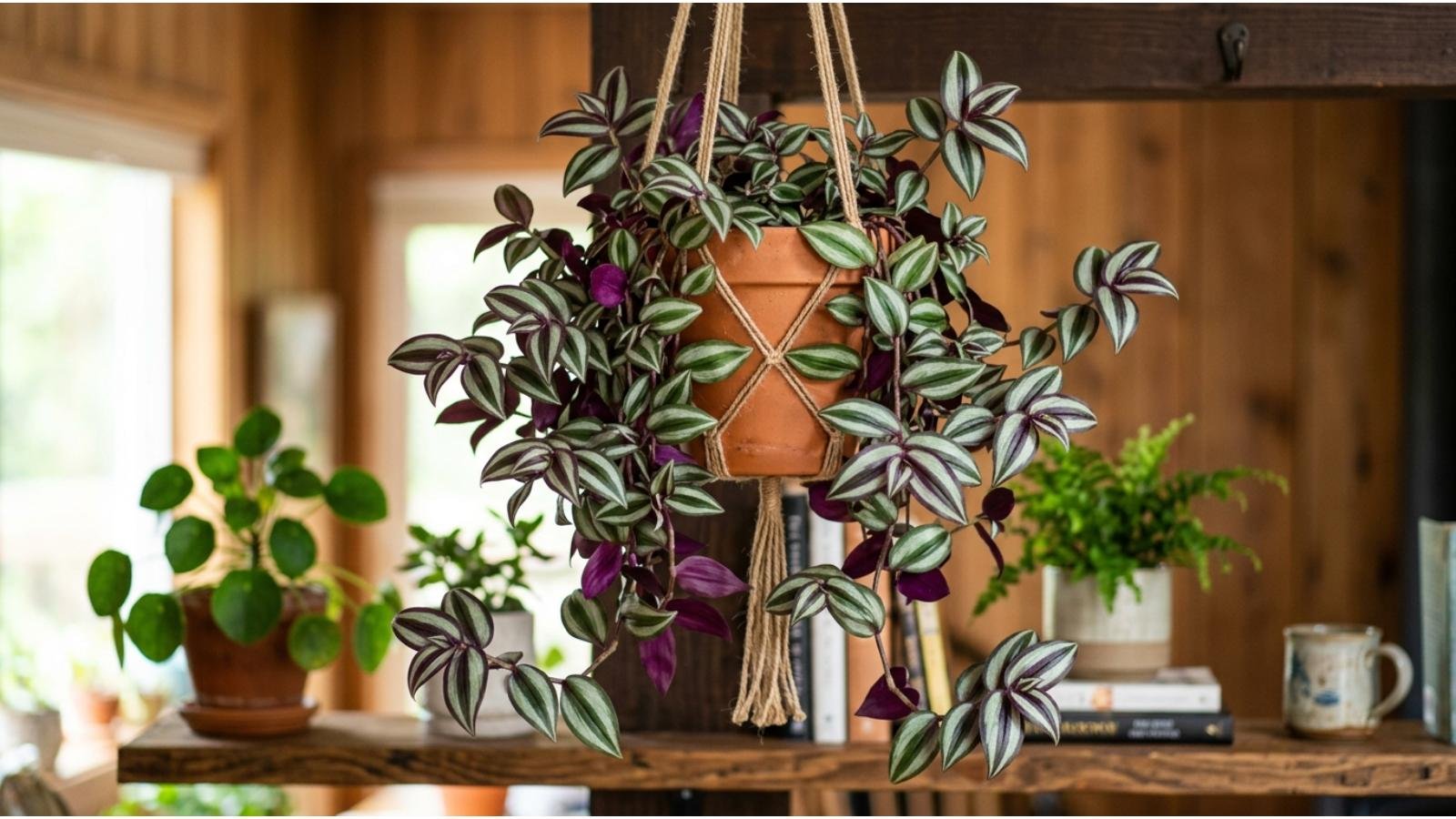
Image Suggestion: Hero image showing a lush, healthy striped Tradescantia zebrina spilling from a modern hanging planter in a bright home interior.
Sources & Expert References
The care recommendations above are based primarily on horticultural guidance from the Royal Horticultural Society and North Carolina State University Extension, with pet-safety information checked against the ASPCA Animal Poison Control database.