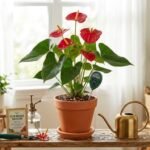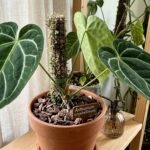
Quick Answer
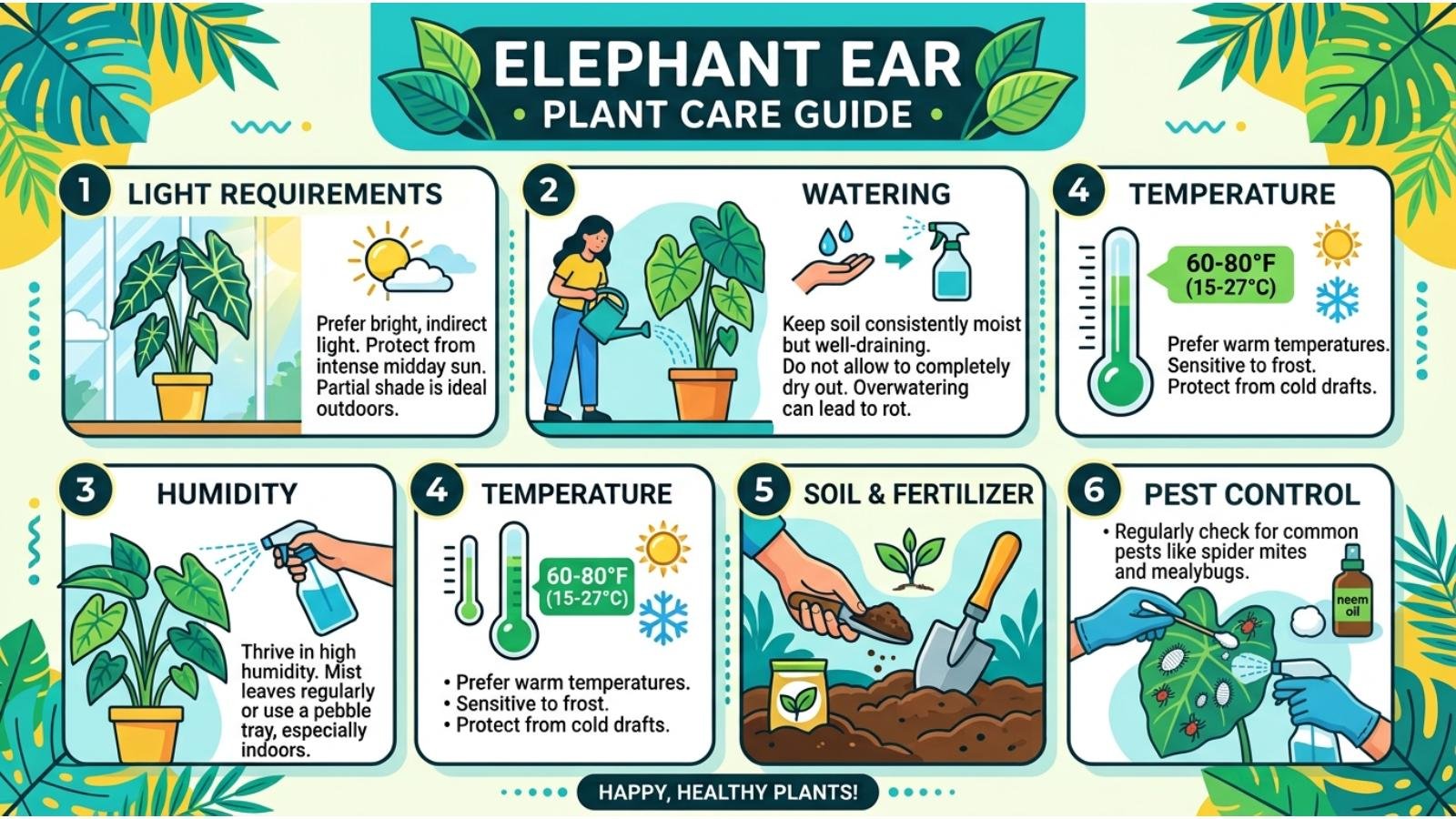
Elephant ear plant care is mainly about providing bright filtered light or suitable sun, consistently moist but well-draining soil, warmth, humidity, and regular feeding during active growth. Colocasia, Alocasia, and Xanthosoma are commonly called elephant ears, but their exact needs vary by species and cultivar. Protect them from cold, avoid waterlogged soil, and reduce watering during dormancy.
Introduction
Elephant ear plants are popular because their enormous, tropical-looking leaves can transform an ordinary garden, patio, or indoor space into something that feels lush and exotic. However, those dramatic leaves also reveal problems quickly. Brown edges, yellow leaves, drooping foliage, slow growth, and root problems are often signs that light, moisture, temperature, or drainage is out of balance.
The key to successful elephant ear plant care is not simply giving the plant lots of water. These plants enjoy moisture, but their roots still need oxygen and good drainage. Understanding the difference between keeping soil consistently moist and keeping it constantly saturated is one of the most important lessons for beginners.
Image Suggestion: A healthy elephant ear plant with large, vibrant leaves beside a stressed plant showing yellowing and drooping.
What Are Elephant Ear Plants
Elephant ear is a common name used for several tropical plants, particularly members of the genera Colocasia, Alocasia, and Xanthosoma. They belong to the arum family, Araceae, and are generally grown for their large, architectural foliage rather than their flowers.
The plants can look remarkably similar, but they are not interchangeable in every situation.
Colocasia varieties often have broad leaves and are particularly associated with warm, moist growing conditions. Alocasia varieties commonly have more upright foliage and are frequently grown as striking container or houseplants. Xanthosoma is another tropical group that is sometimes sold under the elephant ear name.
This distinction matters because a care routine that works beautifully for one cultivar may be excessive or insufficient for another.
Elephant Ear Plant Care Requirements At A Glance
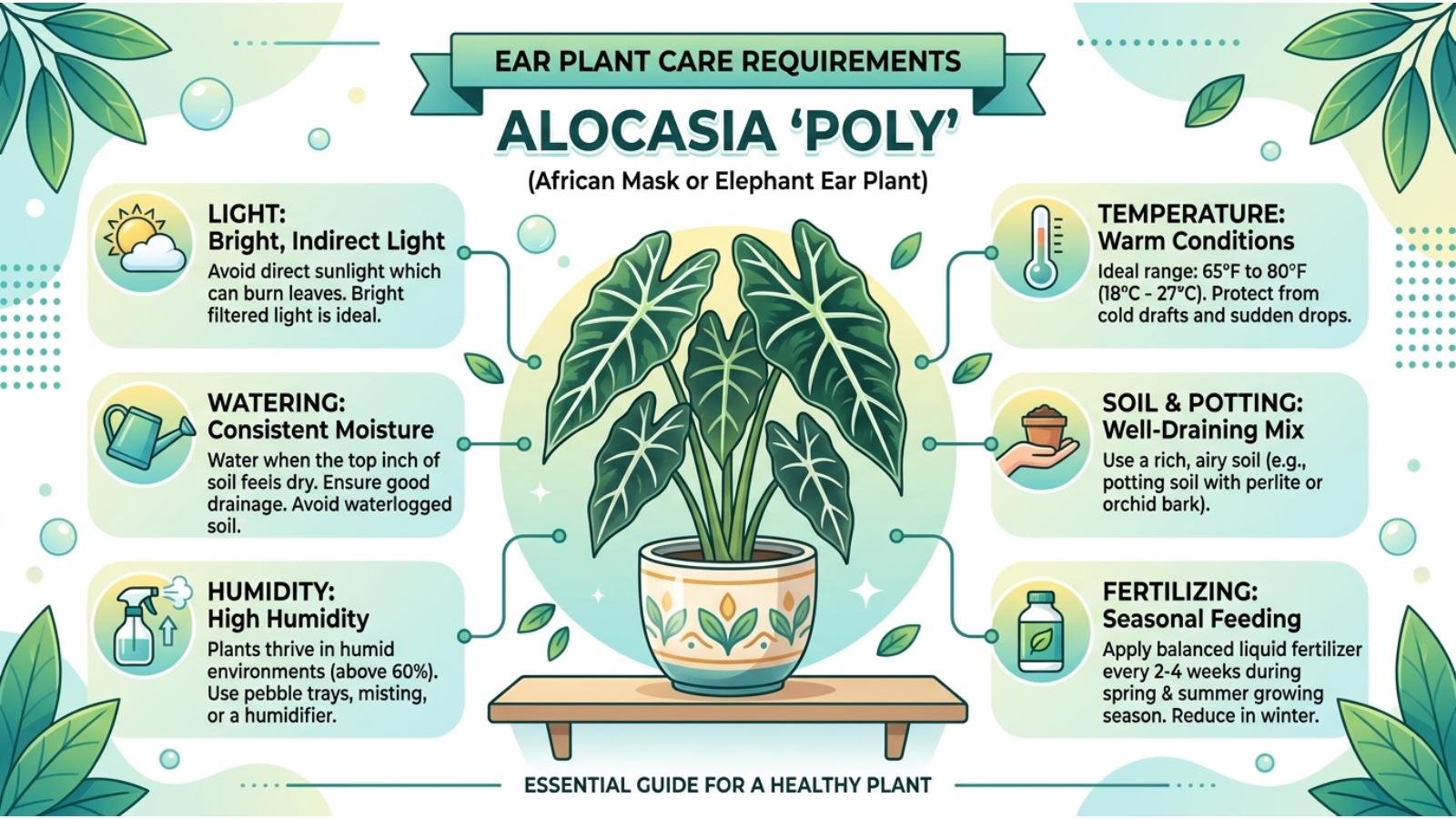
| Care factor | General recommendation |
|---|---|
| Light | Bright filtered light to partial sun, depending on variety |
| Soil | Rich, moisture-retentive but well-draining soil |
| Water | Keep soil consistently moist during active growth |
| Humidity | Moderate to high humidity is beneficial |
| Temperature | Warm conditions are strongly preferred |
| Fertilizer | Regular feeding during active growth |
| Repotting | When roots become crowded or growth slows |
| Pruning | Remove damaged or yellowing leaves at the base |
| Winter care | Protect from frost and cold temperatures |
| Propagation | Division of rhizomes, tubers, or offsets depending on type |
These are general guidelines rather than rigid rules because elephant ears encompass several genera and many cultivars.
How Much Light Do Elephant Ear Plants Need
Light is one of the first things to evaluate when an elephant ear begins looking unhealthy.
Many elephant ears perform well in filtered sun or partial shade, while some cultivars can tolerate considerably more sunlight once properly acclimated. UGA Extension describes elephant ears as plants that generally appreciate filtered sun or shade, while container-growing guidance lists both Alocasia and Colocasia across sun-to-part-shade situations.
The important point is to avoid assuming that every elephant ear should be placed in deep shade.
Too little light can result in:
- Slow growth.
- Smaller leaves.
- Weak or stretched stems.
- Less vigorous overall development.
Too much intense sunlight, particularly when a plant has not been acclimated, can cause:
- Scorched patches.
- Crispy leaf margins.
- Faded foliage.
- Rapid moisture loss.
If you move an indoor elephant ear outside, gradually increase its exposure rather than placing it immediately into intense afternoon sunlight. Extension guidance for houseplants similarly recommends gradually increasing outdoor light to reduce sun and environmental shock.
Practical tip: Watch the leaves rather than following a fixed light schedule. If the foliage is repeatedly scorching, move the plant toward filtered light. If growth is weak and the stems are reaching toward the brightest area, increase light gradually.
How To Water Elephant Ear Plants
Watering is probably the most misunderstood part of elephant ear plant care.
During active growth, elephant ears generally appreciate consistently moist soil. That does not mean the pot should remain permanently flooded.
A good routine is to check the growing medium regularly and water thoroughly when the plant needs it. Allow excess water to escape through the drainage holes rather than letting the container sit in a saucer of stagnant water.
Elephant ears naturally thrive in warm, moist environments, but poor drainage can still create root problems.
Signs Your Elephant Ear Needs More Water
Look for:
- Drooping leaves.
- Dry potting mix.
- Crispy leaf edges.
- Rapid wilting during hot weather.
- Slower-than-normal growth.
Signs You May Be Overwatering
Watch for:
- Persistently soggy soil.
- Yellowing leaves.
- Soft or declining roots.
- A sour smell from the potting mix.
- Repeated decline despite frequent watering.
University of Minnesota Extension emphasizes watering plants properly and avoiding conditions in which roots remain excessively wet because environmental stress can make plants more vulnerable to problems.
Image Suggestion: A simple visual showing properly moist soil versus waterlogged soil around an elephant ear root system.
The Best Soil For Elephant Ear Plants
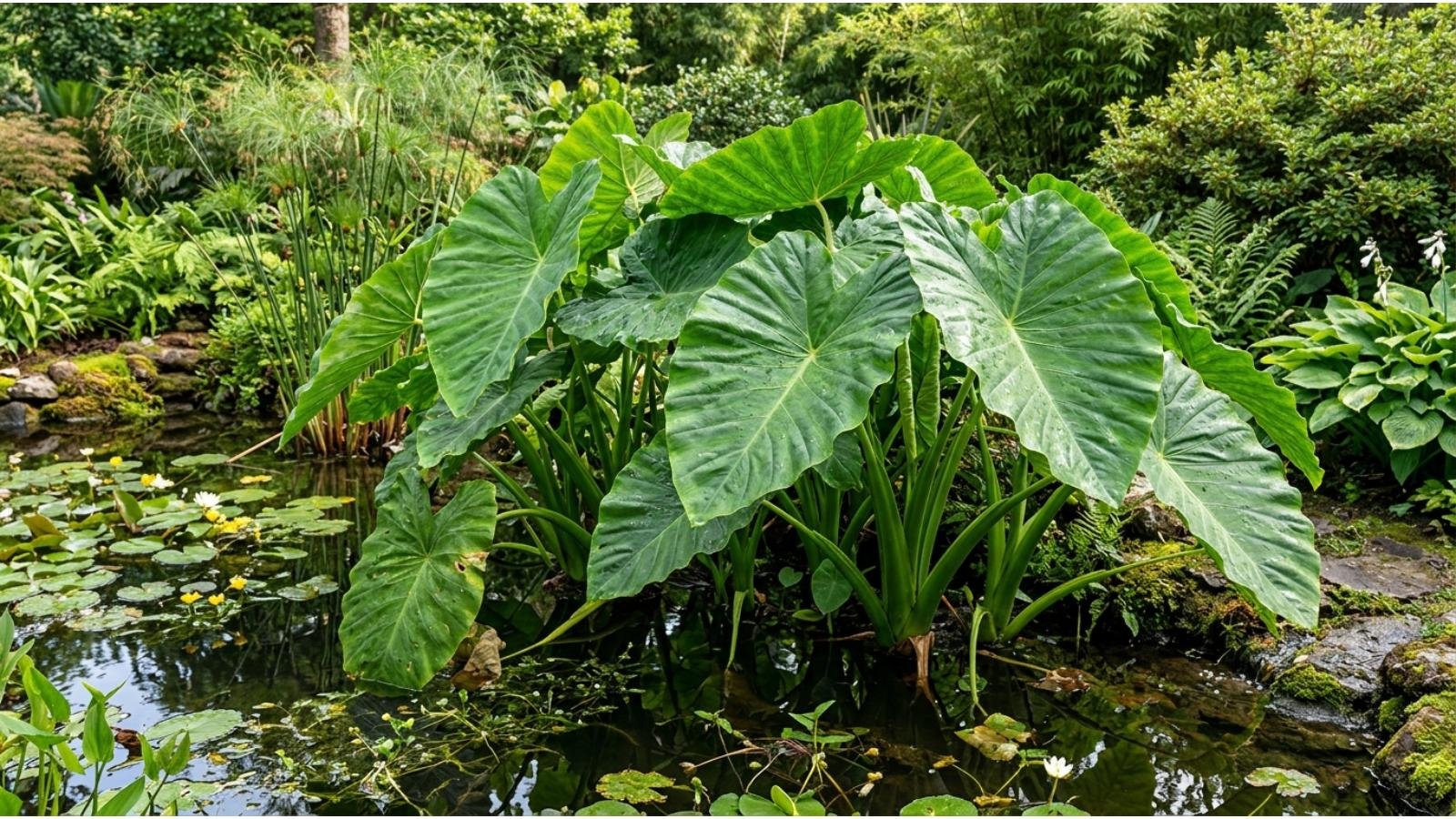
Elephant ears grow best when their soil can hold moisture without becoming stagnant.
A useful growing medium should provide:
- Organic matter.
- Moisture retention.
- Good drainage.
- Enough air around the roots.
- A stable structure that does not compact easily.
For containers, a quality potting mix designed for tropical foliage plants is usually more practical than heavy garden soil.
A common beginner mistake is creating extremely dense soil because elephant ears like moisture. Dense soil can remain saturated for too long, particularly in containers without excellent drainage.
The goal is moist and aerated, not muddy.
How To Fertilize Elephant Ear Plants
Large leaves require substantial energy, particularly when the plant is producing new foliage rapidly.
During active growth, elephant ears can benefit from regular feeding with a balanced fertilizer according to the product label. Container plants may require more attention because repeated watering can gradually move nutrients through the growing medium.
Avoid the temptation to compensate for weak growth by dramatically increasing fertilizer.
If a plant has insufficient light, damaged roots, cold stress, or poor drainage, extra fertilizer will not solve the underlying problem.
A better approach is:
- Check light first.
- Examine the roots and soil.
- Correct watering problems.
- Then establish a sensible feeding routine.
Extension guidance for actively growing houseplants similarly recommends beginning fertilizer gently and adjusting according to growth and light conditions rather than automatically applying large amounts.
Humidity And Temperature For Elephant Ears
Elephant ears are tropical plants, so warmth generally encourages stronger growth.
Cold conditions can cause the plant to slow down, lose foliage, or enter dormancy. Frost and hard freezes are particularly dangerous.
Penn State Extension notes that elephant ears are tropical plants that should be brought indoors before frost when overwintering, and that they prefer warmer storage conditions than some other tropical plants.
Indoor plants may also struggle when placed directly beside:
- Heating vents.
- Air-conditioning outlets.
- Cold drafts.
- Frequently opened exterior doors.
Humidity can be especially helpful when indoor air is very dry, although increasing humidity should not replace good ventilation and appropriate watering.
How To Grow Elephant Ears In Containers
Elephant ears can make spectacular container plants, but container size matters.
A container that is too small can dry rapidly and become unstable as the plant grows larger. A container that is excessively large can hold more wet soil than the root system can use efficiently.
Choose a container with:
- Adequate drainage holes.
- Enough weight to support mature foliage.
- Room for root development.
- A size appropriate for the particular cultivar.
UGA Extension specifically includes elephant ears among tropical plants suitable for container design and recommends matching plants with similar light and water requirements when combining several species.
If you combine elephant ears with other plants, avoid pairing them with drought-loving plants that require the soil to dry substantially between watering.
Image Suggestion: Elephant ear growing successfully in a large container on a shaded patio.
How To Grow Elephant Ears Outdoors
Choose a location that matches your specific cultivar’s light requirements and provides fertile, moisture-retentive soil with adequate drainage.
Before planting, consider the mature size. Some elephant ears become enormous, while others remain relatively compact. UGA Extension notes that elephant ears can range dramatically in size, with some large forms reaching several feet in height and producing exceptionally large leaves.
Give large varieties enough space so their leaves do not constantly collide with walls, walkways, or neighboring plants.
A sheltered location can also reduce mechanical damage from strong winds. Huge elephant ear leaves can catch wind easily and may tear even when the plant itself remains healthy.
How To Prune Elephant Ear Plants
Elephant ears generally do not require complicated pruning.
Remove leaves that are:
- Completely yellow.
- Brown and badly damaged.
- Torn beyond recovery.
- Dead or collapsing.
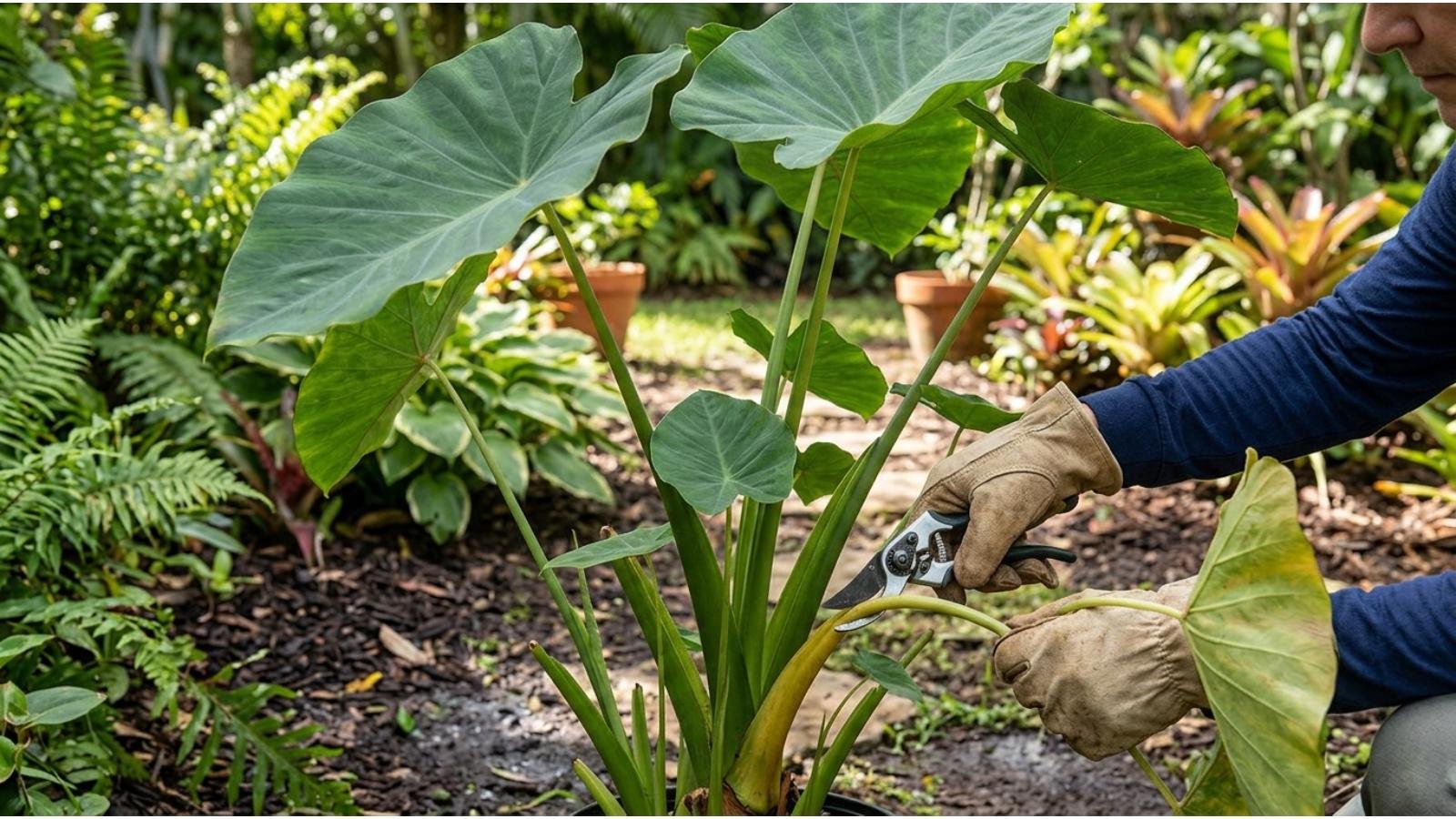
Use clean, sharp pruning tools and cut damaged foliage near its base without unnecessarily damaging emerging leaves.
Do not remove healthy green leaves simply because an older leaf is beginning to age. Those leaves are still contributing energy to the plant.
One damaged leaf is not necessarily a sign that the entire plant is failing.
Common Elephant Ear Plant Problems
Yellow Leaves
Yellow leaves can have several causes, including excessive moisture, aging foliage, inadequate light, temperature stress, or root problems.
Do not automatically assume yellowing means the plant needs more fertilizer.
First inspect the soil.
If the soil remains wet for long periods, drainage and watering frequency deserve attention.
Brown Leaf Edges
Brown edges commonly appear when the plant experiences environmental stress.
Potential contributors include:
- Dry soil.
- Very dry indoor air.
- Excessive direct sun.
- Salt buildup.
- Wind exposure.
- Inconsistent watering.
Look for patterns. If only leaves exposed to strong afternoon sunlight are damaged, light may be the primary issue. If the entire plant has crispy margins and the soil dries extremely quickly, moisture stress is more likely.
Drooping Leaves
A drooping elephant ear does not automatically mean it needs water.
Check the soil before reaching for the watering can.
If the soil is dry, watering may correct the problem. If the soil is already saturated, adding more water could make the underlying issue worse.
This simple check prevents one of the most common plant-care mistakes: treating every symptom with more water.
Small New Leaves
Small leaves may indicate that the plant is not receiving enough light, is nutritionally stressed, has restricted roots, or is experiencing unsuitable temperatures.
Look at the overall growth pattern rather than judging a single leaf.
Holes In Leaves
Large leaves are attractive targets for insects and other garden pests.
Inspect both the upper and lower surfaces of leaves regularly. Early detection is easier than trying to control a large infestation later.
University of Minnesota Extension recommends regularly examining indoor plants and isolating affected plants when pests are detected.
Image Suggestion: Close-up identification guide showing yellow leaves, brown edges, pest damage, and healthy elephant ear foliage.
Elephant Ear Pests And Diseases
Healthy plants are generally better equipped to tolerate environmental stresses, so good basic care is part of pest prevention.
Inspect your plant weekly, particularly:
- Under leaves.
- Around leaf stems.
- Near new growth.
- Around the soil surface.
Common indoor pest problems can include spider mites, aphids, scale, and other sap-feeding insects.
If you find pests, isolate the affected container from other houseplants and identify the pest before selecting a treatment. Extension guidance specifically recommends isolation and regular inspection as part of indoor pest management.
Avoid treating every unexplained brown spot as an insect problem. Watering, light, temperature, and mechanical damage can produce similar symptoms.
How To Overwinter Elephant Ear Plants
Winter care depends heavily on your climate and the specific elephant ear.
In warm climates, some elephant ears can remain outdoors as perennials. In colder climates, they may need to be treated as tender plants and protected from freezing temperatures. UGA Extension notes that many elephant ears are grown as annuals in cooler regions, while some can overwinter in warmer areas.
Penn State Extension recommends bringing tropical elephant ears indoors before frost and explains that container-grown plants can be cut back and stored under suitable conditions.
For plants grown from underground structures that you intend to store, a general process is:
- Allow the plant to enter dormancy after temperatures cool.
- Cut back declining foliage.
- Carefully lift the underground structure where appropriate.
- Allow excess surface moisture to dry.
- Store it according to the requirements of the particular species or cultivar.
- Check periodically for rot or excessive drying.
Do not use one winter-storage method for every elephant ear. Species and climate make a significant difference.
Image Suggestion: Step-by-step illustration showing an elephant ear going dormant, being lifted, dried, and stored for winter.
Elephant Ear Plant Care In Winter Indoors
If you bring an elephant ear indoors as a living houseplant, remember that indoor winter conditions are very different from summer conditions.
Growth may slow because of:
- Reduced daylight.
- Cooler temperatures.
- Lower humidity.
- Less water consumption.
Do not continue watering on a heavy summer schedule simply because you are following the same calendar.
Instead, check the plant and soil regularly and adjust watering according to actual conditions.
Penn State Extension notes that overwintered tropical plants should be inspected for insects and that excessive winter watering can contribute to root rot.
How To Propagate Elephant Ear Plants
Many elephant ears can be propagated through division of their underground structures or offsets, depending on the type.
The basic principle is to separate healthy sections that have viable growth points and establish them in suitable growing conditions.
Propagation is most practical when the plant is actively growing and has enough energy to recover.
Avoid dividing a weak, severely stressed, or diseased plant simply because you want more plants. First restore its health.
When To Repot An Elephant Ear
Repotting may be useful when:
- Roots are densely crowded.
- Water passes through the pot unusually quickly.
- Growth has slowed despite good care.
- The plant repeatedly becomes unstable.
- The pot no longer provides enough room for the root system.
Do not automatically move every elephant ear into a huge container.
A moderately larger pot is usually easier to manage because it reduces the amount of unused wet soil surrounding the roots.
Elephant Ear Care For Beginners
If you are growing an elephant ear for the first time, focus on five things.
Give it appropriate light. Start with bright filtered light or the level recommended for your cultivar.
Keep the soil evenly moist during active growth. Check the soil rather than watering according to a rigid schedule.
Use drainage. Moisture-loving does not mean permanently waterlogged.
Keep it warm. Protect the plant from frost and prolonged cold.
Watch the plant. Leaf color, growth rate, soil moisture, and new foliage tell you more than a fixed care calendar.
Once these fundamentals are right, fertilizer, humidity, pruning, and propagation become much easier to manage.
Common Elephant Ear Care Mistakes
Watering On A Fixed Schedule
Watering every Monday and Thursday may sound convenient, but plants do not consume water at exactly the same rate every week.
Hot weather, sunlight, container size, humidity, and plant size all influence water demand.
Keeping The Soil Constantly Wet
Elephant ears appreciate moisture, but permanently saturated soil can create root problems.
Moving Plants Into Strong Sun Too Quickly
A plant grown indoors or in shade can suffer leaf damage when suddenly exposed to intense outdoor sunlight.
Gradual acclimation is safer.
Ignoring Winter Temperatures
A tropical plant may look perfectly healthy in late summer and decline rapidly when temperatures drop.
Plan the move indoors or winter protection before severe cold arrives.
Choosing A Pot Without Drainage
A decorative container without adequate drainage can become a hidden source of root problems.
Assuming Every Elephant Ear Has Identical Needs
Colocasia and Alocasia may share the elephant ear name, but their growth habits and preferred conditions can differ.
Are Elephant Ear Plants Safe Around Pets
This is an important consideration for households with pets.
The ASPCA lists Colocasia esculenta and Alocasia species as toxic to dogs and cats, with insoluble calcium oxalates capable of causing oral irritation, pain or swelling, drooling, vomiting, and difficulty swallowing.
For that reason, keep elephant ears somewhere pets cannot chew the leaves, stems, or other plant parts.
If a pet has eaten part of the plant and develops concerning symptoms, contact a veterinarian or an appropriate animal poison-control service promptly. Difficulty swallowing or breathing warrants urgent veterinary attention.
Elephant Ear Plant Care By Season
Spring
Spring is the time to encourage new growth.
Increase watering gradually as growth resumes, provide appropriate light, and begin feeding once the plant is actively growing.
If moving an indoor plant outdoors, acclimate it gradually.
Summer
Summer is usually the strongest growth period.
Monitor soil moisture more frequently during hot weather, particularly for container-grown plants. Large leaves can increase water demand, while wind and direct sun can accelerate moisture loss.
Fall
Begin watching nighttime temperatures.
In climates where elephant ears cannot survive winter outdoors, prepare for overwintering before damaging frost or hard freezes arrive.
Winter
Reduce watering for dormant plants and avoid keeping storage media excessively wet.
For living indoor plants, provide adequate light and warmth while adjusting watering to slower growth.
Frequently Asked Questions
How often should I water an elephant ear plant.
Water when the soil begins to dry according to the plant’s growing conditions, but keep the root zone consistently moist during active growth. Avoid allowing the container to remain in standing water.
Do elephant ears need full sun.
Not always. Many varieties perform well in filtered sun or partial shade, while some tolerate more sun. The correct exposure depends on the species and cultivar.
Why are my elephant ear leaves turning yellow.
Yellow leaves can result from excessive moisture, aging foliage, insufficient light, temperature stress, or root problems. Check the soil and growing conditions before changing fertilizer or watering.
Why are my elephant ear leaves turning brown.
Brown edges may result from moisture stress, excessive sun, dry air, wind, or other environmental problems. Examine the entire growing environment instead of treating the leaf symptom alone.
Can elephant ears grow indoors.
Yes. Elephant ears can be grown indoors when provided with suitable light, warmth, humidity, space, and watering. Penn State Extension notes that elephant ears can be brought indoors as tropical plants but require substantial space and appropriate indoor conditions.
Can elephant ears survive winter.
Some can survive outdoors in warm climates, while others require protection or indoor overwintering. Their cold tolerance varies considerably by type and local conditions.
Do elephant ears come back every year.
They can return in suitable climates where the underground structures survive winter. In colder regions, gardeners often grow them seasonally or overwinter them indoors.
Should I cut off damaged elephant ear leaves.
Yes. Severely damaged or dead leaves can be removed near their base. Avoid removing healthy green foliage unnecessarily.
Why is my elephant ear not growing.
Check light, temperature, soil moisture, drainage, root crowding, and nutrition. Cold temperatures and insufficient light are especially important factors when growth slows.
Are elephant ears poisonous to cats and dogs.
Yes. ASPCA identifies Alocasia and Colocasia elephant ears as toxic to dogs and cats because they contain insoluble calcium oxalates.
Conclusion
Successful elephant ear plant care comes down to creating conditions that resemble the plant’s tropical growing environment while avoiding extremes. Give the plant suitable light, warm temperatures, nutrient-rich soil, consistent moisture, and reliable drainage.
The most useful habit is to stop treating plant care as a rigid calendar. Check the soil, observe new growth, inspect the leaves, and respond to changing weather and seasonal conditions. A healthy elephant ear should reward that attention with vigorous growth and impressive foliage.
For colder climates, winter planning is just as important as summer care. Protecting the plant before hard freezes and adjusting watering during dormancy can make the difference between replacing the plant every year and enjoying the same specimen season after season.
Internal linking opportunities: Related articles on Pothos Plant Care, Snake Plant Care, Monstera Plant Care, Prayer Plant Care, and Coleus Plant Care would naturally complement this guide for readers building a broader indoor and tropical plant-care collection.