Quick Answer
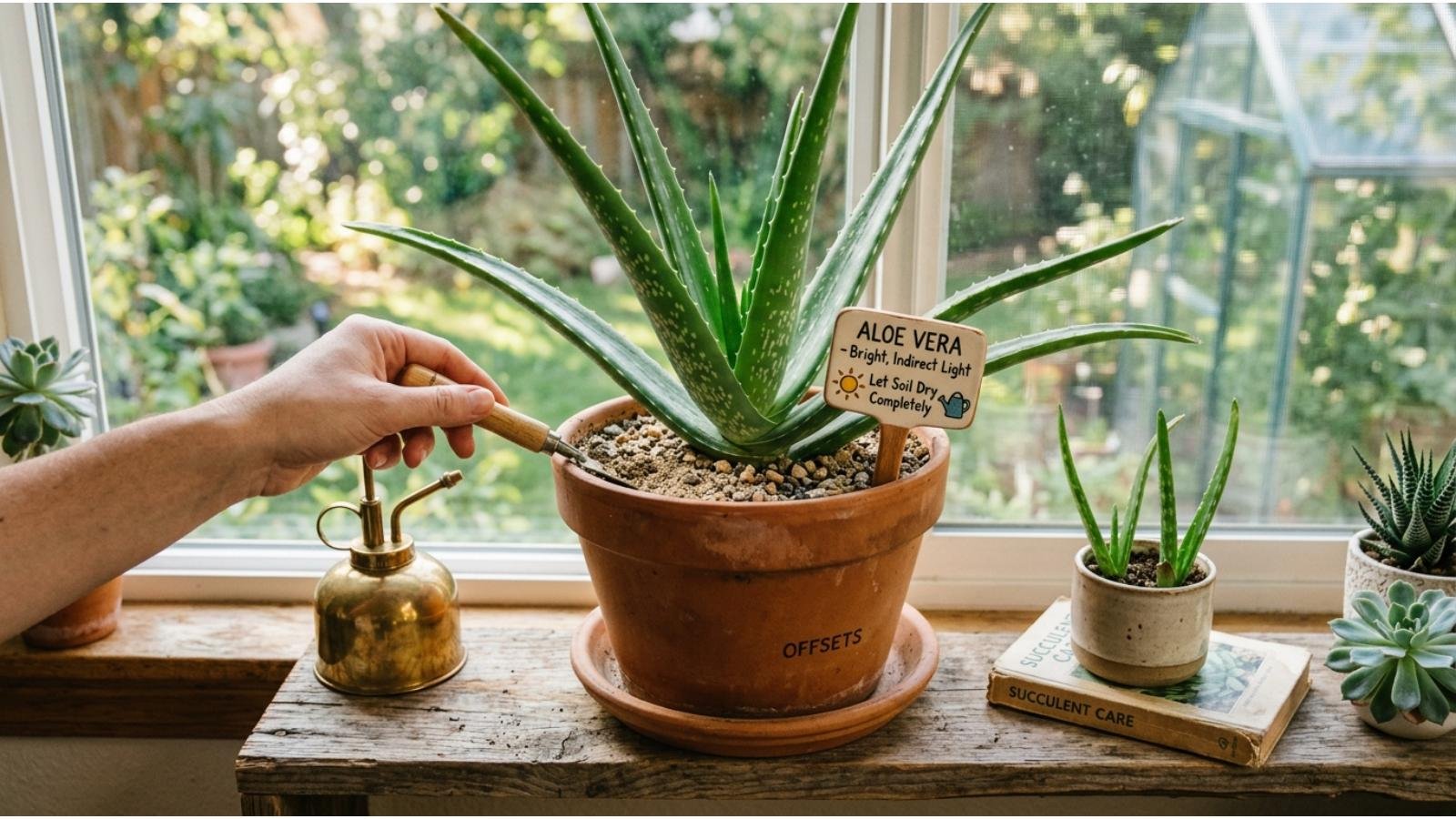
Aloe plant care is mostly about getting three things right: bright light, fast-draining soil, and careful watering. Let the soil dry thoroughly between waterings, use a pot with drainage holes, and avoid leaving the roots in standing water. Aloe vera prefers warm conditions, low humidity, and plenty of light. During winter or periods of slow growth, reduce watering and avoid unnecessary fertilizer.
Introduction
Aloe vera is one of the easiest succulents to grow, but its reputation for being nearly indestructible can lead beginners into one major mistake: loving the plant with too much water. Its thick, fleshy leaves store moisture, so the plant is designed to handle dry periods rather than constantly moist soil.
Good aloe plant care is less about doing more and more about knowing when to leave the plant alone. Give it enough light, allow excess water to escape quickly, and pay attention to changes in the leaves and soil. These simple habits can keep an aloe healthy for years while encouraging strong new growth and offsets.
What Aloe Vera Needs to Grow Well
Aloe vera is a succulent with fleshy leaves adapted to dry environments. In a home, its biggest challenge is usually not finding enough water but recreating the combination of strong light and rapid drainage that its roots prefer.
The basic care formula is simple.
- Bright light.
- Well-draining soil.
- A container with drainage holes.
- Thorough but infrequent watering.
- Warm temperatures.
- Low to moderate indoor humidity.
- Light feeding during active growth.
- Less water during winter or other slow-growth periods.
The RHS recommends cactus-style compost or a free-draining mix amended with horticultural grit and advises allowing the growing medium to dry between waterings.
Image Suggestion: A labeled aloe vera care diagram showing light, soil, drainage, watering, and temperature requirements.
How Much Light Does Aloe Vera Need
Light is one of the most important parts of successful aloe plant care.
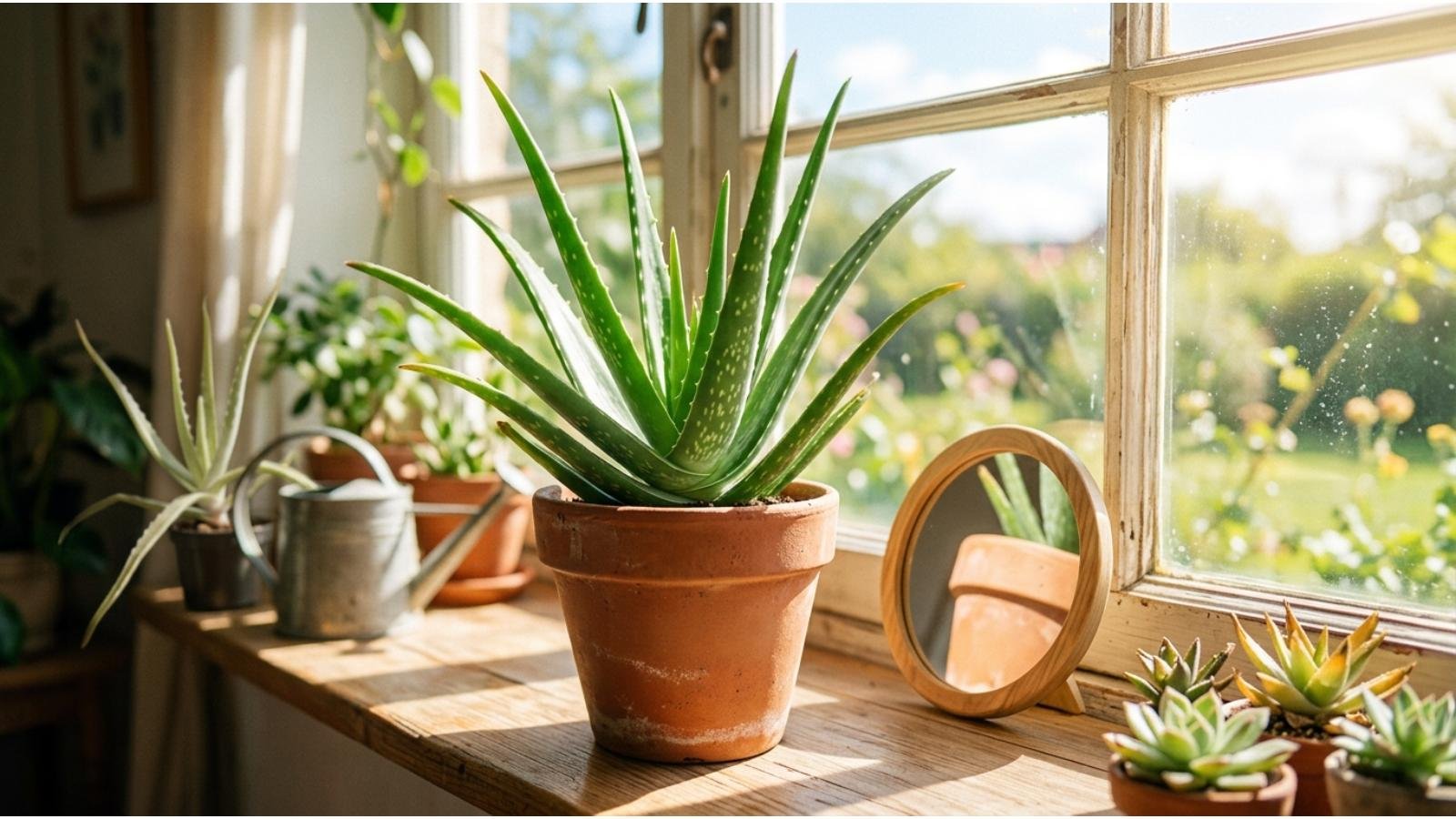
Aloe vera grows best in a bright position. An indoor plant can do well near a bright south- or west-facing window, although the intensity of sunlight through glass can vary considerably depending on the season, window orientation, and climate. The RHS notes that aloe can thrive in full light, while its houseplant guidance also recommends bright conditions.
A plant that receives too little light may become stretched, pale, or lose its compact shape.
A practical approach is to place your aloe where it receives strong natural light for much of the day and then observe its response.
If you move an aloe from a dim location directly into intense outdoor sunlight, introduce the stronger light gradually. Sudden changes can stress the leaves and may cause sun damage.
Signs Your Aloe Needs More Light
Watch for these clues.
- Leaves becoming unusually long or widely spaced.
- A rosette losing its compact shape.
- Pale or weak-looking new growth.
- The plant leaning strongly toward a window.
Light requirements can also change throughout the year. A location that seems bright in summer may provide substantially less usable light during shorter winter days.
How Often Should You Water Aloe Vera
There is no universal watering schedule that works for every aloe.
Instead, check the growing medium.
When the soil has dried thoroughly, water the plant deeply enough that the root ball is moistened and excess water drains from the bottom of the container. Then allow the soil to dry again before watering.
The RHS specifically recommends watering aloe moderately during active growth while allowing the compost to dry between waterings, and watering much more sparingly during winter dormancy.
A common beginner mistake is adding a small amount of water every few days. This can keep the center of the root ball continually damp without giving the roots the dry period they need.
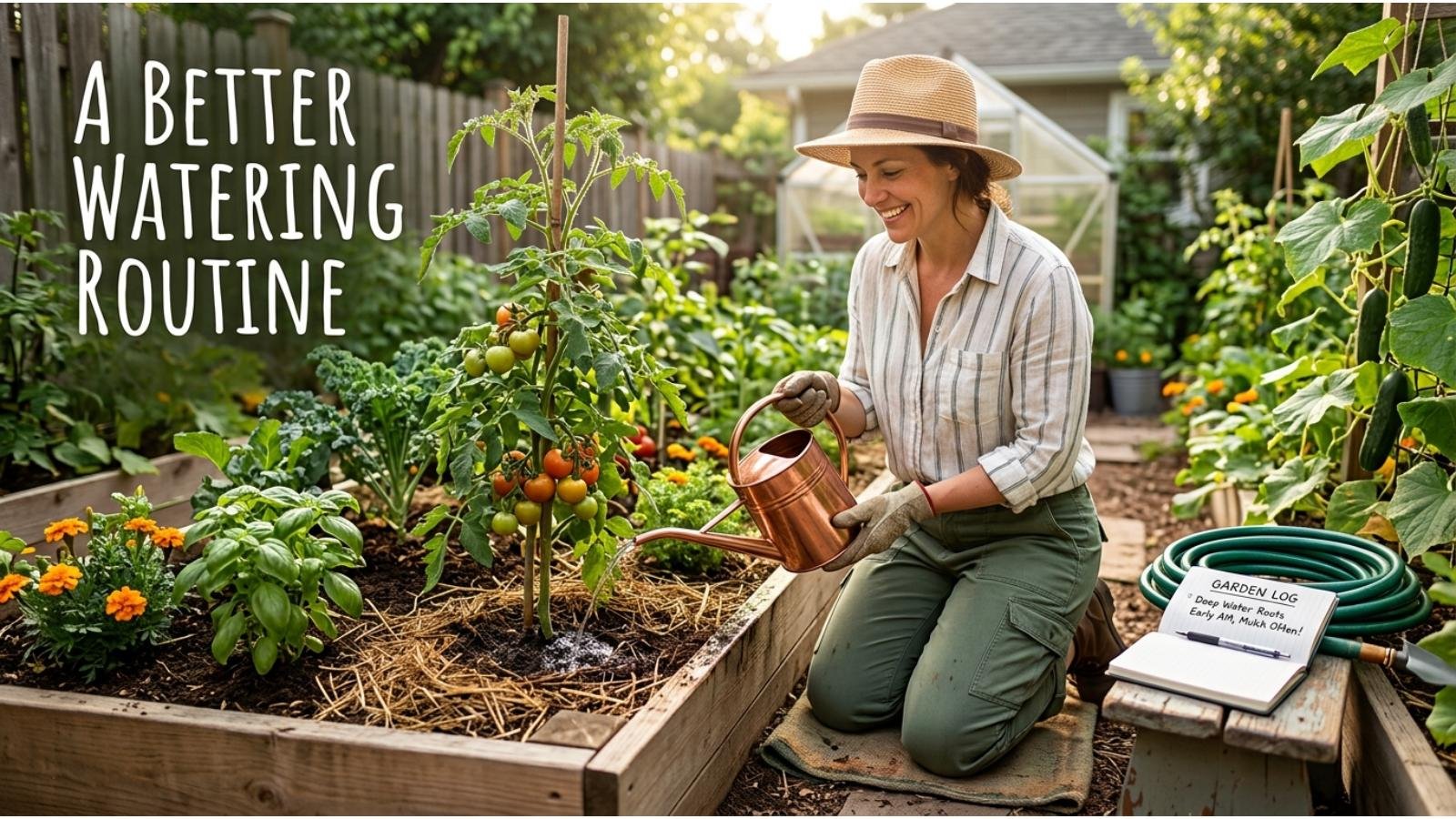
A Better Watering Routine
Use this simple process.
- Check the soil before watering.
- If it is still noticeably damp, wait.
- If it has dried thoroughly, water deeply.
- Let excess water drain completely.
- Empty any water collecting in an outer container or saucer.
- Check the soil again before the next watering.
The exact interval can vary because temperature, light, pot size, soil composition, and season all affect how quickly the soil dries.
Image Suggestion: Side-by-side illustration showing properly dry aloe soil versus waterlogged soil.
How to Tell If You Are Overwatering Aloe
Overwatering is one of the most common problems with aloe vera.
The important point is that overwatering does not simply mean giving a plant too much water once. The bigger problem is keeping the roots in wet conditions for too long.
Continuously wet compost can contribute to root problems and rot. The RHS specifically warns that aloe does poorly in continuously wet compost and identifies root rot as a concern in wet soil.
Possible warning signs include.
- Soft or mushy leaves.
- Yellowing leaves.
- Darkening near the base.
- A collapsing rosette.
- A persistently wet or unpleasant-smelling potting mix.
- Roots that appear dark and unhealthy when inspected.
If the plant is severely affected, simply stopping watering may not be enough. Remove it from the container, inspect the roots, and address the underlying drainage problem before repotting.
How to Tell If Aloe Vera Needs Water
Underwatering can also cause visible changes.
Aloe leaves may become thinner, less firm, curled, or wrinkled as stored moisture is depleted. The surrounding soil will usually be very dry as well.
However, slightly wrinkled leaves do not automatically mean the plant needs immediate watering. Always inspect the soil and consider recent watering history.
This distinction matters because repeatedly treating every leaf wrinkle with water can turn an underwatering problem into an overwatering problem.
Best Soil for Aloe Vera
Aloe needs a growing medium that drains quickly.
A standard moisture-retentive houseplant mix can remain wet around the roots for too long, particularly in a cool room or poorly ventilated container. A cactus or succulent mix is generally a better starting point.
The RHS recommends cactus compost or another free-draining compost with added grit or sharp sand to improve drainage.
A good aloe mix should.
- Drain quickly after watering.
- Allow air around the roots.
- Avoid staying saturated for extended periods.
- Support the plant without becoming compacted.
The container matters just as much as the soil. Even an excellent succulent mix can perform poorly if the pot has no drainage opening.
Choosing the Right Pot for Aloe
Choose a container with at least one effective drainage hole.
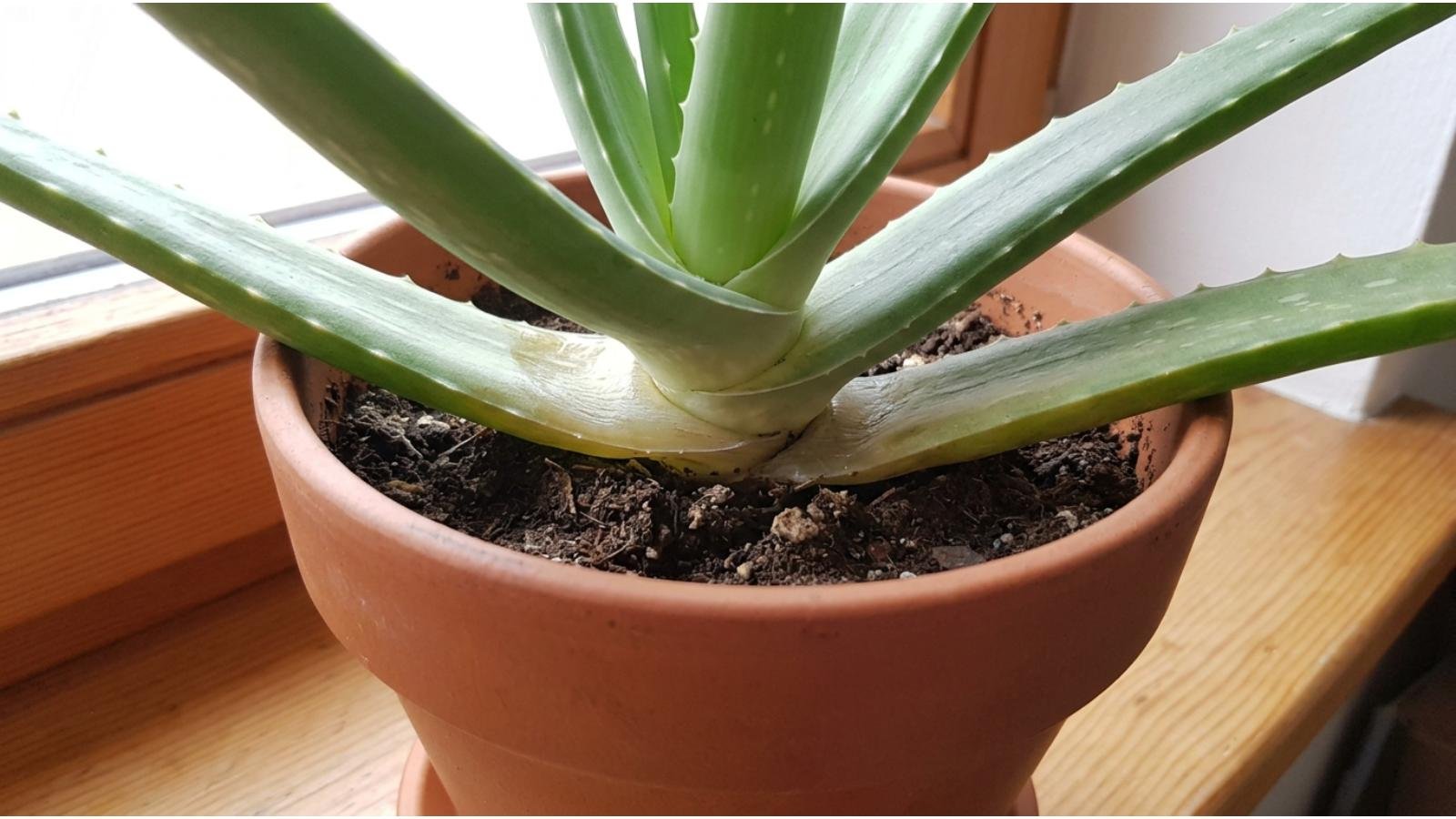
Terracotta pots can be particularly useful for succulents because the porous material can allow moisture to escape through the sides, although the potting mix and watering habits still matter.
Avoid choosing an extremely large container simply because you expect the aloe to grow into it. A large volume of soil can remain wet for longer than the plant’s root system requires.
When repotting, choose a container only modestly larger than the existing root system.
Image Suggestion: Comparison of aloe planted in a drainage pot, decorative cachepot without drainage, and oversized container.
How to Repot Aloe Vera
Repotting is useful when the plant has outgrown its container, the roots have become crowded, or the existing soil has degraded.
The RHS notes that aloe can be repotted when needed and recommends a well-draining cactus-style growing medium.
A simple repotting process is.
- Prepare a clean container with drainage holes.
- Add a layer of appropriate succulent growing mix.
- Remove the aloe carefully from its existing pot.
- Inspect the roots for obvious damage or rot.
- Position the plant at approximately the same depth as before.
- Fill around the roots with fresh mix.
- Avoid burying the leaf rosette.
- Allow the plant to settle before returning to its normal watering routine.
Do not pack the soil tightly around the roots. Aloe benefits from a loose, well-draining medium.
Aloe Vera Temperature and Humidity
Aloe vera generally prefers warm conditions and does not require high humidity.
The RHS recommends protecting aloe from freezing conditions and notes that the plant dislikes humid environments. Its houseplant guidance gives approximately 13°C to 27°C as a suitable range for indoor conditions.
This makes aloe different from tropical houseplants that appreciate frequent misting.
In fact, misting aloe leaves is unnecessary. Keeping the foliage wet while the plant is already growing in humid conditions can create an environment more favorable to problems.
Keep aloe away from.
- Freezing temperatures.
- Cold drafts.
- Permanently damp areas.
- Extremely humid locations.
- Poorly ventilated corners.
Should You Fertilize Aloe Vera
Aloe does not need heavy feeding.
During active growth, a modest amount of fertilizer can support healthy development. The RHS recommends light feeding during the growing season and little or no feeding during winter dormancy.
Avoid the temptation to fertilize a struggling aloe every time it looks unhealthy. Fertilizer cannot compensate for poor light, damaged roots, bad drainage, or incorrect watering.
A plant with a root problem should have its growing conditions corrected before feeding becomes a priority.
How to Propagate Aloe Vera From Offsets
Healthy mature aloe plants often produce offsets, sometimes called pups, around the base of the parent plant.
These young plants can eventually be separated and grown independently.
A practical method is.
- Wait until the offset has developed its own recognizable structure.
- Remove the plant carefully from the container when necessary.
- Separate the offset from the parent plant using a clean tool if it is firmly attached.
- Allow damaged areas to dry before planting when appropriate.
- Place the offset into a small container of well-draining succulent mix.
- Keep watering conservative while it establishes.
- Give it bright light without immediately exposing a recently separated plant to extreme conditions.
The RHS lists separation of offsets in spring or early summer as a propagation method for Aloe vera.
Image Suggestion: Step-by-step infographic showing a mature aloe producing pups and the process of separating one.
Common Aloe Plant Care Mistakes
Many aloe problems come from a few repeated mistakes rather than complicated diseases.
Watering on a Fixed Schedule
Watering every Sunday may sound convenient, but plants do not use water at exactly the same rate every week.
Light, temperature, season, pot size, and soil all influence drying time.
Keeping Aloe in a Dark Corner
Aloe may survive for some time in poor light, but survival is not the same as healthy growth.
Move it toward a brighter location gradually when necessary.
Using a Pot Without Drainage
Decorative containers can look attractive while quietly creating a root problem.
If your favorite decorative pot has no drainage hole, use it as an outer cachepot and keep the aloe in a properly draining nursery container inside it.
Misting the Leaves
Aloe does not need tropical-style humidity.
Focus on light, drainage, and appropriate watering instead.
Choosing an Oversized Pot
More soil means more moisture-holding capacity. For a succulent, that can create unnecessary risk.
Removing Healthy Leaves
Pruning should not become a routine activity. Remove dead or badly damaged leaves with a clean, sharp tool while leaving healthy foliage intact. The RHS notes that routine pruning is generally unnecessary for aloe.
Aloe Vera Problems and Solutions
| Problem | Likely Cause | What to Do |
|---|---|---|
| Soft leaves | Excess moisture or root problems | Check soil and drainage immediately |
| Yellow leaves | Often excessive moisture or stress | Examine watering and roots |
| Thin, stretched growth | Insufficient light | Move toward a brighter location gradually |
| Wrinkled leaves | Dry conditions or depleted moisture | Check soil before watering |
| Brown leaf tips | Environmental stress, intense exposure, or watering issues | Evaluate light, moisture, and recent changes |
| Plant leaning | Insufficient light or uneven exposure | Improve light and rotate periodically |
| Slow growth | Low light, cool conditions, or seasonal slowdown | Review growing conditions |
| Mushy base | Severe moisture/root problem | Inspect roots and replace unsuitable wet soil |
These symptoms are clues rather than guaranteed diagnoses. Looking at several factors together is more reliable than treating a single leaf symptom in isolation.
Aloe Plant Care Through the Seasons
Spring and Summer
As light and growth increase, aloe may use water more quickly.
Check the soil regularly rather than automatically increasing watering. This is also an appropriate period for cautious feeding and repotting when needed.
Fall
Growth may begin slowing as light levels decrease.
Start paying closer attention to how quickly the soil dries. The same watering routine used during bright summer conditions may become excessive.
Winter
Winter is when many aloe plants receive too much water.
Lower light and slower growth can mean the soil stays wet longer. Water less frequently and avoid feeding if the plant is dormant or barely growing. The RHS recommends very sparse winter watering for aloe.
Image Suggestion: Seasonal aloe care calendar showing changes in light, watering, and feeding.
Can Aloe Vera Grow Outdoors
Aloe vera can be grown outdoors in suitable warm climates and can also be moved outside during favorable weather.
The major concern is cold. Aloe is not a frost-tolerant plant, so outdoor plants need protection when temperatures become too low. The RHS classifies Aloe vera as unsuitable for freezing conditions and recommends suitable sheltered growing conditions.
If you move an indoor aloe outside, introduce it to stronger outdoor light gradually rather than assuming it can immediately handle intense direct sunlight.
Is Aloe Vera Safe Around Pets
This is an important part of responsible aloe plant care.
Aloe vera is listed by the ASPCA as toxic to dogs, cats, and horses. The listed toxic principles include saponins and anthraquinones, and reported signs include vomiting, diarrhea, and lethargy.
The safest approach is to keep aloe plants somewhere pets cannot chew them.
If you suspect a pet has eaten aloe, contact a veterinarian or an appropriate animal poison-control service promptly rather than trying to diagnose the exposure yourself.
When Should You Repot Aloe Vera
Aloe does not need frequent repotting simply because a certain amount of time has passed.
Consider repotting when.
- Roots are becoming crowded.
- The plant repeatedly becomes unstable in its container.
- The soil drains poorly.
- The pot has deteriorated.
- The plant has produced offsets that need separation.
- The existing growing medium has broken down.
The RHS gives approximately two to three years as a general repotting interval in its aloe care guidance, while also emphasizing repotting when the plant becomes root-bound.
Condition should always take priority over the calendar.
How to Make Aloe Vera Grow Faster
There is no reliable trick that forces aloe to grow rapidly.
Instead, optimize the conditions that support healthy growth.
Provide.
- Strong natural light.
- A suitable temperature.
- Well-draining soil.
- Correct watering.
- Appropriate container size.
- Occasional feeding during active growth.
- Adequate space for roots and offsets.
The biggest improvement often comes from correcting a limiting factor rather than adding fertilizer.
For example, an aloe sitting in a dark corner may not benefit much from additional fertilizer. Improving its light can be far more meaningful.
Frequently Asked Questions About Aloe Plant Care
How often should I water an aloe plant.
Water thoroughly when the soil has dried completely, then allow it to dry again before watering. During winter or slow growth, watering should generally be reduced.
Does aloe vera need direct sunlight.
Aloe appreciates strong light and can grow in full light, but indoor plants may need gradual acclimation when moved into intense direct sun. Bright conditions are especially important for maintaining compact growth.
Why are my aloe leaves turning brown.
Brown leaves can have several causes, including excessive sun exposure, watering problems, physical damage, or environmental stress. Examine the whole growing situation rather than assuming water is always the answer.
Why is my aloe plant turning yellow.
Yellowing can occur when the plant experiences excessive moisture or root stress. Check the soil, drainage, and roots before increasing watering.
Can aloe vera grow in low light.
It may survive in lower light for a period, but aloe generally performs better in bright conditions. Poor light can contribute to weak, stretched growth.
Should I mist my aloe plant.
No. Aloe does not require high humidity, and the RHS specifically advises against misting aloe leaves.
What is the best soil for aloe vera.
Use a fast-draining cactus or succulent-style mix. Additional grit or another drainage-improving material can be useful when appropriate.
Can I keep aloe vera in the bathroom.
A bright bathroom can work, but a consistently humid, poorly ventilated bathroom is not ideal. Aloe prefers drier conditions and good ventilation.
Can aloe vera survive winter indoors.
Yes. Indoor conditions can protect aloe from freezing temperatures. Reduce watering as growth slows and make sure the plant still receives adequate light.
Is aloe vera poisonous to cats and dogs.
Yes. The ASPCA lists Aloe vera as toxic to cats and dogs, with ingestion potentially causing gastrointestinal symptoms and other signs.
Conclusion
Successful aloe plant care comes down to understanding what this succulent is naturally designed to handle. It stores water in its leaves, prefers strong light, and needs soil that drains rapidly rather than staying wet.
The most useful routine is simple: check the soil before watering, provide plenty of light, use a container with drainage, and reduce watering when growth slows. If you learn to read the plant instead of following a rigid watering calendar, aloe becomes remarkably straightforward to maintain.
For beginners, the biggest lesson is also the easiest to remember: when caring for aloe, more attention does not always mean better care. Give the plant the right environment, then give its roots time to breathe and dry between waterings.
Related Topics Worth Covering
- Snake plant care.
- Jade plant care.
- Pothos plant care.
- Kalanchoe plant care.
- Monstera plant care.
- Coleus plant care.
- Bird of paradise plant care.