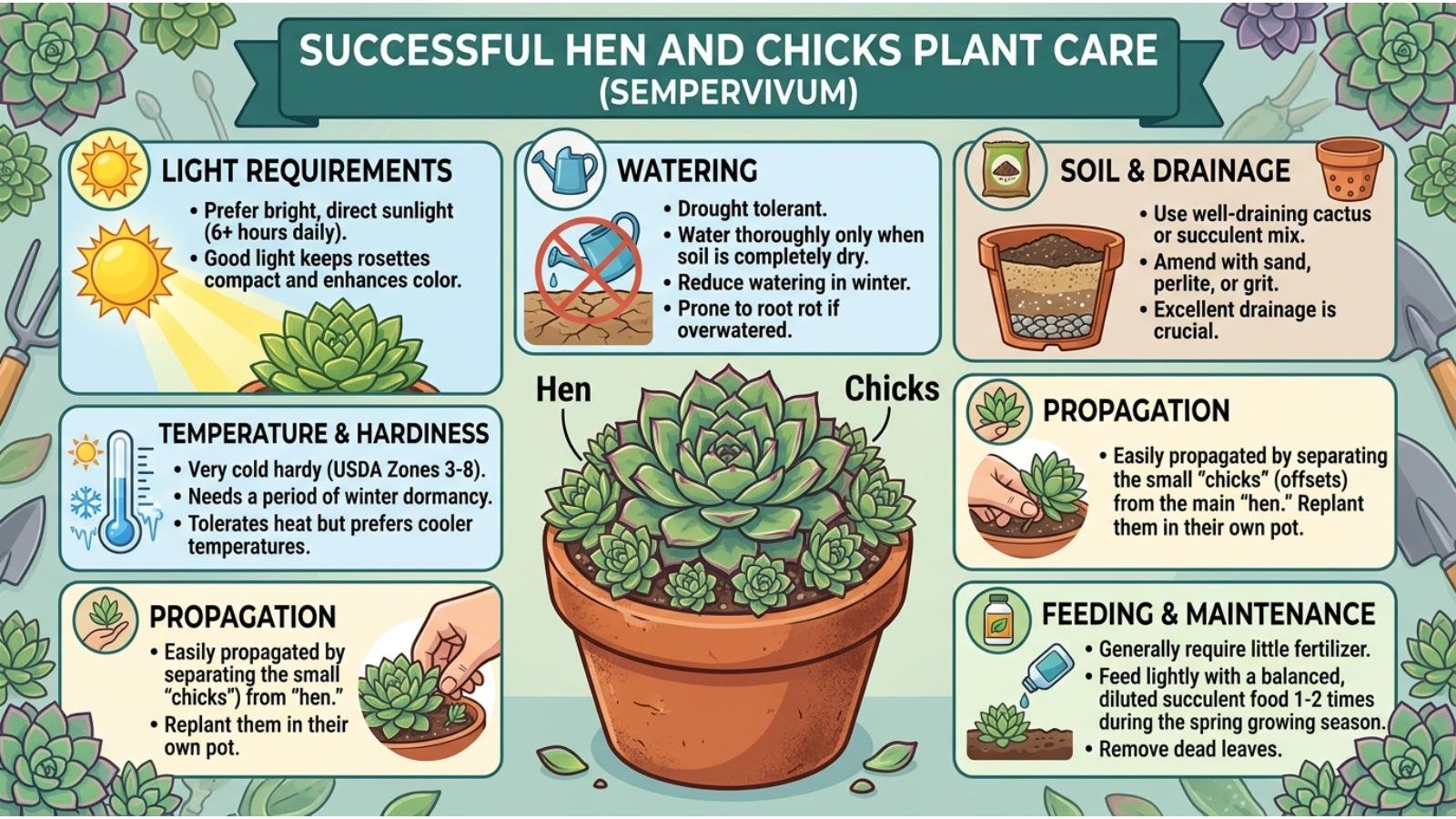
Hen and chicks are among the easiest succulents to grow, but their simple care requirements can be misunderstood. The biggest mistake beginners make is treating them like ordinary houseplants and watering them frequently. These drought-tolerant plants are adapted to conditions where their roots can dry between rainfall, so constantly damp soil can create more problems than underwatering.
Good hen and chicks plant care is mostly about getting three things right: sunlight, drainage, and watering habits. Once those fundamentals are established, the plants need surprisingly little attention. You can grow them in containers, rock gardens, raised beds, or other locations where excess water drains away quickly.
Quick Answer
Hen and chicks plant care is relatively easy because these succulents prefer bright light, fast-draining soil, and infrequent watering. Let the soil dry completely before watering thoroughly, and use a container with drainage holes. Protect the plant from prolonged wet soil, excessive shade, and extreme winter moisture. With plenty of sunlight and good airflow, hen and chicks can produce healthy offsets and form attractive clusters.
What Are Hen and Chicks Plants
Hen and chicks are common names for Sempervivum, a group of rosette-forming succulents known for producing offsets around the main plant.
The large central rosette is commonly called the hen, while the smaller offsets surrounding it are called chicks. These offsets gradually develop their own roots and can eventually become independent plants.
Sempervivum are particularly valued for their cold tolerance compared with many tender succulents. They naturally grow in exposed, rocky environments where drainage is excellent and the plants receive substantial sunlight.
One important detail is that hen and chicks should not automatically be confused with every succulent sold under a similar common name. Some plants are called hens and chicks but belong to different genera and can have different care requirements. Checking the botanical name on the plant label is therefore useful when you want precise care instructions.
Image Suggestion: Close-up botanical illustration showing the mother rosette surrounded by several smaller offsets.
How Much Light Do Hen and Chicks Need
Hen and chicks generally perform best in bright sunlight.
For outdoor plants, several hours of direct sunlight each day usually helps maintain compact rosettes and strong coloration. Plants grown in insufficient light may become elongated, lose their characteristic shape, or develop weaker growth.
However, light conditions can change significantly depending on climate and season. A plant that handles strong afternoon sun comfortably in a cooler climate may appreciate some protection during extremely hot weather.
Watch the plant rather than following a rigid schedule.
Signs that your plant may need more light include:
- Open or stretched rosette growth.
- Longer spaces between leaves.
- Pale or less intense coloration.
- Growth leaning toward a brighter direction.
If a plant has been growing indoors or in shade, move it toward stronger light gradually. A sudden transition from low light to intense direct sun can cause sunburn.
Expert Tip: A compact rosette is often a better indicator of suitable light than simply counting hours of sunlight.
The Best Soil for Hen and Chicks
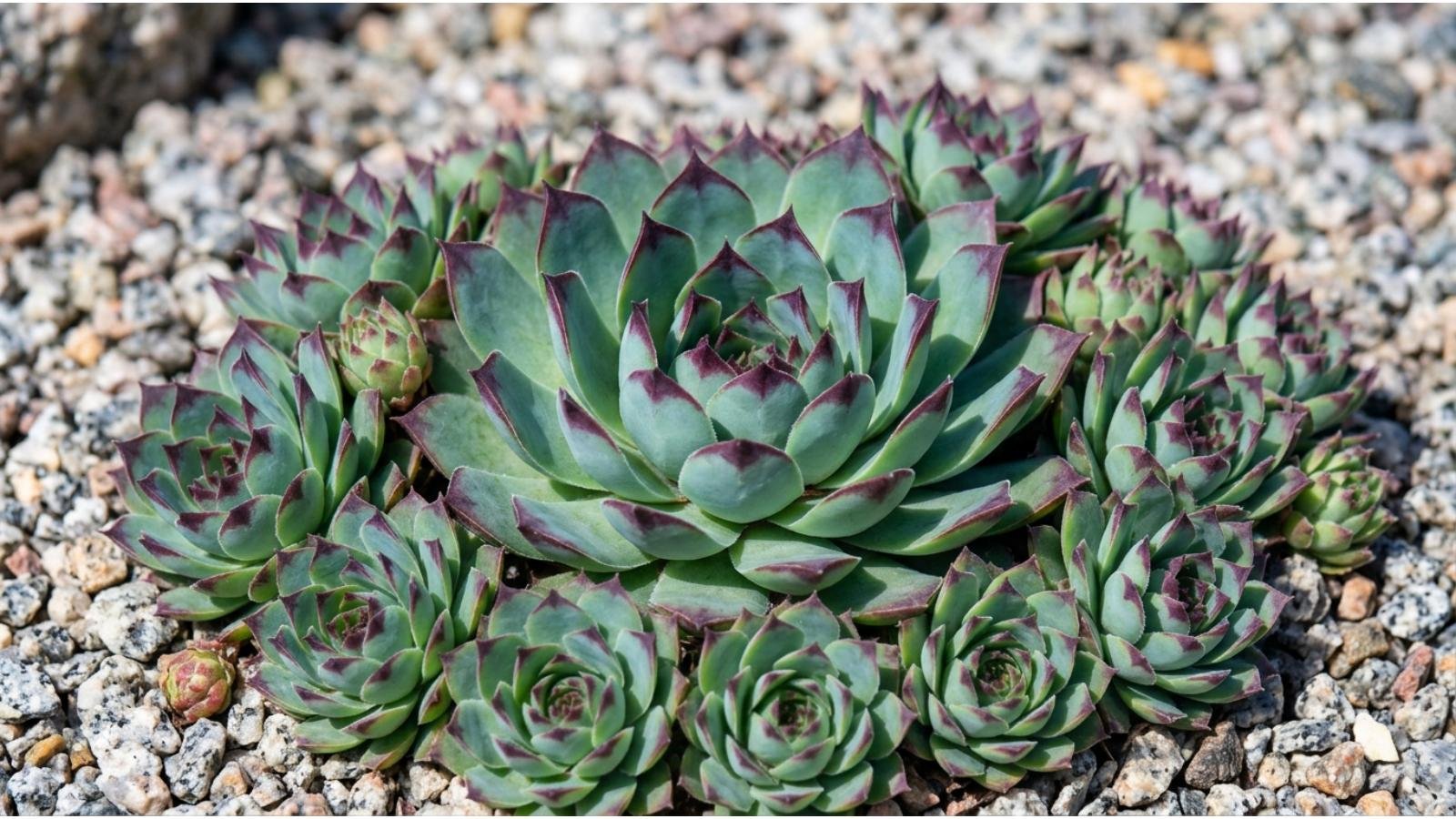
The right soil is one of the most important parts of successful hen and chicks plant care.
These succulents need a growing medium that allows excess water to escape quickly. Heavy garden soil or moisture-retentive potting mixes can stay wet around the roots for too long, particularly in containers.
A suitable succulent or cactus mix is usually a convenient starting point. You can improve drainage further by incorporating materials such as coarse mineral grit, pumice, or perlite.
The goal is not simply to make the soil dry. The goal is to create a balance where the plant receives enough moisture after watering but the roots do not remain saturated for extended periods.
A useful test is to squeeze a small amount of damp soil in your hand. If it stays densely compacted and drains poorly, it may be too moisture-retentive for a typical Sempervivum container.
Image Suggestion: Side-by-side comparison of compacted garden soil and a loose, gritty succulent growing mix.
How to Water Hen and Chicks
Watering is where many otherwise healthy succulents develop problems.
Instead of giving a small amount of water every few days, use a soak-and-dry approach. Water the soil thoroughly, then allow it to dry out before watering again.
The exact interval depends on temperature, sunlight, humidity, container size, soil composition, and rainfall. Therefore, a calendar-based watering schedule is less reliable than checking the soil.
Follow these steps.
- Check the growing medium several inches below the surface when practical.
- If the soil is still damp, wait.
- When the soil has dried thoroughly, water deeply.
- Allow excess water to drain completely.
- Empty standing water from a saucer or decorative container.
- Reduce watering during cool, dark, or rainy periods.
The plant’s thick leaves store water, allowing it to tolerate periods of dryness.
Why Overwatering Is Dangerous
Constantly wet soil reduces the amount of oxygen available around the roots. Prolonged saturation can contribute to root problems and eventually cause soft, collapsing leaves.
An important distinction is that overwatering is not simply the amount of water used at one time. Watering too frequently in poorly draining soil is often the real problem.
A thorough watering followed by a proper drying period is generally much healthier than repeatedly adding tiny amounts of water to already damp soil.
Choosing the Right Pot
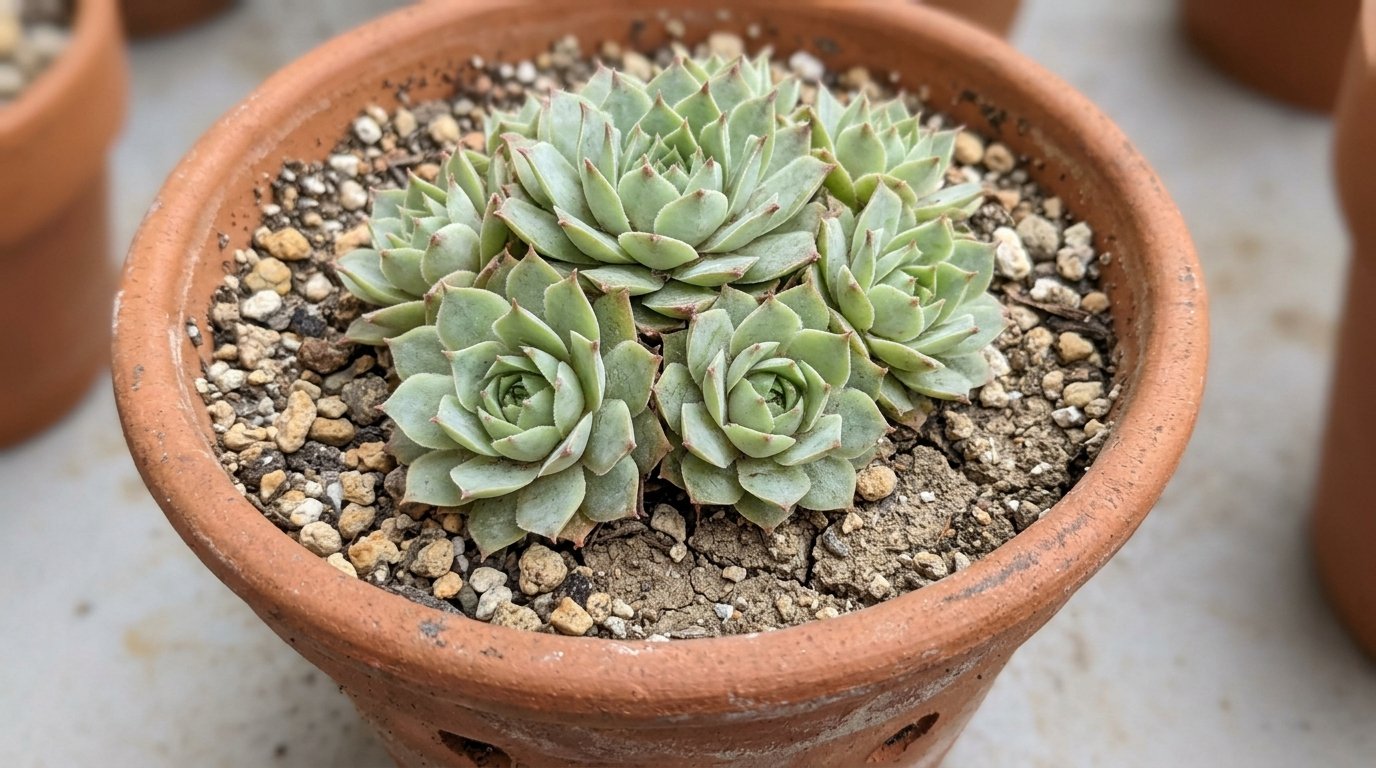
A good pot can make hen and chicks plant care considerably easier.
Choose a container with at least one effective drainage hole. Terracotta can be useful because its porous material allows some moisture to evaporate through the sides, although drainage holes and appropriate soil remain more important.
Avoid choosing a very large pot simply because you want the plant to have room to grow. Excess soil around a small root system can remain wet for a long time.
A shallow or moderately sized container can work particularly well for these relatively shallow-rooted rosette succulents.
For outdoor containers, make sure the drainage hole is not blocked by compacted soil or debris.
Expert Tip: If a decorative pot has no drainage hole, use it as an outer cover pot rather than planting the succulent directly inside it.
How to Plant Hen and Chicks
Planting Sempervivum is straightforward when the soil and location are appropriate.
Start with a container or garden location that drains freely. Place the plant so the base of the rosette sits around the soil surface rather than being buried deeply.
Then gently firm the surrounding soil and avoid immediately saturating the entire container if the roots have been disturbed significantly.
A simple planting process is:
- Select a sunny, well-drained location.
- Prepare a gritty, fast-draining growing medium.
- Make a planting hole approximately the size of the root system.
- Position the plant at the appropriate depth.
- Fill around the roots without burying the rosette.
- Give the plant time to settle.
- Resume normal watering once the soil has dried appropriately.
Good airflow around the rosette is also helpful, particularly in humid conditions.
How Hen and Chicks Produce Chicks
Producing offsets is one of the most interesting features of Sempervivum.
A mature hen develops smaller rosettes around itself. These chicks may remain connected to the mother plant for some time while developing their own roots.
Healthy plants often produce more offsets when growing conditions are favorable.
You do not need to remove every chick. A crowded cluster can create an attractive display, especially in a rock garden or wide container.
If you want to propagate them, wait until an offset has developed enough of its own structure to survive independently. Separate it carefully from the parent plant and place it in suitable gritty soil.
Avoid treating newly separated offsets like thirsty seedlings. They still have succulent characteristics and should not be kept constantly wet.
Image Suggestion: Three-stage propagation diagram showing a mature hen, attached chick, and independently planted offset.
How to Propagate Hen and Chicks
Propagation from offsets is usually the simplest method.
Look for a healthy chick that has developed its own roots or is sufficiently mature to establish independently. Gently separate it from the mother plant using clean hands or a clean tool when necessary.
Allowing a freshly separated offset to dry briefly before planting can help protect damaged tissue from excessive moisture. Once planted, place it in bright light and avoid keeping the growing medium continuously wet.
Seed propagation is also possible, but it is generally slower and less convenient for gardeners who simply want more plants.
Offsets are particularly rewarding because a single established plant can gradually develop a whole colony.
When Hen and Chicks Flower
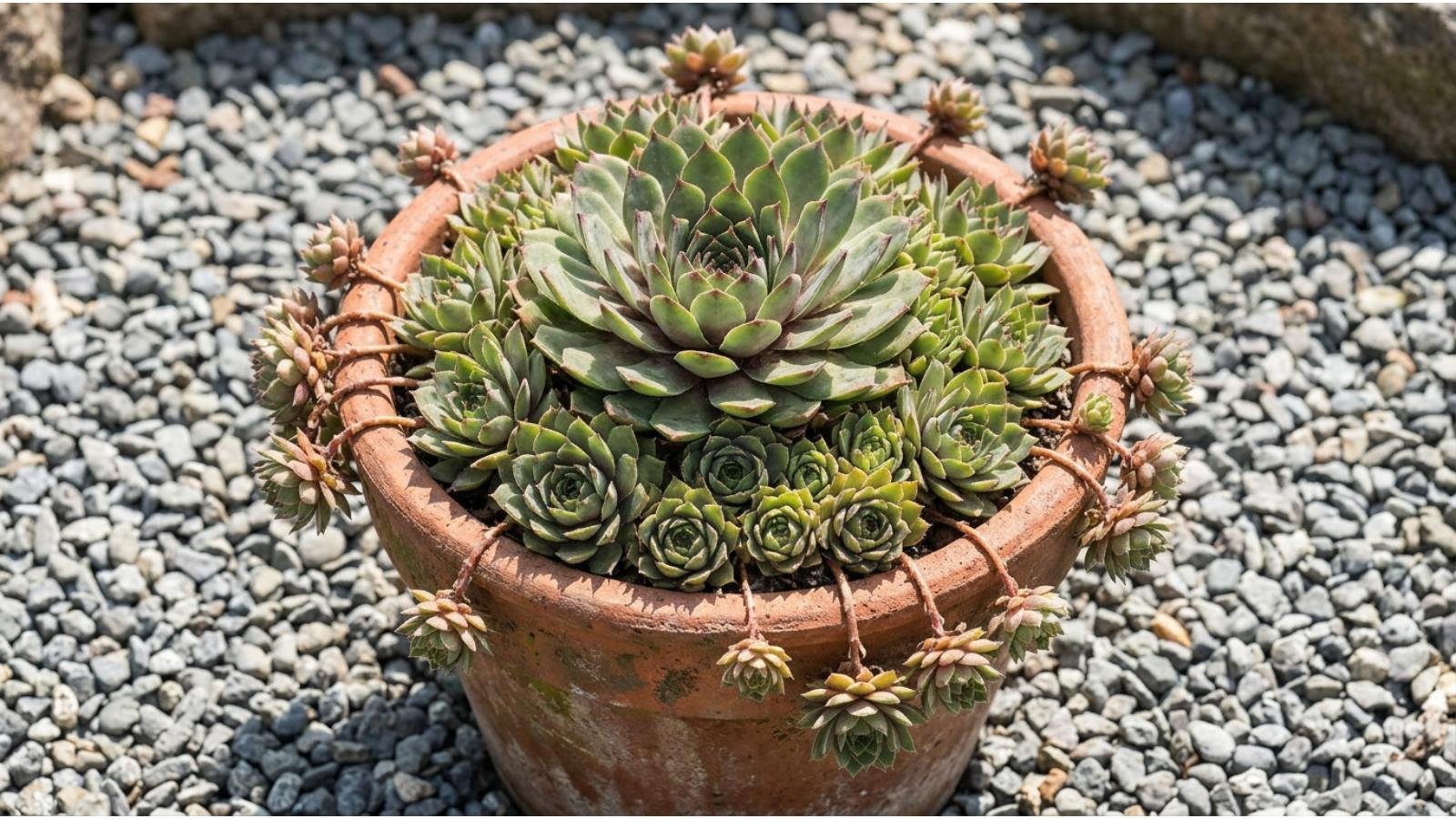
Hen and chicks have a distinctive life cycle. A mature rosette eventually produces a tall flowering stalk.
The flowering rosette can look dramatically different from the compact form it had previously. The stalk rises above the surrounding leaves and eventually develops flowers.
Sempervivum are generally monocarpic at the individual rosette level. This means the flowering rosette eventually dies after blooming.
This can initially alarm new growers, especially when they notice the central plant changing shape.
The surrounding chicks are what allow the colony to continue. After the mother rosette completes its flowering cycle, the offsets can continue growing and take its place.
Expert Tip: Do not remove a healthy flowering rosette simply because it has changed shape. Flowering is a natural part of the plant’s life cycle.
Hen and Chicks Care in Winter
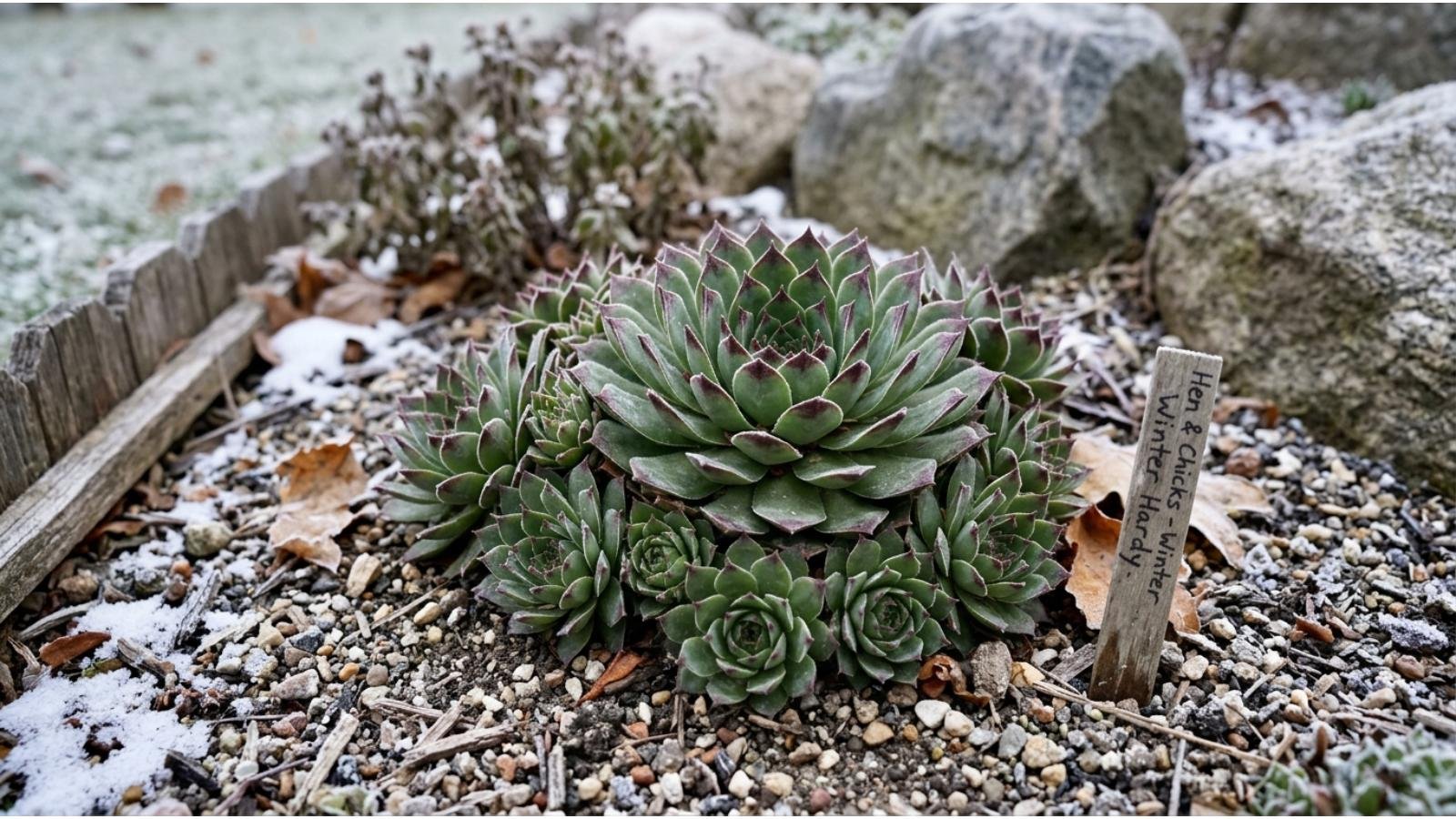
Many Sempervivum are remarkably cold tolerant, making them suitable for climates where some other succulents struggle.
Cold itself is not always the biggest winter concern. Wet soil combined with freezing conditions can be much more problematic.
During rainy or snowy periods, outdoor plants benefit from excellent drainage. Containers should never sit in trays filled with water.
If the plant is grown in a region with severe winter conditions, protection may be necessary depending on the specific Sempervivum cultivar and local climate.
Indoor winter care is different. If you bring plants inside, place them near a bright window and avoid compensating for lower light by watering more frequently.
Winter usually means slower growth, so watering requirements can decrease substantially.
Hen and Chicks Care During Summer
Summer heat can increase water loss, but that does not mean these succulents should be watered constantly.
Plants receiving intense heat and direct sun may dry faster than those growing in mild conditions. Check the soil rather than automatically increasing watering frequency.
During extreme heat:
- Provide strong light while watching for heat stress.
- Ensure the container drains rapidly.
- Avoid leaving the pot sitting in water.
- Improve airflow around crowded plants.
- Check soil moisture more frequently during prolonged hot weather.
- Avoid repeatedly wetting the leaves and keeping the rosette damp.
A plant that looks slightly stressed during extreme heat does not necessarily need immediate watering. Check the soil and the overall condition of the roots before adding more moisture.
Common Hen and Chicks Problems
Hen and chicks are resilient, but they can still experience problems when growing conditions are unsuitable.
Soft or Mushy Leaves
Soft, translucent, or mushy leaves often indicate excess moisture or tissue damage.
Check the soil immediately. If it remains wet for an extended period, improve drainage and reduce watering frequency.
If rot has already progressed into the crown or stem, simply withholding water may not be enough. Healthy offsets may sometimes provide an opportunity to preserve the plant.
Brown or Crispy Leaves
Brown, dry leaves can have several causes.
Older outer leaves naturally dry and disappear as the plant grows. This is normal.
However, widespread crispy foliage can occur when the plant is severely dehydrated, exposed to extreme heat, or experiencing root problems that prevent normal water uptake.
Look at the entire plant rather than diagnosing the issue from one leaf.
Stretching or Leggy Growth
Stretching usually indicates inadequate light.
Move the plant toward a brighter location gradually. Avoid suddenly placing a plant that has been in shade under intense midday sunlight.
Once stretched growth has occurred, the existing stem may not return to its original compact form, but improved lighting can support healthier new growth.
Leaves Turning Yellow
Yellowing leaves are often associated with moisture stress, but the cause depends on the pattern.
A few older yellowing leaves may simply be part of normal aging. Multiple soft yellow leaves combined with persistently wet soil are more concerning.
Inspect drainage, watering frequency, sunlight, and the roots if the problem continues.
Pests
Succulents can occasionally attract pests such as mealybugs, aphids, or other sap-feeding insects.
Inspect the undersides and bases of leaves, especially where rosettes are tightly packed.
Early detection makes pest management much easier. Isolate affected container plants when practical so pests do not spread to nearby plants.
Common Hen and Chicks Care Mistakes
Several mistakes repeatedly cause problems for otherwise easy-to-grow Sempervivum.
- Watering on a fixed schedule instead of checking soil moisture.
- Using dense soil that stays wet for too long.
- Growing the plant in deep shade.
- Using a decorative container without drainage.
- Keeping a saucer permanently filled with water.
- Moving a low-light plant directly into intense sunlight.
- Assuming every yellow leaf means the plant needs more water.
- Removing a flowering rosette because its changing appearance seems unhealthy.
- Planting the rosette too deeply.
- Ignoring poor airflow in a crowded, humid location.
The common theme is simple: these plants usually benefit from conditions that allow moisture to leave quickly.
Indoor Hen and Chicks Plant Care
Hen and chicks can be grown indoors, but finding enough light is often the biggest challenge.
Place the plant in the brightest suitable window available. A south-facing or similarly bright exposure can work well in many homes, although actual indoor light levels vary considerably.
Keep the plant away from constantly damp areas and use a container with drainage.
Indoor plants may also need less frequent watering than outdoor plants because they typically experience less wind, rainfall, and evaporation.
If the rosette starts stretching toward the window, treat it as a signal to reassess light rather than immediately adding fertilizer or water.
Image Suggestion: Healthy compact indoor Sempervivum beside a stretched low-light plant for visual comparison.
Fertilizing Hen and Chicks
Hen and chicks generally do not require heavy feeding.
Succulents are adapted to relatively lean growing conditions, and excessive fertilizer can encourage soft, unnatural growth rather than the compact appearance gardeners usually want.
If you choose to fertilize, use a suitable fertilizer at a conservative strength during active growth and follow the product’s directions.
Freshly repotted or newly propagated plants generally do not need an immediate fertilizer boost. Establishing healthy roots and providing suitable light and drainage are more important.
Do Hen and Chicks Need Deadheading
Deadheading is optional and depends on your preference.
After a rosette flowers and finishes its life cycle, the dried flowering structure can be removed for appearance once it has completed its natural process.
However, do not confuse a normal flowering rosette with a plant that is dying from overwatering. Flowering usually involves a dramatic upward transformation of the central rosette, while rot is more likely to produce soft, collapsing tissue.
Removing dead material can also make the surrounding offsets easier to see and maintain.
How to Keep Hen and Chicks Looking Compact
Compact growth comes primarily from good light and appropriate growing conditions.
If your Sempervivum is becoming unusually open, first examine its light exposure. Fertilizer is not a substitute for adequate sunlight.
Spacing also matters. Extremely crowded colonies can retain more moisture around individual plants after rainfall or watering.
For the best appearance:
- Provide strong light.
- Use fast-draining soil.
- Avoid excessive nitrogen fertilizer.
- Water deeply but infrequently.
- Give crowded colonies enough airflow.
- Remove genuinely dead material when needed.
Color can also change naturally with the seasons and growing conditions, so a greener plant is not automatically an unhealthy plant.
Hen and Chicks in Rock Gardens
Sempervivum are particularly well suited to rock gardens because their natural growth habit complements gravel, stones, slopes, and other sharply drained areas.
A slightly raised planting position can help rainwater move away from the crown and roots.
When designing a rock garden, combine the plants with materials that do not trap excessive moisture. Avoid creating pockets where water collects around the rosettes.
The plants can also be positioned between rocks or in shallow crevices where their roots have access to soil but excess water can escape.
Image Suggestion: Naturalistic rock garden featuring Sempervivum planted between stones with gravel around the rosettes.
A Simple Care Routine
You do not need to constantly monitor a healthy hen and chicks plant.
A practical routine is:
- Check the plant regularly for obvious changes.
- Inspect the soil before watering.
- Water thoroughly when the soil has dried.
- Confirm that excess water drains away.
- Check for stretching if the plant appears unusually open.
- Inspect tightly packed rosettes for pests.
- Remove damaged or dead material when appropriate.
- Adjust care according to seasonal weather.
This approach is more reliable than following a strict weekly watering calendar because environmental conditions can change dramatically.
Frequently Asked Questions About Hen and Chicks Plant Care
How often should you water hen and chicks
Water when the growing medium has dried thoroughly rather than following a fixed number of days. Hot, bright conditions may require more frequent checks, while cool or rainy conditions can greatly reduce the need for water.
Do hen and chicks need full sun
They generally prefer plenty of bright light and can tolerate substantial direct sun when properly acclimated. Extremely intense heat may require some protection depending on the climate and cultivar.
Can hen and chicks grow indoors
Yes, but indoor plants need very bright light and excellent drainage. Insufficient light is one of the most common reasons indoor Sempervivum become stretched.
Why is my hen and chicks plant turning green
Color can naturally change with light, temperature, and seasonal conditions. Reduced sunlight often produces greener growth, while stronger light can encourage more intense coloration in some varieties.
Why is my hen and chicks plant getting tall
If the entire rosette is opening and stretching upward, inadequate light is a likely cause. Gradually move the plant into brighter conditions.
Why are my hen and chicks leaves turning brown
Older outer leaves can naturally become brown and dry. Widespread browning may instead indicate dehydration, intense heat, physical damage, or root problems, so inspect the soil and overall plant condition.
Do hen and chicks come back every year
Many Sempervivum are hardy perennials and can survive year after year when grown in suitable conditions. Individual rosettes eventually flower and die, but the surrounding offsets allow the colony to continue.
Should I remove dead hen and chicks leaves
You can remove completely dead leaves for appearance and airflow, but avoid aggressively pulling healthy leaves. Removing loose dead material is usually sufficient.
Can hen and chicks survive winter
Many Sempervivum tolerate cold temperatures very well. Winter survival depends on the particular cultivar and local conditions, with excessive winter moisture often being more problematic than cold alone.
Can you grow hen and chicks from the chicks
Yes. Offsets are one of the easiest ways to propagate Sempervivum. Allow a sufficiently developed chick to establish independently in well-draining soil.
Final Thoughts
Successful hen and chicks plant care does not require constant attention. The most important lesson is to recreate the conditions these succulents naturally prefer: plenty of light, rapid drainage, and periods of dryness between watering.
If your plant is struggling, start with the basics before changing everything at once. Check the soil, inspect the roots if necessary, evaluate the available light, and make sure excess water can escape. Once those fundamentals are correct, hen and chicks can reward you with compact rosettes, colorful foliage, and an expanding collection of healthy offsets.
The best care routine is therefore not about doing more. It is about providing the right conditions and knowing when to leave the plant alone.
Quick Answer
Hen and chicks plant care is relatively easy because these succulents prefer bright light, fast-draining soil, and infrequent watering. Let the soil dry completely before watering thoroughly, and use a container with drainage holes. Protect the plant from prolonged wet soil, excessive shade, and extreme winter moisture. With plenty of sunlight and good airflow, hen and chicks can produce healthy offsets and form attractive clusters.
Introduction
Hen and chicks are among the easiest succulents to grow, but their simple care requirements can be misunderstood. The biggest mistake beginners make is treating them like ordinary houseplants and watering them frequently. These drought-tolerant plants are adapted to conditions where their roots can dry between rainfall, so constantly damp soil can create more problems than underwatering.
Good hen and chicks plant care is mostly about getting three things right: sunlight, drainage, and watering habits. Once those fundamentals are established, the plants need surprisingly little attention. You can grow them in containers, rock gardens, raised beds, or other locations where excess water drains away quickly.
What Are Hen and Chicks Plants
Hen and chicks are common names for Sempervivum, a group of rosette-forming succulents known for producing offsets around the main plant.
The large central rosette is commonly called the hen, while the smaller offsets surrounding it are called chicks. These offsets gradually develop their own roots and can eventually become independent plants.
Sempervivum are particularly valued for their cold tolerance compared with many tender succulents. They naturally grow in exposed, rocky environments where drainage is excellent and the plants receive substantial sunlight.
One important detail is that hen and chicks should not automatically be confused with every succulent sold under a similar common name. Some plants are called hens and chicks but belong to different genera and can have different care requirements. Checking the botanical name on the plant label is therefore useful when you want precise care instructions.
Image Suggestion: Close-up botanical illustration showing the mother rosette surrounded by several smaller offsets.
How Much Light Do Hen and Chicks Need
Hen and chicks generally perform best in bright sunlight.
For outdoor plants, several hours of direct sunlight each day usually helps maintain compact rosettes and strong coloration. Plants grown in insufficient light may become elongated, lose their characteristic shape, or develop weaker growth.
However, light conditions can change significantly depending on climate and season. A plant that handles strong afternoon sun comfortably in a cooler climate may appreciate some protection during extremely hot weather.
Watch the plant rather than following a rigid schedule.
Signs that your plant may need more light include:
- Open or stretched rosette growth.
- Longer spaces between leaves.
- Pale or less intense coloration.
- Growth leaning toward a brighter direction.
If a plant has been growing indoors or in shade, move it toward stronger light gradually. A sudden transition from low light to intense direct sun can cause sunburn.
Expert Tip: A compact rosette is often a better indicator of suitable light than simply counting hours of sunlight.
The Best Soil for Hen and Chicks
The right soil is one of the most important parts of successful hen and chicks plant care.
These succulents need a growing medium that allows excess water to escape quickly. Heavy garden soil or moisture-retentive potting mixes can stay wet around the roots for too long, particularly in containers.
A suitable succulent or cactus mix is usually a convenient starting point. You can improve drainage further by incorporating materials such as coarse mineral grit, pumice, or perlite.
The goal is not simply to make the soil dry. The goal is to create a balance where the plant receives enough moisture after watering but the roots do not remain saturated for extended periods.
A useful test is to squeeze a small amount of damp soil in your hand. If it stays densely compacted and drains poorly, it may be too moisture-retentive for a typical Sempervivum container.
Image Suggestion: Side-by-side comparison of compacted garden soil and a loose, gritty succulent growing mix.
How to Water Hen and Chicks
Watering is where many otherwise healthy succulents develop problems.
Instead of giving a small amount of water every few days, use a soak-and-dry approach. Water the soil thoroughly, then allow it to dry out before watering again.
The exact interval depends on temperature, sunlight, humidity, container size, soil composition, and rainfall. Therefore, a calendar-based watering schedule is less reliable than checking the soil.
Follow these steps.
- Check the growing medium several inches below the surface when practical.
- If the soil is still damp, wait.
- When the soil has dried thoroughly, water deeply.
- Allow excess water to drain completely.
- Empty standing water from a saucer or decorative container.
- Reduce watering during cool, dark, or rainy periods.
The plant’s thick leaves store water, allowing it to tolerate periods of dryness.
Why Overwatering Is Dangerous
Constantly wet soil reduces the amount of oxygen available around the roots. Prolonged saturation can contribute to root problems and eventually cause soft, collapsing leaves.
An important distinction is that overwatering is not simply the amount of water used at one time. Watering too frequently in poorly draining soil is often the real problem.
A thorough watering followed by a proper drying period is generally much healthier than repeatedly adding tiny amounts of water to already damp soil.
Choosing the Right Pot
A good pot can make hen and chicks plant care considerably easier.
Choose a container with at least one effective drainage hole. Terracotta can be useful because its porous material allows some moisture to evaporate through the sides, although drainage holes and appropriate soil remain more important.
Avoid choosing a very large pot simply because you want the plant to have room to grow. Excess soil around a small root system can remain wet for a long time.
A shallow or moderately sized container can work particularly well for these relatively shallow-rooted rosette succulents.
For outdoor containers, make sure the drainage hole is not blocked by compacted soil or debris.
Expert Tip: If a decorative pot has no drainage hole, use it as an outer cover pot rather than planting the succulent directly inside it.
How to Plant Hen and Chicks
Planting Sempervivum is straightforward when the soil and location are appropriate.
Start with a container or garden location that drains freely. Place the plant so the base of the rosette sits around the soil surface rather than being buried deeply.
Then gently firm the surrounding soil and avoid immediately saturating the entire container if the roots have been disturbed significantly.
A simple planting process is:
- Select a sunny, well-drained location.
- Prepare a gritty, fast-draining growing medium.
- Make a planting hole approximately the size of the root system.
- Position the plant at the appropriate depth.
- Fill around the roots without burying the rosette.
- Give the plant time to settle.
- Resume normal watering once the soil has dried appropriately.
Good airflow around the rosette is also helpful, particularly in humid conditions.
How Hen and Chicks Produce Chicks
Producing offsets is one of the most interesting features of Sempervivum.
A mature hen develops smaller rosettes around itself. These chicks may remain connected to the mother plant for some time while developing their own roots.
Healthy plants often produce more offsets when growing conditions are favorable.
You do not need to remove every chick. A crowded cluster can create an attractive display, especially in a rock garden or wide container.
If you want to propagate them, wait until an offset has developed enough of its own structure to survive independently. Separate it carefully from the parent plant and place it in suitable gritty soil.
Avoid treating newly separated offsets like thirsty seedlings. They still have succulent characteristics and should not be kept constantly wet.
Image Suggestion: Three-stage propagation diagram showing a mature hen, attached chick, and independently planted offset.
How to Propagate Hen and Chicks
Propagation from offsets is usually the simplest method.
Look for a healthy chick that has developed its own roots or is sufficiently mature to establish independently. Gently separate it from the mother plant using clean hands or a clean tool when necessary.
Allowing a freshly separated offset to dry briefly before planting can help protect damaged tissue from excessive moisture. Once planted, place it in bright light and avoid keeping the growing medium continuously wet.
Seed propagation is also possible, but it is generally slower and less convenient for gardeners who simply want more plants.
Offsets are particularly rewarding because a single established plant can gradually develop a whole colony.
When Hen and Chicks Flower
Hen and chicks have a distinctive life cycle. A mature rosette eventually produces a tall flowering stalk.
The flowering rosette can look dramatically different from the compact form it had previously. The stalk rises above the surrounding leaves and eventually develops flowers.
Sempervivum are generally monocarpic at the individual rosette level. This means the flowering rosette eventually dies after blooming.
This can initially alarm new growers, especially when they notice the central plant changing shape.
The surrounding chicks are what allow the colony to continue. After the mother rosette completes its flowering cycle, the offsets can continue growing and take its place.
Expert Tip: Do not remove a healthy flowering rosette simply because it has changed shape. Flowering is a natural part of the plant’s life cycle.
Hen and Chicks Care in Winter
Many Sempervivum are remarkably cold tolerant, making them suitable for climates where some other succulents struggle.
Cold itself is not always the biggest winter concern. Wet soil combined with freezing conditions can be much more problematic.
During rainy or snowy periods, outdoor plants benefit from excellent drainage. Containers should never sit in trays filled with water.
If the plant is grown in a region with severe winter conditions, protection may be necessary depending on the specific Sempervivum cultivar and local climate.
Indoor winter care is different. If you bring plants inside, place them near a bright window and avoid compensating for lower light by watering more frequently.
Winter usually means slower growth, so watering requirements can decrease substantially.
Hen and Chicks Care During Summer
Summer heat can increase water loss, but that does not mean these succulents should be watered constantly.
Plants receiving intense heat and direct sun may dry faster than those growing in mild conditions. Check the soil rather than automatically increasing watering frequency.
During extreme heat:
- Provide strong light while watching for heat stress.
- Ensure the container drains rapidly.
- Avoid leaving the pot sitting in water.
- Improve airflow around crowded plants.
- Check soil moisture more frequently during prolonged hot weather.
- Avoid repeatedly wetting the leaves and keeping the rosette damp.
A plant that looks slightly stressed during extreme heat does not necessarily need immediate watering. Check the soil and the overall condition of the roots before adding more moisture.
Common Hen and Chicks Problems
Hen and chicks are resilient, but they can still experience problems when growing conditions are unsuitable.
Soft or Mushy Leaves
Soft, translucent, or mushy leaves often indicate excess moisture or tissue damage.
Check the soil immediately. If it remains wet for an extended period, improve drainage and reduce watering frequency.
If rot has already progressed into the crown or stem, simply withholding water may not be enough. Healthy offsets may sometimes provide an opportunity to preserve the plant.
Brown or Crispy Leaves
Brown, dry leaves can have several causes.
Older outer leaves naturally dry and disappear as the plant grows. This is normal.
However, widespread crispy foliage can occur when the plant is severely dehydrated, exposed to extreme heat, or experiencing root problems that prevent normal water uptake.
Look at the entire plant rather than diagnosing the issue from one leaf.
Stretching or Leggy Growth
Stretching usually indicates inadequate light.
Move the plant toward a brighter location gradually. Avoid suddenly placing a plant that has been in shade under intense midday sunlight.
Once stretched growth has occurred, the existing stem may not return to its original compact form, but improved lighting can support healthier new growth.
Leaves Turning Yellow
Yellowing leaves are often associated with moisture stress, but the cause depends on the pattern.
A few older yellowing leaves may simply be part of normal aging. Multiple soft yellow leaves combined with persistently wet soil are more concerning.
Inspect drainage, watering frequency, sunlight, and the roots if the problem continues.
Pests
Succulents can occasionally attract pests such as mealybugs, aphids, or other sap-feeding insects.
Inspect the undersides and bases of leaves, especially where rosettes are tightly packed.
Early detection makes pest management much easier. Isolate affected container plants when practical so pests do not spread to nearby plants.
Common Hen and Chicks Care Mistakes
Several mistakes repeatedly cause problems for otherwise easy-to-grow Sempervivum.
- Watering on a fixed schedule instead of checking soil moisture.
- Using dense soil that stays wet for too long.
- Growing the plant in deep shade.
- Using a decorative container without drainage.
- Keeping a saucer permanently filled with water.
- Moving a low-light plant directly into intense sunlight.
- Assuming every yellow leaf means the plant needs more water.
- Removing a flowering rosette because its changing appearance seems unhealthy.
- Planting the rosette too deeply.
- Ignoring poor airflow in a crowded, humid location.
The common theme is simple: these plants usually benefit from conditions that allow moisture to leave quickly.
Indoor Hen and Chicks Plant Care
Hen and chicks can be grown indoors, but finding enough light is often the biggest challenge.
Place the plant in the brightest suitable window available. A south-facing or similarly bright exposure can work well in many homes, although actual indoor light levels vary considerably.
Keep the plant away from constantly damp areas and use a container with drainage.
Indoor plants may also need less frequent watering than outdoor plants because they typically experience less wind, rainfall, and evaporation.
If the rosette starts stretching toward the window, treat it as a signal to reassess light rather than immediately adding fertilizer or water.
Image Suggestion: Healthy compact indoor Sempervivum beside a stretched low-light plant for visual comparison.
Fertilizing Hen and Chicks
Hen and chicks generally do not require heavy feeding.
Succulents are adapted to relatively lean growing conditions, and excessive fertilizer can encourage soft, unnatural growth rather than the compact appearance gardeners usually want.
If you choose to fertilize, use a suitable fertilizer at a conservative strength during active growth and follow the product’s directions.
Freshly repotted or newly propagated plants generally do not need an immediate fertilizer boost. Establishing healthy roots and providing suitable light and drainage are more important.
Do Hen and Chicks Need Deadheading
Deadheading is optional and depends on your preference.
After a rosette flowers and finishes its life cycle, the dried flowering structure can be removed for appearance once it has completed its natural process.
However, do not confuse a normal flowering rosette with a plant that is dying from overwatering. Flowering usually involves a dramatic upward transformation of the central rosette, while rot is more likely to produce soft, collapsing tissue.
Removing dead material can also make the surrounding offsets easier to see and maintain.
How to Keep Hen and Chicks Looking Compact
Compact growth comes primarily from good light and appropriate growing conditions.
If your Sempervivum is becoming unusually open, first examine its light exposure. Fertilizer is not a substitute for adequate sunlight.
Spacing also matters. Extremely crowded colonies can retain more moisture around individual plants after rainfall or watering.
For the best appearance:
- Provide strong light.
- Use fast-draining soil.
- Avoid excessive nitrogen fertilizer.
- Water deeply but infrequently.
- Give crowded colonies enough airflow.
- Remove genuinely dead material when needed.
Color can also change naturally with the seasons and growing conditions, so a greener plant is not automatically an unhealthy plant.
Hen and Chicks in Rock Gardens
Sempervivum are particularly well suited to rock gardens because their natural growth habit complements gravel, stones, slopes, and other sharply drained areas.
A slightly raised planting position can help rainwater move away from the crown and roots.
When designing a rock garden, combine the plants with materials that do not trap excessive moisture. Avoid creating pockets where water collects around the rosettes.
The plants can also be positioned between rocks or in shallow crevices where their roots have access to soil but excess water can escape.
Image Suggestion: Naturalistic rock garden featuring Sempervivum planted between stones with gravel around the rosettes.
A Simple Care Routine
You do not need to constantly monitor a healthy hen and chicks plant.
A practical routine is:
- Check the plant regularly for obvious changes.
- Inspect the soil before watering.
- Water thoroughly when the soil has dried.
- Confirm that excess water drains away.
- Check for stretching if the plant appears unusually open.
- Inspect tightly packed rosettes for pests.
- Remove damaged or dead material when appropriate.
- Adjust care according to seasonal weather.
This approach is more reliable than following a strict weekly watering calendar because environmental conditions can change dramatically.
Frequently Asked Questions About Hen and Chicks Plant Care
How often should you water hen and chicks
Water when the growing medium has dried thoroughly rather than following a fixed number of days. Hot, bright conditions may require more frequent checks, while cool or rainy conditions can greatly reduce the need for water.
Do hen and chicks need full sun
They generally prefer plenty of bright light and can tolerate substantial direct sun when properly acclimated. Extremely intense heat may require some protection depending on the climate and cultivar.
Can hen and chicks grow indoors
Yes, but indoor plants need very bright light and excellent drainage. Insufficient light is one of the most common reasons indoor Sempervivum become stretched.
Why is my hen and chicks plant turning green
Color can naturally change with light, temperature, and seasonal conditions. Reduced sunlight often produces greener growth, while stronger light can encourage more intense coloration in some varieties.
Why is my hen and chicks plant getting tall
If the entire rosette is opening and stretching upward, inadequate light is a likely cause. Gradually move the plant into brighter conditions.
Why are my hen and chicks leaves turning brown
Older outer leaves can naturally become brown and dry. Widespread browning may instead indicate dehydration, intense heat, physical damage, or root problems, so inspect the soil and overall plant condition.
Do hen and chicks come back every year
Many Sempervivum are hardy perennials and can survive year after year when grown in suitable conditions. Individual rosettes eventually flower and die, but the surrounding offsets allow the colony to continue.
Should I remove dead hen and chicks leaves
You can remove completely dead leaves for appearance and airflow, but avoid aggressively pulling healthy leaves. Removing loose dead material is usually sufficient.
Can hen and chicks survive winter
Many Sempervivum tolerate cold temperatures very well. Winter survival depends on the particular cultivar and local conditions, with excessive winter moisture often being more problematic than cold alone.
Can you grow hen and chicks from the chicks
Yes. Offsets are one of the easiest ways to propagate Sempervivum. Allow a sufficiently developed chick to establish independently in well-draining soil.
Final Thoughts
Successful hen and chicks plant care does not require constant attention. The most important lesson is to recreate the conditions these succulents naturally prefer: plenty of light, rapid drainage, and periods of dryness between watering.
If your plant is struggling, start with the basics before changing everything at once. Check the soil, inspect the roots if necessary, evaluate the available light, and make sure excess water can escape. Once those fundamentals are correct, hen and chicks can reward you with compact rosettes, colorful foliage, and an expanding collection of healthy offsets.
The best care routine is therefore not about doing more. It is about providing the right conditions and knowing when to leave the plant alone.