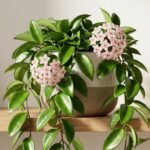
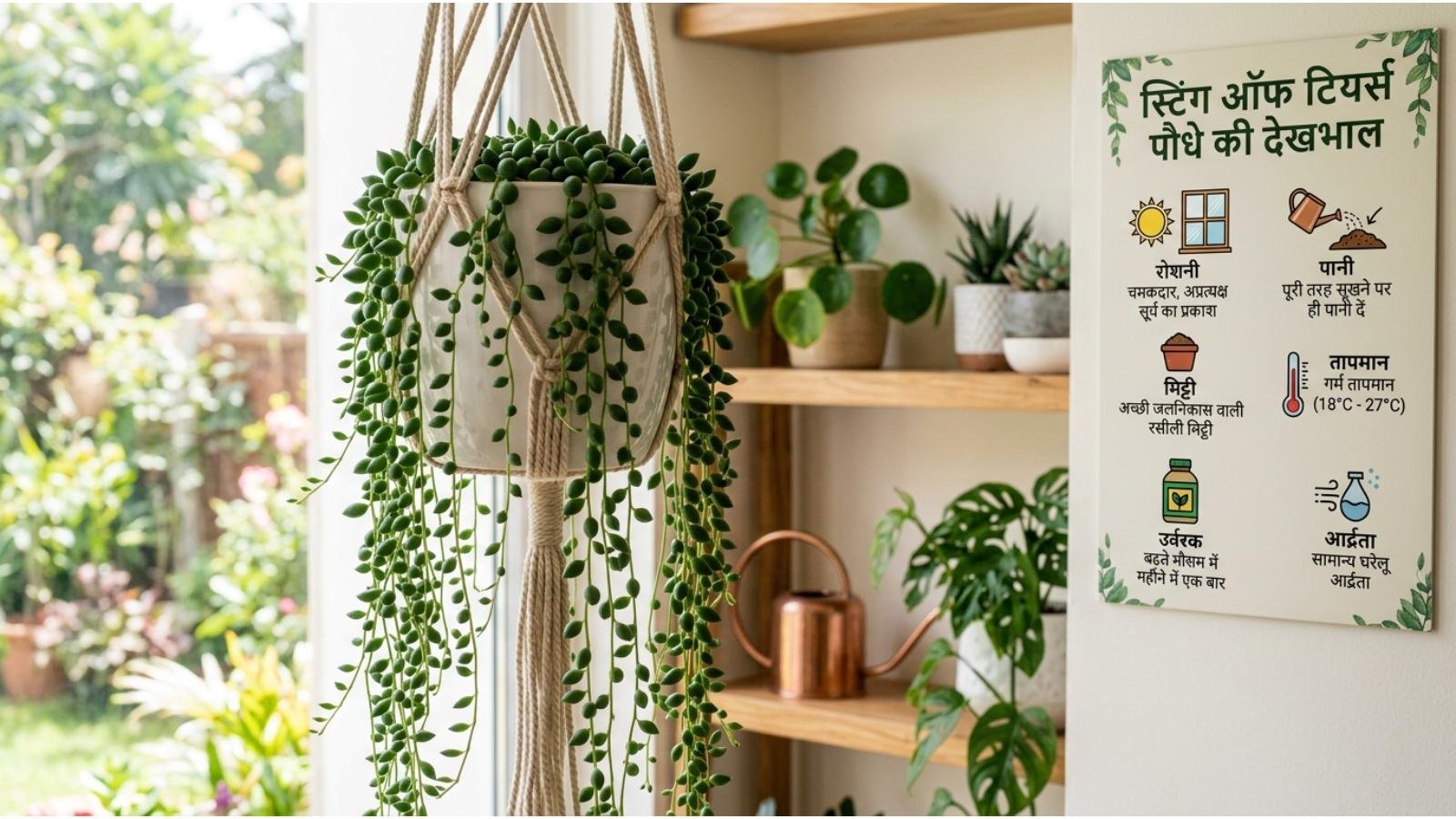
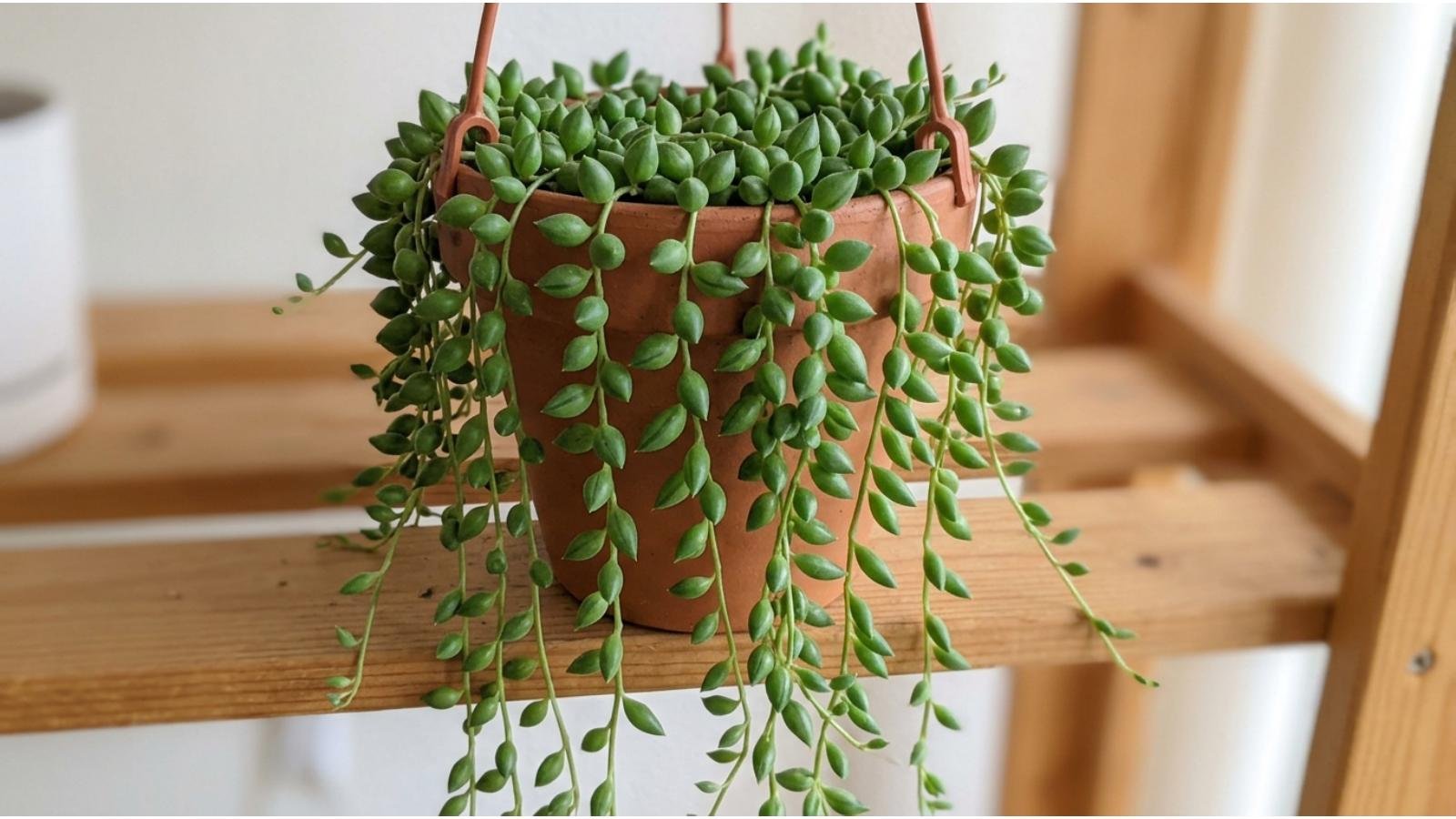
String of Tears, commonly associated with Curio herreianus, is a trailing succulent valued for its unusual teardrop-shaped leaves and cascading growth. It is closely related to other popular “string of” plants and is especially attractive in hanging containers or on elevated shelves. Its succulent foliage stores water, so the plant generally handles dry conditions much better than constantly wet soil.
The biggest challenge is usually not getting enough water but knowing when to stop watering. Beginners often see slightly wrinkled leaves and immediately add more water, while the real problem may be poor light, damaged roots, or unsuitable soil. Understanding what the leaves and soil are telling you makes String of Tears plant care much easier.
Quick Answer
String of Tears plant care is straightforward when you treat this plant like the succulent it is. Give it bright light, sharply draining soil, a pot with drainage holes, and thorough but infrequent watering. Let the soil dry between waterings, protect it from prolonged cold and intense midday sun, and avoid consistently wet roots. With the right balance of light and dryness, Curio herreianus can produce attractive trailing stems and plump, tear-shaped leaves.
What Is a String of Tears Plant
String of Tears is a trailing succulent in the Curio group, formerly classified under Senecio. The plant is recognized by its small, pointed, teardrop-shaped leaves carried along slender trailing stems. The RHS identifies String of Tears as Curio citriformis, while related “string of” plants include species with bead, banana, watermelon, and dolphin-shaped foliage.
This botanical naming can be confusing because many retailers still use older Senecio names. Consequently, when shopping, it is useful to check the botanical name as well as the common name.
Its succulent leaves are an important clue to its care. They are adapted to storing water, which means the plant does not need the frequent watering schedule used for tropical houseplants.
Image Suggestion: Close-up botanical illustration showing String of Tears leaves, stems, roots, and trailing growth habit.
String of Tears Light Requirements
Bright light is one of the most important parts of successful String of Tears plant care. A bright position near an east- or west-facing window generally works well. These plants can tolerate some direct sun, but harsh summer sunlight through a window can scorch delicate foliage.
Insufficient light creates a different problem. Instead of compact, attractive growth, stems may become elongated and sparse, with smaller leaves.
A practical approach is to look at the quality of new growth rather than simply counting hours of sunlight. If new stems are stretching noticeably toward a window, the plant probably needs more usable light.
For a very bright south-facing window, filter intense midday sunlight with a sheer curtain, particularly during hot weather.
Image Suggestion: Comparison of compact String of Tears growth in bright light versus stretched growth caused by insufficient light.

How Often to Water String of Tears
Watering is where many String of Tears plants get into trouble. The plant stores water in its succulent leaves, so keeping the soil constantly moist can deprive roots of the dry periods they need.
Allow the growing medium to dry between waterings. When watering becomes necessary, water thoroughly enough for moisture to drain from the bottom of the container, then empty excess water from the saucer or outer pot. The RHS specifically recommends light watering during active growth and very sparse watering during winter.
Instead of following a rigid calendar, check the soil first. A plant in a small terracotta pot beside a bright window may dry much faster than a larger plant sitting in a plastic pot in lower light.
During winter, growth generally slows, so watering needs decrease substantially. The plant should not be kept wet simply because a previous watering schedule says it is “watering day.”
Signs Your Plant Needs Water
Look for a combination of signs rather than relying on one symptom.
- The potting mix is dry.
- Leaves are beginning to lose some firmness.
- The plant feels noticeably lighter when you lift the container.
- Growth is active and the growing medium has already dried.
A slightly less firm leaf can be a useful warning, but severely shriveled foliage means the plant has been dry for too long.
Signs You Are Overwatering
Overwatering can cause much more serious damage.
- Stems become soft or discolored.
- Leaves become mushy.
- Leaves drop unexpectedly.
- Soil remains wet for prolonged periods.
- The base of stems begins to rot.
The RHS lists stem rot and leaf shriveling among problems associated with inappropriate watering and recommends allowing the compost to dry between waterings.
Image Suggestion: Healthy firm leaves compared with soft, damaged foliage caused by excessive moisture.
Best Soil for String of Tears
String of Tears needs a growing medium that drains quickly rather than holding water around the roots. A commercial cactus or succulent mix is a convenient starting point.
The RHS recommends free-draining, peat-free compost for these plants and notes that a mix of peat-free loam-based compost and horticultural grit can also provide suitable drainage.
The goal is not simply “dry soil.” The goal is soil that becomes appropriately dry without remaining waterlogged for an extended period.
Avoid heavy garden soil or dense potting mixes that stay wet after watering. Even an excellent watering routine cannot fully compensate for a container filled with poorly draining material.
Choosing the Right Pot
A drainage hole is essential.
Choose a container only slightly larger than the existing root system. Oversized pots contain more unused soil, and that extra soil can stay wet for longer after watering.
Terracotta can be particularly useful for succulent growers because the porous material can help excess moisture escape. The RHS also recommends terracotta as a suitable option for “string of” plants.
For hanging baskets, make sure water can escape freely and that the container is not sitting inside a decorative cachepot full of stagnant water.

Temperature and Humidity
String of Tears generally prefers warm indoor conditions and does not require high humidity. The RHS gives a general temperature range of about 10–25°C (50–77°F) for string-of plants and advises protecting them from cold drafts and temperatures below 10°C.
Keep the plant away from:
- Cold windows during winter.
- Air-conditioning vents.
- Drafty exterior doors.
- Radiators and other intense heat sources.
Normal household humidity is usually sufficient. Increasing humidity unnecessarily can make moisture management more difficult, especially when the soil is already slow to dry.
Fertilizing String of Tears
String of Tears does not need aggressive feeding. Its succulent growth habit means excessive fertilizer is unlikely to solve problems caused by poor lighting, unsuitable soil, or overwatering.
During active growth, a diluted, balanced houseplant or succulent fertilizer can be used occasionally according to the product label. Avoid fertilizing a stressed plant, a plant with damaged roots, or one sitting in completely dry soil.
The priority should always be light, drainage, and appropriate watering before fertilizer.
How to Repot String of Tears
Repot when the existing container is becoming restrictive, the growing medium has deteriorated, or drainage has become poor.
Follow these steps.
- Choose a pot with a drainage hole that is only slightly larger than the current container.
- Prepare a free-draining succulent growing mix.
- Remove the plant carefully because the trailing stems and leaves can be delicate.
- Inspect the roots for obvious damage or rot.
- Remove unhealthy material with clean tools.
- Replant at approximately the same depth.
- Avoid immediately soaking a plant that has suffered significant root disturbance.
- Return it to bright, suitable light and resume normal care once it has settled.
There is no need to repot simply because the plant has been in the same container for a short period. The RHS notes that newly purchased string-of plants can often remain in their original container for at least a year unless the existing compost is excessively wet or saturated.
Image Suggestion: Step-by-step repotting diagram showing root inspection, succulent soil, drainage hole, and correctly sized container.
How to Prune String of Tears
Pruning is useful when stems become excessively long, damaged, sparse, or inconveniently positioned.
Use clean scissors to remove unwanted sections. Do not pull individual leaves from healthy stems because the delicate foliage can detach easily.
Pruning can also help create a fuller-looking container when combined with good growing conditions. The RHS recommends trimming weak or straggly stems to encourage stronger-looking growth.
Save healthy cuttings instead of throwing them away. They can potentially be used for propagation.
How to Propagate String of Tears
String of Tears can be propagated from stem cuttings or by layering. Related string-of plants are generally easy to propagate, making this an excellent project for beginners.
Stem Cutting Method
- Select a healthy stem.
- Cut a section containing several nodes.
- Allow the cutting to dry briefly if the cut surface is particularly wet.
- Place the appropriate portion onto or into a lightly moist, well-draining propagation medium.
- Keep it warm with bright, indirect light.
- Maintain modest moisture rather than keeping the medium saturated.
- Wait for rooting and new growth before treating it as an established plant.
Layering Method
Layering is especially useful for trailing plants.
Place part of a healthy stem against the surface of suitable potting mix and gently secure it so one or more nodes contact the medium. Keep the contact area appropriately moist while avoiding saturated soil.
Once roots develop, the rooted section can be separated from the parent plant.
Image Suggestion: Visual propagation guide showing a String of Tears stem with nodes touching succulent soil.
Why String of Tears Leaves Shrivel
Shriveled leaves do not automatically mean the plant simply needs more water.
The most obvious cause is prolonged dryness, but root damage can produce a similar appearance. If roots have rotted because of excessive moisture, the plant may be unable to take up water even though the potting mix is wet.
Check the soil first.
If it is completely dry and the stems remain firm, a thorough watering may restore the plant. If the soil is wet and the leaves are deteriorating, adding more water can make the problem worse.
This is one of the most important diagnostic habits in String of Tears plant care: look at the roots and soil conditions, not just the leaves.
Why String of Tears Is Losing Leaves
Leaf drop can result from several different problems.
Overwatering: Constantly wet soil can damage roots and eventually lead to stem problems.
Insufficient light: Weak growth caused by low light can make the plant sparse.
Physical disturbance: The small succulent leaves can detach when stems are handled, moved, or brushed against.
Temperature stress: Cold drafts can damage tender succulent growth.
Poor roots: Root rot can prevent normal water uptake and lead to foliage decline.
Start by checking the soil moisture, root condition, lighting, and temperature instead of changing everything at once.
Why String of Tears Is Turning Brown
Brown or scorched foliage can indicate excessive exposure to intense sunlight, especially when a plant has not been gradually acclimated to stronger light.
The RHS identifies leaf scorching as a potential consequence of hot, bright sunlight.
Move the plant slightly away from harsh direct rays or use filtered light. Do not respond to sun damage by dramatically increasing watering.
Brown foliage can also result from severe dryness or physical damage, so inspect the entire plant before deciding on the cause.
Why String of Tears Is Getting Leggy
Leggy growth usually points toward insufficient light.
A plant may survive in a dim location, but survival is different from attractive, compact growth. If stems become long with large gaps between leaves, move the plant gradually toward a brighter position.
Do not immediately place a previously shaded plant into intense afternoon sun. Gradual acclimation can reduce the risk of leaf scorch.
Pruning excessively stretched stems can improve appearance, but better light is what addresses the underlying problem.
Common String of Tears Care Mistakes
Watering on a Fixed Schedule
A calendar cannot account for changing temperature, light, pot size, soil, and plant growth.
Check the soil instead.
Using a Large Decorative Pot
A beautiful oversized container can become a moisture trap. Choose drainage and appropriate pot size over appearance.
Keeping the Plant in Low Light
The plant may remain alive but produce sparse, weak growth.
Misting the Plant Frequently
String of Tears does not need tropical-style humidity. Frequent misting does not replace proper root watering and can unnecessarily keep plant surfaces damp.
Using Heavy Soil
Poor drainage increases the risk of prolonged wetness around roots.
Handling the Stems Too Much
The individual leaves are attractive but delicate. Constant repositioning can cause leaves to detach.
Seasonal String of Tears Care
Spring and Summer
This is generally the period when growth is more active. Provide strong light, allow the growing medium to dry between waterings, and monitor the plant more frequently as warm conditions can increase water use.
Autumn
As light levels decline, the plant may use water more slowly. Adjust watering accordingly rather than continuing a summer routine automatically.
Winter
Reduce watering significantly. The RHS recommends watering sparingly in winter and only providing enough moisture to prevent excessive shriveling.
Keep the plant away from cold drafts and freezing conditions.
String of Tears Care at a Glance
| Care Factor | Best Approach |
|---|---|
| Light | Bright light with protection from harsh midday sun |
| Water | Allow soil to dry between waterings |
| Soil | Fast-draining succulent or cactus mix |
| Pot | Container with drainage holes |
| Temperature | Warm household conditions, protected from cold |
| Humidity | Normal indoor humidity is generally adequate |
| Fertilizer | Light feeding during active growth |
| Pruning | Remove weak, damaged, or excessively long stems |
| Propagation | Stem cuttings or layering |
| Main Risk | Overwatering and poor drainage |
Is String of Tears Easy to Grow
Yes, once its succulent nature is understood. The plant is relatively forgiving of occasional dryness but is much less tolerant of persistently wet conditions.
The easiest care routine is surprisingly simple: provide enough light, use fast-draining soil, water thoroughly when the mix has dried, and then leave the roots alone until they need moisture again.
This approach is more reliable than trying to maintain a precise watering schedule.
Is String of Tears Toxic to Pets
Care is needed around children and pets. The RHS advises that string-of plants can be poisonous and that their sap can irritate skin.
Keep the plant somewhere inaccessible to pets and children, and wear gloves when pruning or handling damaged stems if you are sensitive to plant sap.
If ingestion occurs, contact an appropriate veterinary or medical professional for advice rather than relying on online identification alone.
Frequently Asked Questions
How much sunlight does String of Tears need.
Give it bright light, ideally near a bright east- or west-facing window. Some direct sunlight can be tolerated, but strong midday summer sun may scorch the foliage.
How often should I water String of Tears.
Do not rely on a fixed weekly schedule. Allow the growing medium to dry between waterings, then water thoroughly and allow excess water to drain away. Water much less frequently during winter.
Why are my String of Tears leaves falling off.
Check for overwatering, poor drainage, insufficient light, cold stress, and physical disturbance. Delicate leaves can also fall when the trailing stems are frequently handled.
Can String of Tears grow indoors.
Yes. It is well suited to indoor cultivation when given bright light, warm conditions, and sharply draining soil.
Can I propagate String of Tears from cuttings.
Yes. Stem cuttings are a practical propagation method, and layering can also work well for trailing stems.
Does String of Tears need high humidity.
No. These plants are adapted to relatively dry conditions and generally do well with normal household humidity.
Why is my String of Tears growing long and thin.
The most likely issue is insufficient light. Move it gradually into a brighter location and prune severely stretched growth if needed.
Should I mist String of Tears.
Misting is not necessary for healthy growth. Focus instead on proper soil moisture, drainage, and adequate light.
Can String of Tears survive underwatering.
It can tolerate periods of dryness because its succulent leaves store water. However, prolonged severe drought will eventually cause leaves to shrivel and growth to decline.
Conclusion
Successful String of Tears plant care comes down to understanding its natural succulent habits. Bright light supports compact growth, fast-draining soil protects the roots, and allowing the soil to dry between waterings prevents one of the most common causes of failure.
If your plant is struggling, resist the temptation to change everything at once. Check the soil, inspect the roots when necessary, evaluate the available light, and then make one targeted adjustment. That simple diagnostic approach will usually tell you far more than a fixed watering calendar ever could.
For related reading, consider creating internal guides for string of pearls care, string of dolphins care, succulent soil, succulent propagation, and indoor succulent watering.