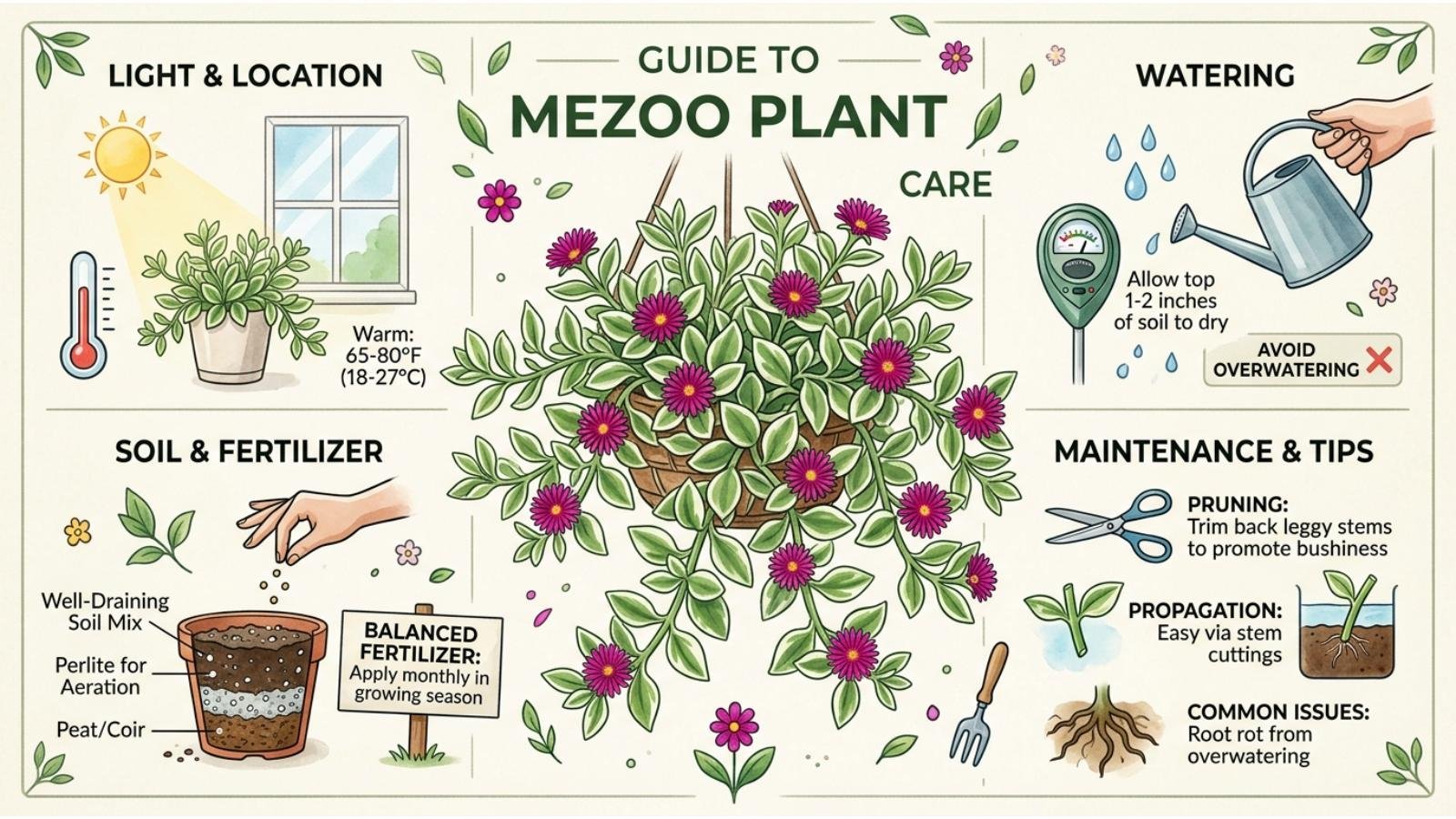
Mezoo is an excellent choice for gardeners who want colorful foliage, trailing growth, and flowers without a complicated maintenance routine. Its thick green leaves with creamy margins make it especially attractive in hanging baskets, containers, window boxes, and sunny garden spaces. The biggest care mistake is usually treating it like a thirsty tropical houseplant instead of recognizing its semi-succulent characteristics.
The good news is that once you understand its relationship with sunlight and soil moisture, Mezoo plant care becomes much easier and more predictable. This guide explains exactly how to grow Mezoo indoors and outdoors, how often to water it, what soil works best, how to propagate cuttings, and how to diagnose common problems before they become serious.
Quick Answer
Mezoo plant care is relatively simple when you provide plenty of bright light, fast-draining soil, moderate watering, and protection from frost. Mezoo, commonly sold as Mezoo Trailing Red, is a trailing, semi-succulent plant with glossy variegated leaves and small red to magenta flowers. Let excess water drain freely, avoid keeping the roots constantly wet, and prune long stems to encourage fuller growth.
What Is The Mezoo Plant
Mezoo is commonly sold under the name Mezoo Trailing Red and is associated with Aptenia cordifolia and related botanical classifications used by growers and plant references. Syngenta Flowers lists Mezoo Trailing Red as Aptenia cordifolia, while other horticultural references use names such as Mesembryanthemum cordifolium for the same commercially recognized plant.
The plant belongs to the ice plant family, Aizoaceae. It develops fleshy foliage and long trailing stems, making it particularly useful when you want a plant to spill naturally over the edge of a container.
Its most recognizable features include:
- Glossy green leaves with creamy-white variegated edges.
- Thick, somewhat succulent foliage that stores moisture.
- Trailing or spreading stems.
- Small red, pink, or magenta flowers.
- Strong performance in warm, sunny conditions.
- Excellent growth in containers and hanging baskets.
Syngenta describes Mezoo as a trailing plant with medium to vigorous vigor and recommends it for part-sun to full-sun exposure.
Image Suggestion: A labeled botanical photograph showing Mezoo leaves, trailing stems, flowers, and overall growth habit.
Mezoo Plant Light Requirements
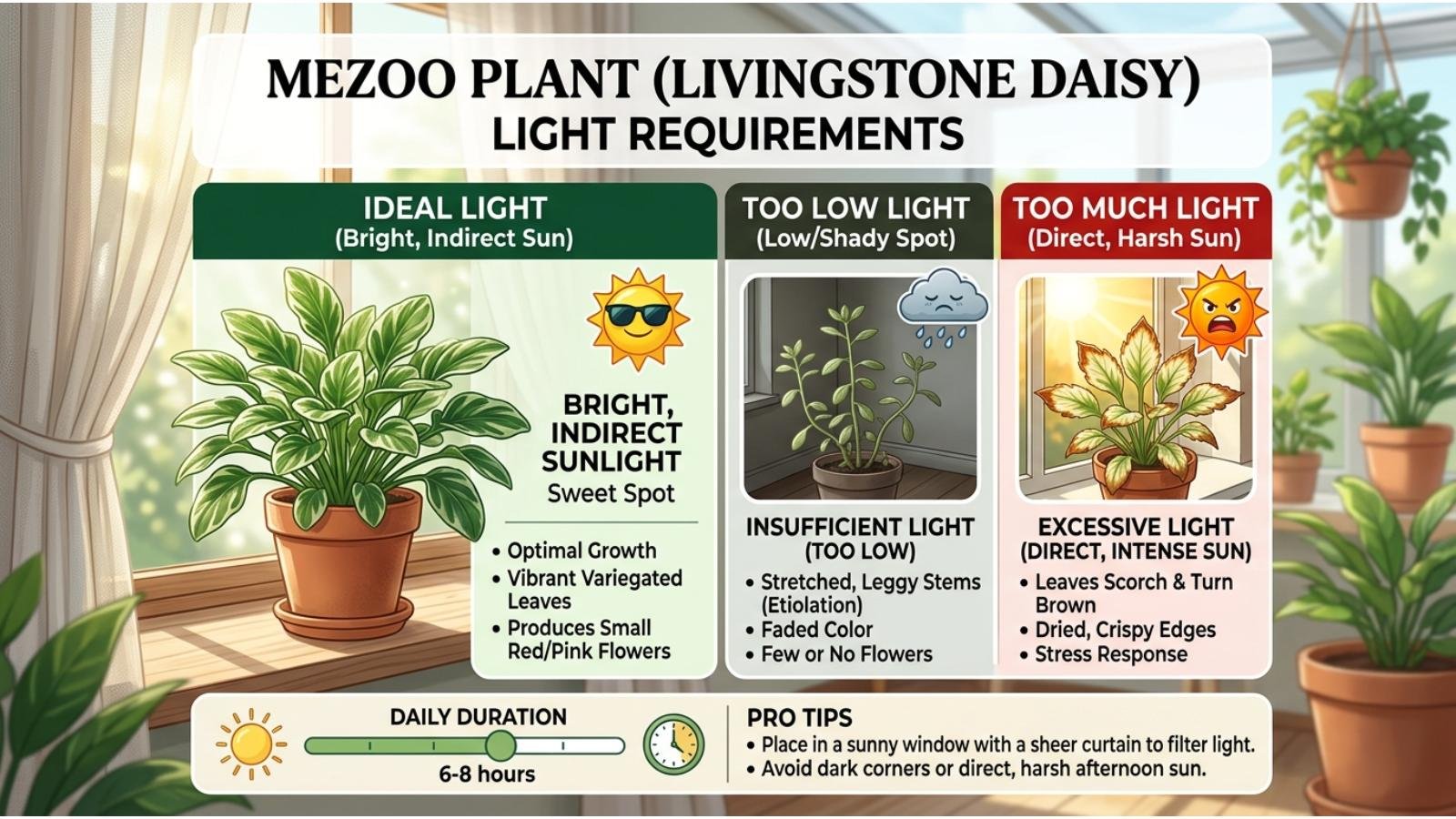
Light is one of the most important factors in successful Mezoo plant care. Give it too little light and the stems can stretch, foliage spacing increases, and flowering may decline.
Outdoor Mezoo generally performs best in full sun to partial sun. A location receiving several hours of direct sunlight helps maintain compact growth and strong coloration. Missouri Botanical Garden lists full sun as the preferred exposure.
For indoor Mezoo, choose the brightest practical location.
A good indoor position can be:
- Near a south-facing window.
- Close to a bright east-facing window.
- Near a west-facing window if afternoon sunlight is not excessively harsh.
- Under a suitable grow light when natural light is inadequate.
Watch the plant rather than relying only on a fixed number of sunlight hours. If stems become unusually long and sparse, light is often the first factor worth checking.
If the plant has recently moved indoors from a very sunny outdoor location, introduce stronger direct sunlight gradually to reduce the chance of leaf stress.
Image Suggestion: A simple diagram showing ideal Mezoo placement near bright windows versus a low-light location.
How Often To Water Mezoo
Watering is where many Mezoo owners go wrong.
Mezoo can tolerate periods of dryness, but that does not mean you should leave the plant bone-dry indefinitely. Missouri Botanical Garden recommends dry to medium moisture and emphasizes well-drained soil while warning against overwatering.
Instead of following a rigid calendar, check the growing medium.
Use this routine:
- Feel the soil several inches below the surface.
- If it is still noticeably wet, wait.
- If the upper portion has dried and the container drains well, water thoroughly.
- Allow excess water to escape through the drainage holes.
- Empty standing water from decorative outer containers or saucers.
Your watering frequency will change with temperature, sunlight, pot size, soil composition, and season.
A Mezoo sitting in hot outdoor sunlight may need water more frequently than one growing indoors beside a window. Conversely, a plant in a large pot with moisture-retaining soil may stay wet far longer than a small plant in a gritty mix.
The goal is not simply to water less. The goal is to prevent the roots from sitting in persistently saturated soil.
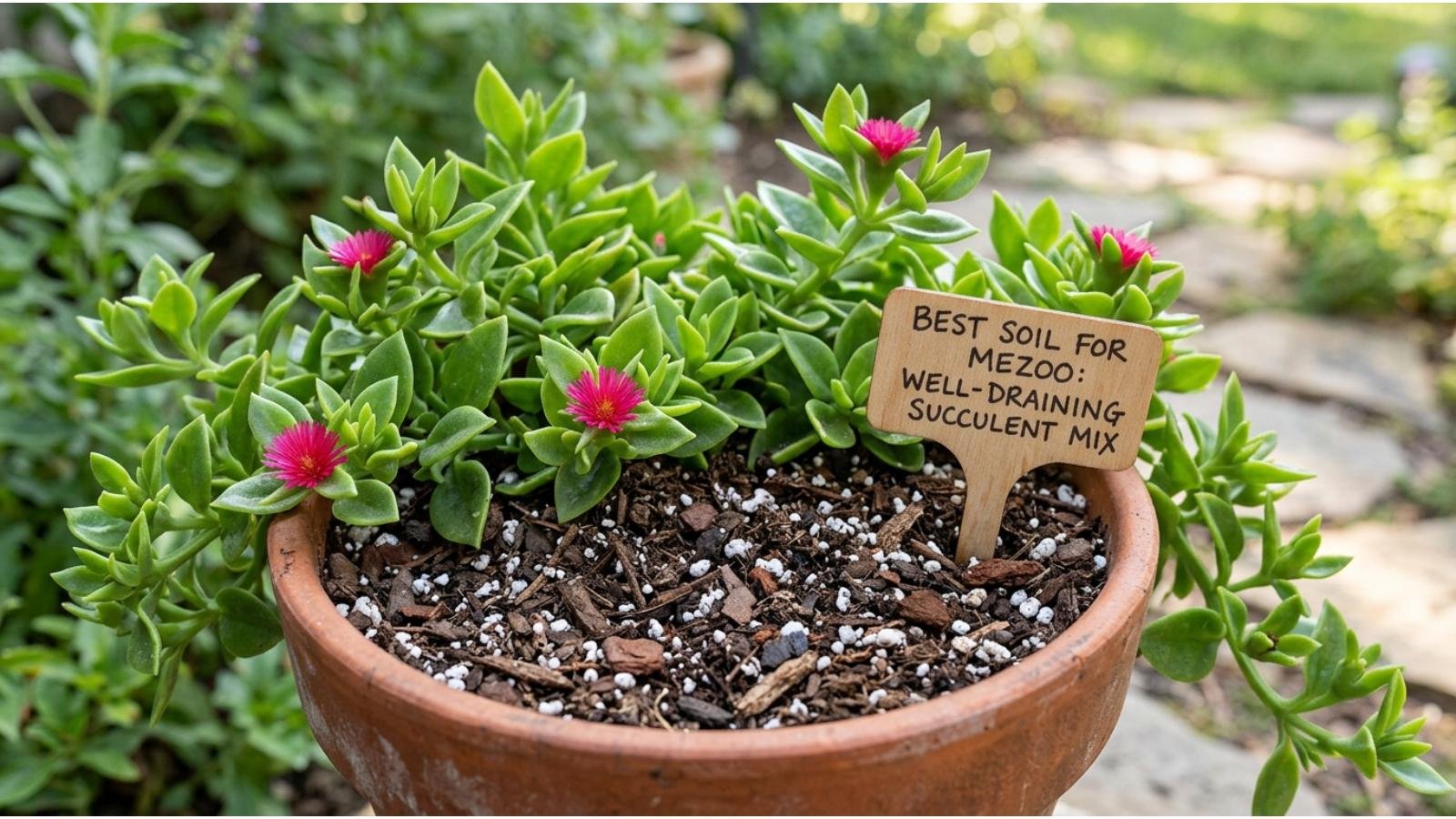
Best Soil For Mezoo
Well-draining soil is essential for healthy Mezoo roots.
A heavy mix that remains wet for days can create conditions that encourage root problems. Missouri Botanical Garden recommends average, dry to medium, well-drained soil and notes that sandy or gravelly soil is suitable.
For container growing, consider a mixture that combines:
- Quality potting mix.
- Cactus or succulent mix.
- Perlite or another coarse drainage amendment.
The exact recipe is less important than the final result. After watering, excess water should move through the container rather than remaining trapped around the roots.
Always use a pot with drainage holes.
A decorative pot without drainage can look attractive, but it makes moisture management much harder. If you want to use one, keep the Mezoo in a separate nursery pot with drainage inside the decorative container.
Image Suggestion: Side-by-side illustration of poorly draining compact soil and an airy Mezoo-friendly potting mix.
Choosing The Right Pot
Mezoo works particularly well in containers because its stems naturally trail over the edges.
When selecting a pot, prioritize drainage over appearance.
A suitable container should:
- Have one or more drainage holes.
- Be large enough for the root system without providing excessive unused soil.
- Remain stable when trailing stems become longer.
- Allow enough space for the plant to spread naturally.
A very large container is not automatically better. Extra soil can hold moisture for a long time, increasing the risk of watering problems.
Hanging baskets are particularly effective because Mezoo’s trailing habit becomes part of the display. Syngenta specifically lists hanging baskets among suitable container formats.
Mezoo Temperature And Humidity Needs
Mezoo prefers warm growing conditions and does not tolerate frost well.
Its response to cold is especially important for gardeners growing it outdoors in cooler climates. Missouri Botanical Garden describes it as a tender perennial and recommends it as an annual or for indoor overwintering outside suitable hardiness zones.
Before cold weather arrives, consider moving container-grown plants indoors if your local conditions are expected to produce frost.
Humidity generally does not need to be artificially increased. Mezoo’s thick foliage and preference for well-drained conditions make constant misting unnecessary.
Avoid placing it in an area where leaves remain repeatedly wet or where air circulation is poor.
How To Fertilize Mezoo
Mezoo is not a plant that needs heavy feeding.
Light fertilization during active growth is generally sufficient. Excess fertilizer can encourage soft, overly vigorous growth rather than the compact appearance many gardeners want.
A practical approach is to:
- Fertilize lightly during active spring and summer growth.
- Follow the fertilizer manufacturer’s dilution instructions.
- Avoid repeated heavy applications.
- Reduce or stop feeding when growth slows significantly.
Fresh potting mix also supplies nutrients, so recently repotted plants may need little additional fertilizer.
The key lesson is simple. More fertilizer does not automatically mean more attractive Mezoo.
How To Prune Mezoo
Pruning is one of the easiest ways to make Mezoo look fuller.
Because it naturally produces trailing stems, an unpruned plant can eventually become long and sparse. Pinching or cutting stems encourages branching and lets you control the overall shape.
For a fuller container:
- Identify long or bare stems.
- Use clean, sharp scissors or pruning shears.
- Cut just above a healthy leaf node.
- Remove dead or damaged growth.
- Repeat light pruning as needed during active growth.
Do not throw away every healthy cutting. Mezoo is particularly easy to propagate from stem cuttings, allowing you to turn pruning into new plants.
How To Propagate Mezoo From Cuttings
Stem propagation is one of the most useful Mezoo plant care techniques because it is inexpensive and straightforward.
Step By Step Propagation
- Select a healthy stem with several leaves.
- Make a clean cutting using sanitized scissors or shears.
- Remove leaves from the lower section of the cutting.
- Allow the cut surface to dry briefly if the cutting is particularly succulent.
- Place the cutting into a lightly moist, well-draining growing medium.
- Keep it in bright light without exposing a fresh cutting to extreme conditions.
- Maintain moderate moisture without making the medium soggy.
- Once roots develop and new growth appears, gradually treat it like an established plant.
Avoid starting with a weak, diseased, or severely damaged stem. Healthy propagation material gives you a much better chance of producing vigorous new plants.
Image Suggestion: Step-by-step infographic showing a Mezoo stem cutting, leaf removal, planting, rooting, and new growth.
Growing Mezoo Indoors
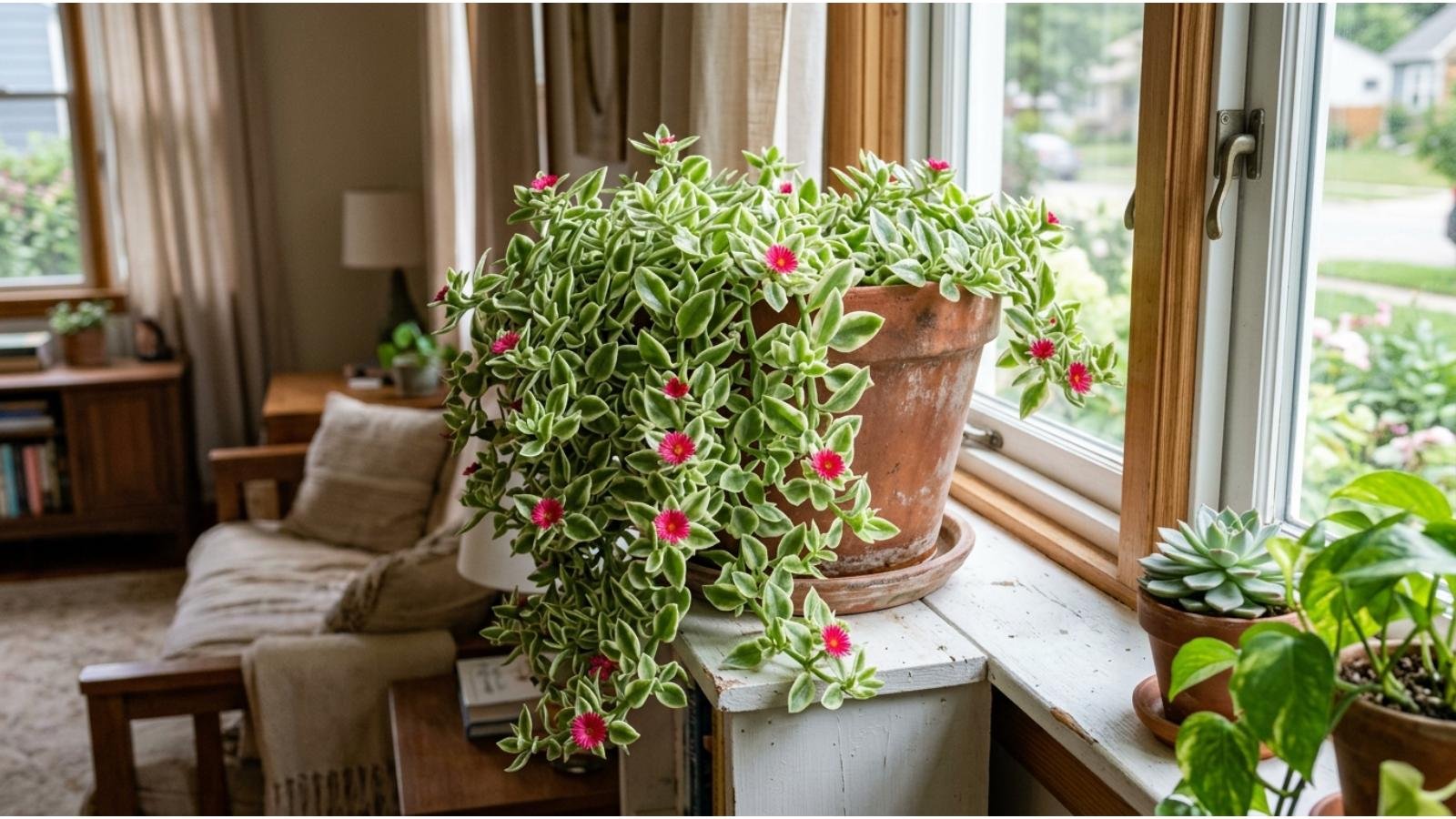
Mezoo can be grown indoors successfully, provided you can offer enough light.
The biggest indoor challenge is usually light rather than humidity.
Place the plant close to your brightest suitable window. If it becomes stretched or loses its compact appearance, increase light exposure before immediately reaching for fertilizer.
Indoor plants also tend to dry more slowly than plants exposed to outdoor sun and airflow. This means an indoor Mezoo may need watering less frequently.
Check the soil before watering rather than copying an outdoor watering schedule.
A useful indoor setup includes:
- Bright natural light or supplemental grow lighting.
- A pot with drainage holes.
- Fast-draining soil.
- Good air circulation.
- Moderate watering.
- Occasional pruning.
Growing Mezoo Outdoors
Outdoor conditions can bring out the plant’s strongest trailing performance.
Mezoo is particularly useful in:
- Hanging baskets.
- Window boxes.
- Patio containers.
- Rock gardens.
- Sunny borders.
- Groundcover-style plantings in suitable climates.
Its heat and drought tolerance make it useful for warm-season containers. Syngenta describes Mezoo as a heat-loving plant that can tolerate a range of conditions including drought.
However, drought tolerance should not be interpreted as permission to ignore the soil completely. Plants growing in containers can dry rapidly during hot weather, especially when exposed to strong sun and wind.
Check the plant regularly during periods of extreme heat.
Mezoo Plant Care In Different Seasons
Spring
Spring is an excellent time to restart active care.
Increase watering gradually as growth accelerates, begin light feeding if needed, and prune leggy stems to encourage fresh branching.
Spring is also a good time to propagate healthy cuttings.
Summer
Summer usually brings the strongest growth and flowering.
Check container moisture more frequently during prolonged heat, but continue allowing excess water to drain freely.
Plants receiving strong sunlight may need water more often than indoor plants.
Fall
As temperatures decline, growth may slow.
Reduce watering according to actual soil moisture rather than continuing the same summer schedule automatically.
If frost is a possibility, decide early whether container plants should be moved indoors.
Winter
Winter care depends heavily on your climate.
In cold areas, protect Mezoo from frost by bringing container plants indoors or growing them as seasonal plants.
Indoors, place the plant in the brightest available location and avoid keeping the soil continuously wet.
Common Mezoo Problems And Solutions
Mezoo Leaves Turning Yellow
Yellow leaves can have several causes, but consistently wet soil is an important one to investigate.
Check the drainage holes and inspect the soil before adding more water.
If the soil remains wet for an unusually long time, improve drainage and adjust your watering routine.
Older leaves can also naturally yellow and drop, so examine the overall plant rather than reacting to one leaf.
Mezoo Leaves Becoming Soft Or Mushy
Soft, translucent, or mushy foliage can indicate excessive moisture and possible tissue damage.
Immediately check:
- Soil moisture.
- Drainage.
- Container size.
- Recent watering frequency.
- Stem firmness.
If rot has developed, affected portions may need to be removed and healthy material propagated separately.
Mezoo Is Leggy
Leggy growth usually means the plant is reaching for more light.
Move it toward a brighter location and prune excessively elongated stems.
Do not simply fertilize a leggy plant. Extra nutrients cannot compensate for inadequate light.
Mezoo Is Not Flowering
Flowering can decline when light levels are inadequate.
Start by checking the plant’s location. A brighter position can encourage stronger growth and flowering.
Also consider seasonal timing, plant maturity, temperature, and general plant health.
Mezoo is listed as flowering from spring through summer by Syngenta, while Missouri Botanical Garden lists a longer June-to-October bloom period for its listed cultivar.
Mezoo Has Brown Leaves
Brown foliage can result from several environmental stresses.
Check the soil first, then inspect the plant’s light exposure and surrounding conditions.
If the soil is extremely dry, the plant may need more consistent watering. If it is constantly wet, the problem may instead be excess moisture.
Avoid diagnosing a problem from leaf color alone.
Mezoo Has Pests
Mezoo is generally considered relatively trouble-free, but common houseplant pests can occasionally appear.
Inspect:
- Leaf undersides.
- Stem joints.
- New growth.
- Areas where leaves meet stems.
Early detection makes pest management much easier.
Common Mezoo Plant Care Mistakes
The most frequent problems are usually caused by a mismatch between the plant’s needs and the growing environment.
Avoid these mistakes:
- Watering automatically on a fixed schedule.
- Using a container without drainage.
- Keeping the soil constantly saturated.
- Growing the plant in very low light.
- Assuming drought tolerance means no watering is required.
- Using excessive fertilizer to compensate for poor growth.
- Ignoring frost warnings.
- Allowing long, bare stems to grow without pruning.
- Choosing an oversized pot for a small root system.
One of the most useful habits is to inspect the soil and plant before making a care decision.
How To Make Mezoo Grow Fuller
If your Mezoo looks thin rather than lush, focus on the three factors that matter most.
First, increase appropriate light. Second, prune long stems. Third, make sure the root zone has enough drainage.
After pruning, healthy stems can branch and create a denser appearance. Consistent bright light then supports the new growth.
Avoid trying to force fullness through heavy fertilization. A balanced environment generally produces better results than aggressive feeding.
Is Mezoo Suitable For Hanging Baskets
Yes. Mezoo’s natural trailing habit makes it particularly attractive in hanging baskets.
As stems grow, they can cascade around the container and create a fuller display. Syngenta specifically identifies hanging baskets as a suitable growing format.
For the best appearance, position the basket where the plant receives sufficient light and where long stems have room to hang naturally.
Rotate indoor baskets occasionally if growth is noticeably stronger on one side.
Mezoo Plant Care Quick Reference
| Care Factor | Best Practice |
|---|---|
| Light | Bright light to full or partial sun |
| Soil | Well-draining, airy soil |
| Water | Water thoroughly, then allow appropriate drying |
| Drainage | Essential |
| Temperature | Warm conditions are preferred |
| Frost | Protect from frost |
| Humidity | Normal household conditions are generally adequate |
| Fertilizer | Light feeding during active growth |
| Pruning | Trim long stems to encourage branching |
| Propagation | Stem cuttings |
| Containers | Pots and hanging baskets with drainage |
| Growth habit | Trailing and spreading |
The exact watering frequency should always be adjusted for pot size, soil, light, temperature, and season rather than following a universal calendar.
Frequently Asked Questions
How Much Sun Does Mezoo Need
Mezoo performs well in full sun to partial sun. Bright conditions help maintain strong growth and attractive variegated foliage. Indoor plants should be placed near a bright window or provided with supplemental lighting when necessary.
Is Mezoo A Succulent
Mezoo has succulent-like, water-storing foliage and is commonly treated as a semi-succulent trailing plant. Its watering needs are therefore different from many moisture-loving tropical houseplants.
Can Mezoo Grow Indoors
Yes. Mezoo can grow indoors when given sufficient bright light, good drainage, and carefully managed watering.
Can Mezoo Survive Winter
Mezoo is not reliably frost hardy. In colder climates, it can be grown as a seasonal plant or moved indoors before freezing temperatures arrive.
Why Is My Mezoo Losing Its Variegation
Low light can contribute to weaker coloration and stretched growth. Move the plant to a brighter location and monitor new growth.
Can You Grow Mezoo From Cuttings
Yes. Healthy stem cuttings are an effective way to propagate Mezoo. Use clean tools, well-draining medium, and avoid keeping the cutting excessively wet.
Does Mezoo Need High Humidity
No. Mezoo generally does not require the high humidity levels preferred by many tropical houseplants. Good drainage and appropriate watering are more important.
How Do I Make Mezoo Bushier
Provide adequate light and prune long trailing stems above healthy growth points. Regular light pruning can encourage branching and create a fuller container display.
Why Is My Mezoo Wilting Even Though The Soil Is Wet
Wilting does not always mean the plant needs more water. If the soil is wet but the plant is wilting, examine the roots and drainage. Waterlogged roots can become stressed and may stop functioning properly.
How Fast Does Mezoo Grow
Growth varies with light, temperature, container size, water, and growing conditions. Under favorable warm conditions, Mezoo can develop a strong trailing habit and spread outward from containers. Syngenta classifies its vigor as medium to vigorous.
Conclusion
Successful Mezoo plant care comes down to balance. Give the plant plenty of appropriate light, use soil that drains efficiently, water according to soil conditions rather than a rigid schedule, and protect it from frost.
For the fullest plants, prune long stems and use healthy cuttings for propagation. If your Mezoo begins looking unhealthy, inspect light, soil moisture, drainage, and temperature before changing several things at once.
With those fundamentals in place, Mezoo can become an especially rewarding trailing plant for containers, hanging baskets, sunny windows, and suitable outdoor gardens.