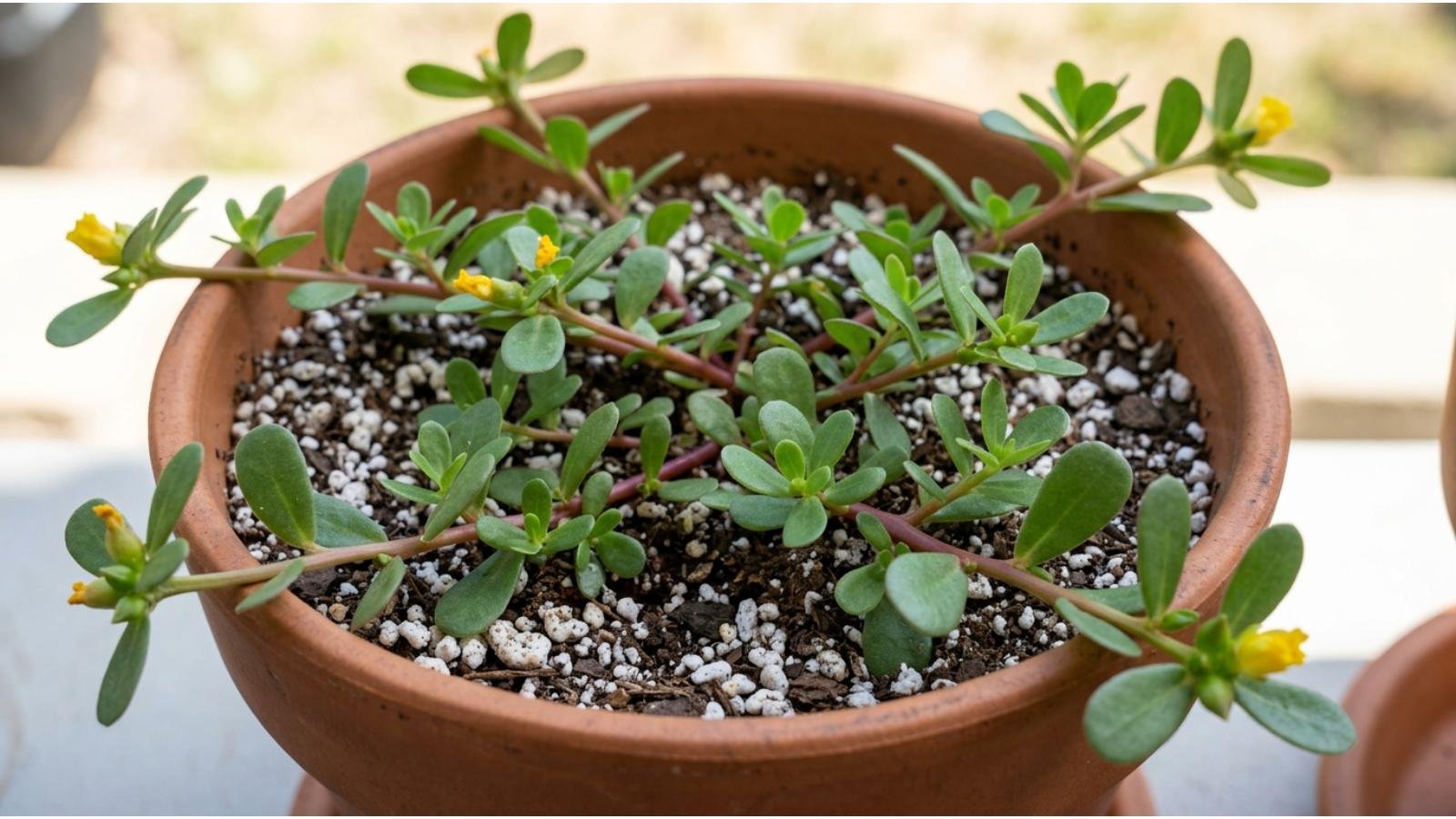
Portulaca is one of the better choices for gardeners dealing with hot, sunny spaces where other flowering plants struggle. Its fleshy leaves and stems store water, allowing the plant to handle heat and periods of dryness while producing colorful flowers in shades including pink, red, orange, yellow, purple, and white.
The main mistake beginners make is treating portulaca like a thirsty bedding plant. Giving it more water does not mean getting more flowers; in poorly drained soil, excess moisture can contribute to crown and root rot. Good portulaca plant care is mostly about giving the plant the conditions it naturally prefers rather than constantly intervening.
Quick Answer
Portulaca plant care is surprisingly easy when you get three things right: strong sunlight, excellent drainage, and restrained watering. Portulaca, especially Portulaca grandiflora or moss rose, is a heat- and drought-tolerant flowering succulent that performs best with at least 6 hours of direct sun and loose, well-drained soil. Let the soil dry between thorough waterings, avoid constantly wet roots, and remove spent flowers when you want to encourage a tidier display.
Understanding Portulaca
Portulaca is a genus containing many species, but the ornamental moss rose commonly grown in gardens is Portulaca grandiflora. It is a low-growing annual with succulent foliage and spreading stems. Mature plants commonly stay relatively short while spreading outward, making them useful for containers, borders, rock gardens, hanging baskets, and sunny spaces.
Its flowers are particularly interesting because many varieties close at night and may remain closed during cloudy or rainy weather. That behavior is normal and does not necessarily mean the plant is unhealthy.
Image Suggestion: A labeled botanical illustration showing portulaca leaves, stems, roots, flowers, and overall spreading growth habit.
Portulaca Light Requirements
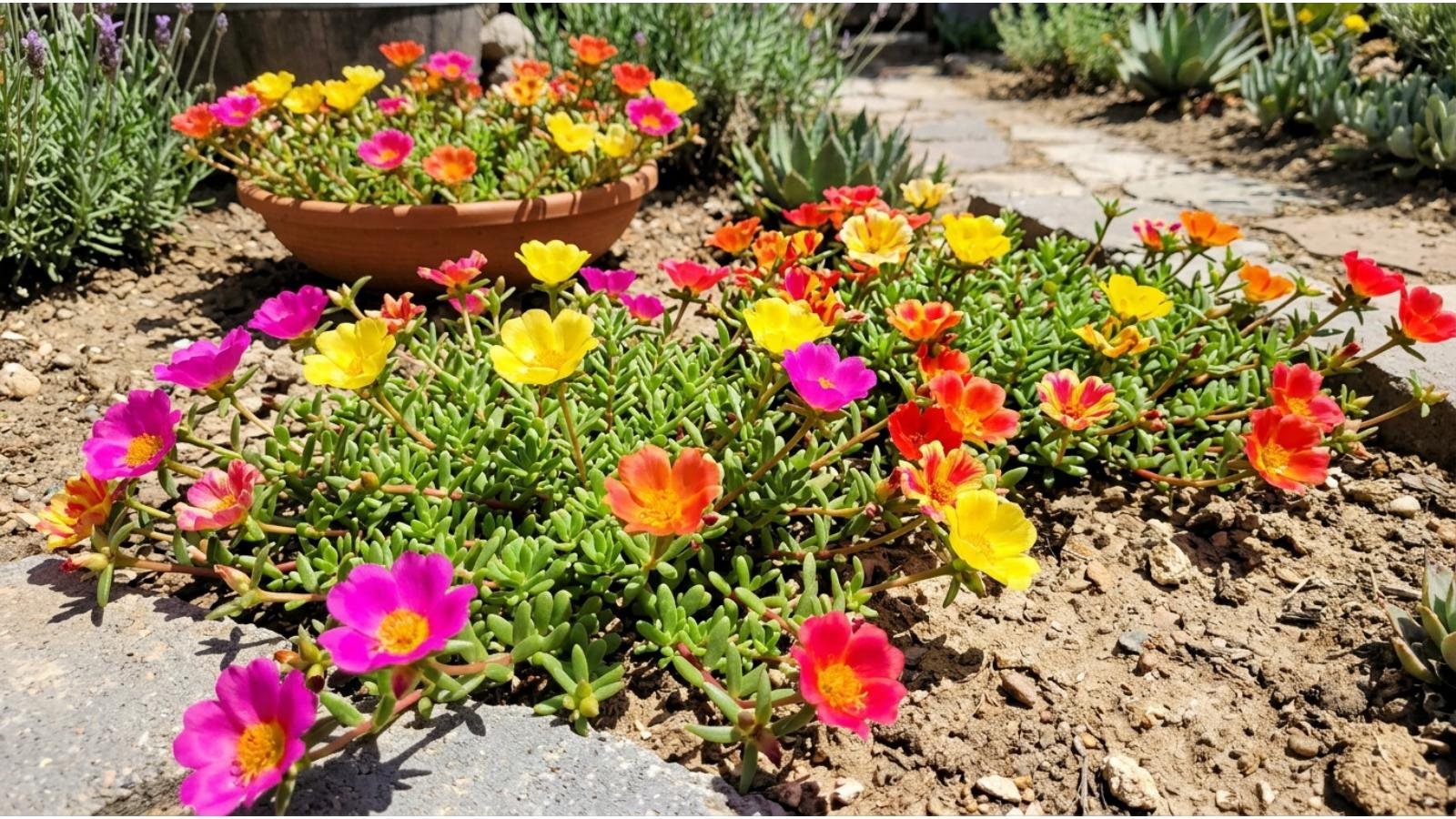
Portulaca performs best in full sun, generally meaning at least 6 hours of direct sunlight per day. Strong light supports compact growth and abundant flowering.
If your plant receives too little light, you may notice weaker growth and fewer flowers. A bright indoor windowsill can work temporarily, but outdoor portulaca usually performs best where it receives substantial direct sunlight.
For containers, place the pot somewhere that receives strong morning and afternoon sunlight. Avoid positioning it permanently in deep shade beneath trees or beside buildings that block most direct light.
How Much Sun Is Ideal
Aim for:
- At least 6 hours of direct sunlight.
- A bright, open location.
- Strong light during the main growing season.
- Good airflow around crowded plants.
In extremely hot climates, intense afternoon conditions can still be tolerated because portulaca is notably heat tolerant.
Choosing the Right Soil
Excellent drainage is more important than rich soil for portulaca. The plant naturally handles dry and relatively poor growing conditions, but persistently wet roots can create serious problems. Extension guidance recommends well-drained sandy, rocky, or loose soils.
For containers, choose a quality potting mix that drains freely rather than dense garden soil. A container with drainage holes is essential.
A practical mix should:
- Drain water quickly.
- Avoid becoming compacted.
- Allow air around the roots.
- Dry reasonably between waterings.
If your garden soil is heavy clay, growing portulaca in a raised area or container can make moisture management much easier.
Image Suggestion: Side-by-side comparison of well-draining sandy soil and compacted waterlogged soil around portulaca roots.
How to Water Portulaca
Watering is where good portulaca plant care differs from many conventional flowering plants.
Portulaca has fleshy leaves and stems that help it tolerate drought. Consequently, it generally needs less frequent watering once established than plants with thin, non-succulent foliage.
Instead of watering automatically every day, check the growing medium.
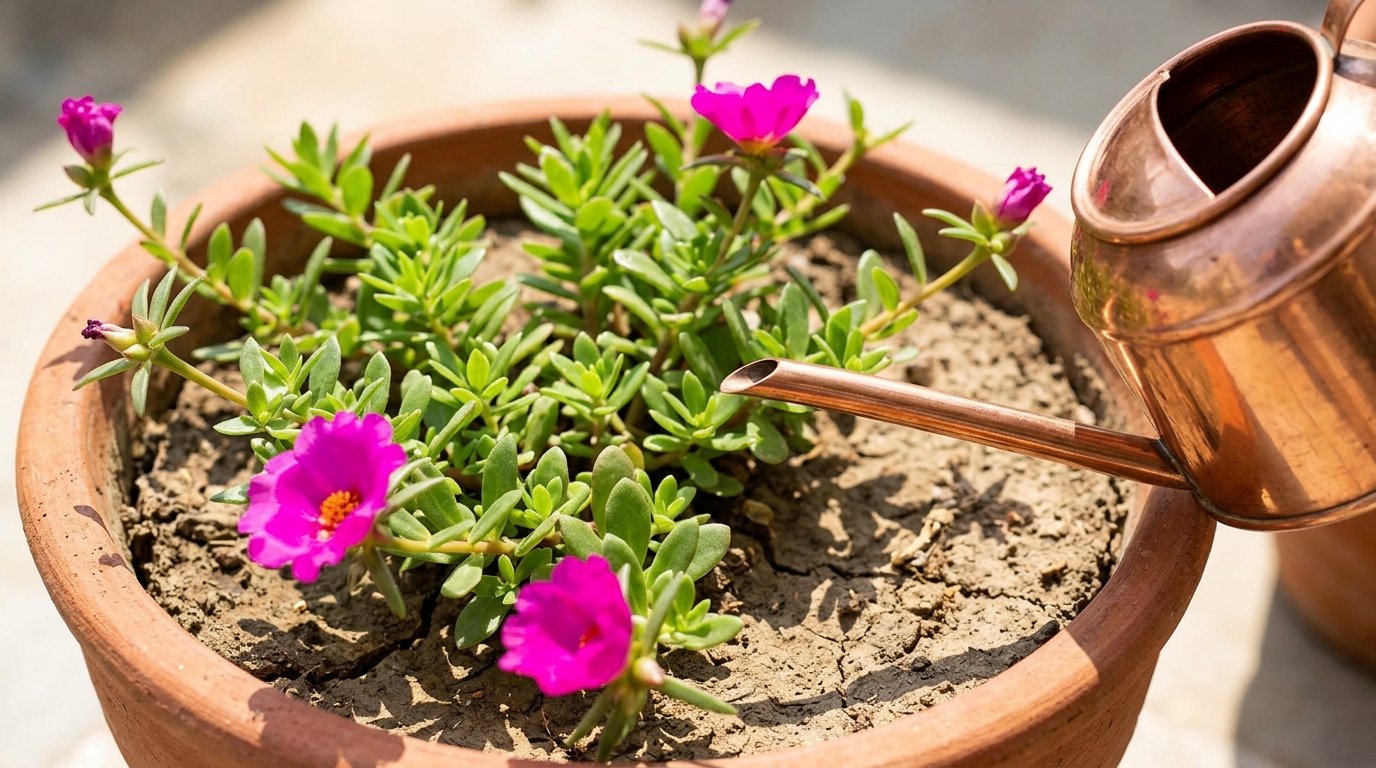
When the soil has dried sufficiently, water thoroughly so moisture reaches the root zone. Then allow excess water to drain away.
A Practical Watering Routine
Use this simple approach:
- Check the soil before watering.
- Water thoroughly when the growing medium has dried.
- Allow excess water to escape from the drainage holes.
- Avoid leaving the container sitting in water.
- Reduce watering during cool or persistently wet weather.
- Monitor newly planted plants more closely until their roots establish.
The exact frequency will vary with temperature, container size, soil, rainfall, and sunlight. A plant sitting in a small pot under intense summer sun may dry considerably faster than one planted in the ground.
Temperature and Humidity
Portulaca is particularly well suited to warm conditions. Portulaca grandiflora is recognized for its strong heat and drought tolerance, which makes it useful for hot summer gardens and difficult sunny locations.
However, heat tolerance does not make the plant immune to water problems. Hot weather combined with constantly wet soil can still create root and crown problems.
For gardeners in colder regions, remember that common moss rose is generally grown as an annual rather than a reliably winter-hardy perennial. Some plants can reseed and return in favorable conditions, but this should not be confused with dependable perennial survival. (
Feeding and Fertilizing Portulaca
Portulaca does not require an aggressive feeding program. Its ability to grow in relatively poor soils is one reason it works well in low-maintenance gardens.
Excessive fertilizer is rarely the solution when flowering is disappointing. Before adding more fertilizer, check the basics:
- Is the plant receiving enough direct sun.
- Is the soil draining properly.
- Are you watering too frequently.
- Is the plant overcrowded.
- Is the container too small.
Healthy portulaca should generally be managed with moderation rather than constant feeding.
How to Encourage More Flowers
If your main goal is a colorful display, focus first on sunlight and drainage.
Portulaca naturally produces showy flowers throughout the warm growing season under suitable conditions.
To encourage a strong display:
- Give the plant plenty of direct sunlight.
- Avoid consistently wet soil.
- Do not crowd plants excessively.
- Remove damaged or spent material when necessary.
- Keep surrounding weeds from competing for light and space.
One useful detail is that some portulaca flowers naturally close during cloudy weather and at night. Therefore, judging flowering performance on a cloudy morning can give you the wrong impression.
Pruning and Deadheading Portulaca
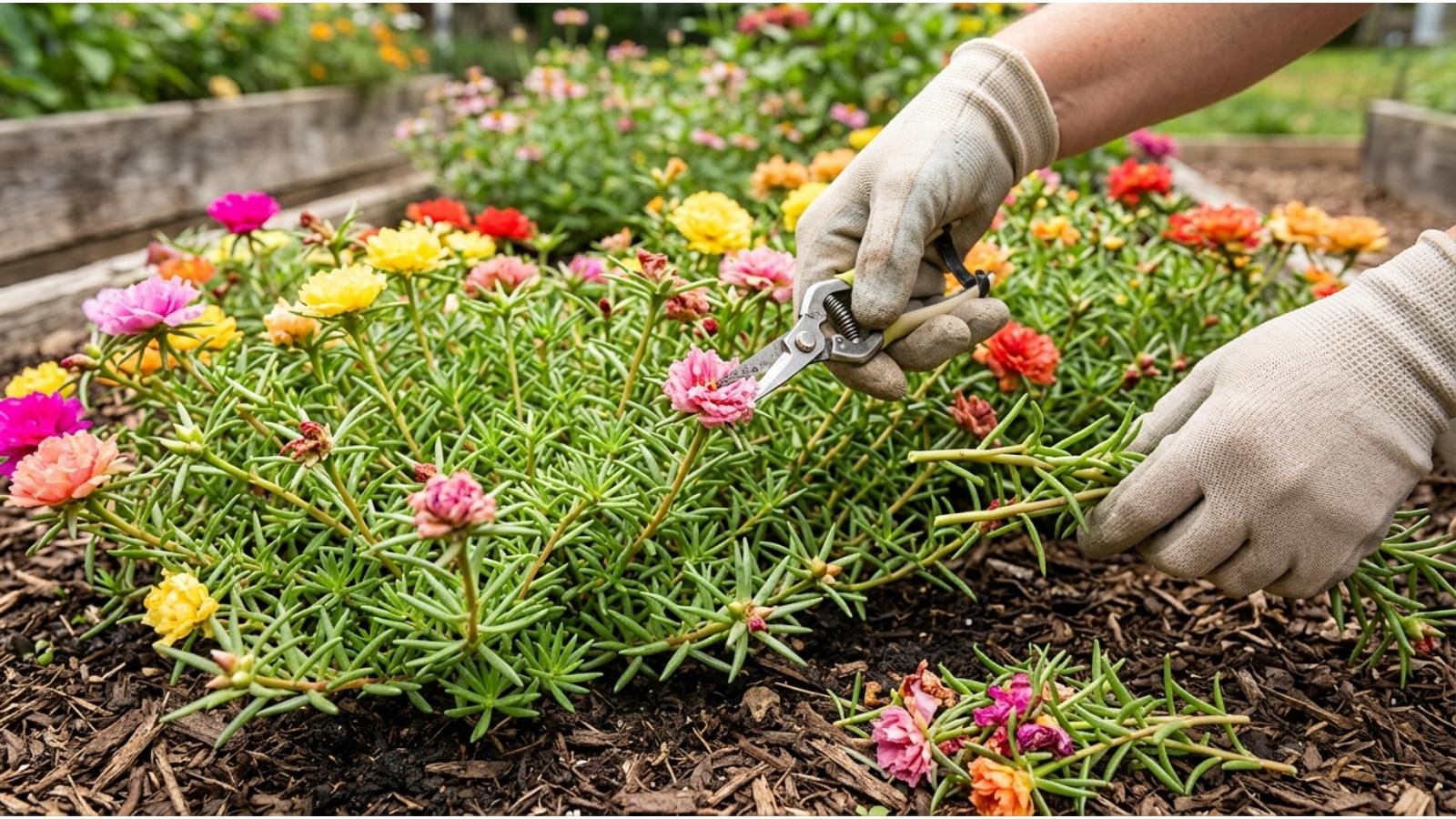
Portulaca generally requires little maintenance. Deadheading is optional rather than essential for basic survival.
Removing spent flowers can make plants look cleaner and can also reduce self-seeding. North Carolina Extension notes that deadheading moss rose helps deter reseeding.
If you like plants to spread naturally and return from seed, you may choose to leave some mature flowers alone.
For containers, occasional trimming can also help maintain a neat, compact appearance when stems become overly long.
Growing Portulaca in Containers
Portulaca is particularly well suited to containers because its compact, spreading habit works beautifully in pots and hanging baskets.
The biggest container-care priority is drainage.
Choose:
- A container with drainage holes.
- A freely draining potting mix.
- A sunny location.
- A container large enough for healthy root development.
- A saucer that does not permanently hold standing water.
Containers dry faster than garden beds, so do not assume that drought tolerance means a potted plant never needs water. Instead, use the condition of the soil and plant as your guide.
Image Suggestion: Healthy flowering portulaca cascading from a terracotta container in full sun.
Growing Portulaca From Seed
Portulaca can be propagated from seed, and direct sowing is a practical option in suitable climates. North Carolina Extension recommends sowing outdoors after the last frost date or starting seeds indoors several weeks before that date.
Young seedlings need more consistent moisture than established plants. This is an important distinction.
A mature portulaca may tolerate dry conditions extremely well, but newly germinated seedlings have limited root systems and should not be allowed to dry excessively during establishment.
Once seedlings become established, gradually transition toward the drier growing conditions preferred by mature plants.
Propagating Portulaca From Cuttings
Some ornamental portulaca can also be propagated from stem cuttings. This can be useful when you want to reproduce a particularly attractive plant.
Take a healthy stem section, allow the cut surface to dry appropriately, and place it into a suitable well-draining propagation medium. Avoid keeping the medium constantly saturated.
Propagation success depends on the particular plant and conditions, so seed propagation remains a straightforward option for many gardeners.
Common Portulaca Problems
Most portulaca problems can be traced back to unsuitable growing conditions rather than complicated care requirements.
Portulaca Turning Yellow
Yellowing foliage can have several causes, but consistently wet soil is an important possibility.
Check:
- Drainage holes.
- Soil moisture.
- Recent rainfall.
- Watering frequency.
- Root or crown health.
Do not automatically respond to yellow leaves by adding fertilizer.
Portulaca Not Flowering
Insufficient sunlight is one of the first things to investigate.
Move container-grown plants toward a brighter location if they are receiving limited direct light. Also check whether excessive moisture or overly vigorous leafy growth is affecting the plant’s performance.
Portulaca Becoming Leggy
Leggy growth can indicate inadequate light. Since portulaca naturally prefers full sun, a plant growing in a dim location may fail to develop the dense, spreading appearance gardeners expect.
Portulaca Rotting
Poor drainage and excessive moisture are major warning signs. Moss rose is drought tolerant, but that does not mean its roots can remain saturated. North Carolina Extension specifically identifies crown rot as a potential problem in poorly drained soils.
If rot is suspected, first correct the growing conditions rather than simply changing the watering schedule for a few days.
Image Suggestion: Healthy portulaca compared with a plant showing symptoms associated with prolonged wet conditions.
Portulaca Pests
Portulaca is generally a low-maintenance plant, but pests can occasionally appear. North Carolina Extension lists aphids and slugs among potential problems for Portulaca grandiflora.
Inspect the foliage regularly, particularly when plants appear stressed.
Look beneath leaves and around new growth for visible insects or feeding damage. Also inspect the soil surface and nearby areas when slug damage is suspected.
Early detection is much easier to manage than waiting until substantial foliage has been damaged.
Portulaca Care Through the Seasons
Spring
Spring is the time to establish plants after the risk of damaging frost has passed.
Focus on:
- Choosing a sunny site.
- Preparing well-drained soil.
- Starting or transplanting plants carefully.
- Establishing young plants with appropriate moisture.
Moss rose does not transplant particularly well, so handle seedlings carefully when moving them.
Summer
Summer is when portulaca really shows its strengths.
Provide strong sunlight and avoid unnecessary watering. During periods of extreme heat, check containers more frequently because they can dry much faster than plants growing in the ground.
Fall
Flowering can continue into fall depending on climate and growing conditions.
If you want plants to self-seed, allow some flowers to mature rather than removing every spent bloom.
Winter
In colder climates, common moss rose is normally treated as an annual. Some plants may reseed naturally, but dependable overwintering should not be expected everywhere.
Common Portulaca Care Mistakes
Watering Every Day
This is perhaps the easiest mistake to make. Drought-tolerant plants do not need the same watering routine as moisture-loving annuals.
Planting in Heavy Wet Soil
Even a heat-loving plant can struggle when its roots remain wet. Drainage should be considered before planting.
Keeping Portulaca in Shade
A plant that needs full sun will not reach its best flowering potential in a dark corner.
Overfertilizing
More fertilizer is not automatically more flowers. Correct sunlight, drainage, and watering problems first.
Assuming Closed Flowers Mean Something Is Wrong
Portulaca flowers commonly close at night and may close during cloudy or rainy weather. This is normal behavior.
Treating Every Portulaca as the Same Plant
The genus contains many species, and ornamental plants sold as portulaca can include hybrids and different species. Care details can therefore vary somewhat between plants.
Portulaca Care At a Glance
| Care factor | Best practice |
|---|---|
| Light | Full sun, ideally 6 or more hours |
| Soil | Loose and very well drained |
| Water | Moderate to low once established |
| Temperature | Warm conditions preferred |
| Fertilizer | Light feeding is generally sufficient |
| Pruning | Minimal |
| Deadheading | Optional, useful for reducing reseeding |
| Container | Excellent choice with drainage holes |
| Propagation | Seeds and some stem cuttings |
| Main concern | Excess moisture and poor drainage |
The specific needs can vary by species and cultivar, but these fundamentals are especially applicable to ornamental moss rose.
Frequently Asked Questions
How much sun does portulaca need.
Portulaca performs best in full sun with at least 6 hours of direct sunlight daily. Strong light is especially important for good flowering. (
How often should I water portulaca.
Water when the growing medium has dried sufficiently rather than following a rigid daily schedule. Established plants are drought tolerant and generally prefer drying between waterings.
Can portulaca grow in pots.
Yes. Portulaca is well suited to containers and hanging baskets. Use a container with drainage holes and a freely draining growing medium.
Why are my portulaca flowers closed.
Portulaca flowers commonly close at night and may also close during cloudy or rainy weather. This is normal behavior for many varieties.
Does portulaca come back every year.
Common moss rose is generally grown as an annual, particularly in colder climates. It can reseed under favorable conditions, but it should not be assumed to survive winter everywhere.
Can portulaca tolerate drought.
Yes. Portulaca is well known for drought tolerance, partly because its fleshy leaves and stems can store water.
Why is my portulaca dying after watering.
If the plant declines despite frequent watering, excessive moisture or poor drainage may be contributing. Portulaca prefers well-drained conditions, and poorly drained soil can contribute to crown rot.
Should I deadhead portulaca.
Deadheading is optional. It can improve appearance and reduce self-seeding, but portulaca is naturally low maintenance.
Can portulaca grow in poor soil.
Yes. Portulaca can perform well in poor to average soils as long as the soil is well drained and the plant receives sufficient sunlight.
Is portulaca easy for beginners.
Yes. Its low maintenance requirements, heat tolerance, drought tolerance, and preference for sunny locations make it a particularly forgiving choice when drainage and sunlight are correct.
Conclusion
Successful portulaca plant care comes down to working with the plant rather than against it. Give it plenty of direct sunlight, fast-draining soil, sensible watering, and minimal unnecessary maintenance, and it can provide a long-lasting display of colorful flowers during warm weather.
The most useful rule to remember is simple: sunny and dry is usually better for portulaca than shady and constantly wet. Once that balance is established, even beginner gardeners can grow healthy, vigorous plants with relatively little effort.
Sources used for horticultural guidance include North Carolina State Extension, University of Wisconsin Horticulture, Iowa State University Extension, Texas Tech University Plant Resources, and Oklahoma State University Extension.