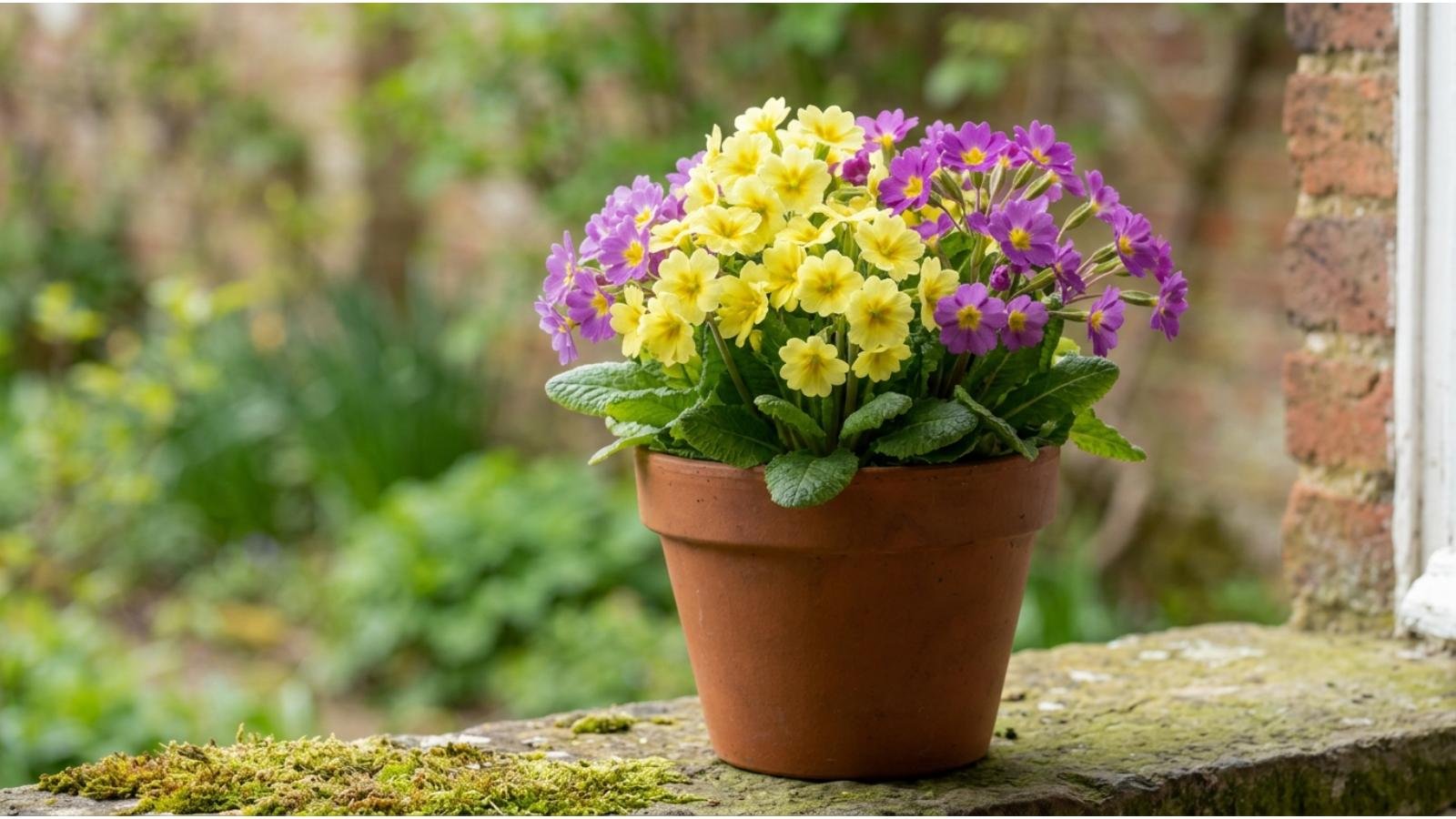
Primroses bring some of the earliest cheerful flowers to gardens, containers, window boxes, and cool indoor spaces. Their compact rosettes and colorful blooms make them look easy to grow, but the biggest challenge is giving them the cool, evenly moist environment they prefer. Heat, dry soil, poor drainage, and intense afternoon sun can quickly cause a once-healthy primrose to wilt or decline.
The good news is that successful primrose plant care is less about complicated routines and more about getting a few environmental conditions consistently right. This guide explains how to choose the right location, water correctly, prepare soil, encourage flowering, handle indoor primroses, troubleshoot common problems, and adapt care through the seasons.
Quick Answer
Primrose plant care is mainly about cool temperatures, bright filtered light, consistently moist but well-drained soil, and protection from harsh afternoon heat. Common garden primroses such as Primula vulgaris perform best in partial shade and humus-rich soil that stays evenly moist without becoming waterlogged. Florist primroses need especially cool indoor conditions and should not be allowed to dry completely.
Understanding Primrose Plants
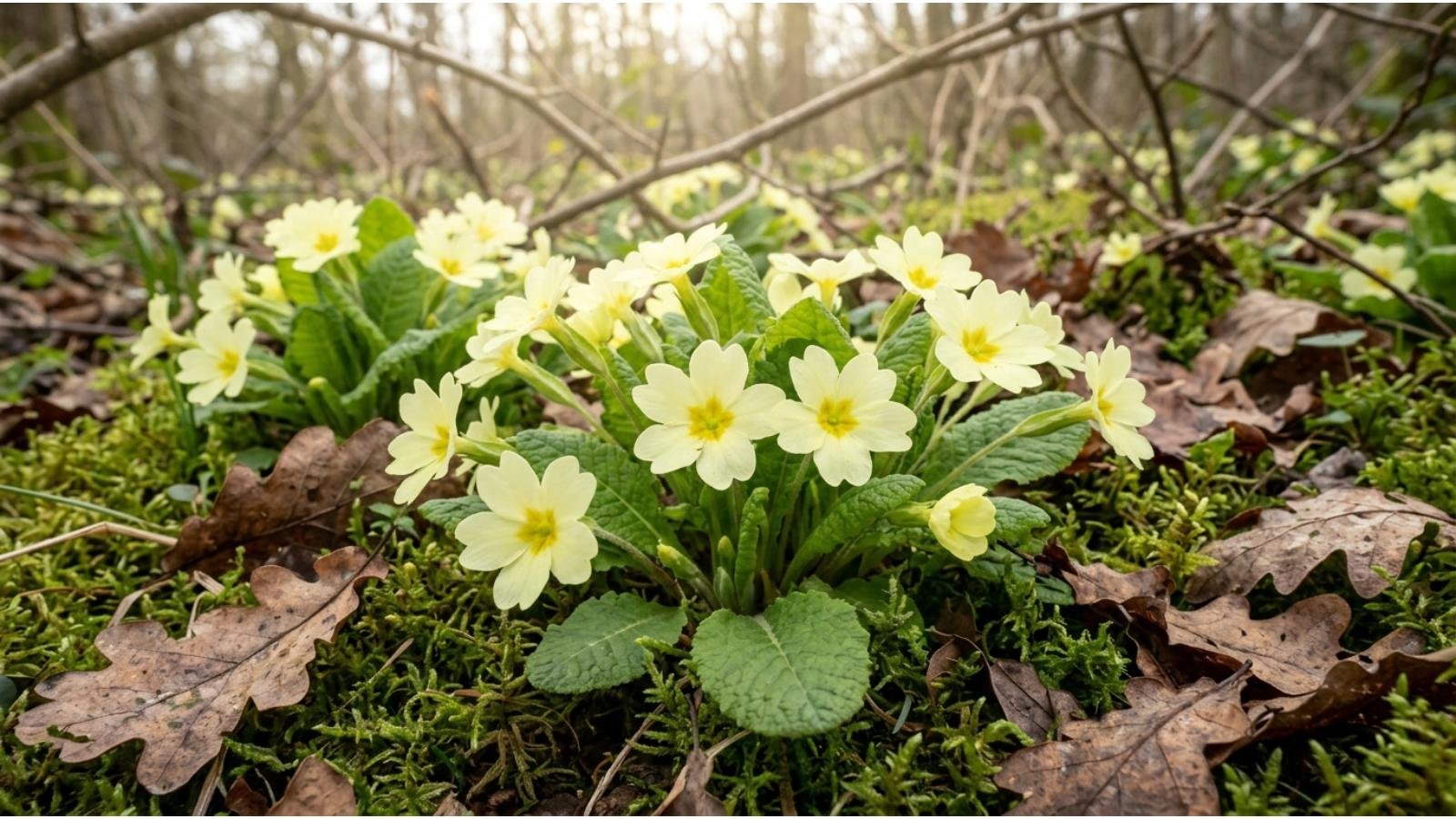
Primrose is the common name used for plants in the genus Primula, which contains many species and cultivated forms with different growing requirements. Common primrose, Primula vulgaris, is a herbaceous perennial that forms a low rosette of leaves and produces flowers above the foliage, typically in early spring.
This distinction matters because not every plant sold as a primrose should receive exactly the same treatment. Some primulas prefer moist woodland-like conditions, while specialist alpine types need sharper drainage and protection from excessive summer heat and winter wet.
For most beginners growing ordinary garden primroses, the basic formula is simple.
- Cool growing conditions.
- Partial shade or gentle sunlight.
- Moist but well-drained soil.
- Plenty of organic matter.
- Protection from extreme afternoon heat.
- Good airflow around the foliage.
Choosing The Right Light
Primroses generally perform well in partial shade, although some varieties can tolerate full sun when their soil remains reliably moist. Primula vulgaris is particularly well suited to partial shade and can suffer in hot afternoon conditions, especially in warmer climates.
A useful way to judge the location is to watch the plant rather than relying only on a fixed number of sunlight hours.
A good location receives bright light without exposing the foliage to relentless hot afternoon sun. Morning sun followed by afternoon shade is often an excellent arrangement.
If you are growing primrose in a container, you also have an advantage because you can move it when seasonal temperatures change.
Image Suggestion: Primrose growing in morning sun with afternoon shade compared with primrose exposed to harsh afternoon sunlight.
Getting Soil And Drainage Right
Primroses like moisture, but moisture does not mean permanently saturated soil. The ideal growing medium holds enough water around the roots while allowing excess water to drain away. RHS guidance recommends moist but well-drained conditions, while extension guidance also emphasizes humus-rich soil with good drainage.
For a garden bed, improve poor soil with organic matter before planting. This can increase moisture retention in sandy ground while improving structure in heavier soil.
For containers, use a quality potting mix that drains freely. RHS recommends multipurpose peat-free compost with grit or perlite for container primulas.
Avoid placing a primrose in a pot without drainage holes. A decorative outer pot can hide standing water, so check the inner container after watering.
A simple rule is useful here.
Moist soil is good. Waterlogged soil is not.
How To Water Primrose Plants
Watering is one of the most important parts of primrose plant care because these plants dislike both severe drying and constantly saturated soil.
Check the soil regularly. If the surface is beginning to dry and the root zone is no longer evenly moist, water thoroughly. Allow excess water to drain before returning the container to its usual position.
For indoor florist primroses, Iowa State University Extension recommends keeping the potting soil evenly moist and warns that plants decline rapidly if the soil dries completely or stays constantly wet.
Avoid watering automatically on the same schedule every day. Temperature, pot size, sunlight, soil composition, and season all affect how quickly moisture disappears.
Watch for these clues.
- Limp leaves with dry soil usually indicate the plant needs water.
- Yellowing leaves with constantly wet soil may indicate excessive moisture or root problems.
- Rapid drying can occur in small nursery pots placed near warm windows.
- Water sitting in a saucer for long periods should be emptied.
The goal is consistent moisture rather than constant watering.
Feeding Primrose For Better Growth
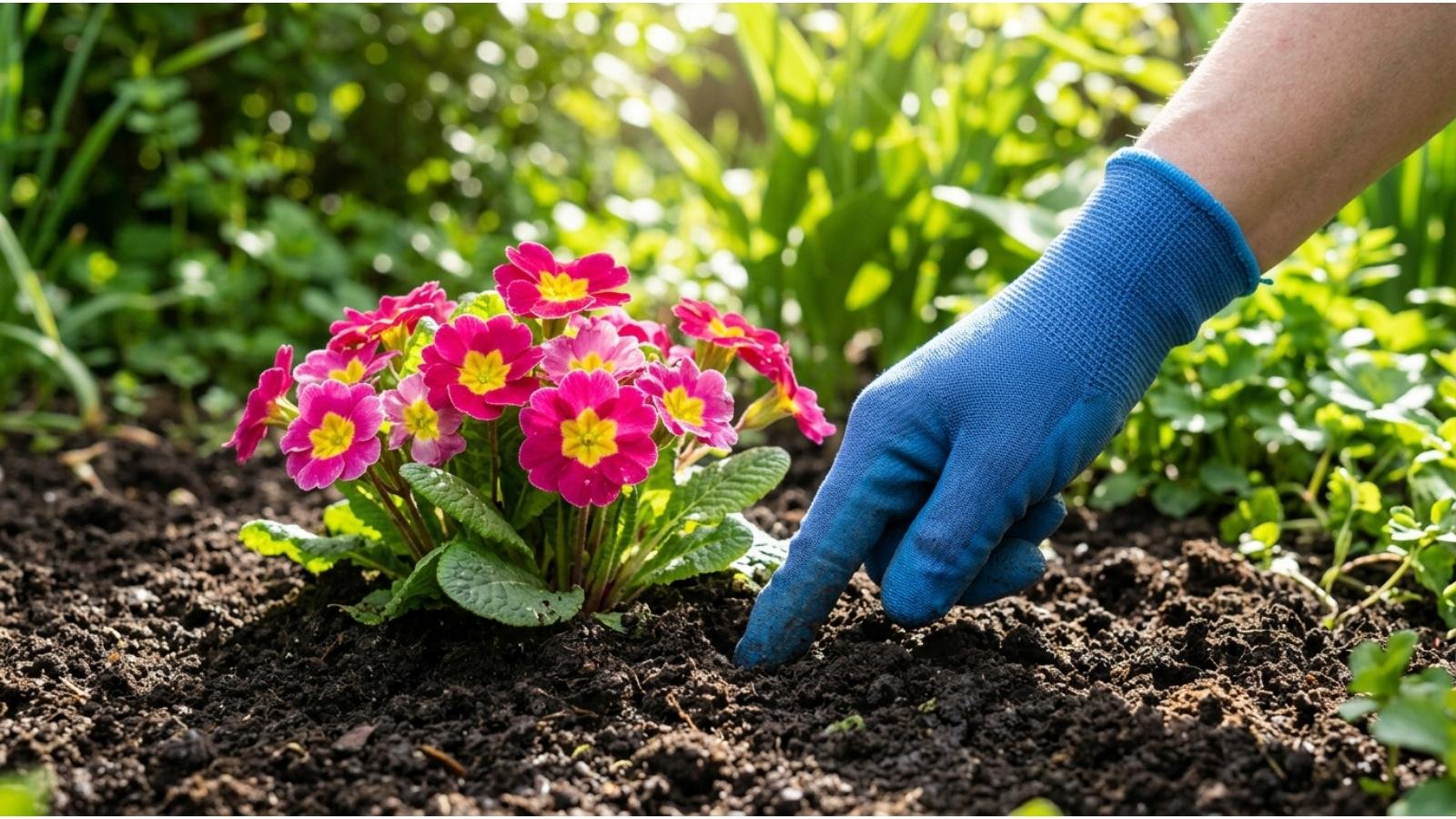
Primroses generally do not need an aggressive feeding schedule to look attractive. Start with fertile soil containing organic matter, then provide additional nutrition when active growth and flowering demand it.
For container plants, a balanced fertilizer used according to its label can support continued growth. Avoid assuming that more fertilizer means more flowers. Excessive feeding can create unnecessary foliage growth and may stress roots.
For specialist primulas such as auriculas, RHS recommends a half-strength general liquid fertilizer at regular intervals during the active growing and flowering period.
For ordinary garden primroses, good soil preparation and sensible feeding are usually more important than frequent heavy applications.
Keeping Primrose Flowers Blooming Longer
Primroses are naturally valued for their colorful early-season flowers. Good environmental conditions are more important for extending flowering than trying to force the plant with fertilizer.
Keep the root zone evenly moist, provide bright but gentle light, and protect the plant from excessive heat.
Remove faded flowers when appropriate. This keeps the plant looking tidy and prevents old blooms from becoming a source of decay in damp conditions.
Avoid cutting healthy leaves simply because flowering has finished. Leaves help the plant continue photosynthesis and build energy for future growth.
RHS notes that some primrose types sold for seasonal display are often treated as temporary bedding or seasonal container plants, and repeat flowering may be less impressive in subsequent years.
Caring For Primrose Indoors
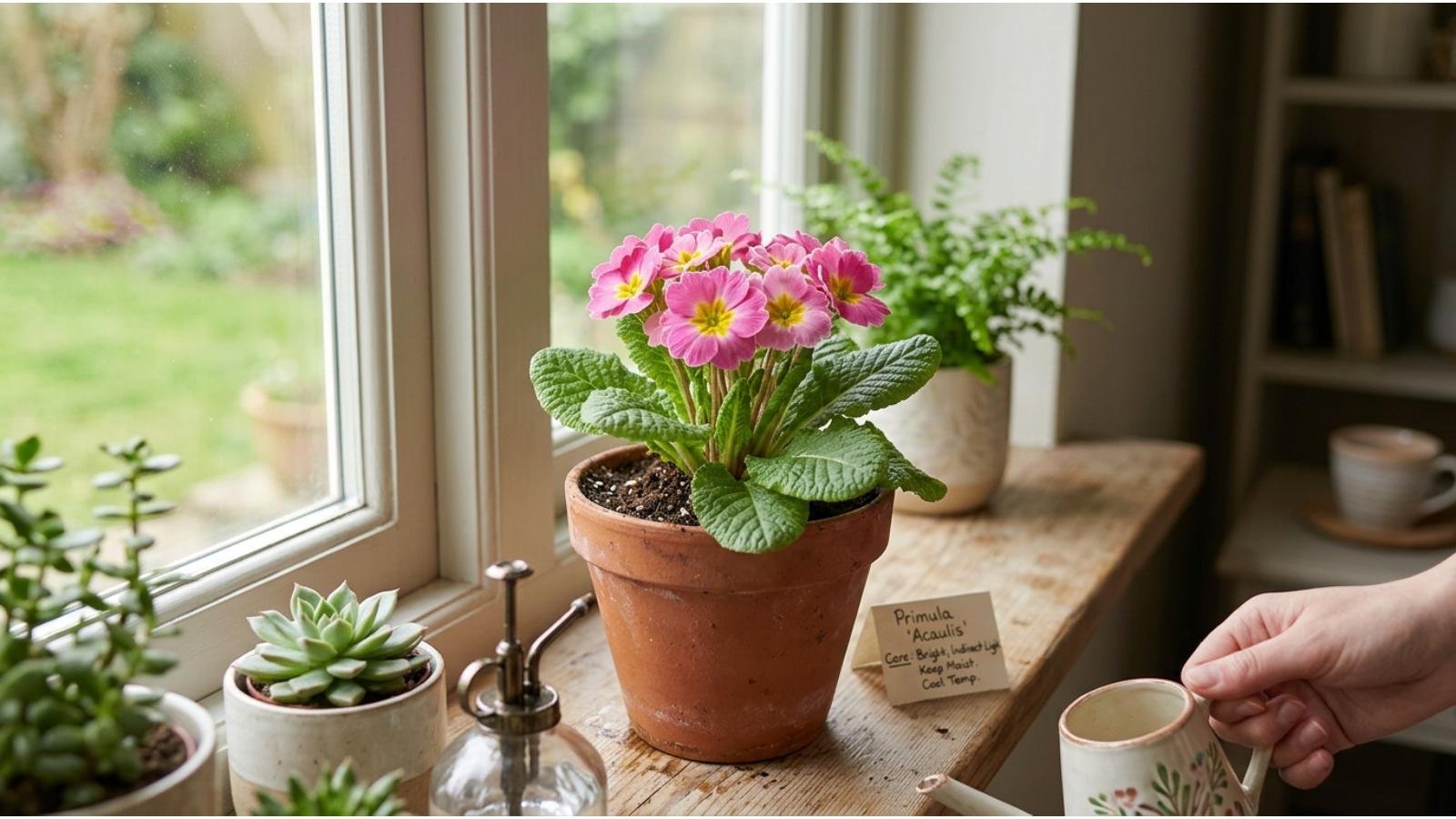
Florist primroses are slightly different from established garden plants. They are often sold while flowering in late winter or early spring and can provide several weeks of indoor color when given the right conditions.
Iowa State University Extension recommends a cool indoor location around 55 to 60°F with bright light and evenly moist soil.
Keep the plant away from hot radiators, heating vents, and excessively warm sunny windows.
A cool room with bright filtered light is usually more suitable than a warm room with intense direct sun.
Some primrose species sold as houseplants have additional considerations. For example, Primula obconica prefers cool conditions and indirect sunlight, and its foliage can cause contact dermatitis in susceptible people. Gloves are recommended when handling it.
Image Suggestion: Healthy potted primrose positioned near a bright cool window away from a radiator.
Planting Primrose Outdoors
Choose a sheltered garden location with suitable light and soil moisture.
Before planting, loosen compacted soil and incorporate organic matter if necessary. Set the plant at an appropriate depth without burying the crown excessively.
Water thoroughly after planting and monitor moisture while the roots establish.
A woodland-style border, shaded edge, container display, or location near moisture-loving companion plants can work particularly well. Some primulas are also suitable beside ponds and streams when their specific moisture requirements are met.
Do not assume every primrose belongs beside water. Specialist types may actually require much better drainage and protection from winter wet.
Primrose Care Through The Seasons
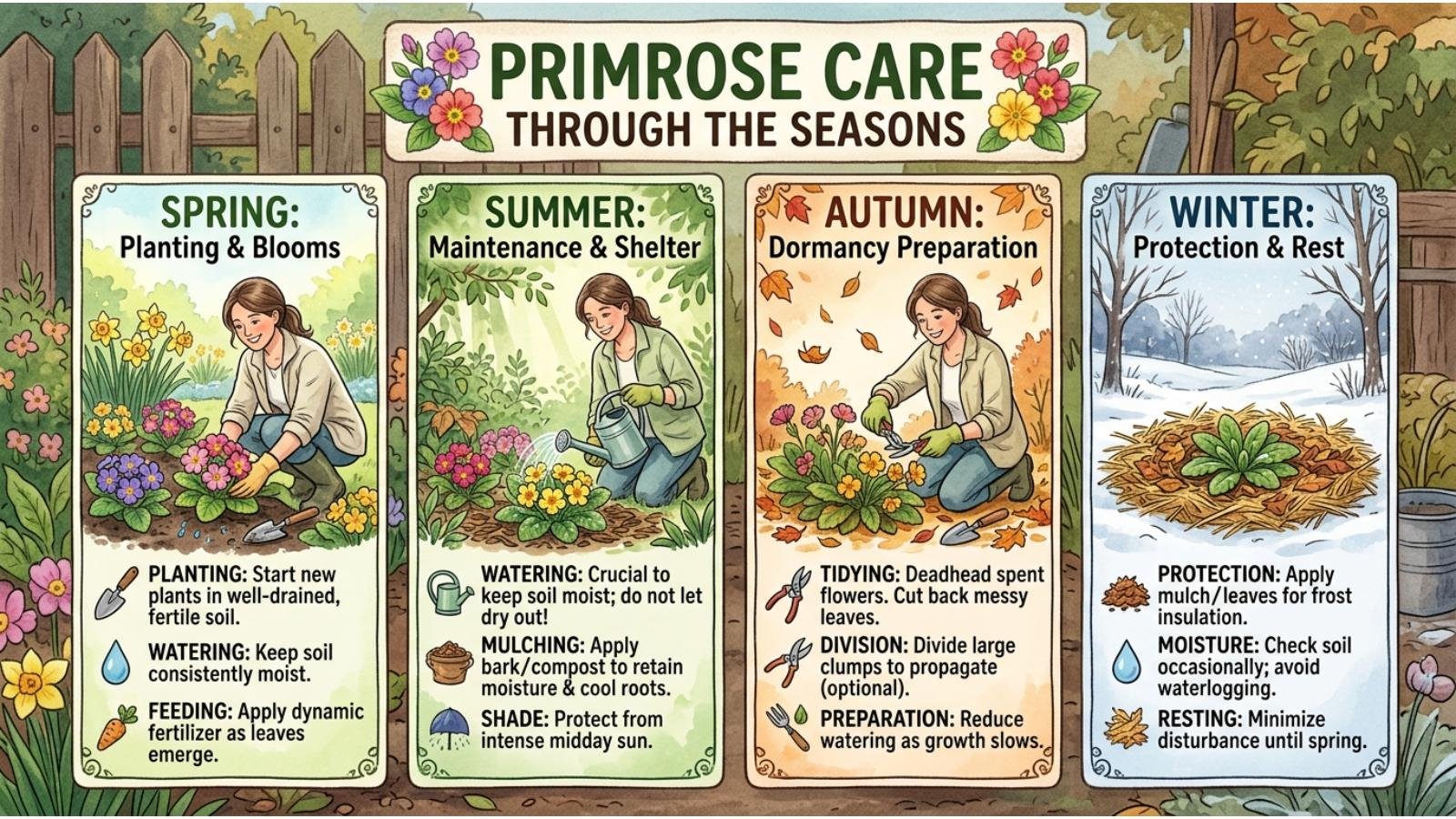
Spring
Spring is usually the main flowering period for many primroses.
- Keep soil consistently moist.
- Remove faded flowers as needed.
- Monitor slugs and snails.
- Provide sufficient light without exposing plants to excessive heat.
- Avoid disturbing roots unnecessarily while plants are actively flowering.
Summer
Summer can be the most challenging season, particularly in warm climates.
Protect primroses from intense afternoon heat and prevent the soil from becoming bone dry. Some specialist primulas are especially sensitive to high summer temperatures and should be kept shaded and well ventilated.
Container plants may need more frequent monitoring because pots can heat and dry faster than garden soil.
Autumn
Autumn is a useful period for establishing or dividing suitable perennial primulas.
RHS guidance indicates that many primulas can be propagated by division in autumn or early spring, depending on the type.
Refresh tired container soil when appropriate and remove damaged or diseased foliage.
Winter
Winter care depends strongly on the species.
Many hardy primulas tolerate cold conditions, but poorly drained winter soil can create problems for types that dislike prolonged wetness. Specialist alpine primulas are particularly sensitive to winter wet.
Do not confuse cold tolerance with tolerance of waterlogged roots.
Propagating Primrose Plants
Primroses can be propagated by seed or division, depending on the species and cultivar. Established clumps are commonly divided during suitable seasons.
Division is often the more practical option for gardeners who already have a mature plant because you can separate an established clump into smaller sections.
When dividing, work carefully around the roots and replant divisions promptly into suitable moist, well-drained soil.
Seed propagation can take longer and may not always produce plants identical to a particular hybrid or cultivar.
Image Suggestion: Step-by-step diagram showing a mature primrose clump being divided into healthy sections.
Common Primrose Problems And Solutions
Yellow Leaves
Yellow leaves can have several causes, so avoid immediately adding fertilizer.
Check the soil first.
If it remains saturated for long periods, improve drainage and reduce watering frequency. If the soil is extremely dry, restore moisture gradually and review the plant’s location.
Older leaves naturally decline as new growth develops, so inspect the overall plant before treating individual yellow leaves as a serious disease symptom.
Wilting Leaves
Wilting does not automatically mean the plant needs more water.
Check the soil and temperature.
Dry soil suggests water stress, while wet soil combined with wilting can point toward root problems. Excessive heat can also cause rapid wilting even when some moisture remains in the soil.
For florist primroses, consistently moist soil and cool temperatures are particularly important.
Brown Leaf Edges
Brown edges commonly signal environmental stress.
Look for dry soil, excessive heat, strong direct sunlight, or inconsistent watering. Move container plants away from harsh afternoon sun and heating sources.
Gray Or Fuzzy Growth
Gray mold, commonly associated with Botrytis, can develop in damp or overcrowded conditions. Primrose references from extension and RHS sources identify gray mold among potential diseases.
Remove affected plant material, improve airflow, avoid wetting foliage unnecessarily, and correct persistent moisture problems.
Slugs And Snails
Slugs and snails can damage young leaves and new growth. Primrose species are documented as susceptible to slug damage.
Inspect plants regularly, particularly after wet weather, and use gardening practices appropriate for your local conditions.
Aphids
Aphids may gather around young growth and flower stems.
Inspect new growth regularly. A small infestation can often be detected before it becomes a major problem, making early intervention much easier.
Mistakes That Commonly Damage Primroses
Several care mistakes appear simple but can create a chain reaction.
Keeping the soil constantly soaked. Primroses appreciate moisture, but their roots still need oxygen and drainage.
Allowing the plant to dry completely. Florist primroses in particular can decline quickly after severe drying.
Putting the plant beside a heater. Warm, dry indoor air works against the cool conditions primroses prefer.
Using intense afternoon sunlight in a hot climate. Common primroses can need protection from hot afternoon sun.
Treating every primrose species identically. Different Primula groups have noticeably different moisture, drainage, and temperature preferences.
Ignoring drainage because the plant likes moisture. Moist soil and waterlogged soil are completely different growing conditions.
Choosing Containers For Primrose
Container-grown primroses are useful for patios, balconies, entrances, window boxes, and small gardens.
Choose a container with drainage holes and enough room for the root system without using an unnecessarily oversized pot.
A container that is too large can retain moisture for longer than expected, particularly when the plant is small and temperatures are cool.
For container primroses, RHS recommends peat-free multipurpose compost amended with grit or perlite to improve drainage.
Terracotta can dry faster than plastic, so adjust watering based on actual soil moisture rather than the calendar.
Primrose Care For Warm Climates
Warm climates require extra attention because many primroses prefer cool growing conditions.
If summers are hot, use a location with bright shade or gentle morning light. Protect plants from reflected heat near concrete walls and hot paving.
Container growing can be particularly useful because it allows you to relocate the plant as temperatures change.
Primula x polyantha, for example, is described by North Carolina Extension as requiring a cool climate and may behave as an annual in warmer coastal areas rather than reliably perennializing.
This is an important practical lesson: a plant’s ability to survive winter does not guarantee that it will thrive through a hot summer.
Primrose Care For Cooler Climates
In cooler regions, primroses are generally easier to keep within their preferred temperature range.
The bigger concern can become excessive winter moisture rather than cold itself. Many primulas are hardy, but some specialist varieties need very good drainage and protection from prolonged winter wet.
Use raised beds, gritty soil, or containers when drainage is poor.
Frequently Asked Questions About Primrose Plant Care
How Often Should I Water A Primrose
Water when the soil begins to lose its moisture, keeping it consistently moist without leaving the roots sitting in water. Indoor florist primroses should not be allowed to dry completely.
Does Primrose Need Full Sun
Primrose can tolerate full sun in some conditions, but partial shade is often safer, particularly in warm climates. Full sun works best when the soil remains reliably moist and the plant does not experience excessive heat.
Can Primrose Grow Indoors
Yes. Florist primroses can perform well indoors for a period when placed in a cool, brightly lit location and kept evenly moist. Iowa State Extension recommends temperatures around 55 to 60°F for indoor primroses.
Why Is My Primrose Wilting
Check soil moisture and temperature first. Dry soil, excessive heat, intense sunlight, and root problems caused by saturated soil can all contribute to wilting.
Can Primrose Survive Winter
Many perennial primulas are hardy, but winter tolerance varies by species and cultivar. Some specialist primulas tolerate freezing temperatures yet dislike prolonged winter wet.
Should I Deadhead Primrose
Removing faded flowers can keep plants looking tidy and may help maintain the appearance of flowering displays. Do not remove healthy foliage unnecessarily because leaves continue supporting the plant after flowering.
Why Is My Primrose Not Flowering
Insufficient light, excessive heat, inappropriate moisture, plant age, or the natural flowering cycle can all play a role. Primroses generally perform best when they receive adequate bright light while avoiding harsh heat and are grown in suitable moist soil.
Can I Grow Primrose In Pots
Yes. Primroses are well suited to containers. Use a pot with drainage holes and a moisture-retentive but well-drained growing medium. RHS specifically recommends adding grit or perlite to container compost.
How Do I Propagate Primrose
Depending on the species, primroses can be propagated from seed or by division. Division is especially useful for established clumps.
Is Primrose A Perennial
Many primroses are herbaceous or semi-evergreen perennials, but plants sold as seasonal flowering displays may be grown or treated as temporary bedding. The exact behavior depends on the species and growing climate.
Final Primrose Plant Care Checklist
Healthy primrose care becomes much easier when you focus on the plant’s environment rather than following a rigid watering calendar.
Remember these essentials.
- Provide bright light with protection from harsh heat.
- Keep the soil consistently moist but well drained.
- Add organic matter to improve soil quality.
- Choose containers with proper drainage.
- Keep indoor florist primroses cool.
- Protect plants from hot afternoon conditions.
- Monitor regularly for slugs, aphids, and fungal problems.
- Avoid both bone-dry soil and permanently saturated roots.
- Check the specific species because different primulas have different requirements.
The most important principle is simple: give primroses moisture without waterlogging, light without excessive heat, and cool conditions whenever possible. Once those fundamentals are right, these colorful plants become considerably easier to maintain and much more rewarding to grow.