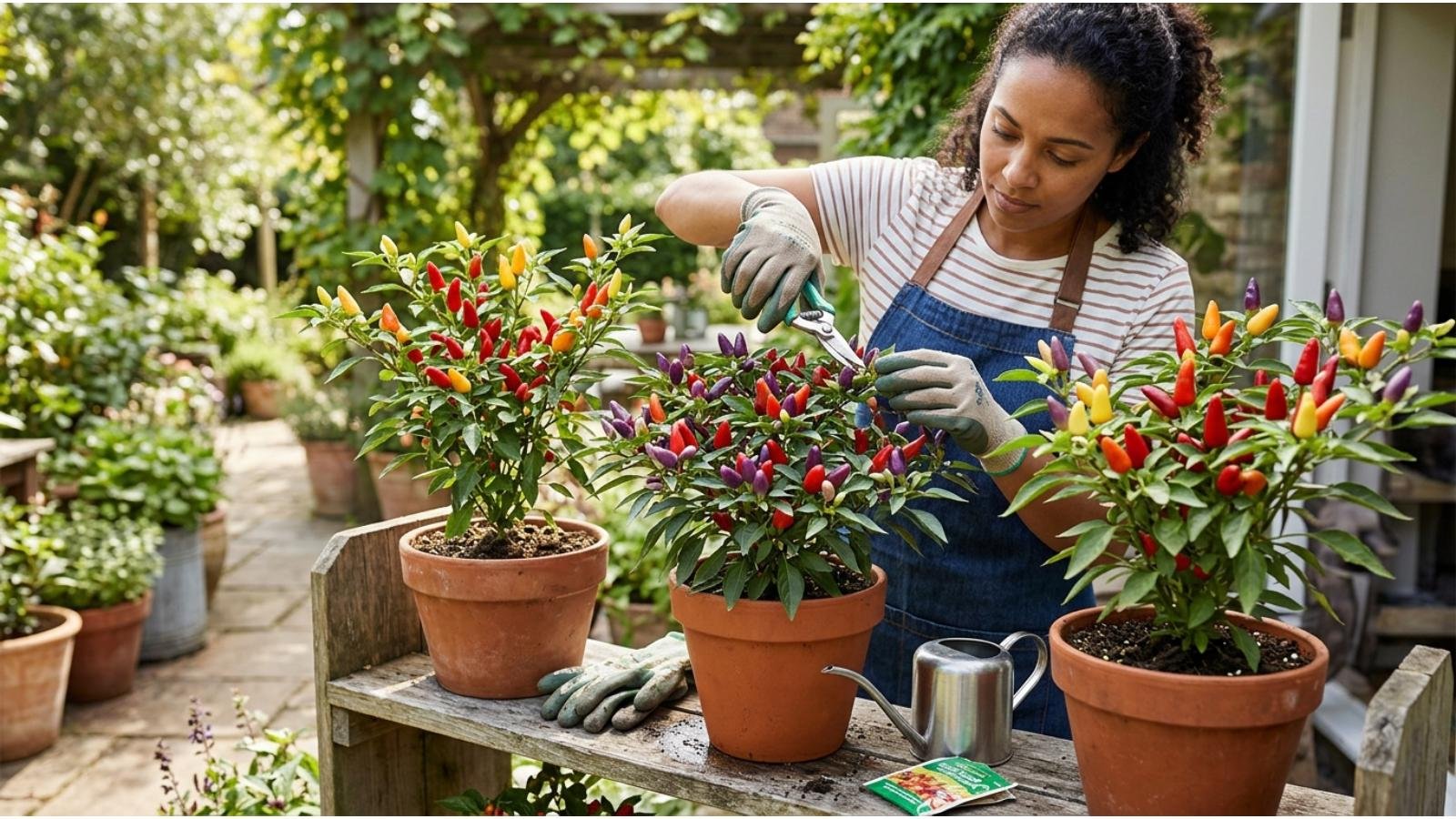
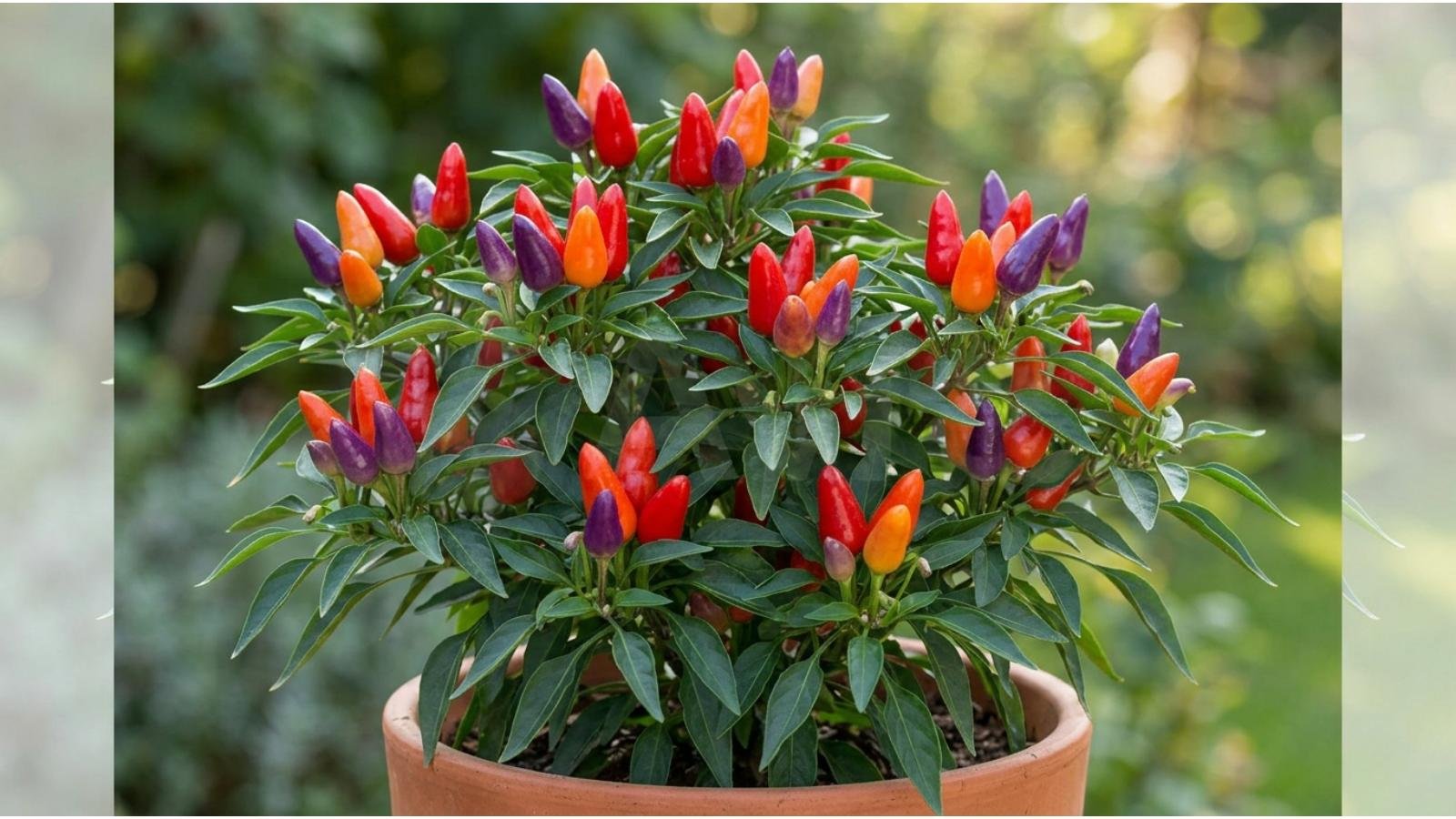
Ornamental peppers are grown primarily for their colorful fruits and attractive foliage. Depending on the cultivar, the small peppers may appear green, yellow, orange, purple, red, or several colors on the same plant. Most ornamental peppers belong to the Capsicum group, and many are selections of Capsicum annuum, a warm-season pepper species also used for edible peppers.
The biggest mistake is treating an ornamental pepper like a low-light houseplant. It is still a pepper, so it performs best with strong light, warmth, good drainage, and dependable moisture. Once you understand those basic needs, keeping the plant compact, leafy, and covered with colorful fruit becomes much easier.
Quick Answer
Ornamental pepper plant care is relatively simple when you provide plenty of bright light, warm temperatures, well-draining soil, and consistent moisture. Let the soil surface begin to dry before watering again, avoid leaving the roots in standing water, and feed lightly during active growth. Good airflow and regular inspection also help prevent common problems such as root rot, pests, flower drop, and leggy growth.
What Is An Ornamental Pepper Plant
Ornamental peppers are pepper plants selected for their attractive fruit, compact growth, unusual shapes, or striking colors rather than primarily for food production.
They are commonly used in containers, patios, balconies, borders, seasonal displays, and sunny indoor locations. Illinois Extension lists ornamental pepper among plants suitable for edging and notes that peppers can provide ornamental value because of their bright-colored fruit.
Although they can look decorative and delicate, their basic growing requirements are similar to other peppers.
One important naming issue deserves attention. The plant commonly sold as ornamental pepper is not always the same plant called Jerusalem cherry. The ASPCA identifies Jerusalem cherry, Solanum pseudocapsicum, as toxic to dogs, cats, and horses.
If pet safety is a concern, identify the plant by its scientific name rather than relying only on the common name ornamental pepper.
Image Suggestion: A labeled ornamental pepper showing leaves, flowers, stems, and colorful fruit.
Ornamental Pepper Light Requirements
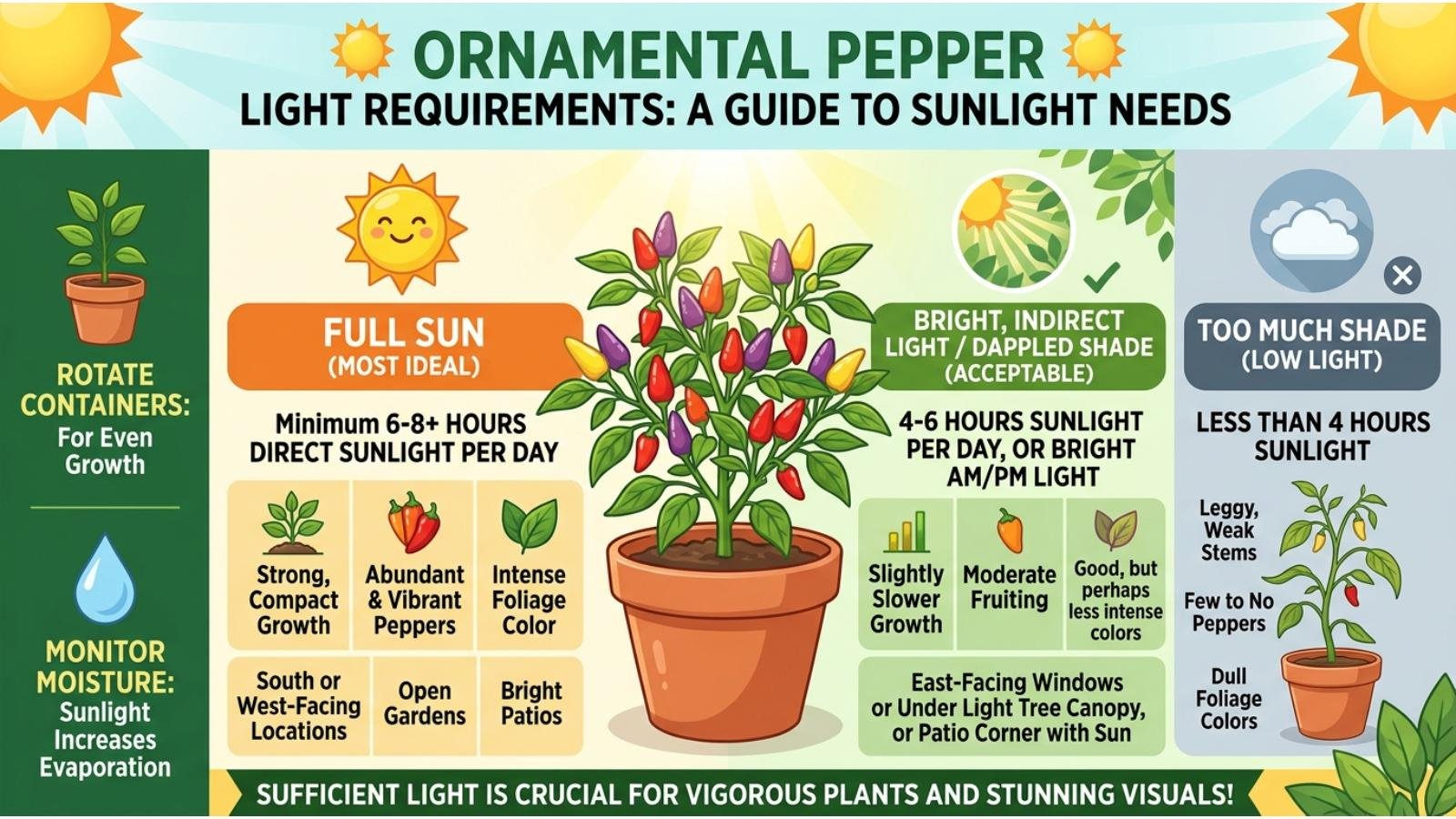
Light is one of the most important factors in successful ornamental pepper plant care.
Give the plant a location with strong sunlight. Outdoor plants generally perform best in a sunny position, while indoor plants should be placed close to a bright window.
Insufficient light can produce several recognizable symptoms.
- Stems become long and weak.
- Leaves may become smaller.
- The plant loses its compact shape.
- Flower production decreases.
- Fruit development can become disappointing.
- The plant may lean toward the brightest window.
A common beginner mistake is moving an ornamental pepper into a dim room simply because it is being treated as a decorative houseplant. Strong light is much closer to what this warm-season plant naturally wants.
If you move a plant from a relatively sheltered indoor location into intense outdoor sunlight, introduce it gradually. A sudden change can cause leaf stress and sun damage.
Practical tip: Rotate an indoor plant periodically so growth remains more balanced instead of developing heavily toward one side.
Image Suggestion: Ornamental pepper growing beside a bright window compared with a stretched plant in low light.
Best Soil For Ornamental Peppers
Use a loose, fertile, well-draining potting mix that allows water to pass through while retaining enough moisture for the roots.
Peppers generally perform well in fertile, well-drained soil supplied with consistent moisture.
For container growing, the drainage holes are just as important as the soil itself. A high-quality potting mix cannot compensate for a container that traps excess water.
A suitable container mix should:
- Drain freely after watering.
- Hold moderate moisture without becoming permanently soggy.
- Allow oxygen to reach the roots.
- Support healthy root development.
- Avoid compacting heavily over time.
Do not place a layer of gravel at the bottom of a container as a substitute for drainage. Instead, choose a container with proper drainage holes and use an appropriate growing medium throughout the pot.
How To Water Ornamental Pepper Plants
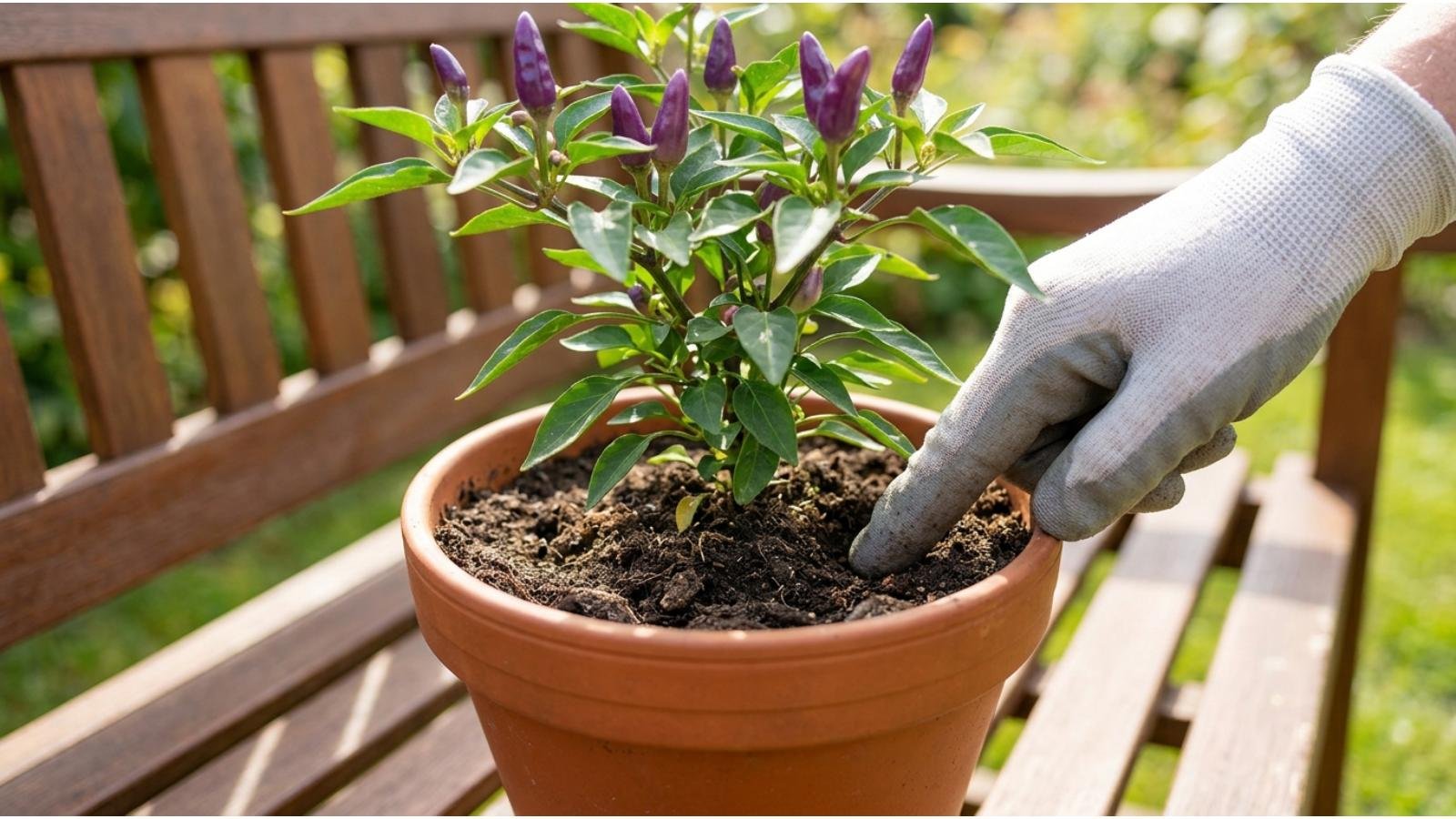
Water ornamental peppers thoroughly when the upper portion of the soil has begun to dry, then allow excess water to drain away.
The goal is consistent moisture rather than constantly wet soil. Peppers need dependable moisture, and Illinois Extension specifically notes that uniform moisture is important, particularly during fruit production.
Your watering frequency will change with temperature, sunlight, pot size, soil, humidity, and whether the plant is indoors or outdoors.
Check the soil instead of following an automatic calendar.
When watering:
- Feel the soil before adding more water.
- Water thoroughly rather than giving tiny daily sips.
- Allow excess water to escape through the drainage holes.
- Empty standing water from decorative outer containers.
- Check containers more frequently during hot weather.
- Reduce watering when growth slows and the soil remains moist longer.
Overwatering is particularly dangerous because the plant can appear thirsty even when its roots are sitting in excessively wet soil.
Yellowing leaves, wilting despite wet soil, unpleasant-smelling soil, and declining roots can indicate a drainage or root-health problem rather than a need for more water.
Temperature And Humidity Needs
Ornamental peppers are warm-season plants and do not tolerate frost.
Pepper growth can become poor when temperatures fall below approximately 50 to 55°F, with symptoms such as slow growth, yellowing leaves, and flower drop.
For the healthiest growth, protect ornamental peppers from:
- Frost.
- Cold drafts.
- Chilly windows during winter.
- Sudden temperature changes.
- Prolonged exposure to cold, wet soil.
Warm conditions encourage active growth, flowering, and fruit development.
Humidity is usually less important than getting light, temperature, watering, and drainage right. Instead of obsessing over humidity readings, focus first on giving the plant strong light and good airflow.
How To Fertilize Ornamental Peppers
Ornamental peppers benefit from access to nutrients during active growth, but excessive fertilizer is not a shortcut to more attractive plants.
For peppers, Illinois Extension recommends starter fertilizer when transplanting and supplemental fertilizer after the first flush of peppers has set.
For a container-grown ornamental pepper, follow the fertilizer label for the product and container size rather than applying an arbitrary amount.
A sensible approach is to:
- Fertilize during active growth.
- Follow the manufacturer’s dilution instructions.
- Avoid repeatedly applying more fertilizer because growth appears slow.
- Water appropriately so soluble nutrients can move through the root zone.
- Reduce feeding when the plant is no longer actively growing.
Too much fertilizer can contribute to excessive leafy growth or salt buildup in containers, while too little nutrition can result in weak growth and pale foliage.
Expert tip: Before increasing fertilizer, check light and watering. A plant sitting in poor light cannot always solve its growth problems by receiving more nutrients.
How To Encourage More Flowers And Fruit
Colorful fruit is the main reason many gardeners grow ornamental peppers, so flowering and fruit development deserve special attention.
Strong light is fundamental. The plant also needs adequate moisture and warm growing conditions.
Dry conditions during critical periods can interfere with pepper fruit production. Illinois Extension notes that hot, dry winds and dry soil can prevent fruit set or cause small immature fruits to abort.
To encourage productive plants:
- Give the plant strong light.
- Maintain reasonably consistent soil moisture.
- Avoid extreme temperature stress.
- Do not overfertilize.
- Avoid repeatedly disturbing the roots.
- Provide adequate airflow.
- Watch for pests that damage flowers or new growth.
If a plant produces flowers but very few peppers, investigate growing conditions before assuming that it needs more fertilizer.
Pruning Ornamental Pepper Plants
Most compact ornamental pepper varieties require little pruning.
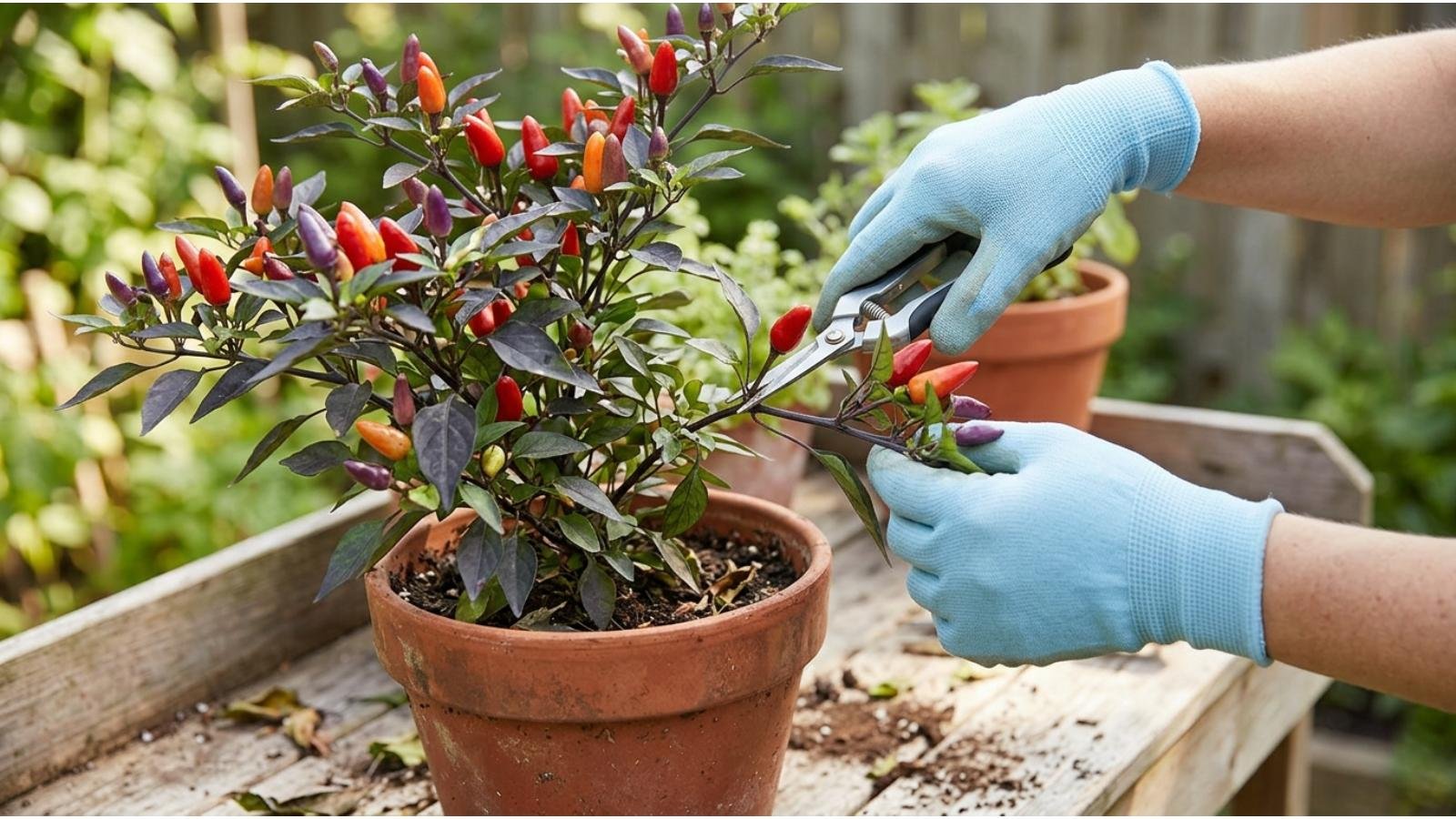
Remove damaged, dead, or diseased growth with clean tools. If a plant becomes unusually leggy, pruning can help reshape it, but aggressive cutting is rarely necessary for a naturally compact cultivar.
Pruning is mainly useful for maintaining appearance and removing unhealthy material.
Avoid removing large amounts of healthy foliage simply to make the plant look smaller. Leaves are the plant’s food-producing structures, and removing too much can reduce its ability to support flowers and fruit.
Repotting Ornamental Peppers
Repot an ornamental pepper when the container has become too small, roots are heavily crowded, drainage has deteriorated, or the growing medium has broken down.
Signs that the plant may need attention include:
- Roots circling heavily around the root ball.
- Roots emerging from drainage holes.
- Water passing through unusually quickly.
- The plant drying out much faster than before.
- Growth becoming restricted despite suitable light and nutrition.
Choose a new container only moderately larger than the current one. Moving a small plant into a dramatically oversized container can leave a large volume of soil wet for too long after watering.
After repotting, water appropriately and give the plant time to adjust rather than immediately applying heavy fertilizer.
Image Suggestion: Step-by-step illustration showing an ornamental pepper being moved from a crowded pot into a slightly larger container.
Common Ornamental Pepper Problems
Yellow Leaves
Yellow leaves can have several causes, so avoid diagnosing the problem from leaf color alone.
Possible causes include excessive moisture, poor drainage, nutrient problems, insufficient light, or natural aging of older leaves.
Check the soil first. If it stays wet for long periods, investigate drainage before adding more water.
Wilting Plant
Wilting does not automatically mean the plant needs water.
If the soil is dry, dehydration is a reasonable possibility. If the soil is already wet, adding more water can make the situation worse.
Check the roots, drainage, temperature, and recent watering pattern before deciding what action to take.
Flowers Falling Off
Flower drop can occur when growing conditions become stressful.
Cold temperatures, heat, drought, and inconsistent moisture can interfere with successful fruit production. Peppers are particularly sensitive to unfavorable temperature conditions during growth and flowering.
Keep the plant warm, well lit, and consistently supplied with moisture without creating waterlogged soil.
Leaves Curling
Curling leaves can result from environmental stress, pests, watering problems, or temperature changes.
Inspect the underside of leaves for insects and examine the soil before changing your entire care routine.
Leggy Growth
Leggy growth usually points toward inadequate light.
Move the plant to a brighter location gradually if the new position is dramatically brighter. Simply pruning the elongated stems without correcting the light problem will not solve the underlying issue.
No Peppers
If an ornamental pepper looks healthy but produces little fruit, examine light, temperature, moisture, and flowering conditions.
Insufficient light is a particularly important factor to investigate. Extremely hot or dry conditions can also interfere with fruit set.
Ornamental Pepper Pests
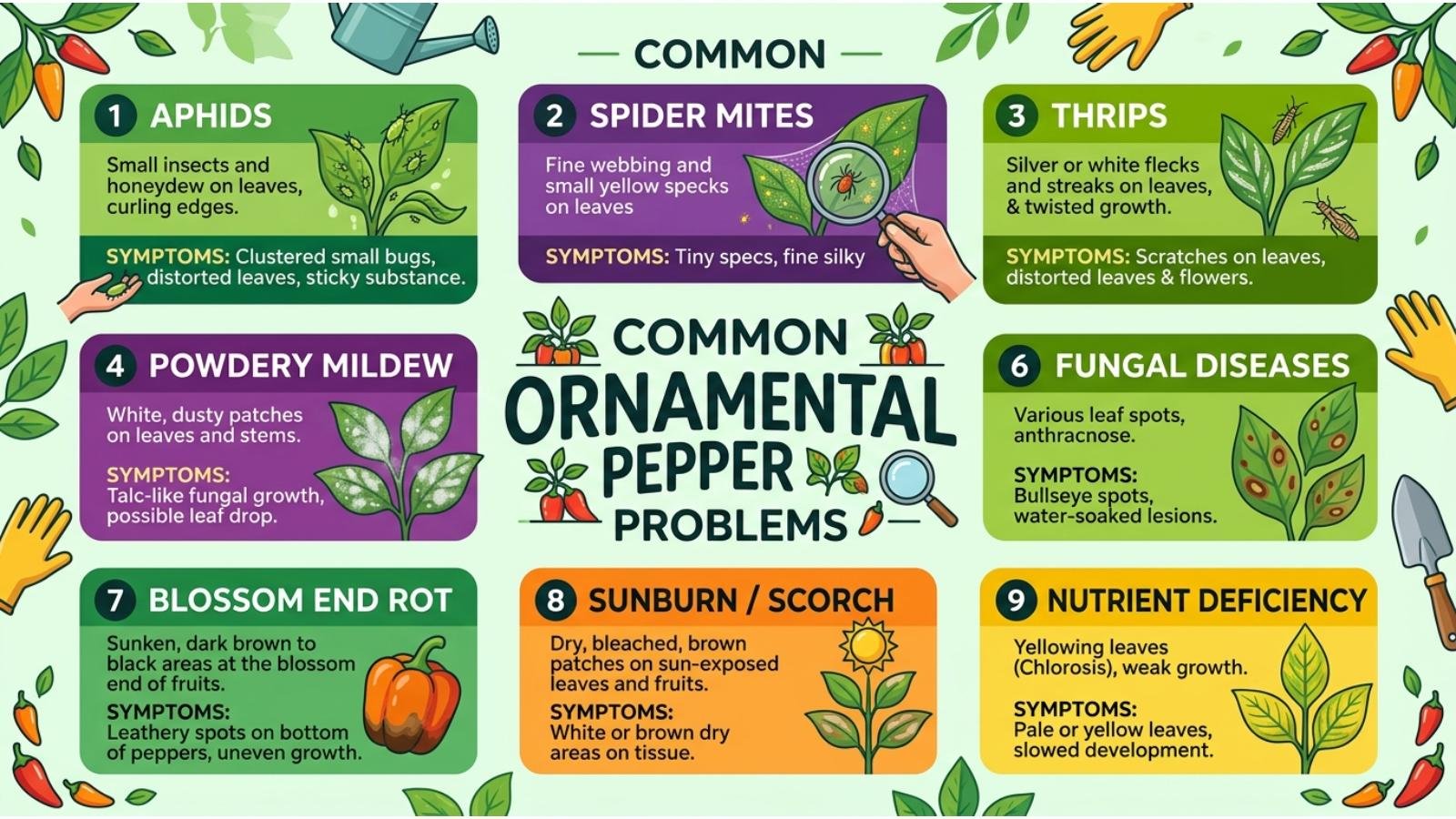
Ornamental peppers can experience pest problems just like other garden plants.
Inspect new growth and the undersides of leaves regularly. Early detection is much easier to manage than a heavily established infestation.
Look for:
- Aphids.
- Whiteflies.
- Spider mites.
- Thrips.
- Other sap-feeding insects.
Signs may include distorted new growth, sticky residue, speckled leaves, visible insects, or unusually stressed foliage.
Instead of automatically treating the plant with a strong pesticide, identify the pest first and select a control method appropriate for the plant and growing environment.
Good airflow, healthy growth, clean tools, and regular inspection all make pest problems easier to manage.
Ornamental Pepper Care Through The Seasons
Spring
Spring is the time to encourage active growth.
Move plants into stronger light as conditions allow, begin regular feeding during active growth, and protect them from unexpectedly cold temperatures.
If transplanting outdoors, wait until cold conditions and frost risk have passed. Peppers perform poorly in cold, wet soil.
Summer
Summer usually brings the strongest growth.
Check containers frequently because hot weather can cause them to dry rapidly. Maintain consistent moisture and watch plants for pests, heat stress, and signs of nutrient problems.
Outdoor container plants may need substantially more frequent watering than plants grown in larger beds.
Fall
As temperatures decline, growth may slow.
If you want to keep a container-grown plant indoors, inspect it carefully for insects before bringing it inside. Gradually transition it to the indoor environment instead of making a dramatic change whenever possible.
Winter
Ornamental peppers may struggle indoors during winter because indoor light is often much weaker than outdoor light.
Place the plant in the brightest practical location and avoid cold drafts. Since growth generally slows under less favorable conditions, be careful not to compensate with excessive watering or fertilizer.
Can Ornamental Peppers Be Grown Indoors
Yes, ornamental peppers can be grown indoors when they receive enough light and appropriate care.
The biggest indoor challenge is usually light. A bright window can work, but a plant that begins stretching may need supplemental lighting.
Indoor care should focus on:
- Bright light.
- Good drainage.
- Careful watering.
- Warm temperatures.
- Air circulation.
- Regular pest inspection.
Do not assume that because a pepper is sold as a decorative indoor plant, it can thrive in a dark corner.
Can You Eat Ornamental Peppers
Do not assume that every plant sold as an ornamental pepper is intended to be eaten.
Different ornamental pepper cultivars can vary in flavor and heat, and plants sold primarily for decoration may not be grown or labeled for culinary use.
More importantly, confirm the plant’s identity before consuming its fruit.
The common name can create confusion because Jerusalem cherry is also associated with ornamental displays but is actually Solanum pseudocapsicum. The ASPCA lists that plant as toxic to dogs, cats, and horses.
If you are unsure what plant you have, identify it by its scientific name and cultivar before treating its fruit as food.
Are Ornamental Peppers Safe Around Pets
Pet owners should identify the exact plant rather than assuming every plant called ornamental pepper has the same toxicity profile.
The ASPCA lists Solanum pseudocapsicum, commonly called Jerusalem cherry and also associated with the name ornamental pepper, as toxic to dogs, cats, and horses. Its listed toxic principle is solanine.
If your plant is a Capsicum ornamental pepper, do not automatically apply the Jerusalem cherry information to it. Instead, confirm the plant’s botanical identity.
For any suspected plant ingestion by a pet, contact a veterinarian or an appropriate animal poison-control service promptly.
Common Ornamental Pepper Care Mistakes
Several problems repeatedly come from trying to care for ornamental peppers like ordinary decorative foliage plants.
Too little light. A pepper needs strong light to maintain compact growth and support flowering.
Watering on a fixed schedule. Soil dries at different rates depending on weather, container size, and plant growth.
Keeping the soil permanently wet. Consistent moisture does not mean saturated roots.
Using an oversized pot. Excess soil can remain wet for too long.
Overfertilizing. More fertilizer does not automatically produce more peppers.
Ignoring temperature. Cold conditions can slow growth and contribute to flower drop.
Failing to identify the plant. Common names can refer to different plants, which is particularly important when pets or edible fruit are involved.
A Simple Ornamental Pepper Care Routine
For beginners, a straightforward routine is more useful than a complicated calendar.
Check the plant every few days and adjust care according to its actual condition.
- Check the soil moisture.
- Inspect leaves for pests.
- Confirm that the plant is receiving strong light.
- Look for new flowers and fruit.
- Remove dead or damaged foliage.
- Make sure excess water can drain freely.
- Feed only according to the fertilizer instructions.
- Watch for sudden changes in temperature.
- Rotate indoor containers when growth becomes one-sided.
This routine takes only a few minutes but can reveal problems before they become serious.
Frequently Asked Questions
How much sunlight does an ornamental pepper need
Ornamental peppers generally perform best with strong sunlight. Indoor plants should receive the brightest practical location, while outdoor plants benefit from a sunny growing position.
How often should I water an ornamental pepper
Water when the upper part of the soil has begun to dry rather than following a rigid schedule. Water thoroughly and allow excess water to drain away.
Why is my ornamental pepper losing leaves
Leaf loss can result from watering problems, inadequate light, temperature stress, pests, or root problems. Examine the soil and growing conditions before changing fertilizer or watering.
Why are my ornamental pepper flowers falling off
Temperature stress, drought, inconsistent moisture, and other unfavorable growing conditions can interfere with flowering and fruit set. Peppers generally perform poorly under cold conditions.
Should I prune ornamental peppers
Usually only light pruning is necessary. Remove damaged or unhealthy growth and reshape unusually leggy plants after addressing the light conditions causing the weak growth.
Can ornamental peppers grow in pots
Yes. They are well suited to containers as long as the pot drains properly and the plant receives adequate light, warmth, moisture, and nutrition.
Can ornamental peppers survive winter
They may be maintained indoors in suitable conditions, but winter success depends heavily on light and temperature. Growth may slow considerably when conditions become less favorable.
Why does my ornamental pepper have lots of leaves but few peppers
Check light first, followed by temperature and moisture consistency. Excess nitrogen can also encourage vegetative growth, so avoid assuming that more fertilizer is the answer.
Are ornamental peppers poisonous
The answer depends on the exact plant. The ASPCA lists Solanum pseudocapsicum, also known as Jerusalem cherry, as toxic to dogs, cats, and horses. Because common names can be confusing, identify the plant scientifically before making safety decisions.
Conclusion
Successful ornamental pepper plant care comes down to getting a few fundamentals right. Give the plant strong light, warm conditions, well-draining soil, and consistent but not excessive moisture. Feed during active growth without overdoing it, monitor the leaves for pests, and respond to environmental stress before problems become severe.
The most useful habit is to inspect the plant rather than blindly following a watering or feeding calendar. A dry container, weak light, cold temperature, or soggy root zone each requires a different solution.
And before eating the fruit or placing an unfamiliar ornamental pepper around pets, identify the plant correctly. Common names can hide important botanical differences, making accurate identification one of the most overlooked parts of responsible ornamental pepper care.