Sunflowers are among the easiest flowering plants to grow, but impressive height and huge blooms do not happen by accident. The right planting location, watering routine, soil preparation, and support can make the difference between a sturdy plant covered in flowers and a weak stem that dries out or falls over.
The good news is that sunflower plant care does not require complicated gardening techniques. Most problems come from a few predictable mistakes, such as planting in too much shade, allowing young plants to dry out, choosing a container that is too small, or waiting too long to stake tall varieties. With a little planning, beginners can grow healthy sunflowers while experienced gardeners can improve flowering, branching, seed production, and overall plant strength.
Quick Answer
Sunflower plant care is surprisingly simple. Give sunflowers full sun, fertile well-drained soil, consistent moisture, and enough space to develop strong roots. Water deeply when the soil begins to dry, especially during hot weather, and support tall varieties before they become top-heavy. Dwarf sunflowers work well in containers, while giant varieties need sheltered planting and sturdy support. (RHS)
Understanding Sunflowers Before You Plant
The name sunflower generally refers to plants in the genus Helianthus. The familiar common sunflower, Helianthus annuus, is an annual that completes its life cycle in one growing season.
Not every sunflower is a towering plant. Cultivars range from compact container-friendly types to giants that can grow several meters tall. There are also perennial sunflowers that return from the roots each year.
This distinction matters because care requirements change with the variety.
- Giant sunflowers need more physical support and room for their roots.
- Dwarf varieties are much better suited to pots and small gardens.
- Branching varieties can produce numerous smaller flowers.
- Annual sunflowers are useful for cut flowers, seed production, and wildlife gardens.
- Perennial sunflowers can provide recurring flowers but usually require considerably more garden space.
Practical tip: Check the mature height on the seed packet before planting. A sunflower that eventually reaches several meters should not be treated like a small patio plant.
How Much Sunlight Do Sunflowers Need
Sunflowers perform best in full sun. Choose a location that receives abundant direct sunlight for most of the day.
Sunlight fuels photosynthesis and helps sunflowers develop strong stems and flowers. A plant grown in inadequate light may stretch toward brighter conditions, producing weaker growth and becoming more vulnerable to falling over.
RHS guidance recommends full sun for Helianthus annuus, with sheltered conditions particularly useful for tall varieties.
Look for a location that is:
- Open and sunny.
- Protected from strong prevailing winds.
- Large enough for the mature plant.
- Away from structures that cast long periods of shade.
- Accessible for watering and supporting tall stems.
Tall sunflowers are especially vulnerable to wind because their large flower heads can become heavy. Planting beside a suitable wall or in another sheltered position can reduce the risk of stems being blown over.
Image Suggestion: Show a healthy sunflower growing in full sun beside a weak, stretched sunflower growing in shade.

Choosing the Right Soil for Sunflowers
Sunflowers are adaptable and can grow in several soil types, but they perform best in fertile, humus-rich, moist but well-drained soil.
Good drainage is particularly important. Sunflowers need moisture, but constantly waterlogged soil can create conditions that damage roots and encourage disease.
Before planting, improve poor soil by incorporating mature garden compost or another suitable organic matter. The RHS recommends adding organic matter to help provide the fertility needed for vigorous growth.
Aim for soil that:
- Holds moisture without remaining saturated.
- Contains plenty of organic matter.
- Drains excess water effectively.
- Provides enough room for roots to expand.
- Is relatively fertile rather than heavily depleted.
Avoid choosing a permanently soggy location simply because sunflowers like water. Moist soil and waterlogged soil are not the same thing.
How to Plant Sunflower Seeds
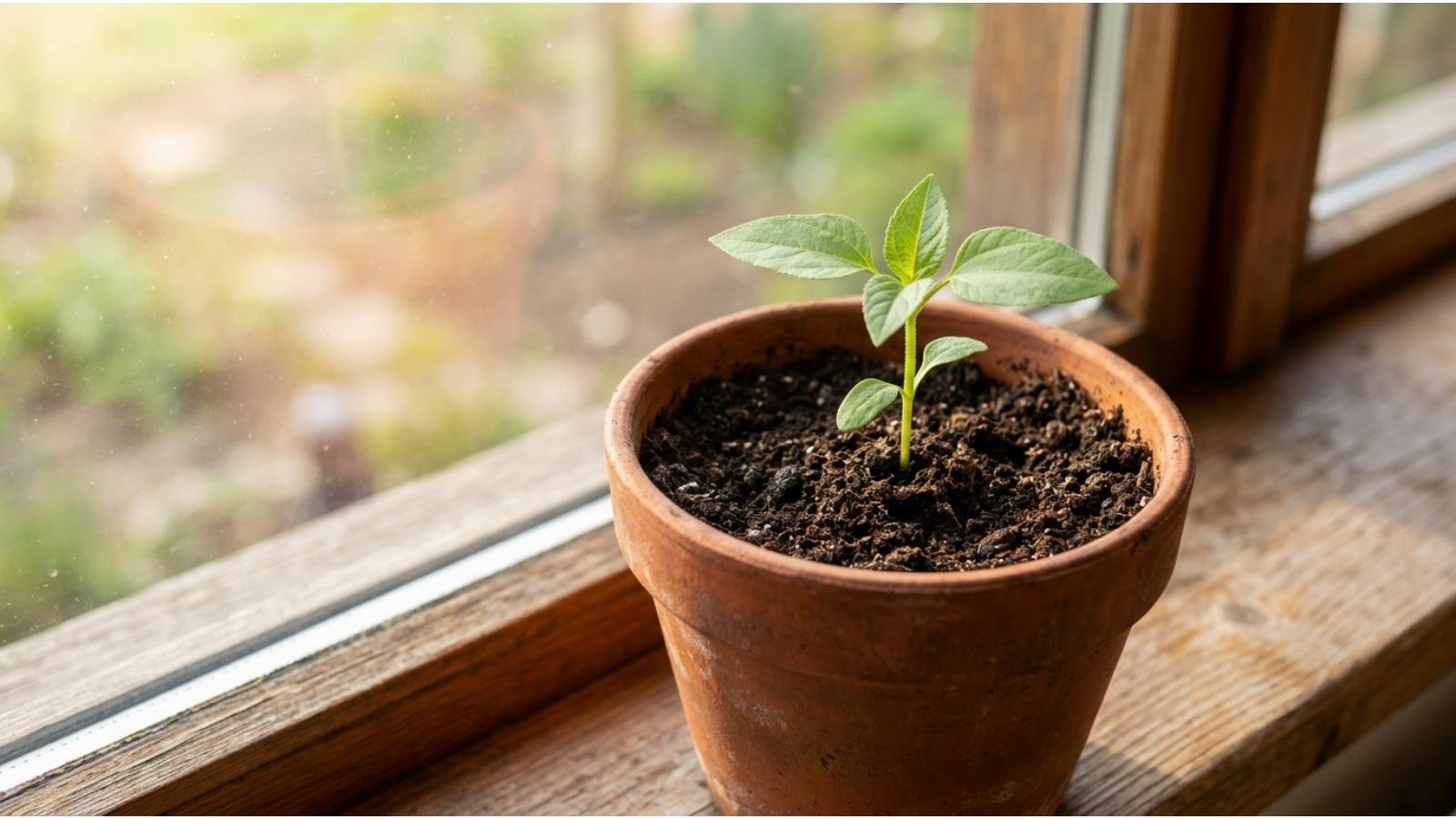
Growing sunflowers from seed is usually the easiest approach.
You can sow seeds directly outdoors once conditions are suitable, or start them indoors to give young plants a head start. In areas with frost, outdoor planting should wait until the danger of frost has passed and the soil has warmed.
A practical planting process is:
- Choose a sunny, sheltered location.
- Remove weeds and competing vegetation.
- Loosen the soil and improve it with organic matter if needed.
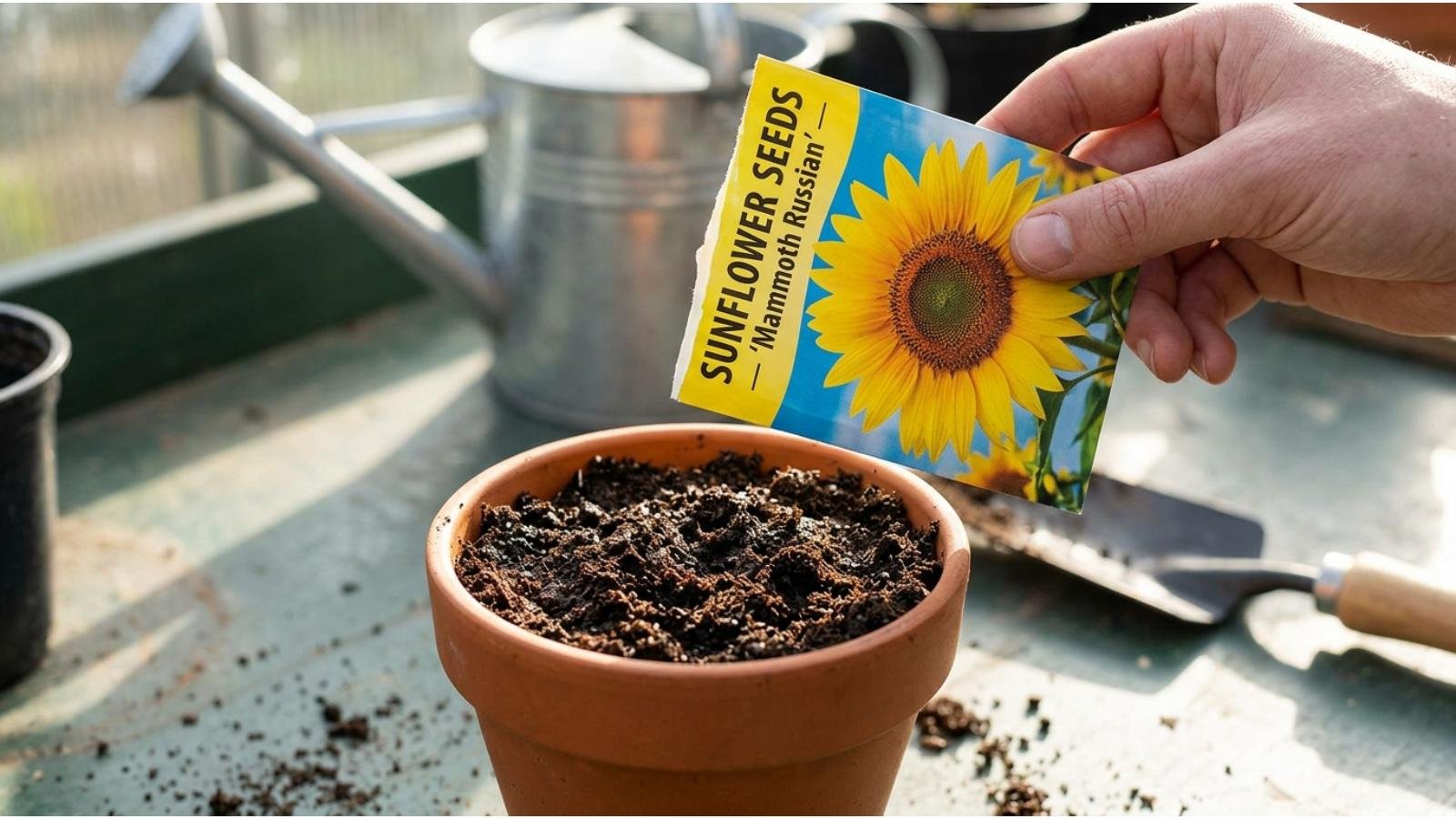
- Sow the seed according to the depth and spacing instructions supplied for the variety.
- Cover the seed with soil.
- Water gently but thoroughly.
- Protect emerging seedlings from slugs, snails, birds, or other local pests when necessary.
- Thin crowded seedlings so the strongest plants have enough room.
- Add support as tall plants develop.
RHS guidance notes that annual sunflowers can be sown indoors in spring or outdoors during suitable spring conditions. Starting indoors can be especially useful for giant varieties because it gives them a head start and protects young seedlings from some pests.
Beginner mistake: Planting several seeds extremely close together because the seedlings look tiny. Sunflowers can become surprisingly large, so spacing should be based on the mature variety rather than the size of the seedling.
How Often Should You Water Sunflowers
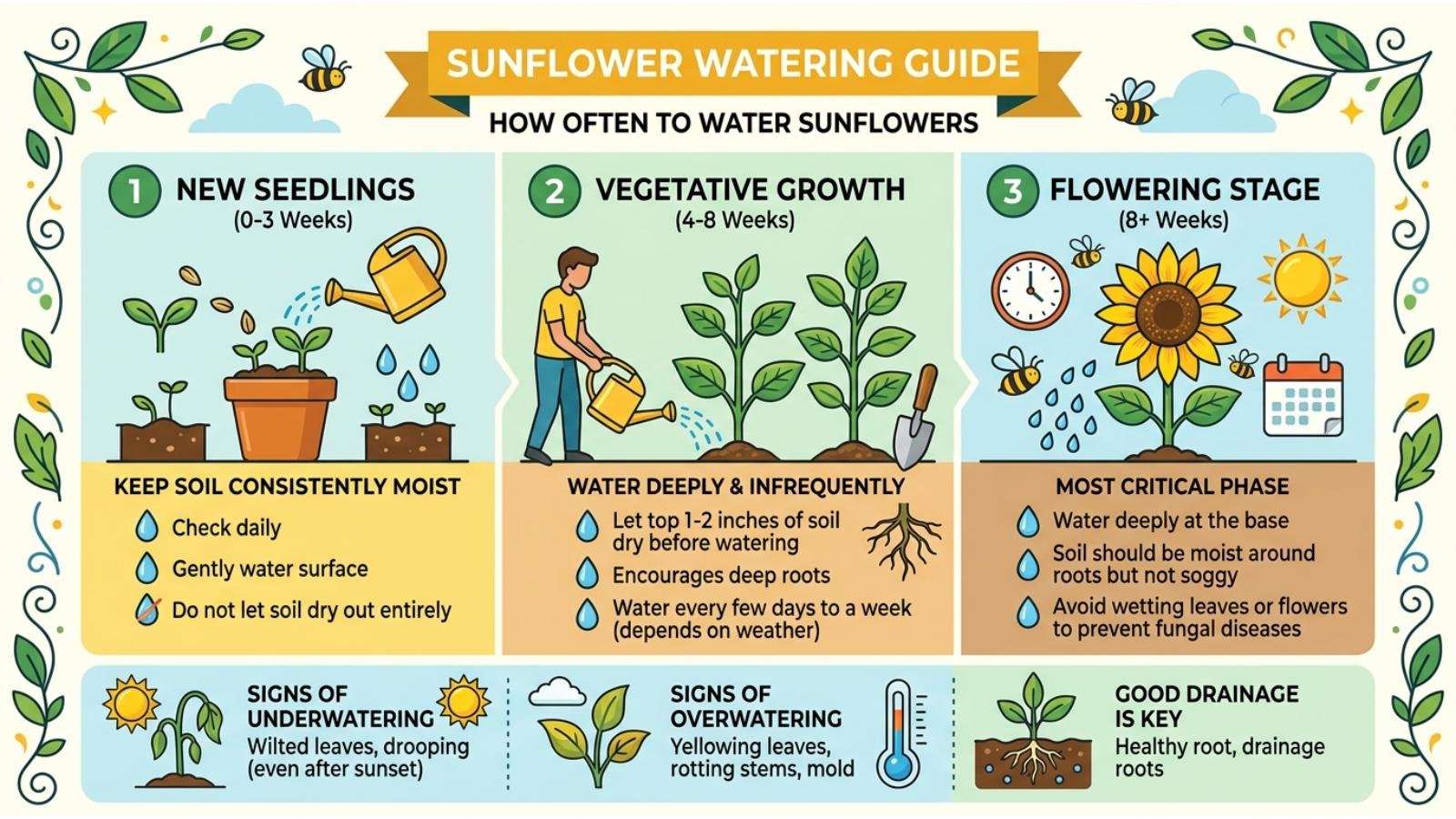
Watering is one of the most important parts of sunflower plant care.
Sunflowers appreciate consistent moisture, particularly while young and during hot, dry weather. Tall annual sunflowers can be particularly thirsty, and container-grown plants can dry out much faster than plants growing in the ground.
Instead of watering according to a rigid calendar, inspect the soil.
When the upper soil begins drying, water thoroughly so moisture reaches deeper into the root zone. Avoid repeatedly giving a tiny splash of water that only wets the surface.
During periods of intense heat:
- Check plants more frequently.
- Pay special attention to container-grown sunflowers.
- Water deeply rather than lightly.
- Mulch around the plant to reduce evaporation.
- Avoid allowing large plants to repeatedly wilt.
Container plants may require watering much more frequently than garden-grown plants, particularly during hot weather. RHS specifically notes that dwarf sunflowers in containers may need watering whenever their compost becomes dry, potentially even daily during hot conditions.
Practical observation: If the soil is still moist several inches below the surface, adding more water simply because the leaves look slightly tired can create unnecessary moisture problems. Check the growing medium before reaching for the hose.
Should You Mulch Around Sunflowers
Mulching can make sunflower care easier, especially in hot or dry conditions.
A layer of organic mulch helps slow moisture loss and can reduce competition from weeds. Compost or another suitable organic mulch can also contribute organic matter as it breaks down.
Keep mulch slightly away from the stem itself. Direct contact with the stem can keep the base excessively damp and may encourage rotting.
For established plants, mulching is especially useful when summer temperatures cause soil moisture to disappear quickly. RHS recommends applying organic mulch around sunflowers while leaving a gap around the stem.
Do Sunflowers Need Fertilizer
Sunflowers grow rapidly, so fertile soil can support strong development. However, fertilizer should complement good soil rather than compensate for poor planting conditions.
Start with reasonably fertile soil containing organic matter. If additional feeding is appropriate for your growing situation, follow the fertilizer label rather than assuming that more fertilizer will produce a bigger flower.
Excessive nitrogen can encourage lush leafy growth at the expense of the balanced growth you want from a flowering plant. For container-grown sunflowers, nutrients can become depleted more quickly because the root environment is limited.
The most important priorities remain:
- Adequate sunlight.
- Good soil.
- Consistent moisture.
- Correct spacing.
- Appropriate support.
RHS educational guidance mentions balanced fertilizer as one option for supporting sunflower growth, while its main growing guide emphasizes fertile soil and organic matter.
How to Support Tall Sunflowers
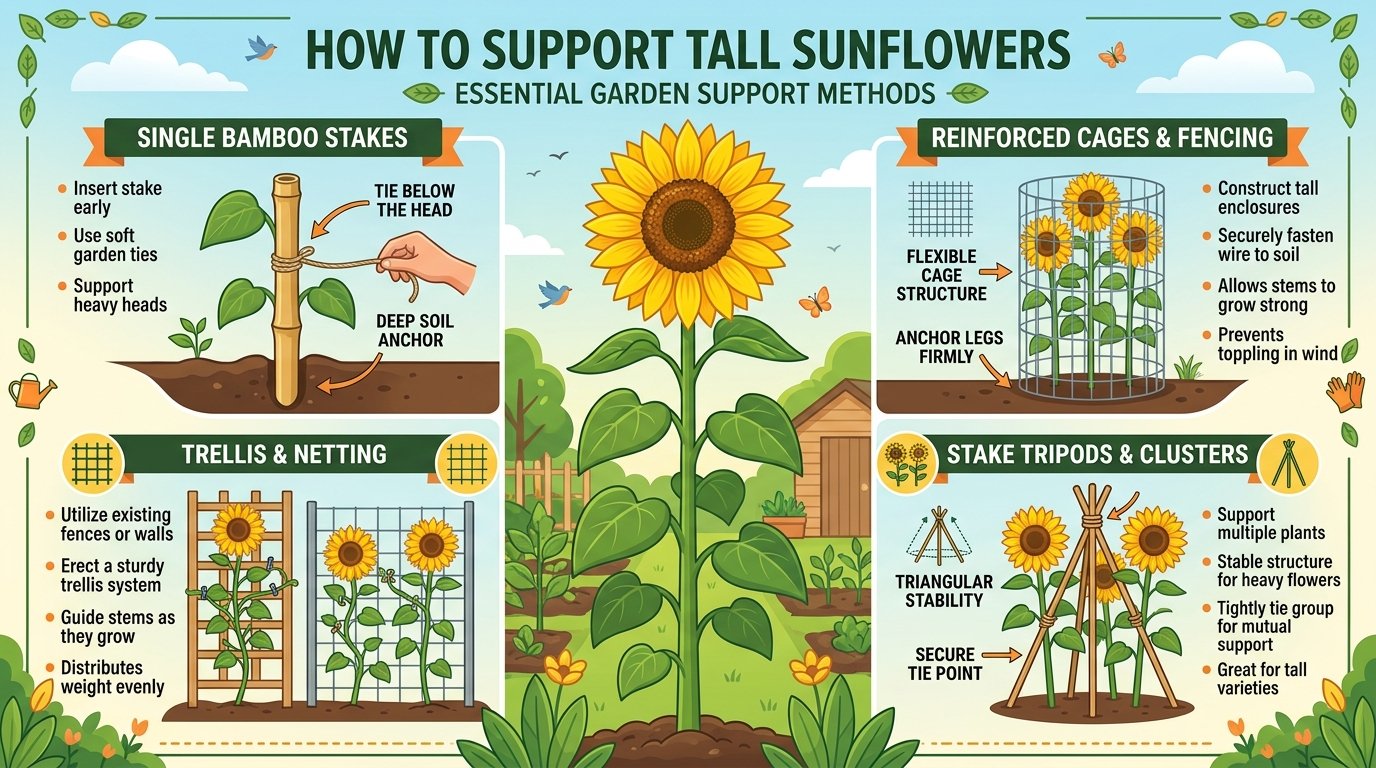
Tall sunflowers often need support because their stems and flower heads can become top-heavy.
Do not wait until a tall sunflower is already leaning dramatically. Install a sturdy support while the plant is developing or before the stem becomes difficult to manage.
Useful supports include:
- Strong garden stakes.
- Bamboo or other suitable canes for moderate-sized plants.
- Sturdy structures for giant varieties.
- A wall or sheltered structure where appropriate.
- Soft ties that do not cut into the stem.
Tie the plant loosely so the stem has some natural movement. Tight ties can damage the growing stem.
Giant sunflowers may require more substantial support than a simple short garden cane. RHS recommends sheltered locations and sturdy support for tall varieties, with giant types potentially benefiting from support against a wall.
Frequently overlooked tip: Think about support before the plant becomes tall. Once a giant sunflower is several feet high and carrying a large flower head, adding a stake without disturbing the roots becomes much harder.
Image Suggestion: Diagram showing correct loose staking versus a tight tie cutting into a sunflower stem.
Growing Sunflowers in Containers
Sunflowers can grow successfully in containers, but the variety you choose matters enormously.
Dwarf cultivars are generally the easiest choice because they remain compact. Some dwarf varieties are specifically described as suitable for pots and containers.
For container sunflower care:
- Choose a variety with a compact mature size.
- Use a container large enough for the plant and root system.
- Make sure the container has drainage holes.
- Use a quality growing medium that drains well.
- Place the container in full sun.
- Monitor moisture frequently.
- Feed appropriately if nutrients become depleted.
- Support the plant if its variety requires it.
Containers dry out faster than garden soil, so watering needs can increase dramatically during hot weather.
One of the biggest mistakes is growing a giant sunflower in a tiny pot. The plant may germinate and grow initially, but the restricted root environment makes maintaining moisture and stability much more difficult.
When and How to Stake Sunflowers
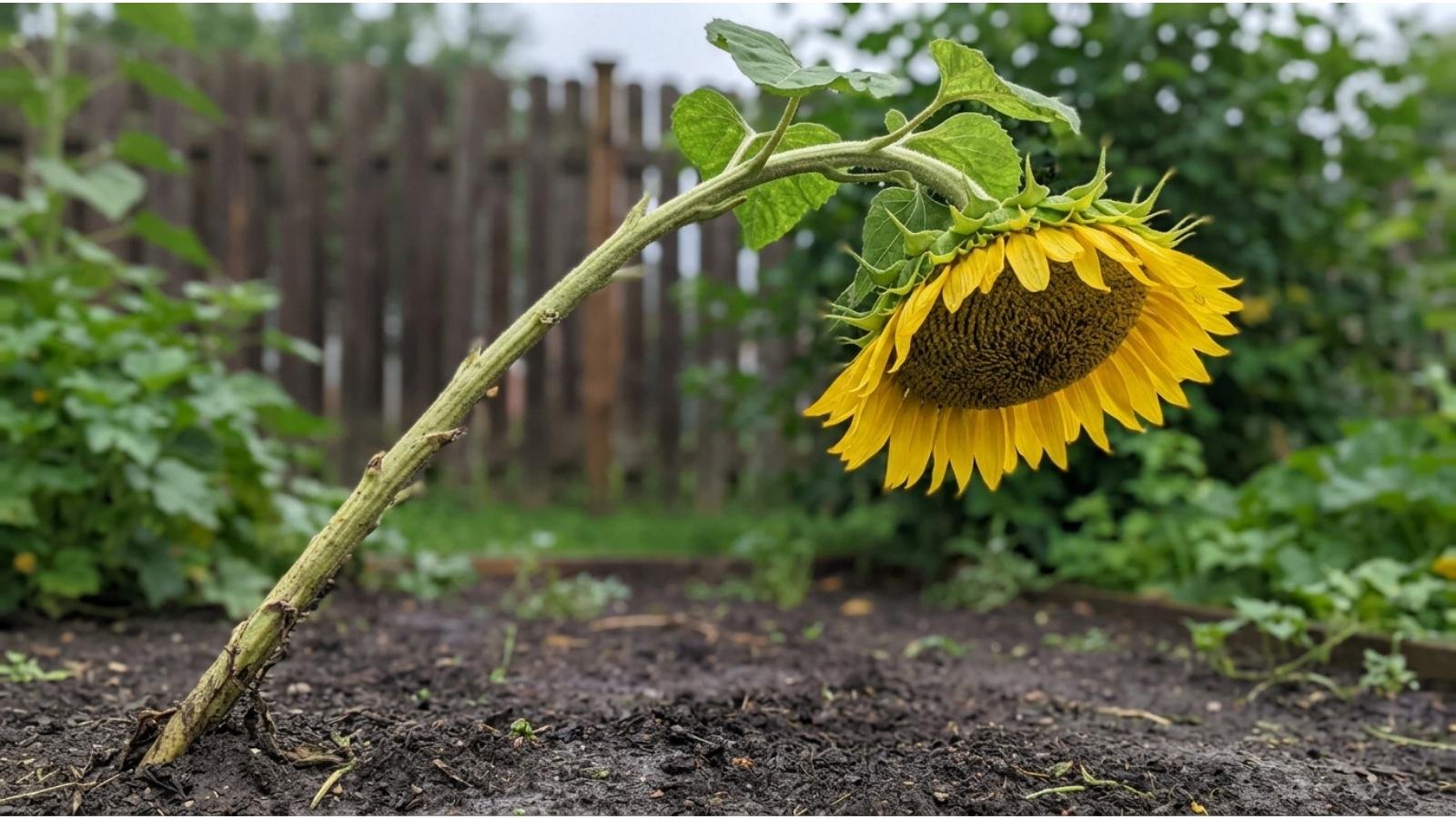
There is no universal height at which every sunflower must be staked. Variety, location, wind exposure, stem strength, and flower size all influence the decision.
Start paying attention when the plant begins gaining significant height or when the stem looks unable to remain upright in normal wind.
Place the support carefully so you do not unnecessarily damage the root system. Tie the stem loosely at intervals as it grows.
For very tall varieties, several strategically positioned supports may be more effective than one weak stake.
If your garden is exposed to strong winds, prevention is particularly important. RHS recommends sheltered planting for tall annual sunflowers because their height makes them vulnerable to being blown over.
How to Encourage More Sunflower Blooms
Different sunflower varieties naturally produce different flowering patterns.
Some types produce one dominant flower, while branching varieties can develop numerous blooms. If you specifically want lots of smaller flowers for cutting or garden display, choose a branching cultivar rather than expecting a giant single-headed variety to behave differently.
RHS notes that cutting the growing tip of certain sunflowers after they reach around 1 meter can encourage side shoots and multiple smaller flowers, although this technique should be considered cultivar-specific rather than a universal rule.
For the most predictable results:
- Select a branching variety if you want multiple blooms.
- Give the plant sufficient sunlight.
- Maintain consistent moisture.
- Avoid overcrowding.
- Keep competing weeds under control.
- Support tall stems.
- Follow the specific pruning recommendations for your cultivar.
Expert tip: Decide your goal before planting. A sunflower grown for a giant competition flower needs a different strategy from one grown for a vase full of smaller stems.
Common Sunflower Problems and Solutions
Sunflowers are generally vigorous, but several problems appear repeatedly in home gardens.
Sunflower Seedlings Disappear Overnight
Young sunflower shoots are attractive to slugs and snails. Seedlings can be damaged or eaten soon after emerging.
Protect vulnerable seedlings with suitable physical barriers or other locally appropriate pest-management methods. Starting seeds indoors can also help plants become larger and tougher before moving them outdoors.
Sunflower Leaves Are Drooping
Drooping can have several causes, including insufficient water, extreme heat, root problems, or other environmental stress.
First check the soil moisture.
If the soil is dry, water thoroughly. If the soil is saturated, adding more water is likely to make the situation worse.
Container-grown sunflowers deserve particular attention because their growing medium can dry quickly during hot weather.
Sunflower Is Leaning
A leaning plant may simply need support.
Tall sunflowers are naturally top-heavy, and wind can make the problem worse. Install a sturdy support and loosely secure the stem.
If the plant is leaning because of inadequate light, improve its growing position if possible.
Sunflower Leaves Have White Powder
White powdery growth can indicate powdery mildew, particularly during conditions that favor fungal disease.
Improve airflow around plants by avoiding excessive crowding and manage watering carefully. Avoid keeping foliage unnecessarily wet.
RHS identifies powdery mildew and sclerotinia among diseases that can affect Helianthus annuus.
Sunflower Suddenly Collapses
A sudden collapse can result from stem damage, severe wind, root problems, pests, or disease.
Inspect the stem near the soil line and examine the roots if the plant has completely failed. Look for chewing damage, discoloration, soft tissue, or signs of fungal infection.
Sclerotinia and other fungal diseases can affect sunflowers, particularly under favorable wet conditions.
Sunflower Has Lots of Leaves but Few Flowers
Check the basics first.
Insufficient sunlight, excessive crowding, inappropriate variety selection, and unbalanced nutrition can all affect flowering performance.
A sunflower bred to produce one enormous flower should not be judged by the same standard as a branching cut-flower cultivar.
Sunflower Care Through the Growing Season
Sunflower needs change as the plant develops.
Early Growth
Focus on germination, moisture, sunlight, and protecting seedlings from pests.
Young plants have limited root systems, so they can suffer quickly if allowed to become severely dry.
Rapid Vegetative Growth
As the stem starts gaining height, monitor soil moisture and prepare support for tall varieties.
This is also the stage when weeds can compete strongly for water and nutrients.
Flower Development
Maintain consistent moisture and keep tall plants supported.
Avoid disturbing roots unnecessarily once the plant becomes large.
Flowering
Enjoy the blooms, monitor water needs, and watch for pests or disease.
If growing for cut flowers, harvest according to the characteristics of the variety.
Seed Development
Once flowers fade, you can allow seed heads to mature.
If you want seeds for wildlife, leaving mature heads in the garden can provide food for seed-eating birds. If you want to save seeds for future planting, protect and harvest mature seed heads before birds consume them all.
How to Save Sunflower Seeds
Saving sunflower seeds is one of the easiest ways to continue growing annual sunflowers.
Allow the flower head to mature and dry. Protect it from birds if necessary. Once the seeds have developed fully, harvest the head and remove the seeds.
Choose seeds from healthy, vigorous plants if you want to select for traits you enjoy.
Keep in mind that saved seed may not produce plants identical to a hybrid cultivar. If maintaining a particular named variety is important, check how the original seed was produced before relying on saved seed.
Sunflower Care in Hot Weather
Hot weather increases the demand for water.
This becomes particularly important for large plants and container-grown sunflowers. Check soil moisture more frequently during heat waves instead of relying on your normal watering schedule.
Helpful practices include:
- Water deeply when the soil begins to dry.
- Check containers at least once during very hot periods.
- Apply mulch around garden-grown plants.
- Avoid unnecessary root disturbance.
- Provide sturdy support before wind and storms arrive.
- Watch young plants particularly closely.
The RHS specifically describes annual sunflowers as thirsty plants and recommends keeping taller types consistently moist during summer.
Sunflower Care in Windy Locations
Wind is one of the most underestimated sunflower problems.
A plant can look perfectly healthy and still fall after a single storm because its tall stem and large flower head act like a sail.
Choose a sheltered location whenever possible. Plant tall varieties near suitable structures or provide sturdy support as they grow.
If your garden is naturally exposed, consider shorter or more compact cultivars. A 60 cm sunflower is inherently easier to manage in a windy garden than a several-meter giant.
Annual Sunflowers Versus Perennial Sunflowers
Not every sunflower needs to be replanted each year.
Annual sunflowers complete their life cycle in one season. They are popular because they grow quickly from seed and can provide dramatic summer flowers.
Perennial sunflowers return from their roots and can form substantial clumps over time. They can also reach considerable heights and therefore need adequate garden space.
| Feature | Annual Sunflowers | Perennial Sunflowers |
|---|---|---|
| Life cycle | One growing season | Returns for multiple years |
| Starting method | Usually grown from seed | Often bought as plants or divided |
| Best use | Seasonal displays, seeds, cutting | Long-term borders and wildlife planting |
| Space | Depends on cultivar | Often needs substantial room |
| Maintenance | Replant each season | Manage established clumps |
| Flowers | Often dramatic and varied | Often abundant over late summer and autumn |
Choose annuals if you want a quick seasonal display. Choose perennials if you have room for a long-term planting.
Sunflowers and Wildlife
Sunflowers provide more than visual interest.
Their flowers can attract bees and other pollinating insects, while mature seed heads can provide food for seed-eating birds. This makes sunflowers useful additions to wildlife-friendly gardens.
If wildlife is part of your gardening goal, resist the temptation to remove every fading flower immediately.
A mature seed head can become one of the most useful parts of the plant for birds later in the season.
Mistakes That Commonly Ruin Sunflowers
Many sunflower failures can be traced to a small number of preventable mistakes.
- Growing a giant variety in a tiny container. The restricted root environment makes watering and stability difficult.
- Planting in shade. Sunflowers are sun-loving plants and perform best with abundant direct light.
- Keeping soil constantly soggy. Sunflowers need moisture but also require well-drained conditions.
- Ignoring wind exposure. Tall stems can topple when flower heads become heavy.
- Waiting too long to support the plant. Early support is easier and safer.
- Overcrowding seedlings. Plants compete for light, water, nutrients, and root space.
- Letting young plants dry repeatedly. Small root systems are particularly vulnerable to drought stress.
- Using the wrong cultivar for your goal. A giant sunflower, dwarf container sunflower, and branching cut-flower sunflower serve different purposes.
- Removing seed heads too early. Mature heads can provide valuable food for birds.
- Focusing only on fertilizer. Good light, soil, water, spacing, and support matter more than simply adding more nutrients.
A Simple Sunflower Care Routine
If you want an uncomplicated routine, use this checklist.
Every few days during active growth: Check soil moisture, inspect the leaves, and look for pest damage.
During hot weather: Check plants more frequently and water thoroughly when the soil begins to dry.
As stems gain height: Install or adjust support before the plant becomes unstable.
During flowering: Maintain moisture, monitor disease, and enjoy the flowers.
After flowering: Decide whether you want to harvest flowers, collect seeds, or leave mature seed heads for wildlife.
This approach is more reliable than following a rigid watering schedule because weather, soil type, container size, plant size, and variety all change how quickly a sunflower uses water.
Frequently Asked Questions About Sunflower Plant Care
How much sunlight does a sunflower need
Sunflowers generally perform best in full sun. Choose the brightest suitable location available, especially for tall annual varieties. (RHS)
How often should I water a sunflower
Water when the soil begins to dry and provide enough water to moisten the root zone. Young plants, large plants, and container-grown sunflowers usually need closer monitoring, especially during hot weather.
Can sunflowers grow in pots
Yes. Dwarf and compact varieties are particularly suitable for containers. Use a container with good drainage and monitor moisture closely because pots dry faster than garden soil.
Do sunflowers need support
Tall varieties frequently benefit from support because large stems and flower heads can become top-heavy. A sheltered planting location also reduces the risk of wind damage.
Why is my sunflower falling over
Common causes include wind, a heavy flower head, insufficient support, weak growth, or an unstable root environment. Tall varieties should be planted in sheltered locations and supported as necessary.
Can sunflowers grow in poor soil
Sunflowers are adaptable, but they perform better in fertile, humus-rich soil that remains moist while draining well. Improving poor soil with organic matter can support stronger growth.
Should I remove dead sunflower heads
It depends on your goal. Remove them if you want to tidy the garden or harvest the seeds. Leave mature heads if you want seed-eating birds to use them as a food source.
Can I grow sunflowers from saved seeds
Yes. Mature sunflower seeds can be collected and saved for future sowing. However, plants grown from saved hybrid seed may not reproduce the exact characteristics of the parent plant.
Why are my sunflower leaves turning yellow
Yellow leaves can result from several problems, including watering stress, poor drainage, nutrient problems, aging foliage, pests, or disease. Check soil moisture and drainage first before automatically adding fertilizer.
How long do sunflowers live
Common annual sunflowers generally complete their life cycle within one growing season. Perennial Helianthus varieties can return year after year.
Conclusion
Successful sunflower plant care comes dohwn to getting a few fundamentals right. Give your sunflower plenty of sunlight, fertile well-drained soil, reliable moisture, adequate growing space, and support when its height demands it.
The most useful approach is to care for the plant according to its variety and growing conditions rather than following a one-size-fits-all schedule. A compact sunflower in a patio container has very different needs from a giant planted in the ground.
Start with the right location and variety, monitor moisture instead of watering blindly, support tall plants before they become unstable, and allow mature seed heads to remain when you want to benefit local birds. With those habits in place, even first-time gardeners can grow strong sunflowers with healthy foliage and impressive summer blooms.
Useful related internal-link opportunities: how to grow sunflowers from seed, best flowers for full sun, container flower gardening, how to improve garden soil, organic gardening tips, and how to attract birds to your garden.