Angel Wings is prized for its unusually large, rounded, silver-white leaves with a soft, velvety texture. The plant commonly sold as Angel Wings is Senecio candicans ‘Angel Wings’, a clumping evergreen perennial that works particularly well in containers, borders, raised beds, and sunny patios.
The biggest secret to healthy Angel Wings is not complicated feeding or constant watering, but giving its roots excellent drainage and plenty of light. Many problems begin when gardeners treat this drought-tolerant plant like a moisture-loving houseplant.
Quick Answer
Angel Wings plant care is easiest when you grow Senecio candicans ‘Angel Wings’ in bright light, fast-draining soil, and a container with excellent drainage. Water when the upper layer of soil has dried, then let excess water drain completely. Feed lightly during active growth, protect the plant from prolonged cold and winter wet, and remove damaged leaves promptly. In suitable climates, it can grow outdoors as a perennial; elsewhere, treat it as a seasonal container plant.
What Is Angel Wings
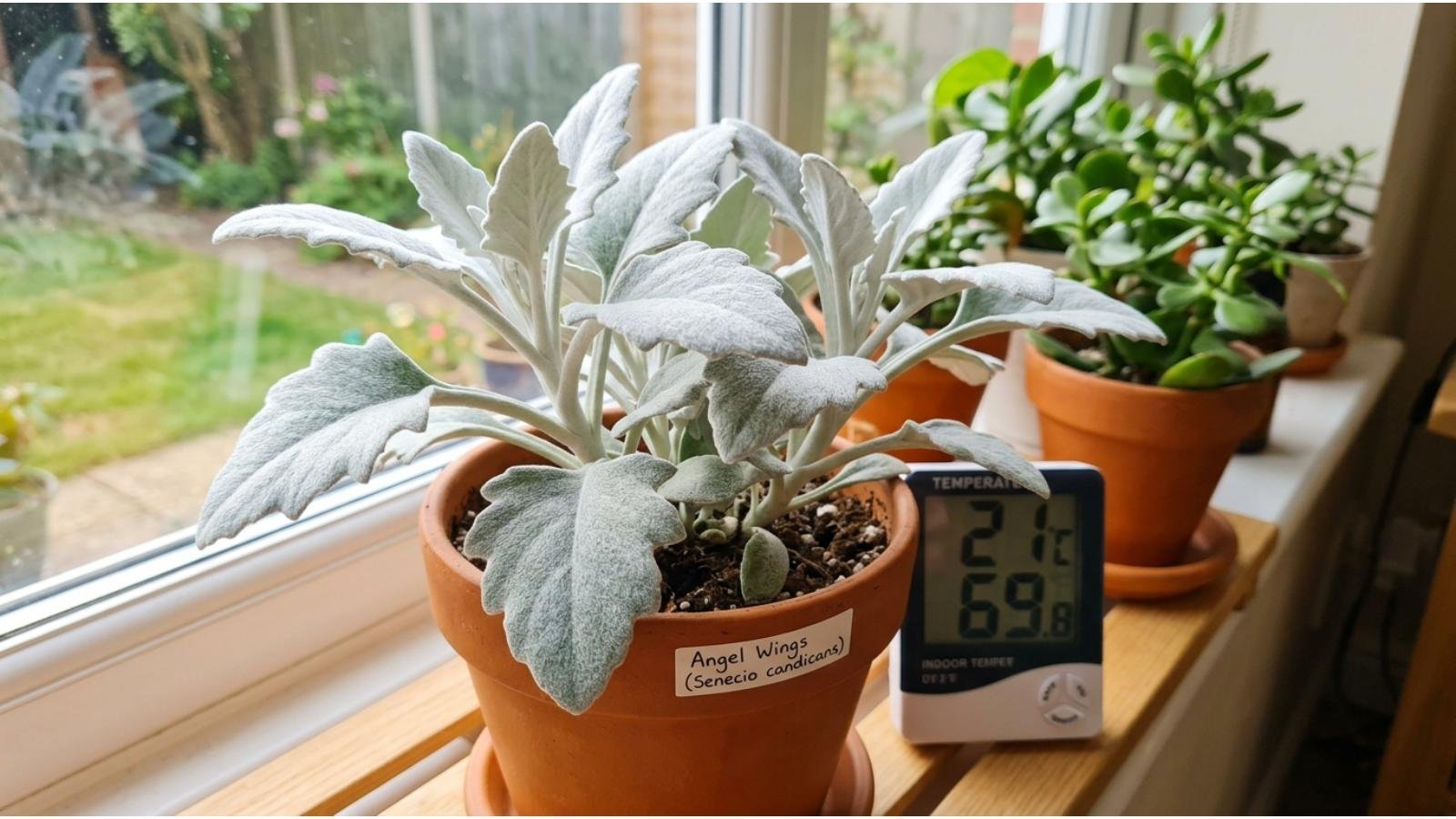
Senecio candicans ‘Angel Wings’ is a silver-leaved ornamental plant in the Asteraceae family. It forms a compact clump and can reach roughly 40–45 cm in height and spread under suitable conditions. Its foliage is its main attraction, while small yellow flowers may appear during summer but are generally less significant ornamentally.
The cultivar is particularly useful when you want a strong foliage contrast. Its almost white leaves can brighten a container arrangement and pair effectively with green, purple, burgundy, or flowering companion plants.
Image Suggestion: Close-up photograph showing the distinctive silver, velvety Angel Wings foliage beside a ruler for scale.
Angel Wings Light Requirements
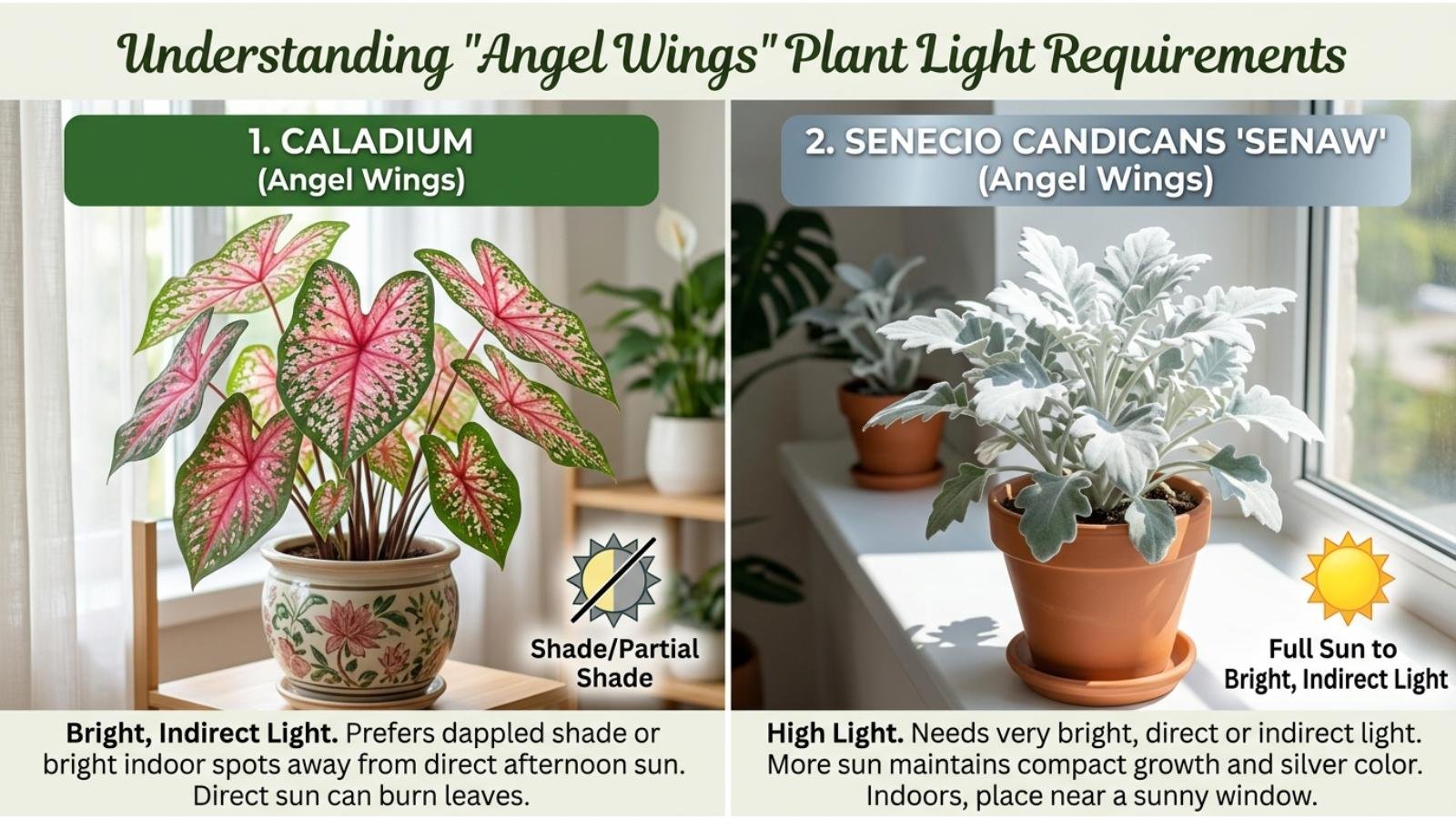
Angel Wings performs best in full sun, although light partial shade can work, particularly where afternoon temperatures become intense. Proven Winners lists full sun as the plant’s preferred exposure, while North Carolina Extension gives full sun to part shade.
Aim for approximately 6 or more hours of direct sunlight when growing it outdoors. Strong light helps maintain its compact shape and characteristic silver appearance.
If your plant receives too little light, you may notice:
- Looser or stretched growth.
- Less vigorous foliage development.
- A less impressive silver appearance.
- Stems becoming weak or floppy.
In extremely hot locations, some afternoon protection can reduce heat stress, but heavy shade is usually a poor trade-off.
How Much Water Angel Wings Needs
Watering is one of the most important parts of Angel Wings plant care because the plant dislikes prolonged wet conditions.
Newly planted specimens need more frequent attention while their roots establish. Once established, Angel Wings becomes considerably more drought tolerant.
For container plants, use this simple method.
- Check the upper portion of the potting mix with your finger.
- If it has dried noticeably, water thoroughly.
- Continue until water drains from the bottom.
- Empty standing water from saucers.
- Allow the soil to dry somewhat before watering again.
Do not follow a rigid calendar such as watering every two days. Temperature, sunlight, pot size, soil composition, and airflow can change drying speed dramatically.
Practical observation: A plant sitting in a small pot on a hot sunny patio can need water much sooner than one planted in a large container or garden bed.
The Best Soil for Angel Wings
Excellent drainage is more important than highly fertile soil.
RHS recommends moderately fertile, free-draining soil, while gardening guidance for Angel Wings emphasizes avoiding moisture-retentive conditions.
For containers, choose a quality mix designed for succulents or other plants requiring strong drainage. You can also improve a conventional potting mix with materials such as perlite or coarse grit.
A useful container setup includes:
- A pot with one or more drainage holes.
- A loose, well-draining growing medium.
- Enough air space around the roots.
- No permanently standing water beneath the pot.
Avoid heavy garden soil in containers because it can remain wet around the roots for too long.
Choosing the Right Container
Angel Wings is especially well suited to container growing. Proven Winners lists containers as a primary use, and its mature size makes it useful as a foliage focal point or thriller plant in mixed containers.
Choose a container that has proper drainage rather than simply selecting the largest decorative pot available.
A container that is excessively large relative to the root ball can hold moisture for longer after watering. Conversely, a severely root-bound plant may dry rapidly and require more frequent watering.
Image Suggestion: Diagram showing a correctly draining Angel Wings container versus a pot with blocked drainage.

Angel Wings Temperature and Winter Care
Temperature is important because Angel Wings is not equally hardy everywhere.
RHS rates the plant H3 under UK conditions, while North Carolina Extension describes it as perennial in USDA Zones 8 and above and recommends overwintering it indoors in colder climates.
Gardeners in colder areas can simplify winter care by growing Angel Wings in a container that can be moved under protection.
Before severe cold arrives:
- Move potted plants to a sheltered location.
- Protect them from hard frost.
- Reduce watering during cooler periods.
- Keep the plant away from prolonged cold, wet conditions.
- Provide plenty of light under cover.
The combination of cold plus excess moisture is particularly troublesome because roots and crowns can remain wet while the plant is growing slowly.
How to Fertilize Angel Wings
Angel Wings does not need an aggressive feeding program.
North Carolina Extension recommends fertilizing annually in spring, while commercial production guidance uses more regular feeding under controlled growing conditions. For ordinary home gardening, there is little reason to copy intensive greenhouse feeding schedules.
For a home-grown plant:
- Feed lightly during active spring growth.
- Use a balanced fertilizer according to its label.
- Avoid excessive fertilizer.
- Reduce or stop feeding during cold, low-growth periods.
Too much fertilizer can encourage soft, excessive growth rather than producing the compact ornamental form gardeners usually want.
How to Prune Angel Wings
Angel Wings generally needs very little pruning. RHS specifically lists no pruning as required, while other horticultural guidance recommends removing old leaves and cutting back leggy growth when necessary.
Remove:
- Dead or damaged leaves.
- Leaves that are beginning to rot.
- Spent flower stems if you prefer a foliage-focused appearance.
- Long, weak stems if the plant becomes leggy.
Use clean pruning shears and make cuts above a suitable leaf node when shortening healthy stems.
Avoid repeatedly cutting healthy foliage simply to make the plant smaller. Give it better light first if weak, stretched growth is the underlying problem.
How to Repot Angel Wings
Repot when the plant has substantially filled its existing container or when the growing medium has become compacted and drains poorly.
When repotting:
- Choose a container with good drainage.
- Prepare a fresh, free-draining mix.
- Remove the plant carefully from its existing pot.
- Inspect the roots for obvious damage or decay.
- Set the plant at approximately its previous planting depth.
- Fill around the root ball without heavily compacting the mix.
- Water appropriately and allow excess water to escape.
Do not automatically jump to a dramatically larger pot. The objective is healthy root space combined with predictable drying.
How to Propagate Angel Wings
Angel Wings can be propagated from cuttings or by division. RHS lists both methods, while specialist growing guidance recommends young shoot cuttings for propagation.
For division, an established clump can be separated carefully so each section retains healthy roots and sufficient top growth.
Cuttings require more attention to moisture. The growing medium should not remain saturated because excessive moisture can encourage rot.
Image Suggestion: Step-by-step illustration showing an Angel Wings cutting, suitable growing medium, rooting stage, and established young plant.
Common Angel Wings Problems
Most Angel Wings problems can be traced back to a small number of environmental mistakes.
Yellowing or Soft Leaves
If leaves become yellow, soft, or increasingly damaged, inspect the soil before adding more water.
Persistently wet soil is a warning sign. Improve drainage and allow the growing medium to dry appropriately between waterings.
Wilting Leaves
Wilting does not automatically mean the plant needs water.
Check the soil first. If it is completely dry, water thoroughly. If it is already wet, adding more water can make the problem worse.
Gardeners often make this mistake because wilting looks identical at first glance whether the plant is thirsty or suffering from root problems.
Brown or Damaged Leaves
Look at the environment before reaching for fertilizer.
Possible causes include:
- Water stress.
- Excessive heat.
- Cold damage.
- Root problems.
- Physical damage.
- Pest activity.
Correct the underlying condition instead of treating every damaged leaf as a nutrient deficiency.
Green Patches on Silver Leaves
Slugs and snails can damage the fine surface hairs on Angel Wings leaves, making affected areas appear greener. Gardeners World recommends checking plants at night when these pests are active.
Inspect foliage regularly, particularly when plants are grown outdoors in sheltered, humid conditions.
Root Rot
Root rot is one of the most serious problems because it can develop below the soil before obvious symptoms appear.
Common contributing factors include:
- Poor drainage.
- Constantly wet soil.
- Excessive watering.
- Cold and wet winter conditions.
- Poor airflow around the plant.
If the soil stays wet for unusually long periods, changing the growing environment is more important than simply reducing the amount of water each time.
Image Suggestion: Healthy Angel Wings root system compared with dark, damaged roots caused by prolonged wet conditions.
Angel Wings Seasonal Care
Spring
Spring is the ideal time to restart active growth.
Check for winter damage, remove dead foliage, refresh containers if necessary, and begin normal watering as growth resumes. A light spring feeding can also support new growth.
Summer
Summer is when Angel Wings can make its strongest visual impact.
Give it abundant light, monitor container moisture, and water deeply when needed. During heat waves, check pots more frequently because containers dry much faster than garden beds.
Fall
Begin preparing container plants for colder weather.
Reduce unnecessary watering as temperatures fall and move plants into protection before serious frost arrives.
Winter
Winter care is primarily about avoiding cold, wet roots.
Keep protected plants bright, ventilated, and relatively dry. Do not maintain summer watering habits when growth has slowed significantly.
Angel Wings in Containers Versus Garden Beds
| Growing Method | Main Advantage | Main Concern |
|---|---|---|
| Container | Easy to move and control drainage | Can dry quickly in hot weather |
| Raised bed | Excellent drainage can be created | Requires suitable winter protection |
| Garden border | Natural landscape appearance | Poor soil drainage can be difficult to correct |
| Patio container | Excellent for displaying silver foliage | Requires regular moisture monitoring |
For many gardeners, a container is the safest option because it gives much greater control over soil drainage and makes winter protection easier.
Mistakes That Make Angel Wings Struggle
The most common mistakes are surprisingly simple.
- Watering on a fixed schedule. Check the soil and environmental conditions instead.
- Using heavy soil. Prioritize free drainage.
- Keeping it in deep shade. Bright light is essential for strong ornamental growth.
- Leaving water in a saucer. Allow excess water to escape.
- Overfertilizing. More fertilizer does not automatically mean better foliage.
- Ignoring winter moisture. Cold, wet conditions can be especially damaging.
- Assuming every wilted plant needs water. Inspect the roots and soil first.
- Choosing a pot without drainage holes. Decorative appearance should never come before root health.
Expert Tips for Better Growth
A few small adjustments can make Angel Wings care considerably easier.
Prioritize drainage before everything else. If the soil remains wet for days, fixing the growing medium will usually accomplish more than changing your watering schedule repeatedly.
Use the plant’s foliage as feedback. Healthy Angel Wings should maintain its characteristic silver-white appearance and firm foliage. Sudden changes deserve an environmental check.
Treat containers differently from garden beds. Container plants can dry rapidly in bright summer conditions but can also become waterlogged if the potting mix is poorly designed.
Protect the foliage from unnecessary wetness. Heavy rain and persistent moisture are more concerning than an occasional thorough watering followed by good drainage.
Do not chase flowers. Angel Wings is primarily grown for its spectacular foliage, and removing insignificant flowers can help maintain a tidy foliage-focused appearance.
Is Angel Wings a Good Indoor Plant
Angel Wings can be grown in containers and temporarily brought indoors, but it is generally better treated as a bright-light patio or outdoor plant rather than a typical low-light houseplant.
If you bring it indoors for winter, place it near the brightest suitable window and avoid keeping the soil constantly wet. North Carolina Extension specifically recommends allowing the soil to dry between waterings for indoor winter plants.
A warm room with weak light and frequent watering is a much less suitable environment than a bright, well-ventilated location.
Frequently Asked Questions
How often should I water Angel Wings
Water when the growing medium has dried appropriately rather than following a fixed weekly schedule. Container plants may require more frequent checking during hot weather, while established outdoor plants can tolerate periods of drought.
Does Angel Wings need full sun
Yes. Full sun is the preferred exposure, although some partial shade can be useful in very hot conditions. Strong light helps maintain compact growth and attractive silver foliage.
Can Angel Wings survive winter
It depends on your climate. It is perennial in suitable warmer zones, while colder climates require protection or overwintering under cover.
Why is my Angel Wings plant turning green
Damage to the fine silver hairs can expose greener underlying tissue. Slugs and snails are one possible cause, so inspect the foliage carefully, particularly at night.
Why are my Angel Wings leaves wilting
Check the soil before watering. Wilting can result from either insufficient moisture or root problems caused by excessively wet soil. If the mix is wet, improving drainage is more appropriate than adding more water.
Does Angel Wings need fertilizer
It benefits from light feeding during active growth, but excessive fertilizer is unnecessary. A modest spring application is sufficient for many home-grown plants.
Can I grow Angel Wings in a pot
Yes. Angel Wings is particularly well suited to containers because you can control the growing medium, drainage, and winter protection.
How big does Angel Wings get
It generally forms a compact clump around 40–45 cm tall and wide, although final size varies with growing conditions.
Conclusion
Successful Angel Wings plant care comes down to creating conditions that match the plant’s natural preferences. Give it abundant light, use genuinely free-draining soil, water according to soil moisture rather than a rigid schedule, and protect it from prolonged cold and wet conditions.
If you remember only one rule, make it this: when Angel Wings looks unhappy, check the roots and drainage before assuming it needs more water. With the right growing environment, its large silver-white foliage can become a striking feature in a container, patio, raised bed, or sunny garden border.
Related topics worth covering next: snake plant care, pothos plant care, jade plant care, coleus plant care, and bird of paradise plant care.