Plumbago, especially Plumbago auriculata, is a fast-growing ornamental shrub prized for its clusters of sky-blue flowers and attractive, sprawling growth. It can be trained against a trellis, grown as a mounding shrub, or kept in a container. Native to southern Africa, it performs particularly well in warm climates and can flower for a long season when given suitable conditions.
The biggest care mistake is treating plumbago like a plant that needs constantly wet soil. Good drainage, strong light, and sensible watering usually matter more than keeping the roots permanently moist. Once established, plumbago has useful drought tolerance, making it a relatively manageable choice for sunny gardens.
Quick Answer
Plumbago plant care is easiest when you provide plenty of sunlight, well-drained soil, moderate watering, regular feeding during active growth, and periodic pruning. Cape plumbago, Plumbago auriculata, grows best in full sun and fertile, well-drained soil. Established plants tolerate drought, but excessive moisture can cause problems. In colder climates, protect it from frost or grow it in a container that can be moved indoors.
What Is Plumbago
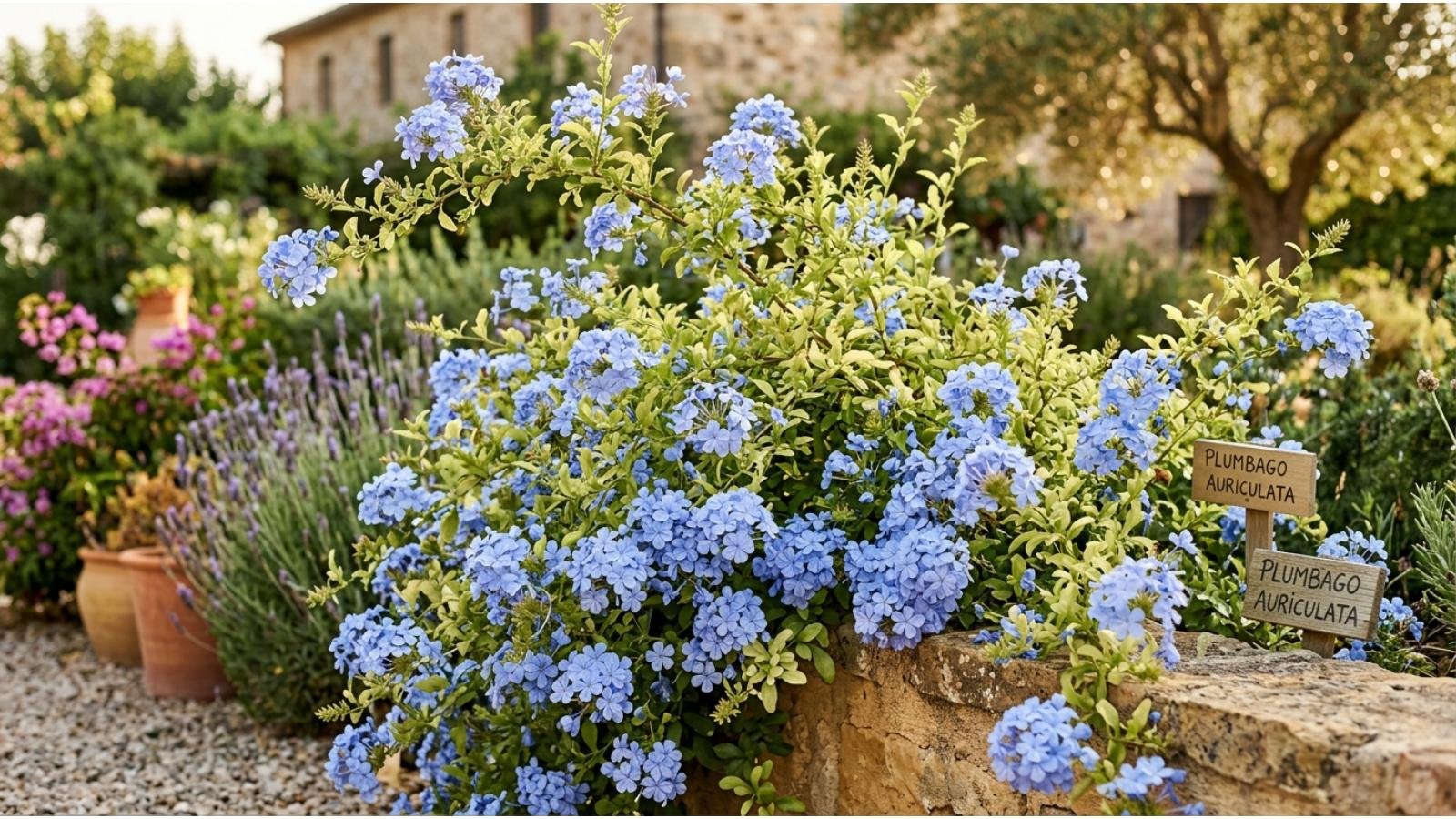
The plant commonly called Cape plumbago or Cape leadwort is Plumbago auriculata, a member of the Plumbaginaceae family. It is technically a shrub, although its long, arching stems allow it to behave much like a climber when given support.
Depending on climate and growing conditions, it can become several feet tall and wide. The Royal Horticultural Society lists a potential height of approximately 2.5 to 4 meters with support.
Its main attractions include:
- Sky-blue flowers with a phlox-like appearance.
- Long flowering periods in suitable warm climates.
- Evergreen foliage in frost-free conditions.
- A naturally cascading or scrambling growth habit.
- Good tolerance of heat and periods of drought once established.
- Suitability for containers, borders, walls, and trellises.
There is also a white-flowered form known as Plumbago auriculata f. alba.
Plumbago Light Requirements
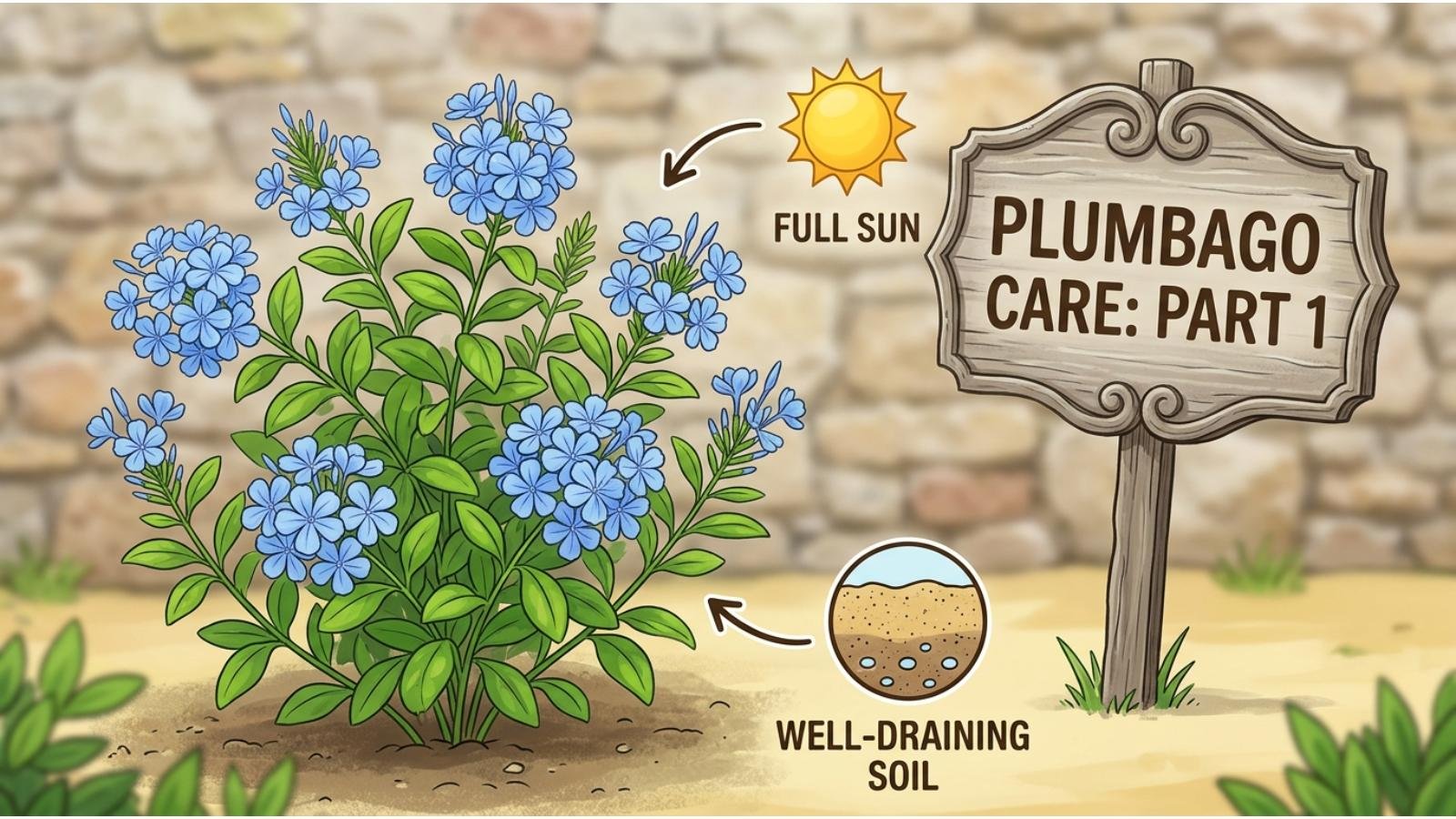
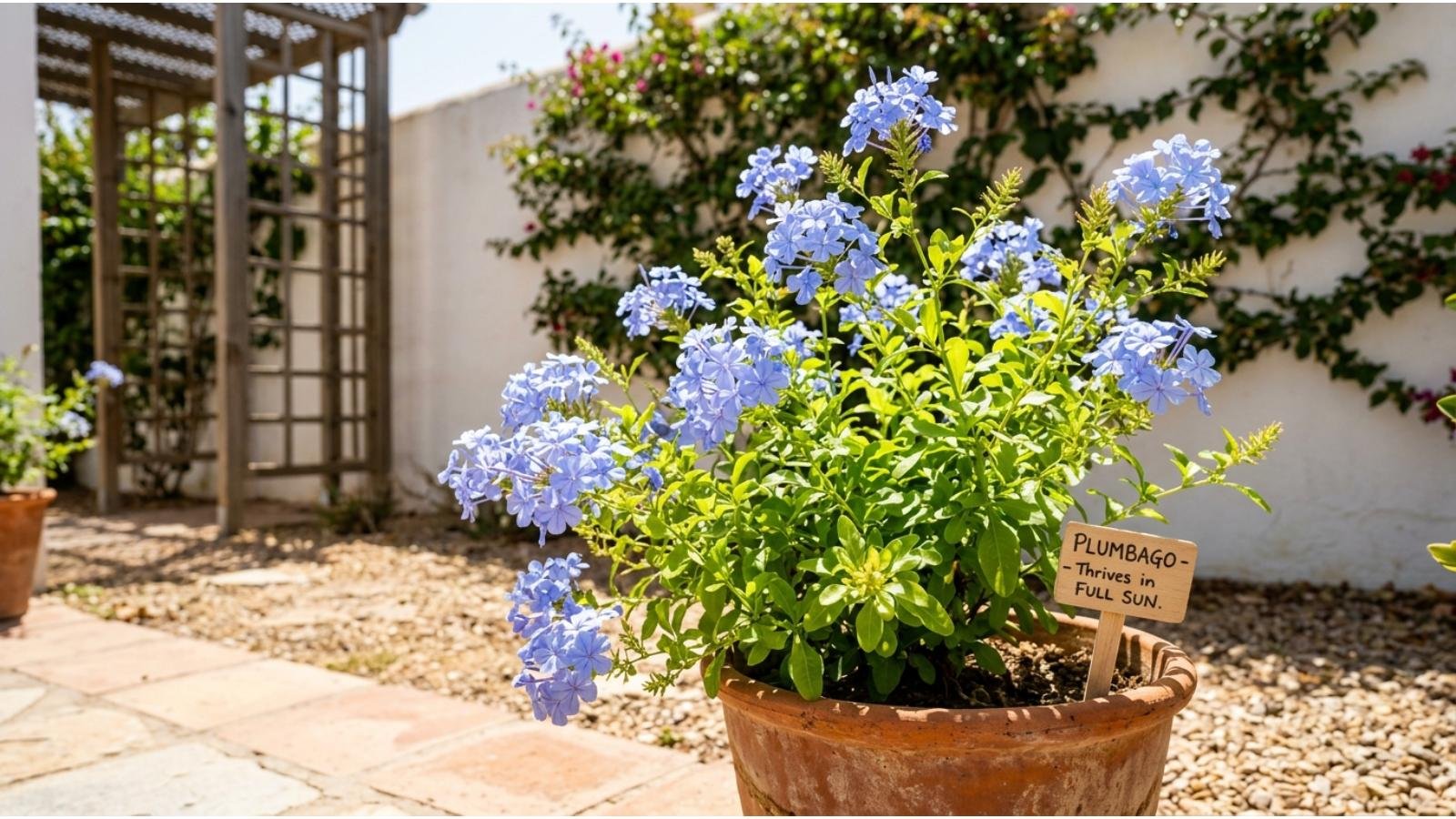
Full sun is the best choice if your priority is abundant flowering.
Aim for approximately six or more hours of direct sunlight per day where practical. Plumbago can tolerate some shade, but reduced light generally means weaker growth and fewer flowers. University extension guidance specifically recommends full sun for the best growth and flowering.
A good location is:
- A sunny garden border.
- A south or west-facing position where appropriate.
- A sunny patio.
- Beside a warm wall.
- A bright greenhouse or conservatory in colder climates.
If your plumbago is producing lots of leaves but very few flowers, insufficient sunlight should be one of the first things you investigate.
Image Suggestion: Plumbago growing in full sun beside a trellis compared with a shaded plant with sparse flowers.
Best Soil for Plumbago
Plumbago prefers fertile, well-drained soil. The most important feature is that excess water can escape instead of remaining around the roots.
The RHS lists chalk, loam, and sand among suitable soil types and specifies well-drained conditions. UF/IFAS similarly recommends fertile, well-drained soil.
For garden planting, improve poor soil with organic matter while avoiding the creation of a permanently soggy planting area.
For containers, use a quality potting mix that drains freely and always use a container with drainage holes.
How to Recognize Poor Drainage
Watch for:
- Soil that stays saturated for several days.
- Persistent yellowing combined with wet soil.
- Weak or declining growth.
- Root problems.
- A musty smell around the root zone.
Adding more water to a struggling plant is often the wrong response when the actual problem is poor drainage.
How to Water Plumbago
Watering should change as the plant matures.
Newly Planted Plumbago
New plants need more consistent moisture while their roots establish. Water thoroughly, then monitor the soil rather than automatically watering according to a rigid calendar.
Established Plants
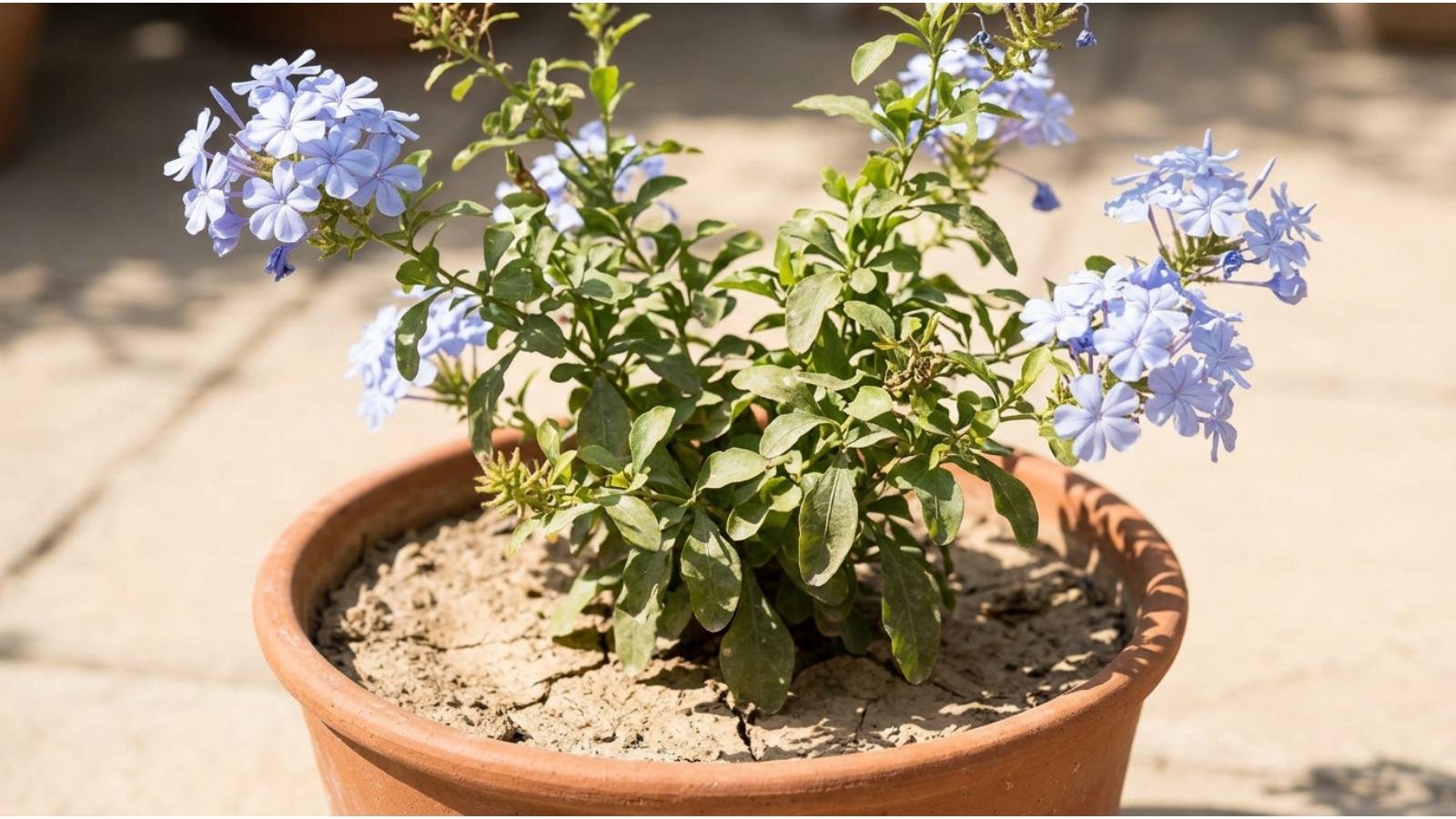
Once established, plumbago becomes moderately drought tolerant. UF/IFAS notes that established plants tolerate drought, while the University of North Florida warns that excess irrigation can be harmful.
During hot, dry weather:
- Water deeply when the plant needs it.
- Allow excess water to drain.
- Check the soil before watering again.
- Increase attention to container plants because containers dry faster.
- Reduce watering during cool or wet periods.
The goal is not to keep the soil constantly soaked. It is to provide enough moisture for active growth while maintaining healthy aeration around the roots.
How to Fertilize Plumbago
Plumbago can benefit from feeding during active growth, particularly when you want vigorous growth and plentiful flowers.
The RHS recommends a balanced liquid fertilizer monthly for plants grown under glass during the growing season. UF/IFAS also reports that fertilizer during the growing season can encourage continuous growth and flowering.
A practical approach is to:
- Feed during active growth.
- Use a balanced fertilizer according to its label.
- Avoid excessive fertilizer.
- Reduce or stop feeding when growth naturally slows.
- Pay particular attention to container plants because nutrients are gradually removed through watering.
More fertilizer is not automatically more flowers. Excessive feeding can encourage vigorous foliage at the expense of a balanced plant.
How to Prune Plumbago
Pruning is one of the most useful parts of plumbago plant care because this plant can grow vigorously and develop long, untidy stems.
Early spring or late winter is a useful time for major pruning in climates where the plant experiences winter dormancy. The RHS recommends early-spring pruning, while UF/IFAS advises removing frost-damaged growth in spring.
Prune to:
- Remove dead or damaged stems.
- Control excessive size.
- Encourage bushier growth.
- Maintain a tidy shape.
- Train the plant toward a support.
- Remove frost-damaged growth after cold weather.
If the plant becomes leggy, cutting it back can encourage fresh growth.
For a trellised plant, select several strong framework stems and guide new shoots onto the support. The RHS recommends choosing three or four strong stems when training the plant.
Image Suggestion: Before-and-after illustration showing how pruning transforms a leggy plumbago into a fuller plant.
How to Get More Plumbago Flowers
If your plumbago looks healthy but refuses to flower generously, check the growing conditions in this order.
Give It More Light
Full sun is usually the biggest flowering advantage. Shaded plants commonly produce less impressive flowering.
Avoid Constantly Wet Soil
Healthy roots support healthy flowering. Poor drainage can undermine growth even when the foliage initially looks acceptable.
Feed During Active Growth
A balanced fertilizer during the growing season can support continued growth and flowering.
Prune Strategically
Pruning encourages fresh shoots and helps prevent the plant from becoming an unruly mass of old stems.
Check for Stress
Heat, drought, cold damage, pest activity, or nutrient problems can all reduce the plant’s performance.
A useful rule is to correct the growing environment before simply adding more fertilizer.
Growing Plumbago in Containers
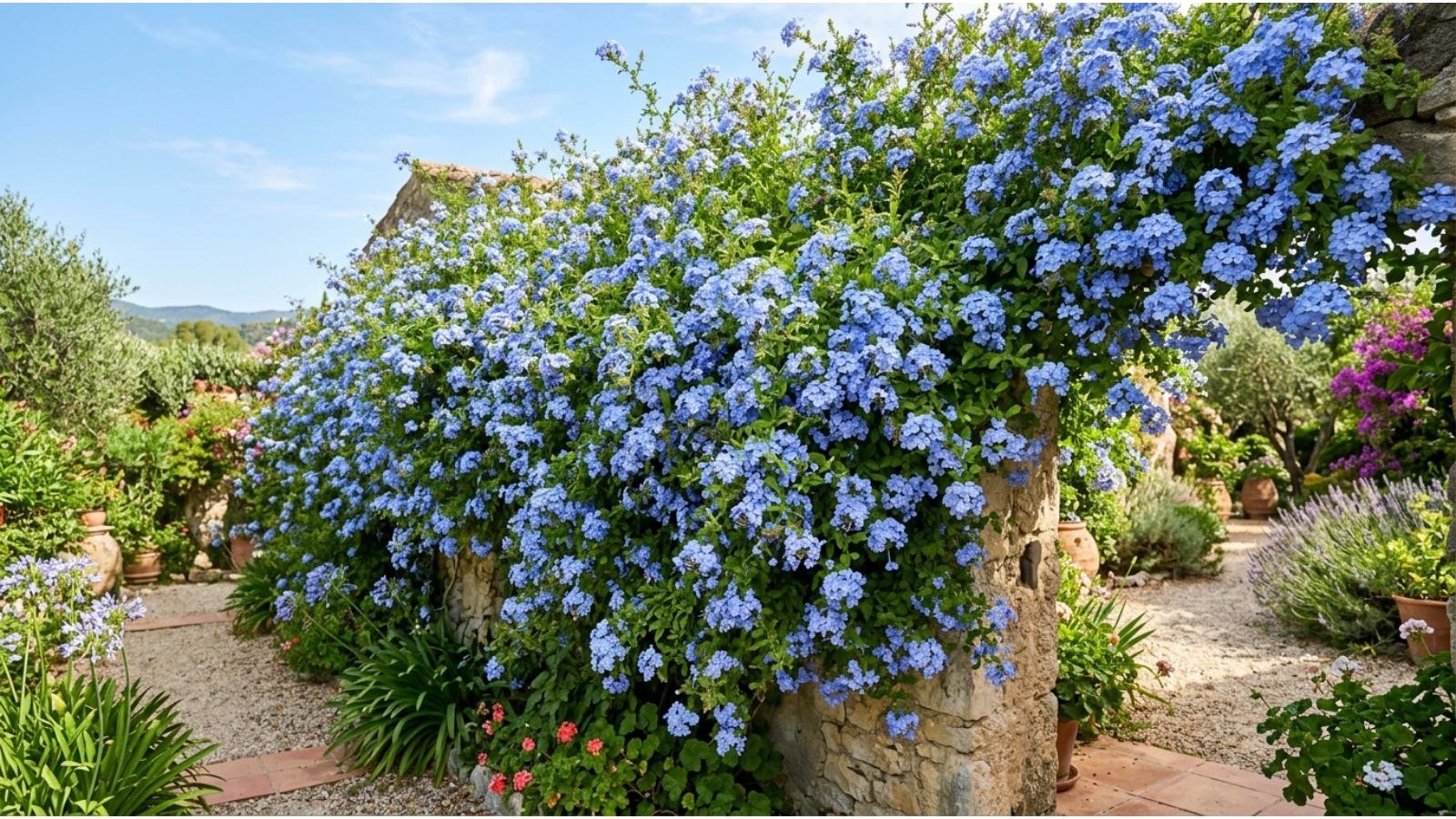
Plumbago can be an excellent container plant, particularly in climates where winter temperatures are too cold for permanent outdoor growth.
Choose a large container with:
- Adequate drainage holes.
- Free-draining potting mix.
- Enough room for root development.
- A stable position that will not easily tip as the plant grows.
- A trellis or support if you want vertical growth.
Container plants generally need closer attention to watering than plants growing in the ground. RHS guidance specifically recommends large containers and moving plants into bright, frost-free protection in colder climates.
Avoid letting the container sit permanently in a saucer of stagnant water.
Plumbago in Winter
Cold tolerance is one of the most important considerations when growing plumbago.
In warm climates, it can remain outdoors and may retain evergreen foliage. In colder areas, frost can cause significant dieback, and the plant may need protection or indoor overwintering. UF/IFAS notes that freeze damage can cause dieback but that plants often recover when temperatures rise.
For container-grown plants in cold regions:
- Move the plant indoors before damaging frost.
- Provide a bright location.
- Water more sparingly during winter.
- Avoid keeping the soil continuously wet.
- Prune damaged or unwanted growth at the appropriate time.
North Carolina State University also recommends bringing container plants indoors into a bright, sunny room in colder climates and watering them sparingly during winter.
Image Suggestion: Seasonal plumbago care calendar showing summer outdoor growth and winter protection.
Plumbago Pests and Problems
Plumbago is generally considered relatively trouble-free, but several pests can occasionally appear.
UF/IFAS identifies pests including mites and cottony cushion scale, while other sources note problems such as chilli thrips.
Yellow Leaves
Yellowing does not automatically mean the plant needs more water.
High-pH soil can contribute to mineral deficiencies and yellow leaves, according to UF/IFAS.
Check:
- Soil moisture.
- Drainage.
- Recent fertilizer use.
- Root health.
- Soil pH if yellowing persists.
Curled or Stunted Leaves
Chilli thrips can cause curled and stunted foliage. Inspect new growth and the undersides of leaves if the plant suddenly develops distorted foliage.
Few Flowers
The most likely environmental factors to investigate are:
- Insufficient direct sunlight.
- Excessively wet roots.
- Nutritional imbalance.
- Excessive shade.
- Severe pruning at an inappropriate time.
- Cold or other environmental stress.
Frost Damage
Frost can cause stems and foliage to die back. Do not assume the entire plant is dead immediately after a freeze. In suitable climates, plumbago can recover when warmer conditions return.
Common Plumbago Care Mistakes
Overwatering
This is one of the easiest mistakes to make because gardeners sometimes interpret wilting as an automatic request for water.
Check the soil first. Established plumbago has meaningful drought tolerance, and excessive irrigation can be harmful.
Growing It in Deep Shade
Plumbago may survive in less light, but flowering is usually better with strong sunlight.
Ignoring Its Size
A young nursery plant can look compact. Given warm conditions and support, however, plumbago can become a substantial shrub or scrambling climber.
Neglecting Pruning
Long stems can quickly become tangled or leggy. Regular shaping makes the plant easier to manage.
Leaving It Exposed to Severe Frost
Gardeners in cold climates should plan winter protection before the first serious cold spell.
Fertilizing Without Fixing Environmental Problems
Fertilizer cannot compensate for poor drainage, inadequate sunlight, or serious root problems.
Plumbago Propagation
Plumbago can be propagated from seed or cuttings.
The RHS lists spring seed propagation at approximately 13 to 18°C and semi-hardwood cuttings in midsummer with bottom heat. UF/IFAS also lists seeds, cuttings, and division as propagation methods.
For home gardeners, cuttings can be an attractive option when you want to reproduce a desirable plant.
Propagation success depends on factors such as cutting maturity, moisture management, warmth, and cleanliness. Avoid keeping propagation material excessively wet because young cuttings are vulnerable to rot.
Plumbago Safety Considerations
Plumbago should be handled with reasonable care.
The RHS identifies it as a skin irritant and notes that it can be harmful if eaten by pets. UC Agriculture and Natural Resources also reports that contact can cause dermatitis and eye irritation and recommends protective clothing when handling the plant.
For routine pruning:
- Consider wearing gloves.
- Avoid touching your eyes while handling the plant.
- Wash your hands after gardening.
- Keep pets and children from chewing plant material.
Plumbago Care by Season
| Season | Main Care |
|---|---|
| Spring | Prune, resume active watering, begin feeding, check for new growth |
| Summer | Provide strong sunlight, water during prolonged dry periods, monitor pests |
| Fall | Reduce intervention as growth slows, prepare container plants for colder weather |
| Winter | Protect from frost, reduce watering, provide bright conditions indoors |
The exact schedule depends heavily on climate. In warm frost-free regions, plumbago may continue growing and flowering for much longer than it would in colder areas.

Plumbago Care for Different Growing Conditions
In Hot Climates
Hot weather is generally well suited to plumbago. Provide full sun, good drainage, and adequate water during prolonged dry periods.
Once established, its drought tolerance makes it useful for warmer landscapes.
In Humid Climates
Good drainage becomes particularly important because frequent rainfall can keep the root zone wet.
In Cold Climates
Treat it as a container plant or seasonal outdoor plant where necessary. Move containers into frost-free protection before severe cold arrives.
In Containers
Monitor moisture more frequently than you would in-ground plants, but do not compensate for a dry surface by automatically watering every day. Examine the actual root-zone moisture.
Frequently Asked Questions
How much sunlight does plumbago need?
Plumbago performs best in full sun. Around six or more hours of direct sunlight is a useful target for strong flowering.
How often should I water plumbago?
There is no universal calendar because climate, soil, plant age, and container size all affect water requirements. Newly planted plants need regular moisture while establishing, while established plants tolerate periods of drought.
Does plumbago like wet soil?
No. It prefers well-drained soil, and excessive irrigation can be harmful.
Why is my plumbago not flowering?
Start by checking sunlight. Plumbago flowers best in full sun. Also investigate excessive moisture, nutritional problems, pruning, and environmental stress.
Should plumbago be pruned?
Yes. Pruning helps control its vigorous growth, maintain shape, and encourage fresh growth. Major pruning is commonly performed in late winter or early spring, depending on climate.
Can plumbago grow in pots?
Yes. It can perform well in a sufficiently large container with good drainage. Container-grown plants can also be moved indoors in climates where winter frost is a concern.
Is plumbago evergreen?
In warm, frost-free climates, Plumbago auriculata can remain evergreen. Cold weather can cause substantial dieback.
Is plumbago drought tolerant?
Yes. Established plants are moderately drought tolerant, although newly planted specimens require more consistent watering while their roots establish.
Can plumbago grow in shade?
It can tolerate some shade, but full sun is preferable for vigorous growth and better flowering.
Is plumbago safe for pets?
The RHS identifies plumbago as a skin irritant and notes potential harm if eaten by dogs. Keep pets from chewing the plant and use care when pruning.
Conclusion
Successful plumbago plant care comes down to a few fundamentals: give it plenty of sunlight, provide well-drained soil, water sensibly, feed during active growth, and prune it to control vigorous growth. Established plants can handle periods of drought, but constantly wet roots are a much bigger concern than allowing the soil to become moderately dry between waterings.
For gardeners in warm climates, plumbago can become a long-lived flowering landscape plant. In colder areas, growing it in a container provides much greater control because you can protect it from frost. Pay attention to sunlight, drainage, seasonal temperature, and pruning, and the plant has a strong foundation for healthy foliage and abundant blue flowers.