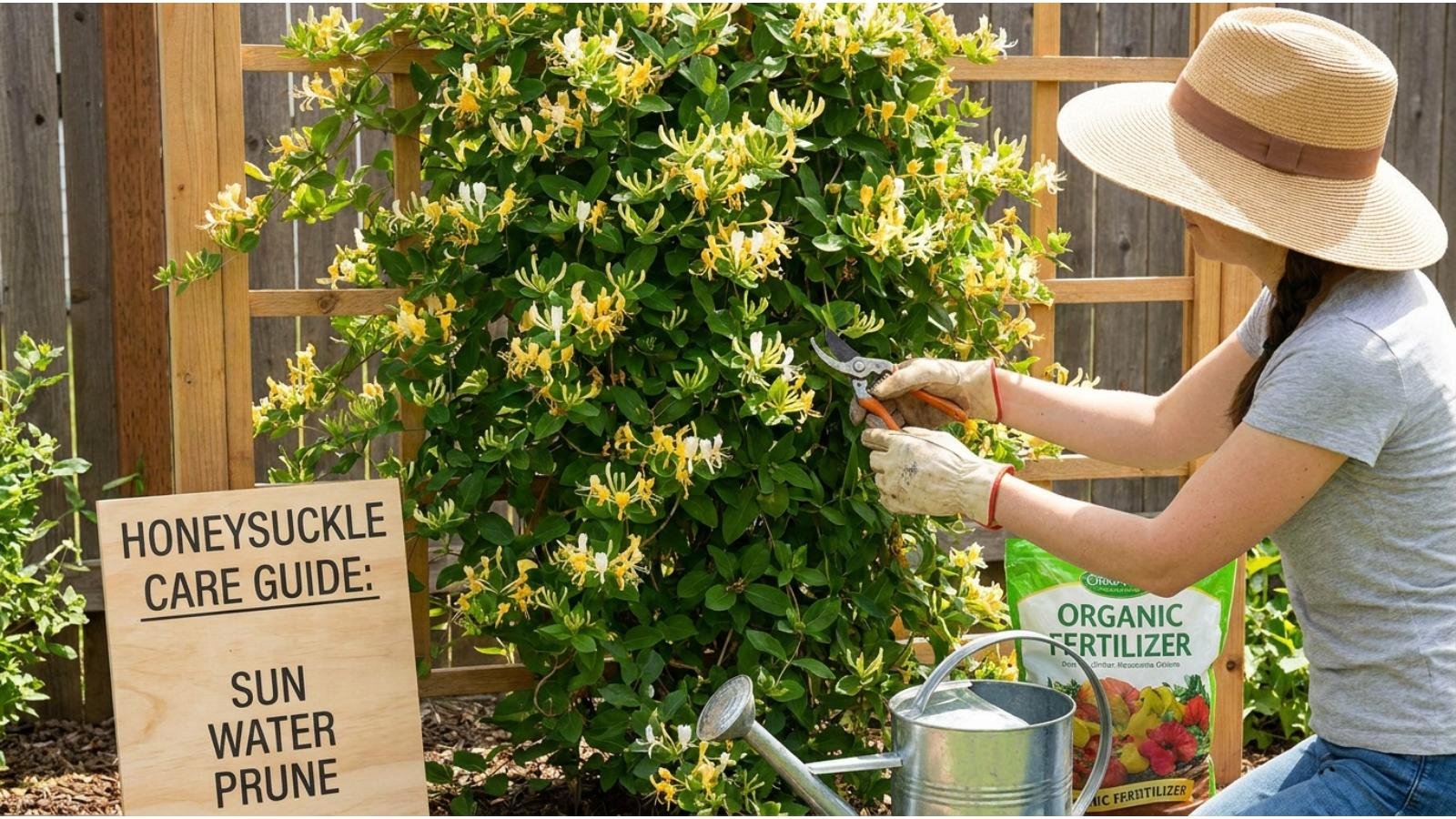
Honeysuckle is valued for its colorful, often fragrant flowers, vigorous growth, and ability to attract pollinators and hummingbirds. But the name covers a large group of plants, including climbing vines and shrubs, so successful honeysuckle plant care starts with knowing exactly which Lonicera you have. Different species can have noticeably different growth habits, flowering times, and maintenance needs.
One important distinction deserves attention before you plant. Japanese honeysuckle (Lonicera japonica) is invasive in many parts of the United States and can spread aggressively through seeds and runners. Native choices such as coral honeysuckle (Lonicera sempervirens) are much better options for many American gardens.
Quick Answer
Honeysuckle plant care is fairly simple when you match the species to the right growing conditions. Most honeysuckles perform best in fertile, well-drained soil with consistent moisture and good sunlight. Provide a sturdy trellis for climbing varieties, water deeply during dry periods, and prune at the correct time for the species. For U.S. gardens, choose native or well-behaved cultivars instead of invasive species such as Japanese honeysuckle.
Understanding Honeysuckle Before You Plant
Honeysuckle belongs to the genus Lonicera, which includes numerous perennial shrubs and climbing plants. Some are evergreen or semi-evergreen, while others lose their leaves during winter.
Coral or trumpet honeysuckle (Lonicera sempervirens) is a particularly useful garden vine. It is native to the eastern United States, twines around supports, and can reach roughly 10 to 20 feet when given suitable growing conditions. Its tubular flowers are especially attractive to hummingbirds.
Honeysuckle should therefore not be treated as one identical plant. Before buying or pruning yours, check the botanical name on the plant label.
Image Suggestion: Create a visual comparison showing coral honeysuckle, Japanese honeysuckle, and shrub honeysuckle with their different flowers, leaves, and growth habits.
Choosing the Right Location
Location has a major effect on flowering, foliage density, and overall growth.
Most ornamental honeysuckles tolerate some shade, but many flowering vines produce their best display with substantial direct sunlight. Coral honeysuckle, for example, grows best in full sun, although it can tolerate partial shade.
- Several hours of direct sunlight.
- Good air circulation around the foliage.
- Enough room for the mature vine.
- Well-drained soil.
- A strong trellis, arbor, fence, or similar support.
- Adequate space around the base for watering and maintenance.
A common mistake is planting honeysuckle directly against a weak fence. Vigorous vines can become surprisingly heavy as their stems mature, so install the support before the plant becomes difficult to manage.
Getting the Soil Right
Honeysuckle is generally adaptable, but good drainage is more important than creating a perfect soil mixture.
Coral honeysuckle prefers medium-moisture, well-drained soil and can grow in clay, loam, or organically rich soil. Suitable pH can range from acidic to neutral depending on the species.
Before planting:
- Loosen compacted soil around the planting area.
- Improve very poor soil with organic matter.
- Avoid locations where water remains around the roots.
- Do not bury the root crown deeper than it was in the nursery container.
- Water thoroughly after planting to settle the soil around the roots.
If your soil is naturally heavy and poorly drained, fixing drainage is usually more useful than simply adding fertilizer.
Watering Honeysuckle Correctly
Newly planted honeysuckle needs more consistent moisture while its roots establish. Once established, many honeysuckles become relatively tolerant of ordinary garden conditions, although prolonged drought can still reduce vigor and flowering.
Instead of watering according to a rigid calendar, check the soil.
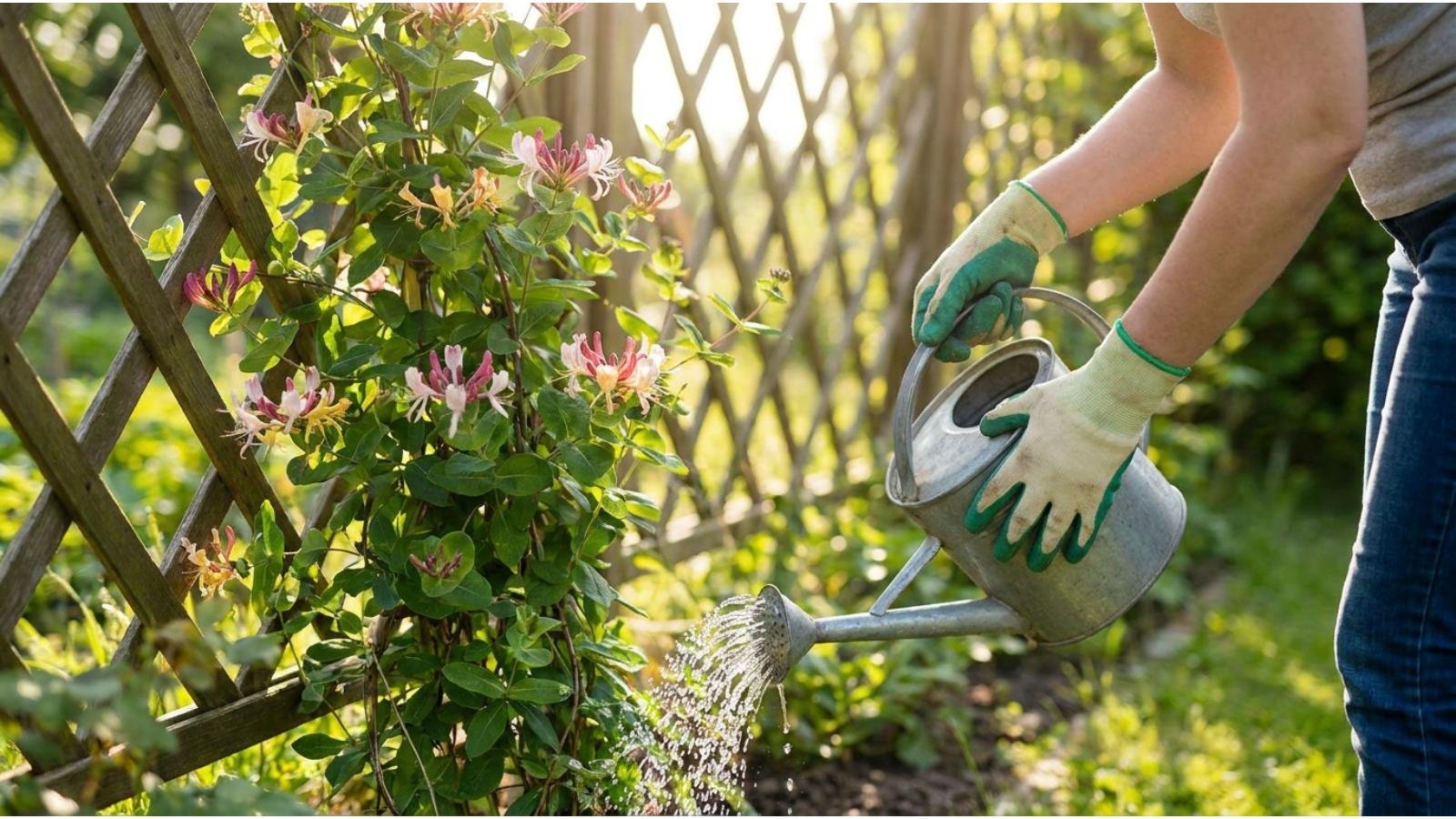
Water deeply when the upper soil begins drying, particularly during hot or unusually dry weather. Allow excess water to drain away rather than keeping the root zone constantly saturated.
A useful routine is:
- Check the soil near the root zone.
- Water slowly and deeply when needed.
- Pay particular attention during the first growing season.
- Increase monitoring during heat waves.
- Reduce unnecessary watering during consistently wet weather.
Expert Tip: Leaves that wilt during extreme heat do not automatically mean the plant needs more water. Check the soil first. Adding water to already saturated soil can create a different problem.
Feeding Honeysuckle Without Excess Fertilizer
Honeysuckle generally does not need aggressive fertilization when growing in reasonably fertile soil.
Too much nitrogen can encourage leafy growth while reducing the emphasis on flowers. North Carolina Extension specifically notes this problem for coral honeysuckle.
If growth is weak, first investigate the basics:
- Is the plant receiving enough sunlight?
- Is the soil draining properly?
- Has drought slowed growth?
- Is the root system competing with nearby plants?
- Has excessive pruning removed flowering wood?
- Does the species naturally flower later?
A soil test is more useful than guessing at nutrient deficiencies, especially for established plants.
Training Honeysuckle on a Trellis
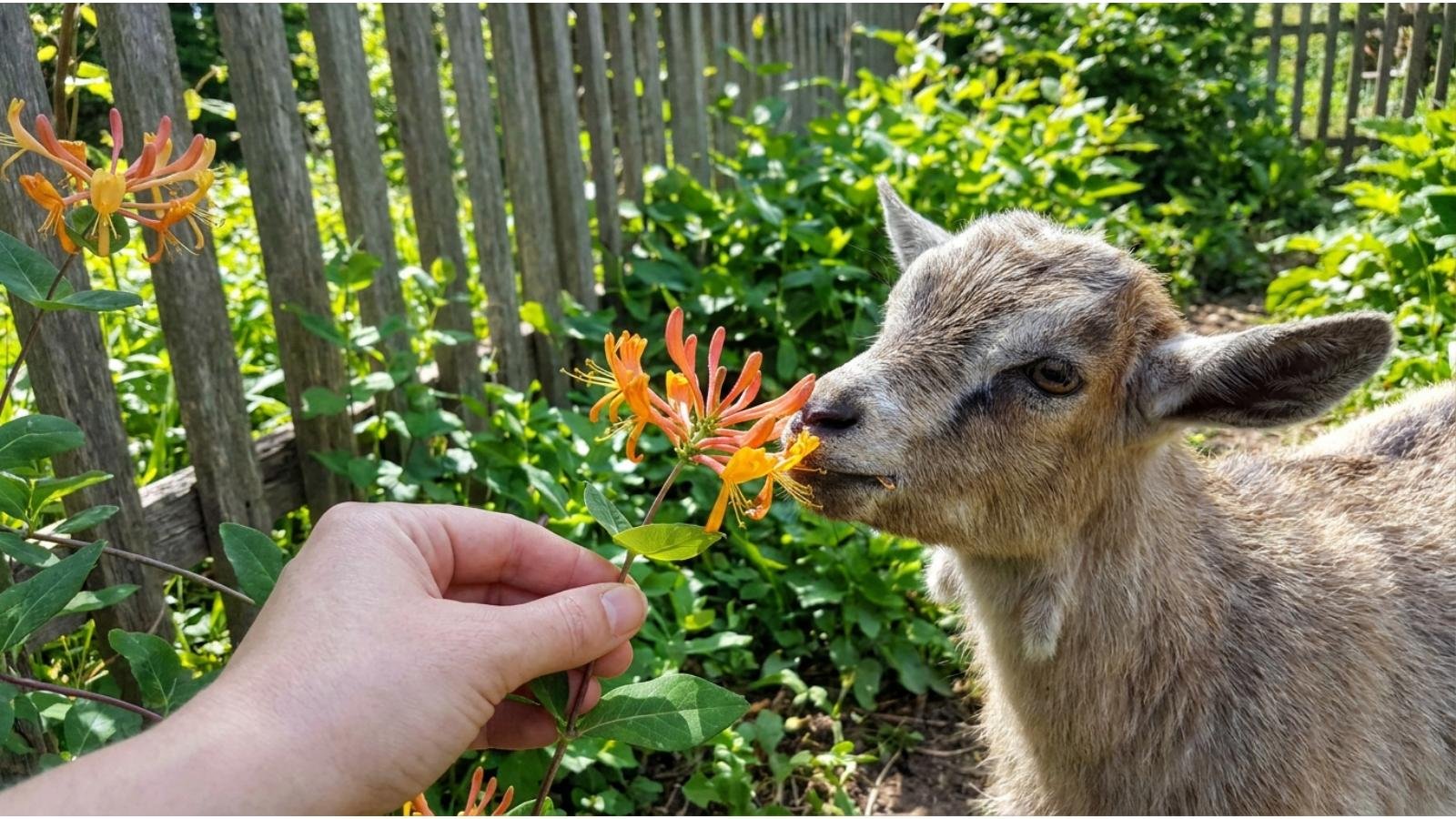
Climbing honeysuckles are twining plants, meaning their stems naturally wrap around suitable supports.
Give the plant a sturdy structure and guide young stems toward it. Some young vines need temporary tying or staking before they begin gripping the support naturally.
A good training approach is:
- Install the support before planting.
- Spread several young stems across the structure.
- Use soft ties rather than wire directly against stems.
- Redirect wandering shoots early.
- Remove damaged or badly positioned growth.
- Keep the base accessible for watering and pruning.
Training is easier when the stems are young. Waiting until several seasons of tangled growth have developed can turn a simple job into a major pruning project.
Image Suggestion: Show a young honeysuckle vine being trained horizontally across a trellis, with arrows indicating desirable stem placement.
Pruning Honeysuckle for Better Growth
Pruning is one of the most misunderstood parts of honeysuckle plant care because the correct timing depends on the species and its flowering habit.
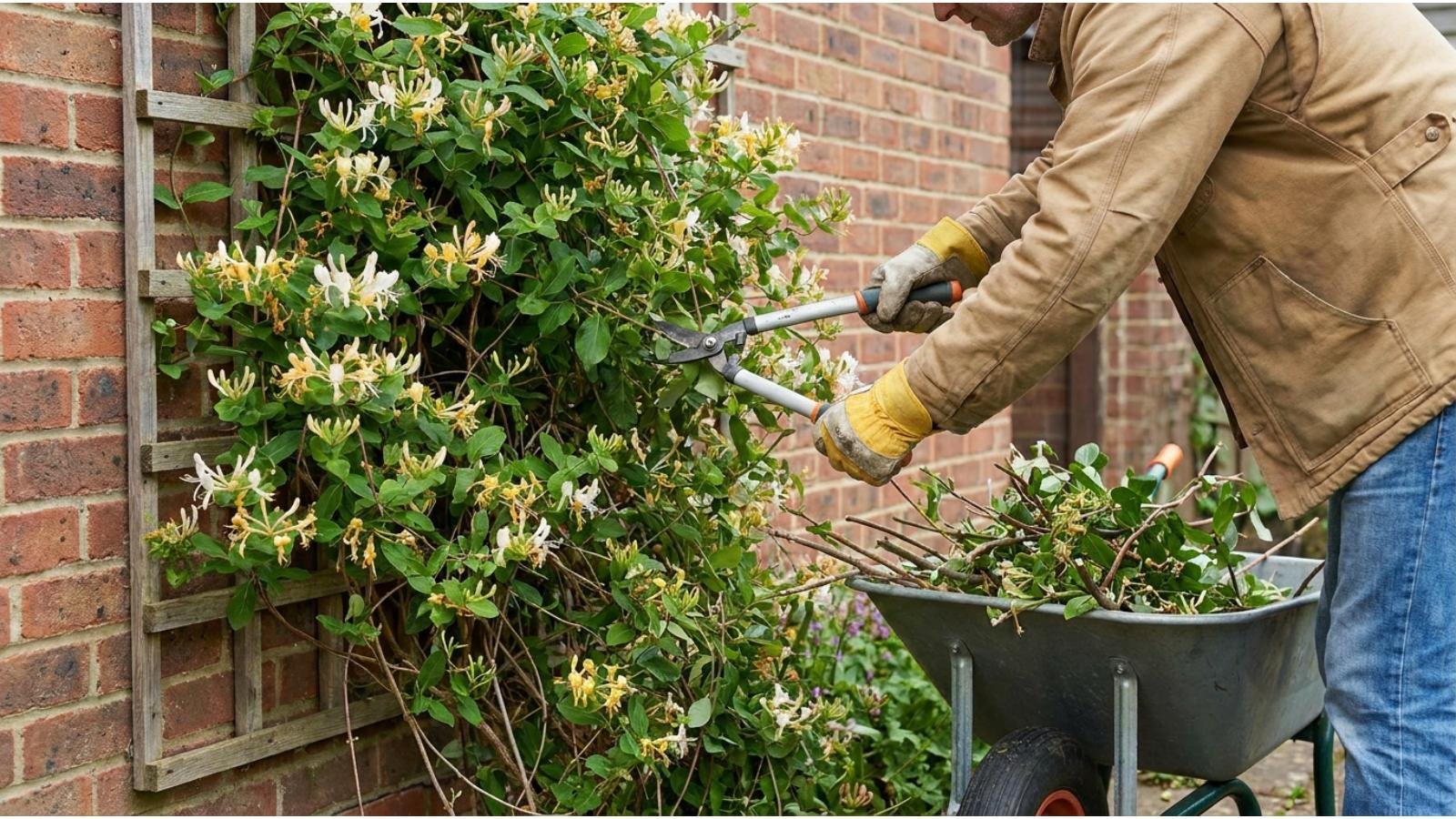
For coral honeysuckle, pruning immediately after the main flowering period is often recommended because pruning earlier can remove flower buds. University of Maryland Extension also recommends removing dead or diseased branches annually and describes gradual renewal pruning for mature plants.
For an overgrown vine, gradual renewal pruning is often less disruptive:
- Remove approximately one-third of the oldest branches.
- Cut selected old branches close to the ground.
- Repeat over several years.
- Remove dead, diseased, or damaged growth as necessary.
- Redirect healthy young stems onto the support.
Severely neglected vines may sometimes require renovation pruning. This can involve cutting the plant back dramatically during dormancy, but flowering may be greatly reduced for a season or longer while new growth develops.
Important: Do not automatically apply one pruning schedule to every honeysuckle. Flowering wood varies among species and cultivars.
Managing Honeysuckle in Different Seasons
Spring
Spring is a good time to inspect the plant for winter damage, organize new growth, and check the support structure.
As new shoots develop, guide them toward the trellis instead of allowing them to form a tangled mass.
Avoid unnecessary early pruning on varieties that flower on older wood because you may remove developing flower buds.
Summer
Summer is generally when many honeysuckles are putting on their strongest display.
Monitor moisture during hot weather, especially for recently planted vines. Remove obviously dead growth and redirect stems that have escaped the support.
After flowering, many varieties can be pruned according to their specific flowering habit.
Fall
Reduce unnecessary watering as temperatures cool if natural rainfall is sufficient, but do not allow newly planted plants to become severely dry before winter.
Remove diseased plant material and inspect the trellis before winter weather arrives.
Winter
Deciduous honeysuckles may lose their leaves, making the structure of the plant easier to inspect.
Winter can be an appropriate period for major structural pruning on some varieties, but timing should be based on the species. Severe pruning can sacrifice the upcoming flower display.
Common Honeysuckle Problems
Honeysuckles are generally resilient, but environmental stress and poor maintenance can create problems.
Yellow Leaves
Yellow foliage can have several causes, including excessive moisture, poor drainage, nutrient problems, or normal seasonal change.
Do not immediately add fertilizer. Check the root-zone moisture and drainage first.
Powdery Mildew
Powdery mildew can appear as a whitish coating on foliage. It is more likely to become troublesome when foliage stays humid and air circulation is poor.
Improve spacing and airflow, avoid unnecessary overhead watering, and remove badly affected plant material where appropriate. Powdery mildew is among the documented problems for some honeysuckle species.
Aphids
Aphids may cluster on tender growth and can produce sticky honeydew.
For coral honeysuckle, University of Florida Extension notes that aphids can often be dislodged with a strong water spray.
Avoid reaching immediately for a broad-spectrum insecticide when a simple physical control is sufficient.
Poor Flowering
Poor flowering is often related to:
- Insufficient sunlight.
- Excessive nitrogen.
- Incorrect pruning.
- Drought stress.
- Excessively vigorous vegetative growth.
- The natural flowering schedule of the particular cultivar.
For example, coral honeysuckle flowers best in full sun, while high nitrogen can encourage foliage instead of flowers.
Why Your Honeysuckle Is Not Blooming
When a healthy-looking honeysuckle produces leaves but few flowers, examine the growing conditions before assuming it needs more fertilizer.
Start with sunlight. A shady location can produce attractive foliage while limiting flowering.
Next, consider pruning history. If you cut a variety before it flowers, you may have removed developing flower buds. This is particularly important with honeysuckles that flower on older wood.
Also consider plant maturity. Young plants may spend their early seasons establishing roots and structural growth before producing the impressive flowering display expected from a mature specimen.
When Honeysuckle Becomes Too Aggressive
Not every honeysuckle belongs in every garden.
Japanese honeysuckle (Lonicera japonica) is a major example. It was introduced into the United States as an ornamental but is now recognized as an invasive plant. It can spread through seeds and runners and climb over desirable vegetation.
Some non-native shrub honeysuckles are also invasive. Penn State Extension identifies several invasive shrub species and recommends management rather than treating them as ordinary garden shrubs.
Before purchasing honeysuckle, check your state or local invasive-plant guidance.
For many U.S. gardens, native species such as coral honeysuckle offer a better ecological choice. North Carolina Extension identifies Lonicera sempervirens as native to the eastern United States and notes its value to hummingbirds.
Honeysuckle and Wildlife
One reason gardeners choose native honeysuckle is its wildlife value.
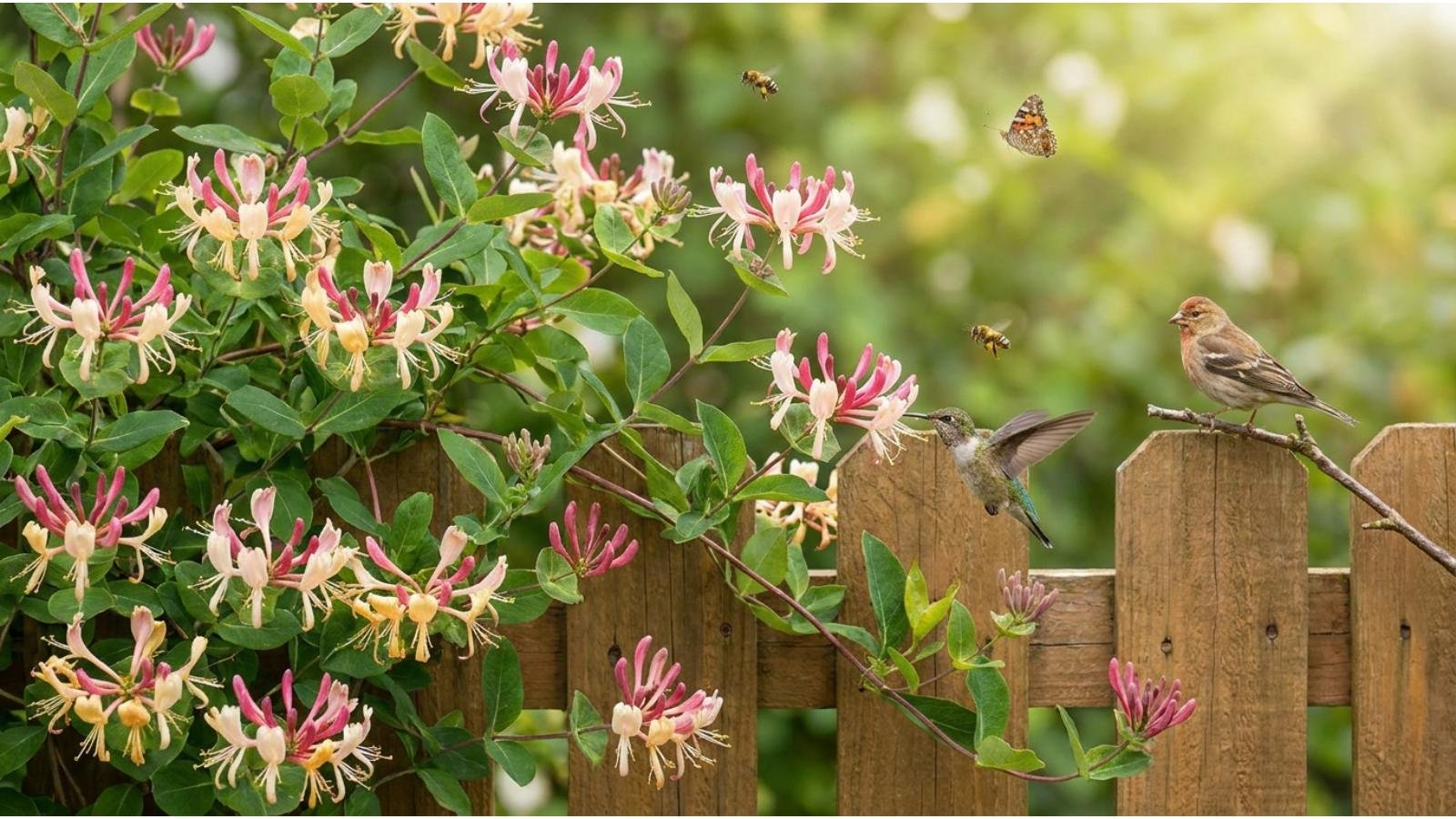
The tubular flowers of coral honeysuckle can attract hummingbirds and other pollinators. Later, its berries provide food for birds.
However, berries should not be assumed to be edible for people. UC Master Gardeners notes that many honeysuckle berries are poisonous and advises that honeysuckle berries are not suitable for human consumption.
This makes plant identification particularly important if children or pets have access to the garden.
Image Suggestion: Create a seasonal honeysuckle wildlife diagram showing flowers attracting hummingbirds and later berries being used by birds.
Propagating Honeysuckle
Several honeysuckle species can be propagated from stem cuttings, layering, or seed.
Layering is especially practical for gardeners because a flexible stem can be encouraged to root while remaining attached to the parent plant. North Carolina Extension lists layering and stem cuttings among propagation methods for coral honeysuckle.
For beginners, propagation through layering can be easier than trying to maintain perfect moisture and humidity around a detached cutting.
Only propagate plants that are appropriate and legal to grow in your area. Avoid intentionally propagating invasive honeysuckle species.
Honeysuckle Plant Care Mistakes to Avoid
The most common mistakes are surprisingly simple.
- Planting an invasive honeysuckle without checking local recommendations.
- Choosing a location with too little sunlight.
- Using a weak trellis for a vigorous vine.
- Keeping the soil constantly wet.
- Fertilizing heavily to force flowering.
- Pruning at the wrong time.
- Allowing young stems to become tangled before training them.
- Ignoring dead or diseased growth.
- Assuming every honeysuckle species has identical care requirements.
- Forgetting to check the mature size before planting.
The biggest lesson is that species identification comes before the care schedule. Once you know the exact honeysuckle, decisions about sunlight, pruning, watering, and maintenance become much easier.
A Simple Honeysuckle Care Routine
For an established ornamental honeysuckle, use this practical routine:
Weekly during active growth: Check soil moisture and inspect new growth.
During hot weather: Monitor the root zone more frequently and water deeply when necessary.
Throughout the growing season: Redirect young stems and prevent the vine from escaping its support.
After flowering: Evaluate whether the plant needs shaping or renewal pruning based on its species.
After storms: Inspect the trellis and remove broken or damaged stems.
In late season: Check for disease, dead growth, and unwanted spread.
Before major pruning: Confirm the species and determine whether it flowers on old wood, new wood, or both.
Frequently Asked Questions About Honeysuckle Plant Care
How much sunlight does honeysuckle need?
Many honeysuckles tolerate partial shade, but flowering varieties commonly perform best with substantial sunlight. Coral honeysuckle, for example, flowers best in full sun.
How often should I water honeysuckle?
Water according to soil moisture rather than a fixed schedule. Newly planted honeysuckle needs regular moisture while establishing, while established plants can often tolerate periods of reduced rainfall.
Does honeysuckle need a trellis?
Climbing honeysuckles benefit from a sturdy support because their twining stems naturally climb structures. Shrubby honeysuckles do not require a trellis.
When should honeysuckle be pruned?
The answer depends on the species and flowering habit. Coral honeysuckle is generally pruned after flowering to avoid unnecessarily removing flower buds.
Why is my honeysuckle growing leaves but not flowers?
Insufficient sunlight, excessive nitrogen, drought stress, plant age, and poorly timed pruning can all contribute. Start by checking sunlight and your recent pruning history.
Can honeysuckle grow in pots?
Some compact honeysuckles can be grown in containers, but vigorous climbing varieties require a sufficiently large container and strong support. Container plants also dry out faster than plants growing in the ground.
Is Japanese honeysuckle good for a garden?
Japanese honeysuckle is considered invasive in many areas of the United States and should not be intentionally planted where it poses an ecological risk. Native or non-invasive alternatives are preferable.
Does honeysuckle attract hummingbirds?
Some species, particularly coral honeysuckle, are valuable hummingbird plants. Its tubular flowers provide an attractive nectar source.
Can I cut an overgrown honeysuckle back hard?
Some honeysuckles tolerate severe renovation pruning, but doing so can eliminate flowers for a period while the plant regrows. Gradual renewal pruning is often a less disruptive approach.
Are honeysuckle berries edible?
Do not eat unidentified honeysuckle berries. Many honeysuckle berries are poisonous, and honeysuckle should not be treated as an edible fruit plant. (
Conclusion
Successful honeysuckle plant care comes down to a few fundamentals: identify the species, provide appropriate sunlight, maintain well-drained soil, water according to actual conditions, give climbing varieties a strong support, and prune according to their flowering habit.
For gardeners in the United States, plant selection is equally important. Native options such as coral honeysuckle can provide attractive flowers and wildlife value, while invasive species such as Japanese honeysuckle can create serious management problems.
The best results usually come from working with the plant’s natural growth habit instead of constantly fighting it. Give honeysuckle enough room, sunlight, support, and timely maintenance, and it can become one of the most rewarding flowering plants in the garden.
Related internal-link opportunities: coral honeysuckle care, climbing plant care, trellis plants, hummingbird garden plants, flowering vine care, native plants for pollinators, and pruning flowering vines.