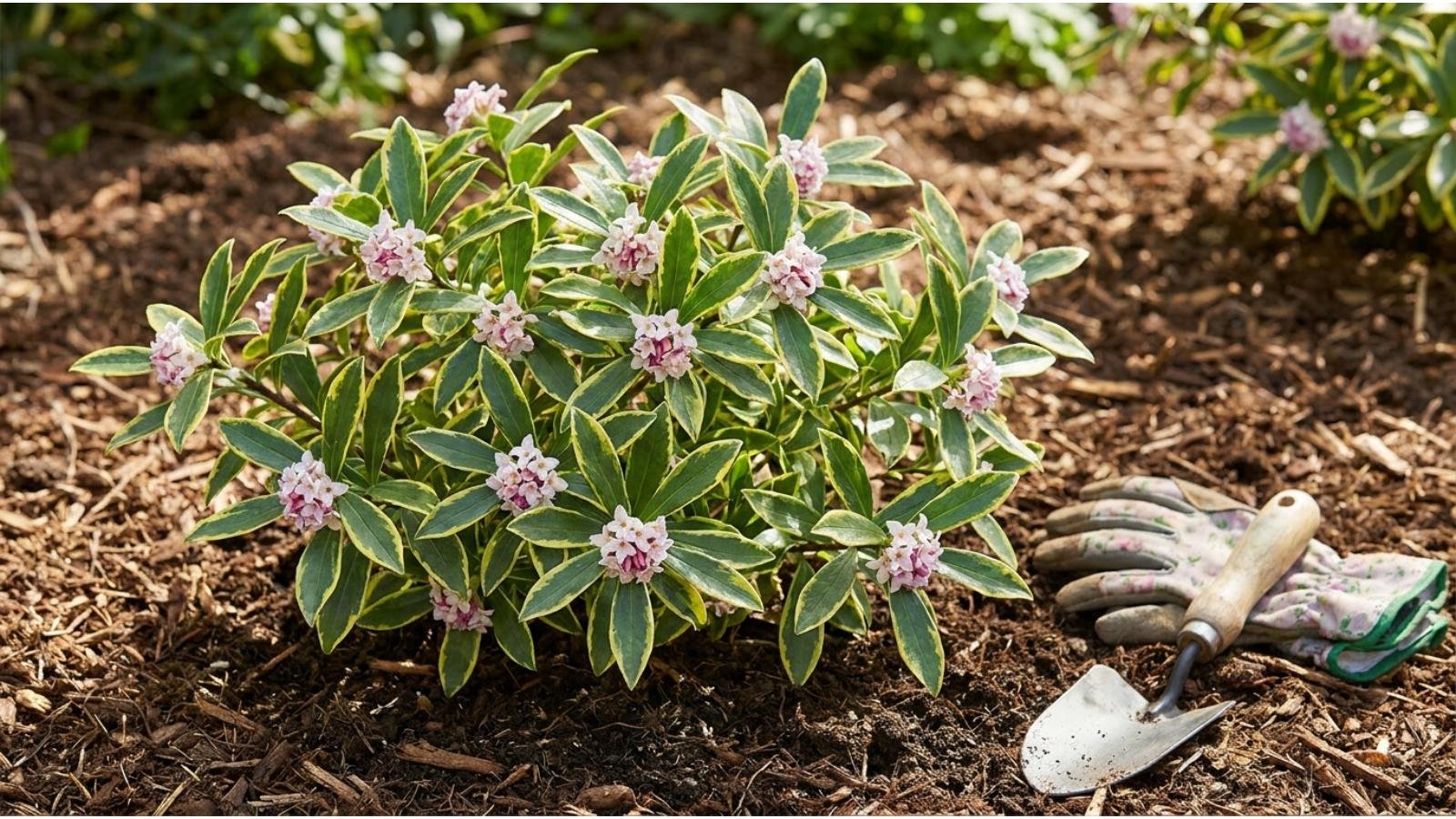
Daphne shrubs are prized for something many garden plants cannot provide during the colder months: an exceptionally strong fragrance from relatively small flowers. Winter daphne can bring scent and evergreen structure to a garden when many other shrubs are dormant. Daphne odora is an evergreen shrub native to China and Japan and typically reaches about 3 to 4 feet tall, making it useful for smaller gardens, sheltered borders, and suitable containers.
The catch is that daphne is not a shrub that rewards constant fussing. Its reputation for being difficult often comes from the same few problems repeated again and again: poor drainage, inappropriate planting sites, excessive watering, root disturbance, and exposure to stressful weather. Good daphne plant care therefore starts before planting rather than after problems appear.
Quick Answer
Daphne plant care is mainly about excellent drainage, consistent but moderate moisture, protection from harsh weather, and minimal root disturbance. Winter daphne, especially Daphne odora, performs best in fertile, well-drained soil and partial shade, particularly in areas with hot summers. Keep the soil from becoming bone dry, but never leave the roots waterlogged. Plant daphne in a sheltered location because established plants dislike being moved, and prune only when necessary.
What Is Daphne
Daphne is a genus of flowering shrubs in the Thymelaeaceae family. Depending on the species, daphnes may be evergreen, semi-evergreen, or deciduous, and their flowers are usually highly fragrant. Many species also produce colorful berries after flowering.
For gardeners searching for general daphne care, Daphne odora is an especially useful reference. It is commonly called winter daphne and produces intensely fragrant flowers in late winter or early spring. The standard plant generally has glossy evergreen foliage and a compact growth habit.
Other daphnes have different habits. For example, Daphne mezereum is deciduous, while Daphne × transatlantica cultivars can offer a much longer flowering period. That means the exact species or cultivar on your plant label matters when making detailed care decisions.
Best Light Conditions For Daphne
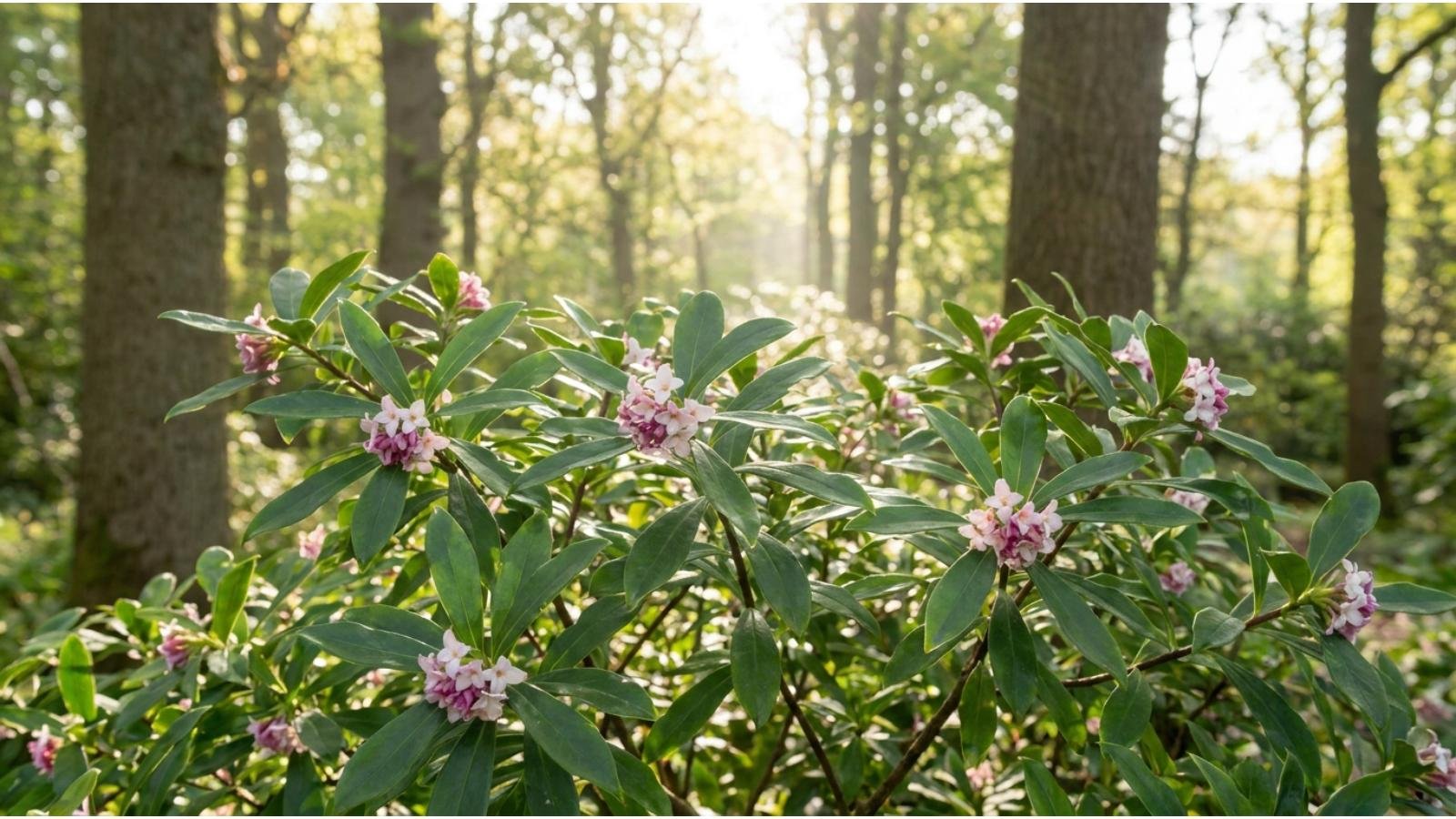
Most commonly grown daphnes perform well in full sun to partial shade, but the ideal exposure depends strongly on climate and species.
For Daphne odora, partial shade is particularly valuable in regions with hot summers. The Missouri Botanical Garden recommends part shade and warns that full sun can scorch leaves in hot summer climates.
A practical approach is to give daphne:
- Morning sun with afternoon protection in hot climates.
- Bright partial shade where summers are intense.
- More sun in cooler climates if the soil remains adequately moist.
- Protection from strong drying winds.
- A sheltered position close to a wall or other garden structure when winter conditions are severe.
Light affects more than flowering. Excessive heat and sun can increase water stress, while deep shade may reduce the plant’s overall vigor.
Expert tip: If you live somewhere with very hot summers, do not automatically assume more sun means more flowers. For winter daphne, avoiding summer heat stress can be more important than maximizing direct sunlight.
Image Suggestion: Show a healthy daphne planted in bright partial shade beside a sheltered wall.
How To Choose The Right Soil For Daphne
Well-drained soil is one of the most important parts of successful daphne plant care.
The plant likes moisture, but its roots should not remain saturated. The RHS recommends fertile, moist but well-drained soil for several daphne types, while Daphne odora performs particularly well in rich, well-drained soil.
Ideal soil characteristics include:
- Good drainage.
- Reasonable fertility.
- Organic matter.
- Moisture retention without prolonged saturation.
- A structure that allows air to reach the roots.
Heavy clay deserves special attention. If water sits around the root zone after rain, simply watering less may not solve the problem. Improving drainage before planting is a better long-term strategy. Missouri Botanical Garden specifically notes that raised planting can help in heavy clay soils because sharp drainage is important for Daphne odora.
Should Daphne Soil Be Acidic
There is no single acidic-soil rule for every daphne.
Some daphne species and cultivars tolerate a broad pH range. RHS information for Daphne odora forms lists neutral to alkaline conditions, while Daphne × transatlantica can tolerate slightly acidic through slightly alkaline soil.
The more important general principle is to avoid poorly drained soil and extreme conditions rather than changing soil pH unnecessarily.
How To Water Daphne
Daphne prefers consistent moisture without soggy soil.
Water newly planted shrubs regularly while they establish, adjusting frequency according to rainfall, temperature, soil type, and drainage. Once established, check the soil before watering instead of following a rigid calendar.
A useful routine is:
- Check the soil several inches below the surface.
- Water thoroughly when the root zone is beginning to dry.
- Allow excess water to drain away.
- Reduce unnecessary watering during cool, wet periods.
- Pay closer attention during prolonged heat or drought.
- Avoid repeatedly giving tiny amounts of water that wet only the surface.
Missouri Botanical Garden notes that Daphne odora should not be allowed to dry out completely, although established plants have some drought tolerance. It also notes that dry conditions can reduce summer flowering.
Can You Overwater Daphne
Yes.
Overwatering is particularly dangerous when it combines with poor drainage. Roots sitting in saturated soil have less access to oxygen, and daphne can be susceptible to Phytophthora root rot. RHS plant profiles also identify root rot and fungal leaf spot among potential disease problems.
If your daphne looks wilted despite wet soil, do not automatically add more water. First investigate the root environment.
Image Suggestion: Create a comparison diagram showing well-drained daphne soil beside saturated soil with damaged roots.
How To Plant Daphne Successfully
Planting correctly is one of the most important steps because daphne dislikes root disturbance after establishment.
Choose the location carefully before putting the plant into the ground.
Step By Step Daphne Planting
Choose a sheltered site.
Look for protection from strong winds, extreme winter exposure, and excessive afternoon heat.
Check drainage.
Avoid locations where rainwater regularly collects.
Prepare the surrounding soil.
Improve heavy or compacted soil before planting rather than trying to correct serious drainage problems later.
Handle the root ball gently.
Do not aggressively loosen or disturb the roots.
Plant at an appropriate depth.
Set the plant so the root ball sits at the correct level rather than burying the stem unnecessarily.
Water thoroughly after planting.
This settles soil around the root ball and removes large air pockets.
Apply a suitable organic mulch.
Keep mulch away from direct contact with the main stems.
The RHS specifically notes that daphnes resent transplanting, while Missouri Botanical Garden recommends leaving established plants undisturbed.
How To Fertilize Daphne
Daphne does not usually need an aggressive feeding program.
If the plant is growing in fertile soil and producing healthy foliage, excessive fertilizer is unlikely to solve a problem that is actually caused by poor drainage, unsuitable light, root damage, or water stress.
A sensible approach is to:
- Start with fertile soil.
- Use a modest general-purpose fertilizer only when appropriate.
- Follow the product label rather than increasing the dose.
- Prioritize soil structure and drainage over heavy feeding.
- Avoid trying to force rapid growth.
Slow growth is not automatically a sign that your daphne is unhealthy. Some daphne varieties naturally establish slowly. RHS profiles list maturity periods that can extend for several years, depending on the species or cultivar.
Daphne Pruning Guide
One of the easiest ways to damage a daphne is to treat it like a shrub that needs regular hard pruning.
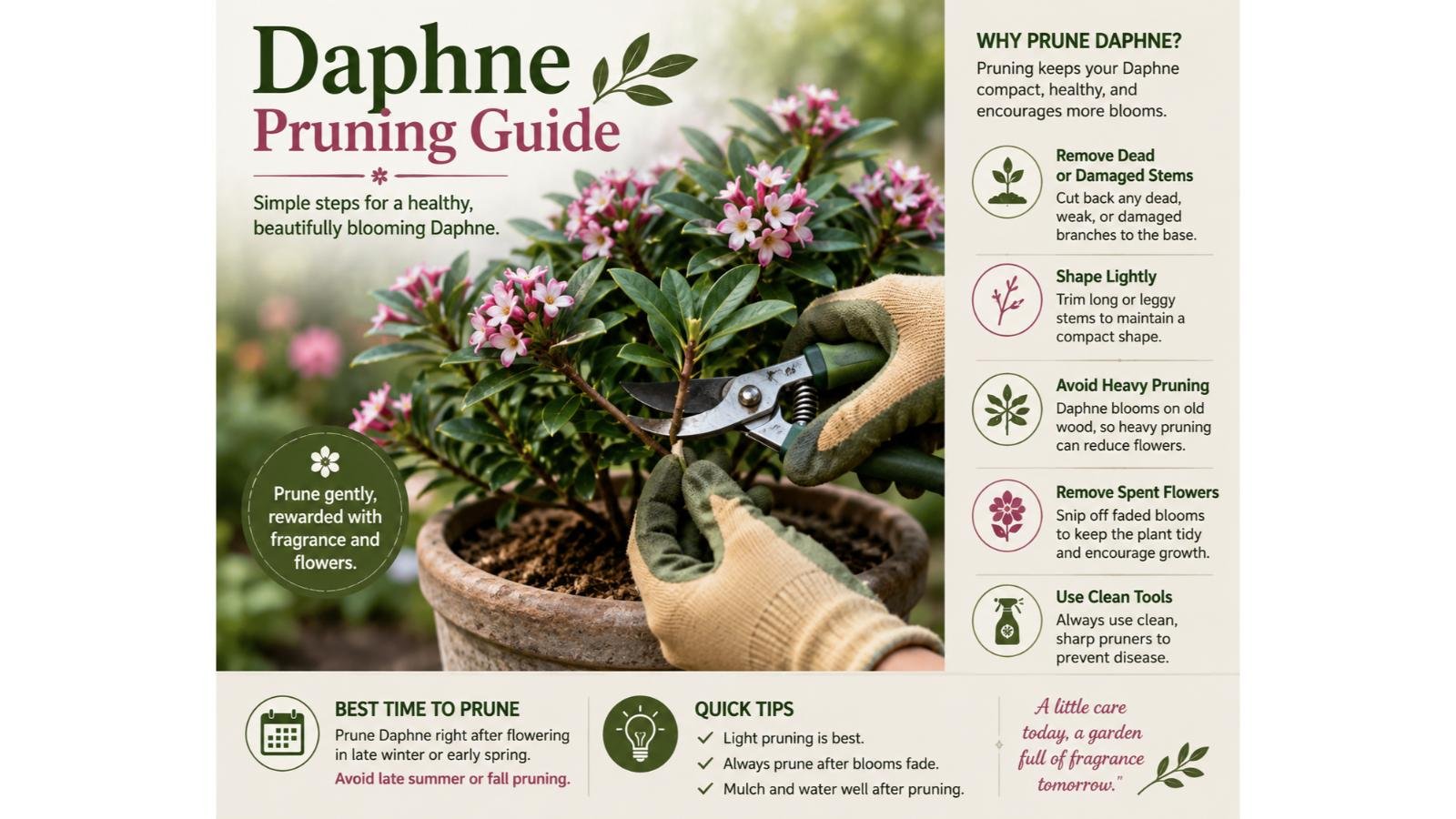
In general, prune daphne lightly and only when there is a clear reason.
Reasons to prune may include:
- Removing dead or damaged growth.
- Correcting a small amount of unwanted growth.
- Maintaining a natural shape.
- Removing diseased material when appropriate.
RHS guidance for several daphne species and cultivars recommends keeping pruning to a minimum.
Avoid cutting deeply into old wood simply to make the plant smaller. A naturally compact daphne is generally easier to manage than one repeatedly subjected to heavy pruning.
Expert tip: Decide where you want the plant to live before planting it. Moving or heavily reshaping daphne later can create more problems than choosing the correct location initially.
Daphne Care Through The Seasons
Spring Daphne Care
Spring is an important transition period after flowering.
Check the plant for:
- Dead or damaged stems.
- Winter injury.
- Aphids.
- Soil moisture.
- Mulch condition.
If pruning is necessary, keep it restrained and follow the recommendations for your particular species or cultivar.
Summer Daphne Care
Summer can be challenging, especially in hot climates.
Focus on:
- Consistent soil moisture.
- Protection from excessive afternoon heat.
- Root-zone cooling through suitable mulch.
- Good air circulation.
- Monitoring for leaf scorch and stress.
For Daphne odora, hot full-sun exposure can cause leaf scorching, making afternoon shade particularly useful in warm climates.
Fall Daphne Care
Fall is a good time to inspect the plant before colder weather arrives.
Make sure:
- The soil drains properly.
- The root zone is not excessively dry.
- The plant is protected from severe exposure.
- Mulch is applied appropriately.
- Damaged branches are identified.
Avoid unnecessary root disturbance.
Winter Daphne Care
Winter daphne can be particularly rewarding because its flowers can appear during the colder season. Daphne odora is reliably hardy around USDA Zone 7 and is more vulnerable in colder areas.
Protect vulnerable plants from:
- Freezing winds.
- Extreme temperature swings.
- Waterlogged winter soil.
- Severe exposure.
A sheltered location can make a significant difference in marginal climates.
How To Keep Daphne Roots Healthy
Healthy roots are the foundation of successful daphne care.
The combination to aim for is simple:
Moist soil plus excellent drainage.
That sounds contradictory, but it is exactly what makes daphne management tricky. The soil should retain enough moisture to prevent repeated drought stress while allowing excess water to escape.
Mulching can help regulate soil conditions. RHS recommendations include annual spring mulching for some daphne forms to help keep the roots cool.
Keep mulch slightly away from the plant’s main stem to reduce the chance of persistent moisture against the bark.
Common Daphne Problems And Solutions
Daphne Leaves Turning Yellow
Yellow leaves can have several causes, so avoid diagnosing the problem from leaf color alone.
Possible causes include:
- Excessively wet soil.
- Root stress.
- Poor drainage.
- Nutrient problems.
- Natural aging of older leaves.
- Environmental stress.
Check the soil first. If it is consistently wet, investigate drainage before adding fertilizer.
Daphne Leaves Turning Brown
Brown foliage can result from environmental stress, including excessive heat, drought, cold injury, or leaf scorch.
In hot climates, excessive direct sun can be especially problematic for Daphne odora.
Check:
- Soil moisture.
- Recent weather.
- Sun exposure.
- Wind exposure.
- Whether browning is occurring on new or old foliage.
Daphne Dropping Leaves
Some daphnes are evergreen while others are deciduous, so leaf drop must be interpreted according to species.
For evergreen Daphne odora, significant unexpected leaf loss can indicate stress. Investigate watering, drainage, temperature exposure, pests, and root health rather than assuming the plant simply needs fertilizer.
Daphne Not Flowering
If your daphne is healthy but producing few flowers, consider:
- Insufficient light.
- Excessive heat stress.
- Water stress.
- Immaturity.
- Incorrect pruning.
- Environmental damage to flower buds.
Remember that different daphne species flower at different times. Daphne odora generally flowers from late winter into spring, while other species and hybrids can have different flowering seasons.
Daphne Wilting
Wilting does not always mean the plant needs water.
If the soil is dry, watering may be appropriate. If the soil is already saturated, adding more water can make the underlying problem worse.
This is one of the most useful troubleshooting rules for daphne care: check the soil before reaching for the watering can.
Daphne Pests And Diseases
Daphne can experience several pest and disease issues.
RHS profiles identify aphids as a potential pest and list diseases including Phytophthora root rot, fungal leaf spot, honey fungus, and some virus diseases.
Good cultural care is your first line of defense.
Keep the plant:
- Properly watered.
- Well drained.
- Adequately ventilated.
- Free from unnecessary root disturbance.
- Regularly inspected for changes.
When diagnosing a disease, look at the whole pattern rather than treating a single symptom. For example, persistent wilting in wet soil points toward a very different problem than wilting in dry soil.
Image Suggestion: Close-up visual guide showing healthy daphne leaves, aphid damage, leaf spotting, and drought stress.
Daphne Safety And Toxicity
An important part of responsible daphne plant care is understanding that many daphnes are potentially harmful if eaten and may irritate the skin. RHS guidance specifically identifies Daphne odora cultivars and Daphne mezereum as toxic if eaten and advises protective equipment when handling them.
Take sensible precautions:
- Wear gloves when handling the plant.
- Do not eat its berries or other plant parts.
- Keep children from treating berries as edible fruit.
- Keep pets away from plant material.
- Wash hands after handling.
- Dispose of pruned material responsibly.
If you suspect ingestion, contact an appropriate medical or veterinary poison service promptly.
Growing Daphne In Containers
Daphne can be grown in containers, particularly compact varieties, but container culture requires more attention to drainage and winter conditions.
Choose:
- A container with adequate drainage holes.
- High-quality, free-draining growing medium.
- A pot large enough to support the root system without creating excessive stagnant soil.
- A sheltered position.
- A watering routine based on soil moisture rather than a fixed schedule.
Container plants can dry out faster than plants in the ground, but poor drainage can still cause serious root problems.
Missouri Botanical Garden notes that Daphne odora can be grown in containers in colder climates where plants can be protected from the harshest winter temperatures.
How To Make Daphne More Fragrant
Daphne is famous for fragrance, but scent intensity depends on species, cultivar, flowering stage, weather, and planting position.
A sheltered location can help you enjoy its fragrance more effectively. The RHS recommends sheltered locations for fragrant plants because the scent can be retained rather than immediately dispersed by wind.
Instead of planting daphne at the far end of a large garden, consider positioning it near:
- A walkway.
- A patio.
- A frequently used entrance.
- A sheltered seating area.
- A window that is regularly opened.
This turns fragrance into an everyday garden experience rather than something you only notice when deliberately searching for it.
Daphne Varieties Worth Knowing
Not every daphne behaves exactly like Daphne odora.
| Daphne | Main feature | General growing habit |
|---|---|---|
| Daphne odora | Evergreen foliage and powerful winter fragrance | Part shade and well-drained soil |
| Daphne mezereum | Deciduous habit and fragrant early flowers | Sun or partial shade |
| Daphne tangutica | Compact evergreen shrub | Sun or partial shade |
| Daphne × transatlantica | Long flowering period in some cultivars | Sun or partial shade |
| Daphne bholua | Fragrant winter flowers and larger growth | Sheltered garden position |
RHS profiles show that these plants can differ considerably in size, flowering period, foliage, and preferred conditions.
So, if a plant label gives you a precise Daphne species or cultivar, use that information rather than applying every general daphne recommendation blindly.
Common Daphne Care Mistakes
Planting In Waterlogged Soil
This is one of the biggest mistakes because daphne needs moisture but does not tolerate prolonged poor drainage well.
Choosing An Exposed Location
Cold winds and extreme exposure can stress daphne, particularly less hardy types.
Moving An Established Plant
Daphnes resent transplanting. Choose the permanent location carefully.
Overwatering A Wilted Plant
Always inspect the soil first. Wilted foliage can occur alongside root problems.
Heavy Pruning
Daphne generally benefits from restrained pruning rather than aggressive reshaping.
Planting In Excessive Heat
In hot summer climates, full afternoon sun can create unnecessary stress for Daphne odora.
Expecting Rapid Growth
Some daphnes are naturally slow to mature. Patience is part of successful daphne care.
Expert Tips For Healthier Daphne
The most useful daphne care strategy is to think about stress prevention rather than constant correction.
Before planting, ask yourself:
- Does this spot drain quickly?
- Will the roots stay reasonably cool?
- Is there protection from harsh wind?
- Is the light appropriate for my climate?
- Can I leave the plant undisturbed here for years?
After planting, concentrate on soil moisture and drainage rather than trying to force rapid growth.
For gardeners in hot climates, afternoon shade can be particularly valuable for Daphne odora. For gardeners in colder climates, choosing a sheltered location or using container protection may be more practical than trying to make a marginal planting site work.
Frequently Asked Questions
How often should I water a daphne plant
Water based on soil moisture rather than a fixed schedule. Keep the root zone from becoming excessively dry, but make sure excess water drains away. Established Daphne odora has some drought tolerance, although prolonged dry conditions can reduce performance.
Does daphne like sun or shade
Most daphnes tolerate sun to partial shade, but Daphne odora generally benefits from partial shade, particularly in hot summer climates where intense afternoon sun can scorch its leaves.
Why is my daphne dying
Common possibilities include poor drainage, root problems, drought stress, harsh weather, pests, or disease. Check the soil moisture and drainage first before changing fertilizer or watering.
Can daphne grow in pots
Yes. Compact daphne varieties can grow in containers when provided with excellent drainage and appropriate protection from severe weather. Daphne odora is also listed as suitable for container culture under appropriate conditions.
Should daphne be pruned
Usually only lightly. Remove dead or damaged material and make limited corrective cuts when necessary. RHS guidance recommends keeping pruning to a minimum for several commonly grown daphnes.
Why does my daphne have yellow leaves
Yellow leaves can be caused by several stresses, but consistently wet soil and poor drainage deserve immediate attention. Check the root environment before assuming the plant needs fertilizer.
Does daphne need acidic soil
Not necessarily. Soil preferences vary by species and cultivar. Daphne odora forms can perform in neutral to alkaline soil, while some hybrids tolerate slightly acidic through slightly alkaline conditions.
Is daphne poisonous to pets
Some daphne species and cultivars are considered toxic if eaten. RHS specifically lists Daphne odora cultivars as toxic if eaten and potentially harmful to pets. Keep pets away from berries and plant material.
When does winter daphne bloom
Daphne odora commonly flowers from late winter into early spring, although flowering time varies with climate and growing conditions.
Can I move an established daphne
It is best avoided when possible. Daphnes resent root disturbance and transplanting, so choosing the correct permanent planting position is especially important.
Conclusion
Successful daphne plant care is less about complicated maintenance and more about getting the fundamentals right. Give the plant well-drained soil, appropriate light, steady moisture, shelter from harsh conditions, and a permanent location, then resist the temptation to overmanage it.
For winter daphne, the biggest lesson is simple: drainage and location matter enormously. A plant placed in the right spot can reward you with evergreen foliage and remarkably fragrant flowers, while a plant struggling in waterlogged or overly exposed conditions can be difficult to rescue.
If you are choosing a daphne for your garden, identify the exact species or cultivar first. That one detail can change the plant’s preferred light, flowering season, mature size, hardiness, and soil requirements.