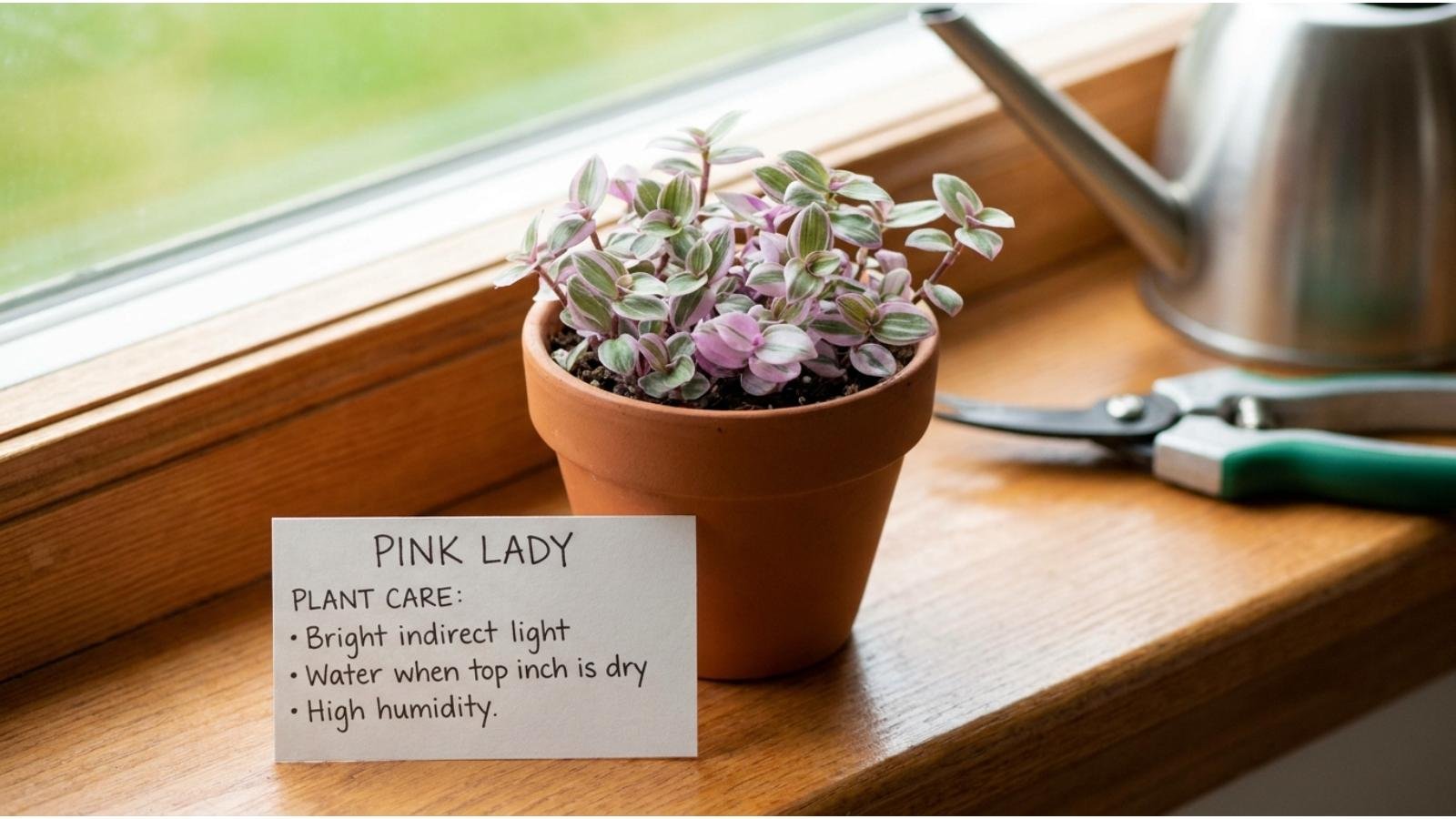
Pink Lady plant care is relatively simple, but getting the balance right matters if you want dense growth and attractive pink coloration. This trailing Callisia repens cultivar is valued for its small, colorful leaves and cascading stems, making it particularly attractive in hanging baskets, shelves, containers, and bright indoor spaces. Callisia repens itself is a recognized species in the Commelinaceae family.
The biggest beginner mistake is usually treating the plant like a traditional succulent and allowing it to become extremely dry for long periods. Pink Lady appreciates moisture but still needs oxygen around its roots. At the same time, too much water in heavy soil can create the opposite problem. Good light, sensible watering, and regular pruning are the foundation of healthy growth.
The secret to keeping Pink Lady colorful and bushy is not simply more water or more fertilizer, but finding the right balance between light, moisture, and regular trimming.
Quick Answer
Pink Lady plant care is easiest when you provide bright, filtered light, well-draining soil, moderate moisture, warmth, and regular trimming. Callisia repens ‘Pink Lady’ develops its strongest pink, cream, green, and purplish coloring when it receives plenty of light without being exposed to harsh midday sun. Water when the upper portion of the potting mix has begun to dry, and always use a container with drainage. Avoid keeping the roots constantly wet because poor drainage can encourage root problems
What Is the Pink Lady Plant
The Pink Lady commonly sold as a houseplant is Callisia repens ‘Pink Lady’. It is a low-growing, trailing plant related to other members of the Commelinaceae family. Callisia repens is native across parts of southeastern Texas and tropical America and naturally grows in seasonally dry tropical environments.
Its small leaves can display combinations of green, cream, pink, and deeper tones. The trailing stems make it particularly useful when you want foliage to spill over the edge of a pot.
You may also see it sold under names such as Pink Lady, Turtle Vine, or Callisia repens ‘Pink Lady’. Because common names can be shared by unrelated plants, checking the botanical name before following a care guide is a smart habit.
Pink Lady Plant Light Requirements
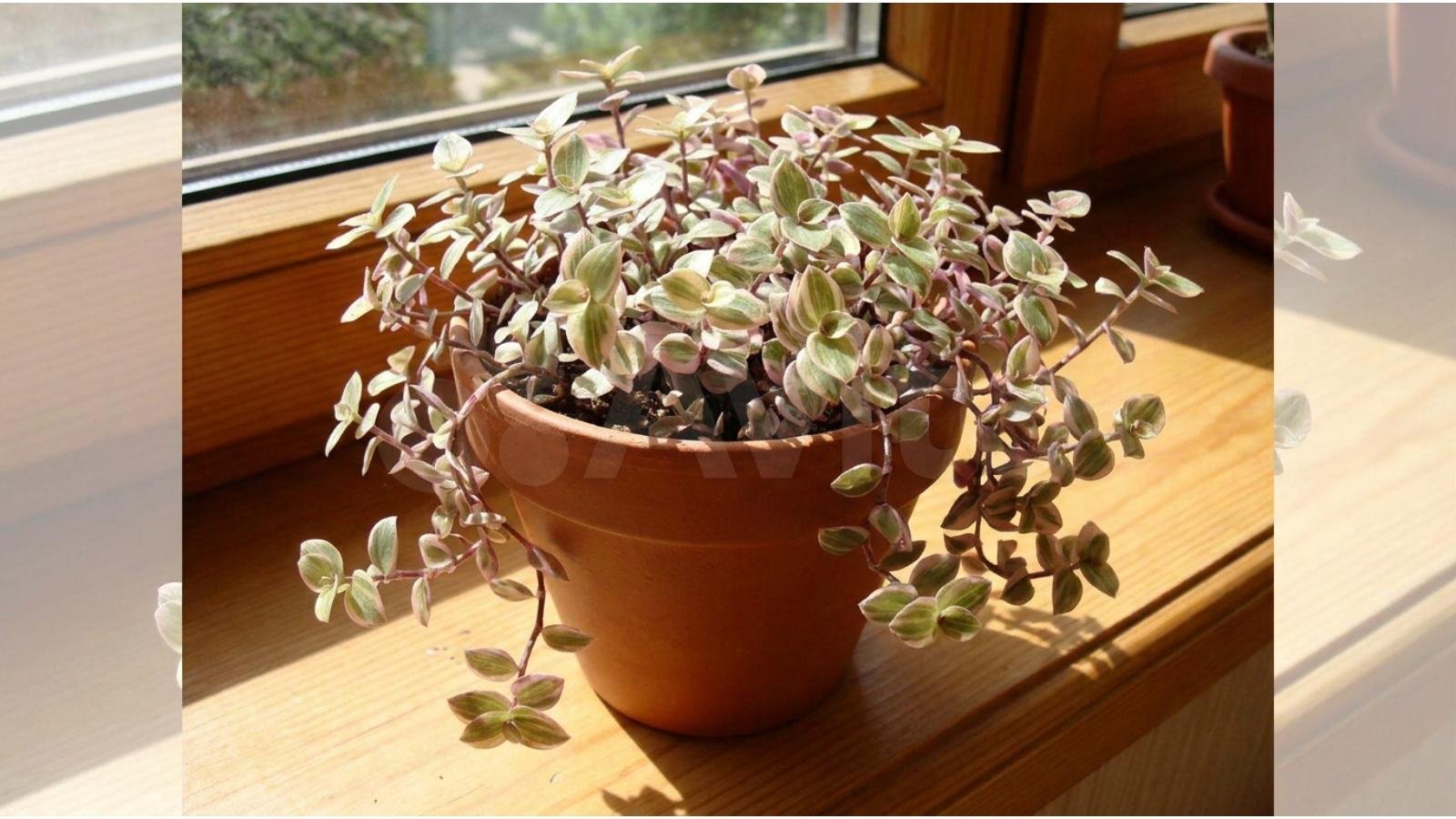
Bright light is one of the most important factors in successful Pink Lady plant care.
Place the plant somewhere that receives plenty of bright filtered light. An east-facing window can be particularly useful because it provides gentle morning sunlight. A bright west-facing location can also work if intense afternoon rays are filtered.
Some direct sunlight can be beneficial, but strong midday sun through glass can scorch delicate foliage.
If the plant receives too little light, you may notice:
- Longer spaces between leaves.
- Thin and weak stems.
- Reduced pink coloration.
- Smaller new leaves.
- A generally sparse appearance.
If the leaves are bleaching, developing crispy patches, or looking scorched, move the plant farther from intense direct sunlight or filter the light with a sheer curtain.
Image Suggestion: A visual comparison showing a compact, colorful Pink Lady in bright filtered light beside a stretched plant growing in insufficient light.
How to Water Pink Lady Plant
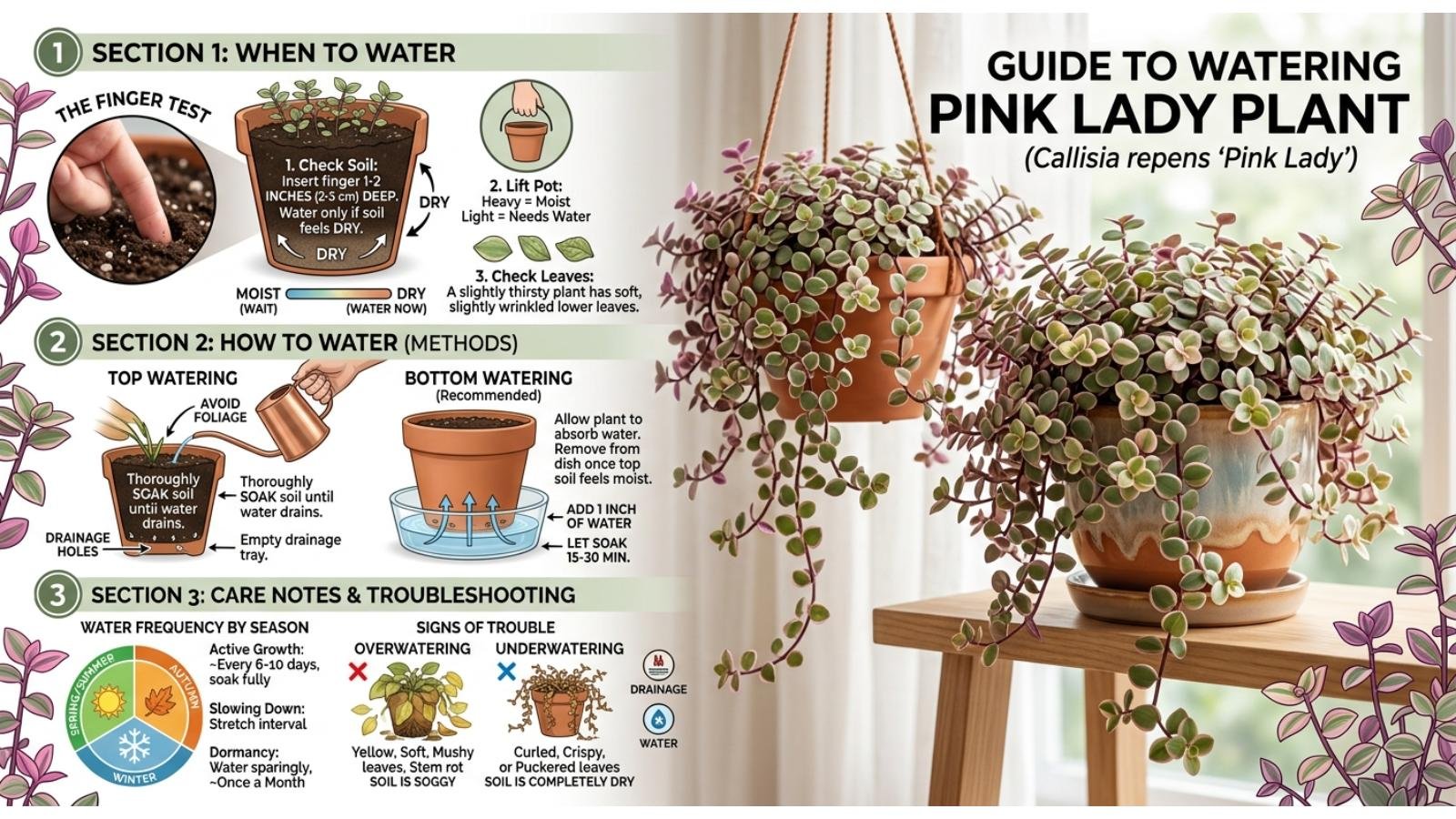
Watering should be based on the condition of the potting mix rather than a rigid calendar.
Check the soil with your finger before watering. When the upper layer has started to dry, water thoroughly until excess moisture drains from the bottom of the container. Then allow the plant to drain completely.
Avoid leaving the pot sitting in a saucer filled with water.
Your watering frequency will change depending on temperature, light, pot size, soil composition, and season. A plant receiving strong light in a warm room may dry substantially faster than one sitting in a cool, dim location.
Signs of possible underwatering include:
- Limp foliage.
- Dry, lightweight potting mix.
- Crispy leaves.
- Rapid leaf drop.
- Stems becoming less firm.
Signs that the plant may be staying too wet include:
- Persistently soggy soil.
- Yellowing foliage.
- Soft or deteriorating stems.
- Unpleasant-smelling soil.
- Slow or declining growth.
A common mistake is adding small amounts of water every day. This can keep the surface damp while producing inconsistent moisture deeper in the pot. A thorough watering followed by appropriate drying is generally easier to manage.
Best Soil for Pink Lady Plant
Pink Lady needs a potting mix that retains some moisture while draining efficiently.
A practical indoor mixture can combine quality houseplant potting soil with materials such as perlite or pumice. The goal is not to make the mix extremely dry but to prevent water from remaining trapped around the roots.
Good drainage becomes especially important when the plant is grown in a relatively small container.
Avoid using a heavy garden soil by itself in an indoor pot. It can compact and remain wet for too long.
The ideal mix should:
- Drain excess water efficiently.
- Remain slightly moisture-retentive.
- Allow air to reach the roots.
- Resist severe compaction.
- Work with a pot that has drainage holes.
Choosing the Right Pot
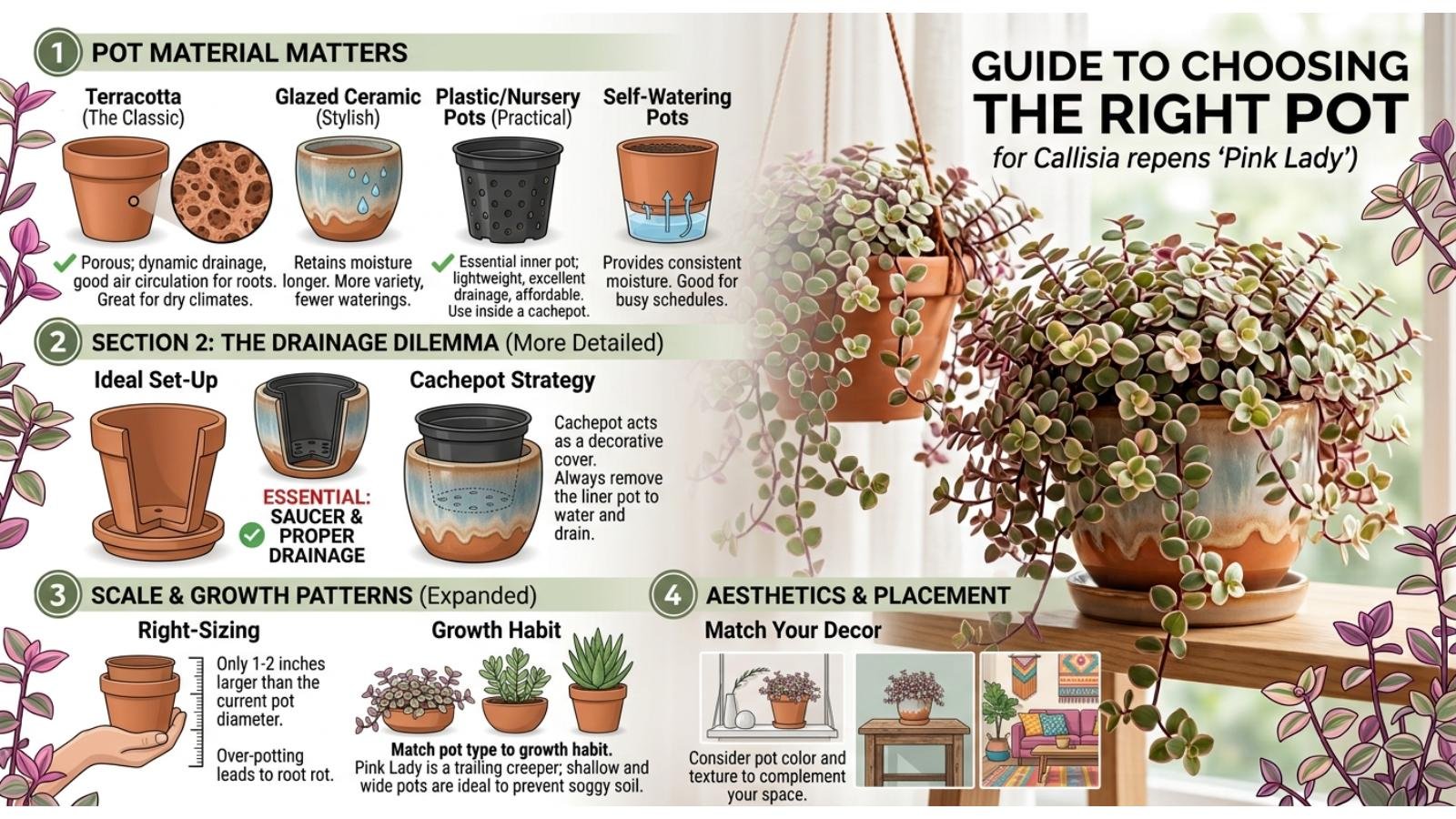
The container should match the existing root system rather than being dramatically larger.
A pot that is much too large holds more unused soil, which can remain wet around a relatively small root system. Extension guidance for Callisia repens similarly recommends increasing pot diameter only modestly during repotting rather than making a large jump in container size.
Choose a container with drainage holes.
When repotting, moving up by roughly one to two inches in diameter is often more practical than immediately placing a small plant into a very large pot.
Temperature and Humidity
Pink Lady generally performs best in warm indoor conditions.
Keep it away from cold drafts, freezing temperatures, and sudden temperature changes. A consistently comfortable indoor environment is usually more important than trying to create tropical conditions artificially.
Normal household humidity can be adequate when watering and lighting are appropriate. If the surrounding air is extremely dry, particularly during prolonged heating or cooling, growth may become less vigorous.
Instead of relying entirely on misting, focus first on:
- Appropriate watering.
- Good light.
- Adequate air circulation.
- A suitable potting mix.
- Keeping the plant away from harsh temperature swings.
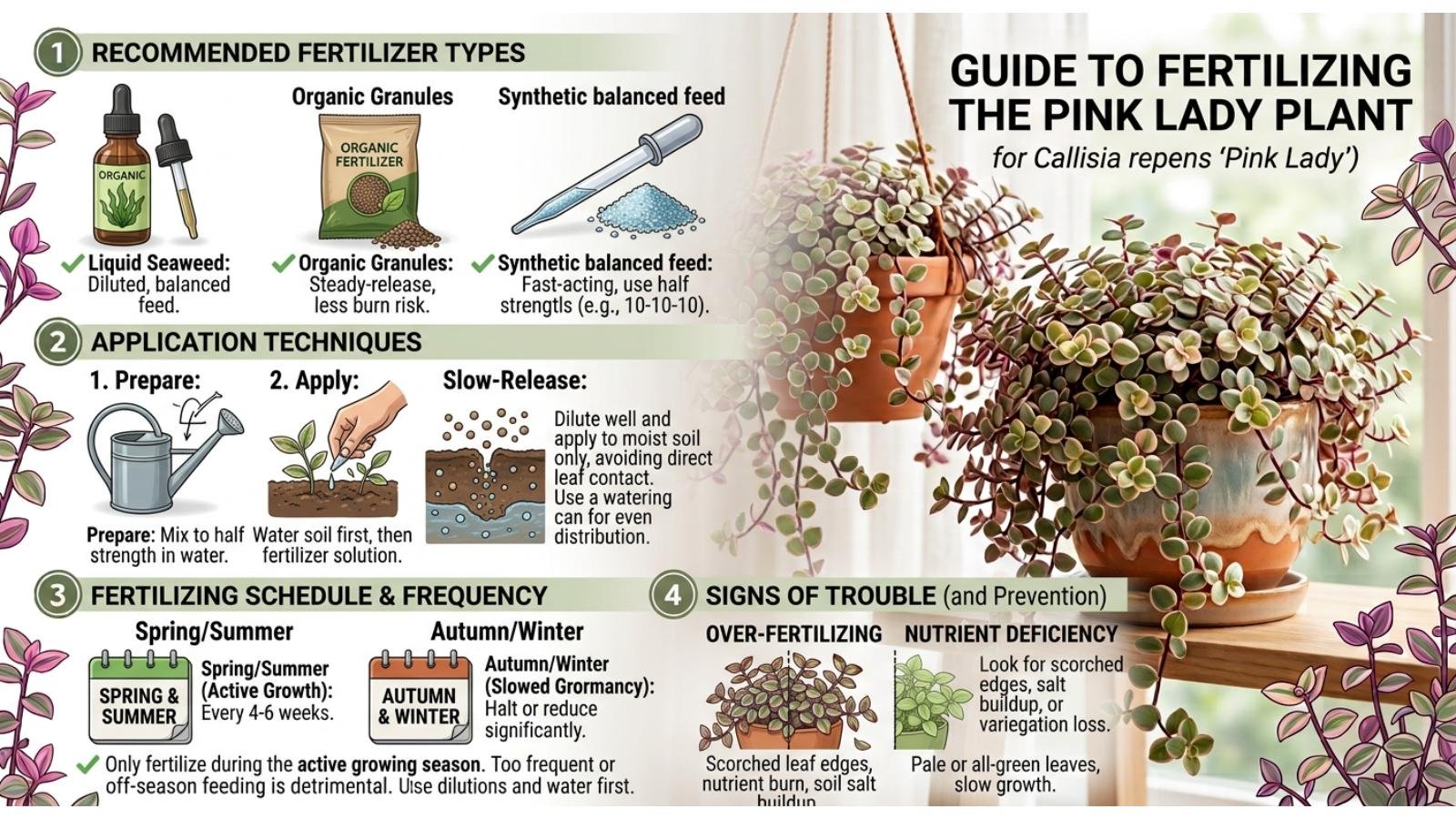
Fertilizing Pink Lady Plant
Pink Lady does not need constant feeding.
During active growth, a balanced houseplant fertilizer diluted according to its product instructions can support continued foliage production. Avoid applying concentrated fertilizer to dry soil because this can stress the roots.
A simple approach is to fertilize periodically during active growth and reduce feeding when growth naturally slows.
More fertilizer does not automatically mean more pink color. Light has a much more important role in maintaining attractive variegated foliage.
If the plant is already struggling because of poor roots, overwatering, or inadequate light, adding fertilizer is unlikely to solve the underlying problem.
How to Make Pink Lady More Bushy
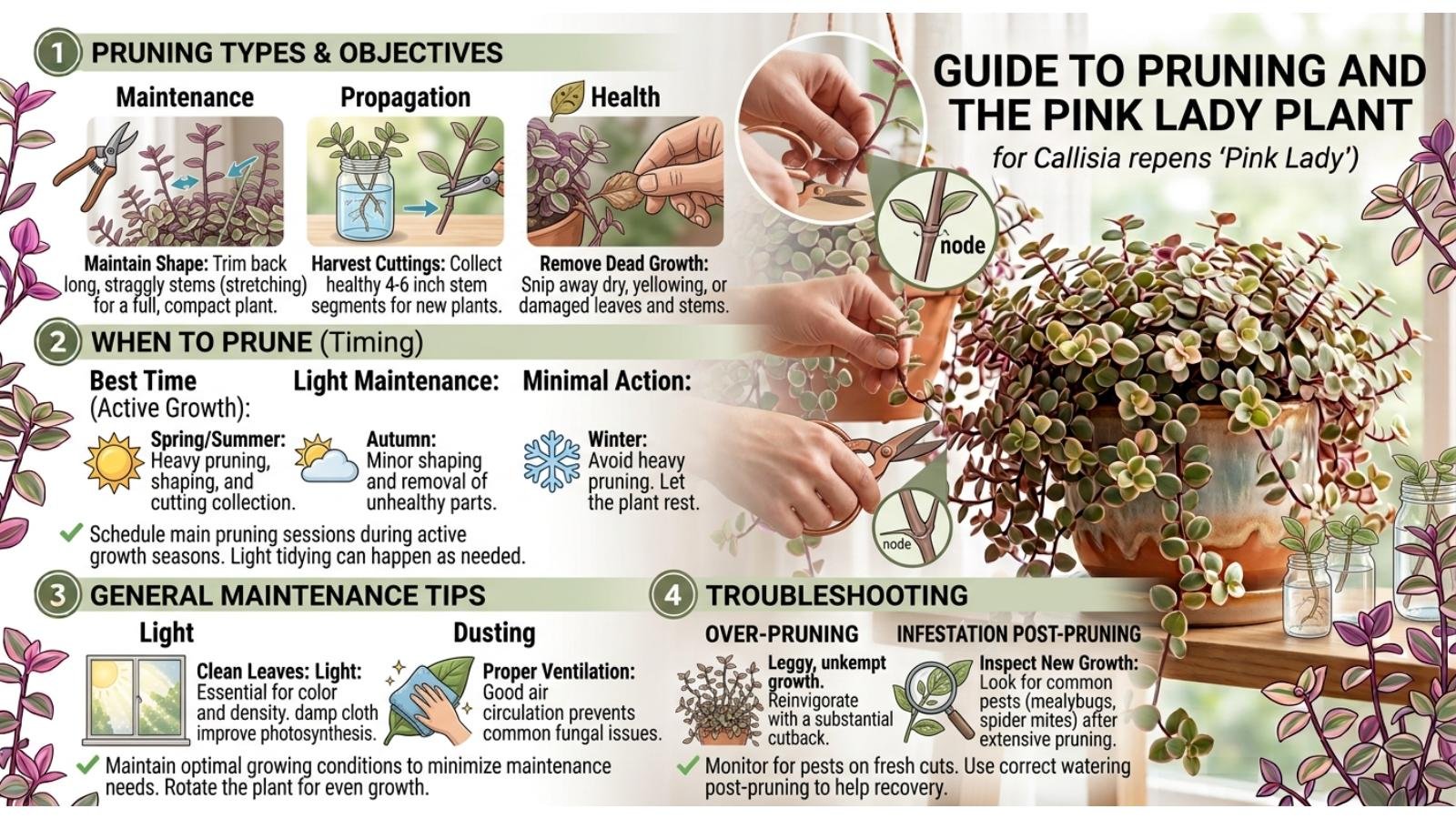
Regular pruning is one of the most useful techniques for maintaining a compact Pink Lady.
Trailing stems can become long and sparse if they are allowed to grow indefinitely. Cutting healthy stems encourages you to create a fuller arrangement rather than leaving all growth concentrated at the ends.
To encourage bushiness:
- Trim excessively long stems.
- Make clean cuts just above healthy growth points.
- Remove damaged foliage.
- Rotate the container so growth receives light more evenly.
- Replant healthy cuttings into the same container to create a fuller appearance.
An extension specialist discussing Callisia repens noted that dead foliage can be removed carefully or healthy tips can be cut back and rooted when a plant becomes unattractive or sparse. The stems can be delicate, so gentle handling is important.
How to Propagate Pink Lady Plant
Stem cuttings are a practical way to produce new Pink Lady plants.
Choose a healthy stem and make a clean cutting. Remove leaves from the portion that will be placed into the growing medium, then insert the cutting into a lightly moist, well-draining propagation mix.
Keep the cutting warm and provide bright, indirect light.
Avoid saturating the propagation medium. The objective is to provide enough moisture for rooting without creating a constantly waterlogged environment.
Once the cutting has developed a healthy root system and begins producing new growth, it can be moved into a regular container.
Another useful approach is to place several rooted cuttings together in one pot. This can create a fuller, more attractive display than relying on a single long stem.
Pruning and Maintenance
Pink Lady responds well to routine grooming.
Remove dead or severely damaged leaves as you notice them. Trim stems that have become excessively long or bare. If a plant has become very sparse, a more substantial cutback can help reset its shape.
Do not throw away every healthy cutting.
Healthy trimmed sections can become propagation material, allowing you to turn routine pruning into an opportunity to produce more plants.
Handle the stems gently because they can break easily. Extension guidance specifically notes the delicate nature of Callisia repens stems when removing dead foliage.
Image Suggestion: A step-by-step pruning illustration showing a long stem, the correct cutting point, and healthy cuttings ready for propagation.
Common Pink Lady Plant Problems
Pink Leaves Are Losing Their Color
The first thing to check is light.
Insufficient light can cause variegated plants to produce less vivid coloration and weaker, more stretched growth. Move the plant gradually toward a brighter position rather than suddenly exposing a dimly grown plant to intense direct sunlight.
Also check whether new leaves are naturally emerging with slightly different coloration. Leaf color can change as foliage matures and according to growing conditions.
Pink Lady Is Getting Leggy
Leggy growth usually indicates that the plant is not receiving enough usable light.
Move it to a brighter location and trim excessively long stems. The combination of better light and pruning can produce a much more compact appearance.
Avoid solving a leggy plant problem with fertilizer alone.
Leaves Are Turning Yellow
Yellow leaves can have several causes.
Start by checking the soil. If it remains wet for an extended period, investigate drainage, pot size, and watering frequency.
If the mix dries extremely quickly and the plant is also limp, insufficient moisture may be contributing.
Older leaves can naturally decline, so one occasional yellow leaf is not automatically a serious problem. Look at the overall pattern.
Stems Are Rotting
Soft or deteriorating stems are a warning sign.
Check whether the potting mix is remaining wet and whether the container drains properly. Remove severely damaged sections with clean tools and correct the watering and drainage conditions.
Do not simply continue watering according to a calendar while the plant is showing signs of root or stem problems.
Leaves Are Falling Off
Leaf loss can occur after environmental stress, poor watering, insufficient light, pest activity, or root problems.
Inspect both sides of the foliage and the stems. Thrips and mealybugs are among the pests that can affect Callisia repens, and extension guidance recommends checking foliage and the root area when plants decline unexpectedly.
Pink Lady Has Pests
Inspect new growth, leaf undersides, stems, and crowded areas.
Look for:
- Fine webbing.
- Sticky residue.
- Cotton-like clusters.
- Silvery or pale leaf damage.
- Tiny insects around new growth.
Isolate a visibly infested plant from other houseplants while you investigate and treat the problem. Early detection is much easier to manage than a large infestation.
Seasonal Pink Lady Plant Care
Spring
Spring is a useful time to increase attention to active growth.
Provide strong filtered light, monitor soil moisture more frequently as temperatures rise, and begin regular feeding if the plant is actively producing new growth.
This is also a good period for pruning and propagation.
Summer
Warm conditions can accelerate growth and drying.
Check the soil more frequently, particularly if the plant is near a bright window. Avoid assuming that hot weather means the plant needs constant watering.
Good ventilation is also useful when temperatures are high.
Fall
As light levels decrease, watering needs may also change.
Check the soil before every watering and avoid maintaining a summer watering routine automatically.
If the plant begins receiving substantially less light, consider moving it closer to a bright window while still protecting it from excessive direct sunlight.
Winter
Winter growth can slow considerably indoors.
Reduce watering frequency when the soil takes longer to dry and avoid placing the plant directly beside cold windows or heating vents.
Low light combined with frequent watering is a particularly risky combination because the plant may use moisture more slowly.
Pink Lady Plant Care Mistakes to Avoid
The most common problems are usually caused by a mismatch between watering, light, and soil.
Avoid these mistakes:
- Keeping the soil permanently wet.
- Using a pot without drainage holes.
- Moving a low-light plant directly into intense sunlight.
- Putting a small root system into an oversized pot.
- Fertilizing a stressed plant heavily.
- Ignoring leggy growth until the plant becomes extremely sparse.
- Throwing away healthy pruning cuttings.
- Watering according to the calendar instead of checking the soil.
- Ignoring pests until the infestation becomes widespread.
A particularly useful rule is to diagnose the growing environment before treating the symptom.
For example, yellow leaves do not automatically mean the plant needs fertilizer. If the roots are sitting in saturated soil, additional fertilizer may make the situation worse.
Pink Lady Plant Care Routine
A simple maintenance routine can keep the plant attractive without requiring constant attention.
Weekly: Check the soil, inspect foliage for pests, and look for damaged or yellowing leaves.
Every few weeks during active growth: Assess whether stems are becoming too long and whether the plant needs grooming or feeding.
Seasonally: Reassess light exposure and watering frequency because indoor conditions change throughout the year.
When roots become crowded: Consider repotting into a slightly larger container with fresh, well-draining mix.
The objective is consistency rather than excessive intervention.
Frequently Asked Questions
Is Pink Lady plant easy to grow
Yes. Callisia repens ‘Pink Lady’ is generally manageable for beginners when it receives sufficient light, appropriate moisture, and well-draining soil. Its trailing growth also makes it forgiving from a pruning and propagation perspective.
How much light does Pink Lady need
Bright filtered or indirect light is a good starting point. Some gentle direct morning or late-afternoon light can work, but harsh midday sunlight can damage foliage.
How often should I water Pink Lady
There is no reliable universal schedule. Check the potting mix and water when the upper portion has started to dry. Adjust frequency according to temperature, light, container size, and soil.
Why is my Pink Lady losing its pink color
Insufficient light is one of the first things to investigate. Variegated foliage generally needs adequate light to maintain strong coloration, while excessive harsh sunlight can cause damage.
Can Pink Lady grow indoors
Yes. Its compact, trailing growth habit makes it well suited to containers and indoor displays when adequate light is available.
Can I grow Pink Lady from cuttings
Yes. Healthy stem cuttings can be rooted and used to create additional plants. Several cuttings can also be combined in one container to produce a fuller display.
Should I mist my Pink Lady plant
Misting is not the most important part of Pink Lady care. Focus first on proper watering, drainage, light, and air circulation. If indoor humidity is very low, improving the surrounding environment is generally more useful than relying on occasional leaf misting.
Why is my Pink Lady plant becoming leggy
Insufficient light is a common reason. Move the plant to a brighter location and prune excessively long stems to encourage a fuller shape.
Does Pink Lady need fertilizer
It can benefit from diluted houseplant fertilizer during active growth, but excessive feeding is unnecessary. Healthy roots and adequate light should come first.
Should I repot Pink Lady into a large pot
No. A modest increase in pot size is usually safer than moving a small root system into a very large container. Extension guidance recommends increasing the container by only about one to two inches when repotting Callisia repens.
Final Thoughts
Successful Pink Lady plant care comes down to a few repeatable habits: give it bright filtered light, use a well-draining growing medium, water according to soil conditions, avoid oversized containers, and prune regularly to maintain dense growth.
Most problems become easier to solve when you look at the entire growing environment instead of treating one symptom in isolation. If the plant is pale, check the light. If it is staying wet, check the soil and container. If it is becoming sparse, improve light and prune strategically.
With those fundamentals in place, Callisia repens ‘Pink Lady’ can provide colorful, trailing foliage without demanding an elaborate care routine.