Lobelia is a compact flowering plant valued for its delicate foliage and abundant blue, purple, white, or violet flowers. The popular Lobelia erinus is commonly grown as an annual bedding plant, although some lobelia types are perennial. Its low-growing or trailing habit makes it particularly useful for containers, window boxes, hanging baskets, garden edging, and flower beds.
The main challenge with lobelia is maintaining the right moisture balance. It dislikes prolonged drought, but constantly waterlogged soil can also create problems. Good lobelia plant care therefore focuses less on a rigid watering schedule and more on monitoring the soil, weather, container size, and plant’s growing conditions.
Quick Answer
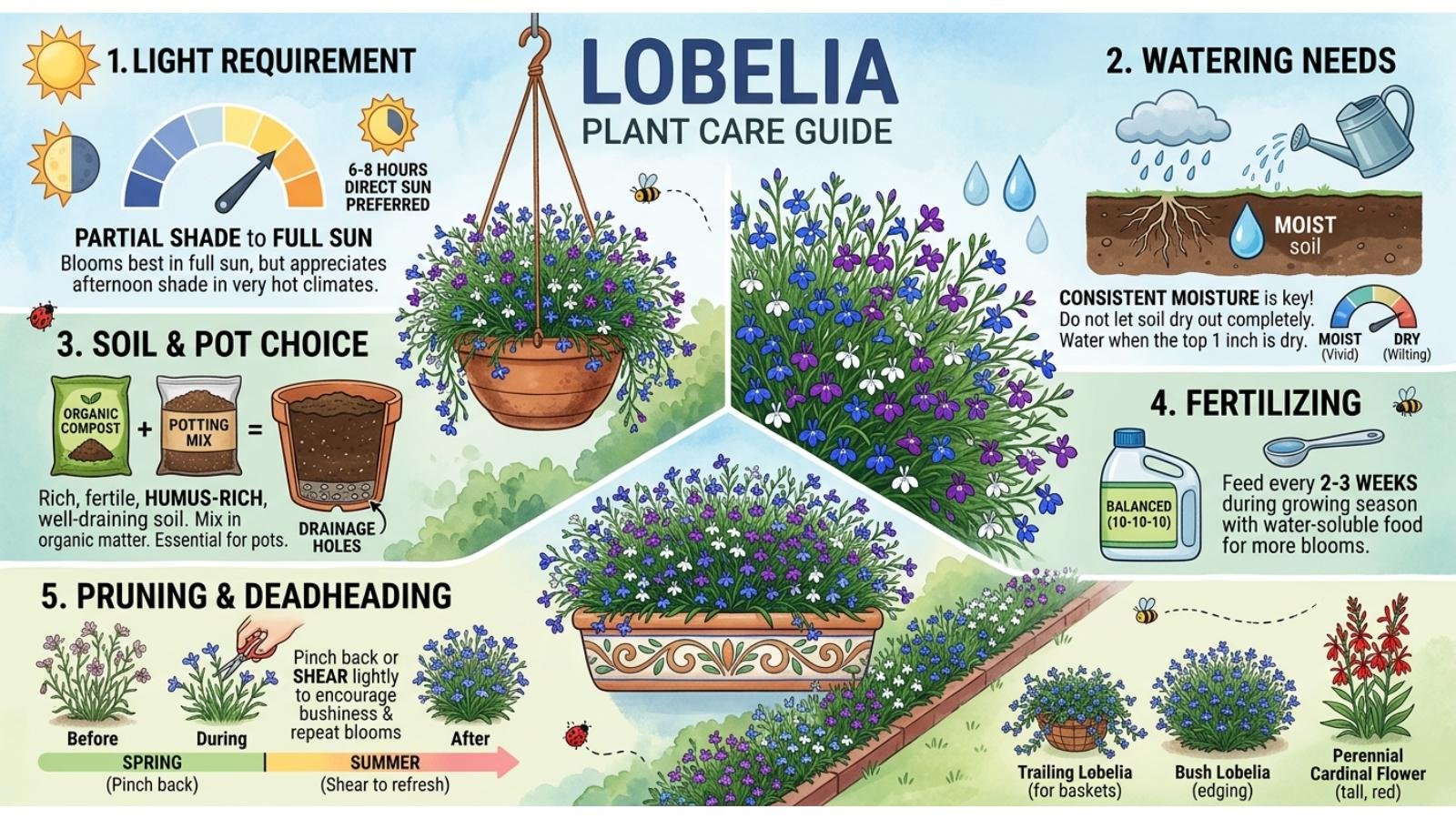
Lobelia plant care is mainly about providing bright light, consistently moist but well-drained soil, and protection from excessive heat and drought. Most garden lobelias, especially Lobelia erinus, perform well in full sun to partial shade and are excellent for containers, borders, and hanging baskets. Regular watering and occasional feeding can help maintain vigorous growth and prolonged flowering.
Understanding Lobelia Before You Plant
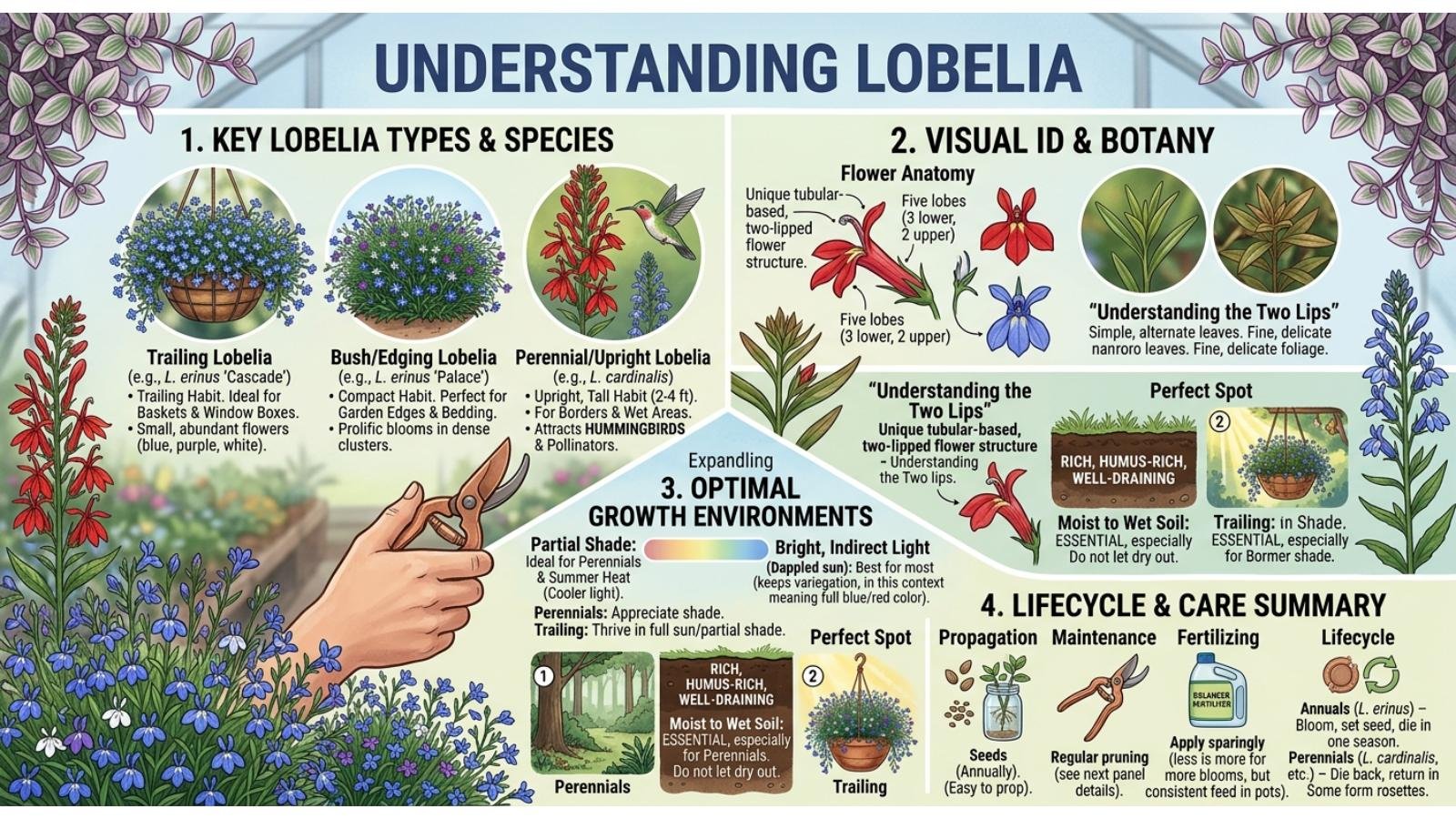
The name lobelia covers several different plants, so care can vary considerably between species. For typical bedding and container plants, Lobelia erinus is one of the most useful references.
It produces small flowers on compact, bushy, or trailing plants and generally reaches only around 10 to 50 cm in height and spread depending on the cultivar. The RHS recommends moist but well-drained conditions and full sun or partial shade.
This distinction matters because a care routine designed for a perennial lobelia may not perfectly suit a tender annual bedding cultivar.
Image Suggestion: Different lobelia growth habits showing bushy, trailing, and container varieties.
Choosing the Right Location for Lobelia
Light has a direct effect on flowering. Most Lobelia erinus cultivars perform well in full sun or partial shade, making them flexible plants for gardens and containers.
In cooler climates, a spot receiving several hours of sunlight can encourage heavy flowering. In areas with intense summer heat, partial afternoon shade can be useful because it reduces heat and moisture stress.
A practical location should provide:
- Bright sunlight for strong flowering.
- Some afternoon protection in very hot climates.
- Good air circulation.
- Protection from severe drying winds.
- Easy access for regular watering.
A common beginner mistake is placing lobelia in an extremely hot position and then trying to compensate with frequent watering. Moving the plant to a slightly cooler location can sometimes solve the problem more effectively.
How to Water Lobelia Correctly
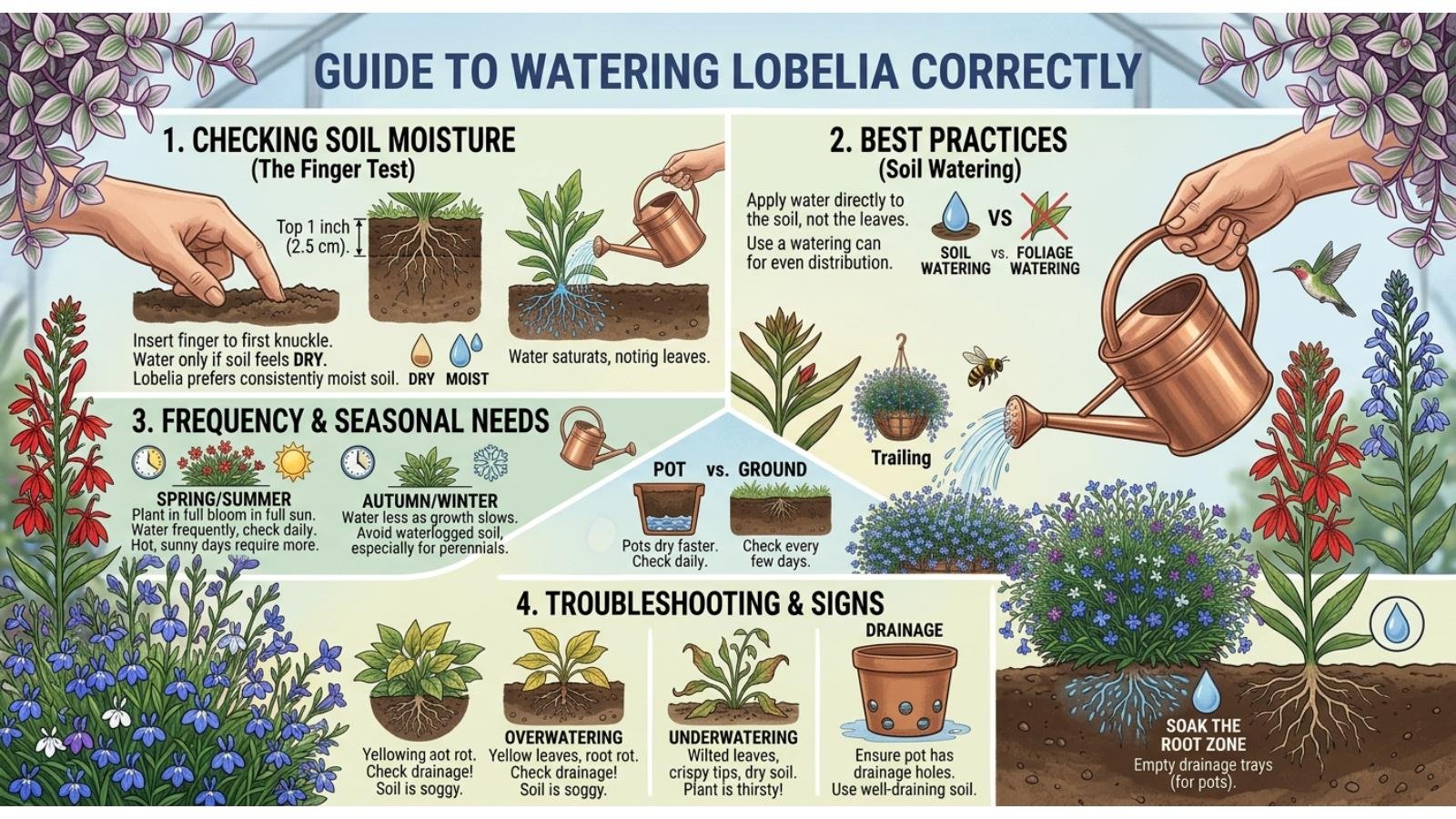
Lobelia prefers soil that remains reliably moist without becoming saturated. The RHS specifically recommends moist but well-drained growing conditions.
Instead of watering automatically every day, check the growing medium first.
Insert a finger into the upper layer of soil. If it feels noticeably dry, water thoroughly. If it still feels damp, give the plant more time.
Container-grown lobelia generally needs closer monitoring than plants growing in garden beds because containers can lose moisture rapidly during warm weather.
Watch for these signs:
- Wilting: The plant may be experiencing drought or heat stress.
- Dry, lightweight potting mix: Water is likely needed.
- Persistently soggy soil: Drainage may be inadequate.
- Yellowing combined with wet soil: Investigate excess moisture rather than immediately adding more water.
One overlooked point is that a small hanging basket can dry much faster than a large container. The same watering schedule should not automatically be applied to both.
Soil and Potting Mix Requirements
The ideal lobelia soil is fertile, moisture-retentive, and well drained. The RHS lists several soil types as suitable, including loam, sand, clay, and chalk, provided the plant has appropriate growing conditions.
For containers, use a quality multipurpose potting mix that drains freely while holding enough moisture for the roots.
Avoid compacted soil that remains saturated after watering. Lobelia benefits from moisture, but its roots still need access to air.
A useful container setup includes:
- A container with drainage holes.
- Quality potting mix.
- Organic matter for moisture retention.
- Enough drainage to prevent standing water.
- A container size appropriate for the plant.
Image Suggestion: Healthy lobelia growing in well-drained potting soil compared with waterlogged soil.
Feeding Lobelia for Better Flowering
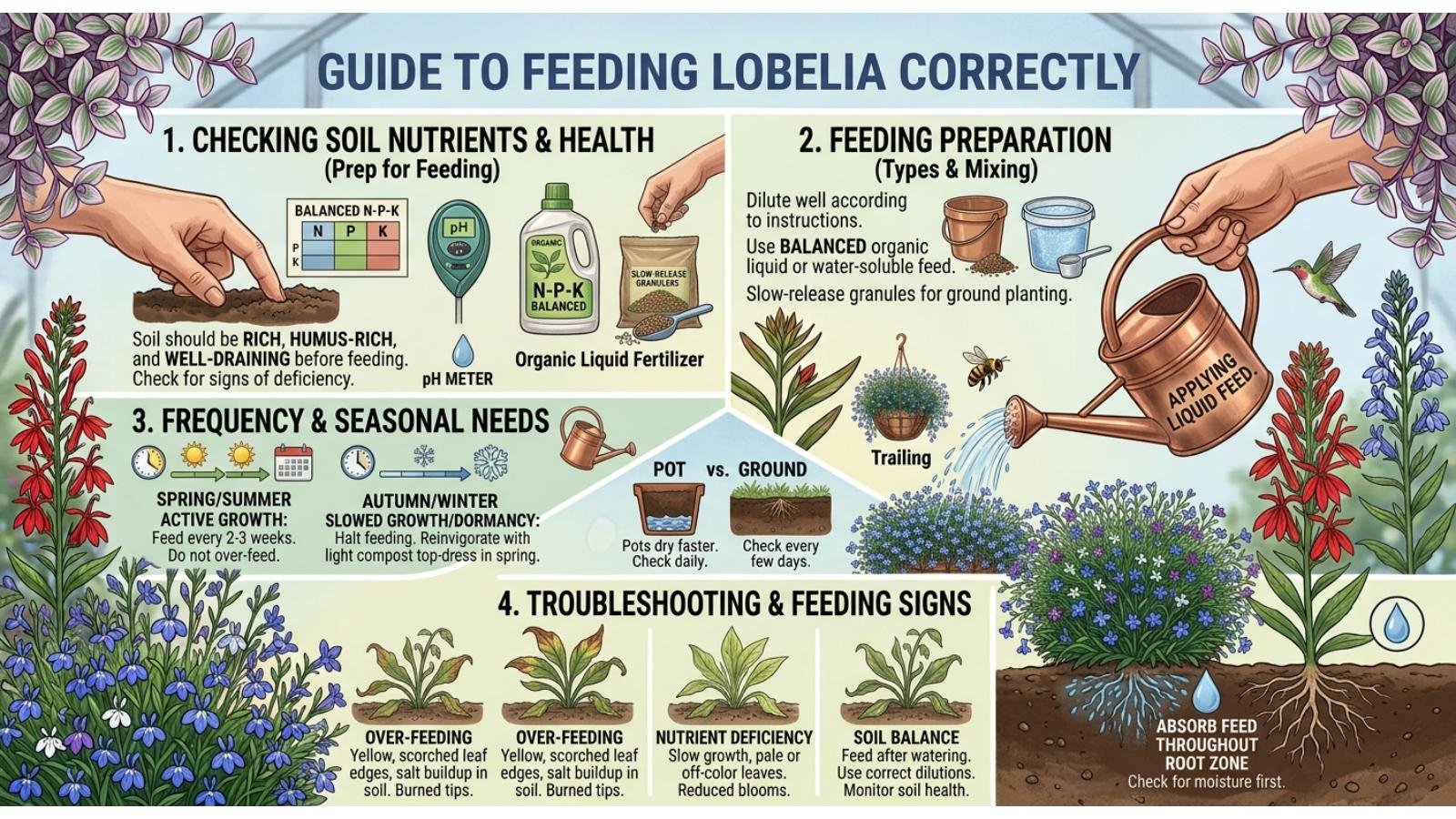
Lobelia can benefit from regular feeding during active growth, particularly when grown in containers where nutrients are gradually depleted.
The RHS recommends balanced fertilizer every two weeks during spring and early summer for Lobelia erinus, followed by a nitrogen-free fertilizer from midsummer for some cultivars.
For home gardeners, the important principle is moderation. Excessive fertilizer is not a shortcut to more flowers.
A sensible approach is to:
- Feed during active growth.
- Follow the fertilizer label.
- Avoid excessive nitrogen.
- Reduce feeding when growth naturally slows.
- Pay closer attention to container plants because nutrients can be depleted faster.
If the foliage looks lush but flowering is disappointing, excessive nitrogen can be one factor worth considering.
How to Grow Lobelia in Containers and Hanging Baskets
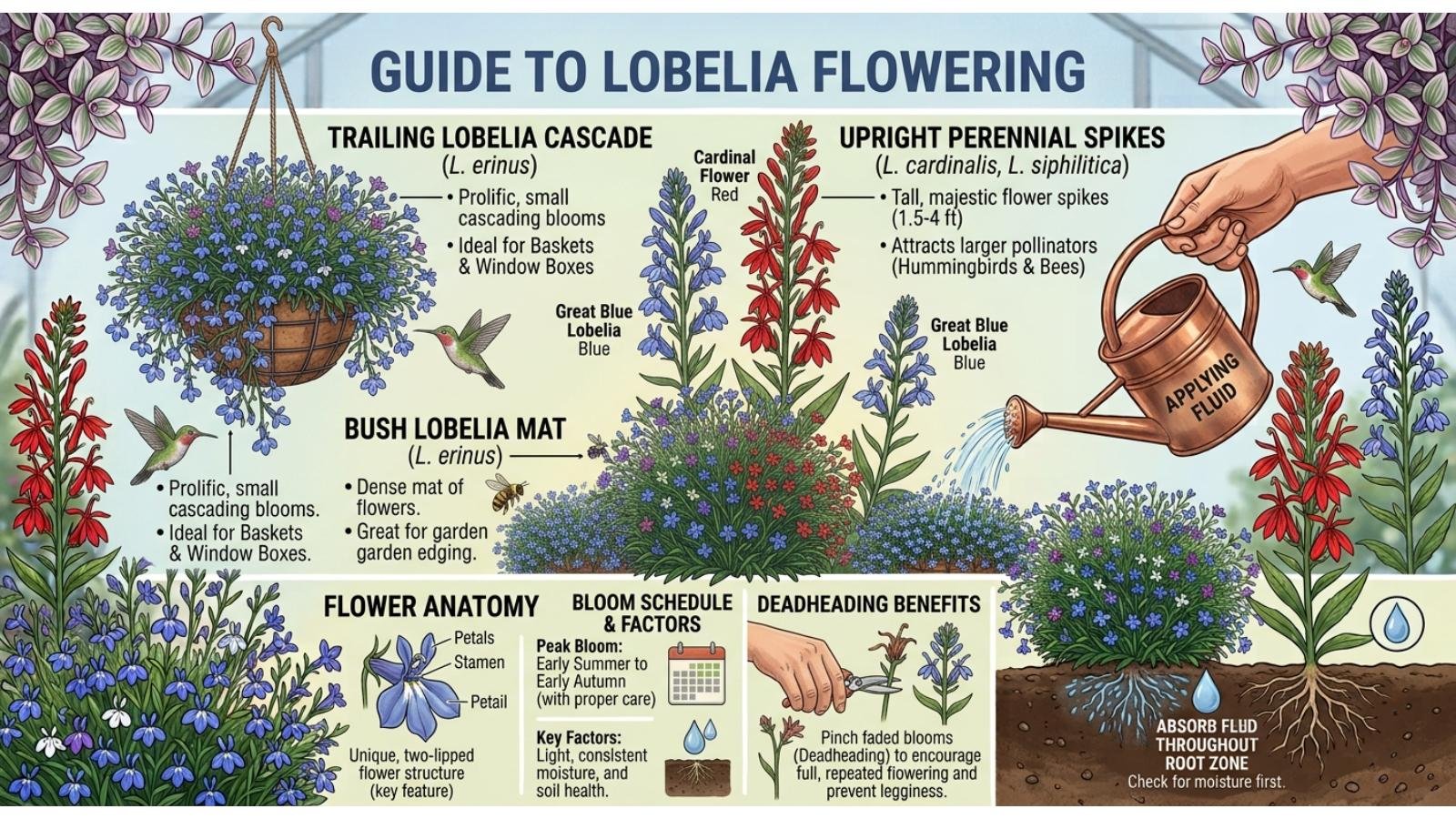
Lobelia is especially well suited to containers and hanging baskets because many cultivars naturally trail or form compact mounds. The RHS lists patio containers and hanging baskets among recommended uses.
Choose a container with drainage holes and position it where you can easily monitor moisture.
Trailing varieties can spill attractively over the edge, while compact varieties work well near the center of mixed displays.
For the best results:
- Use fresh, well-draining potting mix.
- Do not allow the container to remain bone dry for extended periods.
- Check moisture frequently during hot weather.
- Provide adequate light.
- Feed according to the plant’s growth and fertilizer instructions.
- Remove declining material when necessary to keep the display tidy.
A hanging basket exposed to strong afternoon sun may require considerably more attention than a container positioned in partial shade.
Pruning and Keeping Lobelia Flowering
Lobelia generally does not require complicated pruning. Some cultivars can simply be allowed to grow naturally, while cutting back after flowering can help tidy the plant. The RHS notes that pruning requirements vary somewhat among cultivars.
If flowering becomes sparse or the plant starts looking untidy, lightly trimming it can encourage fresh growth in suitable conditions.
Avoid aggressive cutting when the plant is already severely stressed by heat or drought. First correct the growing conditions, then trim damaged or declining growth.
For annual bedding lobelia, removing the plant after its flowering period may be more practical than trying to preserve it through unsuitable winter conditions.
Growing Lobelia From Seed
Lobelia can be propagated from seed, and the RHS recommends sowing Lobelia erinus seed at approximately 13 to 18°C in late winter.
Because the seeds are tiny, sow them carefully rather than burying them deeply. The goal is to give the developing seedlings access to moisture and light while preventing the growing medium from becoming waterlogged.
When raising seedlings:
- Use a clean seed-starting medium.
- Keep the medium consistently moist.
- Provide adequate light after germination.
- Avoid overcrowding.
- Harden plants gradually before moving them outdoors.
Seed-grown plants are particularly useful when you want many plants for borders or seasonal containers.
Image Suggestion: Step-by-step lobelia seed propagation from sowing through young seedlings.
Lobelia Care During Hot Weather
Heat is one of the biggest challenges for gardeners growing lobelia in warm regions.
A plant receiving intense sunlight, high temperatures, and insufficient moisture can wilt even when it looked perfectly healthy a few days earlier. The solution is not always more fertilizer or more frequent shallow watering.
During hot weather:
- Check containers at least once daily.
- Water thoroughly when the growing medium begins drying.
- Provide afternoon shade if the plant is suffering from excessive heat.
- Avoid allowing the root zone to repeatedly dry out.
- Improve the container’s moisture retention if necessary.
- Watch for sudden wilting during the hottest part of the day.
The RHS specifically notes that avoiding drought stress can prolong flowering in some lobelia cultivars.
Lobelia Care Through the Seasons
Spring
Spring is an important establishment period. Give newly planted lobelia consistent moisture and gradually expose nursery-grown plants to outdoor conditions.
This is also a suitable period for planting and active feeding as temperatures become favorable.
Summer
Summer usually brings the greatest watering demand. Monitor containers carefully, particularly during heat waves.
Partial shade can be particularly helpful in hot climates because it reduces moisture loss and heat stress.
Autumn
Many Lobelia erinus cultivars can continue flowering into autumn under favorable conditions.
Remove declining growth and tidy containers as flowering finishes.
Winter
Common bedding lobelia is often treated as an annual rather than a long-term outdoor perennial. Its ability to survive winter depends heavily on species, cultivar, and local climate.
Do not assume every plant sold as lobelia has identical cold tolerance.
Common Lobelia Problems and Solutions
Lobelia Is Wilting
Wilting usually means the plant is under water stress, although heat can also cause temporary midday wilting.
Check the soil before watering. If it is dry, water thoroughly. If it is already wet, investigate root conditions, drainage, and heat exposure instead.
Lobelia Has Yellow Leaves
Yellow leaves can have several causes, including excessive moisture, poor root conditions, nutrient problems, or natural aging.
Do not automatically respond with fertilizer. Check the soil moisture first.
Lobelia Is Not Flowering
Insufficient light, excessive nitrogen, drought stress, heat stress, or general growing conditions can contribute to poor flowering.
Start by checking light and moisture before changing the fertilizer routine.
Lobelia Looks Thin and Leggy
Insufficient light can contribute to weak or stretched growth. Moving the plant to a brighter location can help if the cultivar tolerates the increased exposure.
Avoid making a sudden move from shade into intense midday sun.
Lobelia Suddenly Collapses
Rapid collapse can occur after severe heat or drought stress, but constantly wet soil can also damage root health.
Inspect the roots and growing medium rather than assuming the plant simply needs more water.
Pests and Diseases
Lobelia is generally relatively trouble-free, but slugs and snails can be attracted to some plants. The RHS identifies slugs and snails as potential pests for Lobelia erinus, depending on the cultivar.
Inspect plants regularly, especially when young foliage is disappearing overnight.
Good growing practices also help:
- Avoid overcrowding.
- Maintain appropriate airflow.
- Remove severely damaged plant material.
- Keep containers clean.
- Avoid consistently waterlogged conditions.
- Check underneath leaves and around the base of plants.
Prevention is usually easier than trying to correct a serious problem after the plant has already declined.
Best Lobelia Care Routine
A simple routine makes lobelia much easier to manage.
| Care factor | Best practice |
|---|---|
| Light | Full sun to partial shade |
| Soil | Fertile and reliably moist but well drained |
| Water | Water when the growing medium begins drying |
| Fertilizer | Feed during active growth according to plant needs |
| Containers | Use pots with drainage holes |
| Pruning | Usually minimal |
| Propagation | Seed is commonly used |
| Common pests | Slugs and snails |
| Main challenge | Preventing drought stress without creating soggy soil |
These recommendations are primarily applicable to common Lobelia erinus bedding and container cultivars. Individual cultivars can have different habits and preferences.
Frequently Asked Questions About Lobelia Plant Care
Does lobelia need full sun?
Lobelia can grow in full sun or partial shade. In very hot conditions, some afternoon protection can help reduce heat and moisture stress.
How often should I water lobelia?
Water when the growing medium starts to dry rather than following a fixed calendar. Containers and hot weather can significantly increase watering needs.
Can lobelia grow in pots?
Yes. Lobelia is particularly well suited to containers, patio displays, window boxes, and hanging baskets.
Why is my lobelia dying?
Check moisture first. Both severe drought and persistently waterlogged soil can cause problems. Also examine heat exposure, drainage, light, and the condition of the roots.
Should I deadhead lobelia?
Deadheading is not always essential. Some cultivars can continue naturally, while trimming declining growth can improve appearance and encourage fresh growth.
Can lobelia survive winter?
It depends on the species and cultivar. Many common Lobelia erinus bedding plants are grown as annuals, while some other lobelias are perennial.
How do I make lobelia bloom more?
Provide appropriate light, maintain consistent moisture, avoid drought stress, and feed appropriately during active growth. Drought stress can shorten or reduce flowering.
Is lobelia easy for beginners?
Yes, particularly when grown in containers or garden beds where moisture and light can be monitored easily. The main beginner lesson is to maintain consistent moisture without keeping the roots constantly saturated.
Conclusion
Successful lobelia plant care comes down to balance. Give the plant enough light for flowering, keep the growing medium reliably moist but well drained, and pay particular attention to moisture during hot weather. Container-grown lobelia deserves extra monitoring because small pots can dry rapidly.
The most useful habit is to inspect the plant and soil rather than relying on a fixed care calendar. When you respond to actual moisture, temperature, and light conditions, lobelia can reward you with compact foliage and an impressive display of delicate flowers.