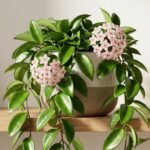
Bridal veil plants are popular hanging-basket houseplants because their fine trailing stems and tiny white flowers create a soft, cascading display. However, their delicate appearance can make watering, lighting, and pruning seem more complicated than they really are.
The key is balance. A bridal veil plant generally performs best when its soil stays lightly moist without becoming waterlogged and its foliage receives bright, filtered light rather than intense direct sun. Understanding these two points prevents many of the brown leaves, weak growth, and root problems beginners encounter.
Quick Answer
Bridal veil plant care is mainly about bright filtered light, consistently moist but well-draining soil, warm temperatures, and adequate humidity. The plant commonly sold as Tahitian bridal veil is Gibasis pellucida, a trailing tropical houseplant with delicate white flowers and purple-tinged stems. Keep it away from harsh direct sunlight, water when the soil begins to dry, prune regularly for fuller growth, and avoid temperatures below about 50°F.
What Is a Bridal Veil Plant
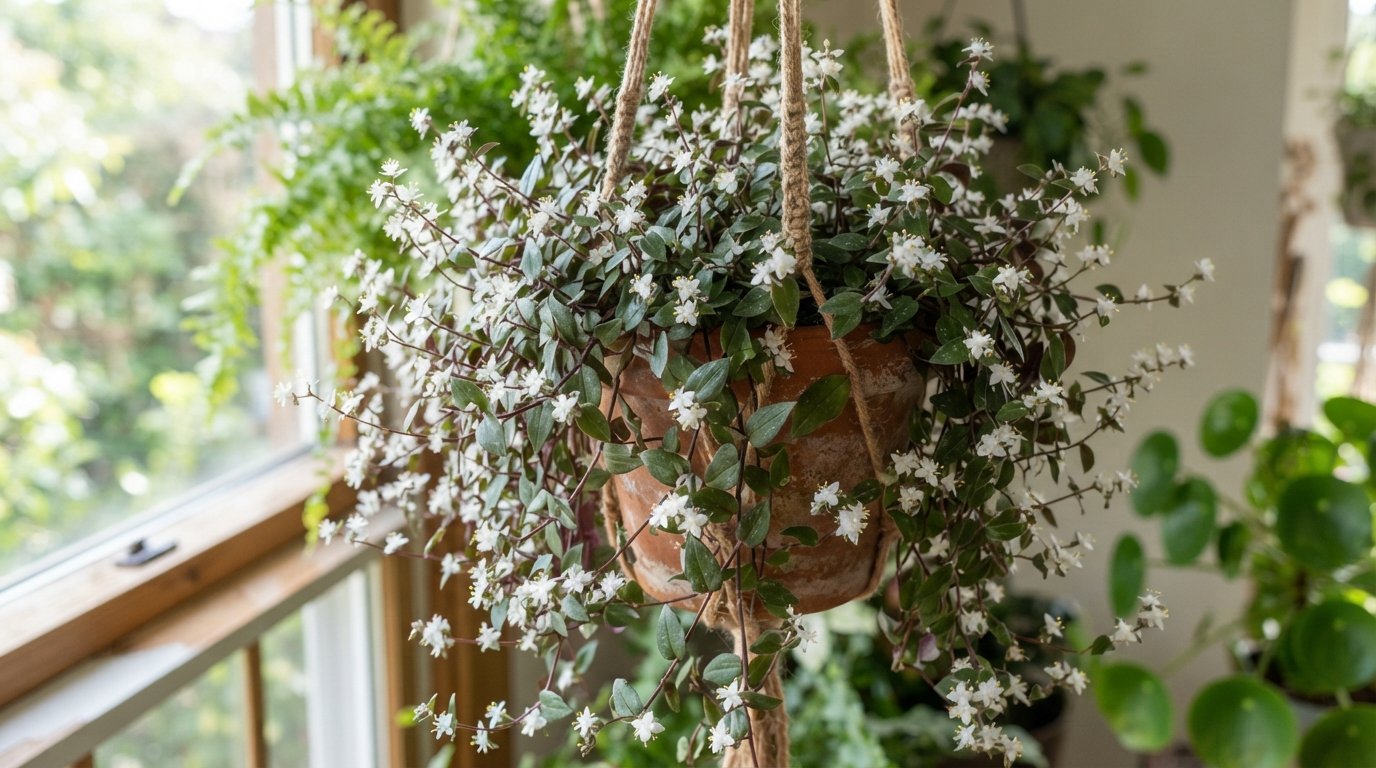
The name bridal veil usually refers to Gibasis pellucida, commonly called Tahitian bridal veil. It belongs to the spiderwort family, Commelinaceae, and originates from tropical regions of Central and South America.
It has several distinctive features.
- Fine trailing or cascading stems.
- Dark green leaves with purple coloration on the undersides.
- Small white flowers less than 1 inch across.
- A naturally delicate, hanging growth habit.
- Excellent suitability for hanging baskets and containers.
North Carolina State Extension lists the plant as a perennial houseplant and recommends partial shade or dappled light with good drainage.
Image Suggestion: Close-up image showing the white flowers, purple stems, and cascading foliage of a healthy bridal veil plant.
Bridal Veil Plant Light Requirements
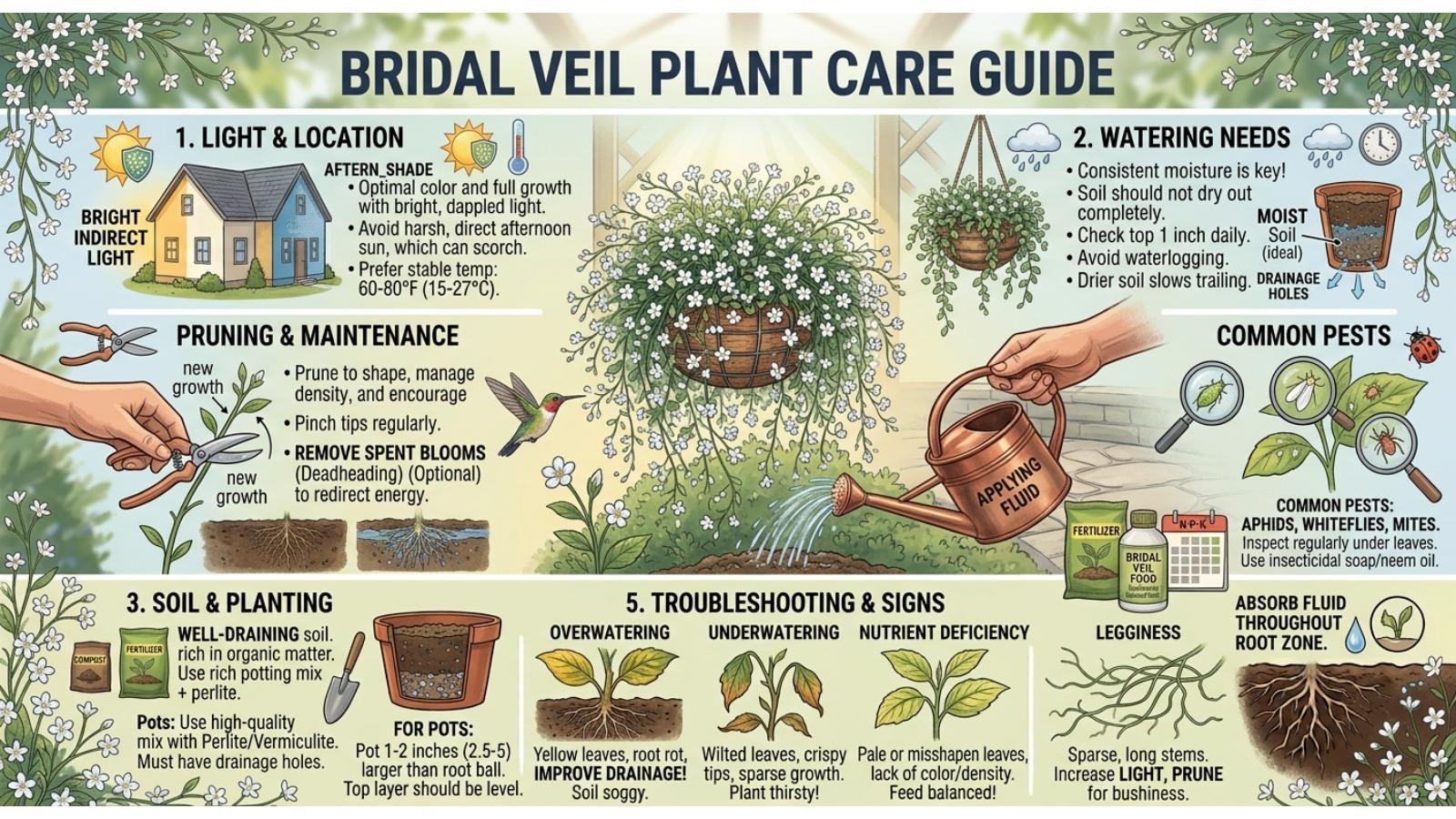
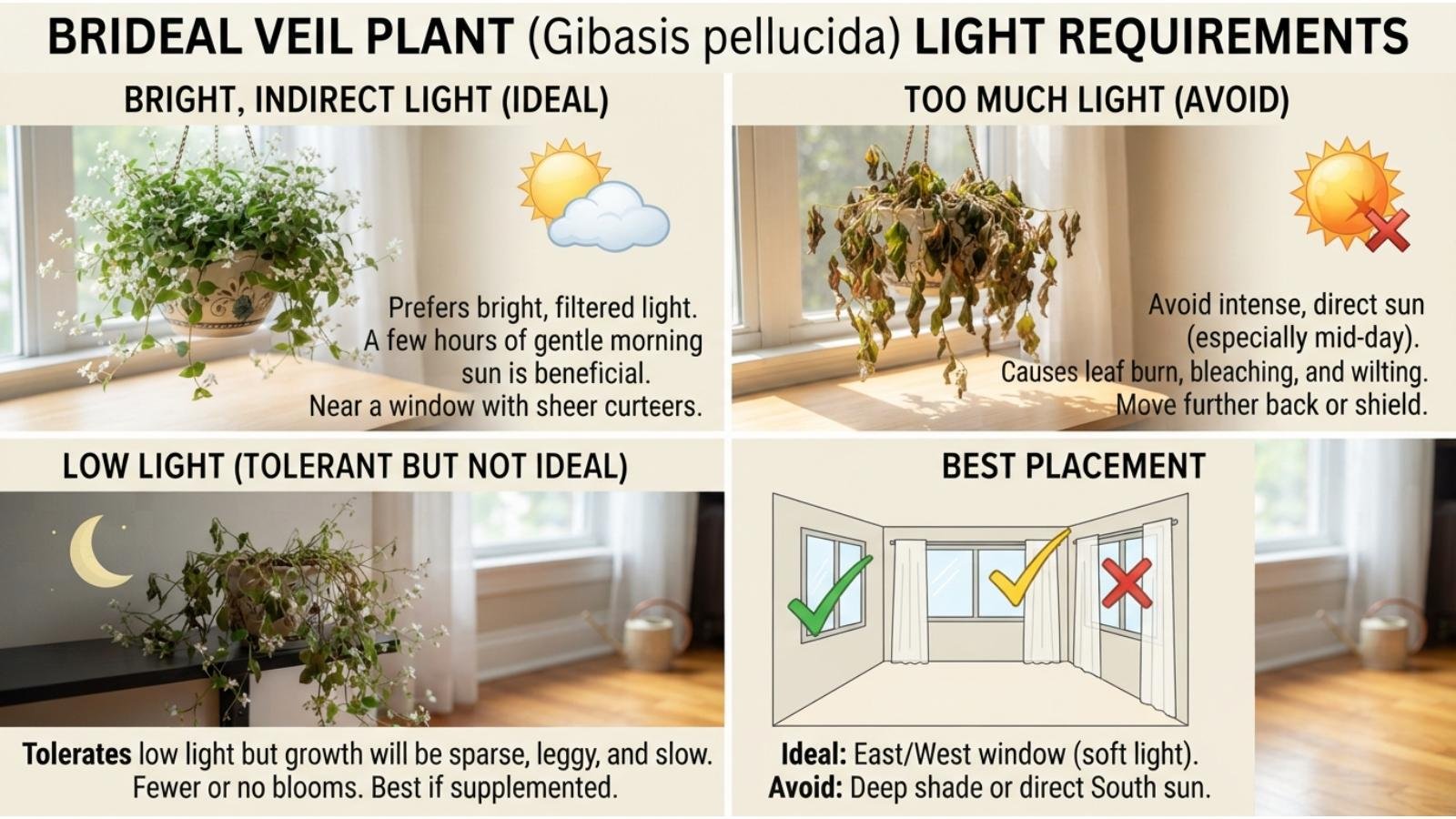
Bridal veil plants prefer bright, filtered or partially shaded light rather than strong direct sunlight.
An east-facing window with gentle morning light can work well. Near a brighter window, use a sheer curtain to soften intense rays.
Too much direct sunlight can cause the upper leaves to develop brown areas or scorched-looking foliage. North Carolina State Extension specifically notes that excessive sun can brown the tops of the leaves.
Too little light creates a different problem. Your plant may survive, but growth can become sparse and less attractive.
Look for these clues.
- Healthy light: Compact growth and good foliage color.
- Too much sun: Brown or scorched leaf surfaces.
- Too little light: Long, thin stems and sparse foliage.
- Uneven light: Growth becomes noticeably fuller on one side.
Rotate the hanging basket occasionally so different sections receive light evenly.
How Often to Water a Bridal Veil Plant
There is no reliable calendar schedule for watering because indoor conditions change throughout the year.
Instead, check the soil.
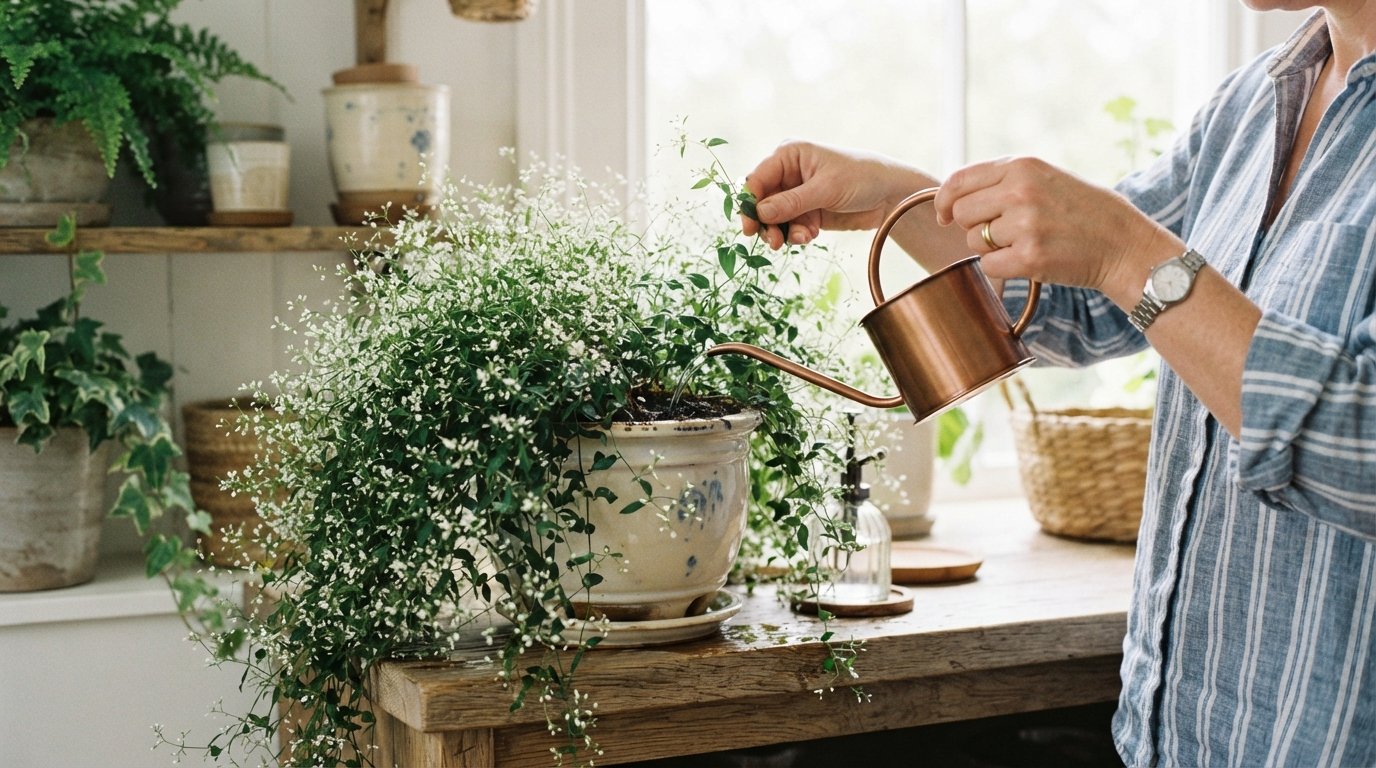
When the upper layer begins to feel dry, water thoroughly until excess water flows through the drainage holes. Then empty standing water from the saucer or decorative container.
This approach is more reliable than watering every Sunday or following a fixed schedule. Missouri Botanical Garden recommends judging indoor plant watering according to the plant, soil, temperature, light, humidity, and other environmental conditions.
During warm, bright growing conditions, your bridal veil plant may need water more frequently. During cooler periods or lower-light conditions, the soil may remain wet longer.
Signs of Underwatering
A thirsty bridal veil plant may show:
- Wilting foliage.
- Dry, crispy leaves.
- Drooping stems.
- Very lightweight potting soil.
- Rapid improvement after thorough watering if the roots are still healthy.
Signs of Overwatering
Excessive moisture can cause:
- Yellowing leaves.
- Soft or declining stems.
- Persistent wet soil.
- Root deterioration.
- General wilting despite wet soil.
One important point is easy to miss: a wilting plant is not automatically thirsty. Root damage from excessive moisture can prevent roots from absorbing water, creating symptoms that resemble underwatering.
Best Soil for Bridal Veil Plants
Use a moisture-retentive but well-draining potting mix.
The goal is to keep enough moisture around the roots without creating stagnant, oxygen-poor conditions.
A practical indoor mix can contain:
- Quality houseplant potting mix.
- Perlite for additional aeration.
- A small amount of organic material to support moisture retention.
The container is just as important as the soil. Always choose a pot with drainage holes.
North Carolina State Extension describes bridal veil as preferring moist, well-drained soil and lists good drainage among its cultural requirements.
Image Suggestion: Simple soil cross-section diagram showing a well-draining mix versus compacted, waterlogged soil.
Temperature and Humidity Requirements
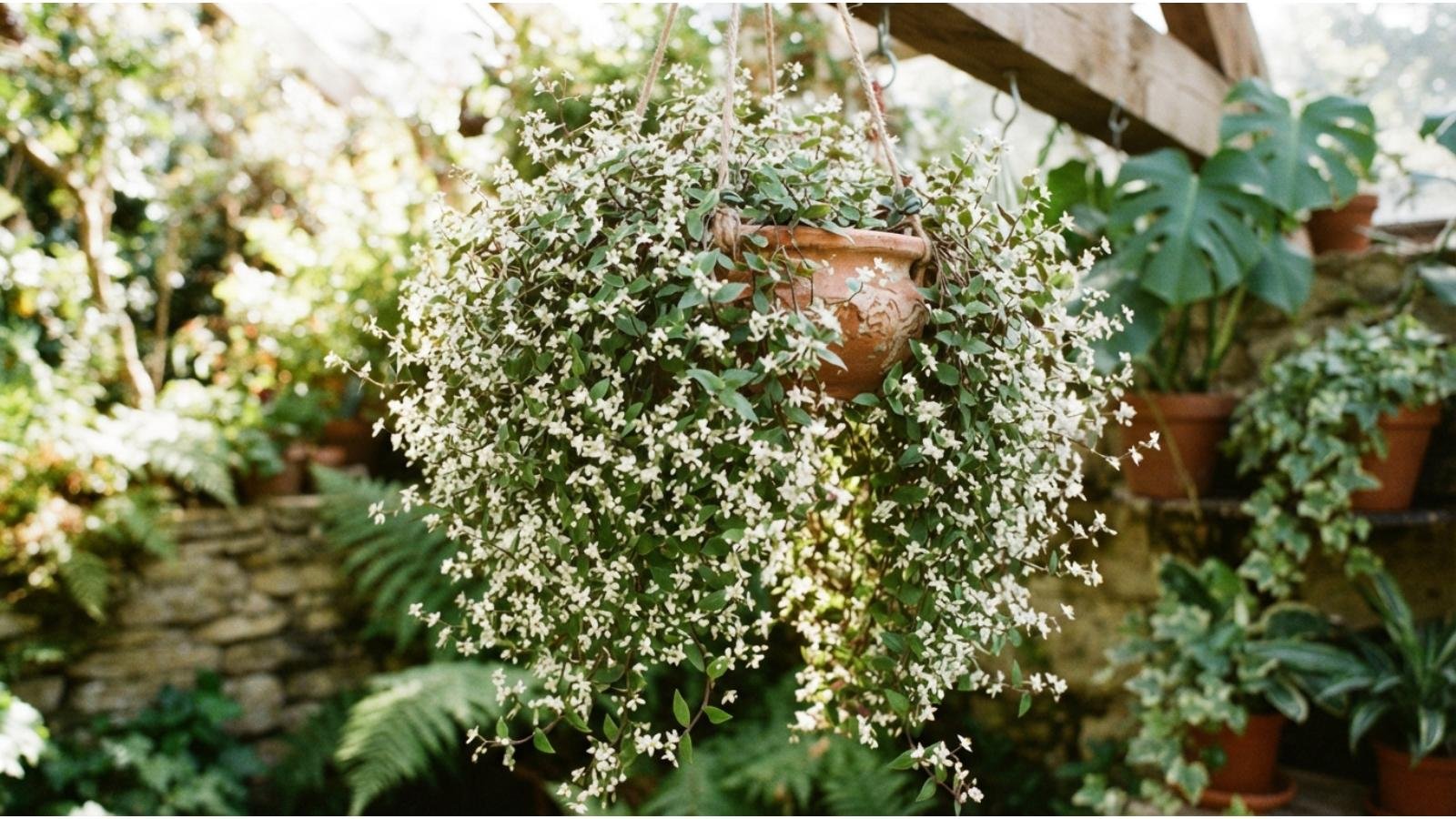
Bridal veil plants appreciate warm indoor conditions because they originate from tropical regions.
Try to protect the plant from:
- Cold drafts.
- Air-conditioning vents.
- Sudden temperature changes.
- Very dry locations.
- Cold windows during winter.
North Carolina State Extension recommends keeping temperatures from falling below approximately 50°F and notes that excessive heat and dryness can stress the plant and increase susceptibility to aphids.
Humidity can also influence how attractive the foliage looks. If your home is particularly dry, placing the plant in a naturally more humid room can help.
However, avoid creating constantly wet foliage with poor air circulation. Good airflow is important for reducing disease problems in indoor plants.
How to Fertilize a Bridal Veil Plant
Bridal veil plants benefit from feeding during active growth, but more fertilizer is not necessarily better.
Use a balanced houseplant fertilizer according to its label directions. If the plant is growing rapidly in bright conditions, regular feeding can support new foliage and flowering.
Reduce feeding when growth slows significantly.
Missouri Botanical Garden notes that indoor plants generally benefit from regular feeding during active growth and that brighter light and faster growth increase fertilizer requirements. It also cautions against encouraging weak growth with fertilizer when plants are growing slowly in winter.
A common mistake is fertilizing a struggling plant before determining why it is struggling. If the roots are sitting in soggy soil or the plant is suffering from inadequate light, fertilizer will not solve the underlying problem.
Pruning Bridal Veil Plants for Fuller Growth
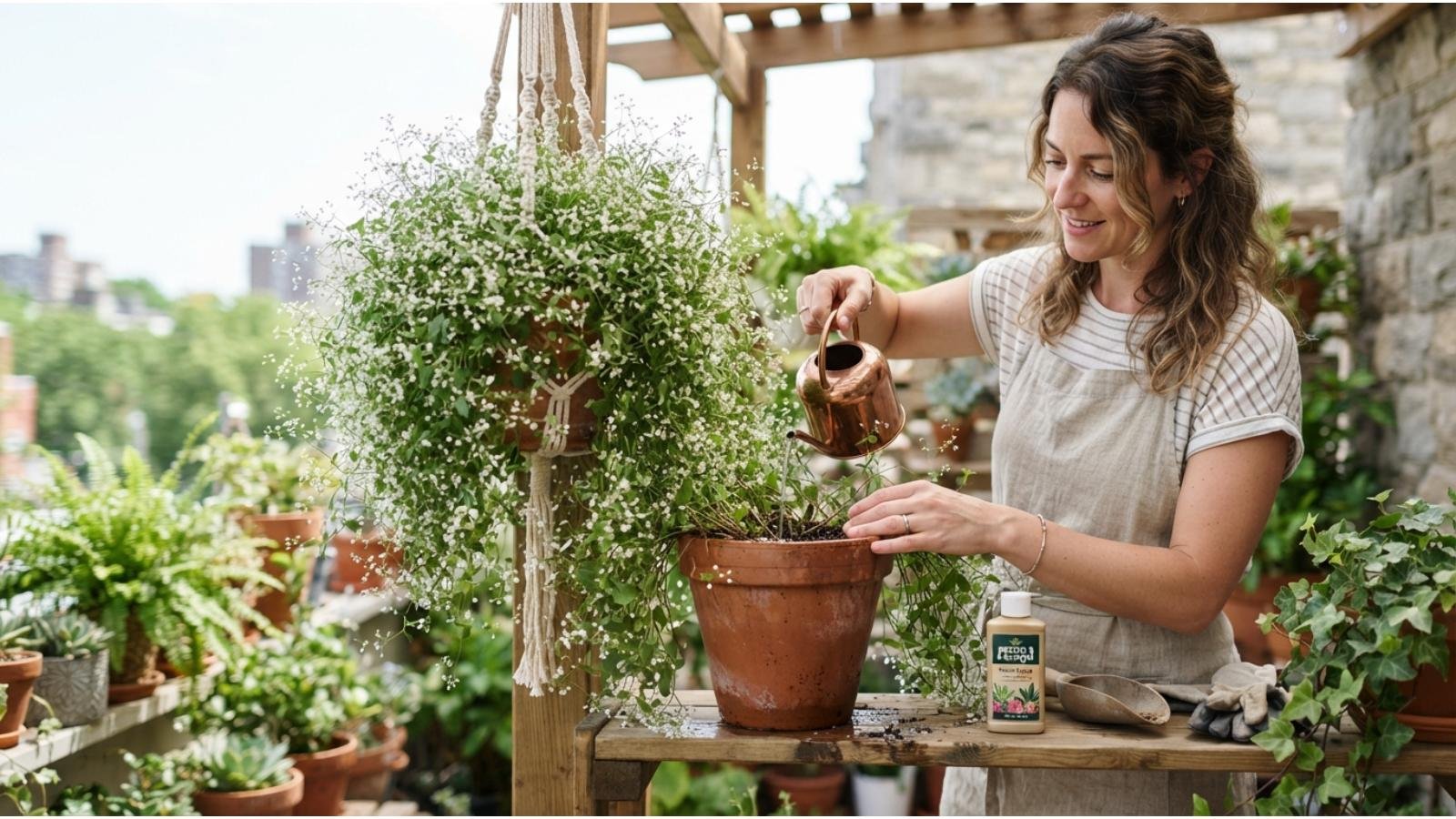
Pruning is one of the easiest ways to make bridal veil plants look fuller.
As stems become long and sparse, pinch or trim their growing tips. This encourages branching and produces a denser appearance.
North Carolina State Extension specifically recommends pruning in late winter and notes that pinching can encourage flowering and increase plant density.
When pruning:
- Use clean, sharp scissors.
- Remove dead or damaged growth.
- Trim excessively long stems.
- Pinch growing tips to encourage branching.
- Avoid removing a large percentage of foliage at once.
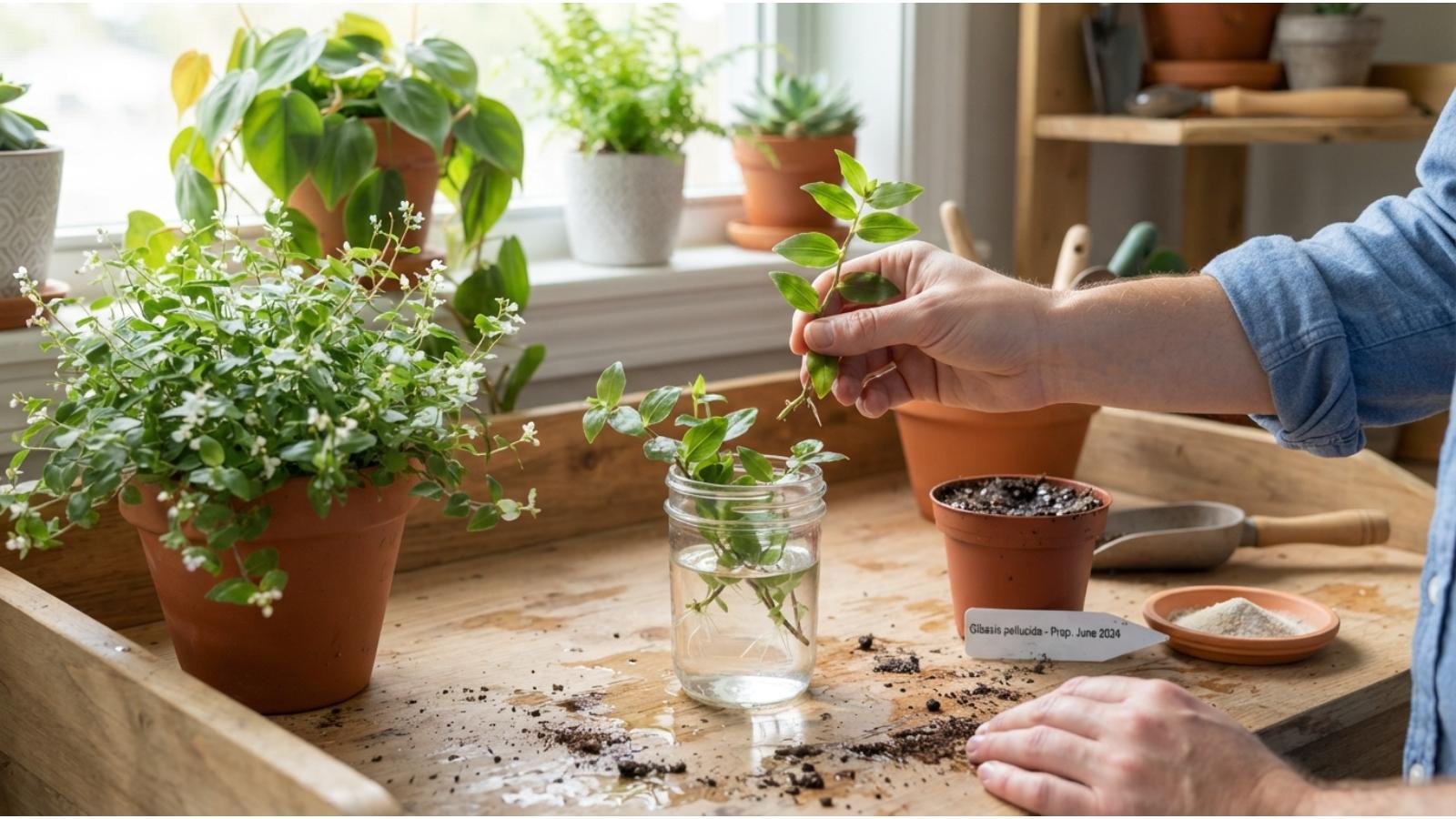
Do not throw away every healthy cutting. Bridal veil plants are easy to propagate from stem cuttings.
How to Propagate a Bridal Veil Plant
Stem propagation is one of the simplest ways to create new plants.
Take a healthy stem cutting with several leaves. Remove lower leaves if necessary and place the cutting in water or moist growing medium.
North Carolina State Extension identifies stem and root cuttings as propagation methods and notes that cuttings can root in water or moist soil.
Simple Propagation Steps
- Select a healthy, non-damaged stem.
- Make a clean cutting.
- Remove leaves from the lower portion.
- Place the cutting in water or moist propagation medium.
- Keep it warm and in bright, indirect light.
- Maintain moisture without creating stagnant conditions.
- Once roots are established, transfer the cutting into an appropriate potting mix.
Propagation is especially useful after pruning because healthy trimmings can become new plants rather than waste.
Image Suggestion: Step-by-step infographic showing a bridal veil stem cutting developing roots in water.
Why Bridal Veil Leaves Turn Brown
Brown leaves can have several causes, so avoid assuming that every brown leaf means underwatering.
The first things to investigate are light, moisture, humidity, and temperature.
Direct Sunlight
Excessive direct sunlight can brown the upper foliage. Move the plant into brighter filtered light rather than placing it immediately in a darker location. (Plant Toolbox)
Dry Conditions
Hot, dry air can stress bridal veil plants. Check the soil before watering and assess the room’s humidity.
Irregular Watering
Allowing the plant to become extremely dry and then repeatedly soaking it can create stress. Aim for consistent moisture rather than dramatic wet-to-dry cycles.
Root Problems
If the soil remains wet for long periods and the plant develops yellowing, wilting, or declining stems, inspect the roots. Indoor plant problems are frequently related to cultural conditions such as water, light, soil, temperature, humidity, and nutrition.
Why Bridal Veil Plant Leaves Turn Yellow
Yellow leaves are a symptom rather than a diagnosis.
Check the following before changing your entire care routine.
- Is the soil staying wet for too long.
- Is the plant receiving enough filtered light.
- Has the plant recently experienced a major environmental change.
- Are roots healthy and firm.
- Is the plant receiving excessive fertilizer.
- Are pests present.
Overwatering is particularly worth investigating because excess moisture can reduce oxygen around the roots and contribute to root problems.
If only an occasional older leaf turns yellow while the rest of the plant looks healthy, the situation may be less concerning than widespread yellowing.
Why Bridal Veil Plants Become Leggy
Leggy growth usually means the plant is not receiving enough usable light or needs pruning.
Move it closer to a suitable bright window while avoiding harsh direct sunlight. Then prune excessively long stems to encourage branching.
Do not solve legginess simply by adding fertilizer. Fertilizer cannot compensate for inadequate light.
A better approach is:
Improve light → prune sparse growth → maintain appropriate moisture → monitor new growth.
New growth is often the best indicator of whether your correction is working.
Common Bridal Veil Plant Care Mistakes
Several mistakes repeatedly cause problems with delicate trailing houseplants.
Watering by Calendar
Watering every few days regardless of conditions can leave the roots permanently wet.
Check the soil instead.
Placing It in Harsh Sun
A bright room does not mean the plant should sit directly against a hot, sunny window.
Filtered light is safer.
Using a Container Without Drainage
Decorative pots without drainage can trap excess water around the roots.
If you want to use a decorative container, keep the plant in a draining nursery pot inside it and empty accumulated water.
Ignoring Sparse Growth
Long, bare stems usually need attention rather than simply more fertilizer.
Improve lighting and prune strategically.
Overcorrecting Problems
A plant with brown leaves does not necessarily need more water. A yellow plant does not necessarily need fertilizer.
Diagnose first, then change one major factor at a time.
Bridal Veil Plant Care Through the Seasons
Spring
Spring usually brings increasing light and active growth.
Check soil moisture more frequently as growth accelerates, begin or increase feeding according to the fertilizer label, and prune if the plant has become sparse.
Summer
Watch for faster drying caused by higher temperatures and brighter light.
Protect the plant from intense direct sun and check for pests, especially if the room becomes hot and dry.
Fall
As light levels decline, watering needs may decrease.
Avoid continuing a summer watering routine automatically.
Winter
Lower light and cooler conditions can slow growth considerably.
Reduce watering frequency as needed, avoid cold drafts, and do not encourage weak winter growth with unnecessary fertilizer.
Missouri Botanical Garden similarly recommends adjusting indoor plant watering and feeding according to seasonal growth, temperature, and light conditions.
Bridal Veil Plant Care Problems at a Glance
| Problem | Likely Cause | What to Check |
|---|---|---|
| Brown leaves | Excessive direct sun or dryness | Light and soil moisture |
| Yellow leaves | Water stress or root problems | Soil and roots |
| Leggy growth | Insufficient light | Window placement |
| Wilting in wet soil | Possible root damage | Root condition |
| Sparse appearance | Insufficient pruning or light | Growth habit |
| Few flowers | Light or growing conditions | Bright filtered light and active growth |
| Aphids | Plant stress and pest exposure | Stems and new growth |
Remember that symptoms can overlap. For example, both underwatering and overwatering can cause wilting. Inspecting the soil and roots is often more useful than treating the visible symptom alone.
Is Bridal Veil Plant Safe for Cats and Dogs
This is an important consideration for pet owners.
North Carolina State Extension lists Gibasis pellucida as toxic to cats and dogs. It reports that ingestion may cause mild gastrointestinal symptoms and that contact can cause dermatitis.
Keep the plant somewhere pets cannot chew the foliage or access fallen plant material.
If you suspect your pet has eaten part of the plant, contact your veterinarian or an appropriate animal poison service for advice.
Frequently Asked Questions
Does a bridal veil plant need direct sunlight.
No. Bridal veil plants generally prefer partial shade, dappled light, or bright filtered light. Strong direct sunlight can damage the foliage and cause browning.
How often should I water a bridal veil plant.
Water when the soil begins to dry rather than following a fixed calendar. Water thoroughly and allow excess water to drain away. The exact interval depends on light, temperature, humidity, pot size, and soil. (Missouri Botanical Garden)
Why is my bridal veil plant losing leaves.
Investigate watering, light, temperature, humidity, and root health. Sudden environmental changes can also cause foliage loss.
How do I make my bridal veil plant bushier.
Pinch or prune long stems to encourage branching. Give the plant suitable bright filtered light so new growth remains compact.
Can I grow bridal veil plants from cuttings.
Yes. Stem cuttings can be rooted in water or moist soil, making propagation relatively straightforward.
Can bridal veil plants grow outdoors.
They can grow outdoors in suitable warm climates. North Carolina State Extension lists the plant for USDA hardiness zones 9b through 11b and also describes it as a houseplant.
Why is my bridal veil plant flowering less.
Insufficient usable light, weak growth, environmental stress, or poor overall plant health can reduce flowering. Start by checking light and root-zone moisture before increasing fertilizer.
Should I mist my bridal veil plant.
Misting is not a substitute for proper humidity or watering. Focus first on suitable soil moisture, good airflow, and an appropriate growing location.
Conclusion
Successful bridal veil plant care comes down to maintaining the right balance rather than following a rigid watering or feeding schedule. Give Gibasis pellucida bright filtered light, moist but well-draining soil, warm conditions, and regular light pruning.
The most useful habit is to inspect the plant rather than simply follow the calendar. Feel the soil, observe new growth, check the leaves, and look at the roots when symptoms do not make sense. With those simple observations, you can catch problems early and keep the plant producing the delicate cascading foliage and white flowers that make bridal veil plants so appealing.