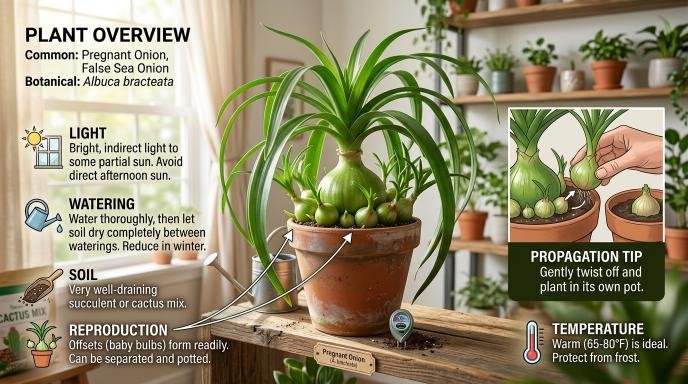
The pregnant onion is an unusual bulbous houseplant best known for producing small bulblets around its large, exposed mother bulb. Its strange appearance makes it an interesting addition to a plant collection, but its care is different from that of a typical leafy houseplant. The biggest mistake beginners make is treating the bulb like a thirsty tropical plant and keeping its soil constantly wet.
Good pregnant onion plant care is really about balance. Give it plenty of light, let excess water escape quickly, avoid burying the bulb, and adjust watering as its growth slows. With those basics right, this plant can remain healthy while producing the little offsets that give it its memorable name.
Quick Answer
Pregnant onion plant care is fairly simple when you provide bright light, fast-draining soil, careful watering, and good airflow. Keep the bulb partly exposed rather than burying it completely, and water thoroughly only after the growing medium has dried significantly. Reduce watering during dormancy and protect the plant from prolonged cold. The plant is now generally classified as Albuca bracteata, formerly Ornithogalum longibracteatum.
What Is a Pregnant Onion Plant
The pregnant onion is Albuca bracteata, a bulbous perennial native to southern and eastern Africa. Older plant references commonly identify it as Ornithogalum longibracteatum or Ornithogalum caudatum.
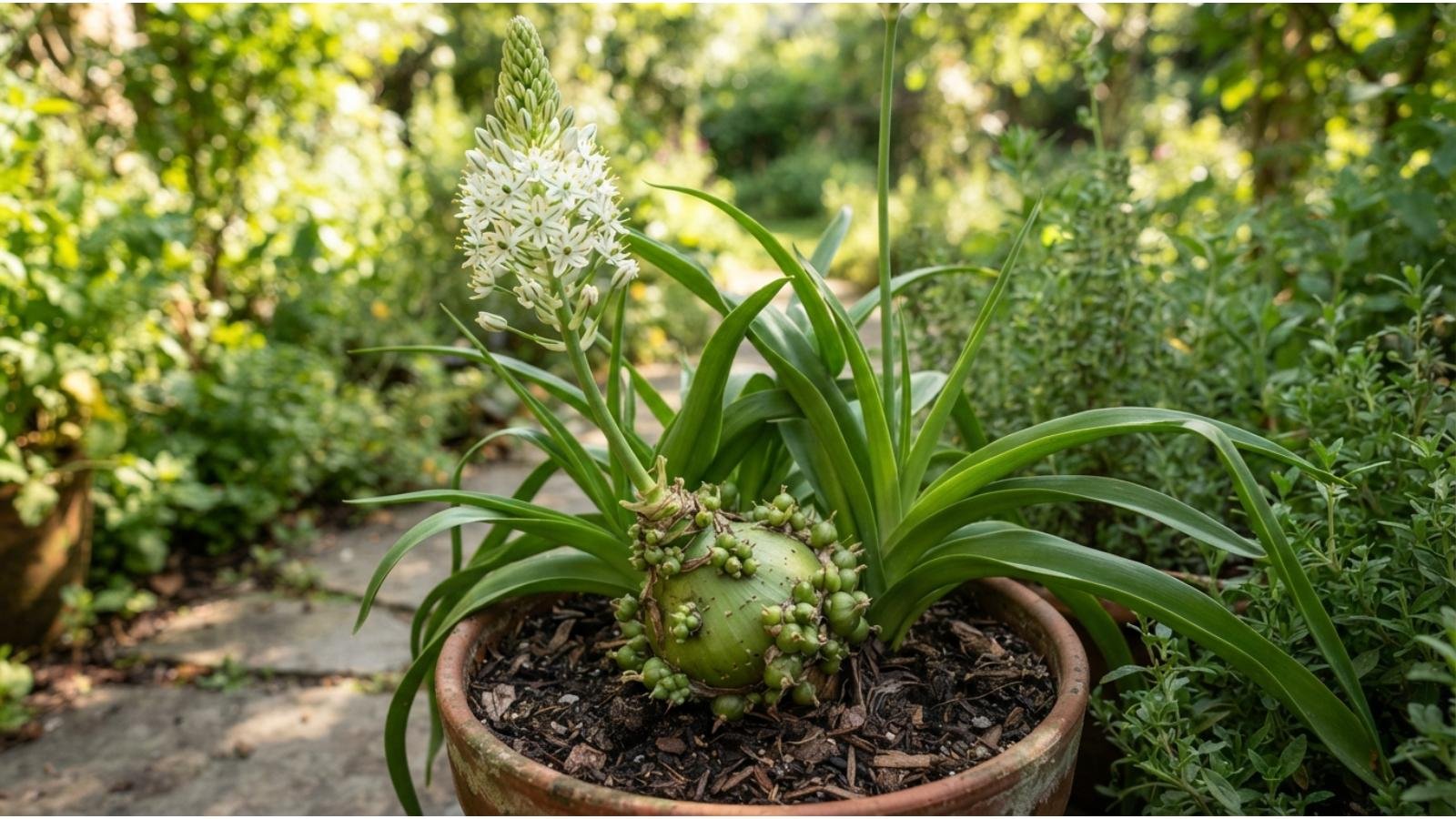
Its name comes from the numerous small bulblets that develop around the mother bulb. These offsets can eventually separate and grow into new plants. The exposed bulb and long, arching, strap-like leaves are its most recognizable features.
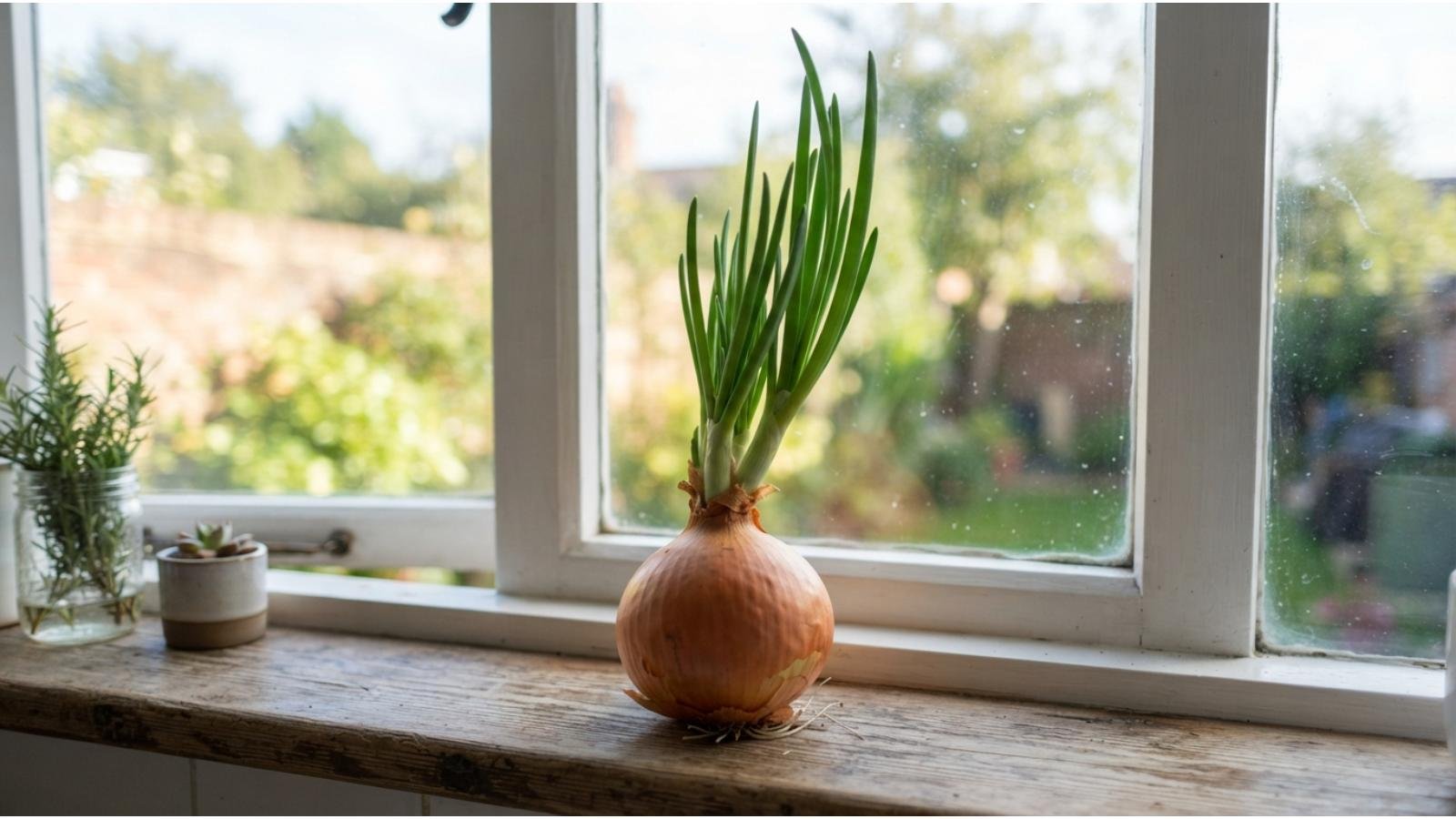
Unlike a conventional onion grown for food, pregnant onion is an ornamental plant and should not be treated as an edible onion.
Image Suggestion: Close-up botanical illustration showing the exposed mother bulb, leaves, roots, and developing baby bulblets.
How Much Light Does Pregnant Onion Need
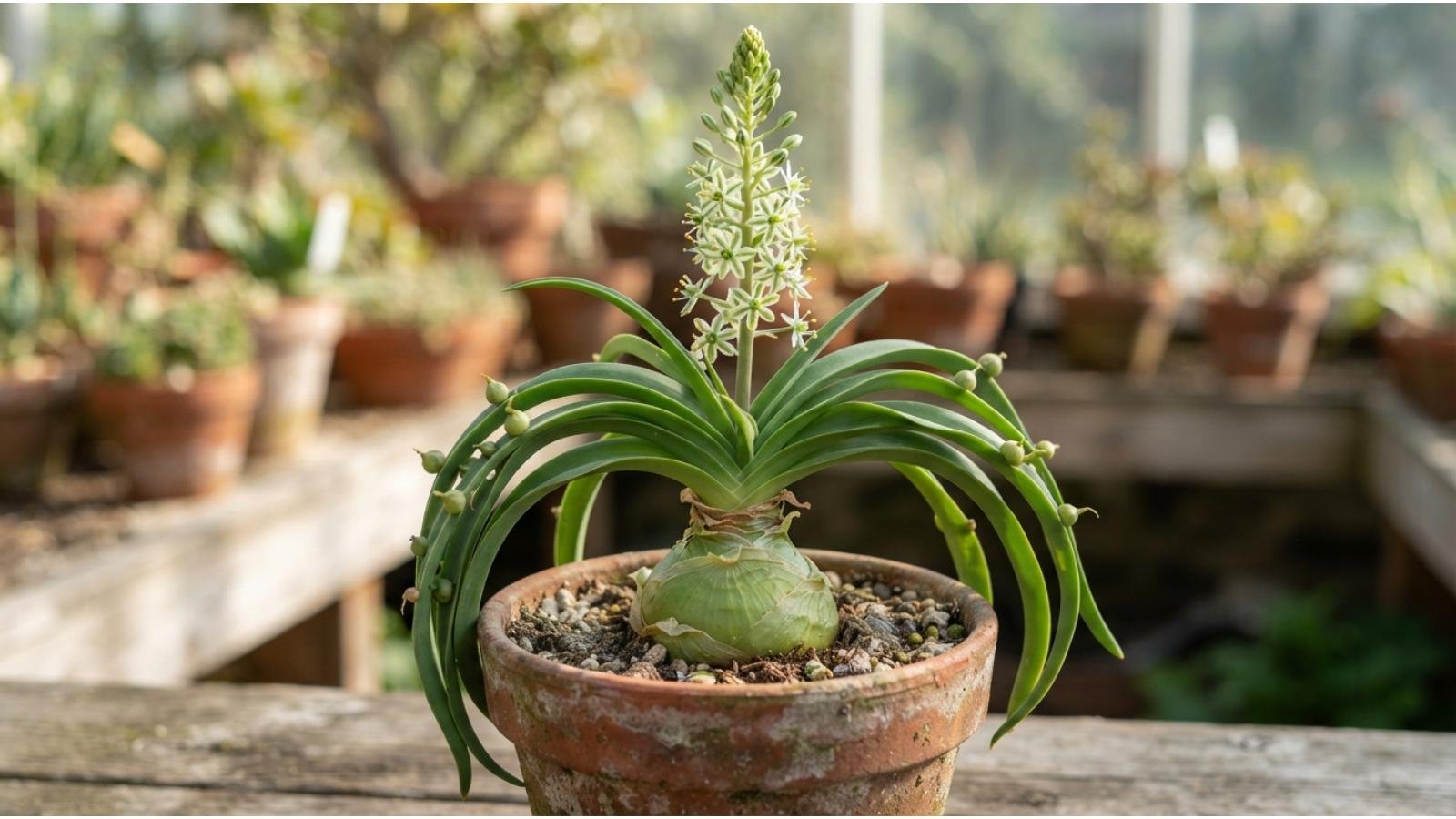
Bright light is one of the most important factors in successful pregnant onion care. The plant performs well in a bright, sunny position, although extremely intense heat directly against a window can be problematic during hot weather.
A bright windowsill can work particularly well indoors. If the plant receives inadequate light, its foliage may become weaker and less attractive, while flowering can also be reduced.
A practical approach is to provide:
- Bright natural light for most of the day.
- Some direct sun when conditions are not excessively hot.
- Protection from intense afternoon heat behind glass.
- A grow light if the indoor location is consistently too dark.
If you move the plant outdoors, introduce stronger sunlight gradually rather than immediately placing an indoor plant into intense sun.
The Best Soil for Pregnant Onion
Drainage matters more than having a complicated soil recipe. Pregnant onions have fleshy roots and a bulb that can suffer when excess moisture remains around it for too long.
A cactus or succulent-style potting mix is a useful starting point because it drains faster than many ordinary houseplant mixes. A gritty mixture containing materials such as perlite, pumice, or coarse sand can further improve drainage.
The most important rule is simple.
The potting medium should drain freely rather than remaining wet for long periods.
Avoid dense garden soil or heavy mixes that stay saturated after watering.
How to Plant a Pregnant Onion
One unusual feature of this plant is that the bulb should not be buried like many traditional bulbs.
When potting it:
- Choose a container with a drainage hole.
- Use a loose, fast-draining growing medium.
- Position the bulb so much of it remains above the soil.
- Cover the roots and lower portion appropriately without burying the entire bulb.
- Keep developing bulblets accessible rather than packing soil tightly around them.
- Water lightly after potting and allow excess water to drain completely.
Keeping the bulb exposed also lets you monitor its condition. A healthy bulb should not be sitting in persistently wet soil.
How to Water a Pregnant Onion
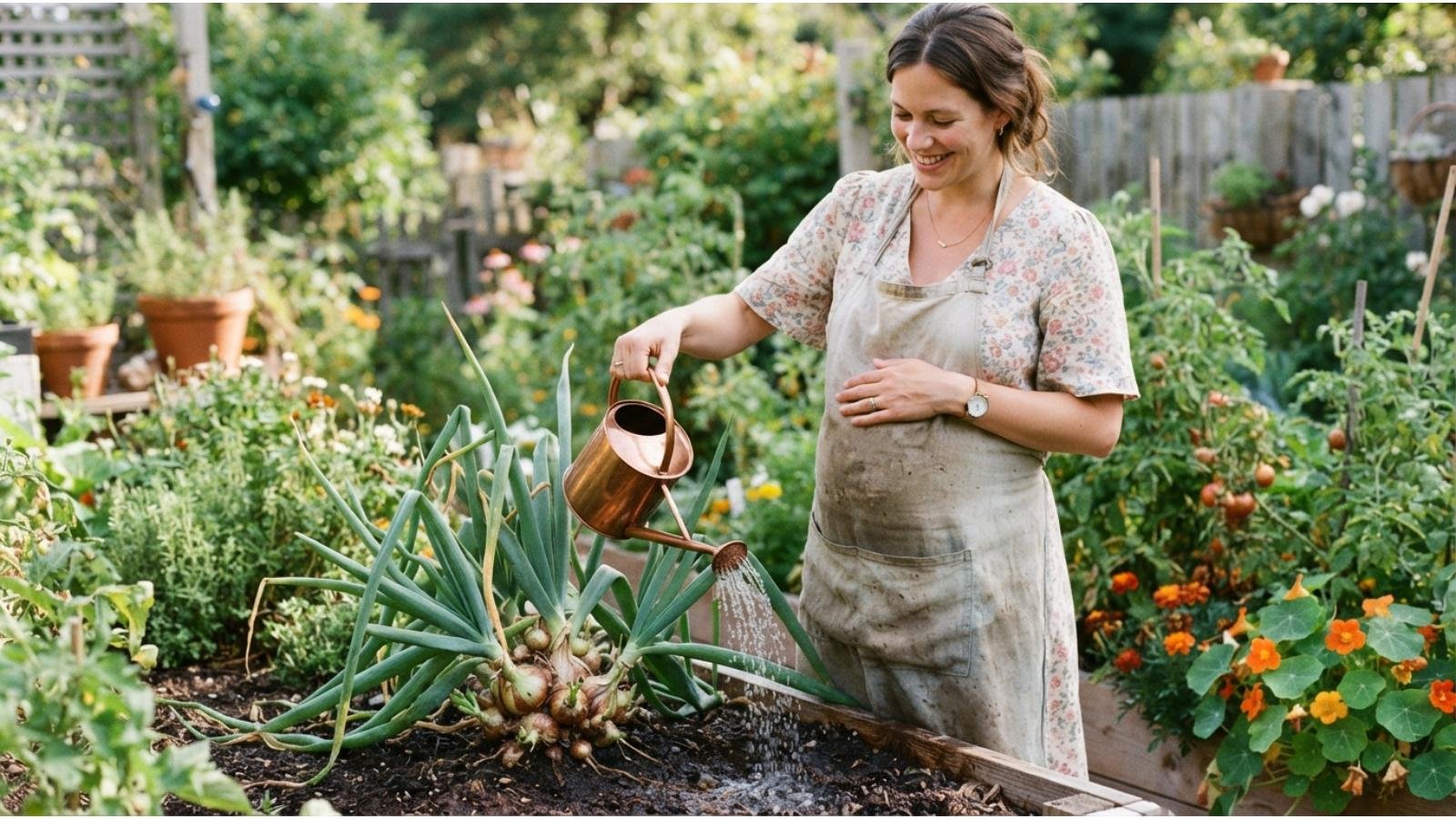
Overwatering is one of the easiest ways to create problems with this plant. During active growth, water thoroughly enough to moisten the root zone, then allow the growing medium to dry substantially before watering again. One care reference specifically recommends allowing the plant to nearly dry before the next watering and removing water that drains from the pot.
Do not follow a rigid calendar such as watering every three days. Indoor temperature, light, pot size, soil composition, and season all affect how quickly the soil dries.
A better routine is:
- Check the soil before watering.
- Water thoroughly when the medium has dried sufficiently.
- Let excess water drain from the bottom.
- Empty standing water from the saucer.
- Reduce watering when growth slows.
- Avoid keeping the bulb constantly damp.
A common beginner mistake is watering because the leaves look slightly different from one day to another. Instead, check the actual moisture level of the potting medium.
Pregnant Onion Watering During Winter
Winter care depends on the temperature and light available to the plant.
When growth slows or the plant enters dormancy, its water requirement can fall significantly. A cool winter rest with reduced watering can be appropriate. One specialist care source recommends stopping fertilizer during winter and providing only enough water to prevent excessive leaf decline when the plant is being kept through its dormant period.
The key is to avoid combining low light with frequent watering. That combination leaves the plant using water slowly while the roots remain surrounded by moisture.
Temperature and Humidity Requirements
Pregnant onion is frost-sensitive, so cold protection is important. A specialist care reference recommends bringing it indoors when temperatures remain below about 10°C or 50°F.
Average household humidity is generally adequate. You do not need to create a humid greenhouse environment simply to keep this bulb healthy.
Focus instead on:
- Warm growing conditions.
- Protection from frost.
- Good air circulation.
- Avoiding prolonged cold and wet conditions.
- Moving outdoor plants inside before cold weather becomes persistent.
If your plant spends summer outdoors, remember that heavy rainfall can keep the potting medium wet for too long unless drainage is excellent.

How to Fertilize Pregnant Onion
Pregnant onion does not require heavy feeding.
During active growth, a diluted balanced fertilizer can be applied periodically. One specialist care guide recommends half-strength water-soluble fertilizer monthly during spring and summer. It also advises waiting several weeks before fertilizing a newly purchased or recently repotted plant
Avoid the temptation to fertilize more often simply because you want faster growth or more baby bulbs. Excess fertilizer does not compensate for inadequate light, poor drainage, or incorrect watering.
A healthy root system and suitable growing conditions should come first.
How to Encourage Baby Bulblets
The bulblets are the feature that makes the pregnant onion particularly interesting. They naturally develop around the mother bulb, creating the characteristic pregnant appearance. Botanical sources describe the plant as bulbiferous and note its ability to produce numerous small bulblets.
You do not need to force this process.
Give the mother plant:
- Strong, appropriate light.
- Suitable drainage.
- Consistent care during active growth.
- Enough space for offsets to develop.
- Appropriate seasonal watering.
Trying to produce babies through excessive watering or fertilizer is counterproductive.
How to Propagate Pregnant Onion
Propagation is primarily done through the small bulblets produced by the mother bulb. The plant is well known for its prolific production of offsets, which makes propagation relatively straightforward.
Once a bulblet has developed sufficiently, it can be separated carefully and planted in a small container containing a well-draining medium.
Avoid rushing to remove every tiny bulblet. Very small offsets may benefit from remaining attached until they are developed enough to establish independently.
Image Suggestion: Step-by-step diagram showing a mature bulblet developing, separating from the mother bulb, rooting, and becoming a young plant.
When Does Pregnant Onion Flower
A healthy pregnant onion can produce a tall flowering stalk carrying clusters of small white-and-green flowers. Botanical sources report flowering during the warmer part of the year, although the precise timing can vary with growing conditions.
Adequate light is particularly important if you want to encourage flowering.
If your plant produces lots of foliage but never flowers, review its light exposure before immediately adding more fertilizer. Insufficient light is often a more useful place to investigate than feeding.
Common Pregnant Onion Plant Problems
Yellowing Leaves
Yellow leaves can have several causes, so color alone does not provide a diagnosis.
Check:
- How wet the soil remains.
- Whether the pot drains freely.
- Recent changes in watering.
- Light levels.
- Whether the plant is entering dormancy.
If yellowing occurs alongside persistently wet soil, reassess watering and drainage first.
Soft or Rotting Bulb
A soft bulb is more concerning than ordinary leaf yellowing. Persistent moisture around the bulb can encourage rot.
Remove obvious sources of excess moisture and inspect the roots and bulb carefully. Severely damaged tissue may not recover, so prevention is much easier than trying to rescue a badly rotted bulb.
Long, Weak Leaves
Weak or unusually stretched foliage can indicate insufficient light. Move the plant toward a brighter location gradually rather than suddenly exposing a low-light plant to intense sunlight.
No Baby Bulbs
Not every plant produces offsets at the same speed. Give the plant appropriate light and growing conditions rather than increasing fertilizer or water aggressively.
Pests
Scale insects have been documented as a pest associated with pregnant onion.
Inspect the bulb, leaf bases, and undersides of leaves when bringing plants indoors or introducing them to a collection.
Common Care Mistakes to Avoid
The most important mistakes are surprisingly basic.
- Burying the entire bulb.
- Keeping the soil constantly wet.
- Using a container without drainage.
- Giving too little light.
- Leaving the plant outdoors through frost.
- Fertilizing excessively.
- Watering according to a fixed calendar instead of checking conditions.
- Ignoring changes in the plant’s seasonal growth.
The goal is not to make the plant grow as quickly as possible. The goal is to create conditions where the bulb can grow steadily without remaining stressed.
Is Pregnant Onion Toxic
This is an important point for households with pets or children.
The Stellenbosch University Botanical Garden identifies Albuca bracteata as poisonous, while Agriculture Victoria reports that all parts of pregnant onion are poisonous and that contact with the sap can cause skin irritation.
For that reason, keep the plant away from children and pets that may chew or handle it. Wear gloves when handling damaged plant material if you are sensitive to plant sap, and wash your hands after working with the plant.
Do not consume the bulb, leaves, flowers, or bulblets.
Pregnant Onion Care at a Glance
| Care Factor | Best Practice |
|---|---|
| Light | Bright light with suitable direct sun |
| Soil | Loose, gritty, fast-draining mix |
| Water | Water thoroughly, then allow significant drying |
| Pot | Container with drainage holes |
| Bulb | Keep much of the bulb above the soil |
| Fertilizer | Diluted feeding during active growth |
| Winter | Reduce watering as growth slows |
| Temperature | Protect from prolonged cold and frost |
| Humidity | Normal household conditions are generally sufficient |
| Propagation | Separate established bulblets |
| Safety | Treat the entire plant as poisonous |
Frequently Asked Questions
How often should I water a pregnant onion?
There is no single correct weekly schedule. Check the growing medium and water when it has dried sufficiently, then allow excess water to drain completely. Water less during periods of slow growth or dormancy.
Should the pregnant onion bulb be buried?
No. The bulb is naturally exposed above the soil, and keeping much of it above the growing medium helps prevent prolonged moisture around the bulb.
Does pregnant onion need full sun?
It prefers bright, sunny conditions, but extremely intense heat behind glass can be damaging. Provide strong light while protecting it from excessive heat during very hot periods
Why is my pregnant onion producing babies?
Producing small bulblets is a natural characteristic of the plant. These offsets develop around the mother bulb and can eventually become independent plants.
Can pregnant onion grow indoors?
Yes. It is widely grown as a houseplant, particularly because its unusual exposed bulb and bulblets make it an interesting ornamental specimen.
Does pregnant onion need high humidity?
No special humidity treatment is generally necessary. Good light, appropriate watering, drainage, and temperature are more important factors.
Why is my pregnant onion not flowering?
Insufficient light is one factor worth checking first. The plant needs suitable growing conditions to produce its tall flowering stalks.
Is pregnant onion safe for pets?
It should be treated as unsafe. Botanical and agricultural references identify the plant as poisonous, so keep it inaccessible to pets and children
Conclusion
Successful pregnant onion plant care does not require complicated techniques. The essentials are bright light, excellent drainage, restrained watering, an exposed bulb, seasonal adjustments, and protection from cold.
The most useful habit is to observe the plant rather than blindly follow a watering calendar. Check the soil, examine the bulb, watch the leaves, and adjust care according to growth and environmental conditions. With the right balance, your pregnant onion can remain healthy while producing the unusual bulblets that make this plant so distinctive.
Image Suggestion: Finished care infographic showing light, watering, soil, temperature, exposed bulb, propagation, and toxicity warnings.