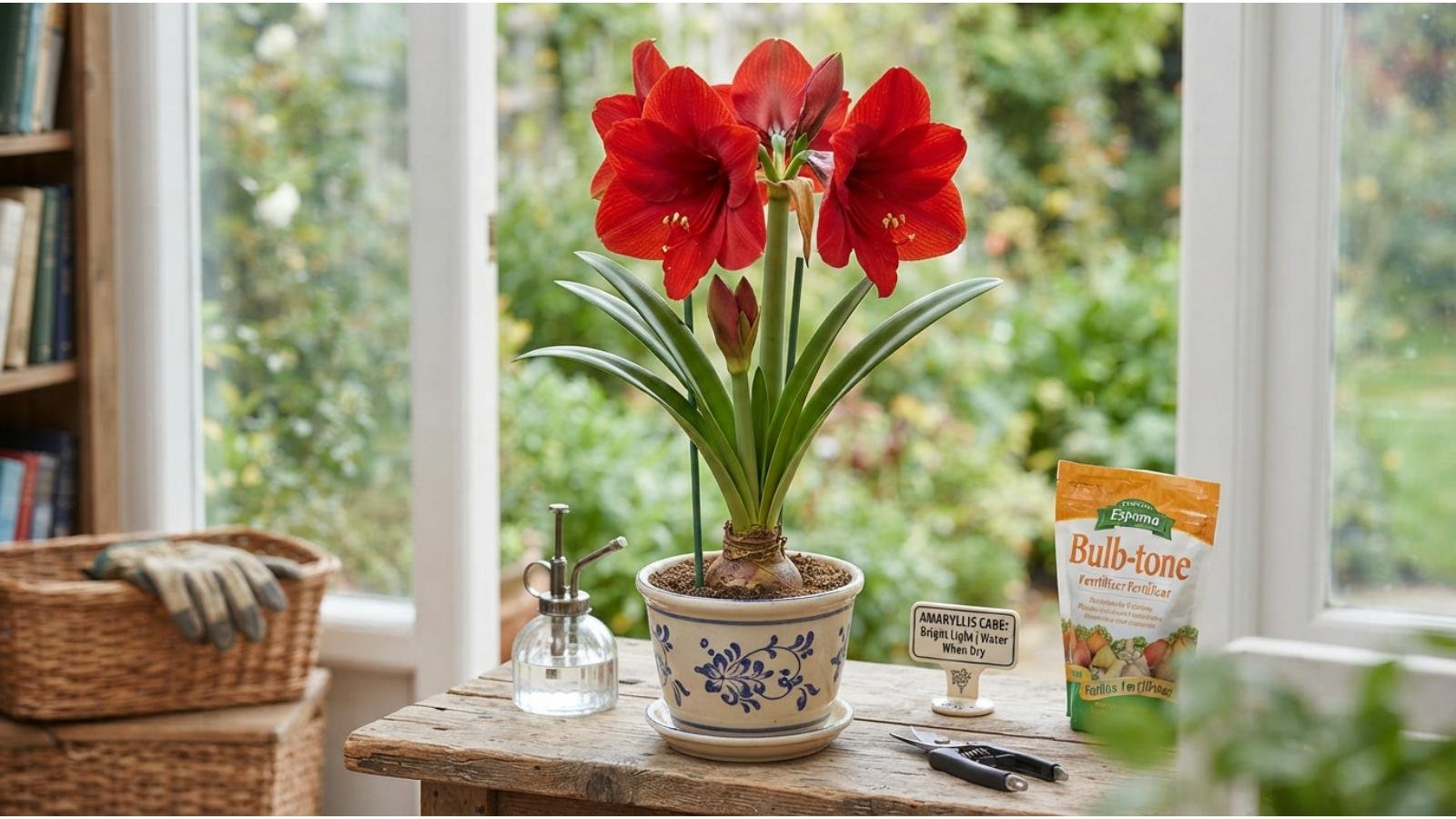
Amaryllis plant care becomes much easier once you understand that the bulb stores the energy needed for its spectacular flowers. The biggest problems usually come from treating the bulb like an ordinary foliage houseplant, especially by keeping the soil constantly wet or cutting off healthy leaves too soon.
With the right combination of light, moisture, nutrition, and seasonal rest, a healthy amaryllis can flower repeatedly for years. This guide focuses primarily on the indoor Hippeastrum commonly sold as amaryllis, while also explaining the important botanical distinction between Hippeastrum and the true Amaryllis genus.
Quick Answer
Amaryllis plant care is mainly about bright light, well-draining soil, careful watering, regular feeding during active growth, and a proper rest period if you want the bulb to rebloom. Most indoor “amaryllis” sold today are actually Hippeastrum, which should be kept slightly dry at first, watered more consistently once growth begins, and allowed to rest for several weeks before restarting its growth cycle.
Amaryllis vs Hippeastrum
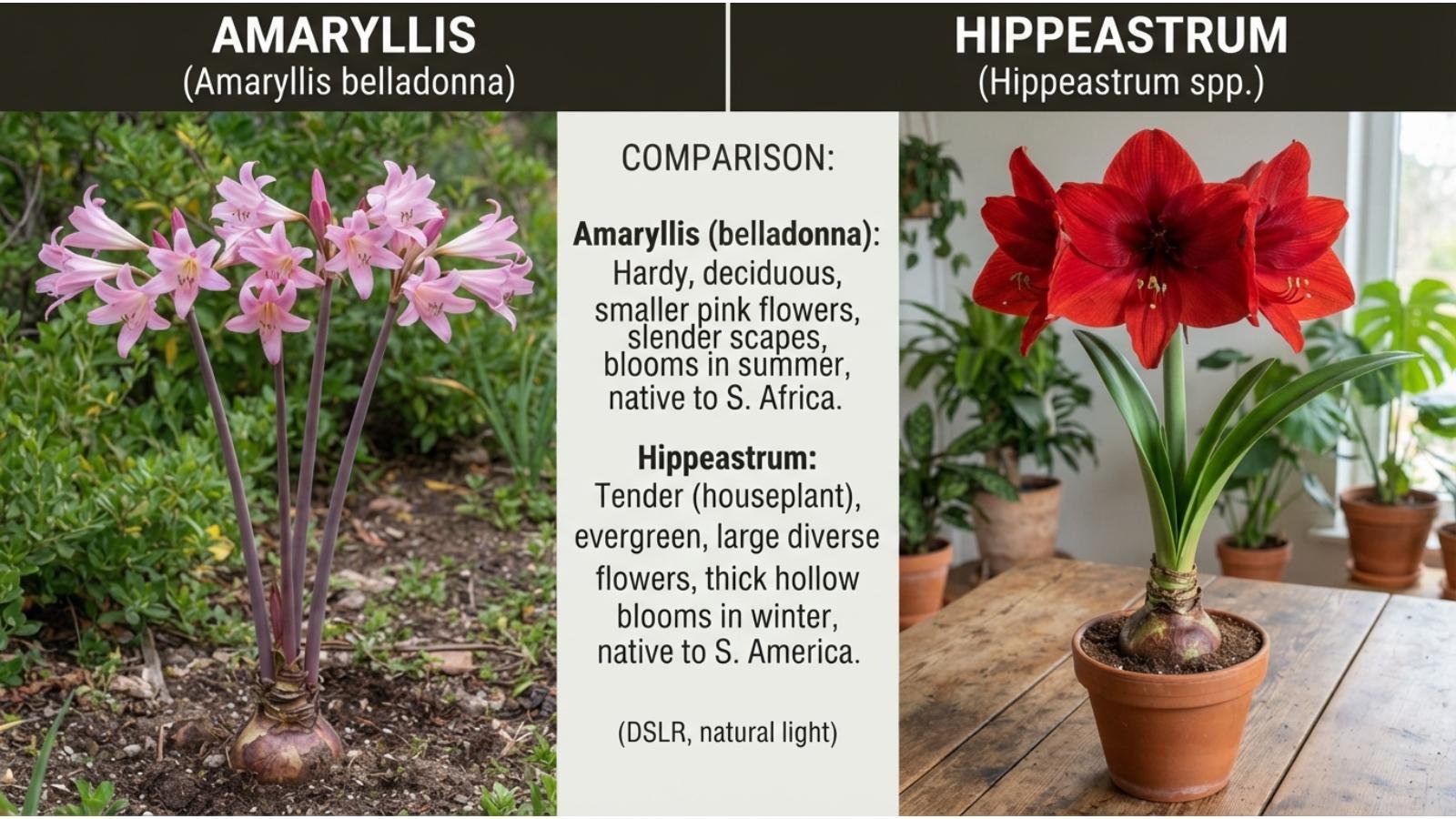
The name “amaryllis” causes considerable confusion.
The true genus Amaryllis is native to southern Africa and generally produces flowers in late summer to early autumn. The bulbs commonly sold as indoor Christmas or winter amaryllis are usually Hippeastrum, a different genus that typically flowers from winter into spring.
For indoor gardeners, this distinction matters because the care and seasonal cycle described on many plant labels actually apply to Hippeastrum.
If your plant was sold as a large bulb intended for an indoor pot and produces tall flower stalks followed by strap-shaped leaves, it is very likely a Hippeastrum.
Choosing a Healthy Amaryllis Bulb
Starting with a strong bulb makes successful amaryllis care much easier.
Look for a bulb that is:
- Firm when gently pressed.
- Heavy for its size.
- Free from soft, collapsing areas.
- Free from obvious mold or extensive damage.
- Large enough to support strong flowering.
Avoid bulbs that feel unusually soft or show signs of rot.
A larger, healthy bulb generally has greater stored energy for flowering, although cultivar and growing conditions also influence performance.
How to Plant Amaryllis
Hippeastrum does not need a huge container.
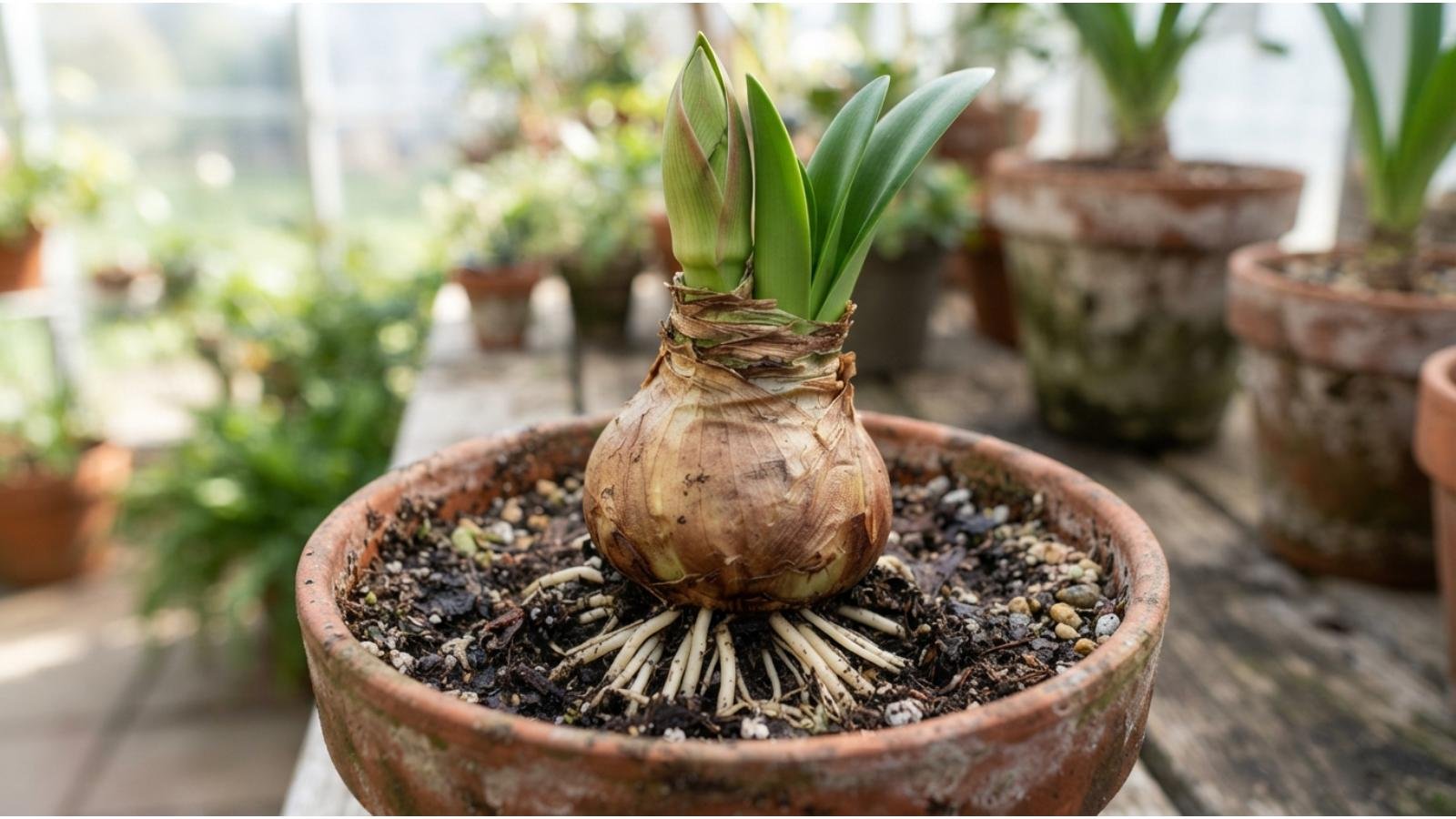
Choose a pot that is only slightly larger than the bulb and has a drainage hole. Use a loose, well-draining, peat-free potting mix. The bulb should not be buried completely. Approximately two-thirds of the bulb should remain above the soil surface.
Planting Steps
- Fill the container with well-draining potting mix.
- Position the bulb with its roots downward.
- Leave most of the bulb above the soil.
- Firm the mix gently around the roots.
- Water sparingly after planting.
- Place the pot somewhere bright and warm.
A common beginner mistake is burying the entire bulb because it looks unusual sitting above the soil. That can increase the risk of moisture-related problems around the bulb.


Best Light for Amaryllis
Bright light is essential for strong growth.
Place an indoor amaryllis near a bright window where it receives plenty of indirect or filtered light. Once the plant is actively growing, good light helps it develop stronger foliage and supports the bulb’s ability to replenish its stored energy.
Rotate the pot regularly. Otherwise, the flower stalk may lean toward the strongest light source.
If the plant receives very little light, you may notice:
- Weak or stretched growth.
- Flower stems leaning dramatically.
- Poor leaf development.
- Reduced flowering in a later cycle.
How Often to Water Amaryllis
Watering is one of the most important parts of amaryllis plant care.
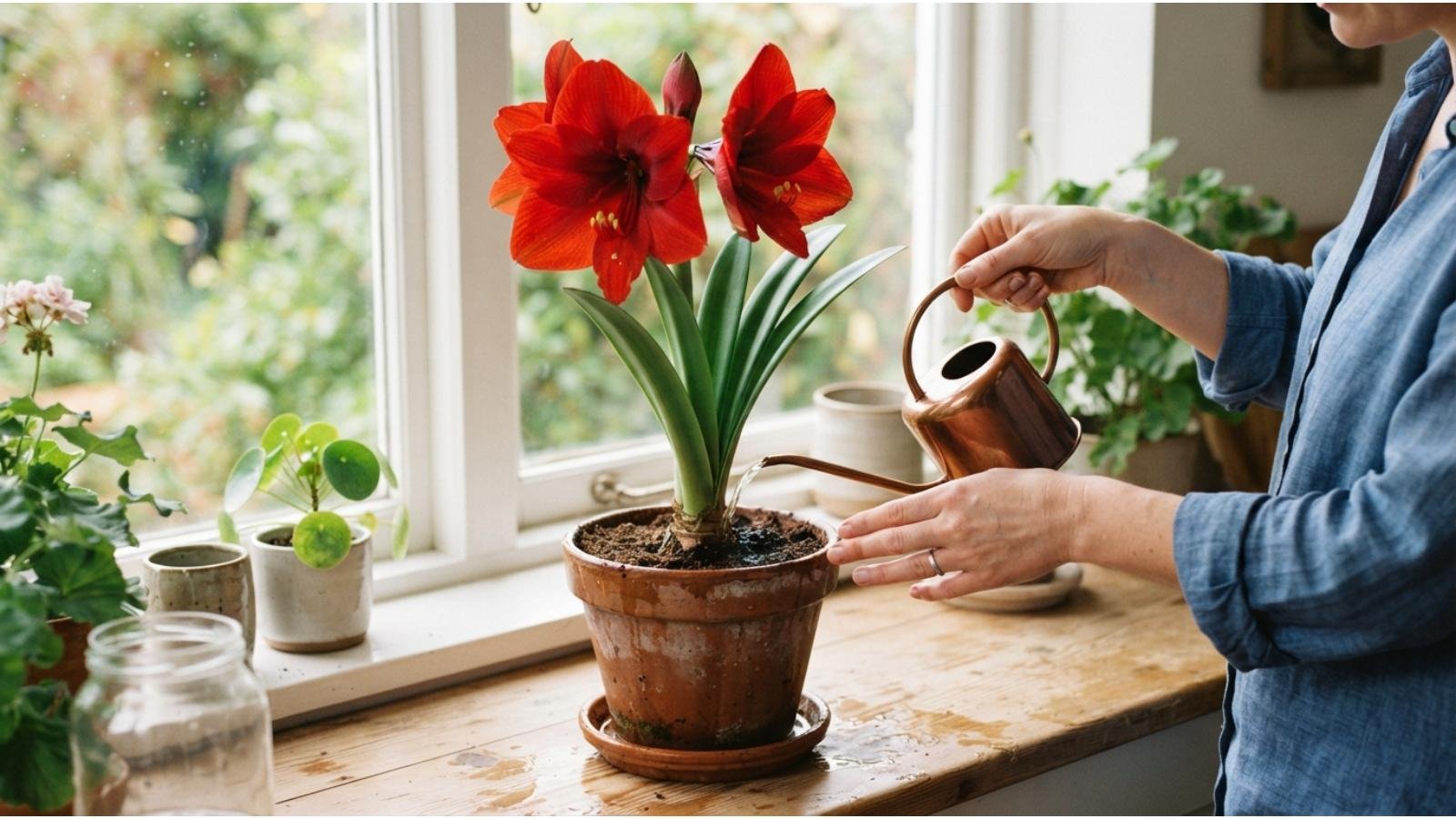
Immediately after planting, water sparingly until new growth appears. Once the plant begins actively growing, increase watering, but never leave the pot sitting in water.
A practical approach is to check the potting mix rather than following a rigid calendar.
Before watering:
- Feel the upper layer of the soil.
- Check whether excess water has drained from the container.
- Water thoroughly when appropriate.
- Empty standing water from the saucer.
The exact schedule depends on temperature, light, pot size, soil composition, and humidity.
Do not assume that more water means faster growth. A bulb sitting in constantly wet soil is much more vulnerable to rot.
Amaryllis Watering During Different Growth Stages
| Growth stage | Watering approach |
|---|---|
| Newly planted bulb | Water sparingly |
| New shoot emerging | Gradually increase watering |
| Active leaf growth | Water when the mix begins drying |
| Flowering | Keep moisture consistent without waterlogging |
| After flowering | Continue supporting leaf growth |
| Dormancy | Reduce or stop watering according to the chosen rest method |
The important principle is to adjust watering as the plant’s growth changes rather than treating every month identically.
Feeding Amaryllis for Better Blooms
Flowers are produced using energy stored in the bulb, so what happens after flowering is extremely important.
Once the plant has finished flowering, keep the leaves growing. During active growth, provide a suitable balanced liquid fertilizer according to its label directions
The leaves are not simply decorative. They manufacture energy that is transferred back into the bulb.
This is why removing healthy green leaves immediately after flowering can weaken the plant’s ability to prepare for another flowering cycle.
What to Do After Amaryllis Flowers
Once flowers fade, remove the spent flower stalk near its base while keeping healthy leaves intact.
The goal is to prevent unnecessary energy going into seed production while allowing the foliage to continue photosynthesizing.
After flowering:
- Remove faded flowers and the spent stalk.
- Keep the leaves.
- Continue watering appropriately.
- Continue feeding during active growth.
- Give the plant plenty of light.
- Allow the bulb to rebuild its reserves.


How to Get Amaryllis to Rebloom
Getting a second flowering is where many growers become frustrated.
The bulb needs time to rebuild its energy reserves and, for many Hippeastrum, a deliberate resting period helps initiate the next flowering cycle.
One established approach is to keep the plant growing after flowering, then gradually reduce watering and provide a cooler resting period.
After the rest:
- Bring the bulb back into a bright location.
- Resume watering cautiously.
- Allow new growth to develop.
- Return to normal active-growth care.
Do not treat dormancy as the death of the plant. The bulb is resting and conserving resources.
Why Your Amaryllis Is Not Flowering
A healthy-looking amaryllis that refuses to bloom can be especially frustrating.
Several factors can contribute to poor flowering:
- Insufficient light.
- Inadequate growth after the previous flowering period.
- Drying the bulb too early.
- Insufficient watering during active summer growth.
- An unsuccessful or poorly timed rest period.
- Bulb pests or disease.
- A bulb that has not yet reached sufficient maturity.
The important lesson is that next season’s flowers are often determined by the care you provide after this season’s flowers disappear.
Common Amaryllis Care Mistakes
Burying the Bulb Too Deeply
Indoor Hippeastrum should generally have much of the bulb exposed above the potting mix.
Keeping Soil Constantly Wet
Bulbs need oxygen around their roots. Poor drainage and excessive moisture can create conditions favorable to rot.
Cutting Leaves Too Early
Green leaves are actively producing energy. Removing them prematurely reduces the plant’s opportunity to replenish the bulb.
Putting It in a Dark Corner
A flowering stalk may tolerate a short period of lower light, but long-term growth requires adequate light.
Using an Oversized Pot
A huge container holds more unused wet soil around a relatively small root system. A modestly sized pot with drainage is usually more practical.
Forgetting the Rest Period
If your goal is reliable reblooming, seasonal rest is an important part of the traditional Hippeastrum cycle.
Amaryllis Leaves Turning Yellow
Yellow leaves are not automatically a sign of disease.
If flowering has finished and the plant is approaching its natural rest period, older foliage can gradually yellow as the bulb enters dormancy.
However, sudden yellowing combined with persistently wet soil, soft bulb tissue, or a foul smell deserves closer inspection.
The timing matters.
Yellowing during natural dormancy can be normal, while unexplained yellowing during vigorous growth may indicate a growing problem.
Amaryllis Leaves Are Long and Floppy
Long, weak foliage can result from insufficient light.
Move the plant to a brighter position and rotate the pot regularly.
Avoid making dramatic environmental changes all at once. If the plant has been kept indoors in relatively gentle conditions, gradually acclimate it before exposing it to intense outdoor sunlight.
Amaryllis Flower Stalk Is Falling Over
Large amaryllis flowers can make the stalk top-heavy.
First, make sure the plant is receiving sufficient light and rotate the pot regularly.
For cultivars carrying especially large flowers, staking may be useful.
A heavy or wide container can also reduce the likelihood of the entire plant tipping over.
Amaryllis Bulb Rot
Bulb rot is one of the problems worth preventing rather than trying to correct after severe damage occurs.
Warning signs can include:
- Soft areas on the bulb.
- Persistent foul odor.
- Rapid deterioration.
- Dark or collapsing tissue.
- Soil that stays excessively wet.
The first preventative measure is proper drainage and controlled watering.
True Amaryllis species also dislike cold, wet soil, while Hippeastrum should similarly be protected from prolonged excessive moisture.
When to Repot Amaryllis
Hippeastrum does not need constant repotting.
Repot when:
- The growing medium has deteriorated.
- Roots have substantially filled the container.
- The bulb needs fresh growing medium.
- Offsets need separating.
Avoid automatically moving the bulb into a dramatically larger pot.
How to Propagate Amaryllis
There are two practical propagation methods.
Bulb Offsets
Offsets developing beside the main bulb can eventually be separated when they have their own roots.
This is generally the more predictable option for maintaining the characteristics of the parent plant.
Seeds
Growing from seed is slower.
Seed-grown Hippeastrum can take several years to reach flowering size, and seedlings may not produce flowers identical to the parent plant.
For most home gardeners who simply want more of the same plant, offsets are usually the more practical route.
Amaryllis Care Throughout the Year
The easiest way to understand amaryllis care is as a cycle rather than a single routine.
| Stage | Main priority |
|---|---|
| Planting | Drainage, correct depth, gentle watering |
| Emergence | Bright light and cautious moisture |
| Flowering | Bright conditions and careful watering |
| Post-flowering | Preserve leaves and rebuild bulb energy |
| Active growth | Light, water, and regular feeding |
| Rest period | Cooler conditions and reduced or withheld water |
| Restart | Bright light and gradual return to watering |
This seasonal approach is more useful than memorizing a single watering schedule because the plant’s needs change considerably throughout its growth cycle.


Indoor Amaryllis Care Tips for Beginners
If this is your first amaryllis, keep the routine simple.
- Use a pot with drainage.
- Keep most of the bulb above the soil.
- Provide bright light.
- Water cautiously at first.
- Increase watering once active growth begins.
- Never leave the pot standing in water.
- Keep healthy leaves after flowering.
- Feed during active growth.
- Give the bulb an appropriate rest period if you want reblooming.
- Inspect the bulb occasionally for signs of rot or pests.
The biggest improvement most beginners can make is learning to respond to the plant rather than watering automatically on a fixed schedule.
Is Amaryllis Toxic to Pets
Amaryllis and Hippeastrum should be treated cautiously around pets.
Keep bulbs, leaves, and plant material away from pets that chew plants. If a pet has eaten part of the plant, contact a veterinarian or appropriate animal poison service for guidance.
Frequently Asked Questions
How often should I water an amaryllis?
Watering frequency depends on the plant’s growth stage and growing conditions. Water sparingly while the bulb is beginning growth, then provide more consistent moisture once active growth begins while avoiding waterlogged soil.
Does amaryllis need full sun?
Indoor Hippeastrum performs best in bright light. Outdoor true Amaryllis species generally prefer full sun in a sheltered, free-draining location.
Should I cut off amaryllis leaves after flowering?
No. Keep healthy green leaves after flowering because they help replenish the bulb. Remove them only as they naturally yellow during the transition toward dormancy.
How long does amaryllis take to bloom?
Hippeastrum bulbs can flower roughly six to eight weeks after planting when grown under suitable conditions, although actual timing varies by bulb and growing environment.
Why is my amaryllis growing leaves but no flowers?
Possible causes include insufficient light, inadequate watering or growth during the previous season, drying the bulb too early, or problems with its dormancy cycle.
Can amaryllis bloom more than once?
Yes. With appropriate post-flowering care and a suitable rest period, Hippeastrum can be encouraged to flower again in a future cycle.
Should I keep amaryllis in the dark during dormancy?
A cool, dark resting location can be used under one established Hippeastrum care method. Another method keeps the plant in a cooler, well-lit location while watering and feeding are reduced.
Can I grow amaryllis outside?
It depends on the plant. True Amaryllis can be grown outdoors in suitable climates with well-drained soil and shelter, while the commonly sold indoor Hippeastrum is tender and is generally grown in containers indoors or protected environments.
Conclusion
Successful amaryllis plant care is less about complicated techniques and more about understanding the bulb’s natural growth cycle. Give it bright light, excellent drainage, controlled watering, adequate nutrition during active growth, and enough time to rest before asking it to flower again.
The most important habit is to care for the plant after flowering, not just while the flowers look spectacular. Keeping healthy foliage growing allows the bulb to rebuild its reserves, giving you a much better chance of enjoying another impressive display in the future.
Image opportunities for publication: A bulb planted at the correct depth, a watering-stage diagram, healthy versus rotting bulbs, post-flowering foliage, the annual Hippeastrum growth cycle, and a reblooming timeline would all add useful visual information rather than serving as decoration.