Coral bells plant care is surprisingly simple once you understand the plant’s biggest needs: the right light, good drainage, and careful watering. These compact perennials are prized not only for their delicate bell-shaped flowers but also for colorful foliage ranging from lime green and silver to burgundy, bronze, purple, and peach.
The most common problems are usually caused by conditions rather than complicated maintenance. A plant placed in harsh afternoon sun may develop scorched leaves, while one planted too deeply or kept in soggy soil can suffer crown or root problems. The goal is to keep the roots reasonably moist while allowing excess water to drain away.
Quick Answer
Coral bells, or Heuchera, grow best in fertile, well-draining soil with consistent moisture and light to partial shade. Most varieties perform especially well in dappled shade, while darker-leaved cultivars can tolerate more sun. Keep the crown at or slightly above soil level, avoid waterlogged conditions, water newly planted plants regularly, and divide mature plants every three to four years when they become crowded or woody.
What Are Coral Bells
Coral bells are perennial plants in the genus Heuchera and family Saxifragaceae. They form compact mounds of rounded, often scalloped foliage and produce slender flower stems carrying small tubular flowers during the warmer months. Depending on the cultivar, the leaves can be green, purple, bronze, pink, silver, apricot, or lime.
They are particularly useful in borders, woodland-style gardens, containers, garden edges, and as underplanting around larger shrubs and trees. Their foliage can provide interest for much of the year, while their flowers can attract pollinating insects such as bees.
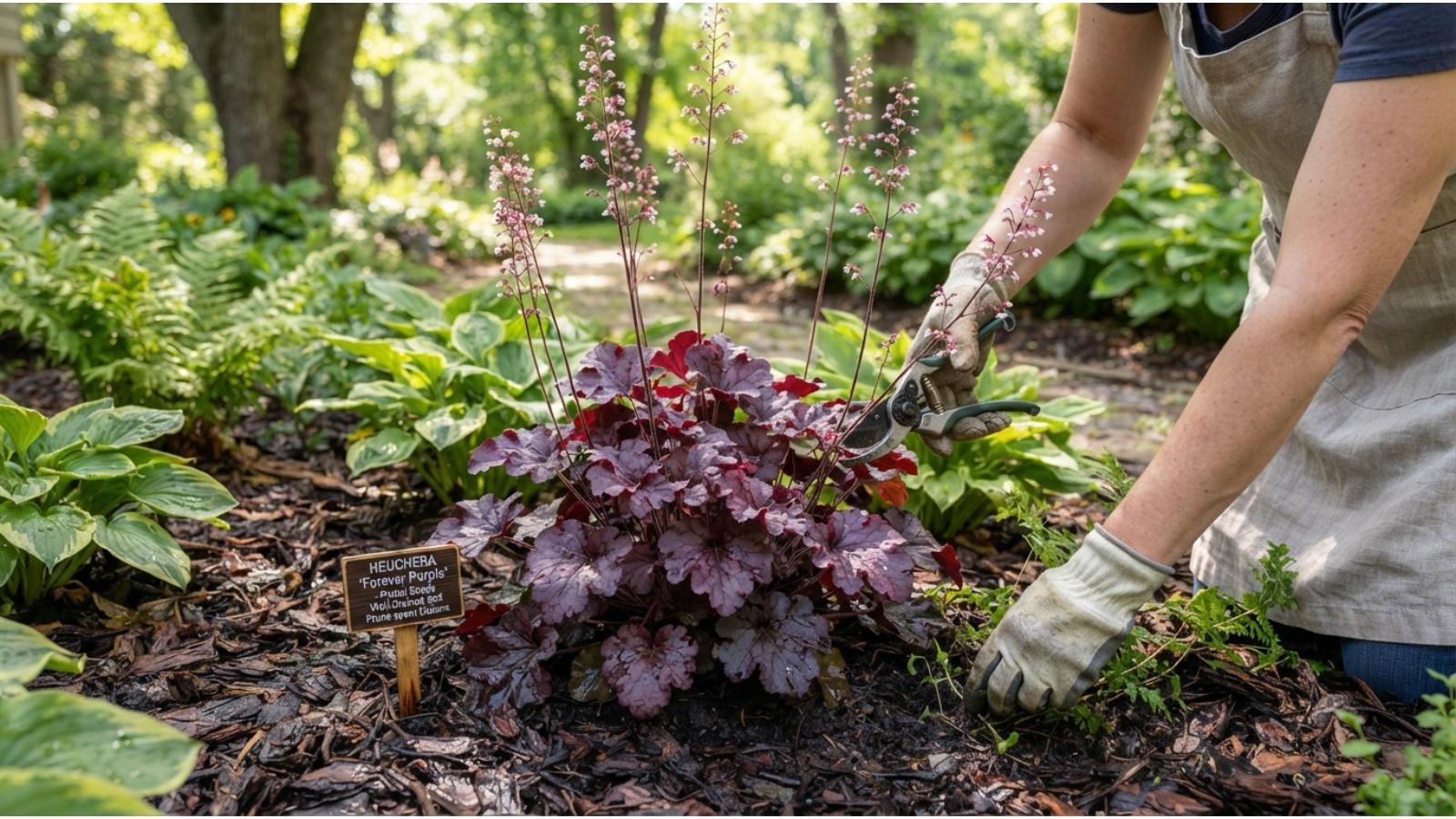
Image Suggestion: Close-up photograph showing the colorful foliage and delicate flower stems of a healthy coral bells plant.
Best Light for Coral Bells
Light requirements depend partly on the cultivar and leaf color.
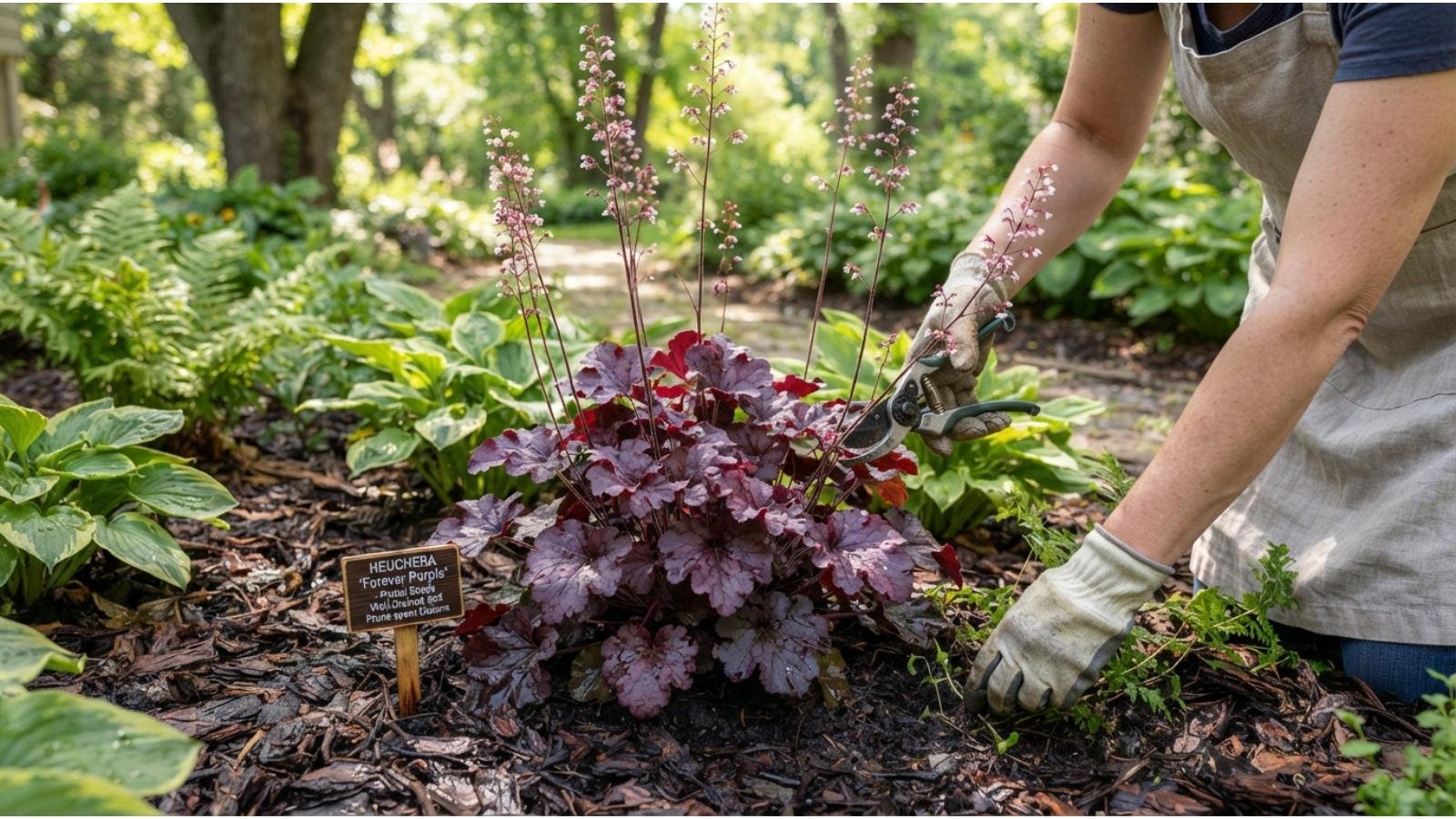
Most coral bells perform best in partial or dappled shade. This is particularly important for varieties with pale, golden, or highly colorful foliage because intense summer sunlight can bleach, scorch, or crinkle their leaves. Darker-leaved varieties can generally tolerate more sunlight and may develop stronger coloration with adequate light.
A practical approach is to provide morning sun followed by afternoon shade in warmer climates. In cooler climates, some cultivars can handle considerably more sun if the soil remains adequately moist.
Watch the foliage rather than following a rigid sunlight schedule. Brown crispy patches and faded leaves can indicate excessive exposure, especially during hot weather.
How to Water Coral Bells
Coral bells appreciate moisture but dislike constantly saturated soil. Newly planted plants need regular watering during their first growing season so their roots can establish properly. Once established, many plants need supplemental water mainly during prolonged dry periods.
A useful watering routine is:
- Check the soil before watering instead of following an automatic daily schedule.
- Water deeply enough to moisten the root zone.
- Allow excess water to drain away.
- Reduce watering when cool or rainy conditions keep the soil naturally moist.
- Pay closer attention to container-grown plants because containers dry out faster.
- Avoid repeatedly soaking the foliage when watering.
One of the easiest mistakes to make is assuming wilted foliage always means the plant needs more water. If the soil is already wet, adding more water can make the underlying problem worse.
Image Suggestion: Side-by-side diagram showing properly moist soil compared with waterlogged soil around a coral bells root system.
Choosing the Right Soil
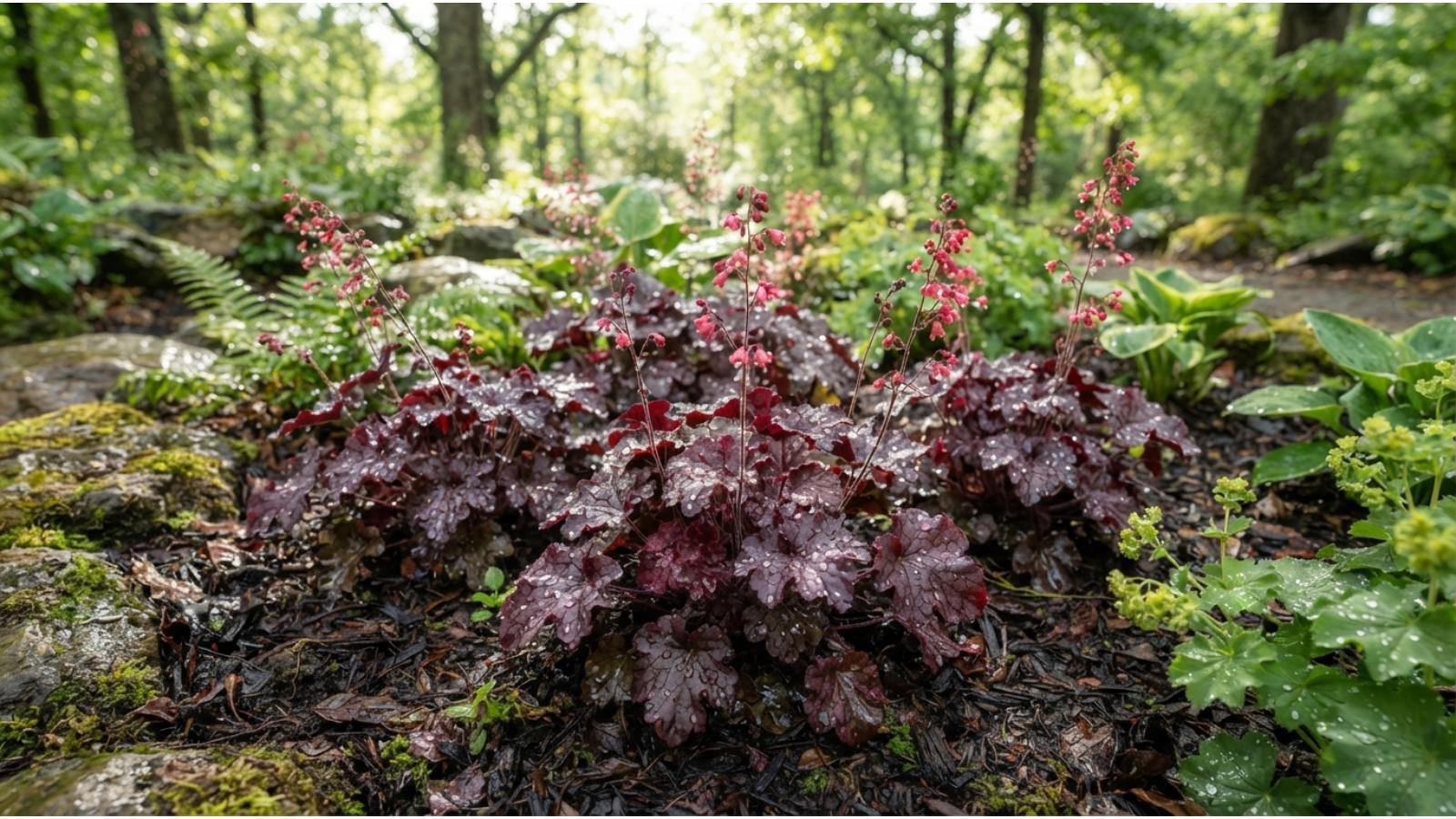
Good drainage is one of the most important parts of successful coral bells plant care. Coral bells prefer fertile soil that retains some moisture while still allowing excess water to escape. Heavy, poorly drained soil can make root establishment difficult and increase the risk of rot.
If your garden soil is heavy clay, improve its structure with suitable organic matter before planting. Avoid creating a small pocket of rich soil surrounded by dense clay because water can become trapped around the roots.
For containers, use a quality potting mix that drains freely and always choose a container with drainage holes.
How to Plant Coral Bells Correctly
Planting depth matters more than many beginners realize. Coral bells can develop problems when their crown is buried beneath the soil.
Follow these steps:
- Select a site with suitable light and well-drained soil.
- Dig a hole slightly wider than the plant’s root ball.
- Place the plant at approximately the same level at which it was growing in its nursery container.
- Keep the crown at soil level or slightly above it.
- Backfill gently without compacting the soil excessively.
- Water thoroughly after planting.
- Apply a thin layer of mulch around the plant while keeping mulch away from the crown.
Spring and autumn are generally favorable planting periods because soil conditions are usually more suitable for establishment. Summer planting is possible, but newly planted coral bells require more careful watering during hot, dry weather.
Fertilizing Coral Bells
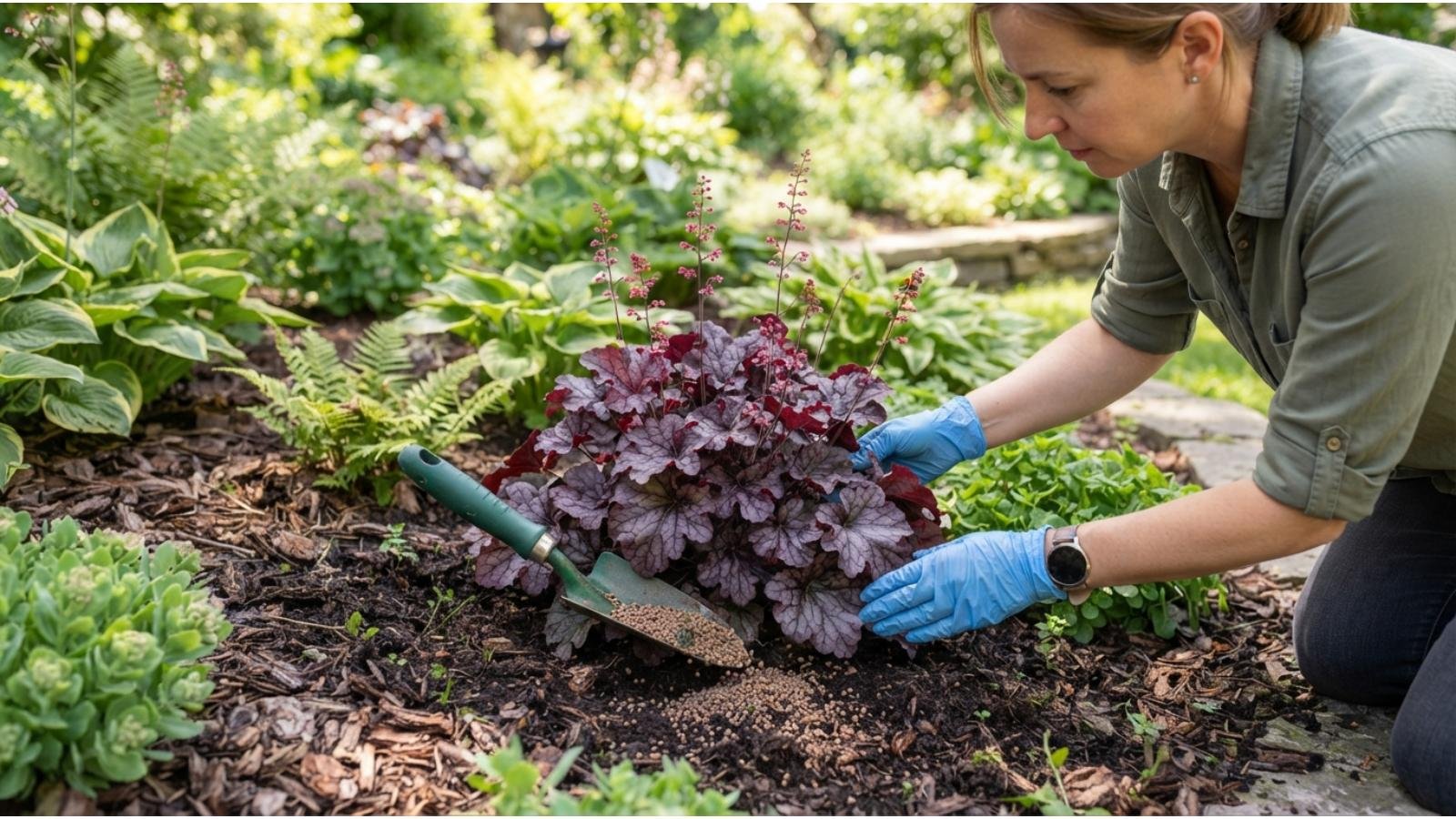
Coral bells growing in garden beds generally do not require heavy feeding. If growth appears weak, a general-purpose fertilizer can be applied in spring according to the product’s instructions.
Container-grown plants have different needs because nutrients in potting mix become depleted over time. Regular feeding during active spring and summer growth can therefore be more useful for plants kept permanently in containers.
Avoid the temptation to use excessive fertilizer simply because you want faster growth. Coral bells are valued for compact foliage, and excessive feeding is not a substitute for correcting poor light, drainage, or watering.
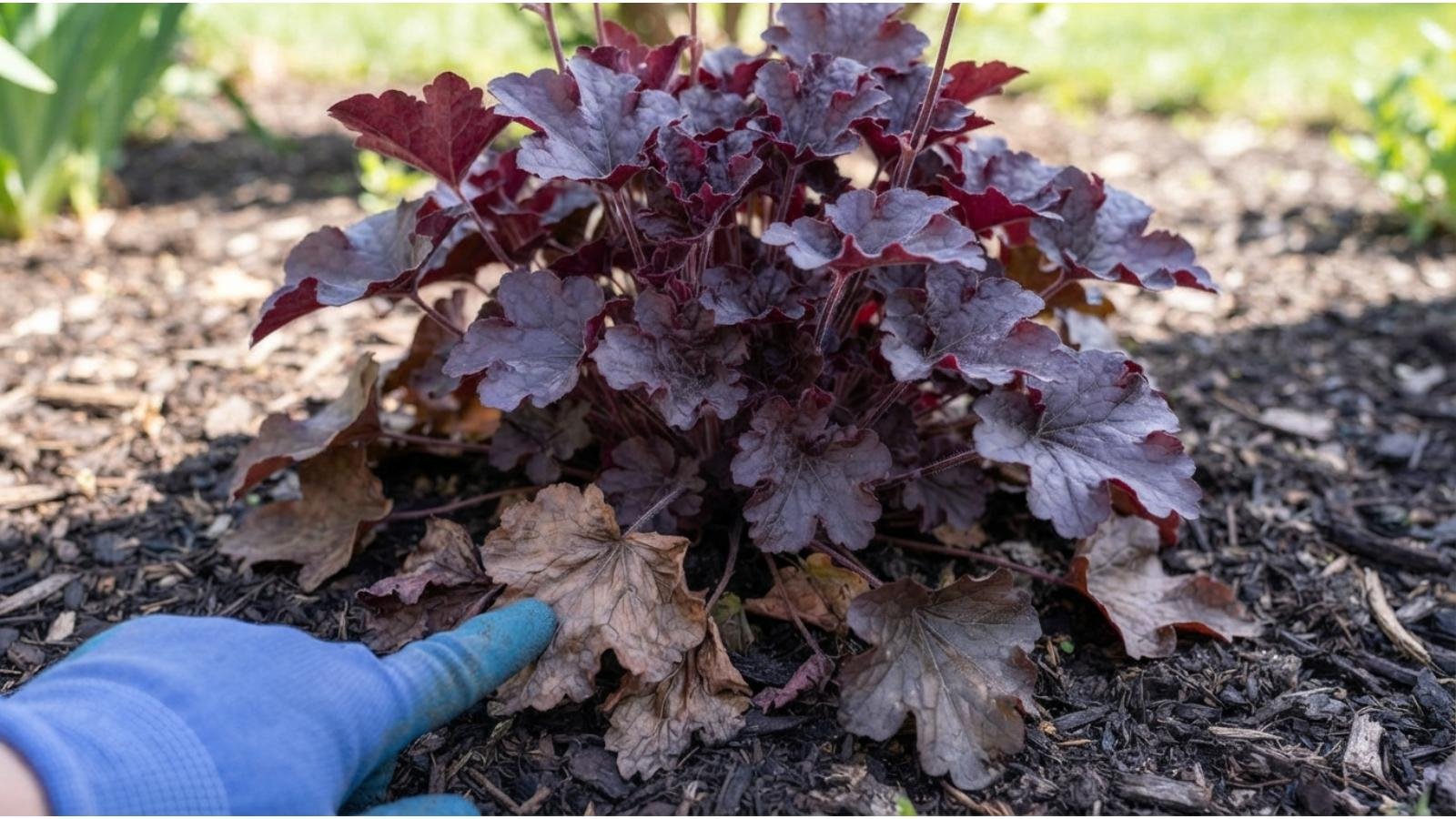
How to Prune Coral Bells
Coral bells generally need very little pruning.
Remove:
- Faded flower stems.
- Dead or badly damaged leaves.
- Diseased-looking foliage when appropriate.
- Old growth that has become unattractive.
Removing spent flower stems keeps the plant looking tidy and redirects attention toward its attractive foliage.
Do not aggressively cut healthy foliage simply to make the plant look smaller. The leaves are the main ornamental feature of many modern cultivars.
Coral Bells Care in Containers
Coral bells are excellent container plants because they naturally form relatively compact mounds. Their colorful foliage can make a shaded patio, balcony, entrance, or mixed container much more interesting.
Container care requires more attention to moisture because pots have limited soil volume.
Use a pot with drainage holes and a free-draining potting mix. Check moisture more frequently during warm weather, but never allow the container to remain permanently waterlogged.
A common mistake is placing a container inside a decorative cachepot where drainage water accumulates beneath the nursery pot. Empty standing water after watering so the roots are not continuously exposed to saturated conditions.
Image Suggestion: Attractive container arrangement featuring coral bells with companion shade-loving plants.
How to Keep Coral Bells Healthy Through Winter
Many coral bells are evergreen or semi-evergreen depending on the cultivar and climate. Their foliage can therefore remain attractive well beyond the traditional growing season.
Cold weather can also cause plants to lift slightly from the ground as soil freezes and thaws. Check the crown after winter and gently replant if the root system has become exposed. Annual mulching can help retain moisture and reduce problems associated with exposed roots.
Container-grown coral bells need particular attention during winter because excessive moisture can become a problem when evaporation slows. In climates with persistent winter rain, moving containers to a sheltered location can help prevent soggy potting mix.
When and How to Divide Coral Bells
Older coral bells can become woody, stretched, or less vigorous. Division is a useful way to rejuvenate established plants.
The RHS recommends dividing heucheras approximately every three to four years when needed to maintain vigor.
A simple division process is:
- Dig around the mature clump.
- Lift it carefully from the soil.
- Separate healthy sections with roots attached.
- Remove damaged or excessively woody material.
- Replant the divisions at the correct depth.
- Water thoroughly after planting.
Division is particularly useful when the center of the plant begins to look bare or the plant produces fewer leaves and flowers.
Common Coral Bells Problems
Coral bells are generally considered relatively trouble-free, but several problems can occur. Recognizing the symptoms early makes treatment much easier.
Brown or Scorched Leaves
Leaf scorch is often associated with excessive sun, particularly in golden or pale-leaved cultivars. Moving the plant to a more protected location may prevent further damage.
Yellowing Leaves
Yellow leaves can have several causes, including excessive moisture, poor drainage, aging foliage, or environmental stress. Check the soil before increasing watering.
If the soil stays wet for long periods, improve drainage rather than simply changing your watering schedule.
Crown Rot
A buried crown or persistently wet soil can create serious problems. Keep the crown at soil level or slightly above it and avoid planting coral bells in areas where water routinely collects.
Plant Lifting Out of the Soil
Coral bells have shallow roots and can gradually become exposed, especially after winter weather. Check the plant each spring and reset it so the crown sits correctly at the soil surface.
Pests
Potential problems include vine weevils and certain eelworms. Coral bells can also be affected by diseases such as heuchera rust and leafy gall.
Regularly inspecting the foliage and crown gives you a better chance of spotting problems before they become severe.
Coral Bells Seasonal Care
Spring
Spring is an excellent time to inspect coral bells after winter.
Check for exposed roots, remove damaged foliage, refresh mulch, and assess whether older plants need division. This is also an appropriate time for optional fertilization.
Summer
Summer care is mainly about managing heat, sunlight, and moisture.
Watch pale-leaved cultivars carefully during periods of intense sun. Newly planted plants may need frequent watering, while established specimens generally cope better once their root systems are developed.
Autumn
Autumn is useful for planting and dividing coral bells in suitable climates. Keep the soil reasonably moist while new divisions establish, but avoid creating soggy conditions.
Winter
Avoid excessive winter moisture, particularly in containers. Check for plants that have been lifted by freezing and thawing, and correct their planting depth when conditions permit.
Best Coral Bells for Different Garden Conditions
There are hundreds of heuchera cultivars, so choosing a plant based only on flower color can be a mistake. Leaf color and sunlight tolerance are often more important for long-term performance.
Consider:
| Garden condition | Better choice |
|---|---|
| Dappled shade | Most coral bells |
| Morning sun | Many cultivars |
| Hot afternoon sun | More sun-tolerant, darker-leaved cultivars |
| Small container | Compact mound-forming varieties |
| Color-focused garden | Burgundy, purple, bronze, lime, silver, or peach foliage |
| Pollinator garden | Flowering heuchera varieties |
Specific cultivar performance varies, so check the plant label for its recommended light exposure rather than assuming every heuchera behaves identically.
Coral Bells Care Mistakes to Avoid
The biggest problems are often surprisingly simple.
- Burying the crown too deeply.
- Planting in permanently wet soil.
- Giving pale-leaved varieties too much intense sunlight.
- Watering on a fixed schedule without checking the soil.
- Ignoring drainage problems in containers.
- Overfertilizing healthy plants.
- Allowing older plants to become severely woody and overcrowded.
- Forgetting to check whether winter weather has lifted the plant from the soil.
Correcting these basics usually produces a greater improvement than adding complicated treatments.
Frequently Asked Questions
Do coral bells prefer sun or shade?
Most coral bells prefer partial or dappled shade. Some darker-leaved varieties tolerate more sunlight, while pale or golden cultivars can be more vulnerable to leaf scorch in intense sun.
How often should I water coral bells?
Water newly planted coral bells regularly while they establish. Established plants generally need additional water during prolonged dry periods, while container plants may require more frequent attention because their soil dries faster.
Can coral bells grow in full sun?
Some cultivars can grow successfully in full sun, particularly where temperatures are moderate and soil moisture is maintained. However, many coral bells perform better with some afternoon protection, especially in hot conditions.
Why are my coral bells turning brown?
Brown or crispy foliage can result from excessive sunlight, heat, drought stress, or other environmental problems. Pale-leaved cultivars are particularly susceptible to leaf scorch in strong sun.
Can coral bells grow in pots?
Yes. Their compact growth habit makes them well suited to containers. Use a container with drainage holes and a well-draining potting mix, and monitor moisture more closely than you would for plants growing in the ground.
Should I cut back coral bells?
Usually, only light maintenance is necessary. Remove dead or damaged leaves and faded flower stems. Avoid removing healthy foliage unnecessarily because the leaves are an important ornamental feature.
How do I make coral bells fuller?
Provide suitable light, consistent but not excessive moisture, and good drainage. Older plants that have become woody or sparse can benefit from division and replanting, which the RHS recommends approximately every three to four years when necessary.
Do coral bells come back every year?
Yes. Coral bells are perennial plants and can return year after year when grown in suitable conditions. Their foliage may remain evergreen or semi-evergreen depending on the cultivar and climate.
Conclusion
Successful coral bells plant care comes down to getting the fundamentals right rather than constantly treating problems. Give the plant appropriate light, fertile but well-drained soil, sensible watering, and enough room for the crown to remain above the soil surface.
The most important practical lesson is to treat each cultivar according to its characteristics. A dark-leaved coral bell may handle more sun than a pale-leaved variety, while a container specimen may require more frequent watering than one established in the ground. With those differences in mind, coral bells can provide colorful foliage, delicate flowers, and reliable garden interest for years.