Mandevilla is a tropical-looking flowering vine prized for glossy foliage and large trumpet-shaped flowers in shades such as pink, red, white, cream, and yellow. Outdoors, it can transform a patio, trellis, balcony, or garden wall into a colorful vertical display. The challenge is that this warm-loving plant does not tolerate cold like many common garden vines.
Successful mandevilla plant care outdoors comes down to matching the plant with the right climate and then maintaining a balance between sunlight, moisture, nutrition, and warmth. The biggest mistake is treating mandevilla like a cold-hardy perennial simply because it grows vigorously during summer.
Quick Answer
Mandevilla plant care outdoors is mainly about warm temperatures, strong light, consistently moist but well-drained soil, regular feeding, and sturdy support for climbing stems. In warm, frost-free climates, mandevilla can grow outdoors as a perennial. In cooler areas, grow it in a container and move it indoors before cold weather arrives. It performs best when protected from frost and extreme temperature drops.
Where Should You Grow Mandevilla Outdoors
Choose a location that provides plenty of sunlight, warmth, and protection from strong winds. Mandevilla generally flowers best with abundant light, while very hot conditions can make some plants benefit from afternoon protection.
A good outdoor location should have:
- Strong morning or daytime sunlight.
- Protection from harsh wind.
- Well-draining soil or potting mix.
- A trellis, fence, arch, or other sturdy support.
- Easy access to water.
- Protection from frost and sudden cold temperatures.
In particularly hot climates, afternoon shade can prevent excessive heat stress while still providing enough light for flowering. North Carolina Extension specifically notes that mandevilla appreciates afternoon shade in hot, humid conditions.
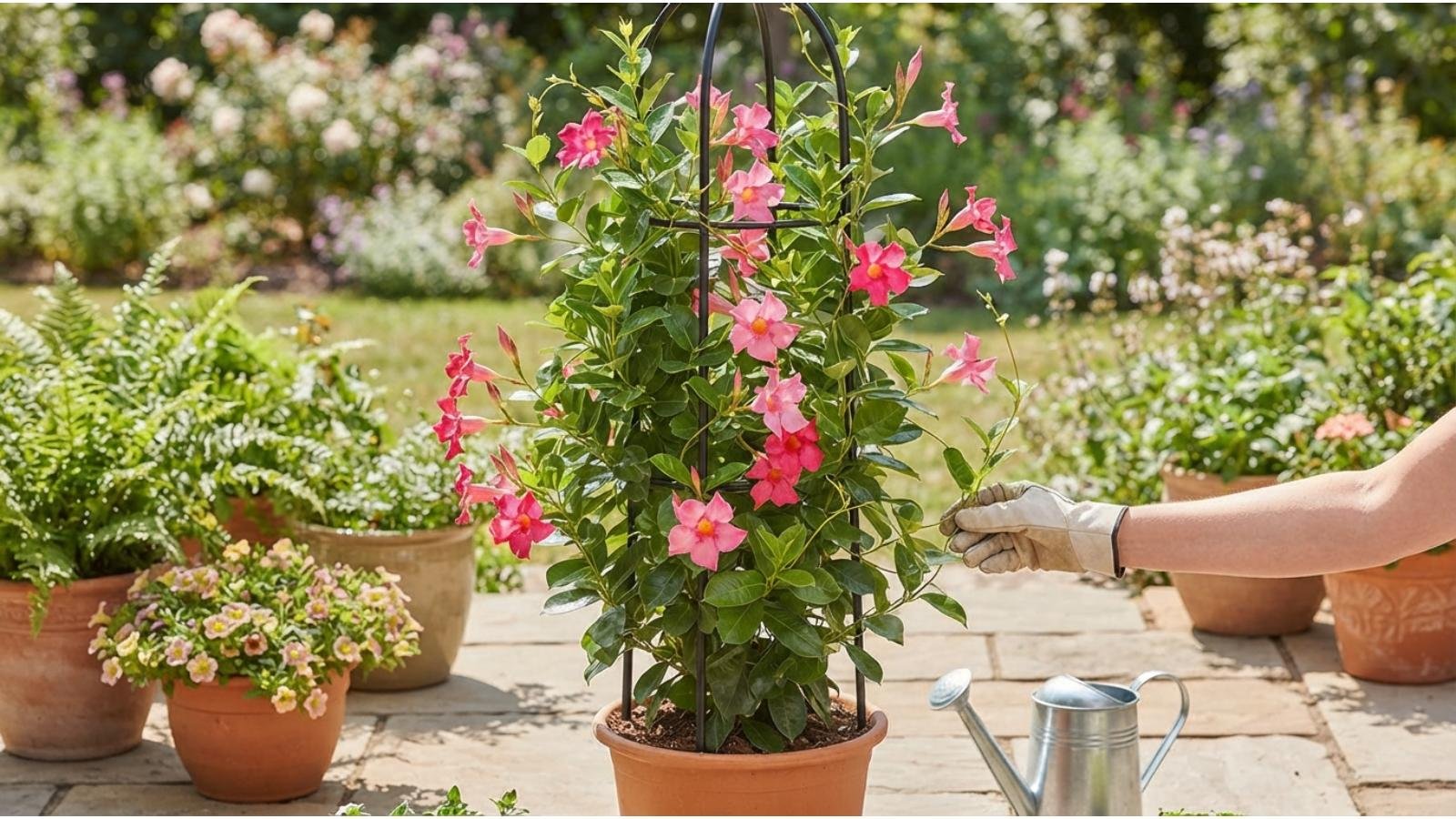
Image Suggestion: Show a healthy mandevilla growing against a sunny garden trellis with its stems trained upward.
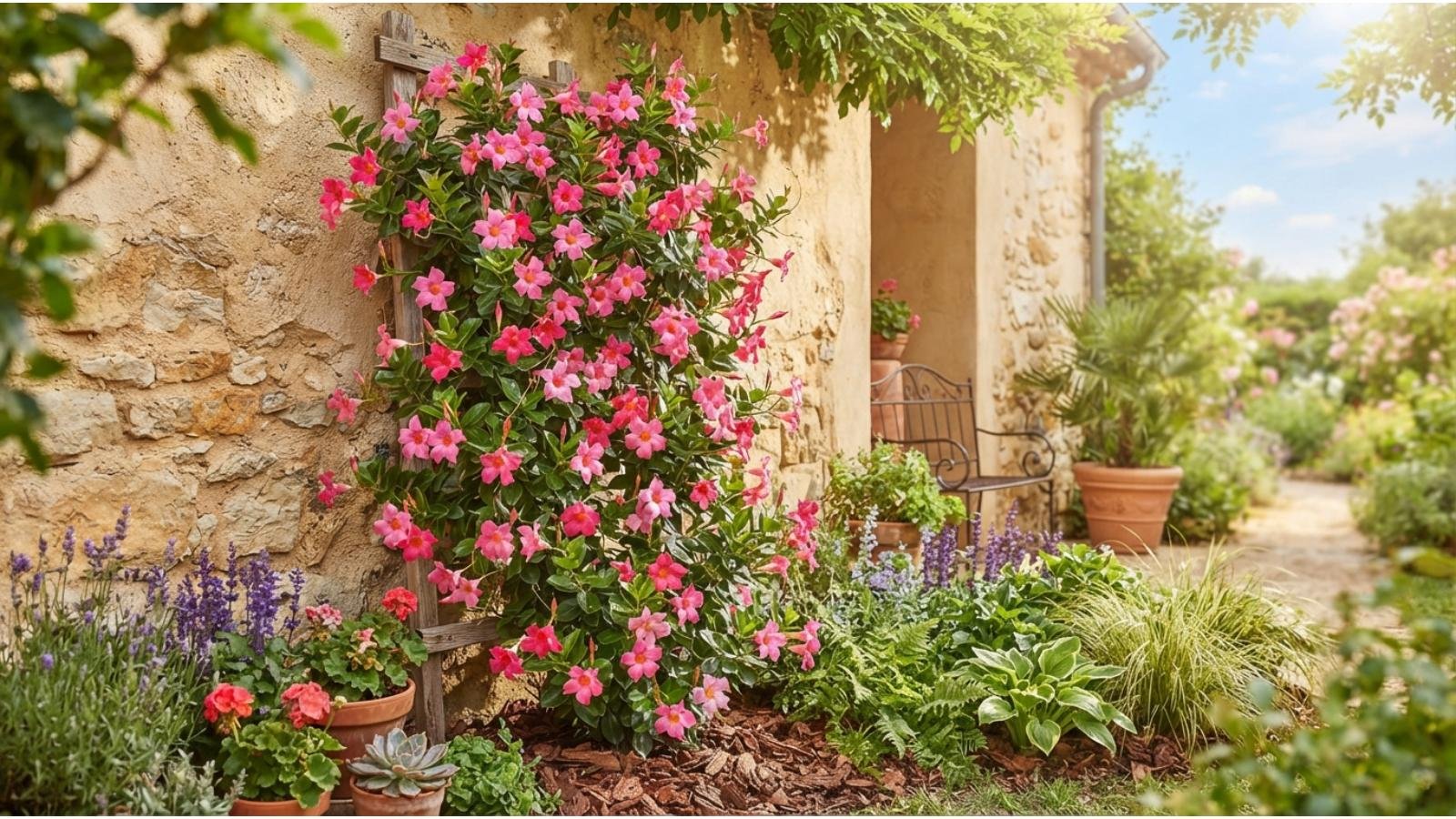
How Much Sun Does Mandevilla Need
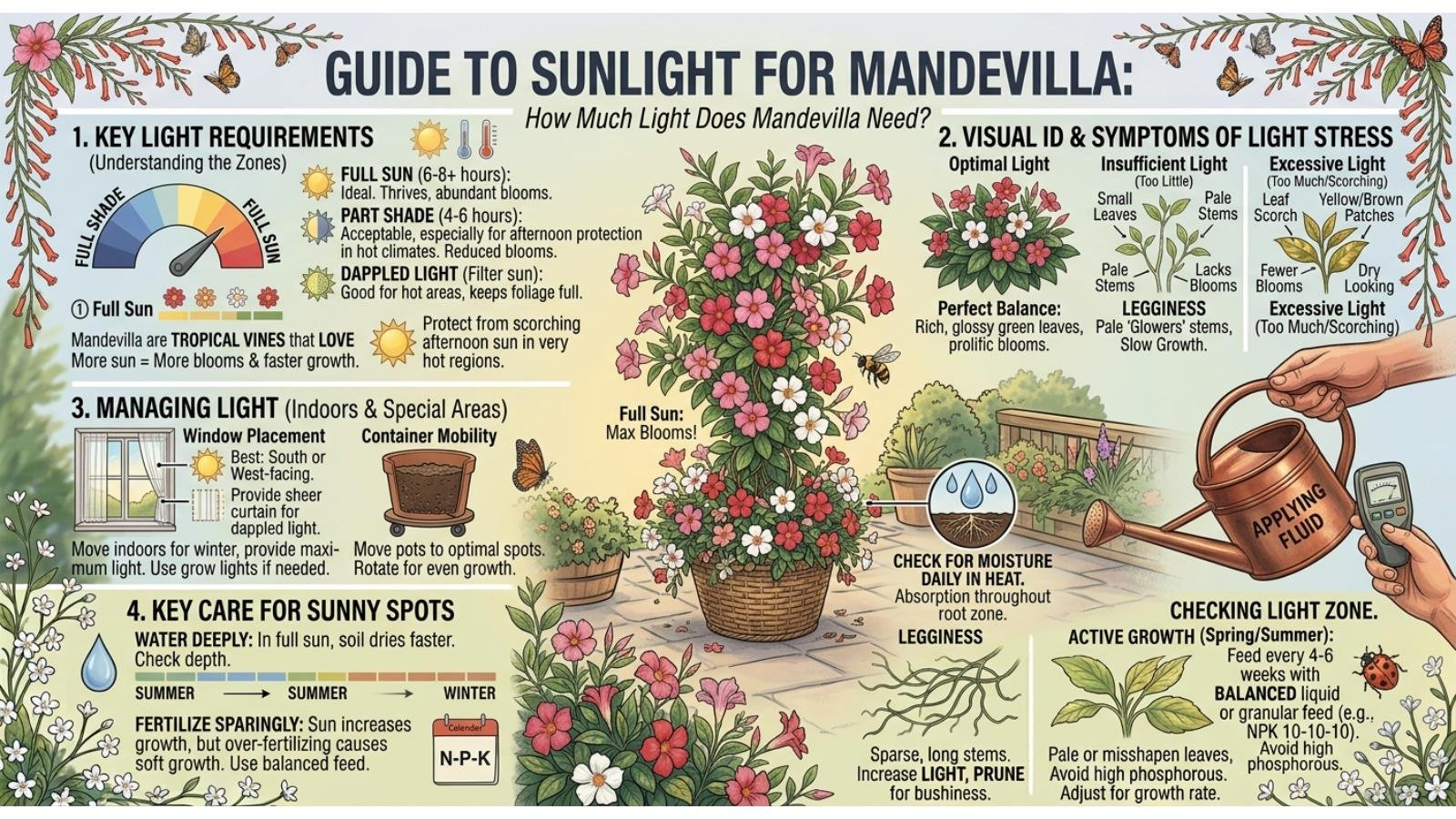
Mandevilla needs plenty of light to produce vigorous growth and abundant flowers. University of Florida Extension recommends full sun for strong flowering, while other growing guidance recommends bright light with protection from excessively hot sun.
For most outdoor gardens, aim for a bright position with several hours of direct sunlight.
If your plant receives too little light, you may notice:
- Long, weak stems.
- Fewer flowers.
- Smaller leaves.
- Growth leaning toward brighter areas.
- A generally sparse appearance.
On the other hand, intense reflected heat from concrete walls, paving, or glass can create a much hotter microclimate than the surrounding garden.
Practical tip: If your mandevilla receives strong morning sun but looks stressed during the hottest part of the afternoon, try providing light afternoon shade rather than moving it into deep shade.
What Soil Is Best for Mandevilla
Mandevilla prefers soil that retains some moisture but drains efficiently. Constantly saturated soil reduces the air available around the roots and can contribute to root problems.
For containers, use a quality, well-draining potting mix rather than heavy garden soil. The RHS recommends a loam-based compost with additional grit for drainage when growing mandevilla in containers.
For garden planting, improve heavy soil with organic matter and make sure excess water can drain away.
The goal is simple.
Moist roots are good. Permanently soggy roots are not.
This distinction is especially important after heavy rainfall. A plant may appear thirsty because its leaves are drooping, but adding more water to already saturated soil can make the underlying problem worse.
How to Water Mandevilla Outdoors
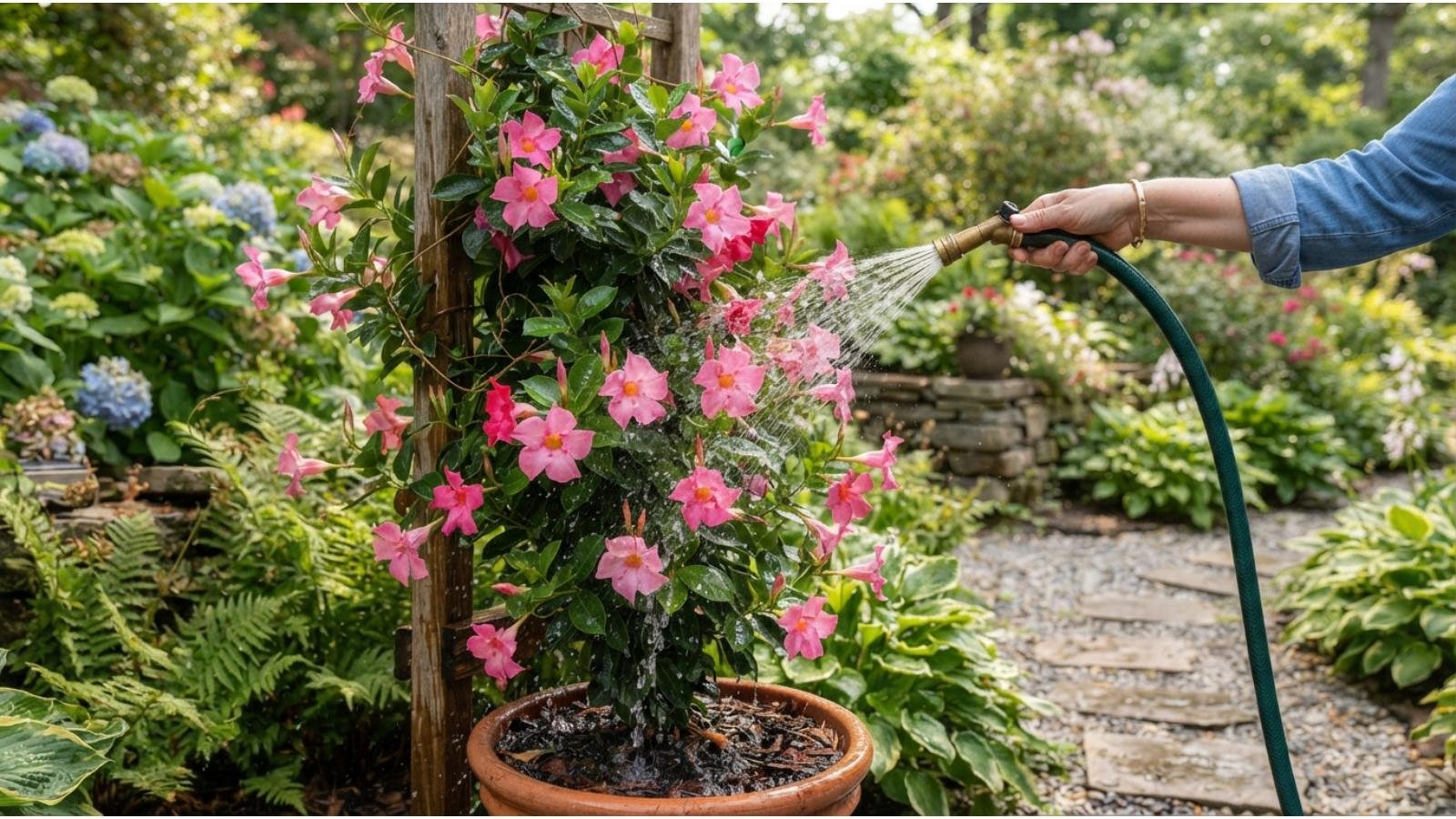
Mandevilla needs regular watering during active growth, especially in hot weather. Container-grown plants can dry out faster than plants growing in the ground.
Instead of following a rigid calendar, check the growing medium.
Water thoroughly when the soil or potting mix has begun to dry, allowing excess water to drain away.
During hot summer weather:
- Check containers frequently.
- Water deeply rather than giving tiny amounts repeatedly.
- Check plants more often during heat waves.
- Make sure drainage holes remain unobstructed.
- Water early in the morning or later in the day when temperatures are lower.
During cooler periods, reduce watering because the plant uses less moisture.
A Common Watering Mistake
One of the most common problems is confusing frequent watering with good watering.
Adding a small amount of water every day can leave the upper soil damp while the deeper root area remains poorly aerated. Instead, aim to thoroughly moisten the root zone and then allow appropriate drying between waterings.
How to Fertilize Mandevilla for More Flowers
Mandevilla is a vigorous grower and benefits from regular feeding during its active growing season.
Follow the fertilizer label rather than assuming more fertilizer means more flowers.
A practical feeding routine is:
- Begin feeding when active spring growth starts.
- Fertilize regularly during vigorous growth.
- Use a balanced fertilizer for general development.
- Consider a potassium-rich flowering fertilizer during the flowering season.
- Reduce or stop feeding when growth slows significantly.
Excess fertilizer can create lush foliage without solving problems caused by insufficient light, cold temperatures, or poor drainage.
How to Train Mandevilla on a Trellis
Mandevilla is a twining climber, so providing support is essential if you want an upright, attractive plant.
Install the support before the vine becomes difficult to manage.
Suitable supports include:
- Garden trellises.
- Arches.
- Pergolas.
- Strong garden fencing.
- Wall-mounted wires.
- Tall stakes or tripod supports.
Gently guide young stems toward the support and tie them loosely when necessary.
Avoid pulling stems tightly against a trellis. As the plant grows, restrictive ties can damage expanding stems.
Image Suggestion: Create a simple diagram showing young mandevilla stems being gently trained around a trellis.
When and How to Prune Mandevilla
Pruning helps control size, improve the plant’s shape, and encourage productive new growth.
A simple pruning approach is:
- Remove dead or damaged growth.
- Cut out weak or badly overcrowded stems.
- Shorten excessive side shoots.
- Retain a strong framework for new growth.
- Reattach healthy stems to their support as they develop.
You can also pinch the tips of new shoots to encourage bushier growth, a technique recommended by University of Florida Extension.
Important: Mandevilla produces milky sap that can irritate the skin. Wear gloves when pruning or handling damaged stems.
Mandevilla Care in Hot Weather
Hot weather can be excellent for mandevilla because warmth encourages vigorous growth and flowering. However, extreme heat creates additional demands on container plants.
During a heat wave:
- Check soil moisture more frequently.
- Protect containers from extreme reflected heat.
- Make sure the plant receives adequate water.
- Watch for wilting that persists after watering.
- Provide afternoon protection if the foliage is suffering from intense heat.
- Avoid placing the container directly against surfaces that become extremely hot.
A plant sitting on sun-baked concrete can experience considerably more heat around its roots than one planted in a garden bed.
How to Protect Mandevilla in Winter
Winter care is one of the most important parts of growing mandevilla outdoors.
Mandevilla is cold-sensitive. In areas where frost or freezing temperatures occur, a container-grown plant can be moved indoors before temperatures become dangerously low. North Carolina Extension recommends container growing in colder regions so the plant can be protected from frost.
If you live in a warm, frost-free climate, mandevilla may remain outdoors year-round. In colder climates, treat it as a seasonal outdoor plant or overwinter it in a protected location.
Container Versus Ground Planting
| Growing method | Main advantage | Main challenge |
|---|---|---|
| Container | Easy to move indoors | Dries out faster |
| Garden bed | More stable root environment | Difficult to protect from frost |
| Trellis container | Flexible and decorative | Requires sturdy support |
| Warm protected bed | Excellent summer display | Depends heavily on local climate |
Should Mandevilla Be Grown in a Pot Outdoors
Yes. Outdoor container growing is one of the most practical ways to grow mandevilla, particularly in regions with cold winters.
A container gives you control over:
- Soil drainage.
- Plant location.
- Winter protection.
- Support structure.
- Watering.
- Root environment.
Choose a container with drainage holes and increase pot size gradually when repotting.
Why Is My Outdoor Mandevilla Not Flowering
Lack of flowers is often related to environmental conditions rather than a simple fertilizer deficiency.
Check these factors first:
Insufficient Light
Mandevilla needs substantial light for good flowering. Move a poorly positioned plant to a brighter location.
Cold Temperatures
Cool spring conditions can delay flowering. The specifically identifies inadequate warmth as a common reason mandevilla fails to flower.
Excessive Nitrogen
Too much nitrogen can encourage leafy growth at the expense of the flowering display.
Incorrect Watering
Both severe dryness and persistently waterlogged conditions can interfere with healthy growth.
Heavy Pruning at the Wrong Time
Mandevilla flowers on new growth, but poorly timed or excessive pruning can reduce the growth available for flowering.
Why Are Mandevilla Leaves Turning Yellow
Yellow leaves can have several causes, so avoid immediately adding fertilizer.
Check the plant systematically.
If the soil is constantly wet: drainage or overwatering may be the problem.
If the soil is extremely dry: the plant may be experiencing water stress.
If yellowing appears with very slow growth: inspect the roots, light conditions, and nutrition.
If leaves show stippling or fine damage: inspect closely for pests such as spider mites.
The lists red spider mites, mealybugs, and whitefly among pests that can affect mandevilla.
Common Mandevilla Pests
Mandevilla generally does not suffer from a large number of serious pest problems, but several insects can occasionally become troublesome.
Look for:
- Mealybugs.
- Scale insects.
- Whiteflies.
- Spider mites.
Inspect the undersides of leaves and areas around new growth.
Catching an infestation early is much easier than trying to control a heavily infested plant. University of Florida Extension recommends insecticidal soap when pests such as scale or mealybugs become a problem.
Always follow the product label and test treatments appropriately before widespread application.
Image Suggestion: Close-up comparison of healthy mandevilla leaves and leaves affected by spider mites or mealybugs.
Mandevilla Seasonal Care Calendar
Spring
Move overwintered plants back outdoors gradually once temperatures are reliably warm.
- Begin increasing watering.
- Start feeding during active growth.
- Prune if needed.
- Install or repair the trellis.
- Acclimate plants gradually to outdoor light.
Summer
This is the main growth and flowering period.
- Provide strong light.
- Water consistently.
- Feed regularly.
- Train new stems.
- Monitor pests.
- Watch containers closely during heat waves.
Autumn
Begin preparing for colder weather.
- Reduce feeding as growth slows.
- Inspect carefully for pests before moving indoors.
- Prune where appropriate.
- Move container plants into protection before dangerous cold arrives.
Winter
Keep the plant protected from frost and excessive cold.
- Reduce watering.
- Avoid keeping the soil saturated.
- Provide appropriate light.
- Keep the plant in a suitable temperature range.
- Delay major outdoor growth expectations until warmer conditions return.
Common Mandevilla Care Mistakes
Planting It in Poorly Drained Soil
Mandevilla likes moisture but does not want permanently saturated roots.
Putting It in Deep Shade
Low light can result in weak growth and fewer flowers.
Ignoring Winter Temperatures
A thriving summer mandevilla can decline rapidly after exposure to frost or freezing conditions.
Using a Weak Support
The plant may eventually become much larger than its original nursery trellis suggests.
Overfertilizing
More fertilizer is not a substitute for sufficient sunlight, warmth, water management, and healthy roots.
Moving It Directly From Indoors to Harsh Sun
Gradually acclimating plants helps reduce the shock associated with a sudden change in outdoor conditions.
Best Mandevilla Care Routine for Beginners
If you want a simple routine, focus on five priorities.
- Light: Give it a bright, sunny position with protection from excessive heat where necessary.
- Water: Keep the root zone consistently moist during active growth without leaving it waterlogged.
- Food: Fertilize regularly during the growing season according to the product directions.
- Support: Train the vine early on a sturdy trellis.
- Temperature: Protect the plant from frost and significant cold.
Getting these five fundamentals right will solve many of the problems that beginners encounter.
Frequently Asked Questions
Can mandevilla grow outside all year
Yes, but only in climates warm enough to protect it from damaging cold. In colder regions, it should be overwintered in a protected location or grown as a seasonal outdoor plant.
Does mandevilla like full sun
Mandevilla generally performs well with abundant sunlight and flowers best in strong light. In very hot climates, afternoon shade can help protect the plant from excessive heat.
How often should I water outdoor mandevilla
Water when the growing medium begins to dry, then water thoroughly. During hot weather, container plants may require very frequent watering, sometimes daily.
Can mandevilla survive frost
Mandevilla is cold-sensitive and should not be treated as a frost-hardy vine. Freezing temperatures can cause severe damage or kill the plant.
Should I cut back mandevilla every year
Established plants benefit from pruning, generally in late winter or early spring, to remove weak or overcrowded growth and encourage a manageable framework for new flowering shoots.
Why does my mandevilla have lots of leaves but few flowers
Start by checking light and temperature. Insufficient light, cool conditions, excessive nitrogen, and unsuitable watering can all contribute to poor flowering.
Can mandevilla grow in a container outdoors
Yes. Containers are especially useful in climates where the plant needs to be moved indoors or protected during winter.
Conclusion
Successful mandevilla plant care outdoors is less about complicated techniques and more about getting the environment right. Give the vine plenty of light, well-drained soil, consistent moisture, regular nutrition, a strong climbing support, and protection from cold.
The most important lesson is to plan around your climate. In warm regions, mandevilla can become a spectacular long-term garden vine. In colder regions, container growing gives you the flexibility to enjoy its summer flowers while protecting the plant when temperatures fall.
With the right combination of warmth, light, water, feeding, pruning, and winter protection, mandevilla can reward you with vigorous foliage and an impressive display of trumpet-shaped flowers throughout the growing season.