Growing banana plants outdoors can transform an ordinary garden into a lush tropical-looking space, but their fast growth comes with specific needs. Large leaves lose moisture quickly, strong winds can shred them, and cold temperatures can damage or kill above-ground growth. Understanding these conditions before planting makes banana plant care much easier.
The good news is that bananas are vigorous growers when their basic requirements are met. With the right planting location, moisture management, feeding routine, and winter strategy, you can maintain healthy foliage and, with a suitable variety and climate, potentially produce fruit.
Quick Answer
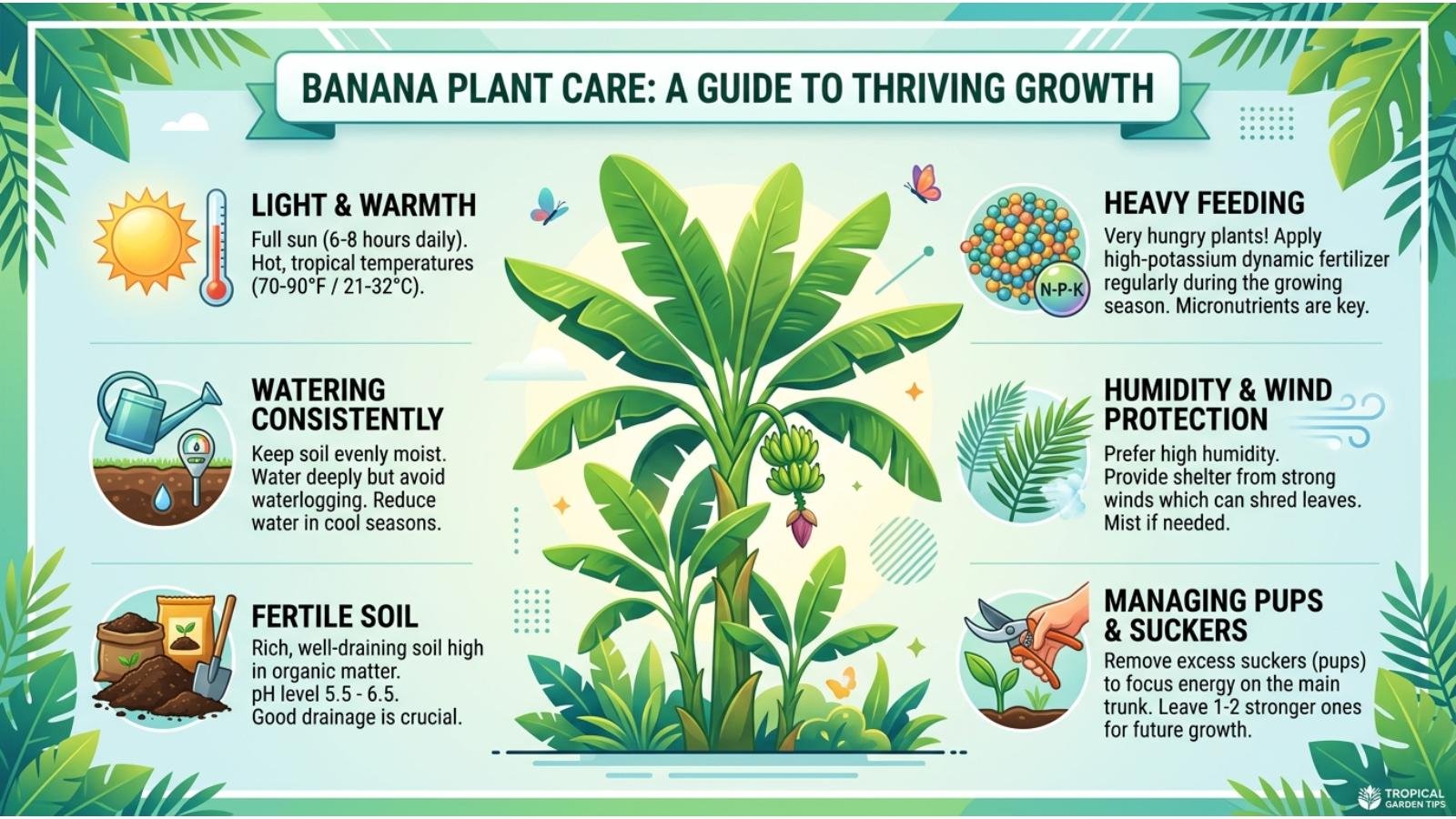
Banana plant care outdoor is easiest when plants receive full sun, consistently moist but well-drained soil, regular fertilizer, warmth, and protection from strong winds and cold. Most edible banana varieties are tropical and perform best in warm climates, while cold-hardy types such as Musa basjoo can survive much colder winters with proper protection.
Choose the Right Banana Plant for Your Climate
One of the biggest mistakes beginners make is treating every banana plant as equally cold hardy. They are not.
Common edible bananas such as Musa acuminata are tropical plants generally suited to USDA Zones 10 and 11, while Musa basjoo is considerably more cold tolerant.
Before planting outdoors, identify the exact species or cultivar you have.
| Banana type | Main advantage | Cold tolerance | Best use |
|---|---|---|---|
| Musa acuminata | Edible fruit and tropical foliage | Low | Warm climates |
| Musa basjoo | Excellent cold tolerance | High | Cold-climate ornamental growing |
| Musa balbisiana | Large plant and useful fruit | Low | Warm climates |
| Musa velutina | Decorative pink fruit | Moderate | Ornamental gardens |
| Red banana types | Colorful foliage | Tender | Warm gardens or containers |
Cold hardiness also does not mean the entire plant remains green through winter. Some bananas can lose their above-ground growth while surviving underground and sending up new shoots later.
Image Suggestion: Create a comparison graphic showing common banana varieties, mature size, fruit characteristics, and cold tolerance.
Find the Best Outdoor Planting Location
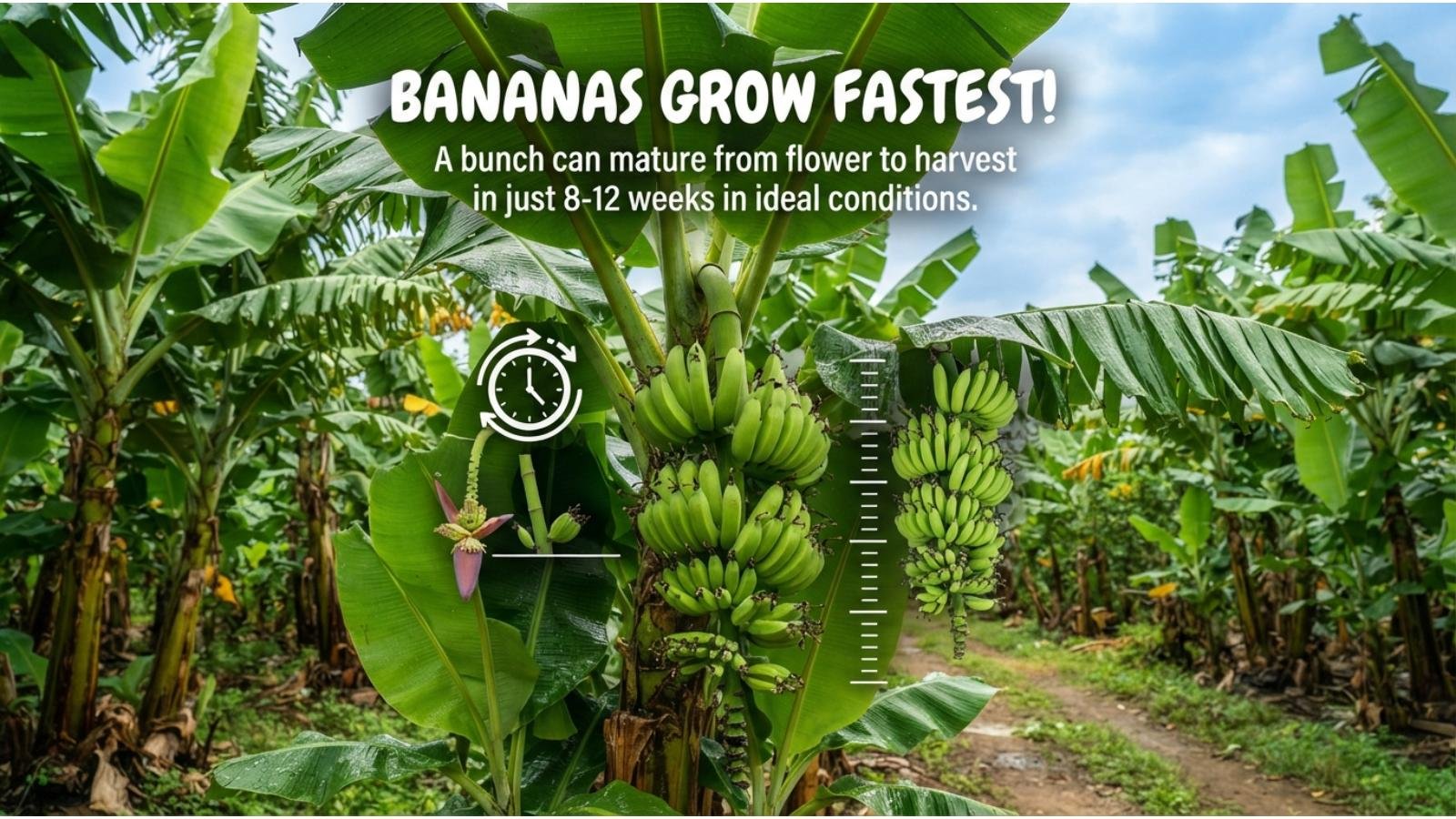
Bananas grow fastest when they receive plenty of sunlight.
A location with six or more hours of direct sunlight is generally ideal. Some banana plants tolerate partial shade, and filtered afternoon light can be useful in extremely hot conditions.
The location should also provide protection from strong winds.
Banana leaves are large and relatively delicate. Wind can split, tear, and shred them even when the plant itself remains healthy. A wall, fence, courtyard, or other sheltered position can therefore make a noticeable difference.
When choosing a planting spot, look for:
- At least six hours of sunlight.
- Protection from persistent strong winds.
- Soil that drains efficiently.
- Enough room for the plant to spread.
- Easy access to irrigation.
- Sufficient space for developing pups around the main plant.
Avoid placing a banana plant where water routinely collects after heavy rain.
Prepare Rich and Well Drained Soil
Bananas are hungry, fast-growing plants, so poor soil can quickly limit their performance.
The ideal outdoor soil is organically rich, fertile, moist, and well drained. Banana plants appreciate moisture, but constantly saturated soil can create root problems and reduce plant health.
Before planting, improve poor soil with mature compost or other suitable organic matter.
A useful approach is to combine:
- Existing garden soil.
- Mature compost.
- Organic matter that improves moisture retention.
- Material that maintains good drainage when the native soil is heavy.
Do not confuse moisture-loving with waterlogged. The goal is soil that stays evenly moist without becoming a stagnant, muddy environment.
Image Suggestion: Show a cross-section diagram comparing healthy moist banana soil with compacted, waterlogged soil.
Plant Banana Plants at the Right Time
Outdoor planting is most successful when the danger of damaging cold has passed and the soil is warm.
Bananas are warm-season plants, so placing a young plant into cold soil can slow establishment dramatically. Tender varieties should receive particular protection from frost and cold weather.
When planting:
- Choose a warm, sunny day.
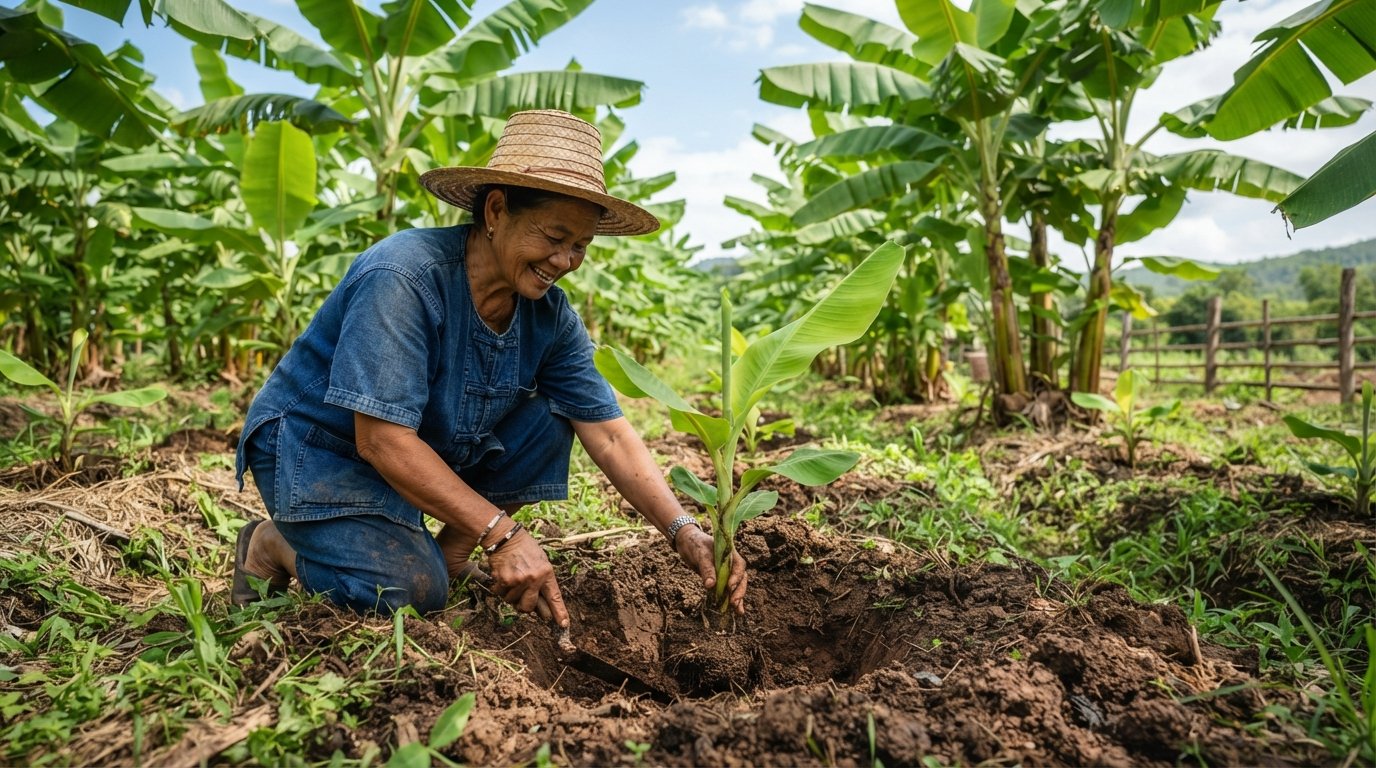
- Dig a hole wider than the root ball.
- Incorporate suitable organic matter into poor soil.
- Position the plant at approximately the same depth it was growing previously.
- Backfill gently.
- Water thoroughly.
- Apply a layer of organic mulch around the root zone.
Keep mulch slightly away from direct contact with the pseudostem to reduce the chance of persistent moisture against the stem.
Water Banana Plants Consistently
Water is one of the most important parts of outdoor banana plant care.
Bananas have relatively low drought tolerance and perform best when their soil remains consistently moist.
However, watering should respond to actual soil conditions rather than an automatic calendar.
During hot, dry weather, check the soil frequently. A plant growing in sandy soil under intense sunlight may need water more often than one growing in rich soil with afternoon protection.
Watch the plant and soil for clues.
Too little water can cause:
- Drooping leaves.
- Dry or curling leaf edges.
- Slower growth.
- Premature leaf damage.
Too much water can contribute to:
- Poor root health.
- Persistently soggy soil.
- Weak growth.
- Increased risk of root-related problems.
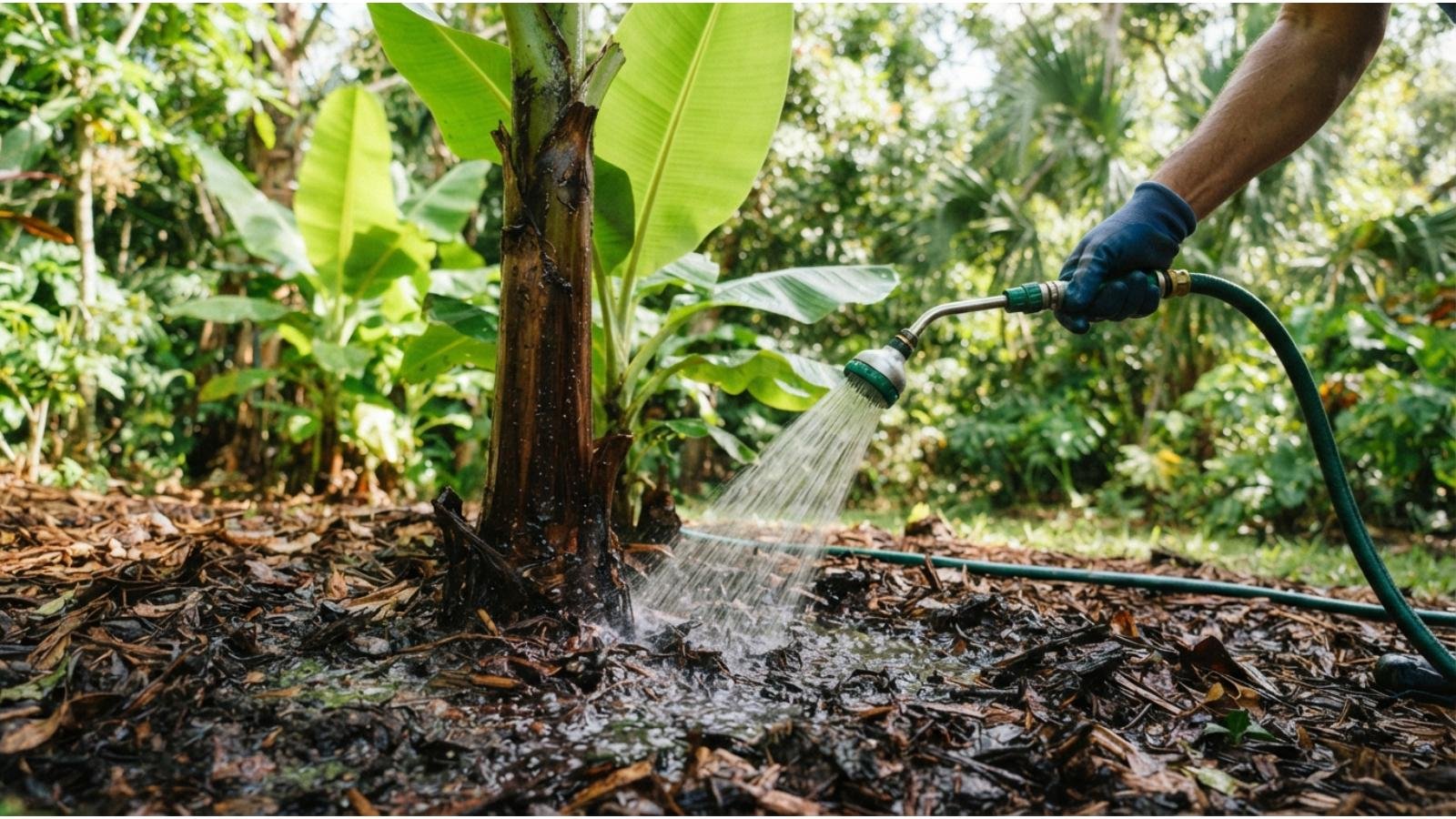
A thick organic mulch layer can help slow evaporation and moderate soil temperatures while reducing competition from weeds.
Fertilize During Active Growth
Banana plants are heavy feeders, particularly when they are producing large amounts of foliage.
Regular fertilization during the growing season is recommended by extension horticulture sources.
Instead of applying excessive fertilizer at once, follow the instructions for the product you are using and provide nutrients consistently during active growth.
A balanced feeding program should consider:
- Plant size.
- Soil fertility.
- Growth rate.
- Whether the plant is being grown primarily for foliage or fruit.
- The fertilizer’s recommended application rate.
If fruit production is your goal, avoid assuming that simply adding more fertilizer will automatically produce bananas. Variety, temperature, plant maturity, sunlight, water availability, and overall growing conditions also influence fruiting.
Give Banana Plants Enough Space
A banana plant may start small and become surprisingly large.
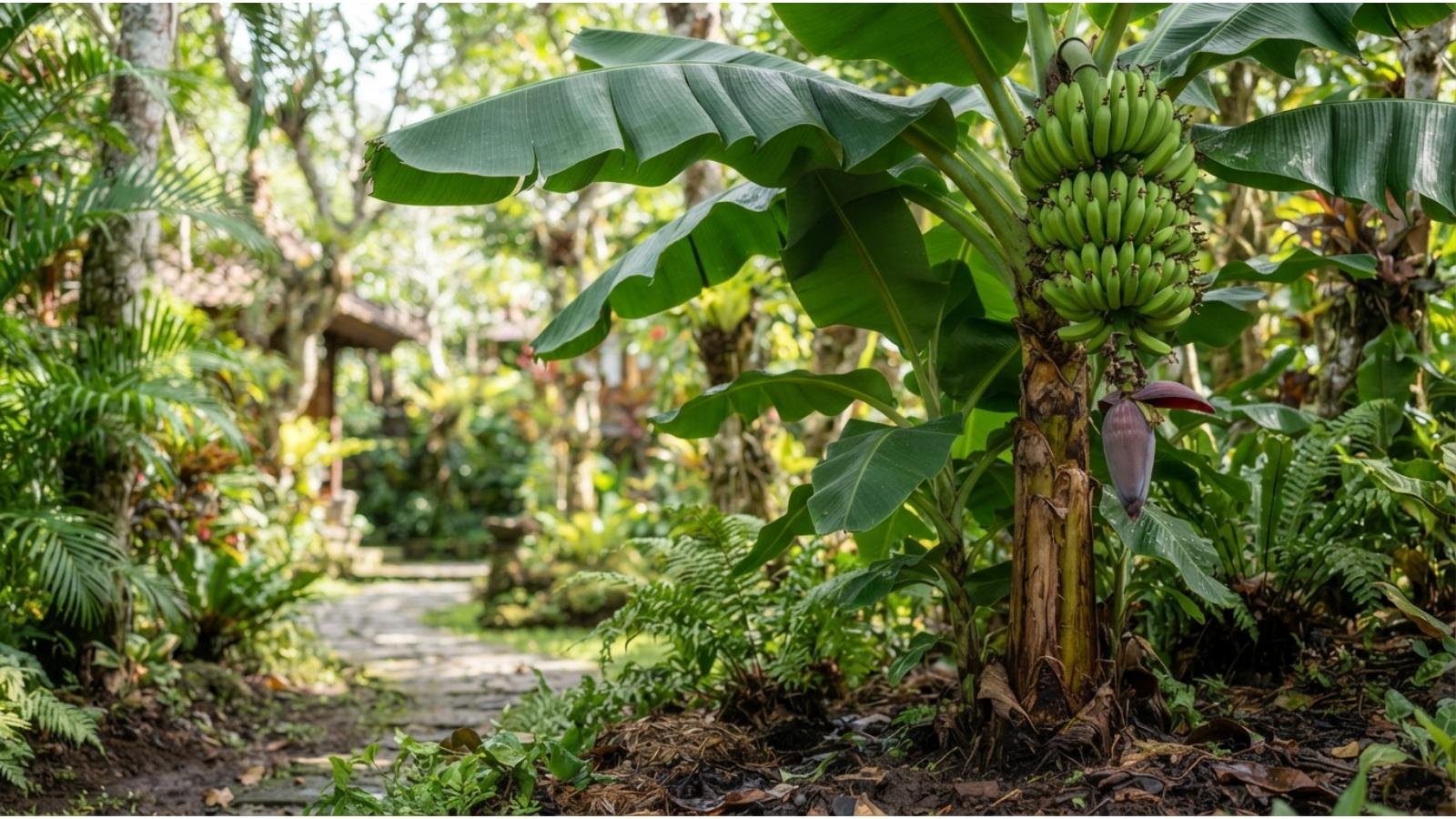
Some banana species can reach around 20 feet under suitable conditions, while their large leaves can create a substantial visual spread.
Crowding can create several problems:
- Reduced airflow.
- Increased competition for water and nutrients.
- More difficult maintenance.
- Greater shading of neighboring plants.
- Less room for new banana pups.
Leave enough space for the mature plant rather than planning around its nursery size.
This is especially important because bananas naturally produce suckers, also called pups, from underground structures. These young shoots eventually become new pseudostems.
Manage Banana Pups
Banana plants naturally form clumps.
After an older pseudostem flowers and fruits, that particular stem eventually dies, while new shoots develop from the base.
Allowing every pup to remain can create an overcrowded clump. Extension guidance notes that excessive suckers can reduce the ability of individual plants to produce a good fruit bunch.
For a productive planting, select healthy pups and remove excess shoots when appropriate.
A practical strategy is to maintain a main fruiting plant alongside one younger replacement and possibly one smaller pup. The exact system depends on your climate, cultivar, and available space.
Protect Banana Plants From Wind
Wind protection is one of the most overlooked banana plant care tips.
Banana leaves are enormous compared with those of many garden plants. Their size gives them a dramatic tropical appearance but also makes them vulnerable to tearing.
A protected planting site can reduce leaf damage. Fences, walls, hedges, and sheltered courtyards can all help.
Do not worry excessively when an established plant develops some torn leaves after a storm. Leaf shredding does not automatically mean the entire plant is dying.
Instead, check the pseudostem and growing point for serious damage.
Image Suggestion: Show a healthy banana plant beside one with wind-shredded leaves, explaining why leaf damage does not necessarily mean root damage.
Pruning Banana Plants Correctly
Bananas do not need heavy routine pruning like many woody fruit trees.
Remove leaves when they are completely dead, severely damaged, or interfering with maintenance.
Avoid removing large amounts of healthy green foliage simply to make the plant look tidy. Those leaves contribute to photosynthesis and support vigorous growth.
After a pseudostem flowers and produces fruit, it eventually completes its life cycle. New shoots can then take over.
In cold climates, pruning becomes part of winter preparation rather than ordinary seasonal maintenance.
Prepare Banana Plants for Winter
Winter care depends heavily on the species.
Tender edible bananas may require container culture, indoor protection, or digging and storing in climates where freezing temperatures occur.
Cold-hardy Musa basjoo is different. Its above-ground growth can die back during winter, while the protected underground rhizomes can survive substantially colder temperatures. North Carolina Extension reports that properly protected rhizomes can tolerate temperatures down to about -10°F.
For cold-climate outdoor banana care:
- Wait until frost damages the foliage.
- Cut back dead growth according to the requirements of your cultivar.
- Protect the base with a substantial layer of mulch.
- Consider additional protection around the pseudostem in severe climates.
- Remove winter protection gradually as temperatures become reliably warmer.
Do not assume the winter strategy for Musa basjoo applies equally to every banana variety.
Encourage Fruit Production
Growing impressive banana foliage is easier than producing a mature fruit bunch in many climates.
Bananas require a sufficiently long, warm growing season to flower and develop fruit. Young plants may not flower or fruit until they are established, and some plants can require multiple years.
For better fruiting potential, focus on the basics:
- Choose a fruit-producing cultivar suited to your climate.
- Provide abundant sunlight.
- Maintain consistent moisture.
- Feed regularly during active growth.
- Protect the plant from severe wind.
- Avoid removing the main fruiting pseudostem prematurely.
- Manage excessive pups so resources are not spread too thinly.
In areas where winter freezes repeatedly kill the pseudostem, a plant may survive but still fail to produce fruit because it needs to regrow before reaching reproductive maturity.
Common Banana Plant Care Mistakes
Several simple mistakes can prevent otherwise healthy bananas from reaching their potential.
Overwatering Poorly Drained Soil
Keeping banana soil moist does not mean keeping it saturated. Moisture and drainage need to work together.
Planting in Constant Wind
A banana may survive a windy location, but its leaves can become shredded and unattractive.
Choosing the Wrong Variety
A tropical dessert banana is not automatically a good choice for a cold winter climate.
Removing Too Many Leaves
Aggressive pruning can reduce the plant’s productive foliage.
Allowing Too Many Pups
A dense clump may look vigorous, but excessive shoots can compete for available resources.
Expecting Fruit Immediately
Young plants often need time to become established before flowering and fruiting.
Ignoring Winter Temperatures
A variety’s ability to survive winter should be considered before planting it permanently in the ground.
Troubleshooting Outdoor Banana Plants
| Problem | Likely cause | What to do |
|---|---|---|
| Yellowing leaves | Water stress, aging foliage, nutrient issues | Check soil moisture and overall nutrition |
| Brown leaf edges | Dry conditions or environmental stress | Improve moisture consistency and inspect exposure |
| Torn leaves | Wind damage | Move young plants or add wind protection |
| Slow growth | Cold, poor nutrition, insufficient sunlight, or root stress | Check temperature, light, soil, and feeding |
| Plant dies back after frost | Cold damage | Protect the root system and identify cultivar hardiness |
| Many small pups | Natural suckering | Thin excess shoots when appropriate |
| No fruit | Young plant, unsuitable climate, or insufficient growing season | Verify cultivar and growing conditions |
| Soggy soil | Poor drainage or excessive irrigation | Improve drainage and adjust watering |
Pests and Diseases to Watch For
Outdoor bananas can encounter different problems depending on species and growing region.
Potential pests include aphids, spider mites, mealybugs, scale, grasshoppers, borers, and nematodes. Certain banana diseases can also occur, particularly in susceptible plants and unfavorable growing conditions.
Inspect leaves and pseudostems regularly instead of waiting until the plant looks severely damaged.
Look underneath leaves as well as on their upper surfaces. Early detection generally makes pest management easier.
If you notice unusual leaf patterns, rapid wilting, stem problems, or persistent decline, identify the specific cultivar and consult a local extension service or qualified horticultural professional because disease pressure varies by region.
Outdoor Banana Plant Care by Season
Spring
Spring is the time to restart active growth.
Remove winter-damaged material, assess the root zone, refresh mulch, and gradually increase watering as temperatures rise.
Container-grown plants moved outdoors should be acclimated rather than immediately exposed to dramatically different outdoor conditions. Iowa State Extension recommends a gradual acclimation period for plants transitioning outdoors.
Summer
Summer is usually the main growth period.
Focus on:
- Consistent soil moisture.
- Regular feeding.
- Weed control.
- Wind protection.
- Pup management.
- Monitoring for pests.
Fast growth during warm weather can be dramatic, particularly when sunlight, moisture, nutrients, and temperature are favorable.
Fall
As temperatures decline, reduce expectations for new growth.
In cold regions, begin planning winter protection before severe freezing weather arrives. Tender varieties may need to be moved indoors or stored using an appropriate dormant method.
Winter
Winter priorities depend on the banana’s hardiness.
Tropical varieties may need frost-free protection, while cold-hardy bananas can often be protected outdoors with appropriate pruning and heavy mulching.
Growing Banana Plants in Containers Outdoors
Container growing is useful when your climate is too cold for permanent outdoor planting.
Use a large container with drainage holes and a high-quality, well-draining growing medium. Remember that a container dries faster than garden soil, particularly in hot weather.
Container bananas also become heavy as they grow, so choose a location where the plant can remain safely positioned during the growing season.
If the container needs to be moved indoors for winter, plan for its mature size and weight before selecting an enormous specimen.
Image Suggestion: Show a healthy container-grown banana on a sunny patio with drainage holes and a suitable potting mix.
Banana Plant Care Outdoor Checklist
Use this quick checklist throughout the growing season.
- Provide full sun or suitable partial shade.
- Keep soil consistently moist.
- Make sure excess water can drain away.
- Feed regularly during active growth.
- Protect large leaves from strong winds.
- Remove dead or severely damaged foliage.
- Control excessive pups.
- Monitor for insects and disease symptoms.
- Choose cultivars appropriate for your winter climate.
- Protect tender varieties before frost.
- Mulch cold-hardy bananas heavily when winter protection is required.
- Give mature plants enough space to develop.
Frequently Asked Questions
How much sun does an outdoor banana plant need?
Most banana plants perform best in full sun, generally around six or more hours of direct sunlight daily. Some tolerate partial shade, particularly filtered light during very hot periods.
How often should I water a banana plant outdoors?
Water when the soil begins to lose moisture rather than following a rigid schedule. Bananas prefer consistently moist soil and have relatively low drought tolerance, but the soil should still drain well.
Do banana plants need fertilizer?
Yes. Bananas are vigorous, heavy-feeding plants and generally benefit from regular fertilization during active growth. Follow the application instructions for your chosen fertilizer rather than applying excessive amounts.
Can banana plants survive winter outdoors?
Some can. Cold-hardy types such as Musa basjoo can survive much colder conditions than tropical edible bananas when their underground rhizomes are properly protected. Many tender varieties require frost-free protection.
Why are my banana leaves tearing?
Strong wind is a common reason. The large leaves are easily shredded, so planting bananas in a sheltered location can substantially reduce cosmetic damage.
How long does it take for a banana plant to produce fruit?
The timing varies by cultivar, climate, plant age, and growing conditions. Young plants may not flower or fruit until they are well established, and some can require two or more growing years.
Should I remove banana pups?
You can remove excess pups if you want to prevent overcrowding and concentrate resources on selected plants. Keeping a manageable number of healthy shoots can also help maintain a succession of plants.
Can banana plants grow in pots outdoors?
Yes. Container growing is particularly useful for tender varieties in climates where winter temperatures are too cold for permanent outdoor planting. However, large banana plants require substantial containers and can become difficult to move.
Conclusion
Successful banana plant care outdoor comes down to matching the plant to the climate and then consistently providing what it needs most: warmth, sunlight, moisture, fertile soil, feeding, and protection from wind and cold.
The most important decision happens before planting. Choose a banana suited to your growing conditions rather than expecting a tropical fruiting variety to behave like a cold-hardy ornamental. Once the right plant is selected, focus on well-drained soil, consistent watering, regular nutrition, adequate space, and sensible winter protection.
With those fundamentals in place, banana plants can grow remarkably quickly and create the lush tropical appearance that makes them such an attractive addition to outdoor gardens.