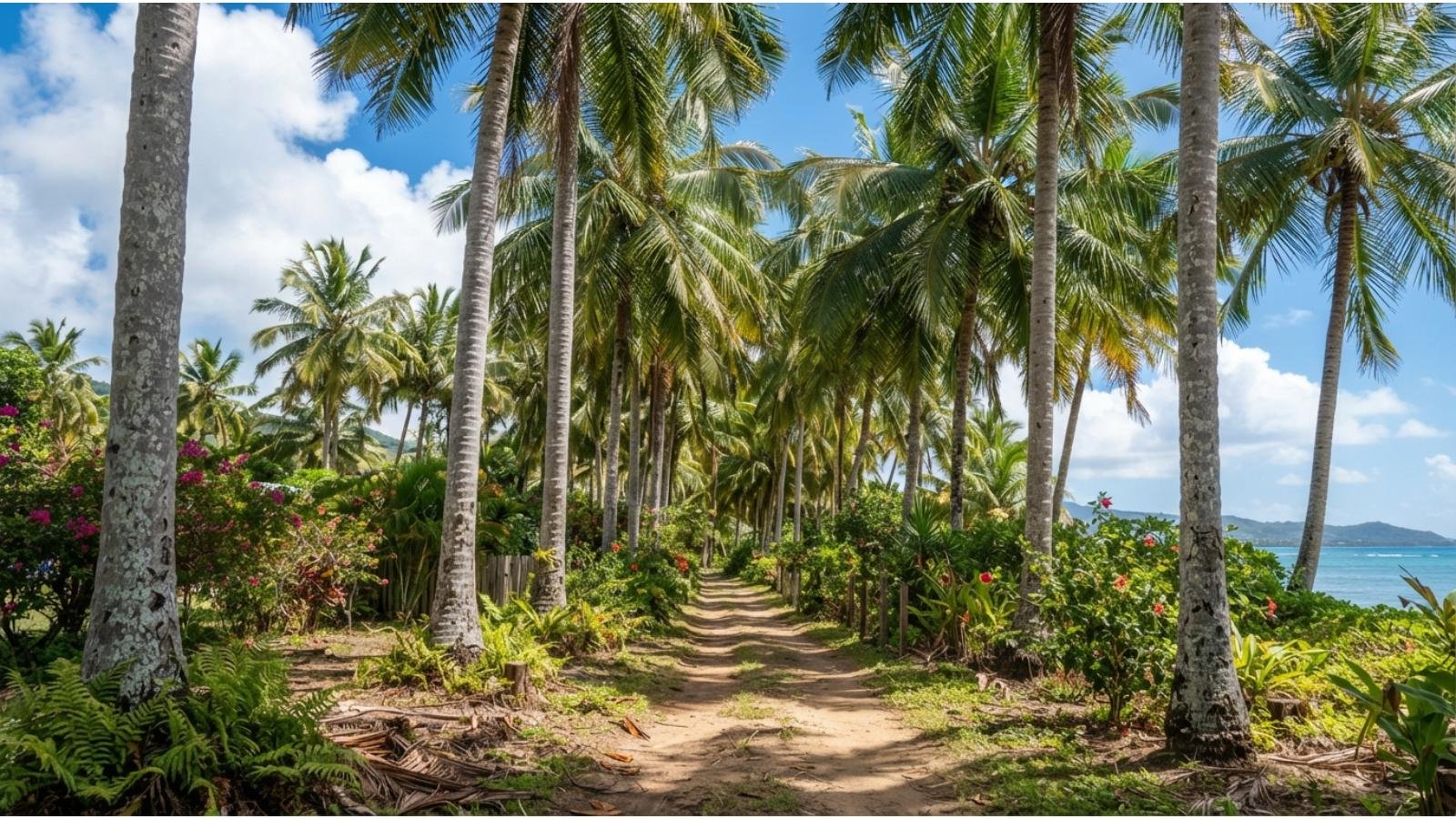
Outdoor palms can create an instant tropical or resort-like appearance, but keeping them healthy requires more than regular watering. A palm growing in a landscape is exposed to intense sunlight, wind, changing temperatures, rainfall, compacted soil, pests, and seasonal stress. The right care routine depends heavily on the palm species and the conditions at the planting site.
The most important principle is simple. A healthy outdoor palm needs the right plant in the right location, followed by consistent moisture without permanently wet soil. Many problems that look like disease or fertilizer deficiency actually begin with poor planting depth, inappropriate irrigation, unsuitable climate conditions, or excessive pruning.
Choose the Right Palm for Your Outdoor Space
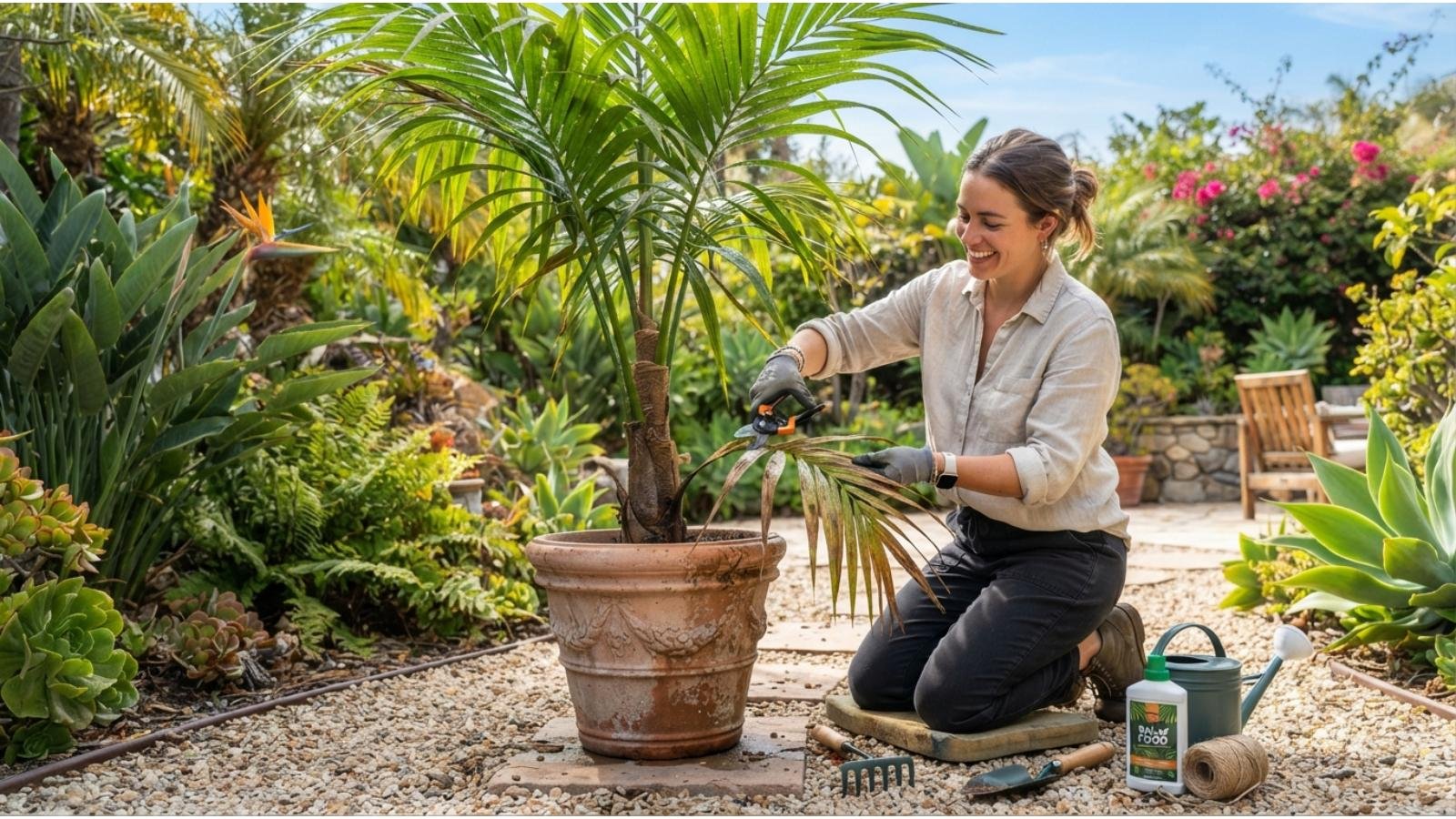
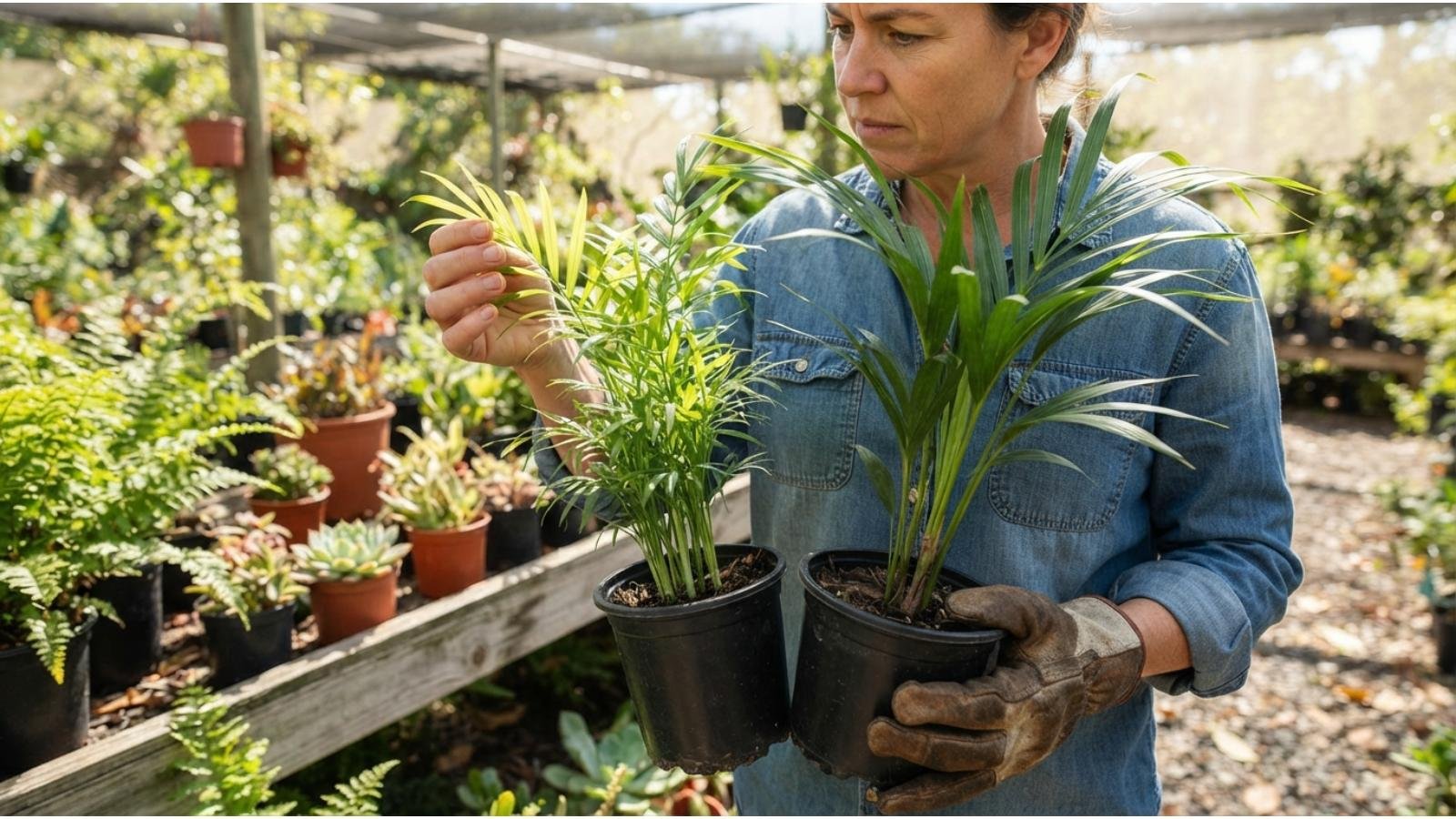
The first step in successful palm plant care outdoor is selecting a species that can handle your local climate.
Not all palms have the same tolerance for heat, drought, humidity, wind, or cold. A palm that thrives in a warm coastal landscape may struggle badly in a location with winter freezes.
Before purchasing a palm, consider:
- Minimum winter temperatures in your area.
- Summer heat and humidity.
- Available sunlight.
- Soil drainage.
- Wind exposure.
- Available planting space.
- Mature height and canopy width.
- Local rainfall patterns.
- Whether the palm will be planted in the ground or kept in a container.
Cold tolerance is particularly important. Palm species differ considerably in their ability to withstand freezing temperatures, and cold injury can damage foliage or, in severe cases, the growing point.
Image Suggestion: Create a visual comparison showing sun-loving, shade-tolerant, drought-tolerant, and cold-sensitive outdoor palm types.
How Much Sunlight Do Outdoor Palms Need
Light requirements vary considerably among palm species.
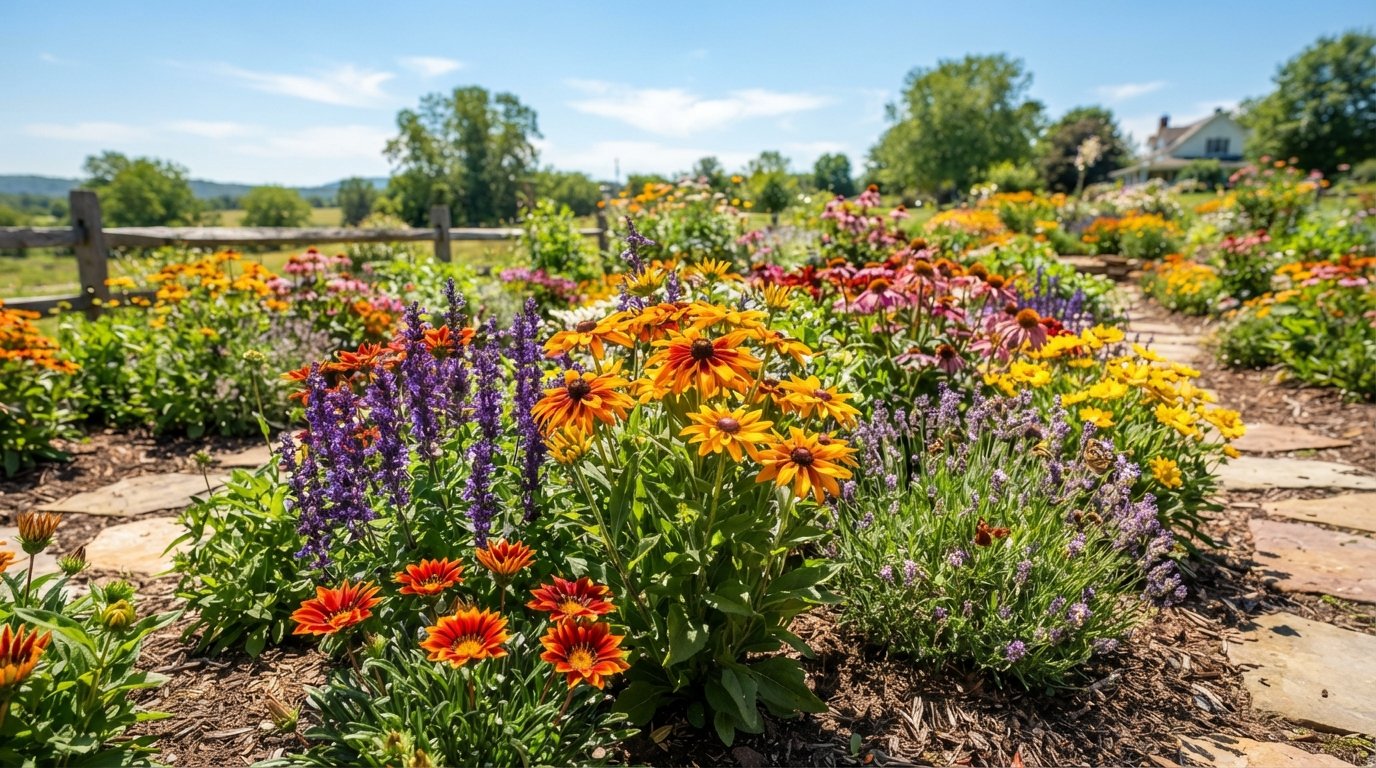
Some palms perform best in full sun, while others naturally grow beneath taller vegetation and prefer filtered light or partial shade. Assuming every palm needs intense afternoon sun is a common landscaping mistake.
A newly planted palm can also react differently from an established specimen. Roots need time to establish after transplanting, so environmental stress can be greater during the first growing season.
Look at the plant’s natural requirements before choosing its final position.
A practical approach is to observe the location throughout the day. A spot that receives bright morning sunlight may have very different conditions from one exposed to intense afternoon heat and reflected sunlight from concrete.
In extremely hot climates, reflected heat from walls, paving, and buildings can increase water loss and stress even when the palm receives an otherwise appropriate amount of sunlight.
Best Soil for Outdoor Palm Plants
Good drainage is one of the most important requirements for outdoor palms.
Palm roots need access to both moisture and oxygen. Soil that stays saturated for long periods can reduce oxygen around the roots and contribute to poor growth and root problems.
Ideally, choose a location with:
- Good natural drainage.
- Loose or reasonably well-structured soil.
- Enough soil volume for root development.
- No persistent standing water.
- Adequate organic matter without creating a permanently wet planting environment.
Heavy clay soil deserves particular attention. If water remains around the root zone long after irrigation or rainfall, improve drainage conditions before planting instead of attempting to compensate with a more complicated watering schedule.
How to Plant a Palm Outdoors
Correct planting depth can make a major difference to long-term health.
Dig a planting hole according to the size of the root ball. For smaller container-grown palms, the planting hole can generally be wider than the root ball while remaining approximately as deep as the root ball.
The important point is to avoid burying the trunk.
University of Arizona Cooperative Extension guidance emphasizes that the trunk should not be buried and that planting too deeply can contribute to oxygen problems and root disease.
Follow these steps.
- Select a location appropriate for the palm’s mature size.
- Check that water drains reasonably well.
- Dig a hole approximately as deep as the root ball and wider than it.
- Position the palm at the appropriate soil level.
- Avoid burying the trunk.
- Backfill carefully.
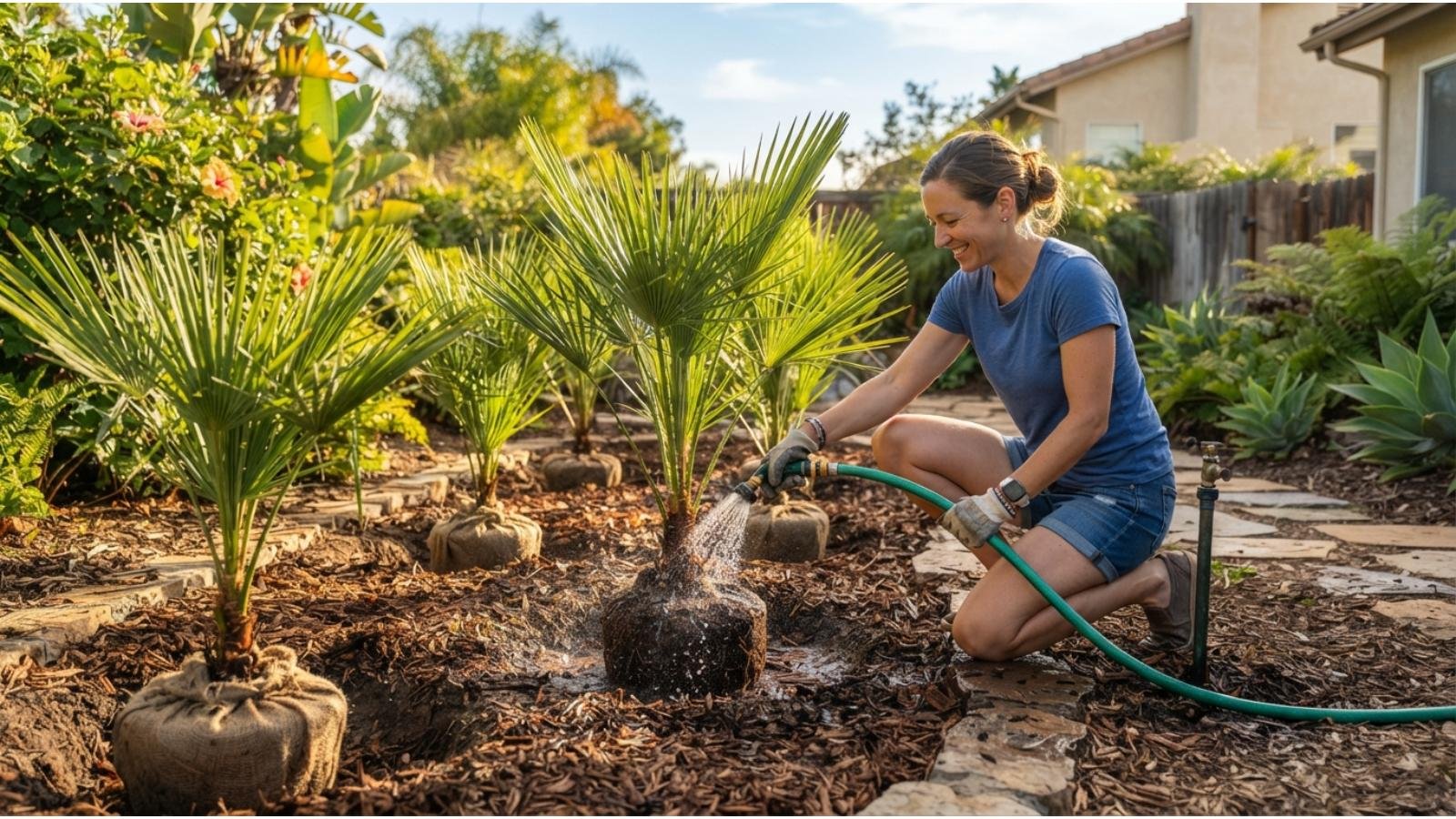
- Water thoroughly after planting.
- Keep the surrounding root zone consistently moist while the palm establishes.
- Gradually expand the irrigated area as roots grow outward.
Do not automatically fill the planting hole with large quantities of amendments. In many landscape situations, using the existing soil as backfill is recommended rather than creating a small pocket of dramatically different soil around the roots.
Image Suggestion: Add a labeled planting diagram showing correct palm depth, root ball, soil line, mulch zone, and irrigation area.

How Often Should You Water an Outdoor Palm
Watering is one of the most misunderstood parts of palm plant care outdoor.
A newly planted palm usually requires more attention than an established palm because its root system has not yet spread into the surrounding soil.
Instead of watering according to a rigid calendar, consider:
- Palm species.
- Plant age.
- Soil type.
- Temperature.
- Rainfall.
- Wind.
- Root-zone moisture.
- Drainage.
- Container versus in-ground planting.
Deep irrigation is generally more useful than frequent shallow sprinkling. Palm roots commonly spread horizontally, so watering should eventually cover an expanding portion of the root zone rather than concentrating water directly against the trunk.
During hot, dry weather, check the soil before irrigating. The goal is moist root-zone soil without creating permanently saturated conditions.
A useful rule is to water according to soil and plant conditions, not simply because a certain day of the week has arrived.
Watering Newly Planted Palms
Newly planted palms need special attention during establishment.
After planting, thoroughly water the root ball and surrounding soil. During the establishment period, monitor the soil frequently because the original root ball can dry faster than the surrounding landscape soil.
As new roots move outward, gradually expand the irrigation area.
This matters because continuing to water only the original root ball can encourage the palm to remain dependent on a small area of soil. University of Arizona guidance recommends expanding irrigation away from the trunk over time as new roots develop.
Do not respond to every wilted or yellowing frond by immediately increasing irrigation. Examine the soil first. Overwatering can also create serious problems.
How to Fertilize Outdoor Palms
Palms have nutritional requirements that differ from many ordinary landscape plants.
A palm-specific fertilizer is generally preferable because palms can develop deficiencies involving nutrients such as potassium, magnesium, manganese, and other micronutrients.
A suitable fertilizer program should consider:
- Palm species.
- Soil conditions.
- Existing nutrient availability.
- Local climate.
- Palm age.
- Visible deficiency symptoms.
- Product instructions.
University of Arizona guidance recommends palm-specific fertilizer formulations and emphasizes following application directions and watering fertilizer into the soil.
Controlled-release fertilizers can be useful because they provide nutrients more gradually and can reduce nutrient loss compared with poorly timed applications.
Avoid the common mistake of assuming that more fertilizer means faster growth. Excessive fertilizer can create nutrient imbalances and may damage plants.
Common Palm Nutrient Problems
Yellowing leaves do not automatically mean the palm needs more fertilizer.
Different nutrient deficiencies can produce different symptoms. For example, potassium deficiency can affect older leaves and may appear as yellow or necrotic spotting, while magnesium deficiency can produce yellowing while parts of the midrib remain green.
Before applying fertilizer, examine:
- Which leaves are affected.
- Whether symptoms begin on older or newer foliage.
- The pattern of discoloration.
- Recent irrigation practices.
- Soil drainage.
- Recent weather.
- Previous fertilizer applications.
If symptoms are severe or persistent, a soil or tissue test can be more useful than guessing.
How to Prune Outdoor Palm Plants
Palm pruning should be conservative.
A healthy green frond is still producing energy for the plant, so removing it simply to make the palm look cleaner can weaken the plant over time.
Generally, remove:
- Completely dead fronds.
- Severely damaged fronds when appropriate.
- Dead flower stalks when necessary.
- Fruit clusters when there is a specific management reason.
University of Arizona guidance recommends avoiding unnecessary removal of healthy green leaves and limiting pruning to protect the palm’s photosynthetic capacity. It also recommends avoiding removal of leaves above the horizontal 9-and-3 position.
Do not aggressively strip the trunk simply to create a perfectly smooth appearance. Removing living or protective tissue can create unnecessary wounds.
Another important safety point is that climbing palms with spikes can permanently injure the trunk. Palm trunks do not heal wounds in the same way woody trees do.
The Biggest Outdoor Palm Care Mistakes
Many struggling palms are not suffering from a mysterious disease. They are experiencing preventable cultural problems.
Overwatering
Constantly wet soil deprives roots of oxygen and can contribute to root problems.
Better approach: Check the root-zone moisture and improve drainage before simply reducing or increasing watering.
Planting Too Deep
Burying the trunk or root initiation area can cause serious establishment problems.
Better approach: Keep the trunk out of the soil and follow species-appropriate planting depth.
Removing Too Many Green Leaves
Over-pruning reduces the palm’s photosynthetic capacity.
Better approach: Remove dead or genuinely problematic foliage rather than healthy green fronds.
Using the Wrong Fertilizer
General lawn fertilizer may not provide the nutrient balance palms require.
Better approach: Use a palm-specific product according to the label and local recommendations.
Watering Only at the Trunk
Palm roots can extend outward from the trunk.
Better approach: Gradually expand irrigation across the active root zone as the palm becomes established.
Ignoring Climate
A palm can receive excellent care and still fail if the species is poorly adapted to local temperatures.
Better approach: Select palms based on their proven performance in your climate.
Outdoor Palm Care in Summer
Summer care usually focuses on moisture management, heat stress, and avoiding unnecessary disturbance.
During prolonged hot and dry weather:
- Monitor soil moisture more frequently.
- Water deeply when irrigation is required.
- Avoid allowing newly planted palms to become severely dry.
- Check irrigation coverage rather than assuming sprinklers are reaching the roots.
- Watch for wind-driven moisture loss.
- Avoid excessive pruning during severe heat or drought.
In hot climates, slow and thorough irrigation is generally more useful than frequent light watering. However, exact irrigation intervals should be adjusted according to soil, weather, palm species, and establishment status.
Outdoor Palm Care in Winter
Winter care depends heavily on the palm species and local temperatures.
Cold-sensitive palms can suffer foliage damage during freezes, while more cold-tolerant species may recover from brief temperature drops.
After cold damage, avoid immediately cutting away every damaged frond. Some damaged foliage can continue providing protection, and the growing point may survive even when leaves look severely damaged.
The key winter questions are:
- How cold did the palm experience?
- Is the species cold hardy for the location?
- Is the central growing point still alive?
- Is the spear leaf firmly attached?
- Has new growth begun?
Do not fertilize aggressively simply because cold-damaged leaves look unhealthy. Some symptoms can be related to earlier cold stress and may improve as temperatures recover.
How to Mulch Around an Outdoor Palm
Mulch can help moderate soil temperature, reduce evaporation, and limit competition from weeds.
Apply mulch across the root zone while keeping it away from direct contact with the trunk.
Avoid creating a thick mound of mulch against the base of the palm. The goal is to protect the soil, not bury the trunk.
Organic mulch can gradually decompose and improve soil structure, while inorganic options may be appropriate in some landscape designs. Choose based on the palm, climate, drainage, and overall landscape.
How to Tell What Is Wrong With Your Palm
A symptom-based inspection is more useful than immediately reaching for fertilizer or pesticides.
| Symptom | Possible Cause | What to Check |
|---|---|---|
| Older leaves turning yellow | Nutrient imbalance or water stress | Fertilization, drainage, irrigation |
| Brown leaf tips | Drought, salt stress, environmental stress | Soil moisture and water quality |
| Yellow leaves with poor growth | Root or nutrient problems | Drainage and nutrient availability |
| Sudden leaf damage after cold | Cold injury | Recent temperatures |
| Permanently wet soil | Poor drainage or excessive irrigation | Soil and irrigation system |
| New growth looks distorted | Nutritional or environmental problem | Soil, fertilizer history, species |
| Entire palm declines rapidly | Root, disease, severe environmental, or structural issue | Root zone and growing point |
Symptoms can overlap, so avoid diagnosing a problem from leaf color alone.
What to Do if Palm Leaves Turn Brown
Brown leaves can result from several different conditions.
Common possibilities include:
- Drought stress.
- Excessive heat.
- Wind.
- Salt accumulation.
- Cold damage.
- Nutrient deficiency.
- Root problems.
- Natural aging of older leaves.
Look at the pattern rather than focusing on one brown leaf.
If only older leaves are naturally declining while new growth looks healthy, the situation may be normal. If new leaves are repeatedly damaged, distorted, or discolored, investigate the growing conditions more carefully.
What to Do if the Palm Has Yellow Leaves
Yellow leaves are a symptom, not a diagnosis.
First inspect the irrigation pattern. Is the soil bone dry, constantly wet, or somewhere between those extremes?
Next, determine which foliage is affected. Nutrient deficiencies often have recognizable patterns, and palms can be particularly sensitive to nutritional imbalances.
Do not automatically add fertilizer every time a leaf turns yellow. If the underlying issue is poor drainage, excess fertilizer can make the situation worse.
How to Care for Palm Plants in Containers Outdoors
Outdoor container palms need more frequent monitoring than palms planted directly in the landscape.
Containers have a limited volume of soil, which means they can dry much faster during hot weather.
Pay attention to:
- Container size.
- Drainage holes.
- Potting mix structure.
- Sun exposure.
- Wind.
- Temperature.
- Root crowding.
- Watering frequency.
A container palm should never sit in standing water for extended periods.
During extreme weather, container palms can also be moved to a more suitable position if their size and growing requirements allow it.
When Should You Repot an Outdoor Palm
Repotting is usually appropriate when the current container is too small for the root system, drainage has deteriorated, or the growing medium has broken down.
Do not automatically move a palm into a dramatically oversized container. Excess soil can remain wet for too long after irrigation.
Choose a container with adequate drainage and increase the size gradually when appropriate.
After repotting, monitor moisture carefully because the larger volume of growing medium can behave differently from the previous container.
How to Protect Outdoor Palms From Extreme Weather
Extreme weather can create stress even when everyday care is excellent.
During severe heat, focus on maintaining appropriate root-zone moisture and avoiding unnecessary pruning.
During freezes, protection depends on the palm species, plant size, expected temperature, and duration of the cold event.
Cold injury can affect foliage, and severe freezing can damage the growing point or water-conducting tissues.
The best long-term protection is choosing a palm adapted to the location instead of relying on emergency protection every winter.
Expert Tips for Healthier Outdoor Palms
A few small changes can make palm maintenance substantially easier.
- Identify the exact palm species before changing its care routine.
- Inspect soil moisture before watering.
- Expand irrigation outward as roots establish.
- Keep the trunk free from piled soil and excessive mulch.
- Use palm-specific fertilizer when fertilization is needed.
- Avoid excessive nitrogen.
- Keep healthy green fronds whenever possible.
- Do not prune simply because a frond is slightly damaged.
- Check drainage before increasing irrigation.
- Watch new growth because it often reveals ongoing problems better than old leaves.
- Choose climate-adapted palms instead of forcing unsuitable species to survive.
- Investigate recurring symptoms instead of treating the same symptom repeatedly.
The biggest improvement often comes from treating the cause rather than the visible symptom.
Frequently Asked Questions
How often should I water an outdoor palm?
There is no universal schedule. Newly planted palms generally require more frequent watering during establishment, while established palms can usually be watered less frequently. Soil type, rainfall, temperature, species, and drainage should determine the schedule. Deep irrigation that wets the root zone is generally preferable to constant shallow watering.
Do outdoor palms need full sun?
Not always. Some palm species thrive in full sun, while others prefer partial shade or filtered light. Always match the palm species to the light conditions available at the planting site.
What is the best fertilizer for palm plants outdoors?
A palm-specific fertilizer is usually the better choice because palms have particular nutritional requirements. Look for a product formulated for palms and follow its application instructions rather than applying fertilizer simply because the leaves look yellow.
Should I cut brown leaves off my palm?
Completely dead leaves can generally be removed, but avoid removing healthy green foliage unnecessarily. Leaves that still contain substantial green tissue can continue contributing to photosynthesis and nutrient storage.
Why are my outdoor palm leaves turning yellow?
Possible causes include nutrient deficiencies, excessive moisture, drought, root problems, environmental stress, or natural aging. Examine the entire plant and growing conditions before choosing a treatment.
Can outdoor palms survive winter?
Some can tolerate significant cold, while tropical palms may suffer damage from relatively mild freezes. Cold tolerance varies by species, so selecting an appropriate palm for the local climate is essential.
Should palm fertilizer be placed directly against the trunk?
No. Fertilizer should generally be distributed over the appropriate root zone rather than concentrated directly against the trunk. Product directions should always take priority.
How do I know if my palm is overwatered?
Look for persistently wet soil, poor growth, yellowing, root problems, or other signs of declining health. Overwatering is not simply about the amount of water used; poor drainage and insufficient drying between irrigation events can also create problems.
Can I prune a palm whenever I want?
Pruning should be based on a genuine need and the palm’s condition. Avoid unnecessary removal of green leaves, particularly during environmental stress. Correct pruning practices help preserve the plant’s ability to photosynthesize and recover.
Conclusion
Successful palm plant care outdoor is less about following a rigid watering calendar and more about understanding the plant’s environment. Choose a palm suited to your climate, plant it at the correct depth, provide well-drained soil, water the developing root zone thoroughly, fertilize appropriately, and prune conservatively.
Most importantly, inspect the whole growing environment before treating a problem. A yellow frond may be caused by nutrition, water, roots, weather, or normal aging. Once you learn to connect symptoms with growing conditions, outdoor palm maintenance becomes much easier and more predictable.
For readers building a broader plant-care library, closely related topics include outdoor palm watering, palm fertilizer, palm pruning, palm transplanting, tropical plant care, container palm care, and diagnosing yellow palm leaves.