Firecracker plants are popular for their colorful tubular flowers, compact growth, and ability to attract hummingbirds and other pollinators. Cuphea ignea, also called cigar plant or cigar flower, can bloom from late spring into fall and handles heat particularly well.
The biggest challenge is usually not getting the plant to grow but keeping it compact, flowering well, and protected from cold. With the right balance of sunlight, moisture, pruning, and nutrition, this warm-climate plant can become a reliable container or landscape performer.
Quick Answer
Firecracker plant care is fairly simple when you provide bright light, well-drained soil, regular moisture, warmth, and occasional feeding. The name commonly refers to Cuphea ignea, a compact flowering plant with red-orange tubular blooms, although Russelia equisetiformis is also called firecracker plant. Cuphea ignea performs best in full sun to partial shade and moist, well-drained soil.
What Is a Firecracker Plant
The name firecracker plant can be confusing because it is used for several unrelated plants. For this guide, the primary focus is Cuphea ignea, commonly called firecracker plant, cigar plant, or cigar flower.
Cuphea ignea is a member of the loosestrife family and originates from Mexico and the Caribbean region. It develops branching growth with narrow green leaves and distinctive tubular reddish-orange flowers.
It typically reaches around 18 to 30 inches tall and can become similarly wide under suitable conditions. Its flowers are particularly attractive to hummingbirds, butterflies, and bees
Image Suggestion: Close-up botanical image showing Cuphea ignea flowers, leaves, and branching habit.
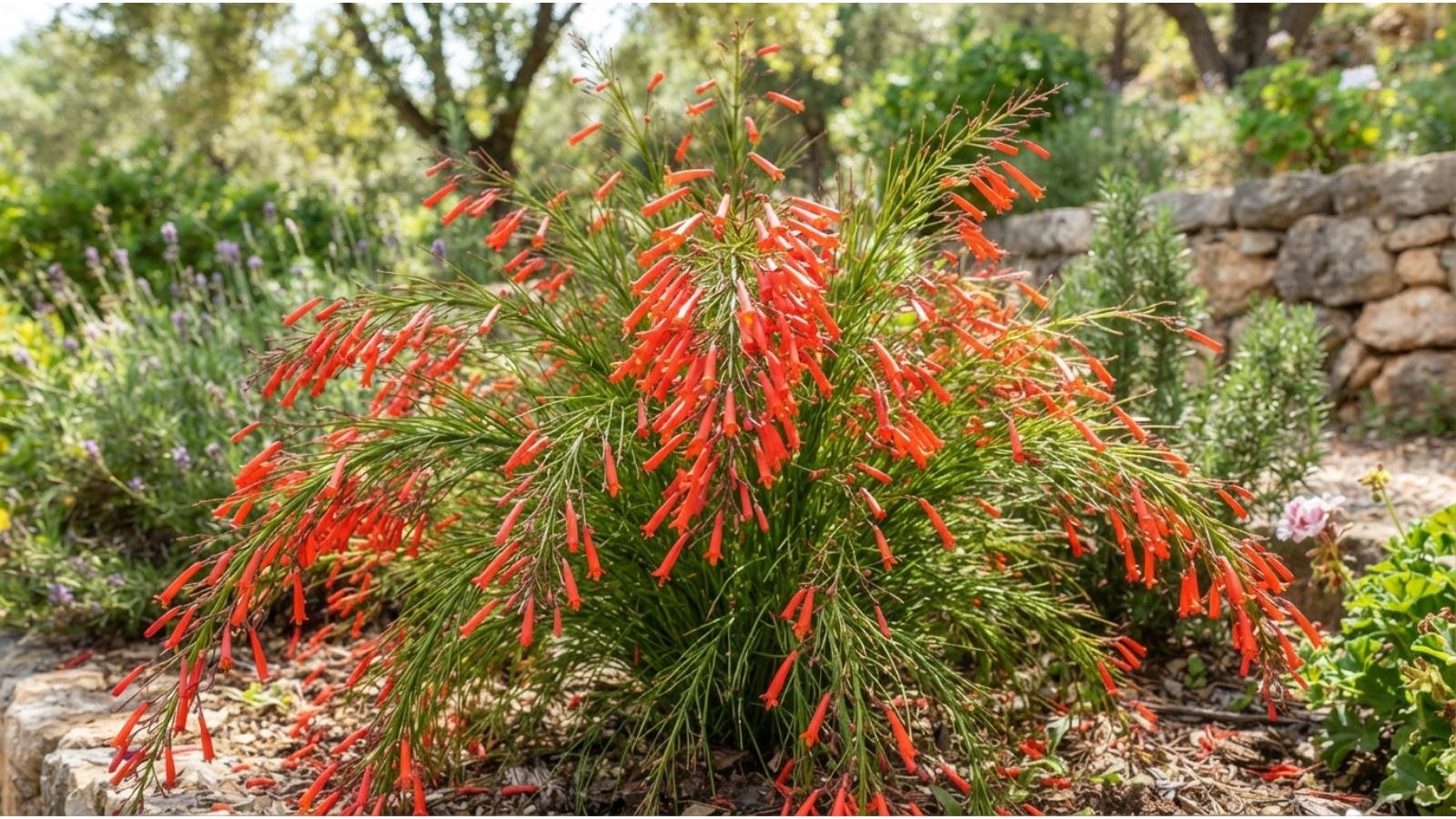
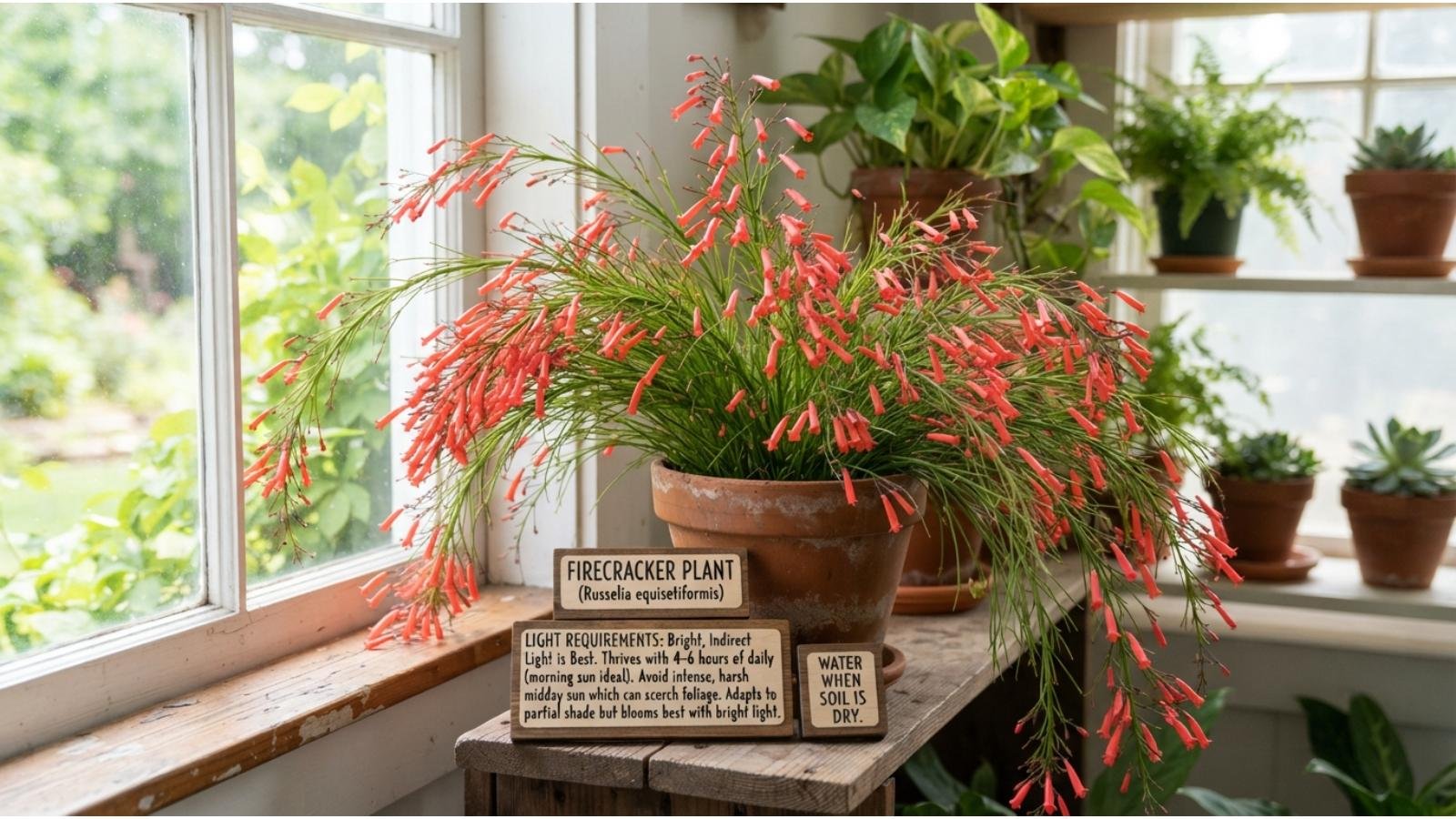
Firecracker Plant Light Requirements
Firecracker plants grow best with plenty of sunlight.
Aim for full sun to partial shade, with brighter conditions generally producing stronger growth and better flowering. North Carolina Extension recommends full sun to partial shade, while UF/IFAS notes that cigar flower performs well in full sun or part shade.
In extremely hot climates, some afternoon protection can be useful. Too little light, however, can encourage stretched or leggy growth.
A good location should provide:
- Several hours of direct sunlight.
- Good air circulation.
- Protection from harsh cold.
- Enough space for the plant to branch naturally.
- Bright light if grown indoors during winter.
If your firecracker plant has plenty of leaves but produces relatively few flowers, insufficient light is one of the first conditions worth checking.
Best Soil for Firecracker Plant
The ideal soil is moist but well drained.
Firecracker plants appreciate moisture, but their roots should not remain saturated for prolonged periods. Suitable soil can contain loam, organic matter, and materials that improve drainage. Cuphea ignea can tolerate several soil types as long as drainage is adequate.
For containers, a practical mix is:
- Quality potting mix.
- Compost or other well-decomposed organic matter.
- Perlite, pumice, or another drainage-improving material.
Avoid heavy soil that stays wet for days after watering.
Expert tip: A drainage hole is just as important as the potting mix. A high-quality soil cannot compensate for a container that allows excess water to remain trapped around the roots.
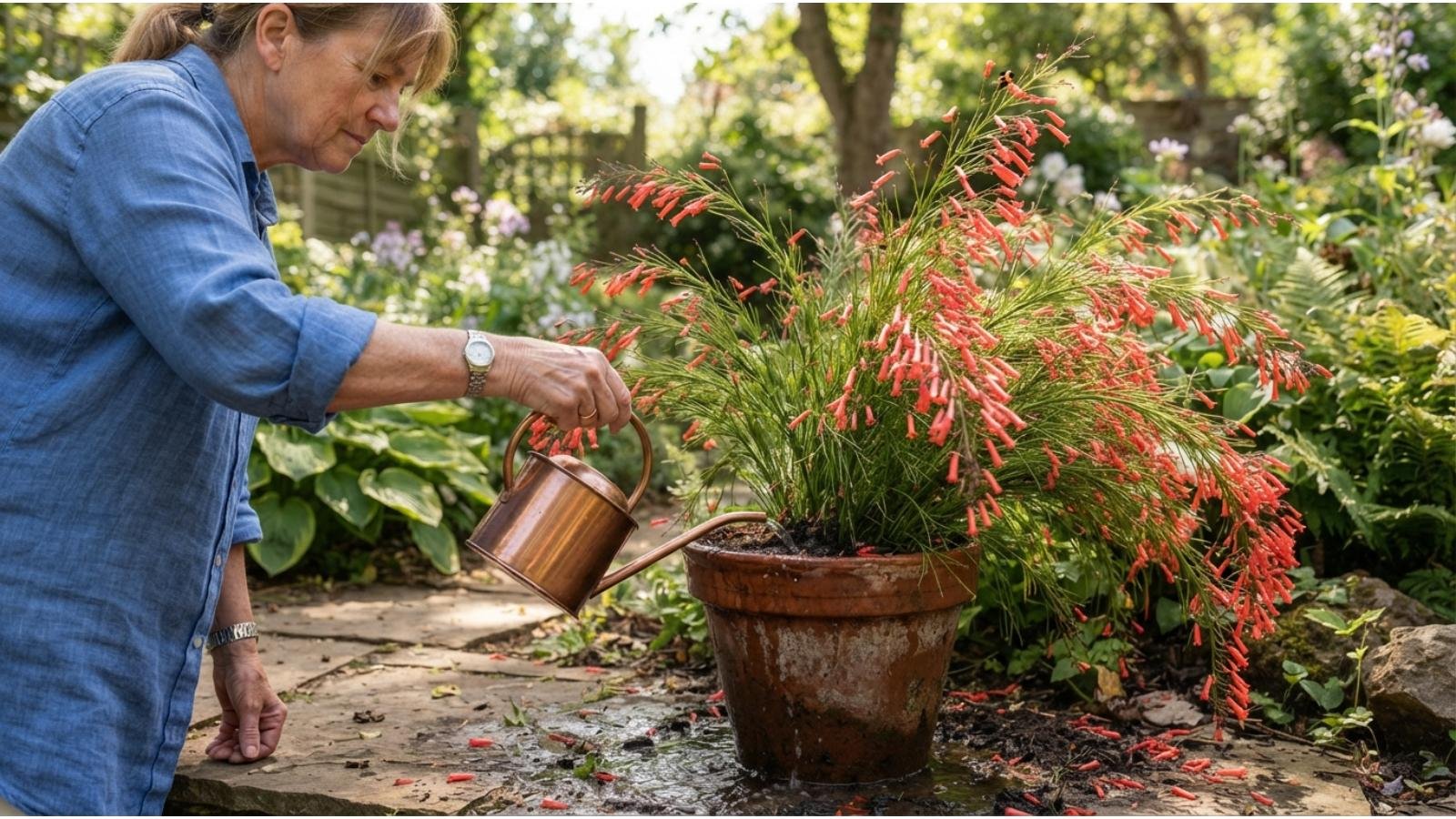
How to Water a Firecracker Plant
Firecracker plant watering should keep the soil moderately moist without making it constantly soggy.
Newly planted specimens need more consistent moisture while establishing roots. Once established, Cuphea ignea has some drought tolerance, but regular moisture generally supports stronger growth and flowering.
A useful routine is:
- Check the soil before watering.
- Water thoroughly when the upper layer begins to dry.
- Allow excess water to drain completely.
- Reduce watering during cool or low-light periods.
- Avoid leaving containers sitting in water.
Container plants may need water more frequently than plants growing in the ground, particularly during hot weather.
The exact schedule depends on temperature, pot size, sunlight, soil, humidity, and rainfall, so watering by calendar alone is less reliable than checking the soil.
Firecracker Plant Temperature and Humidity
Warm conditions suit firecracker plants because they originate from tropical and subtropical regions.
Cuphea ignea is frost sensitive and is generally hardy only in warm regions, with North Carolina Extension listing it for USDA Zones 10 through 12.
If you live somewhere with cold winters, you have several options:
- Grow the plant as an annual.
- Keep it in a container.
- Move the container into a warm, bright location before frost.
- Protect established plants in marginal climates according to local conditions.
Cold damage can cause foliage loss or dieback. Do not assume a damaged plant is dead immediately after a cold event. In suitable climates, plants can recover when warm conditions return.
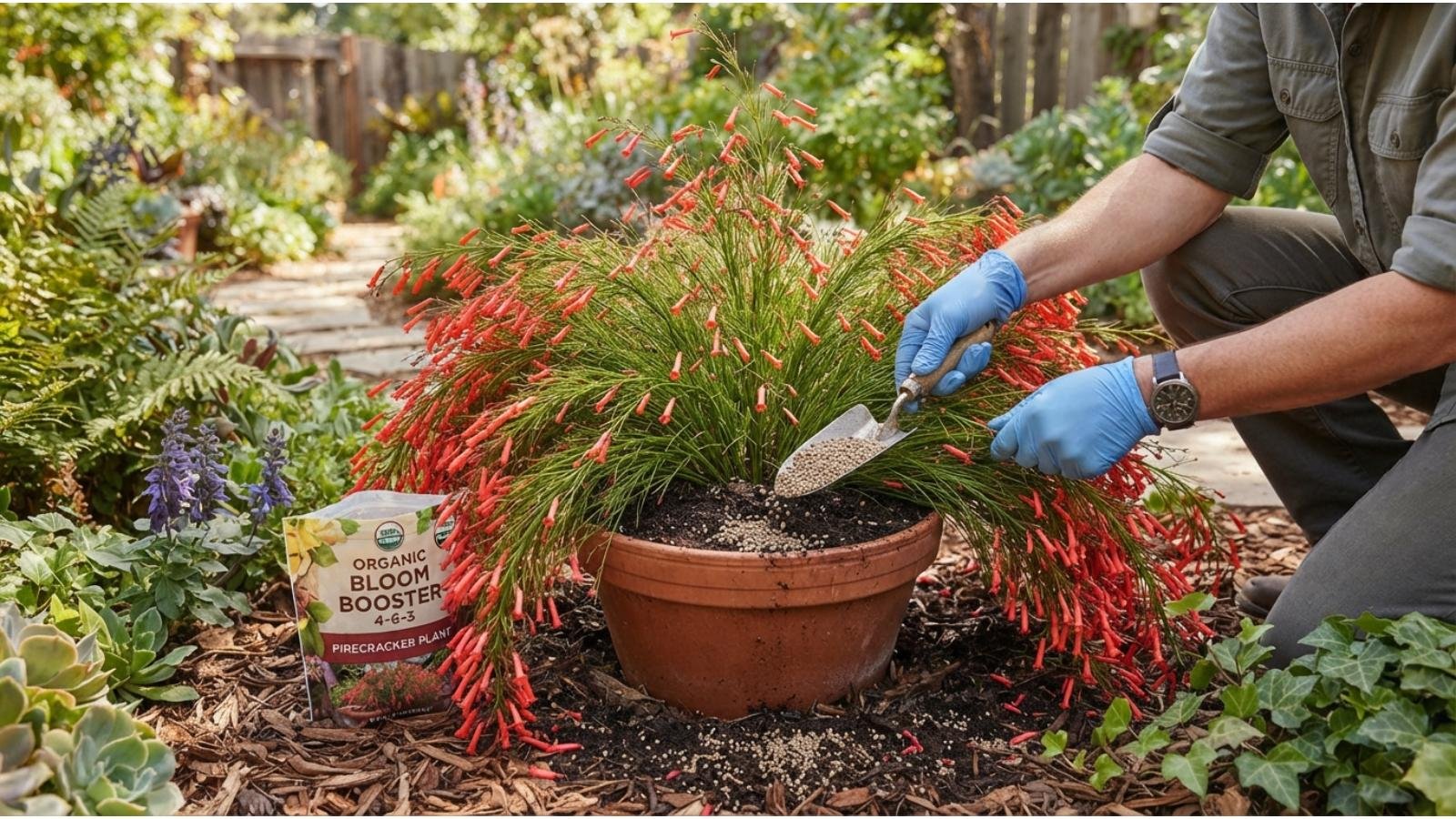
How to Fertilize Firecracker Plant
Firecracker plants benefit from regular nutrition during active growth, particularly when grown in containers or poor soil.
UF/IFAS recommends regular watering and fertilization for good performance, while specific cultivars such as Vermillionaire are recommended for monthly fertilization when maximum flowering is desired.
A practical approach is to:
- Feed during active growth.
- Use a balanced flowering-plant fertilizer according to its label.
- Avoid excessive fertilizer.
- Reduce feeding during cool or dormant periods.
- Water normally after applying granular fertilizer according to the product instructions.
Overfeeding is not a shortcut to more flowers. Excessive nutrients can encourage foliage growth at the expense of a balanced plant.
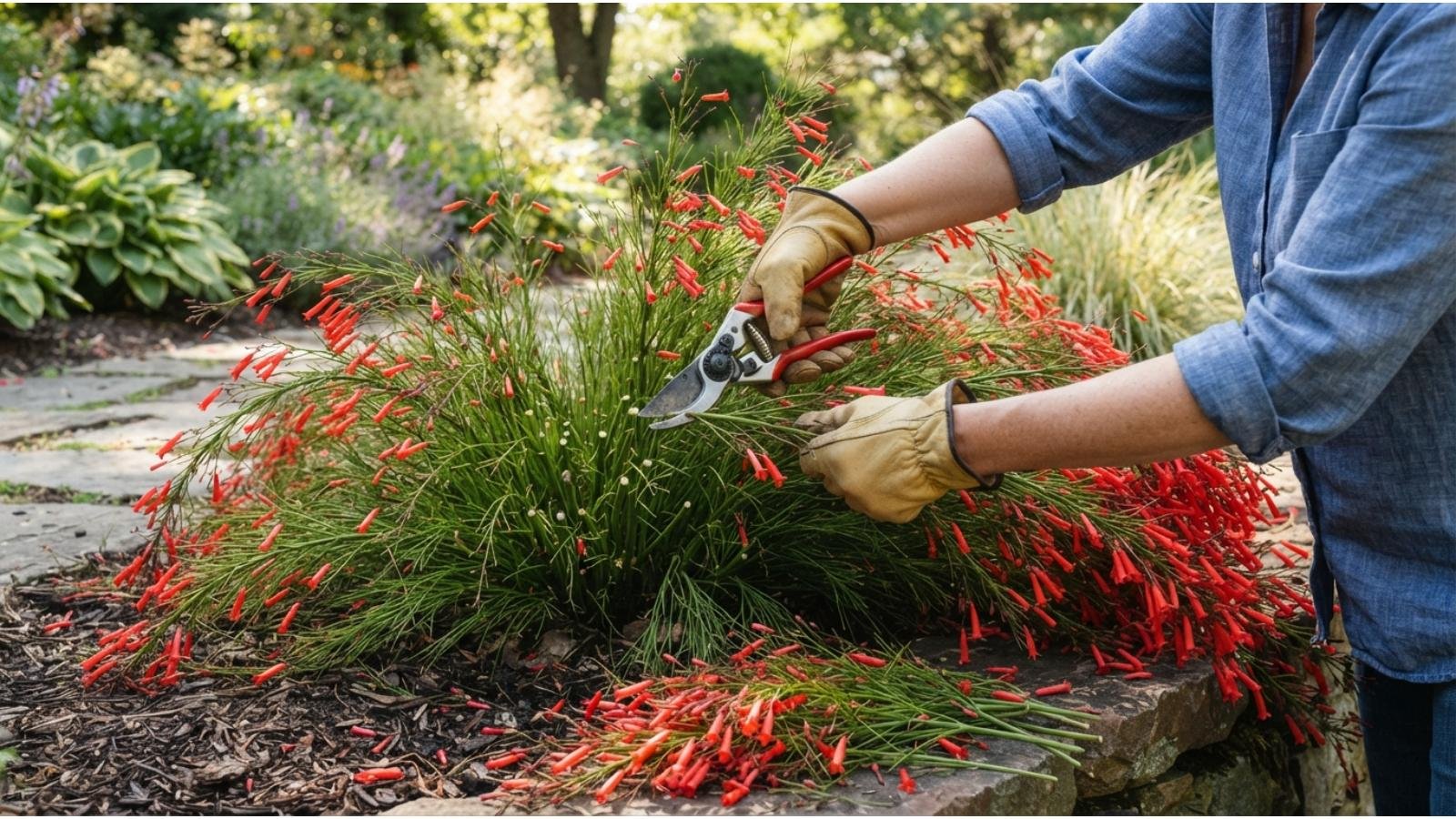
How to Prune Firecracker Plant
Pruning is useful when the plant becomes leggy, oversized, or uneven.
For Cuphea ignea, North Carolina Extension recommends pruning after flowering when needed. UF/IFAS also recommends pinching stem tips during the growing season to encourage a fuller plant.
To encourage bushier growth:
- Pinch the growing tips of young stems.
- Remove weak or awkward growth.
- Cut back excessively long stems.
- Use clean, sharp pruning tools.
- Avoid removing large amounts of healthy growth at once.
Regular light pinching is often better than waiting until the plant becomes extremely leggy.
Image Suggestion: Before-and-after illustration showing leggy firecracker plant growth and a compact plant after tip pruning.
Does Firecracker Plant Need Deadheading
Usually, no.
Firecracker plants can continue producing flowers without intensive deadheading. Some popular Cuphea cultivars are specifically described as not requiring deadheading.
Instead of spending time removing every faded flower, focus on:
- Adequate sunlight.
- Consistent moisture.
- Occasional feeding.
- Pinching when growth becomes leggy.
- Removing damaged or unhealthy stems.
This makes firecracker plant a convenient choice for gardeners who want long-lasting flowers without high maintenance.
Growing Firecracker Plant in Containers
Firecracker plants can perform particularly well in containers because their size and branching habit make them suitable for patios, balconies, and sunny entrances.
Choose a container with:
- Drainage holes.
- Enough room for root development.
- Fresh, well-drained potting mix.
- A stable base that will not easily tip as the plant grows.
Container plants dry out faster than plants in the ground, especially during hot weather. Check the pot regularly rather than assuming rainfall has provided enough moisture.
If temperatures become dangerously cold, a container also gives you the advantage of moving the plant to a protected location.
Firecracker Plant Care Through the Seasons
Spring
Spring is a good time to encourage fresh growth after winter.
In warm climates, damaged stems can be removed and plants can be lightly shaped. UF/IFAS recommends cutting plants back after winter in appropriate climates to encourage fresh growth from the base.
As temperatures rise, gradually return to regular watering and active fertilization.
Summer
Summer is usually the main growing and flowering period.
Provide:
- Strong sunlight.
- Consistent moisture.
- Good drainage.
- Occasional fertilizer.
- Light pruning if stems become leggy.
Cuphea is well adapted to heat and can produce abundant flowers during warm weather.
Fall
Flowering can continue into fall, depending on the climate and cultivar.
Watch nighttime temperatures closely in areas that experience early cold weather. If your plant is container grown, move it to protection before damaging frost.
Winter
Winter care depends heavily on your climate.
In warm regions, the plant may continue growing. In colder areas, it may need to be treated as an annual or protected indoors.
When growth slows, reduce watering rather than maintaining the same schedule used during hot summer weather. North Carolina Extension specifically recommends reducing watering for plants being overwintered.
Common Firecracker Plant Problems
Yellow Leaves
Yellow leaves can have several causes.
Check the soil first. If it remains wet for an extended period, excessive moisture or poor drainage may be contributing to the problem.
Also consider:
- Insufficient light.
- Natural aging of older leaves.
- Nutritional deficiencies.
- Temperature stress.
- Root problems.
Do not automatically add fertilizer whenever leaves turn yellow. First identify the underlying cause.
Leggy Growth
Leggy growth usually means the plant is stretching rather than developing a dense form.
Insufficient light is a common factor. Move container plants toward brighter conditions when appropriate and pinch growing tips to encourage branching.
UF/IFAS specifically recommends tip pinching when cigar flower becomes leggy.
Few Flowers
If your plant looks healthy but is not flowering well, review its growing conditions.
The most important questions are:
- Is it receiving enough sunlight.
- Is it actively growing.
- Is watering appropriate.
- Is it receiving adequate nutrition.
- Has it recently experienced cold or other stress.
Firecracker plants generally flower most strongly when they have sufficient light and favorable warmth.
Wilting
Wilting does not always mean the plant needs more water.
Check the soil before watering. Dry soil suggests water stress, while saturated soil may indicate a drainage or root problem.
This simple check prevents one of the most common gardening mistakes, adding more water to a plant that is already sitting in wet soil.
Pests
Firecracker plants are generally considered relatively trouble-free, although pests can occasionally occur. Some extension sources specifically note that Japanese beetles may feed on Cuphea foliage.
Inspect leaves regularly for:
- Chewed foliage.
- Clusters of insects.
- Sticky residue.
- Distorted new growth.
- Webbing.
Treat pest problems according to the pest involved rather than automatically applying broad-spectrum insecticides.
Firecracker Plant Propagation
Firecracker plants can be propagated from seed or stem cuttings.
North Carolina Extension lists both methods for Cuphea ignea, while UF/IFAS also notes that cigar flower can be propagated from seed or cuttings.
Stem Cuttings
Stem cuttings are useful when you want to reproduce a desirable plant.
A basic process is:
- Take a healthy stem cutting.
- Remove unnecessary lower leaves.
- Place the cutting in a suitable rooting medium.
- Keep the medium appropriately moist.
- Provide warmth and bright indirect light.
- Transplant after a strong root system develops.
Taking several cuttings gives you a better chance of successful propagation.
Firecracker Plant vs Vermillionaire
The term firecracker plant may describe both Cuphea ignea and modern Cuphea hybrids.
Vermillionaire is a popular Cuphea hybrid that produces reddish-orange tubular flowers and has a mounding growth habit. North Carolina Extension reports that it can reach about 30 inches or more in height, attracts pollinators, tolerates heat and drought, and does not require deadheading.
| Feature | Cuphea ignea | Vermillionaire |
|---|---|---|
| Plant type | Tender perennial or annual depending on climate | Tender perennial or annual depending on climate |
| Flowers | Tubular red-orange flowers | Abundant reddish-orange tubular flowers |
| Light | Full sun to partial shade | Full sun |
| Soil | Moist, well drained | Moist, well drained |
| Pollinators | Attracts pollinators | Attracts hummingbirds and pollinators |
| Pruning | Useful when leggy | Pinch if needed |
| Deadheading | Generally unnecessary | Not required |
Cultivar characteristics can vary, so check the plant label when purchasing a particular firecracker plant.
A Note About the Name Firecracker Plant
One important point for gardeners is that firecracker plant is not a single universally defined species.
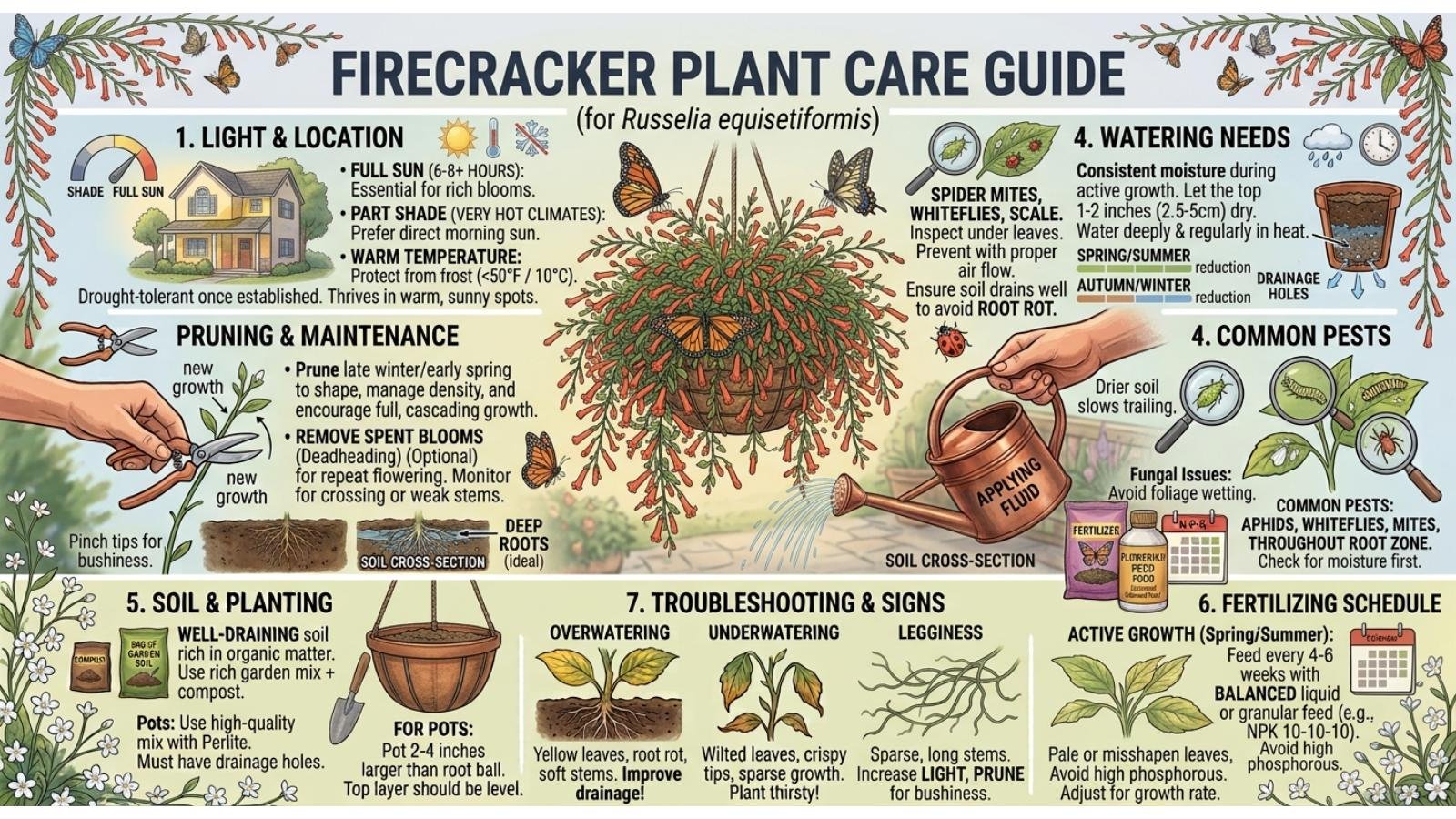
Cuphea ignea is commonly called firecracker plant, but Russelia equisetiformis also carries the same common name. The two plants have very different growth habits. Russelia equisetiformis develops arching or trailing branches and red flowers, while Cuphea ignea has a more compact, branched habit.
Always check the botanical name on the nursery label before following a care guide.
Image Suggestion: Side-by-side comparison of Cuphea ignea and Russelia equisetiformis labeled with their botanical names.
Frequently Asked Questions
How much sun does a firecracker plant need.
Firecracker plant generally performs best in full sun to partial shade. More light usually supports stronger flowering and compact growth, although some protection from intense afternoon heat can be helpful in extremely hot climates.
How often should I water firecracker plant.
Water when the soil begins to dry rather than following a rigid schedule. Keep the soil moderately moist during active growth while ensuring excess water drains freely.
Is firecracker plant perennial.
Cuphea ignea is a tender perennial in sufficiently warm climates but is commonly grown as an annual in colder regions. North Carolina Extension lists it as winter hardy in Zones 10 through 12.
Can firecracker plant grow indoors.
It can be overwintered in a container indoors if given a warm, bright location. Indoor plants generally need less water during periods of reduced growth.
Should I deadhead firecracker plant.
Usually, no. Many Cuphea plants continue flowering without routine deadheading, so regular watering, adequate light, and appropriate nutrition are more important.
Why is my firecracker plant not flowering.
Insufficient sunlight, inadequate growing conditions, cold stress, or excessive vegetative growth can reduce flowering. Start by checking light and overall plant health before increasing fertilizer.
Can firecracker plant tolerate drought.
Established Cuphea ignea has some drought tolerance, but it generally performs better with regular moisture, particularly during active growth and hot weather.
Does firecracker plant attract hummingbirds.
Yes. Cuphea species and hybrids are valued for their tubular, nectar-rich flowers, which can attract hummingbirds as well as butterflies and bees.
Conclusion
Successful firecracker plant care comes down to a few fundamentals: give it plenty of light, use well-drained soil, maintain appropriate moisture, feed during active growth, and protect it from damaging cold.
The plant is particularly rewarding for gardeners who want long-lasting color without complicated maintenance. If your plant becomes leggy, increase light when possible and pinch the growing tips. If flowering slows, review light, moisture, temperature, and nutrition before making major changes.
Most importantly, check the botanical name before buying or troubleshooting. Since several different plants are sold under the name firecracker plant, identifying whether you have Cuphea ignea or another species can make your care routine much more accurate.