Quick Answer
Flaming Katy plant care is relatively easy because Kalanchoe blossfeldiana is a drought-tolerant succulent that prefers bright light, well-draining soil, and infrequent watering. Let the soil dry between waterings, avoid standing water, and keep the plant in a warm location. With enough sunlight and proper watering, Flaming Katy can produce colorful flowers and remain healthy for years.
Introduction
Flaming Katy plant care is easier than caring for many flowering houseplants, but its biggest weakness is usually too much attention rather than too little. This popular kalanchoe stores water in its thick leaves, allowing it to tolerate dry conditions. Problems often begin when gardeners water it on a fixed schedule or place it in poorly draining soil.
The reward for getting the basics right is a compact succulent with glossy green foliage and clusters of bright flowers. Flaming Katy can bloom in shades such as red, pink, orange, yellow, and white. Whether you have just brought one home from a garden center or want to encourage an established plant to rebloom, understanding light, watering, soil, temperature, and pruning makes a noticeable difference.
What Is Flaming Katy?
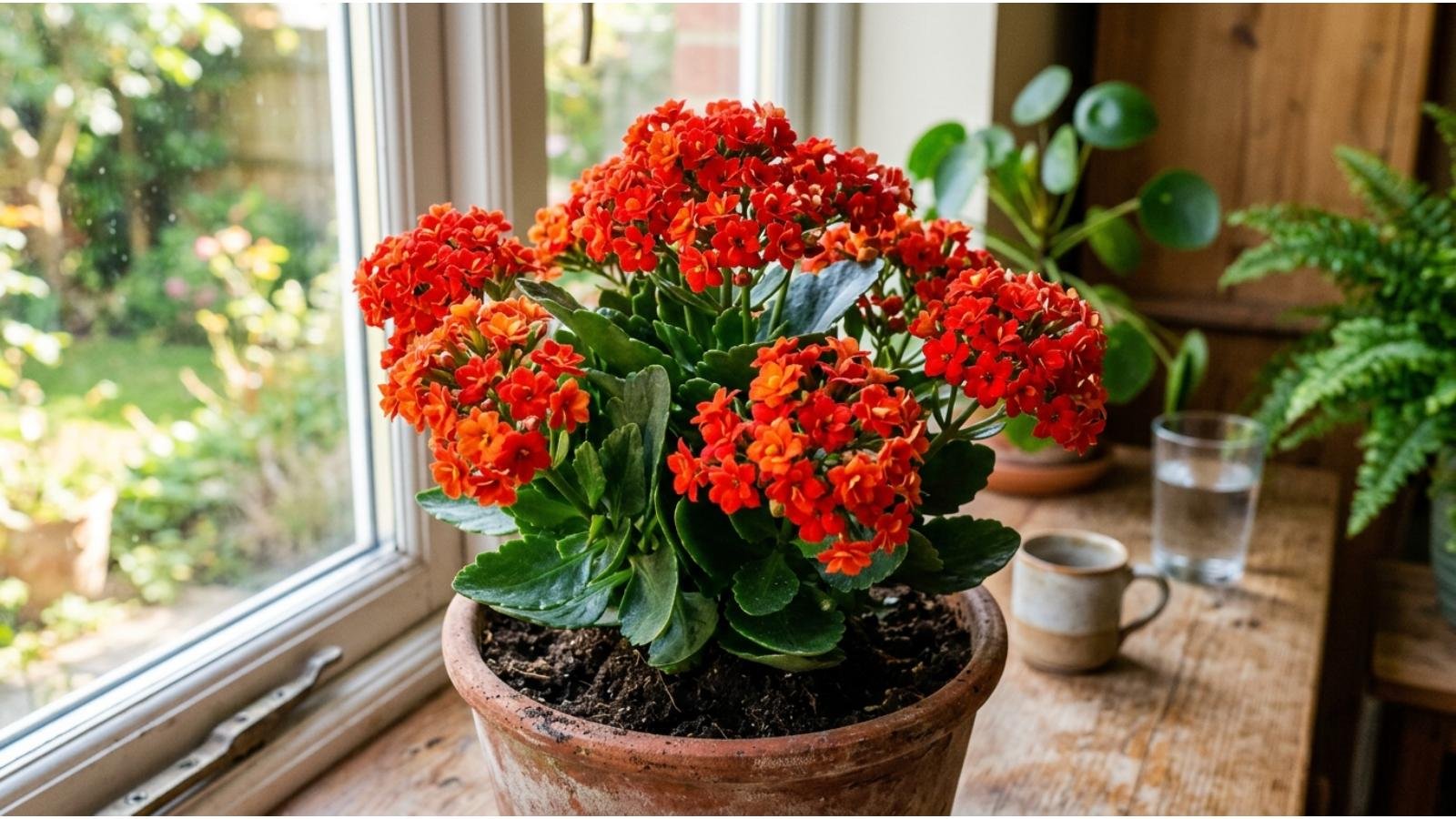
Flaming Katy, botanically known as Kalanchoe blossfeldiana, is a flowering succulent belonging to the Crassulaceae family. It is commonly grown as a houseplant because of its attractive foliage, relatively low water requirements, and long-lasting flower clusters.
The plant naturally grows in warm climates and is not frost tolerant. In cooler regions, it is usually grown indoors or moved indoors when temperatures fall.
Its succulent leaves are an important clue to its care requirements: they hold moisture, so the plant generally prefers drying out between thorough waterings rather than staying constantly moist.
Image Suggestion: Close-up botanical image showing Flaming Katy’s succulent leaves and flower clusters.
Flaming Katy Plant Care at a Glance
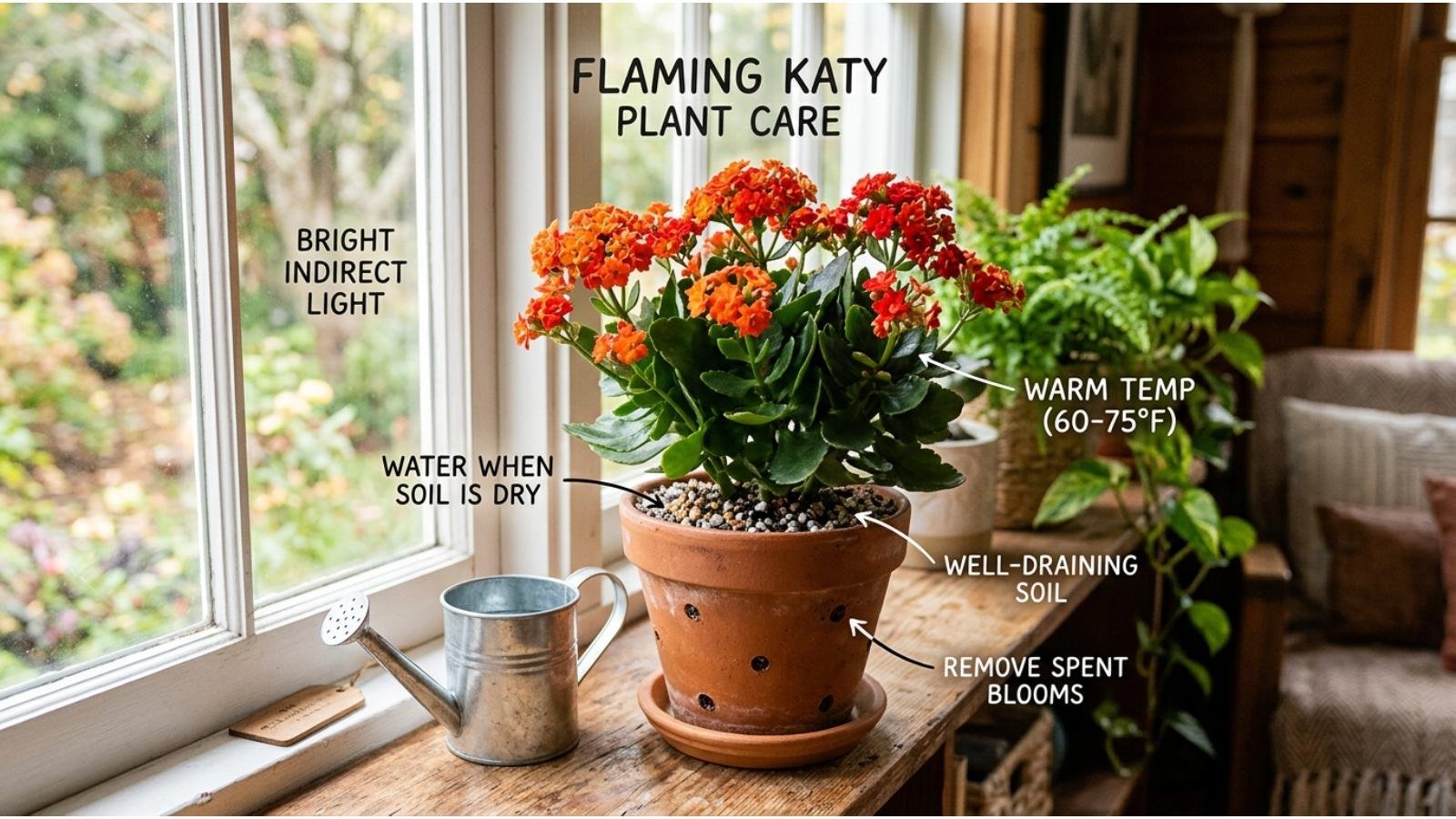
| Care Requirement | Best Practice |
|---|---|
| Light | Bright light with several hours of gentle direct sun |
| Water | Water thoroughly, then allow soil to dry |
| Soil | Fast-draining succulent or cactus mix |
| Pot | Container with a drainage hole |
| Temperature | Warm indoor temperatures; protect from frost |
| Humidity | Average household humidity is usually adequate |
| Fertilizer | Light feeding during active growth |
| Pruning | Remove faded flowers and leggy growth |
| Repotting | Usually every few years or when root-bound |
| Flowering | Bright light and appropriate day-length conditions help |
How Much Light Does Flaming Katy Need?
Bright light is one of the most important factors in successful Flaming Katy care.
Place the plant near a bright window where it receives plenty of indirect light and, when appropriate, some gentle direct sunlight. An east- or west-facing window can work particularly well. A very bright south-facing window may also work, although intense midday sun through glass can sometimes scorch the leaves.
Signs your Flaming Katy needs more light
Watch for:
- Long, stretched stems.
- Large gaps between leaves.
- Weak or floppy growth.
- Reduced flowering.
- A plant leaning strongly toward a window.
A Flaming Katy that grows beautifully but refuses to flower may not necessarily need more fertilizer. Insufficient light is often a more important issue to investigate first.
Can Flaming Katy grow in low light?
It may survive in lower light, but survival and good growth are different things. Low light can produce weak, stretched growth and poor flowering.
If your plant is several feet away from a bright window, consider moving it gradually closer to a suitable light source.
Image Suggestion: Diagram comparing Flaming Katy positioned in low, bright indirect, and excessive direct sunlight.
How Often Should You Water Flaming Katy?
There is no universally correct watering schedule because indoor conditions vary. Instead of watering every Sunday or every seven days, check the soil.
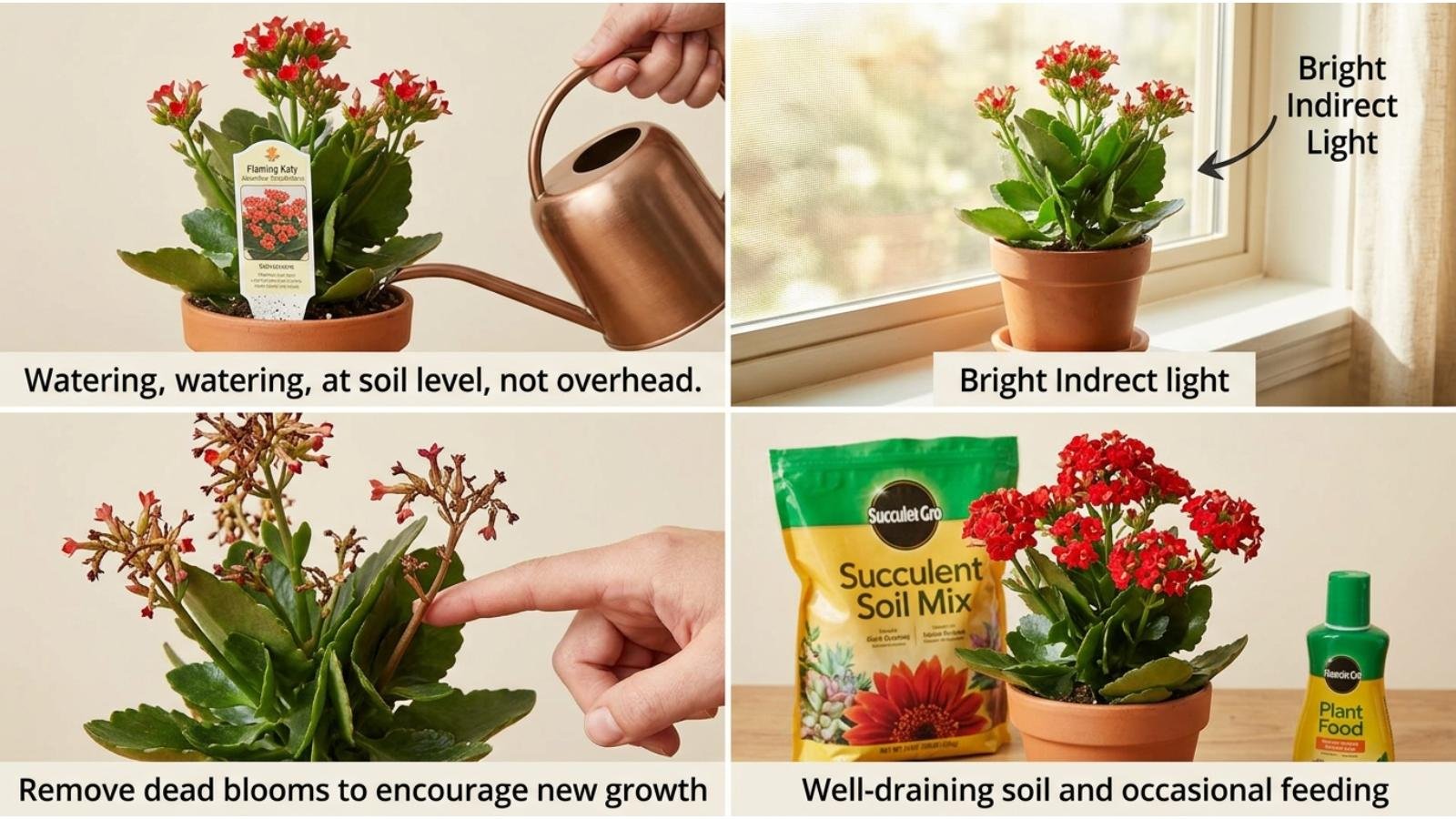
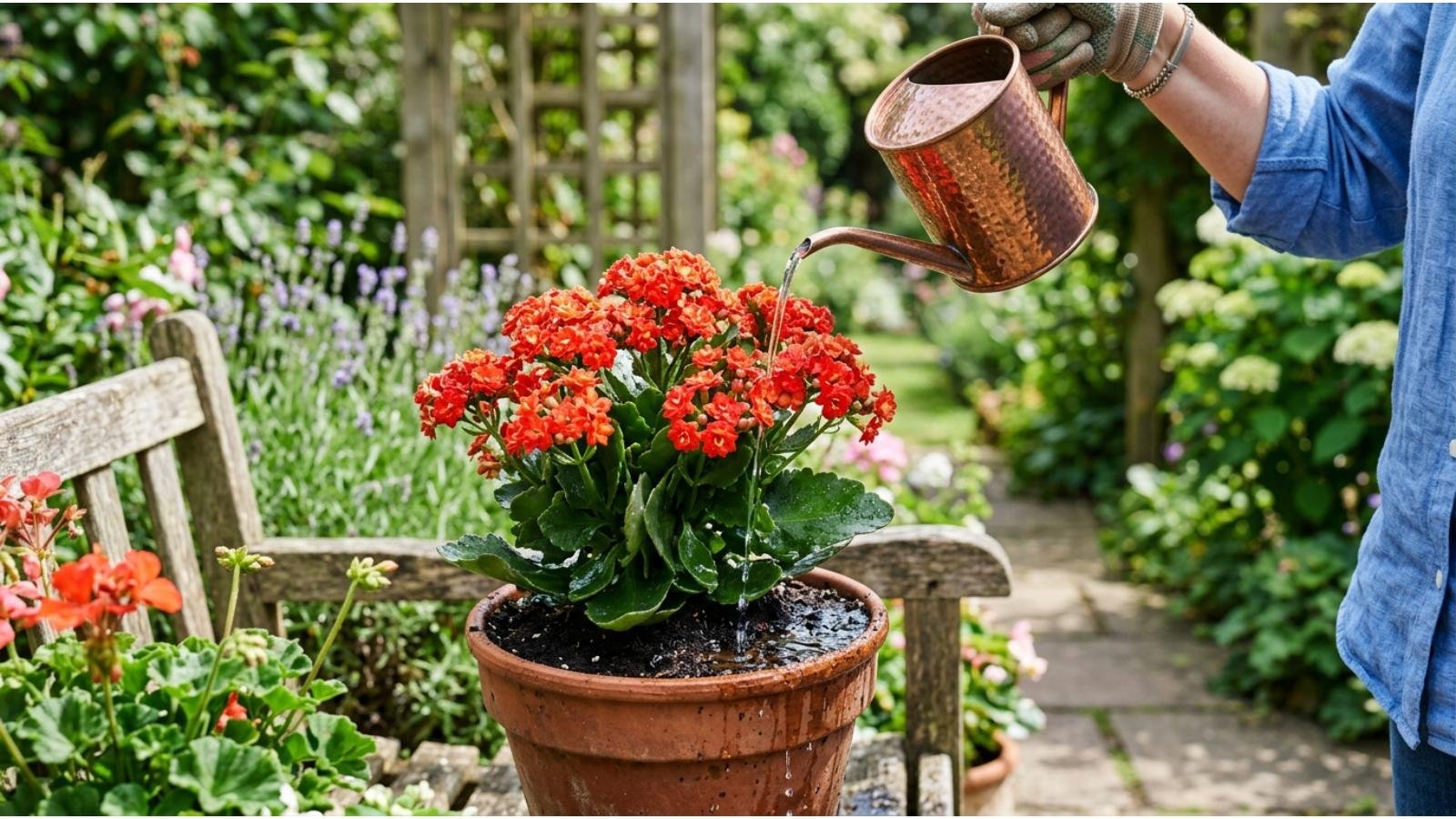
Water when the growing medium has dried substantially. When you do water, soak the soil thoroughly until excess water drains from the bottom of the pot. Empty any water sitting in a saucer or decorative container.
This approach is more reliable than giving the plant a small amount of water frequently.
Why overwatering causes problems
Flaming Katy stores water in its leaves and stems. Constantly wet soil reduces air around the roots and can encourage root problems.
A common beginner mistake is interpreting drooping leaves as an automatic signal to water. With succulents, drooping can sometimes occur because of overwatering as well as underwatering, so check the soil before reaching for the watering can.
Signs of overwatering
Look for:
- Yellowing leaves.
- Soft or mushy stems.
- Leaves dropping despite wet soil.
- Persistent moisture in the pot.
- Dark or deteriorating roots.
- A musty smell from the growing medium.
Signs of underwatering
Possible signs include:
- Wrinkled leaves.
- Very dry soil pulling away from the pot.
- Crispy lower leaves.
- Noticeable loss of firmness in the foliage.
Practical tip: Always consider the pot size, soil, temperature, light level, and season together. A Flaming Katy in a small pot beside a sunny window can dry much faster than one sitting in a large container in a dim room.
What Soil Is Best for Flaming Katy?
Use a well-draining succulent or cactus potting mix.
The goal is not simply to find soil labeled for succulents. You want a growing medium that allows excess water to move away from the roots quickly while still retaining enough moisture for healthy growth.
Avoid heavy garden soil in indoor containers because it can remain wet for too long and may compact around the roots.
If using a regular houseplant potting mix, improving drainage with appropriate coarse materials can help, but a quality commercial succulent mix is often the simplest option for beginners.
Choose a Pot With Drainage
A drainage hole is more important than an attractive container.
Decorative pots without drainage can trap water around the root system. If you prefer using a decorative outer pot, keep the plant in a nursery container with drainage and remove it when watering so excess water can escape.
Should Flaming Katy be root-bound?
Being slightly snug in its container is generally less concerning than placing it in a pot that is dramatically oversized.
An oversized pot contains more unused soil, which can stay wet for longer after watering. When repotting, choose a container only modestly larger than the existing root ball.
Image Suggestion: Cross-section illustration showing a Flaming Katy in a pot with a drainage hole versus one sitting in waterlogged soil.
Ideal Temperature for Flaming Katy
Flaming Katy prefers warm conditions similar to comfortable indoor temperatures.
Protect it from:
- Frost.
- Freezing temperatures.
- Cold drafts.
- Sudden temperature changes.
- Prolonged exposure to very hot surfaces or intense heat.
If you grow Flaming Katy outdoors during warm weather, bring it inside before cold temperatures or frost become a concern.
Does Flaming Katy Need High Humidity?
Usually, no.
Normal household humidity is generally sufficient. Unlike tropical houseplants, Flaming Katy does not need consistently humid air to remain healthy.
Avoid routinely misting the leaves as a solution to dryness. Good light, appropriate watering, air circulation, and well-draining soil are more important factors.
How to Fertilize Flaming Katy
Flaming Katy does not require heavy feeding.
During active growth, use a balanced fertilizer at an appropriate dilution according to the product label. Avoid repeatedly applying concentrated fertilizer because excessive salts can accumulate in the soil and damage roots.
A useful approach is to prioritize healthy growing conditions before increasing fertilizer. A plant suffering from poor light, root damage, or improper watering will not necessarily recover simply because it receives more nutrients.
How to Encourage Flaming Katy to Bloom
Flowering is one of the main reasons people grow Flaming Katy, and light plays a major role.
Provide strong, appropriate light during its growing period. After flowering, remove spent flower clusters to keep the plant tidy and encourage new growth.
Kalanchoe blossfeldiana is also influenced by photoperiod, meaning the length of day and night can affect flower initiation. Commercial growers often manipulate day length to produce plants in flower at specific times.
For home gardeners, the simplest strategy is to provide healthy growth, plenty of suitable light, and consistent care rather than constantly changing the plant’s environment.
Why isn’t my Flaming Katy flowering?
Common possibilities include:
- Insufficient light.
- Excessive nitrogen feeding.
- Poor overall plant health.
- Lack of appropriate seasonal conditions.
- The plant has recently finished a flowering cycle.
Do not assume fertilizer is always the answer. If a plant is healthy but producing leaves instead of flowers, evaluate its light and seasonal conditions first.
How to Prune Flaming Katy
Pruning is straightforward.
After flowers fade, remove the spent flower clusters. If stems have become long or unattractive, trim them back with clean, sharp scissors or pruning shears.
Pruning can help maintain a compact shape and encourage branching.
Avoid removing large amounts of healthy foliage unnecessarily. Flaming Katy’s leaves are useful energy-producing structures, so routine aggressive pruning is not required.
Image Suggestion: Step-by-step illustration showing how to remove spent Flaming Katy flower clusters without damaging healthy leaves.
How to Propagate Flaming Katy
Flaming Katy can be propagated from stem cuttings.
Simple stem-cutting method
- Choose a healthy, non-flowering stem.
- Cut a section using clean scissors.
- Remove the lower leaves.
- Allow the cut end to dry and callus for a short period.
- Place the cutting into a well-draining growing medium.
- Keep the medium lightly managed rather than constantly wet.
- Provide bright, indirect light.
- Once roots develop and new growth appears, continue normal succulent care.
Avoid treating a fresh cutting like a fully established plant by soaking the soil repeatedly.
Repotting Flaming Katy
Repot when the plant has clearly outgrown its container, the soil has deteriorated, or roots are becoming crowded.
The best time is generally during active growth rather than when the plant is heavily stressed or flowering.
When repotting:
- Select a pot with drainage.
- Use fresh, fast-draining soil.
- Avoid moving into an excessively large container.
- Handle the roots gently.
- Allow the plant to settle before resuming a normal watering routine.
If the existing soil remains healthy and the plant is growing well, repotting simply for the sake of doing so is unnecessary.
Common Flaming Katy Plant Care Mistakes
Watering on a Fixed Schedule
Calendar-based watering ignores changes in temperature, light, humidity, and soil moisture.
Better approach: Check the soil and plant before watering.
Using a Pot Without Drainage
This is particularly risky for succulents because excess water has nowhere to escape.
Better approach: Use a container with a drainage hole.
Keeping the Plant Too Far From a Window
A bright room can still be too dim for strong flowering.
Better approach: Position Flaming Katy where it receives substantially more useful light.
Using Heavy Soil
Dense soil can remain wet for extended periods.
Better approach: Choose a well-draining succulent growing medium.
Assuming Yellow Leaves Mean Underwatering
Yellowing can occur for several reasons, and excessive moisture is a common possibility.
Better approach: Check soil moisture before increasing watering.
Fertilizing a Stressed Plant
More fertilizer does not fix root damage, poor light, or watering problems.
Better approach: Correct the environmental problem first.
Flaming Katy Problems and Solutions
| Problem | Likely Cause | What to Do |
|---|---|---|
| Yellow leaves | Excess moisture, stress, or aging foliage | Check soil and drainage |
| Mushy stems | Severe moisture stress or root problems | Reduce watering and inspect roots |
| Wrinkled leaves | Dry soil or prolonged underwatering | Check moisture and water thoroughly when appropriate |
| Leggy growth | Insufficient light | Move to a brighter location gradually |
| No flowers | Poor light or unsuitable seasonal conditions | Improve light and review care |
| Leaf drop | Watering stress, temperature changes, or root problems | Examine soil, roots, and environment |
| Brown crispy areas | Excessive dryness or intense sun | Check watering and light exposure |
| Slow growth | Low light, cool conditions, or seasonal dormancy | Review environmental conditions |
How to Revive an Unhealthy Flaming Katy
The first step is diagnosis, not fertilizer.
If the soil is extremely wet
Stop watering and assess the drainage. If the soil remains saturated for an unusually long time, inspect the roots for signs of deterioration.
If the soil is completely dry
Water thoroughly when the plant is otherwise healthy and the container can drain freely. Avoid repeated tiny amounts that only wet the surface.
If the plant is stretched
Move it toward stronger light gradually. A sudden change from low light to intense direct sun can stress foliage.
If the roots are damaged
Remove compromised roots with clean tools and repot the plant into fresh, well-draining medium if necessary. Severely damaged plants may also benefit from healthy stem cuttings as a backup propagation method.
Seasonal Flaming Katy Plant Care
Spring
Spring is a good time to encourage fresh growth.
- Increase attention to watering as growth resumes.
- Provide strong light.
- Begin appropriate feeding if the plant is actively growing.
- Prune leggy stems if necessary.
Summer
Protect the plant from excessive heat and intense afternoon sun if it begins showing signs of leaf scorch.
Outdoor plants should remain in a location where they receive suitable light without being exposed to damaging extremes.
Fall
Growth may begin slowing as conditions change.
Reduce watering according to how quickly the soil dries rather than following the summer schedule.
Winter
Indoor Flaming Katy generally needs less water when growth slows.
Keep it away from freezing temperatures and cold drafts, while maintaining adequate light.
Important: The plant’s actual environment matters more than the calendar. A warm, brightly lit indoor plant may continue growing while another plant becomes nearly dormant.
Can Flaming Katy Grow Outdoors?
Yes, Flaming Katy can be grown outdoors in warm, frost-free conditions.
It works well in containers, patios, balconies, and sheltered garden locations where drainage is excellent. However, it should be protected from freezing temperatures and excessive prolonged rainfall.
If moving a plant from indoor conditions outdoors, acclimate it gradually rather than placing it immediately into strong sunlight.
Is Flaming Katy Safe Around Pets?
Kalanchoe species are considered toxic to cats and dogs if eaten, with the greatest concern being the plant’s cardiac-active compounds. Keep Flaming Katy out of reach of pets and contact a veterinarian promptly if a pet has consumed part of the plant.
For homes with curious pets, placement is an important part of responsible plant care.
Expert Tips for Better Flaming Katy Growth
A few small changes can make Flaming Katy much easier to manage:
- Judge watering by soil moisture, not the calendar.
- Prioritize drainage before worrying about fertilizer.
- Give flowering plants more attention to light than many beginners expect.
- Remove faded flowers to keep the plant looking tidy.
- Rotate the container periodically for more balanced growth.
- Do not leave the nursery pot sitting in collected water.
- Acclimate indoor plants gradually when moving them outdoors.
- Keep newly propagated cuttings slightly different from established plants in watering strategy.
- Treat sudden changes in leaf appearance as clues rather than immediately assuming one cause.
One of the most useful habits is to observe how quickly the soil dries in your particular home. Once you understand that rhythm, watering becomes much less complicated.
Frequently Asked Questions
How often should you water a Flaming Katy?
Water when the soil has dried substantially rather than following a fixed schedule. Water thoroughly and allow excess moisture to drain completely.
Does Flaming Katy need direct sunlight?
It benefits from bright light and can tolerate some gentle direct sun. Extremely intense sunlight, especially through hot glass, can scorch foliage, so adjust exposure to your growing conditions.
Why are my Flaming Katy leaves turning yellow?
Overwatering or soil that remains wet too long is a common cause. Check the soil, drainage, roots, light, and overall growing conditions before changing the watering routine.
Why is my Flaming Katy not blooming?
Insufficient light is one possibility. Review the plant’s light exposure, overall health, feeding practices, and seasonal conditions before adding more fertilizer.
Can Flaming Katy survive indoors?
Yes. Flaming Katy is commonly grown indoors and can perform well when given bright light, well-draining soil, and careful watering.
Should I remove dead flowers from Flaming Katy?
Yes. Removing spent flower clusters improves the plant’s appearance and can support continued maintenance and new growth.
Can Flaming Katy grow from cuttings?
Yes. Healthy stem cuttings can be rooted in an appropriate well-draining growing medium.
What is the best soil for Flaming Katy?
A fast-draining cactus or succulent mix is a practical choice. The soil should not remain saturated after watering.
How do I make Flaming Katy bushier?
Provide adequate light and prune excessively long stems appropriately. Good light helps prevent weak, stretched growth and supports more compact development.
Can Flaming Katy live outside year-round?
Only in suitable warm, frost-free climates. In regions with freezing winters, move the plant indoors or protect it appropriately before temperatures become dangerous.
Conclusion
Successful Flaming Katy plant care comes down to controlling the conditions that matter most: bright light, fast drainage, careful watering, suitable temperatures, and occasional pruning. This is a plant that generally performs better when you avoid overwatering and resist the temptation to constantly intervene.
If your Flaming Katy is struggling, start with the basics. Check the soil moisture, inspect the drainage, evaluate the available light, and look at the roots if symptoms suggest a moisture problem. Once those fundamentals are right, this colorful flowering succulent can remain attractive and rewarding with surprisingly little maintenance.