Quick Answer
Lambs ear plant care is easiest when the plant receives plenty of sunlight, sharply draining soil, and relatively little water once established. Stachys byzantina prefers dry conditions and can struggle in consistently wet soil. Water deeply when the soil has dried, avoid wetting its fuzzy leaves, and remove damaged foliage regularly. In humid or rainy conditions, good air circulation and excellent drainage are especially important for preventing rot.
Introduction
Lambs ear plant care is surprisingly simple, but this soft, silvery perennial has one major weakness: too much moisture. Its velvety leaves may look delicate, yet an established lambs ear is generally much tougher than its appearance suggests.
The biggest mistake is treating it like a thirsty leafy plant. Lambs ear is adapted to relatively dry conditions, so the goal is not to keep the soil constantly moist. Instead, give it strong light, excellent drainage, and enough space for air to move around the foliage.
This guide explains where to plant lambs ear, how often to water it, when to fertilize, how to prune and divide it, and what to do when common problems appear.
Understanding Lambs Ear
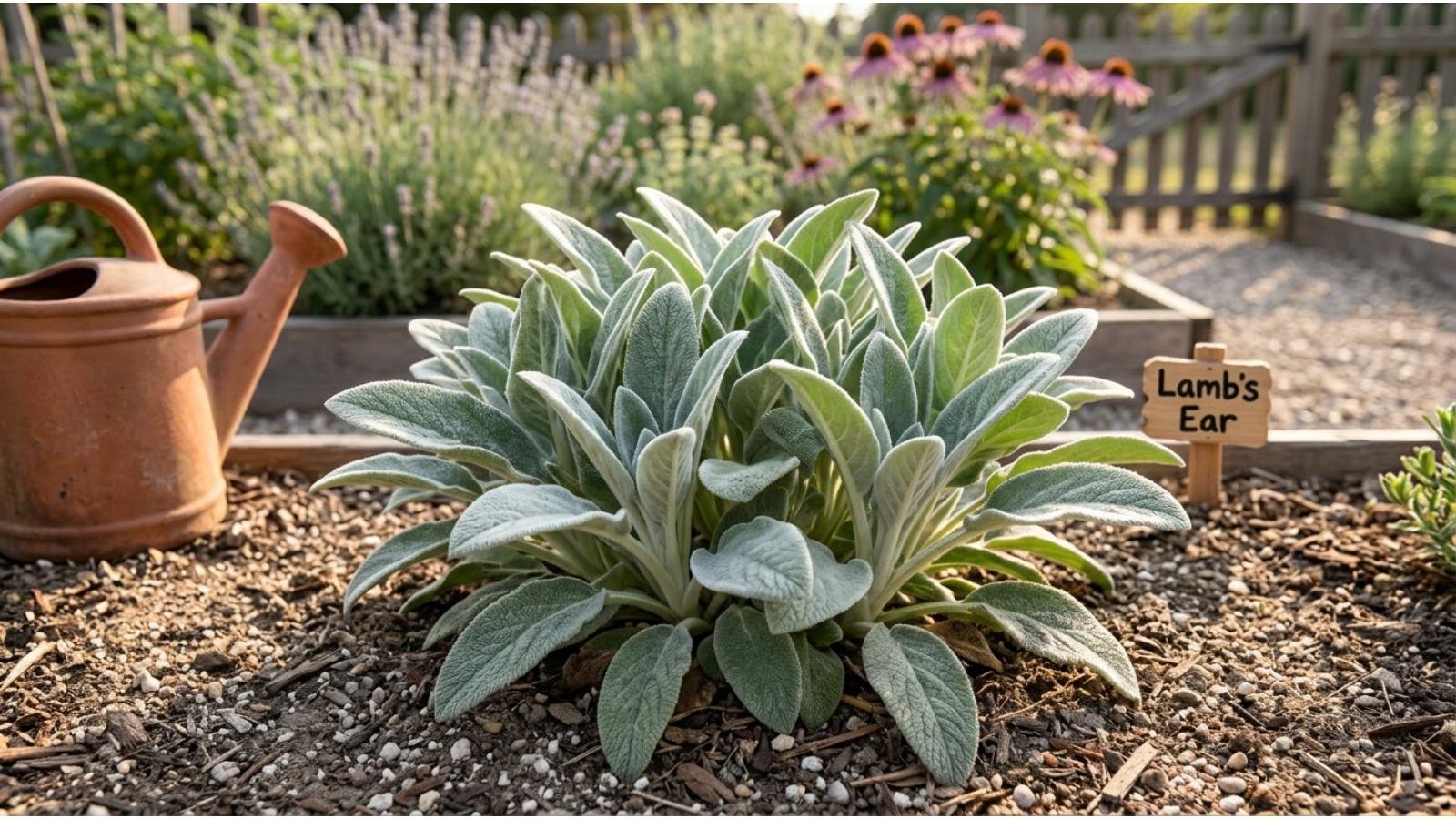
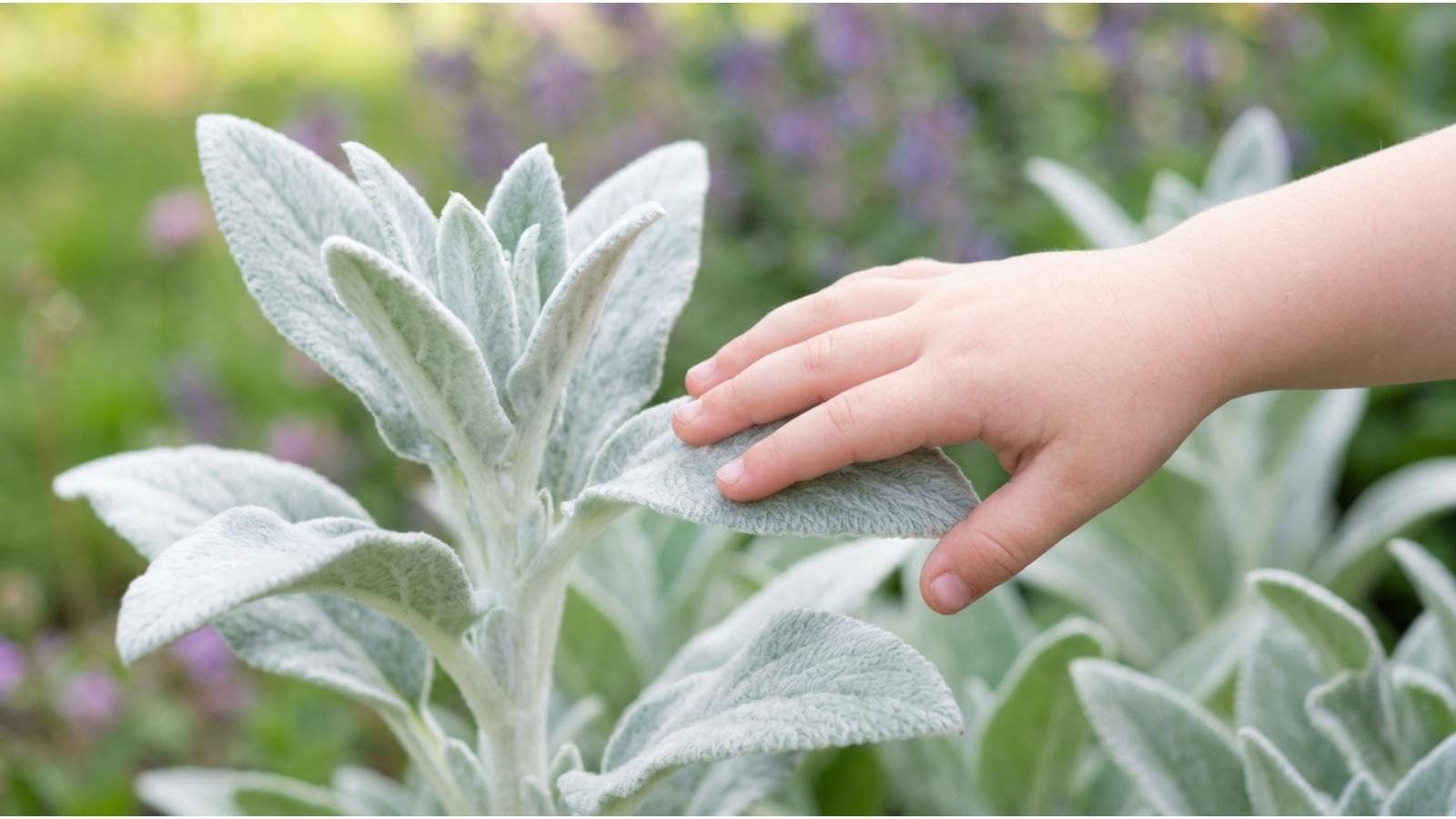
Lambs ear, botanically known as Stachys byzantina, is a low-growing perennial valued primarily for its distinctive foliage. Its leaves are covered with fine hairs that give them a soft, woolly texture and a silvery-gray appearance.
It is commonly grown as:
- A border plant.
- A ground-covering perennial.
- An edging plant.
- A rock-garden plant.
- A drought-tolerant landscape plant.
- A foliage contrast plant in mixed flower beds.
The plant can also produce upright flower spikes, usually carrying small pinkish-purple flowers.
Practical insight: The foliage is often the main reason gardeners grow lambs ear. If your priority is attractive leaves rather than flowers, concentrate on sunlight, drainage, and keeping the foliage relatively dry.
Choose the Right Location Before Planting
Location has a bigger impact on lambs ear than frequent maintenance.
Sunlight
Lambs ear generally performs best in full sun, particularly where the plant receives several hours of direct sunlight each day.
More sunlight can help:
- Maintain compact growth.
- Keep foliage silvery and attractive.
- Improve drying after rainfall.
- Reduce conditions that encourage fungal problems.
In very hot climates, some afternoon protection can be helpful if the plant shows signs of heat stress, but excessive shade can produce weaker, less attractive growth.
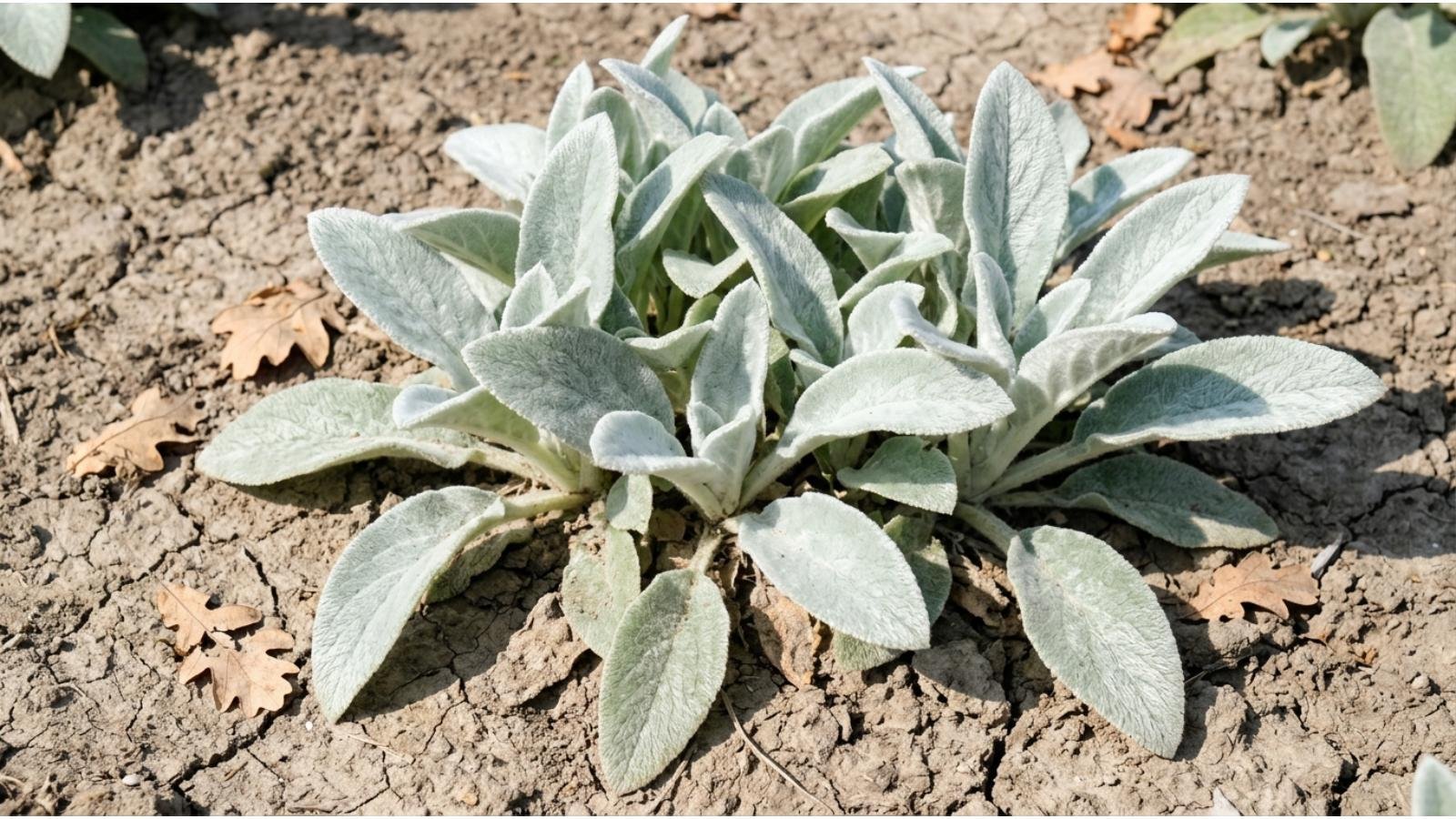
Image Suggestion: Healthy lambs ear growing in a sunny, dry garden border.
Soil
The most important soil characteristic is good drainage.
Suitable soil can include:
- Sandy soil.
- Gravelly soil.
- Light loamy soil.
- Other well-draining garden mixes.
Heavy clay is more challenging because it can retain water around the roots. If your garden soil stays wet after rainfall, improving drainage is usually more useful than simply reducing watering.
A raised bed or slightly elevated planting area can be particularly helpful in poorly drained gardens.
How to Water Lambs Ear
Watering is where many lambs ear problems begin.
After planting, water the plant thoroughly enough to help establish its roots. Once established, allow the soil to dry between waterings rather than keeping it continuously damp.
A useful approach is:
- Check the soil before watering.
- If the upper soil has dried and the plant needs moisture, water deeply around the root zone.
- Let excess water drain away.
- Wait until the soil dries again before watering.
Do not rely on a fixed schedule alone. Weather, soil type, container size, rainfall, and sunlight all change how quickly the plant dries.
Should You Water the Leaves?
It is better to direct water toward the soil around the base rather than repeatedly soaking the fuzzy foliage.
The dense hairs on lambs ear leaves can hold moisture on the surface. In humid or poorly ventilated conditions, prolonged wetness can contribute to foliage problems.
Beginner mistake: Watering lambs ear every day simply because the leaves look soft. Soft-looking leaves are normal; they do not automatically mean the plant needs more water.
Fertilizing Lambs Ear
Lambs ear usually does not require heavy feeding.
If the plant is growing in reasonably fertile soil, excessive fertilizer can encourage soft, lush growth that is less desirable than compact foliage.
A better strategy is to:
- Start with healthy, well-draining soil.
- Avoid repeated heavy feeding.
- Use a light, balanced fertilizer only when growth indicates it is needed.
- Follow the fertilizer label rather than applying concentrated amounts.
If a mature plant is healthy and producing attractive foliage, there may be little reason to fertilize it frequently.
How to Prune Lambs Ear
Pruning is mainly about keeping the plant tidy and preventing old foliage from overwhelming new growth.
Remove Damaged Leaves
Cut away:
- Brown leaves.
- Rotten foliage.
- Severely damaged leaves.
- Dead stems.
Use clean pruning scissors and avoid tearing the leaves from the plant.
Remove Flower Stalks
If you primarily grow lambs ear for its foliage, you can remove flower stalks after flowering begins or when they become unattractive.
Cutting spent flower stems can help the plant maintain a neater appearance.
Avoid Aggressive Pruning
Do not continually cut healthy foliage simply to make the plant look smaller. Instead, remove damaged growth and control overcrowding through division when necessary.
Image Suggestion: Step-by-step illustration showing where to cut spent lambs ear flower stalks.
How to Propagate Lambs Ear
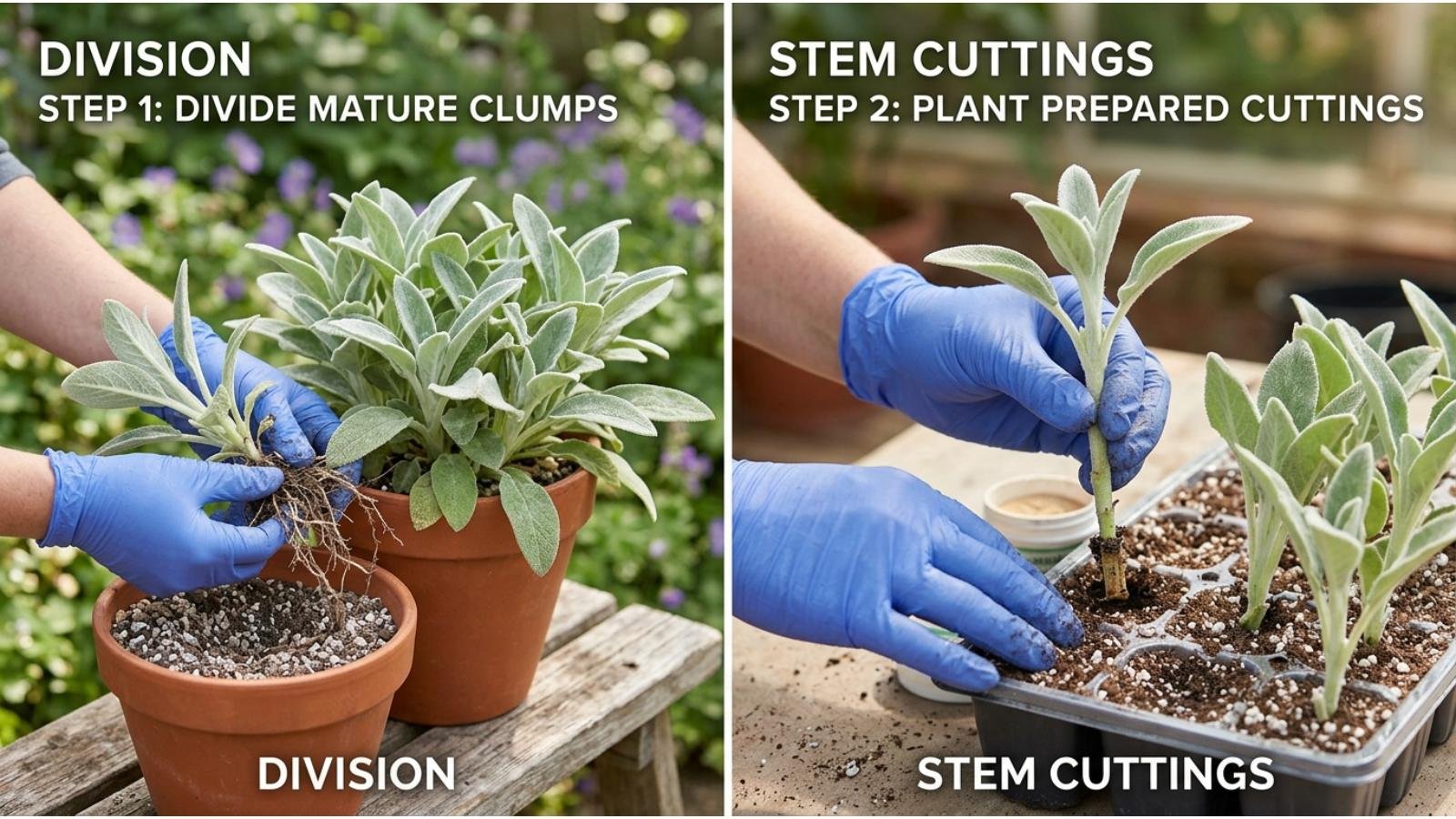
Lambs ear can be propagated by division, making it a practical way to manage mature clumps.
Division Method
- Choose a healthy, established clump.
- Water it lightly beforehand if the soil is extremely dry.
- Carefully lift the plant from the ground.
- Separate the crown into smaller sections with healthy roots.
- Replant the divisions in well-draining soil.
- Water them enough to establish the roots.
- Continue monitoring moisture while the new plants establish.
Division is especially useful when a clump has become crowded or started spreading beyond its intended area.
Growing Lambs Ear in Containers
Lambs ear can be grown in containers as long as drainage is excellent.
Choose a pot with:
- Adequate drainage holes.
- A well-draining potting mix.
- Enough room for the root system.
- A location with plenty of sunlight.
Containers dry faster than garden beds, so check the soil regularly. However, do not compensate by keeping the pot permanently wet.
A common container mistake is using a decorative pot without drainage. A beautiful container cannot make up for waterlogged roots.
Lambs Ear Care Through the Seasons
Spring
Spring is a good time to:
- Remove winter-damaged foliage.
- Divide overcrowded plants.
- Check drainage.
- Begin monitoring new growth.
- Remove debris around the plant.
As temperatures rise, increase watering only when the soil actually requires it.
Summer
Summer care focuses on sunlight and moisture management.
Keep an eye on plants during prolonged heat, especially newly planted specimens. Established plants are generally more tolerant of dry conditions than constantly wet soil.
Avoid unnecessary overhead watering during hot, humid weather.
Fall
Remove declining foliage and keep the area reasonably clean.
If your climate experiences wet autumn weather, drainage becomes particularly important because repeated rainfall can keep the root zone saturated.
Winter
In climates where lambs ear becomes dormant, growth may slow substantially or the foliage may decline.
Avoid excessive winter watering. Cold, wet soil can be more problematic than cold temperatures alone.
Common Lambs Ear Problems
| Problem | Likely Cause | What to Do |
|---|---|---|
| Yellowing leaves | Excess moisture or poor drainage | Check soil and drainage |
| Mushy roots | Waterlogged soil | Improve drainage and reduce watering |
| Brown foliage | Stress, damage, or excessive moisture | Remove damaged growth and assess growing conditions |
| Leggy growth | Insufficient sunlight | Move toward a sunnier location |
| Rotting leaves | Persistent moisture and poor airflow | Keep foliage drier and improve spacing |
| Poor growth | Unsuitable conditions or root problems | Check light, soil, drainage, and watering |
| Overcrowded clump | Natural spreading | Divide the plant |
Why Lambs Ear Turns Brown
Brown leaves do not always mean the plant needs water.
Possible causes include:
- Excessive moisture.
- Root problems.
- Heat stress.
- Physical damage.
- Old foliage.
- Poor airflow.
- Inappropriate growing conditions.
Before watering a brown plant, inspect the soil.
If the soil is already wet, adding more water can make the underlying problem worse.
Why Lambs Ear Gets Leggy
Lambs ear generally looks best when it forms a compact mound of foliage.
Leggy growth can occur when the plant does not receive enough direct sunlight. Moving it to a brighter location can help produce stronger, more compact growth.
Do not solve a light problem by simply adding fertilizer. More nutrients cannot replace insufficient sunlight.
How to Prevent Root Rot
Root rot is one of the more serious problems for lambs ear because the plant naturally prefers relatively dry conditions.
To reduce the risk:
- Use well-draining soil.
- Avoid planting in areas that remain soggy.
- Do not water automatically every day.
- Use containers with drainage holes.
- Avoid allowing pots to sit in standing water.
- Give crowded plants enough airflow.
Expert tip: If your garden naturally holds water after rain, correcting the planting site is usually more effective than trying to manage the plant with increasingly complicated watering schedules.
Common Lambs Ear Care Mistakes
1. Overwatering
This is one of the easiest ways to create problems.
Lambs ear is not a plant that benefits from constantly moist soil.
2. Planting in Heavy, Wet Soil
Even careful watering cannot completely compensate for soil that drains poorly.
3. Growing It in Too Much Shade
Insufficient sunlight can result in weaker growth and less attractive foliage.
4. Watering the Foliage Frequently
Repeatedly wet leaves are less desirable than watering directly at the root zone.
5. Overfertilizing
Lambs ear generally does not need aggressive feeding.
6. Ignoring Overcrowding
Dense clumps can become difficult to maintain. Dividing established plants can restore space and airflow.
Lambs Ear vs Other Drought-Tolerant Plants
Lambs ear is particularly useful when you want textural foliage rather than simply another green plant.
Its silvery leaves contrast well with:
- Green ornamental grasses.
- Purple-flowering perennials.
- Pink flowers.
- Blue flowers.
- Dark-leaved plants.
This makes lambs ear useful as a visual transition between plants with very different colors and textures.
A Simple Lambs Ear Care Routine
For gardeners who want an easy maintenance plan, use this routine:
Weekly: Check the soil and inspect the foliage.
After heavy rain: Make sure water is not pooling around the roots.
During active growth: Remove dead or damaged leaves and unwanted flower stalks.
When crowded: Divide mature clumps rather than repeatedly cutting them back.
During hot weather: Monitor newly planted specimens more closely while avoiding unnecessary watering of established plants.
The key is observation rather than following a rigid watering calendar.
Frequently Asked Questions
Does lambs ear need full sun?
Lambs ear generally grows best in full sun. Plenty of direct light helps maintain compact growth and attractive silvery foliage.
How often should I water lambs ear?
Water when the soil has dried sufficiently rather than following a strict daily schedule. Established plants generally tolerate relatively dry conditions.
Can lambs ear grow in shade?
It can tolerate some partial shade, but too little sunlight may lead to weaker or less compact growth.
Why is my lambs ear turning brown?
Brown foliage can result from excessive moisture, poor drainage, heat stress, old leaves, physical damage, or other environmental stress. Check the soil before assuming the plant needs water.
Does lambs ear come back every year?
In suitable climates, lambs ear is grown as a perennial and can return year after year.
Should I cut back lambs ear?
Remove dead or damaged foliage and unwanted flower stalks as needed. Avoid unnecessarily cutting healthy foliage.
Can lambs ear survive drought?
Established lambs ear has relatively good drought tolerance, particularly when grown in well-draining soil and given suitable sunlight.
Can lambs ear grow in pots?
Yes. Use a container with drainage holes and a well-draining growing medium. Monitor moisture because containers can dry faster than garden soil.
Does lambs ear spread?
Lambs ear can form expanding clumps over time. Divide overcrowded plants to control their size and maintain healthy growth.
Conclusion
Successful lambs ear plant care comes down to resisting the temptation to overmanage it. Give the plant plenty of sunlight, fast-draining soil, sensible watering, and enough space for air circulation. Once established, lambs ear generally needs much less attention than its soft, delicate-looking foliage suggests.
The most useful habit is simple: check the soil before watering. If the growing area drains well and the plant receives adequate light, lambs ear can provide attractive silvery texture with relatively little maintenance.