Quick Answer
Sensitive plant care is mainly about providing bright light, consistently moist but well-drained soil, warmth, and protection from cold drafts. The sensitive plant, Mimosa pudica, grows best in a warm, sheltered position with plenty of light and moderate watering. It is famous for folding its leaves when touched and closing them at night. Avoid waterlogged soil, poor light, cold temperatures, and excessive handling, which can stress the plant.
Introduction
The sensitive plant (Mimosa pudica) is one of the most fascinating plants you can grow at home. Its delicate-looking leaves respond dramatically to touch by folding inward, while the leaves also close naturally during the night.
That unusual behavior makes it tempting to treat the plant like a living toy. However, successful sensitive plant care is less about repeatedly touching the leaves and more about giving the plant the right growing environment. Bright light, proper watering, warm temperatures, good drainage, and regular observation matter far more than making the leaves move.
Native to Brazil, Mimosa pudica belongs to the legume family, Fabaceae. It can grow as a low, spreading plant with divided foliage and small pink to pale-purple flower heads. The Royal Horticultural Society recommends full sun to partial shade, moist but well-drained soil, and sheltered conditions.
What Is a Sensitive Plant?
The sensitive plant is commonly known as Mimosa pudica, touch-me-not, action plant, shy plant, or shame plant.
It is best known for its rapid response to physical stimulation. When a leaflet is touched or the plant experiences vibration, the leaflets fold and the petiole can droop.
This is not ordinary wilting.
The movement is a specialized plant response involving electrical signaling, changes in water movement, and structures called pulvini at the bases of the leaves. Scientific research describes the response as a thigmonastic or seismonastic movement.
The plant also performs a slower daily movement called nyctinasty. Its leaves naturally fold during darkness and reopen during the light period.
Why does the sensitive plant close its leaves?
Leaf movement is generally associated with protective responses to environmental stimulation. Folding the foliage may make the plant less attractive or accessible to herbivores and may reduce exposure of delicate leaf surfaces.
Importantly, a leaf closing after touch does not mean the plant is unhealthy.
It is behaving normally.
Image Suggestion: Close-up illustration showing an open Mimosa pudica leaf beside the same leaf folded after touch.
Sensitive Plant Light Requirements
Light is one of the most important parts of sensitive plant care.
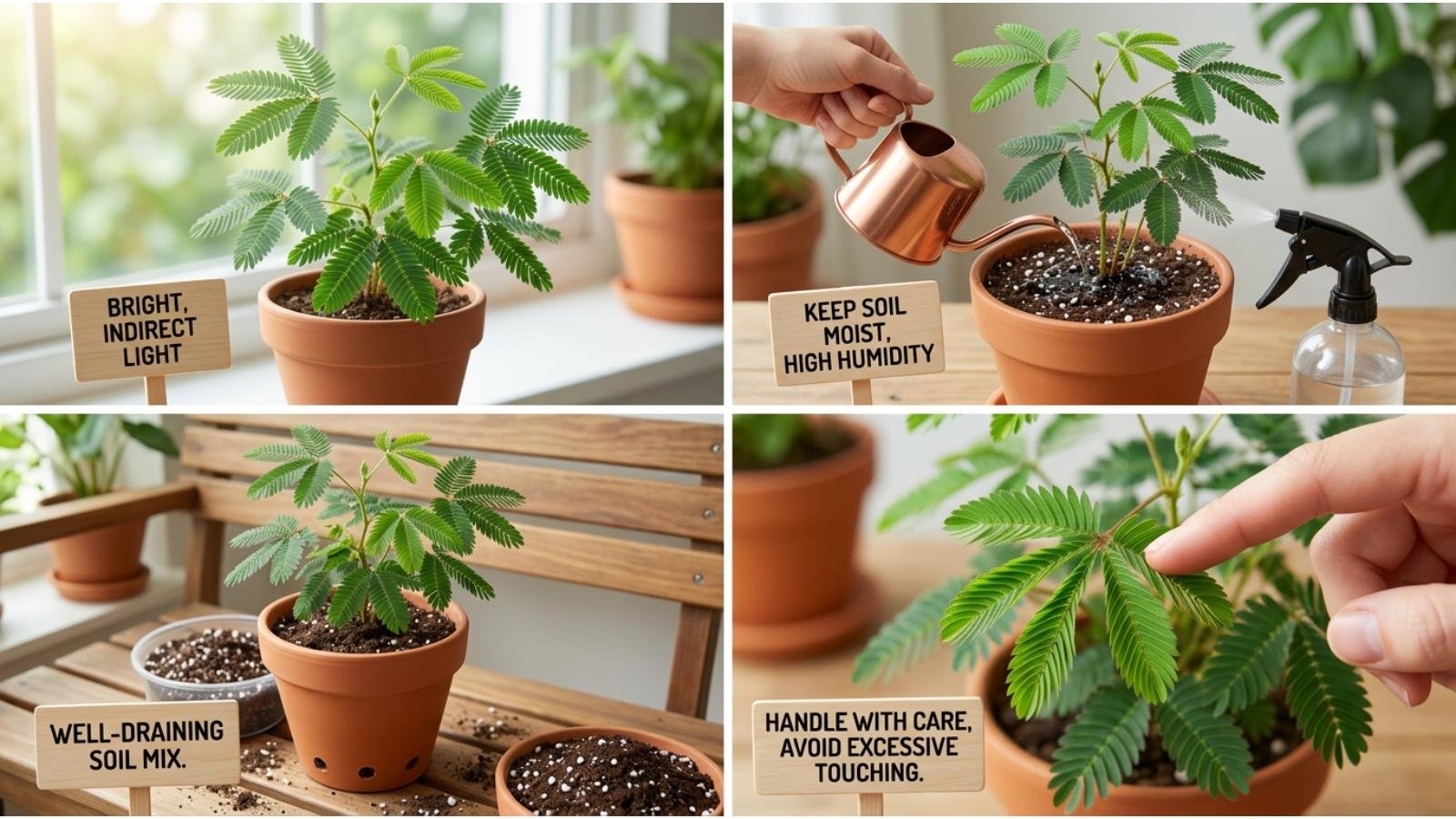
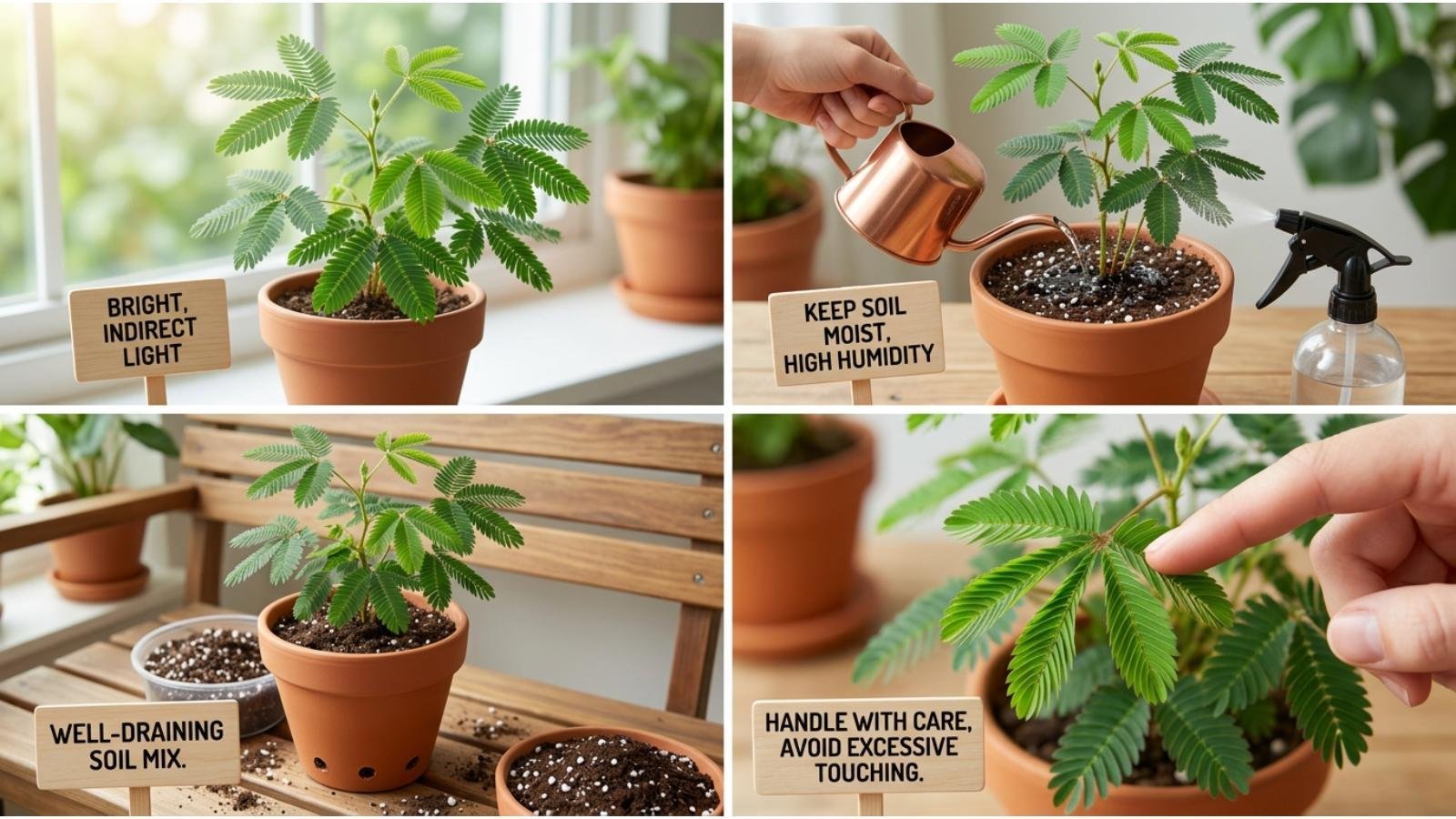
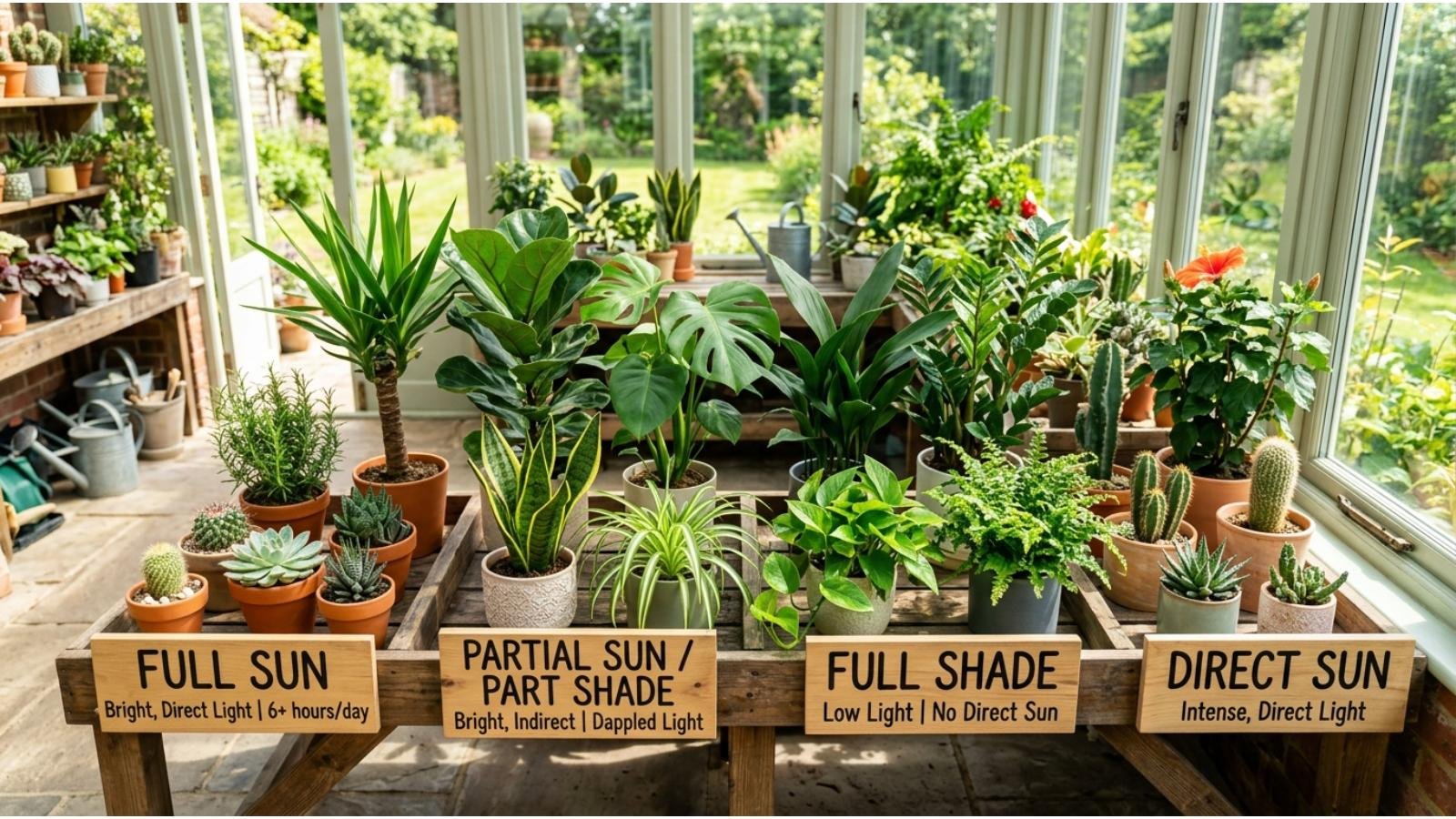
The full sun to partial shade for Mimosa pudica, with a bright position protected from harsh conditions.
For an indoor plant, aim for:
- A very bright window.
- Several hours of strong natural light.
- Protection from extremely intense afternoon heat through glass if the foliage begins to scorch.
- A position where the plant is not constantly shaded by curtains, furniture, or larger plants.
What happens when a sensitive plant gets too little light?
Low light can cause:
- Long, weak stems.
- Sparse foliage.
- Slow growth.
- Poor flowering.
- Leaves becoming less vigorous.
- Greater difficulty maintaining compact growth.
Light provides the energy plants need for photosynthesis, and inadequate indoor light can eventually cause weak growth and leaf loss.
Practical tip: If your plant is growing toward one side of the window, turning the container periodically can help maintain more balanced growth.
How Often Should You Water a Sensitive Plant?
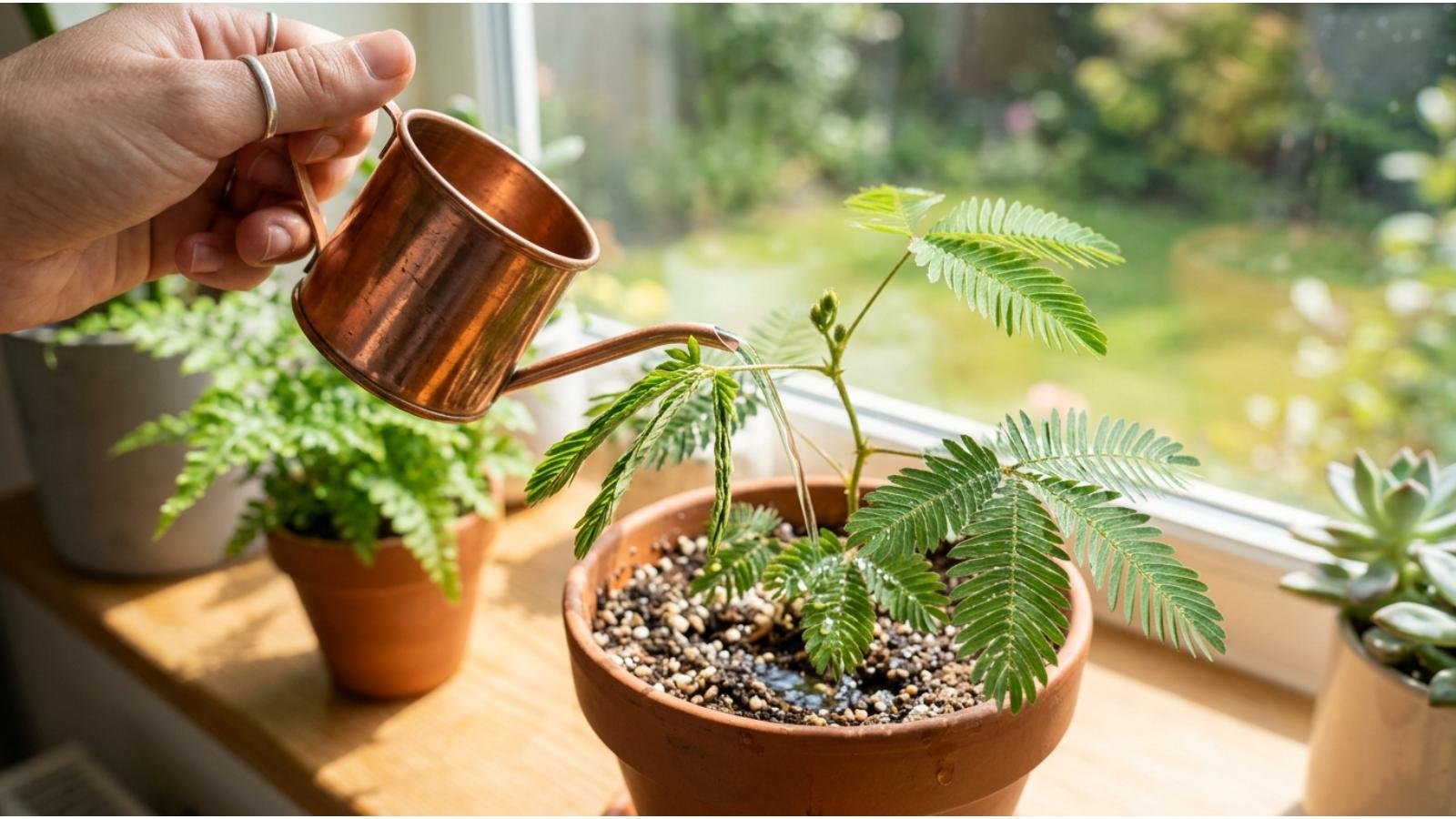
Sensitive plants prefer soil that stays moist but not waterlogged.
The moist but well-drained growing conditions and notes that moderate watering is appropriate during active growth, with reduced watering in winter.
Instead of watering according to a fixed calendar, check the soil.
A simple watering method
- Touch the surface of the potting mix.
- If the upper layer is beginning to dry, check deeper into the mix.
- Water thoroughly when the plant needs it.
- Allow excess water to drain through the pot.
- Empty standing water from a saucer.
Avoid keeping the root zone permanently saturated.
Indoor plant watering depends on the plant, soil, temperature, light, and container. A calendar-based schedule can therefore lead to either underwatering or overwatering.
Can you overwater a sensitive plant?
Yes.
One of the easiest mistakes is assuming that a plant that likes moisture should remain wet all the time.
Constantly saturated soil limits the air available around roots and can encourage root problems. Good drainage is therefore just as important as providing enough water.
Image Suggestion: Diagram comparing healthy moist soil, excessively dry soil, and waterlogged soil around sensitive plant roots.
The Best Soil for Mimosa Pudica
The goal is a growing medium that holds enough moisture for the plant while allowing excess water to escape.
A quality container mix with good drainage is a practical choice.
Avoid heavy garden soil in a small indoor container if it becomes compacted and remains wet for long periods.
What makes a good sensitive plant potting mix?
Look for a mix that provides:
- Moisture retention without becoming soggy.
- Good drainage.
- Adequate air around the roots.
- Enough structure to support the plant.
The container itself matters too. Always use a pot with drainage holes.
Temperature and Humidity
Sensitive plants are warm-growing plants and are not good candidates for cold conditions.
The growing Mimosa pudica in a heated glasshouse where winter temperatures do not fall below about 13°C (55°F).
For indoor cultivation, keep the plant away from:
- Cold drafts.
- Unheated windows during cold weather.
- Air-conditioning vents.
- Sudden temperature changes.
- Very hot, dry air from heaters.
A stable environment is generally easier to manage than repeatedly moving the plant between dramatically different conditions.
Does a sensitive plant need high humidity?
Moderate to higher humidity can be helpful, particularly in dry indoor environments, but humidity should not be used as a substitute for proper watering and airflow.
If the air is very dry, monitor the plant for stress while also checking soil moisture.
Should You Touch a Sensitive Plant?
Occasional gentle observation is fine, but repeatedly triggering leaf closure is not a good care routine.
The movement itself has physiological costs. A 2018 greenhouse study found that repeated daytime touch stimulation was associated with reduced reproductive biomass, with the researchers attributing the effect to the energetic cost of leaf movement and reduced photosynthetic opportunity.
That does not mean touching the plant once will harm it.
It means the plant’s ability to move is a fascinating biological response, not an invitation to repeatedly stimulate it throughout the day.
Expert tip: Let the plant demonstrate its behavior naturally rather than constantly testing it.
Why Does My Sensitive Plant Close Its Leaves?
Leaf closure can be completely normal.
Common reasons include:
| Cause | What you may notice |
|---|---|
| Touch | Leaflets fold rapidly |
| Vibration | Leaves may close or droop |
| Darkness | Leaves fold as part of the daily cycle |
| Wind or disturbance | Leaves may respond to movement |
| Water stress | Leaves may appear generally wilted |
| Environmental stress | Closure may occur alongside other symptoms |
The important distinction is between normal leaf movement and persistent plant stress.
A healthy plant can close its leaves when touched and later reopen them.
A struggling plant may remain droopy, lose leaves, develop discoloration, or show poor growth.
Why Is My Sensitive Plant Not Opening Its Leaves?
If the plant closes after being touched, give it time.
The leaves normally reopen after the stimulus passes, although the timing can vary depending on conditions.
If leaves remain closed or the whole plant looks unhealthy, investigate the environment rather than repeatedly touching it.
Check:
- Soil moisture.
- Light levels.
- Temperature.
- Drainage.
- Recent changes in location.
- Pest activity.
The plant’s daily leaf movement is also influenced by its light-dark cycle, so nighttime closure is normal.
Why Is My Sensitive Plant Drooping?
Drooping is different from the plant’s characteristic touch response.
Possible causes include:
- Soil that has become too dry.
- Excessively wet roots.
- Insufficient light.
- Cold temperatures.
- Root damage.
- Pest pressure.
- Sudden environmental changes.
First check the soil rather than immediately adding water.
If the soil is dry, water thoroughly and allow excess water to drain.
If the soil is already saturated, adding more water can make the problem worse.
This distinction is especially important because improper watering is a common cause of indoor plant problems.
Why Are Sensitive Plant Leaves Turning Yellow?
Yellow leaves can have several causes, so avoid treating every yellow leaf the same way.
If the soil is constantly wet
The root environment may be staying too saturated.
Check the drainage holes and the potting mix.
If the soil is extremely dry
The plant may be experiencing water stress.
Restore moisture gradually rather than allowing the plant to repeatedly become severely dry.
If light is poor
Move the plant gradually toward a brighter location.
If only an older leaf is yellow
A single aging leaf is less concerning than widespread yellowing accompanied by poor growth.
The best diagnosis comes from looking at the whole plant plus its growing conditions, rather than relying on leaf color alone.
How to Fertilize a Sensitive Plant
During active growth, the RHS recommends a balanced liquid fertilizer applied monthly. In winter, growth and water requirements are reduced. (RHS)
A practical feeding routine is:
- Fertilize during active growth.
- Follow the fertilizer label.
- Avoid excessive feeding.
- Reduce or stop feeding when growth slows substantially.
- Water appropriately rather than compensating for weak growth with extra fertilizer.
More fertilizer does not automatically mean faster or healthier growth.
If light, watering, or roots are the real problem, additional fertilizer will not fix the underlying issue.
Repotting Sensitive Plants
Repot when the plant has clearly outgrown its container or the growing medium has deteriorated.
Signs that repotting may be appropriate include:
- Roots filling most of the container.
- Water passing unusually quickly through the pot.
- Growth becoming restricted despite suitable conditions.
- The pot drying out extremely quickly.
Choose a container only moderately larger than the current one.
A dramatically oversized pot can hold more moisture than the root system can use, increasing the risk of persistently wet soil.
Repotting steps
- Prepare a clean container with drainage holes.
- Add fresh, well-draining potting mix.
- Carefully remove the plant.
- Avoid unnecessarily disturbing the roots.
- Position the plant at the same general depth.
- Fill around the root ball.
- Water appropriately.
- Return it to a suitable bright location.
Pruning Sensitive Plant
Mimosa pudica generally does not require extensive pruning.
If the plant becomes damaged or develops an unwanted shape, remove clearly dead or damaged material using clean tools.
Do not prune simply because the plant’s leaves close after touch.
Leaf movement is part of its normal biology.
How to Grow Sensitive Plant From Seed
Seed propagation is one of the recommended ways to propagate Mimosa pudica.
The seed in spring at approximately 18–24°C (64–75°F) and soaking the seed overnight before sowing.
Basic propagation process
- Soak the seeds overnight.
- Prepare a clean, well-draining seed-starting medium.
- Sow the seeds according to the appropriate planting depth for the seed.
- Keep the medium appropriately moist.
- Maintain warm conditions.
- Provide good light after germination.
- Transplant carefully once seedlings are established.
Image Suggestion: Step-by-step infographic showing sensitive plant seed soaking, sowing, germination, and young seedling development.
Common Sensitive Plant Care Mistakes
1. Keeping the soil constantly wet
Moist soil does not mean permanently saturated soil.
Good drainage is essential.
2. Giving it too little light
A bright-looking room can still have surprisingly weak light several feet from a window.
3. Treating leaf movement as a problem
Closing leaves after touch is normal behavior.
4. Touching it repeatedly
The movement is fascinating, but repeated stimulation can carry energetic and photosynthetic costs.
5. Putting it in a cold location
Sensitive plants prefer warmth and sheltered conditions.
6. Watering on a rigid schedule
The plant’s water needs change with light, temperature, season, soil, and container size.
7. Using a container without drainage
Even a good potting mix cannot compensate for a container that traps excess water.
Sensitive Plant Care Through the Seasons
Spring
This is an active growth period.
Focus on:
- Bright light.
- Increasing watering as growth increases.
- Monthly balanced feeding.
- Seed propagation if desired.
The spring as the suitable season for seed propagation.
Summer
Monitor moisture more frequently because warm, bright conditions can increase water use.
If grown outdoors, protect the plant from harsh exposure and ensure containers do not dry excessively.
Fall
As light levels decline, growth may slow.
Avoid continuing an aggressive watering or feeding routine simply because you used the same schedule during summer.
Winter
This is the season when sensitive plant care requires the most attention to temperature and watering.
The plant above approximately 13°C (55°F) in winter and reducing watering compared with the growing season.
Indoor vs Outdoor Sensitive Plant Care
| Factor | Indoors | Outdoors |
|---|---|---|
| Light | Bright window or suitable grow light | Bright, sheltered position |
| Watering | Check soil regularly | Monitor more often during hot weather |
| Temperature | Protect from cold drafts | Protect from cold conditions |
| Pests | Inspect regularly | Monitor foliage and stems |
| Container | Drainage is essential | Drainage remains essential |
| Environment | More stable | More exposure to weather |
When moving a container-grown plant outdoors, do not assume it can immediately tolerate intense outdoor sun. Houseplants can suffer foliage damage when suddenly exposed to strong direct sunlight, and outdoor containers may dry faster.
Sensitive Plant Pests and Problems
Healthy plants generally cope better with pest pressure, while plants stressed by poor light, incorrect watering, or unsuitable temperatures can become more vulnerable.
Make pest checks part of your routine
Look closely at:
- Leaf undersides.
- New growth.
- Stems.
- Leaf joints.
- Areas where webbing or unusual discoloration appears.
If you find pests, isolate the affected plant from other houseplants while you identify and manage the problem.
A Simple Sensitive Plant Care Routine
You do not need a complicated schedule.
Weekly
- Check soil moisture.
- Inspect leaves and stems.
- Look underneath foliage for pests.
- Check whether the plant is receiving adequate light.
- Remove dead or damaged material if necessary.
Monthly During Active Growth
- Consider balanced liquid fertilizer according to label directions.
- Check whether roots are becoming crowded.
- Assess overall growth and plant shape.
Throughout the Year
- Keep temperatures suitable.
- Avoid waterlogged soil.
- Avoid unnecessary handling.
- Watch how the plant responds to changes in light, water, and temperature.
The most useful habit is observation.
Instead of asking, “What day should I water this plant?” ask, “What are the soil, light, temperature, and plant telling me today?”
Frequently Asked Questions
How much sunlight does a sensitive plant need?
Sensitive plants prefer full sun to partial shade. Indoors, provide a very bright location while protecting the foliage from excessive heat or scorching.
How often should I water Mimosa pudica?
Water when the soil begins to dry rather than following a rigid calendar. Keep the growing medium moist but well drained, and never leave the plant sitting in standing water.
Why does my sensitive plant close when I touch it?
Touch triggers a rapid thigmonastic response that causes the leaflets to fold and the petiole to droop. This is normal behavior for Mimosa pudica.
Should I touch my sensitive plant every day?
It is better not to repeatedly stimulate the leaves. Research has found measurable energetic and photosynthetic costs associated with repeated daytime leaf-closing responses.
Why does my sensitive plant close at night?
Nighttime closure is part of the plant’s natural nyctinastic movement. The leaves typically reopen during the light period.
Can sensitive plants grow indoors?
Yes. They can be grown as container plants indoors when provided with sufficient light, warmth, moisture, and good drainage. The RHS lists Mimosa pudica as suitable for container cultivation.
What temperature is too cold for a sensitive plant?
The winter temperatures no lower than about 13°C (55°F) when cultivated under glass. Protect the plant from cold drafts and sudden temperature drops.
Does Mimosa pudica need humidity?
It benefits from a suitable indoor environment, but correct soil moisture, light, temperature, and airflow are more important than simply maximizing humidity.
Why are my sensitive plant leaves yellow?
Possible causes include watering problems, poor light, root stress, temperature stress, or normal aging of individual leaves. Examine the entire growing environment before changing one care factor.
Can you grow sensitive plant from seeds?
Yes. The soaking seeds overnight and sowing them in spring at approximately 18–24°C (64–75°F).
Final Thoughts
Successful sensitive plant care is surprisingly straightforward once you stop treating the plant’s leaf movement as its main care requirement.
Give Mimosa pudica plenty of light, warm and sheltered conditions, moist but well-drained soil, appropriate feeding during active growth, and careful watering. Most importantly, observe the plant instead of relying on a fixed schedule.
Its folding leaves are one of nature’s most entertaining plant behaviors, but the healthiest sensitive plant is not necessarily the one that closes its leaves most dramatically. Focus on strong new growth, healthy foliage, suitable soil moisture, and stable growing conditions.
And when those little leaves fold after an accidental touch, let the plant reopen them in peace. That fascinating movement is part of what makes Mimosa pudica special—not a behavior you need to test all day.